MEATABOLIC
INBORN
ERRORS
PRESENTER : #2013-02-095 / GIA K. SHARMA
INSTRUCTOR: DR. TOLUNIMI ADEDEJI [M.D.]
CENTRAL AMERICA HEALTH SCIENCE UNIVERSITY, BELIZE

July 10

2013
BIOCHEMISTRY
ASSIGNMENT
INDEX
METABOLIC INBRON ERRORS
PHENYLYKETONURIA
MAPLE SYRUP URINE DISORDER
HOMOCYSTINURIA
TYROSINEURIA
TYROSINEURIA TYPE 1
TYROSINEURIA TYPE 2
TYROSINEURIA TYPE 3
GALACTOSEMIA
GALACTOSEMIA TYPE 1
GALACTOSEMIA TYPE 2
GALACTOSEMIA TYPE 3
POMPE’S DISEASE
ANDERSON’S DISEASE
VON GIERKE’S DISEASE
GRAVES’ DISEASE
METABOLIC INBORN ERRORS
Inborn errors of metabolisms, is a group of disorders
where a single gene defect causes a block in the
metabolism.
It is caused by the defect in the enzymes that metabolize:
Proteins
Carbohydrates
Lipids
Fats
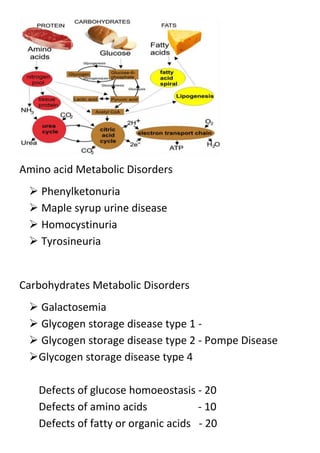
Amino acid Metabolic Disorders
 Phenylketonuria
 Maple syrup urine disease
 Homocystinuria
 Tyrosineuria

Carbohydrates Metabolic Disorders
 Galactosemia
 Glycogen storage disease type 1  Glycogen storage disease type 2 - Pompe Disease
Glycogen storage disease type 4
Defects of glucose homoeostasis - 20
Defects of amino acids
- 10
Defects of fatty or organic acids - 20
Defects of Lactate and others

- 20

Every child with unexplained
Neurological deterioration
Metabolic acidosis
Hypoglycemia
Inappropriate ketosis
Hypotonia
Cardiomyopathy
Hepatocellular dysfunction
Failure to thrive

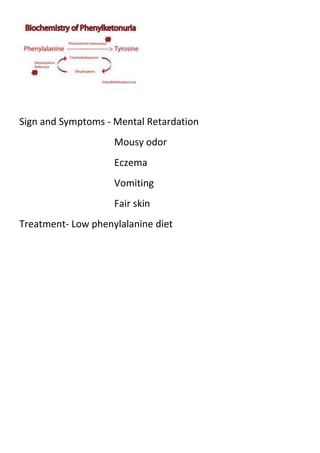
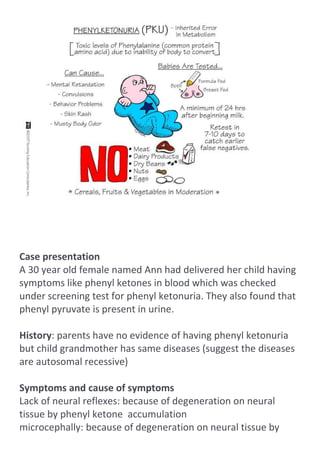
Phenylketonuria
Also known as PKU

Deficiency of Phenylalanine hydroxylase [PAH]
Sign and Symptoms - Mental Retardation
Mousy odor
Eczema
Vomiting
Fair skin
Treatment- Low phenylalanine diet
Case presentation
A 30 year old female named Ann had delivered her child having
symptoms like phenyl ketones in blood which was checked
under screening test for phenyl ketonuria. They also found that
phenyl pyruvate is present in urine.
History: parents have no evidence of having phenyl ketonuria
but child grandmother has same diseases (suggest the diseases
are autosomal recessive)
Symptoms and cause of symptoms
Lack of neural reflexes: because of degeneration on neural
tissue by phenyl ketone accumulation
microcephally: because of degeneration on neural tissue by
phenyl ketone accumulation presence of phenyketones in
blood : lack of enzyme phenyl alanine hydroxilase
Diagnosis: maternalphenyalketonuria
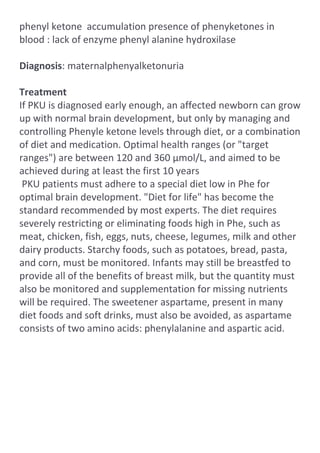
Treatment
If PKU is diagnosed early enough, an affected newborn can grow
up with normal brain development, but only by managing and
controlling Phenyle ketone levels through diet, or a combination
of diet and medication. Optimal health ranges (or "target
ranges") are between 120 and 360 µmol/L, and aimed to be
achieved during at least the first 10 years
PKU patients must adhere to a special diet low in Phe for
optimal brain development. "Diet for life" has become the
standard recommended by most experts. The diet requires
severely restricting or eliminating foods high in Phe, such as
meat, chicken, fish, eggs, nuts, cheese, legumes, milk and other
dairy products. Starchy foods, such as potatoes, bread, pasta,
and corn, must be monitored. Infants may still be breastfed to
provide all of the benefits of breast milk, but the quantity must
also be monitored and supplementation for missing nutrients
will be required. The sweetener aspartame, present in many
diet foods and soft drinks, must also be avoided, as aspartame
consists of two amino acids: phenylalanine and aspartic acid.
Maple Syrup Urine Disease

It is also known as MSUD and
It is an inherited, as it is passed from parent to child.
It is autosomal.
The defective gene is located on an autosome.
Majority of people that get MSUD are Caucasian.
It affects the Blood
Brain
Urine, thou is does not affect any specific organs
but brain.
It usually affects babies from all age.
Older infants require a diet not consisting of Eggs, Nuts and
Meat.
If the baby is not treated or screened, the baby will die in
months.
Diagnosis/Detection
To determine if someone has MSUD, you have to look the urine
odor for a sweet smell.
Blood test for amino acids.
If alloisoleucine is detected, the diagnosis is confirmed.

Deficiency of Branched chain alpha keto acid dehydrogenase
complex (BCKDC)

Sign and Symptoms- Maple syrup odor
Dehydration
Hypoglycemia
Ketoacidosis
Coma
Brain damage (if untreated)
Vomiting
Lethargy [lack of energy]

There is no cure for MSUD, however a special diet cant help
prevent these health problems.
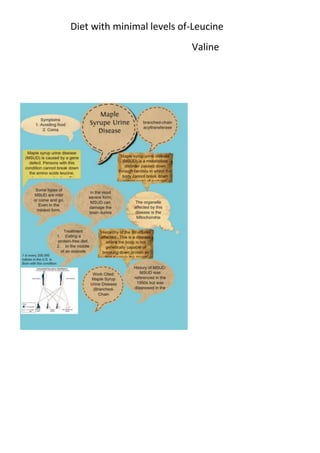
Treatment- High doses of Thiamine
Diet with minimal levels of-Leucine
Valine
Homocystinuria

CBS deficiency
Homocystine accumulates in the urine.
It builds up to toxin levels in the body due to the CBS
deficiency.
It is a very rare disease that affects about 200,000 to
300,000 babies born.
It occurs in almost all ethnic groups.

Diagnosis
It is confirmed by measuring the levels of amino acids in
the blood and urine.
Levels of total homocystine and methionine will be
elevated while the level of cystine will be decreased.
CBS enzyme ang genetic testing can also be used to
confirm the diagnosis.
Deficiency of- Methionine and often involving
Cystathionine beta synthase
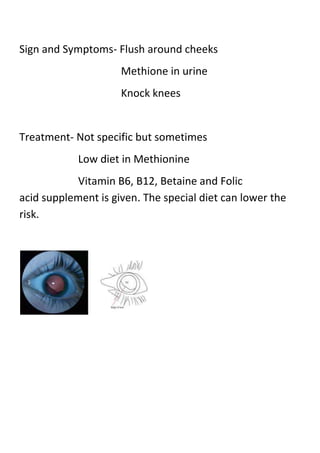
Sign and Symptoms- Flush around cheeks
Methione in urine
Knock knees

Treatment- Not specific but sometimes
Low diet in Methionine
Vitamin B6, B12, Betaine and Folic
acid supplement is given. The special diet can lower the
risk.
Tyrosinemia

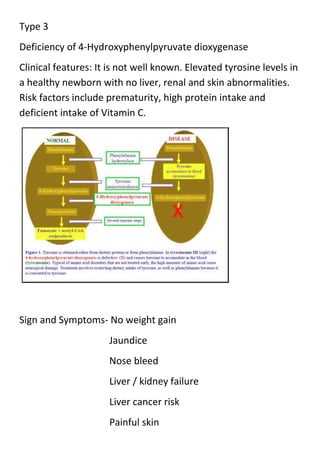
Mutations in the gene for fumarylacetoacetase
[FAH] result in enzyme that is not working well
or it is deficient.

It is a genetic disorder characterized by elevated blood
levels of the amino acids tyrosine.
It is also known as Hypertyrosinemia, type 1 and type 2 .

Type 1
Deficiency of Fumarylacetoacetate hydroxylase
Type 2
Deficiency of Tyrosine aminotransferase
Clinical features: Involve only skin, eyes and CNS which may
lead to excessive tearing, photophobia, eye pain and redness
and skin lesions.
Type 3
Deficiency of 4-Hydroxyphenylpyruvate dioxygenase
Clinical features: It is not well known. Elevated tyrosine levels in
a healthy newborn with no liver, renal and skin abnormalities.
Risk factors include prematurity, high protein intake and
deficient intake of Vitamin C.

Sign and Symptoms- No weight gain
Jaundice
Nose bleed
Liver / kidney failure
Liver cancer risk
Painful skin
Red eyes

Treatment- Liver transplant
Low diet in phenylalanine, methionine and tyrosine.
Galactosemia
Lactose is the main carbohydrate in breast milk
and most non-soy infant formulas and is broken
down into glucose and galactose in the intestine.
Individuals with galactosemia are not able to
utilize galactose because an enzyme, called GALT
(galactose-1-phosphate uridyl transferase), is
defective or deficient. This leads to an accumulation
of galactose and other harmful substances in the
blood and urine, which can cause serious health
problems. Some individuals have a milder form of
the condition in which there is some GALT activity.
What is its incidence?
The incidence of classic galactosemia has been
estimated to be approximately 1 in 60,000, although
the numbers will vary according to different sources.
What causes the disease?
Mutations in the GALT gene produce an enzyme
with deficient activity.
What are the clinical features of
the disease?
Although babies with galactosemia are normal at
birth, they may have serious problems without
treatment. The inability to metabolize galactose
can result in life-threatening complications
including hypoglycemia, feeding problems, failure
to thrive, liver damage, lethargy, bleeding, and
sepsis. Even with early treatment, however,
children with galactosemia are at increased risk
for developmental delays, speech problems,
abnormalities of motor function. cataracts, and,
in females, premature ovarian failure.
How is the diagnosis confirmed?
The diagnosis of galactosemia can be confirmed
by measuring the amount of galactose, galactose-1phosphate, and GALT enzyme activity in the blood.
Genetic testing to look for mutations in the GALT
gene may also assist in confirming the diagnosis.
Diagnostic testing is arranged by specialists at your
regional treatment centre.
What is the treatment of the disease?
A galactose-restricted diet is effective in preventing
many of the complications of galactosemia,
including the liver and kidney problems. It may
also reduce the risk for developmental delays.
Treatment is coordinated by specialists at your
regional treatment centre.
What is the outcome of treatment?
Although early identification and treatment will
ensure the best outcome, some individuals with
galactosemia are still at increased risk to develop
complications, as discussed in Clinical Features.
Can a family have more than one child
with Galactosemia?
Galactosemia is inherited as an autosomal recessive
disease. Parents of a child with galactosemia are
assumed to be carriers for the disease and have a
1 in 4 (25%) chance, in each pregnancy, of having
another child with this condition. Prenatal testing
for galactosemia can be done as early as 15-16 weeks
of pregnancy. Genetic counselling to discuss the
benefits of prenatal testing options in more detail
is recommended.
Unaffected siblings of a child with galactosemia
have a 2/3 chance of being carriers. Carriers are
healthy and do not have symptoms of galactosemia

Type 1
Deficiency of galactose 1 phosphate uridyl transferase

Type 2
Deficiency of galactokinase

Type 3
Deficiency of UDPgalactose epimerase

Sign and symptoms- Jaundice
Diarrhea
Vomiting
Lethary
Treatment- Eliminating Lactose and Galactose from diet.
Von Gierke disease

Glycogen storage disorder type 1

Deficiency of glucose-6-phosphate

Sign and Symptoms- Hypoglycemia
Lactic acidosis
Thin arms and legs
Short stature
Enlarged kidney

Treatment- avoiding sugars
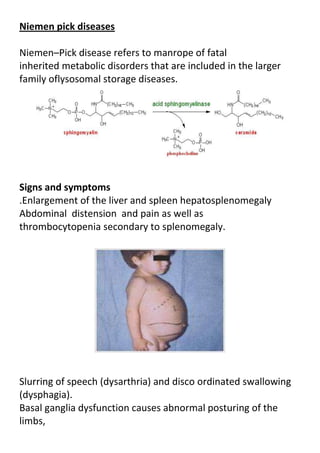
Niemen pick diseases
Niemen–Pick disease refers to manrope of fatal
inherited metabolic disorders that are included in the larger
family oflysosomal storage diseases.

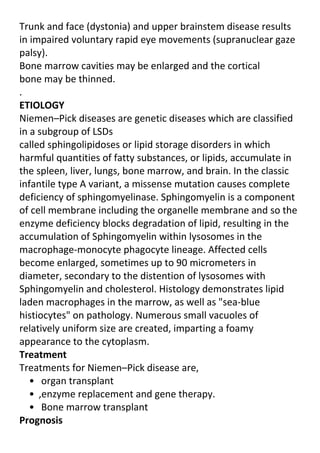
Signs and symptoms
.Enlargement of the liver and spleen hepatosplenomegaly
Abdominal distension and pain as well as
thrombocytopenia secondary to splenomegaly.

Slurring of speech (dysarthria) and disco ordinated swallowing
(dysphagia).
Basal ganglia dysfunction causes abnormal posturing of the
limbs,
Trunk and face (dystonia) and upper brainstem disease results
in impaired voluntary rapid eye movements (supranuclear gaze
palsy).
Bone marrow cavities may be enlarged and the cortical
bone may be thinned.
.
ETIOLOGY
Niemen–Pick diseases are genetic diseases which are classified
in a subgroup of LSDs
called sphingolipidoses or lipid storage disorders in which
harmful quantities of fatty substances, or lipids, accumulate in
the spleen, liver, lungs, bone marrow, and brain. In the classic
infantile type A variant, a missense mutation causes complete
deficiency of sphingomyelinase. Sphingomyelin is a component
of cell membrane including the organelle membrane and so the
enzyme deficiency blocks degradation of lipid, resulting in the
accumulation of Sphingomyelin within lysosomes in the
macrophage-monocyte phagocyte lineage. Affected cells
become enlarged, sometimes up to 90 micrometers in
diameter, secondary to the distention of lysosomes with
Sphingomyelin and cholesterol. Histology demonstrates lipid
laden macrophages in the marrow, as well as "sea-blue
histiocytes" on pathology. Numerous small vacuoles of
relatively uniform size are created, imparting a foamy
appearance to the cytoplasm.
Treatment
Treatments for Niemen–Pick disease are,
• organ transplant
• ,enzyme replacement and gene therapy.
• Bone marrow transplant
Prognosis
Type A Niemen Pick disease has an extremely poor prognosis
with most cases being fatal by the age of 18 months. Type B and
C Niemen Pick disease have a better prognosis, with many
patients with these disorders living into their teens or
adulthood
Graves’ disease
It is a type of hyperthyroidism, which is caused by a generalized
over activity of the entire thyroid gland.
It is an autoimmune disease.
Cause : In this disease instead of destroying the thyroid gland,
an antibody called thyrotropin receptor antibody [TRAb] makes
the thyroid gland produce large amounts of thyroid harmone. It
is most common in women over age of 20 years.
Symptoms: Anxiety
Breast enlargement in men
Difficulty in concentrating
Double vision
Eyeballs that stick out [exophthalmos]
Eye irritation and tearing
Fatigue
Frequent bowel movements
Goiter [possible]
Increased appetite
Increased sweating
Insomnia
Muscle weakness
Nervousness
Weight loss
Restlessness
Diagnosis
In the examination doctor will look for a Goiter
Enlarged thyroid gland
A rapid pulse
Tremor
Blood test
A radioactive-iodine uptake test and
Thyroid scan

Treatment
The purpose of the treatment is to control the over activity of
the thyroid gland.
Antithyroid medications
Radioactivity iodine
Surgery
The eye problems related to graves disease usually improve
when hyperthyroidism is treated with medications,

Pompe’s disease
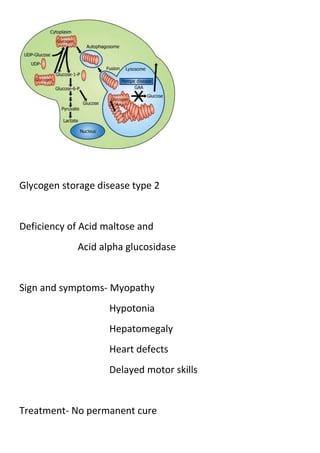
Glycogen storage disease type 2

Deficiency of Acid maltose and
Acid alpha glucosidase

Sign and symptoms- Myopathy
Hypotonia
Hepatomegaly
Heart defects
Delayed motor skills

Treatment- No permanent cure
REFERENCES
Wikipedia
Docstocs
Quizlet
Slideshares
Study stack
Bibliography
(PhD.), K. P. (2003, July 07). Tyrosinemia. Retrieved July 10, 2013, from malacards: www.malacards.org
Smith, D. J. (2010, June 17). Tyrosinemia. Retrieved July 10, 2013, from Dostoc: www.docstoc.com
Sosa, D. J. (2002, January 23). Understanding Galctosemia. Retrieved July 10, 2013, from Galactosemia:
http://galactosemia.org/PDFs/UnderstandingGalactosemiaDietGuide3.pdf
Medline Plus. (2005, March 08). Galctosemia. Retrieved june 22, 2013, from Medline Plus:
http://www.nlm.nih.gov/medlineplus/ency/article/000366.htm
True Star Health. (2012, June 06). Homocysteinuria. Retrieved from True Star Health:
http://www.truestarhealth.com/Notes/1029002.html#Condition-Symptoms
wikipedia. (2006, June 11). Galactosemia. Retrieved from wikipedia: http://en.wikipedia.org/wiki/Galactosemia
Wikipedia. (2006, August 30). MSUD. Retrieved June 22, 2013, from Wikipedia:
http://en.wikipedia.org/wiki/Maple_syrup_urine_disease
Wikipedia. (2010, June 12). MSUD. Retrieved from Wikipedia:
http://en.wikipedia.org/wiki/Maple_syrup_urine_disease
Wikipedia. (2011, January 23). homocystenuria. Retrieved from Wikipedia:
http://en.wikipedia.org/wiki/Homocystinuria
Thank you DR. T
Bibliography
(PhD.), K. P. (2003, July 07). Tyrosinemia. Retrieved July 10, 2013, from malacards: www.malacards.org
Smith, D. J. (2010, June 17). Tyrosinemia. Retrieved July 10, 2013, from Dostoc: www.docstoc.com
Sosa, D. J. (2002, January 23). Understanding Galctosemia. Retrieved July 10, 2013, from Galactosemia:
http://galactosemia.org/PDFs/UnderstandingGalactosemiaDietGuide3.pdf
Medline Plus. (2005, March 08). Galctosemia. Retrieved june 22, 2013, from Medline Plus:
http://www.nlm.nih.gov/medlineplus/ency/article/000366.htm
True Star Health. (2012, June 06). Homocysteinuria. Retrieved from True Star Health:
http://www.truestarhealth.com/Notes/1029002.html#Condition-Symptoms
wikipedia. (2006, June 11). Galactosemia. Retrieved from wikipedia: http://en.wikipedia.org/wiki/Galactosemia
Wikipedia. (2006, August 30). MSUD. Retrieved June 22, 2013, from Wikipedia:
http://en.wikipedia.org/wiki/Maple_syrup_urine_disease
Wikipedia. (2010, June 12). MSUD. Retrieved from Wikipedia:
http://en.wikipedia.org/wiki/Maple_syrup_urine_disease
Wikipedia. (2011, January 23). homocystenuria. Retrieved from Wikipedia:
http://en.wikipedia.org/wiki/Homocystinuria

Metabolic inborn errors

  • 1.
    MEATABOLIC INBORN ERRORS PRESENTER : #2013-02-095/ GIA K. SHARMA INSTRUCTOR: DR. TOLUNIMI ADEDEJI [M.D.] CENTRAL AMERICA HEALTH SCIENCE UNIVERSITY, BELIZE July 10 2013 BIOCHEMISTRY ASSIGNMENT
  • 2.
    INDEX METABOLIC INBRON ERRORS PHENYLYKETONURIA MAPLESYRUP URINE DISORDER HOMOCYSTINURIA TYROSINEURIA TYROSINEURIA TYPE 1 TYROSINEURIA TYPE 2 TYROSINEURIA TYPE 3 GALACTOSEMIA GALACTOSEMIA TYPE 1 GALACTOSEMIA TYPE 2 GALACTOSEMIA TYPE 3 POMPE’S DISEASE ANDERSON’S DISEASE VON GIERKE’S DISEASE GRAVES’ DISEASE
  • 3.
    METABOLIC INBORN ERRORS Inbornerrors of metabolisms, is a group of disorders where a single gene defect causes a block in the metabolism. It is caused by the defect in the enzymes that metabolize: Proteins Carbohydrates Lipids Fats
  • 4.
    Amino acid MetabolicDisorders  Phenylketonuria  Maple syrup urine disease  Homocystinuria  Tyrosineuria Carbohydrates Metabolic Disorders  Galactosemia  Glycogen storage disease type 1  Glycogen storage disease type 2 - Pompe Disease Glycogen storage disease type 4 Defects of glucose homoeostasis - 20 Defects of amino acids - 10 Defects of fatty or organic acids - 20
  • 5.
    Defects of Lactateand others - 20 Every child with unexplained Neurological deterioration Metabolic acidosis Hypoglycemia Inappropriate ketosis Hypotonia Cardiomyopathy Hepatocellular dysfunction Failure to thrive Phenylketonuria Also known as PKU Deficiency of Phenylalanine hydroxylase [PAH]
  • 6.
    Sign and Symptoms- Mental Retardation Mousy odor Eczema Vomiting Fair skin Treatment- Low phenylalanine diet
  • 7.
    Case presentation A 30year old female named Ann had delivered her child having symptoms like phenyl ketones in blood which was checked under screening test for phenyl ketonuria. They also found that phenyl pyruvate is present in urine. History: parents have no evidence of having phenyl ketonuria but child grandmother has same diseases (suggest the diseases are autosomal recessive) Symptoms and cause of symptoms Lack of neural reflexes: because of degeneration on neural tissue by phenyl ketone accumulation microcephally: because of degeneration on neural tissue by
  • 8.
    phenyl ketone accumulationpresence of phenyketones in blood : lack of enzyme phenyl alanine hydroxilase Diagnosis: maternalphenyalketonuria Treatment If PKU is diagnosed early enough, an affected newborn can grow up with normal brain development, but only by managing and controlling Phenyle ketone levels through diet, or a combination of diet and medication. Optimal health ranges (or "target ranges") are between 120 and 360 µmol/L, and aimed to be achieved during at least the first 10 years PKU patients must adhere to a special diet low in Phe for optimal brain development. "Diet for life" has become the standard recommended by most experts. The diet requires severely restricting or eliminating foods high in Phe, such as meat, chicken, fish, eggs, nuts, cheese, legumes, milk and other dairy products. Starchy foods, such as potatoes, bread, pasta, and corn, must be monitored. Infants may still be breastfed to provide all of the benefits of breast milk, but the quantity must also be monitored and supplementation for missing nutrients will be required. The sweetener aspartame, present in many diet foods and soft drinks, must also be avoided, as aspartame consists of two amino acids: phenylalanine and aspartic acid.
  • 9.
    Maple Syrup UrineDisease It is also known as MSUD and It is an inherited, as it is passed from parent to child. It is autosomal. The defective gene is located on an autosome. Majority of people that get MSUD are Caucasian. It affects the Blood Brain Urine, thou is does not affect any specific organs but brain. It usually affects babies from all age. Older infants require a diet not consisting of Eggs, Nuts and Meat. If the baby is not treated or screened, the baby will die in months.
  • 10.
    Diagnosis/Detection To determine ifsomeone has MSUD, you have to look the urine odor for a sweet smell. Blood test for amino acids. If alloisoleucine is detected, the diagnosis is confirmed. Deficiency of Branched chain alpha keto acid dehydrogenase complex (BCKDC) Sign and Symptoms- Maple syrup odor Dehydration Hypoglycemia Ketoacidosis Coma Brain damage (if untreated) Vomiting Lethargy [lack of energy] There is no cure for MSUD, however a special diet cant help prevent these health problems. Treatment- High doses of Thiamine
  • 11.
    Diet with minimallevels of-Leucine Valine
  • 12.
    Homocystinuria CBS deficiency Homocystine accumulatesin the urine. It builds up to toxin levels in the body due to the CBS deficiency. It is a very rare disease that affects about 200,000 to 300,000 babies born. It occurs in almost all ethnic groups. Diagnosis It is confirmed by measuring the levels of amino acids in the blood and urine. Levels of total homocystine and methionine will be elevated while the level of cystine will be decreased. CBS enzyme ang genetic testing can also be used to confirm the diagnosis. Deficiency of- Methionine and often involving Cystathionine beta synthase
  • 13.
    Sign and Symptoms-Flush around cheeks Methione in urine Knock knees Treatment- Not specific but sometimes Low diet in Methionine Vitamin B6, B12, Betaine and Folic acid supplement is given. The special diet can lower the risk.
  • 15.
    Tyrosinemia Mutations in thegene for fumarylacetoacetase [FAH] result in enzyme that is not working well or it is deficient. It is a genetic disorder characterized by elevated blood levels of the amino acids tyrosine. It is also known as Hypertyrosinemia, type 1 and type 2 . Type 1 Deficiency of Fumarylacetoacetate hydroxylase Type 2 Deficiency of Tyrosine aminotransferase Clinical features: Involve only skin, eyes and CNS which may lead to excessive tearing, photophobia, eye pain and redness and skin lesions.
  • 16.
    Type 3 Deficiency of4-Hydroxyphenylpyruvate dioxygenase Clinical features: It is not well known. Elevated tyrosine levels in a healthy newborn with no liver, renal and skin abnormalities. Risk factors include prematurity, high protein intake and deficient intake of Vitamin C. Sign and Symptoms- No weight gain Jaundice Nose bleed Liver / kidney failure Liver cancer risk Painful skin
  • 17.
    Red eyes Treatment- Livertransplant Low diet in phenylalanine, methionine and tyrosine.
  • 18.
    Galactosemia Lactose is themain carbohydrate in breast milk and most non-soy infant formulas and is broken down into glucose and galactose in the intestine. Individuals with galactosemia are not able to utilize galactose because an enzyme, called GALT (galactose-1-phosphate uridyl transferase), is defective or deficient. This leads to an accumulation of galactose and other harmful substances in the blood and urine, which can cause serious health problems. Some individuals have a milder form of the condition in which there is some GALT activity. What is its incidence? The incidence of classic galactosemia has been estimated to be approximately 1 in 60,000, although the numbers will vary according to different sources. What causes the disease? Mutations in the GALT gene produce an enzyme with deficient activity. What are the clinical features of the disease? Although babies with galactosemia are normal at birth, they may have serious problems without treatment. The inability to metabolize galactose can result in life-threatening complications including hypoglycemia, feeding problems, failure to thrive, liver damage, lethargy, bleeding, and sepsis. Even with early treatment, however, children with galactosemia are at increased risk
  • 19.
    for developmental delays,speech problems, abnormalities of motor function. cataracts, and, in females, premature ovarian failure. How is the diagnosis confirmed? The diagnosis of galactosemia can be confirmed by measuring the amount of galactose, galactose-1phosphate, and GALT enzyme activity in the blood. Genetic testing to look for mutations in the GALT gene may also assist in confirming the diagnosis. Diagnostic testing is arranged by specialists at your regional treatment centre. What is the treatment of the disease? A galactose-restricted diet is effective in preventing many of the complications of galactosemia, including the liver and kidney problems. It may also reduce the risk for developmental delays. Treatment is coordinated by specialists at your regional treatment centre. What is the outcome of treatment? Although early identification and treatment will ensure the best outcome, some individuals with galactosemia are still at increased risk to develop complications, as discussed in Clinical Features. Can a family have more than one child with Galactosemia? Galactosemia is inherited as an autosomal recessive disease. Parents of a child with galactosemia are assumed to be carriers for the disease and have a 1 in 4 (25%) chance, in each pregnancy, of having another child with this condition. Prenatal testing for galactosemia can be done as early as 15-16 weeks
  • 20.
    of pregnancy. Geneticcounselling to discuss the benefits of prenatal testing options in more detail is recommended. Unaffected siblings of a child with galactosemia have a 2/3 chance of being carriers. Carriers are healthy and do not have symptoms of galactosemia Type 1 Deficiency of galactose 1 phosphate uridyl transferase Type 2 Deficiency of galactokinase Type 3 Deficiency of UDPgalactose epimerase Sign and symptoms- Jaundice Diarrhea Vomiting Lethary Treatment- Eliminating Lactose and Galactose from diet.
  • 21.
    Von Gierke disease Glycogenstorage disorder type 1 Deficiency of glucose-6-phosphate Sign and Symptoms- Hypoglycemia Lactic acidosis Thin arms and legs Short stature Enlarged kidney Treatment- avoiding sugars
  • 22.
    Niemen pick diseases Niemen–Pickdisease refers to manrope of fatal inherited metabolic disorders that are included in the larger family oflysosomal storage diseases. Signs and symptoms .Enlargement of the liver and spleen hepatosplenomegaly Abdominal distension and pain as well as thrombocytopenia secondary to splenomegaly. Slurring of speech (dysarthria) and disco ordinated swallowing (dysphagia). Basal ganglia dysfunction causes abnormal posturing of the limbs,
  • 23.
    Trunk and face(dystonia) and upper brainstem disease results in impaired voluntary rapid eye movements (supranuclear gaze palsy). Bone marrow cavities may be enlarged and the cortical bone may be thinned. . ETIOLOGY Niemen–Pick diseases are genetic diseases which are classified in a subgroup of LSDs called sphingolipidoses or lipid storage disorders in which harmful quantities of fatty substances, or lipids, accumulate in the spleen, liver, lungs, bone marrow, and brain. In the classic infantile type A variant, a missense mutation causes complete deficiency of sphingomyelinase. Sphingomyelin is a component of cell membrane including the organelle membrane and so the enzyme deficiency blocks degradation of lipid, resulting in the accumulation of Sphingomyelin within lysosomes in the macrophage-monocyte phagocyte lineage. Affected cells become enlarged, sometimes up to 90 micrometers in diameter, secondary to the distention of lysosomes with Sphingomyelin and cholesterol. Histology demonstrates lipid laden macrophages in the marrow, as well as "sea-blue histiocytes" on pathology. Numerous small vacuoles of relatively uniform size are created, imparting a foamy appearance to the cytoplasm. Treatment Treatments for Niemen–Pick disease are, • organ transplant • ,enzyme replacement and gene therapy. • Bone marrow transplant Prognosis
  • 24.
    Type A NiemenPick disease has an extremely poor prognosis with most cases being fatal by the age of 18 months. Type B and C Niemen Pick disease have a better prognosis, with many patients with these disorders living into their teens or adulthood
  • 25.
    Graves’ disease It isa type of hyperthyroidism, which is caused by a generalized over activity of the entire thyroid gland. It is an autoimmune disease. Cause : In this disease instead of destroying the thyroid gland, an antibody called thyrotropin receptor antibody [TRAb] makes the thyroid gland produce large amounts of thyroid harmone. It is most common in women over age of 20 years. Symptoms: Anxiety Breast enlargement in men Difficulty in concentrating Double vision Eyeballs that stick out [exophthalmos] Eye irritation and tearing Fatigue Frequent bowel movements Goiter [possible] Increased appetite Increased sweating Insomnia Muscle weakness Nervousness Weight loss Restlessness
  • 26.
    Diagnosis In the examinationdoctor will look for a Goiter Enlarged thyroid gland A rapid pulse Tremor Blood test A radioactive-iodine uptake test and Thyroid scan Treatment The purpose of the treatment is to control the over activity of the thyroid gland. Antithyroid medications Radioactivity iodine Surgery The eye problems related to graves disease usually improve when hyperthyroidism is treated with medications, Pompe’s disease
  • 27.
    Glycogen storage diseasetype 2 Deficiency of Acid maltose and Acid alpha glucosidase Sign and symptoms- Myopathy Hypotonia Hepatomegaly Heart defects Delayed motor skills Treatment- No permanent cure
  • 28.
    REFERENCES Wikipedia Docstocs Quizlet Slideshares Study stack Bibliography (PhD.), K.P. (2003, July 07). Tyrosinemia. Retrieved July 10, 2013, from malacards: www.malacards.org Smith, D. J. (2010, June 17). Tyrosinemia. Retrieved July 10, 2013, from Dostoc: www.docstoc.com Sosa, D. J. (2002, January 23). Understanding Galctosemia. Retrieved July 10, 2013, from Galactosemia: http://galactosemia.org/PDFs/UnderstandingGalactosemiaDietGuide3.pdf Medline Plus. (2005, March 08). Galctosemia. Retrieved june 22, 2013, from Medline Plus: http://www.nlm.nih.gov/medlineplus/ency/article/000366.htm True Star Health. (2012, June 06). Homocysteinuria. Retrieved from True Star Health: http://www.truestarhealth.com/Notes/1029002.html#Condition-Symptoms wikipedia. (2006, June 11). Galactosemia. Retrieved from wikipedia: http://en.wikipedia.org/wiki/Galactosemia Wikipedia. (2006, August 30). MSUD. Retrieved June 22, 2013, from Wikipedia: http://en.wikipedia.org/wiki/Maple_syrup_urine_disease Wikipedia. (2010, June 12). MSUD. Retrieved from Wikipedia: http://en.wikipedia.org/wiki/Maple_syrup_urine_disease Wikipedia. (2011, January 23). homocystenuria. Retrieved from Wikipedia: http://en.wikipedia.org/wiki/Homocystinuria
  • 30.
  • 36.
    Bibliography (PhD.), K. P.(2003, July 07). Tyrosinemia. Retrieved July 10, 2013, from malacards: www.malacards.org Smith, D. J. (2010, June 17). Tyrosinemia. Retrieved July 10, 2013, from Dostoc: www.docstoc.com Sosa, D. J. (2002, January 23). Understanding Galctosemia. Retrieved July 10, 2013, from Galactosemia: http://galactosemia.org/PDFs/UnderstandingGalactosemiaDietGuide3.pdf Medline Plus. (2005, March 08). Galctosemia. Retrieved june 22, 2013, from Medline Plus: http://www.nlm.nih.gov/medlineplus/ency/article/000366.htm True Star Health. (2012, June 06). Homocysteinuria. Retrieved from True Star Health: http://www.truestarhealth.com/Notes/1029002.html#Condition-Symptoms wikipedia. (2006, June 11). Galactosemia. Retrieved from wikipedia: http://en.wikipedia.org/wiki/Galactosemia Wikipedia. (2006, August 30). MSUD. Retrieved June 22, 2013, from Wikipedia: http://en.wikipedia.org/wiki/Maple_syrup_urine_disease Wikipedia. (2010, June 12). MSUD. Retrieved from Wikipedia: http://en.wikipedia.org/wiki/Maple_syrup_urine_disease Wikipedia. (2011, January 23). homocystenuria. Retrieved from Wikipedia: http://en.wikipedia.org/wiki/Homocystinuria