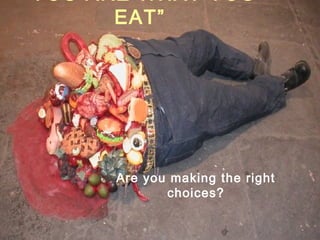
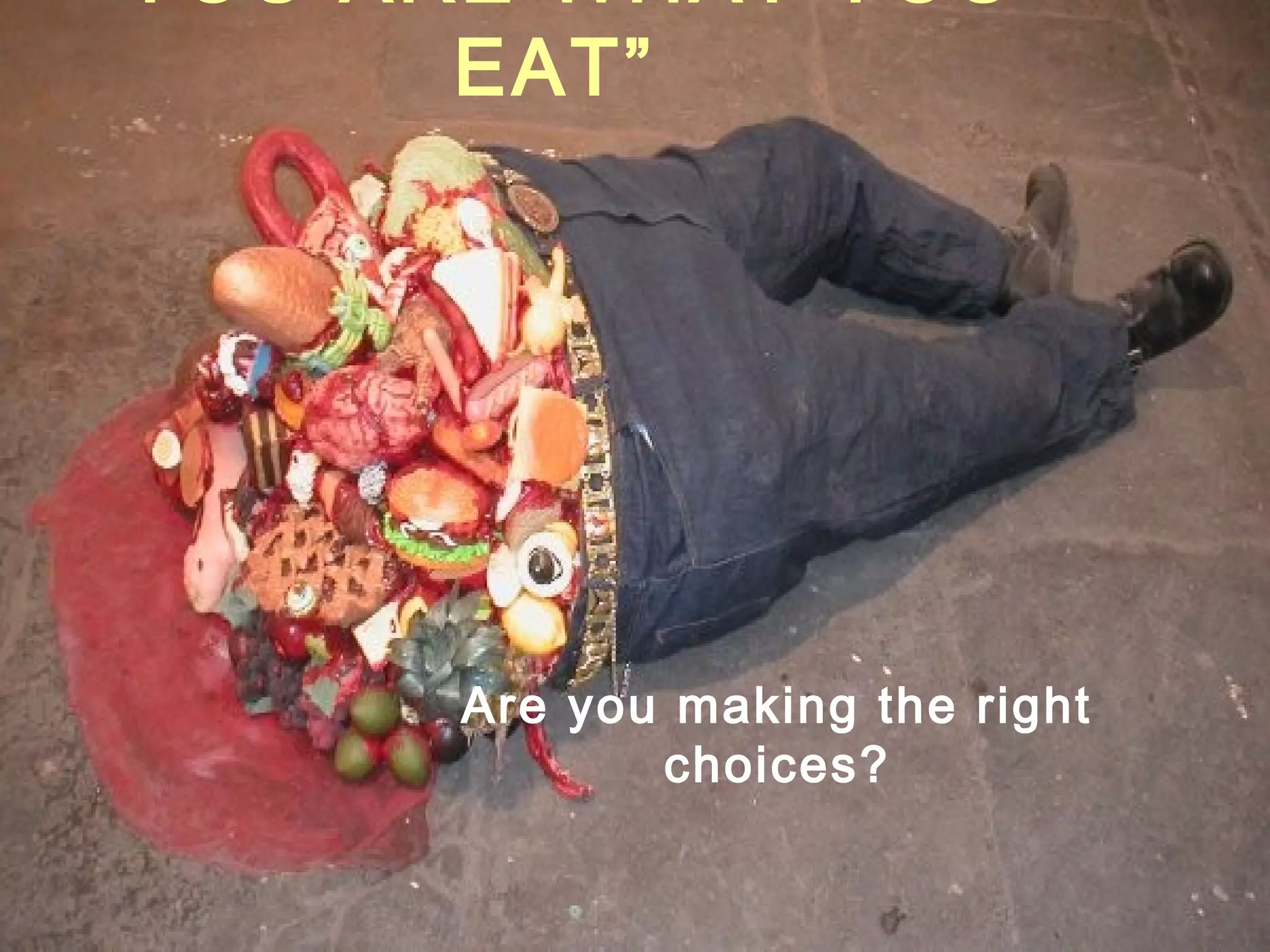
“YOU ARE WHAT YOU
       EAT”


      Are you making the right
             choices?
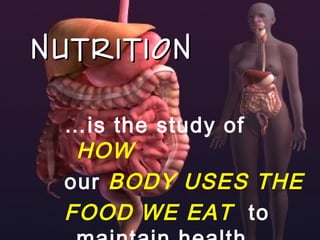
NUTRITION

 …is the study of
  HOW
 our BODY USES THE
 FOOD WE EAT to
Appetite vs.
 HUNGER
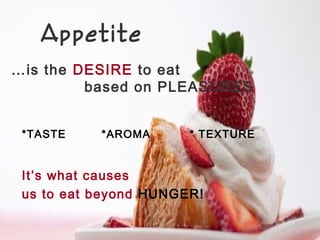
Appetite
…is the DESIRE to eat
         based on PLEASURES


 *TASTE    *AROMA      * TEXTURE


 It’s what causes
 us to eat beyond HUNGER!
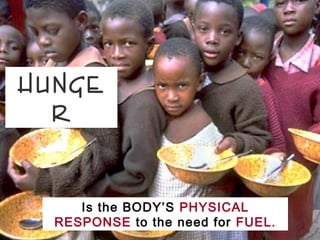
HUNGE
  R


     Is the BODY’S PHYSICAL
  RESPONSE to the need for FUEL.
“DIET”
A diet is a pattern of
 eating that includes
 what a person eats,
 how much a person
 eats, and when a
 person eats.
DIET
    is
     a
LIFESTYLE
Reasons Why we EAT

o   It (food) was there. Boredom
o   Social (family, holiday, outing)
o   Emotions (anger, sadness,
    happiness)
o   Someone Else
o   Nervousness
o   Stress
Factors that affect food
        choices
o Personal preference
      o Education
    o Convenience
         o Cost
       o Cultural
        o Social
      o Religious
 o Availability/Variety
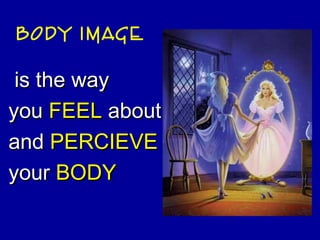
BODY IMAGE

 is the way
you FEEL about
and PERCIEVE
your BODY
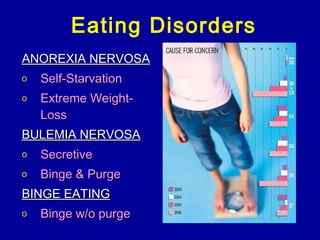
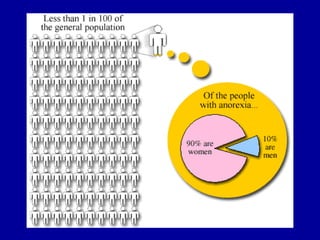
Eating Disorders
ANOREXIA NERVOSA
o   Self-Starvation
o   Extreme Weight-
    Loss
BULEMIA NERVOSA
o   Secretive
o   Binge & Purge
BINGE EATING
o   Binge w/o purge
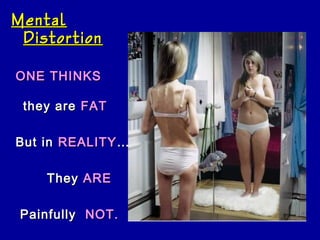
Mental
 Distortion

ONE THINKS

 they are FAT

But in REALITY …

    They ARE

 Painfully NOT.
Hollywood    Sicklywood


HelpMEwood   TreatMEwoo
             d
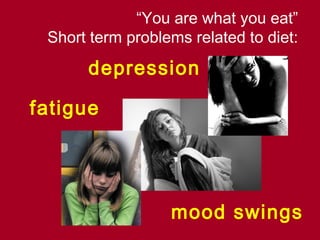
“You are what you eat”
 Short term problems related to diet:
      depression

fatigue


                  mood swings
“You are what you eat”
LONG term problems related to diet:
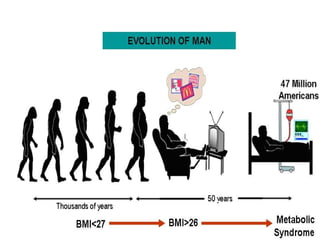
 Obesity
 Heart disease
 Diabetes
 High blood pressure
 Cirrhosis of the liver
 Cancer
 Cavities
 Dietary deficiency
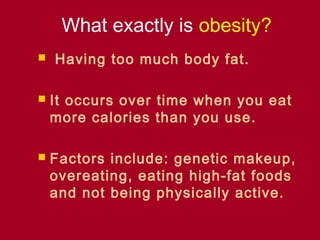
What exactly is obesity?
   Having too much body fat.

   It occurs over time when you eat
    more calories than you use.

   Factors include: genetic makeup,
    overeating, eating high-fat foods
    and not being physically active.
Top 10 Leading Causes of Death
Top 6 leading causes of death are
  all associated with obesity
 Coronary Heart Disease
 Cancer
 Stroke
 Chronic lower respiratory diseases
 Diabetes
 Accidents (unintentional injuries)
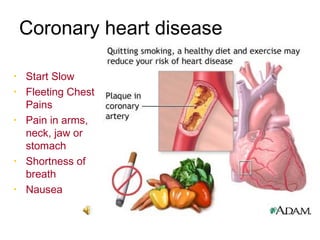
Coronary heart disease
Heart Attacks
•   Start Slow
•   Fleeting Chest
    Pains
•   Pain in arms,
    neck, jaw or
    stomach
•   Shortness of
    breath
•   Nausea
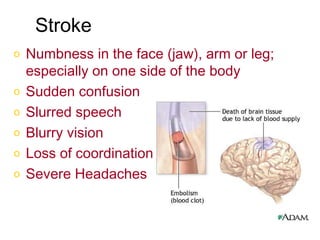
Stroke
o   Numbness in the face (jaw), arm or leg;
    especially on one side of the body
o   Sudden confusion
o   Slurred speech
o   Blurry vision
o   Loss of coordination
o   Severe Headaches
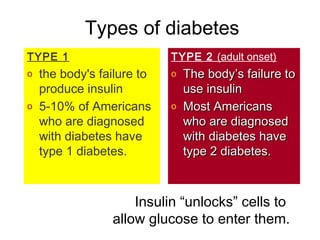
Types of diabetes
TYPE 1                      TYPE 2 (adult onset)
o   the body's failure to   o   The body’s failure to
    produce insulin             use insulin
o   5-10% of Americans      o   Most Americans
    who are diagnosed           who are diagnosed
    with diabetes have          with diabetes have
    type 1 diabetes.            type 2 diabetes.


                     Insulin “unlocks” cells to
                 allow glucose to enter them.
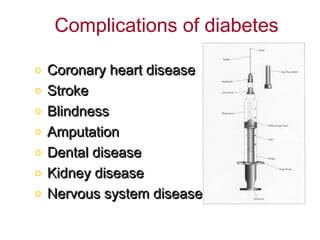
Complications of diabetes

o   Coronary heart disease
o   Stroke
o   Blindness
o   Amputation
o   Dental disease
o   Kidney disease
o   Nervous system disease
In conclusion


DIET   IS A


LIFESTYL
In conclusion


what you eat affects
your MIND, BODY
   & emotions
Yea… FOOD
choice
   is that
IMPORTAN
“you are what you eat”

    So   eat healthy
there is good in all of us
Eating bad habits

Eating bad habits

  • 1.
    “YOU ARE WHATYOU EAT” Are you making the right choices?
  • 2.
    NUTRITION …is thestudy of HOW our BODY USES THE FOOD WE EAT to
  • 3.
  • 4.
    Appetite …is the DESIREto eat based on PLEASURES *TASTE *AROMA * TEXTURE It’s what causes us to eat beyond HUNGER!
  • 5.
    HUNGE R Is the BODY’S PHYSICAL RESPONSE to the need for FUEL.
  • 6.
    “DIET” A diet isa pattern of eating that includes what a person eats, how much a person eats, and when a person eats.
  • 7.
    DIET is a LIFESTYLE
  • 8.
    Reasons Why weEAT o It (food) was there. Boredom o Social (family, holiday, outing) o Emotions (anger, sadness, happiness) o Someone Else o Nervousness o Stress
  • 9.
    Factors that affectfood choices o Personal preference o Education o Convenience o Cost o Cultural o Social o Religious o Availability/Variety
  • 10.
    BODY IMAGE isthe way you FEEL about and PERCIEVE your BODY
  • 11.
    Eating Disorders ANOREXIA NERVOSA o Self-Starvation o Extreme Weight- Loss BULEMIA NERVOSA o Secretive o Binge & Purge BINGE EATING o Binge w/o purge
  • 13.
    Mental Distortion ONE THINKS they are FAT But in REALITY … They ARE Painfully NOT.
  • 14.
    Hollywood Sicklywood HelpMEwood TreatMEwoo d
  • 15.
    “You are whatyou eat” Short term problems related to diet: depression fatigue mood swings
  • 16.
    “You are whatyou eat” LONG term problems related to diet:  Obesity  Heart disease  Diabetes  High blood pressure  Cirrhosis of the liver  Cancer  Cavities  Dietary deficiency
  • 17.
    What exactly isobesity?  Having too much body fat.  It occurs over time when you eat more calories than you use.  Factors include: genetic makeup, overeating, eating high-fat foods and not being physically active.
  • 18.
    Top 10 LeadingCauses of Death Top 6 leading causes of death are all associated with obesity  Coronary Heart Disease  Cancer  Stroke  Chronic lower respiratory diseases  Diabetes  Accidents (unintentional injuries)
  • 23.
    Coronary heart disease HeartAttacks • Start Slow • Fleeting Chest Pains • Pain in arms, neck, jaw or stomach • Shortness of breath • Nausea
  • 24.
    Stroke o Numbness in the face (jaw), arm or leg; especially on one side of the body o Sudden confusion o Slurred speech o Blurry vision o Loss of coordination o Severe Headaches
  • 25.
    Types of diabetes TYPE1 TYPE 2 (adult onset) o the body's failure to o The body’s failure to produce insulin use insulin o 5-10% of Americans o Most Americans who are diagnosed who are diagnosed with diabetes have with diabetes have type 1 diabetes. type 2 diabetes. Insulin “unlocks” cells to allow glucose to enter them.
  • 26.
    Complications of diabetes o Coronary heart disease o Stroke o Blindness o Amputation o Dental disease o Kidney disease o Nervous system disease
  • 27.
    In conclusion DIET IS A LIFESTYL
  • 28.
    In conclusion what youeat affects your MIND, BODY & emotions
  • 29.
    Yea… FOOD choice is that IMPORTAN
  • 30.
    “you are whatyou eat” So eat healthy there is good in all of us

Editor's Notes

  • #2 Give out m v. factsquiz
  • #3 We can’t address the issue of obesity without first taking an investigative look at our level of nutrition. You are what you eat – OK we have all heard that by now The question is what does it truly mean? – the impact of food on our health
  • #4 wrong
  • #5 psychological
  • #6 Physiological – biological – basic human need
  • #7 When in terms of “how often” you can think of diet as Who, what, when, where, why and how of eating – Not jenny craig, atkins, weight watchers or slim fast Key word is pattern If we are ever going to solve the obesity puzzle we have got to ask the right questions
  • #8 We ask What are we having for dinner?/ Where are we going to eat? When is it lunchtime? One simple (one-word) sentence question that is a favorite of five-year olds We also have to start asking why
  • #9 Common responses given other than hunger
  • #10 Seven factors
  • #11 Perception - “mirror, mirror” – distorted – funhouse mirrors
  • #12 20% of persons with eating disorders die
  • #16 % people who fit the medical definition of obese – that’s over 60 million people
  • #17 Not limited to morbidity or illness but mortality as well – researchers are continually improving on ways to determine obesity as cause of death
  • #23 The importance of moderation
  • #24 Every 5 years