EARTHQUAKE MANAGEMENT
A WAY TO REDUCE HIGH DEATH RATE
WHAT IS AN EARTHQUAKE?
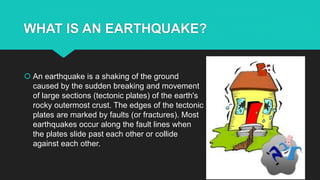
 An earthquake is a shaking of the ground
caused by the sudden breaking and movement
of large sections (tectonic plates) of the earth's
rocky outermost crust. The edges of the tectonic
plates are marked by faults (or fractures). Most
earthquakes occur along the fault lines when
the plates slide past each other or collide
against each other.
What causes them to happen?
An earthquake is caused by a sudden slip on a fault. The
tectonic plates are always slowly moving, but they get stuck at
their edges due to friction. When the stress on the edge
overcomes the friction, there is an earthquake that releases
energy in waves that travel through the earth's crust and cause
the shaking that we feel
Cont….
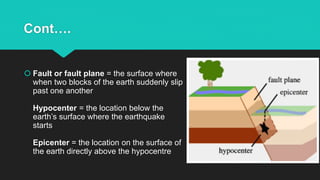
 Fault or fault plane = the surface where
when two blocks of the earth suddenly slip
past one another
Hypocenter = the location below the
earth’s surface where the earthquake
starts
Epicenter = the location on the surface of
the earth directly above the hypocentre
Earthquake prevention?
Short answer is NO. It’s a natural digester & we can’t prevent
that event can’t get any warning as we get from other
calamities!!!
BUT…….
we can take proper precautions & earthquake management to
minimize the losses & death!!
What is earthquake management?
Earthquake management is a setup of works or strategies
that can reduce damages by earthquake. There are 3
stages:
Before Earthquake
During Earthquake
After Earthquake
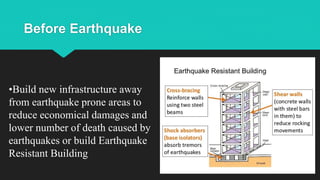
Before Earthquake
•Build new infrastructure away
from earthquake prone areas to
reduce economical damages and
lower number of death caused by
earthquakes or build Earthquake
Resistant Building
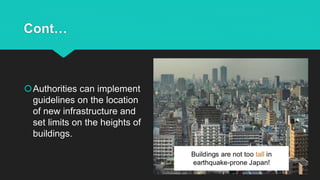
Cont…
Authorities can implement
guidelines on the location
of new infrastructure and
set limits on the heights of
buildings.
Cont…
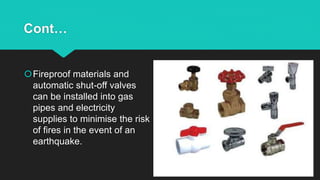
Fireproof materials and
automatic shut-off valves
can be installed into gas
pipes and electricity
supplies to minimise the risk
of fires in the event of an
earthquake.
Cont…
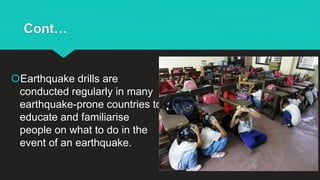
Earthquake drills are
conducted regularly in many
earthquake-prone countries to
educate and familiarise
people on what to do in the
event of an earthquake.
Cont…
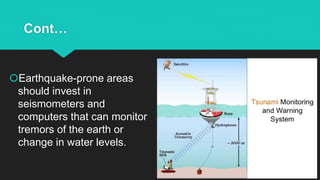
Earthquake-prone areas
should invest in
seismometers and
computers that can monitor
tremors of the earth or
change in water levels.
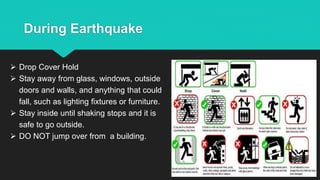
During Earthquake
 Drop Cover Hold
 Stay away from glass, windows, outside
doors and walls, and anything that could
fall, such as lighting fixtures or furniture.
 Stay inside until shaking stops and it is
safe to go outside.
 DO NOT jump over from a building.
Cont…
DO NOT waste time to take something with you.
DO NOT use the elevators, even if they are working.
If You are outdoors then find a stable area & stay there. Also, move
away from buildings, streetlights, and utility wires.
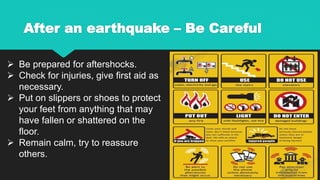
After an earthquake – Be Careful
 Be prepared for aftershocks.
 Check for injuries, give first aid as
necessary.
 Put on slippers or shoes to protect
your feet from anything that may
have fallen or shattered on the
floor.
 Remain calm, try to reassure
others.
Con..
Check gas, water, and electric lines.
Check for fire and take appropriate actions.
Ensure emergency medical treatment.
be smart about Earthquake safety
Thank you all 

Earthquake management

  • 1.
    EARTHQUAKE MANAGEMENT A WAYTO REDUCE HIGH DEATH RATE
  • 2.
    WHAT IS ANEARTHQUAKE?  An earthquake is a shaking of the ground caused by the sudden breaking and movement of large sections (tectonic plates) of the earth's rocky outermost crust. The edges of the tectonic plates are marked by faults (or fractures). Most earthquakes occur along the fault lines when the plates slide past each other or collide against each other.
  • 3.
    What causes themto happen? An earthquake is caused by a sudden slip on a fault. The tectonic plates are always slowly moving, but they get stuck at their edges due to friction. When the stress on the edge overcomes the friction, there is an earthquake that releases energy in waves that travel through the earth's crust and cause the shaking that we feel
  • 4.
    Cont….  Fault orfault plane = the surface where when two blocks of the earth suddenly slip past one another Hypocenter = the location below the earth’s surface where the earthquake starts Epicenter = the location on the surface of the earth directly above the hypocentre
  • 5.
    Earthquake prevention? Short answeris NO. It’s a natural digester & we can’t prevent that event can’t get any warning as we get from other calamities!!! BUT……. we can take proper precautions & earthquake management to minimize the losses & death!!
  • 6.
    What is earthquakemanagement? Earthquake management is a setup of works or strategies that can reduce damages by earthquake. There are 3 stages: Before Earthquake During Earthquake After Earthquake
  • 7.
    Before Earthquake •Build newinfrastructure away from earthquake prone areas to reduce economical damages and lower number of death caused by earthquakes or build Earthquake Resistant Building
  • 8.
    Cont… Authorities can implement guidelineson the location of new infrastructure and set limits on the heights of buildings.
  • 9.
    Cont… Fireproof materials and automaticshut-off valves can be installed into gas pipes and electricity supplies to minimise the risk of fires in the event of an earthquake.
  • 10.
    Cont… Earthquake drills are conductedregularly in many earthquake-prone countries to educate and familiarise people on what to do in the event of an earthquake.
  • 11.
    Cont… Earthquake-prone areas should investin seismometers and computers that can monitor tremors of the earth or change in water levels.
  • 12.
    During Earthquake  DropCover Hold  Stay away from glass, windows, outside doors and walls, and anything that could fall, such as lighting fixtures or furniture.  Stay inside until shaking stops and it is safe to go outside.  DO NOT jump over from a building.
  • 13.
    Cont… DO NOT wastetime to take something with you. DO NOT use the elevators, even if they are working. If You are outdoors then find a stable area & stay there. Also, move away from buildings, streetlights, and utility wires.
  • 14.
    After an earthquake– Be Careful  Be prepared for aftershocks.  Check for injuries, give first aid as necessary.  Put on slippers or shoes to protect your feet from anything that may have fallen or shattered on the floor.  Remain calm, try to reassure others.
  • 15.
    Con.. Check gas, water,and electric lines. Check for fire and take appropriate actions. Ensure emergency medical treatment.
  • 16.
    be smart aboutEarthquake safety Thank you all 