Introduction to
Earthquakes
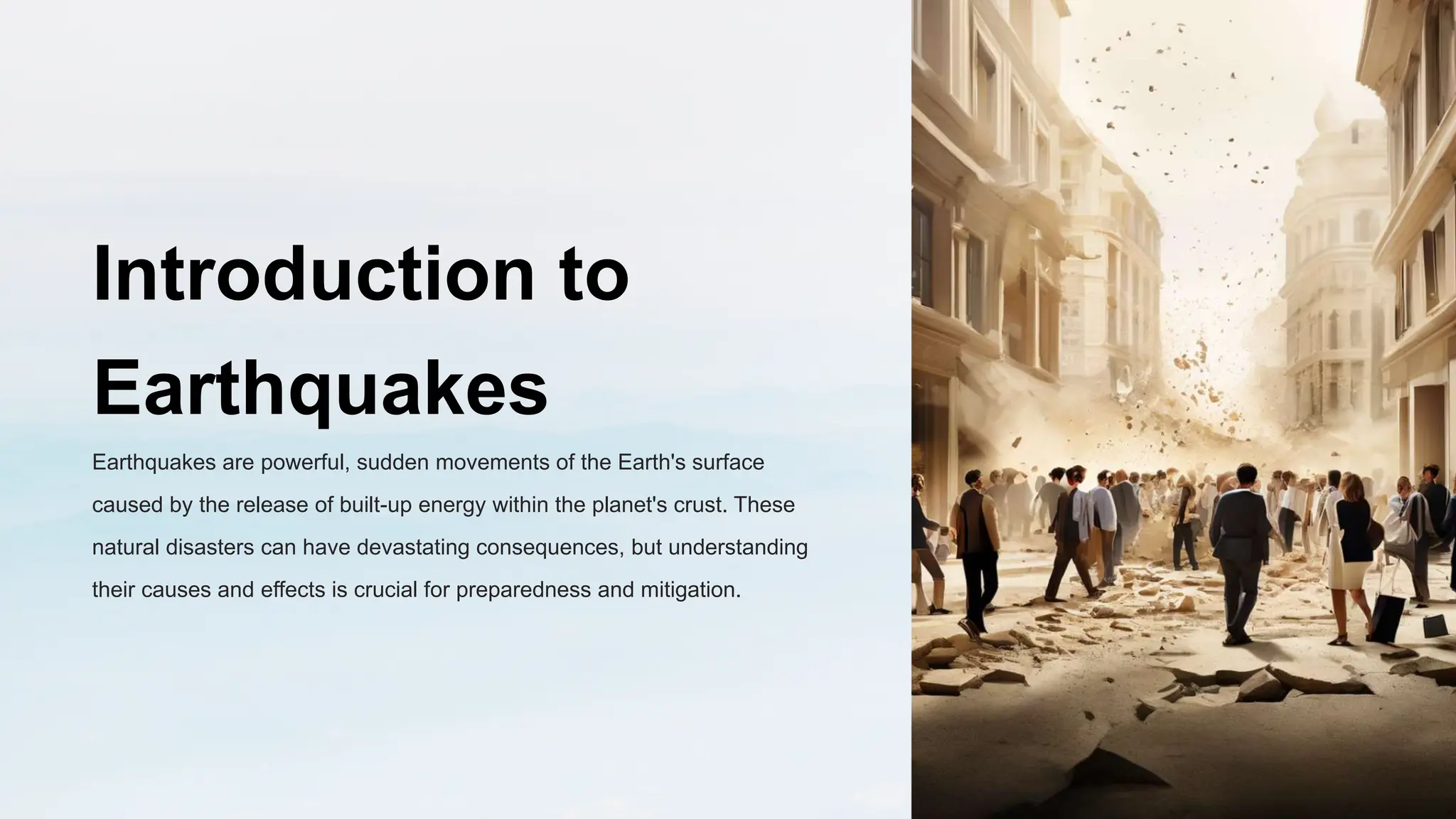
Earthquakes are powerful, sudden movements of the Earth's surface
caused by the release of built-up energy within the planet's crust. These
natural disasters can have devastating consequences, but understanding
their causes and effects is crucial for preparedness and mitigation.
What are Earthquakes?
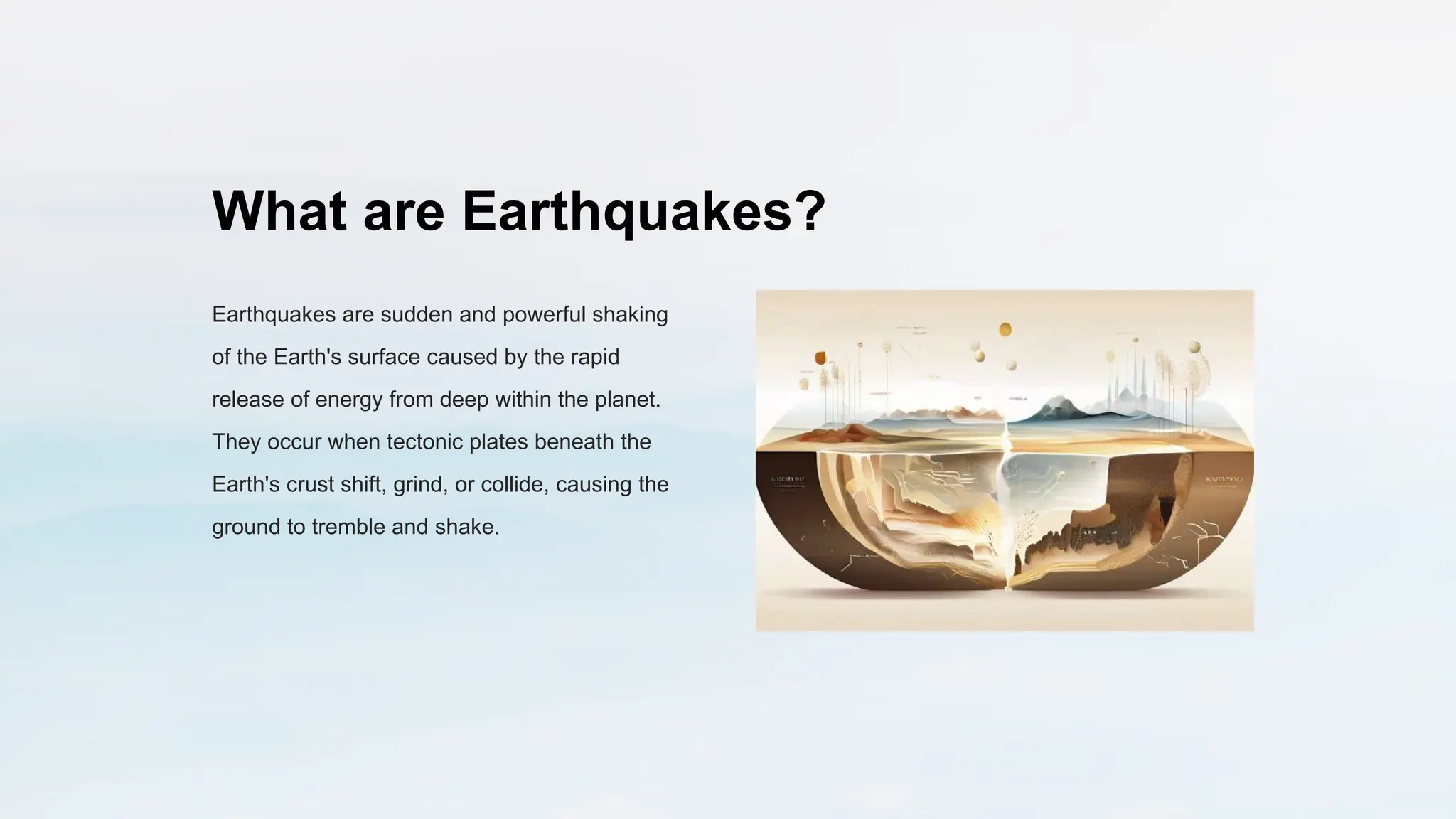
Earthquakes are sudden and powerful shaking
of the Earth's surface caused by the rapid
release of energy from deep within the planet.
They occur when tectonic plates beneath the
Earth's crust shift, grind, or collide, causing the
ground to tremble and shake.
Causes of
Earthquakes
1 Tectonic Plate
Movement
Earthquakes are primarily caused by the
movement and collision of Earth's tectonic
plates. This creates stresses that build up
and are suddenly released, shaking the
ground.
2 Fault Lines
Earthquakes often occur near fault lines,
where tectonic plates meet. Sudden slips
or shifts along these fault lines release
enormous amounts of energy, resulting in
earthquakes.
3 Volcanic Activity
Earthquakes can also be triggered by
volcanic activity, as magma movement and
eruptions can cause the ground to shake
and tremble.
4 Human Activity
In some cases, human activities like
drilling, mining, and reservoir filling can
induce small earthquakes by altering the
stress levels in the Earth's crust.
1 Tectonic Plate
Movement
Earthquakes are primarily caused by the
movement and collision of Earth's tectonic
plates. This creates stresses that build up
and are suddenly released, shaking the
ground.
2 Fault Lines
Earthquakes often occur near fault lines,
where tectonic plates meet. Sudden slips
or shifts along these fault lines release
enormous amounts of energy, resulting in
earthquakes.
3 Volcanic Activity
Earthquakes can also be triggered by
volcanic activity, as magma movement and
eruptions can cause the ground to shake
and tremble.
4 Human Activity
In some cases, human activities like
drilling, mining, and reservoir filling can
induce small earthquakes by altering the
stress levels in the Earth's crust.
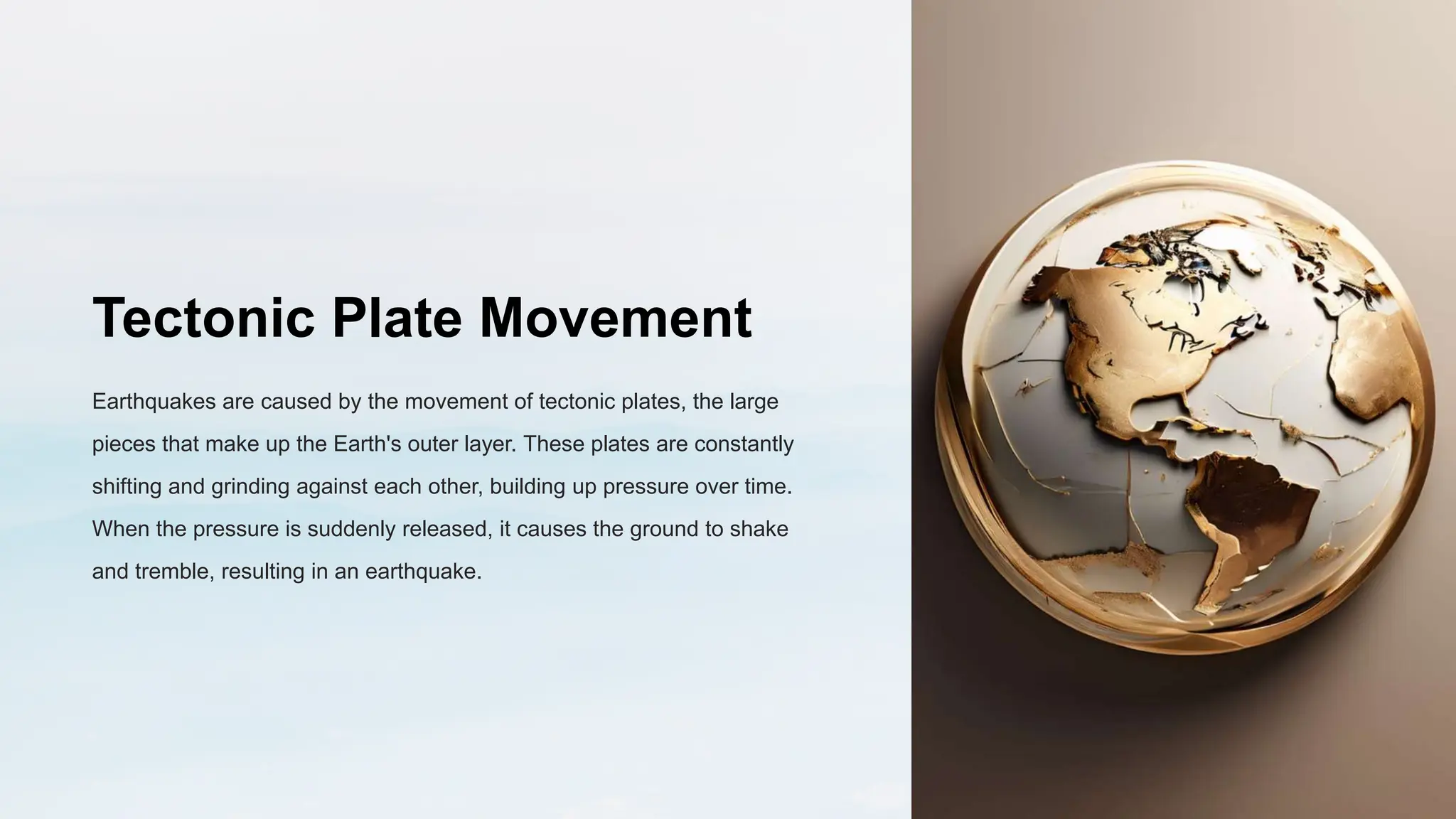
Tectonic Plate Movement
Earthquakes are caused by the movement of tectonic plates, the large
pieces that make up the Earth's outer layer. These plates are constantly
shifting and grinding against each other, building up pressure over time.
When the pressure is suddenly released, it causes the ground to shake
and tremble, resulting in an earthquake.
Fault Lines and
Earthquakes
Tectonic Fault
Lines
Earthquakes are caused by the
sudden movement of tectonic
plates along fault lines in the
Earth's crust. These fractures
in the ground can extend for
hundreds of miles and mark
the boundaries between
different plates.
Stress Build-Up
As the plates move, stress
builds up along the fault lines.
When this stress is suddenly
released, it causes the ground
to shake and tremble, resulting
in an earthquake.
Plate Tectonics
Earthquakes are closely linked
to the movement of tectonic
plates, which are constantly
shifting and colliding. The
boundaries between these
plates are where most
earthquakes occur.
Magnitude and Intensity of
Earthquakes
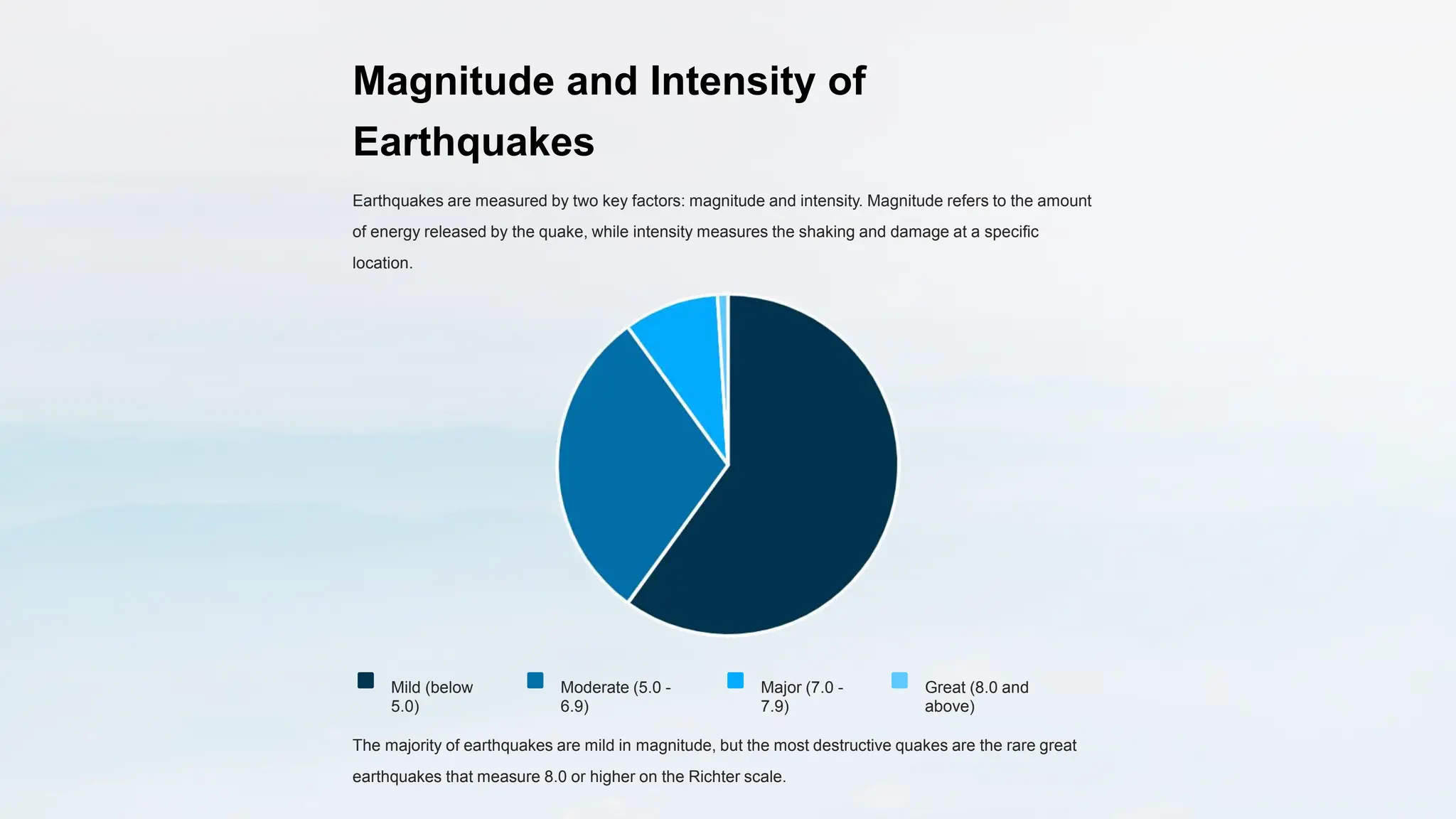
Earthquakes are measured by two key factors: magnitude and intensity. Magnitude refers to the amount
of energy released by the quake, while intensity measures the shaking and damage at a specific
location.
Mild (below
5.0)
Moderate (5.0 -
6.9)
Major (7.0 -
7.9)
Great (8.0 and
above)
The majority of earthquakes are mild in magnitude, but the most destructive quakes are the rare great
earthquakes that measure 8.0 or higher on the Richter scale.
Effects of
Earthquakes
Structural Damage
Earthquakes can cause severe damage to
buildings, bridges, and other infrastructure,
leading to collapse and casualties.
Loss of Life
Powerful earthquakes can claim many lives,
either directly through building collapses or
indirectly through related events like fires and
landslides.
Disruption of
Services
Earthquakes can disrupt essential services
like electricity, water, and transportation,
hampering rescue and recovery efforts.
Environmental
Impacts
Earthquakes can trigger landslides, tsunamis,
and liquefaction, causing widespread
environmental damage and further
endangering lives.
Damage to Buildings and
Infrastructure
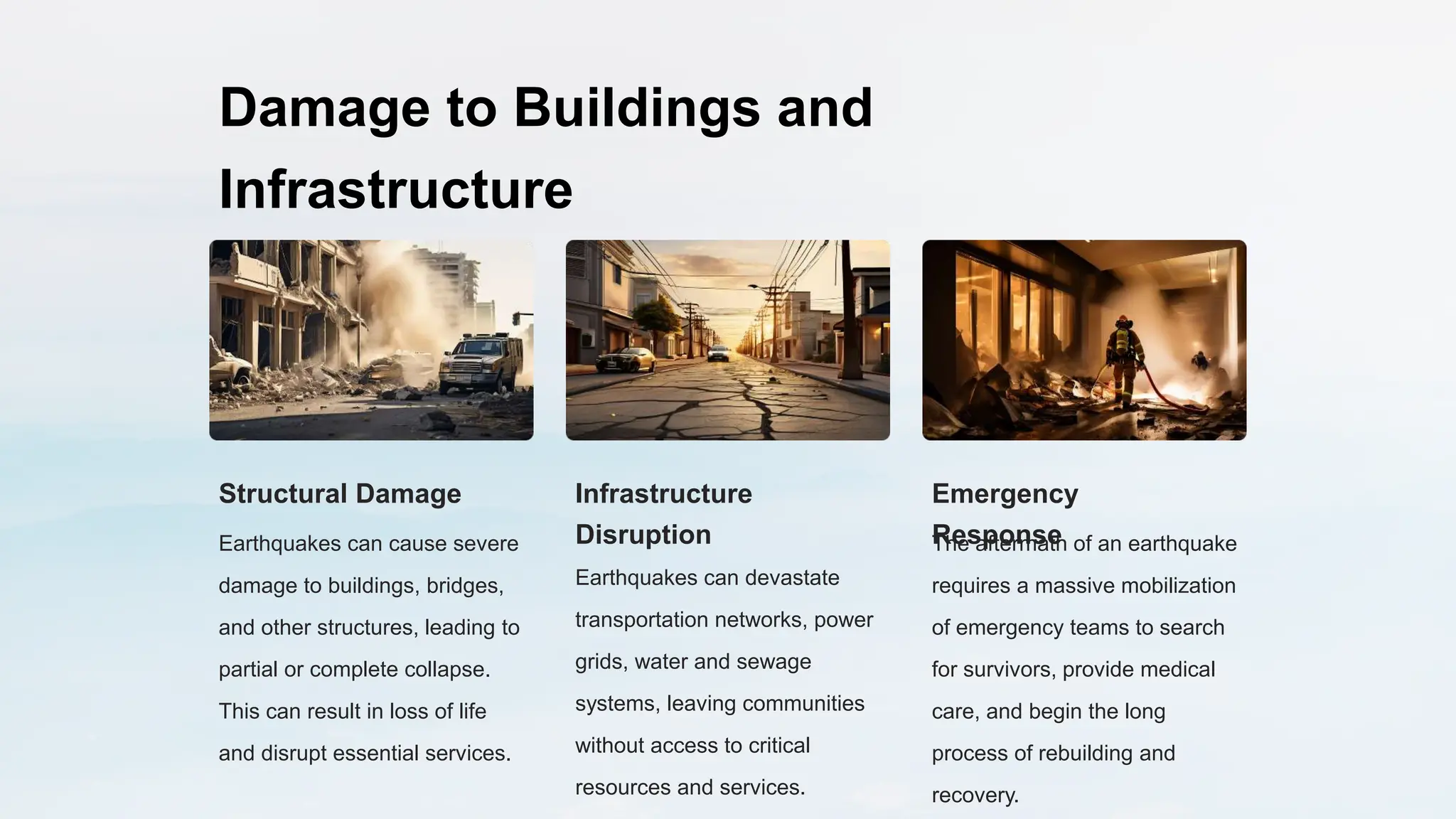
Structural Damage
Earthquakes can cause severe
damage to buildings, bridges,
and other structures, leading to
partial or complete collapse.
This can result in loss of life
and disrupt essential services.
Infrastructure
Disruption
Earthquakes can devastate
transportation networks, power
grids, water and sewage
systems, leaving communities
without access to critical
resources and services.
Emergency
Response
The aftermath of an earthquake
requires a massive mobilization
of emergency teams to search
for survivors, provide medical
care, and begin the long
process of rebuilding and
recovery.
Tsunamis and
Earthquakes
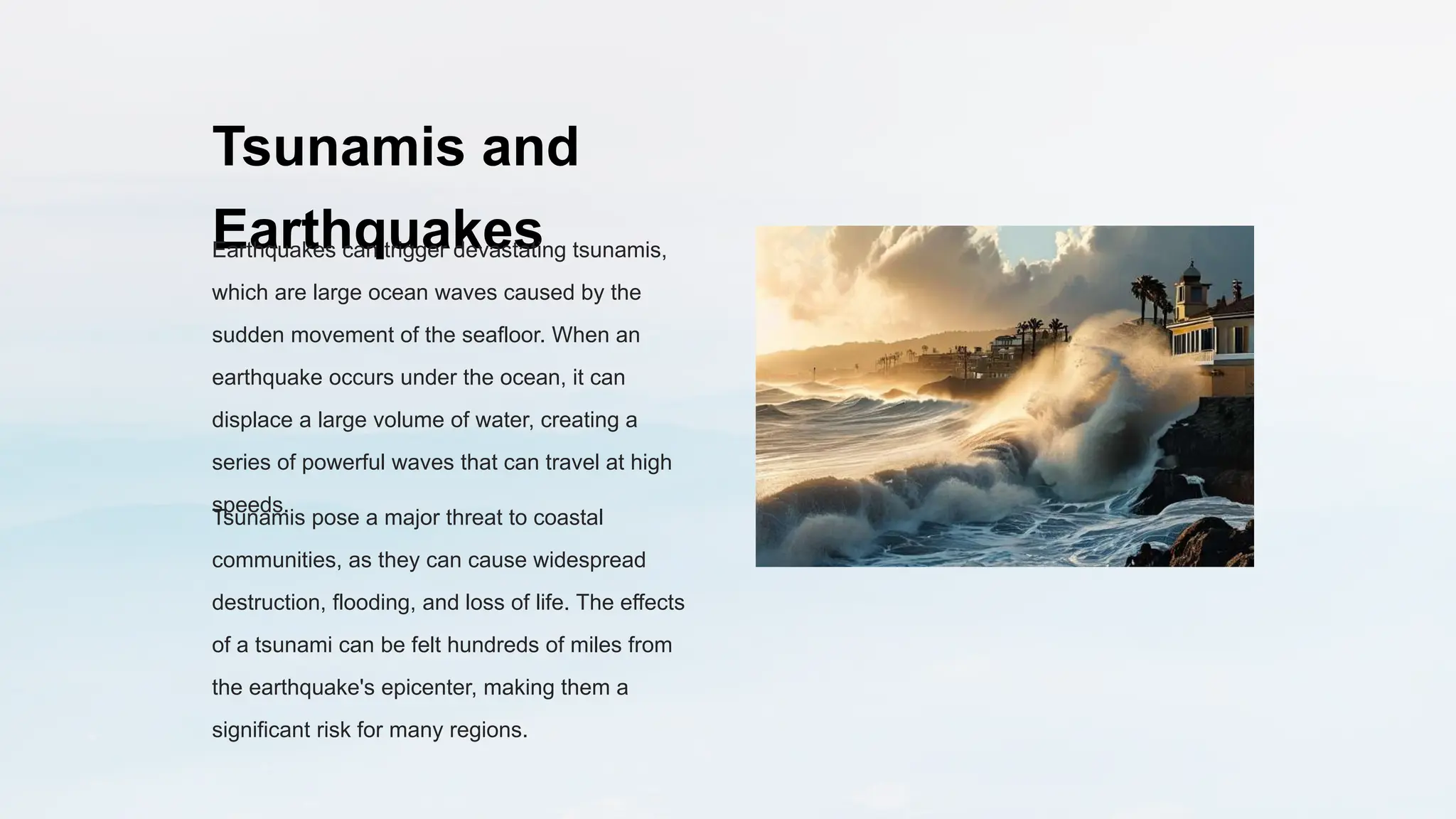
Earthquakes can trigger devastating tsunamis,
which are large ocean waves caused by the
sudden movement of the seafloor. When an
earthquake occurs under the ocean, it can
displace a large volume of water, creating a
series of powerful waves that can travel at high
speeds.
Tsunamis pose a major threat to coastal
communities, as they can cause widespread
destruction, flooding, and loss of life. The effects
of a tsunami can be felt hundreds of miles from
the earthquake's epicenter, making them a
significant risk for many regions.
Earthquake Preparedness and
Safety
Be Prepared
Develop a family
emergency plan,
identify safe spots in
your home, and
stock up on
essential supplies
like water, food, and
first aid kits.
During an
Earthquake
If indoors, drop,
cover, and hold on.
Avoid windows,
mirrors, and heavy
objects that could
fall. If outdoors,
move away from
buildings, trees, and
power lines.
After an
Earthquake
Check for injuries
and damage, turn
off utilities, and be
prepared for
aftershocks. Listen
to local authorities
and follow their
instructions for
evacuation and
safety.
Community
Preparedness
Participate in
earthquake drills,
volunteer with local
disaster response
teams, and support
efforts to improve
infrastructure and
building codes.

Introduction-to-Earthquakes and all.pptx

  • 1.
    Introduction to Earthquakes Earthquakes arepowerful, sudden movements of the Earth's surface caused by the release of built-up energy within the planet's crust. These natural disasters can have devastating consequences, but understanding their causes and effects is crucial for preparedness and mitigation.
  • 2.
    What are Earthquakes? Earthquakesare sudden and powerful shaking of the Earth's surface caused by the rapid release of energy from deep within the planet. They occur when tectonic plates beneath the Earth's crust shift, grind, or collide, causing the ground to tremble and shake.
  • 3.
    Causes of Earthquakes 1 TectonicPlate Movement Earthquakes are primarily caused by the movement and collision of Earth's tectonic plates. This creates stresses that build up and are suddenly released, shaking the ground. 2 Fault Lines Earthquakes often occur near fault lines, where tectonic plates meet. Sudden slips or shifts along these fault lines release enormous amounts of energy, resulting in earthquakes. 3 Volcanic Activity Earthquakes can also be triggered by volcanic activity, as magma movement and eruptions can cause the ground to shake and tremble. 4 Human Activity In some cases, human activities like drilling, mining, and reservoir filling can induce small earthquakes by altering the stress levels in the Earth's crust.
  • 4.
    1 Tectonic Plate Movement Earthquakesare primarily caused by the movement and collision of Earth's tectonic plates. This creates stresses that build up and are suddenly released, shaking the ground. 2 Fault Lines Earthquakes often occur near fault lines, where tectonic plates meet. Sudden slips or shifts along these fault lines release enormous amounts of energy, resulting in earthquakes. 3 Volcanic Activity Earthquakes can also be triggered by volcanic activity, as magma movement and eruptions can cause the ground to shake and tremble. 4 Human Activity In some cases, human activities like drilling, mining, and reservoir filling can induce small earthquakes by altering the stress levels in the Earth's crust.
  • 5.
    Tectonic Plate Movement Earthquakesare caused by the movement of tectonic plates, the large pieces that make up the Earth's outer layer. These plates are constantly shifting and grinding against each other, building up pressure over time. When the pressure is suddenly released, it causes the ground to shake and tremble, resulting in an earthquake.
  • 6.
    Fault Lines and Earthquakes TectonicFault Lines Earthquakes are caused by the sudden movement of tectonic plates along fault lines in the Earth's crust. These fractures in the ground can extend for hundreds of miles and mark the boundaries between different plates. Stress Build-Up As the plates move, stress builds up along the fault lines. When this stress is suddenly released, it causes the ground to shake and tremble, resulting in an earthquake. Plate Tectonics Earthquakes are closely linked to the movement of tectonic plates, which are constantly shifting and colliding. The boundaries between these plates are where most earthquakes occur.
  • 7.
    Magnitude and Intensityof Earthquakes Earthquakes are measured by two key factors: magnitude and intensity. Magnitude refers to the amount of energy released by the quake, while intensity measures the shaking and damage at a specific location. Mild (below 5.0) Moderate (5.0 - 6.9) Major (7.0 - 7.9) Great (8.0 and above) The majority of earthquakes are mild in magnitude, but the most destructive quakes are the rare great earthquakes that measure 8.0 or higher on the Richter scale.
  • 8.
    Effects of Earthquakes Structural Damage Earthquakescan cause severe damage to buildings, bridges, and other infrastructure, leading to collapse and casualties. Loss of Life Powerful earthquakes can claim many lives, either directly through building collapses or indirectly through related events like fires and landslides. Disruption of Services Earthquakes can disrupt essential services like electricity, water, and transportation, hampering rescue and recovery efforts. Environmental Impacts Earthquakes can trigger landslides, tsunamis, and liquefaction, causing widespread environmental damage and further endangering lives.
  • 9.
    Damage to Buildingsand Infrastructure Structural Damage Earthquakes can cause severe damage to buildings, bridges, and other structures, leading to partial or complete collapse. This can result in loss of life and disrupt essential services. Infrastructure Disruption Earthquakes can devastate transportation networks, power grids, water and sewage systems, leaving communities without access to critical resources and services. Emergency Response The aftermath of an earthquake requires a massive mobilization of emergency teams to search for survivors, provide medical care, and begin the long process of rebuilding and recovery.
  • 10.
    Tsunamis and Earthquakes Earthquakes cantrigger devastating tsunamis, which are large ocean waves caused by the sudden movement of the seafloor. When an earthquake occurs under the ocean, it can displace a large volume of water, creating a series of powerful waves that can travel at high speeds. Tsunamis pose a major threat to coastal communities, as they can cause widespread destruction, flooding, and loss of life. The effects of a tsunami can be felt hundreds of miles from the earthquake's epicenter, making them a significant risk for many regions.
  • 11.
    Earthquake Preparedness and Safety BePrepared Develop a family emergency plan, identify safe spots in your home, and stock up on essential supplies like water, food, and first aid kits. During an Earthquake If indoors, drop, cover, and hold on. Avoid windows, mirrors, and heavy objects that could fall. If outdoors, move away from buildings, trees, and power lines. After an Earthquake Check for injuries and damage, turn off utilities, and be prepared for aftershocks. Listen to local authorities and follow their instructions for evacuation and safety. Community Preparedness Participate in earthquake drills, volunteer with local disaster response teams, and support efforts to improve infrastructure and building codes.