DYSFUNCTIONAL UTERINE
BLEEDING
By,
Nazni Nazar
2009 MBBS
ABNORMAL UTERINE
BLEEDING
• The menstrual bleed that is abnormally heavy or
abnormal in timing
• Assessment-
• Causes-
1. DUB
2. Pelvic pathology
3. Pregnancy related conditions
4. Coagulation &hematological problems
5. Medical problems
6. iatrogenic
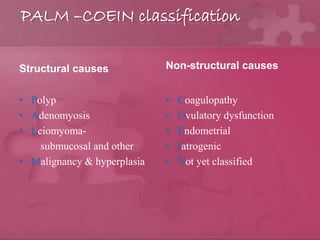
PALM –COEIN classification
Structural causes
• Polyp
• Adenomyosis
• Leiomyoma-
submucosal and other
• Malignancy & hyperplasia
Non-structural causes
• Coagulopathy
• Ovulatory dysfunction
• Endometrial
• Iatrogenic
• Not yet classified
CLINICAL TYPES
1. Menorrhagia (hypermenorrhea): prolonged (>7
days) and/or excessive (>80ml) uterine bleeding
occurring at REGULAR intervals.
[Fibroids,hematological problems]
2. Polymenorrhea: shortened cycles- uterine
bleeding at regular intervals of <21
days.[Endometriosis, PID]
3. Oligomenorrhea: uterine bleeding at regular
intervals from 6weeks to 6 months.[hormonal
CLINICAL TYPES….
4. Metorrhagia: acyclical and intermenstrual
uterine bleeding.[surface lesions-cervical
polyps,erosions,cervical ca]
5. Menometorrhagia: uterine bleeding that is
prolonged and occurs at completely irregular
intervals.
DYSFUNCTIONAL UTERINE
BLEEDING
• Abnormal uterine bleeding with no demonstrable
organic cause, genital or extragenital.
• Diagnosis by exclusion
• abnormal releasing of sex hormones
50% at near menopause
20% in adolescents
 30% at reproductive age
pathophysiology
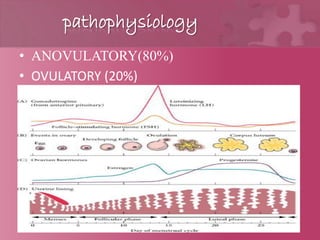
• ANOVULATORY(80%)
• OVULATORY (20%)
Anovulatory DUB
• Irregular cycle,short cycles with scanty flow or
period of amenorrhoea
• Due to alteration in hypothalamic-pituitary axis
corpus luteum not formed
failure of the cyclical secretion of progesterone
continuous unopposed production of estradiol
stimulates overgrowth of the endometrium
endometrium grows thick ,outgrows its blood supply
necrosis and irregular bleeding
In adolescents and in perimenopausal women,
the bleeding may be triggered by estrogen
withdrawal
• Threshold bleeding-low estrogen and atropic
endometrium[lactation,menopause]
• Metropathia hemorrhagica-periods of
amenorrhoea followed by prolonged heavy
bleeding[hyperestrogenism]
Ovulatory DUB:
• Presents as menorrhagia
• A less common cause of DUB
• caused by a defect in local endometrial
hemostasis
• Absence of progesterone Alterations in
prostaglandin production, with more PGE2 PGI2
[vasodilation and antiplatelet] and less
PGF2[vasoconstriction] , increased
fibrinolytic activity bleeding
• Irregular ripening-premenstrual spotting
• Irregular shedding-prolonged mensus and
postmenstrual spotting.
• IUCD insertion
• Following sterlization operation
Adolescent age group
• Prevalance -50%
• Hypothalamic-pituitary axis is still immature
• Estrogen withdrawal bleeding-as it takes time
to establish positive feedback and lh surge
well.
• An irregular period with prolonged excessive
flow is suggestive of DUB
REPRODUCTIVE AGE GROUP
• DUB less common
• H/o heavy regular cyclical bleedingover
several consecutive cycles.
• Intermenstrual bleeding-polyp
• Post coital bleeding-premalignancy
Perimenopausal age group
• Anovulatory DUB more common
• Metropathia
Dysfunctional uterine bleeding

Dysfunctional uterine bleeding

  • 1.
  • 2.
    ABNORMAL UTERINE BLEEDING • Themenstrual bleed that is abnormally heavy or abnormal in timing • Assessment- • Causes- 1. DUB 2. Pelvic pathology 3. Pregnancy related conditions 4. Coagulation &hematological problems 5. Medical problems 6. iatrogenic
  • 3.
    PALM –COEIN classification Structuralcauses • Polyp • Adenomyosis • Leiomyoma- submucosal and other • Malignancy & hyperplasia Non-structural causes • Coagulopathy • Ovulatory dysfunction • Endometrial • Iatrogenic • Not yet classified
  • 4.
    CLINICAL TYPES 1. Menorrhagia(hypermenorrhea): prolonged (>7 days) and/or excessive (>80ml) uterine bleeding occurring at REGULAR intervals. [Fibroids,hematological problems] 2. Polymenorrhea: shortened cycles- uterine bleeding at regular intervals of <21 days.[Endometriosis, PID] 3. Oligomenorrhea: uterine bleeding at regular intervals from 6weeks to 6 months.[hormonal
  • 5.
    CLINICAL TYPES…. 4. Metorrhagia:acyclical and intermenstrual uterine bleeding.[surface lesions-cervical polyps,erosions,cervical ca] 5. Menometorrhagia: uterine bleeding that is prolonged and occurs at completely irregular intervals.
  • 6.
    DYSFUNCTIONAL UTERINE BLEEDING • Abnormaluterine bleeding with no demonstrable organic cause, genital or extragenital. • Diagnosis by exclusion • abnormal releasing of sex hormones 50% at near menopause 20% in adolescents  30% at reproductive age
  • 7.
  • 8.
    Anovulatory DUB • Irregularcycle,short cycles with scanty flow or period of amenorrhoea • Due to alteration in hypothalamic-pituitary axis corpus luteum not formed failure of the cyclical secretion of progesterone continuous unopposed production of estradiol stimulates overgrowth of the endometrium endometrium grows thick ,outgrows its blood supply necrosis and irregular bleeding
  • 9.
    In adolescents andin perimenopausal women, the bleeding may be triggered by estrogen withdrawal • Threshold bleeding-low estrogen and atropic endometrium[lactation,menopause] • Metropathia hemorrhagica-periods of amenorrhoea followed by prolonged heavy bleeding[hyperestrogenism]
  • 10.
    Ovulatory DUB: • Presentsas menorrhagia • A less common cause of DUB • caused by a defect in local endometrial hemostasis • Absence of progesterone Alterations in prostaglandin production, with more PGE2 PGI2 [vasodilation and antiplatelet] and less PGF2[vasoconstriction] , increased fibrinolytic activity bleeding
  • 11.
    • Irregular ripening-premenstrualspotting • Irregular shedding-prolonged mensus and postmenstrual spotting. • IUCD insertion • Following sterlization operation
  • 12.
    Adolescent age group •Prevalance -50% • Hypothalamic-pituitary axis is still immature • Estrogen withdrawal bleeding-as it takes time to establish positive feedback and lh surge well. • An irregular period with prolonged excessive flow is suggestive of DUB
  • 13.
    REPRODUCTIVE AGE GROUP •DUB less common • H/o heavy regular cyclical bleedingover several consecutive cycles. • Intermenstrual bleeding-polyp • Post coital bleeding-premalignancy
  • 14.
    Perimenopausal age group •Anovulatory DUB more common • Metropathia