Dysfunctional Uterine
Bleeding
Introduction
•Dysfunctional uterine bleeding (DUB) is
defined as ABNORMAL uterine bleeding
with no demonstrable organic cause,
genital or extragenital.
•Diagnosis of EXCLUSION
•Patients present with “abnormal uterine
bleeding”
•DUB occurs most often shortly after
menarche and at the end of the
reproductive years.
–20% of cases are adolescents
–50% of cases in 40-50 year olds
Introduction
• DUB is most frequently associated with chronic
anovulation.
• Heavy menses, prolonged menses, or frequent
irregular bleeding are the most common
complaints.
• Up to 20% of women will experience irregular
cycles in their lifetimes.
Definitions
• Menorrhagia (hypermenorrhea): prolonged (>7
days) and/or excessive (>80cc) uterine bleeding
occurring at REGULAR intervals.
• Metorrhagia: uterine bleeding occurring at
completely irregular but frequent intervals, the
amount being variable.
• Menometorrhagia: uterine bleeding that is
prolonged AND occurs at completely irregular
intervals.
• Polymenorrhea: uterine bleeding at regular
intervals of less than 21 days.
• Intermenstrual bleeding: bleeding of variable
amounts occurring between regular menstrual
Definitions
• Oligomenorrhea: uterine bleeding at regular
intervals from 35 days to 6 months.
• Amenorrhea: absence of uterine bleeding for > 6
months.
• Postmenopausal bleeding: uterine bleeding that
occurs more than 1 year after the last menses in a
woman with ovarian failure.
Normal Menstruation
• Life Cycle
– Menarche
– 5-7 years of relatively long cycles
– Increasing regularity of cycles
– In the 40’s cycles begin to increase in length with
increasing episodes of anovulation (2-8 years
“perimenopause”)
– Menopause (average age = 52)
• Characteristics
– By age 25, 40% of women have cycles between 25-28
days
– Age 25-35, 60% of women have 25-28 day cycles.
– Overall 15% have 28 day cycles
– .5% have cycles < 21days
– .9% have cycles >35 days
Normal Menstruation
• Results from fluctuations in the circulating levels
of estrogen and progesterone.
• Estrogen causes increased blood flow to the
endometrium
• A significant correlation exists between plasma
Estradiol and endometrial blood flow, with both
increasing in the days preceding ovulation.
• These vasodilatory and vasoconstrictive effects
are mediated by substances like:
– acetylcholine
– vasopressin
– endothelin
– histamine
Normal Menstruation
• Estradiol and progesterone levels decrease several
days prior to the onset of menses.
– Endometrial blood flow decreases
– Endometrial height decreases and vascular stasis occurs.
– Tissue ischemia occurs.
– Arterial relaxation
– Sloughing of the endometrium.
– Uterine bleeding occurs
• In women with DUB secondary to anovulation,
endometrial blood flow is variable and follows no
orderly pattern
Cessation of Menses
• Two main mechanisms:
– Formation of the platelet plug
• important in the functional endometrium
– Prostaglandin dependent
vasoconstriction
• important in the basalis layer
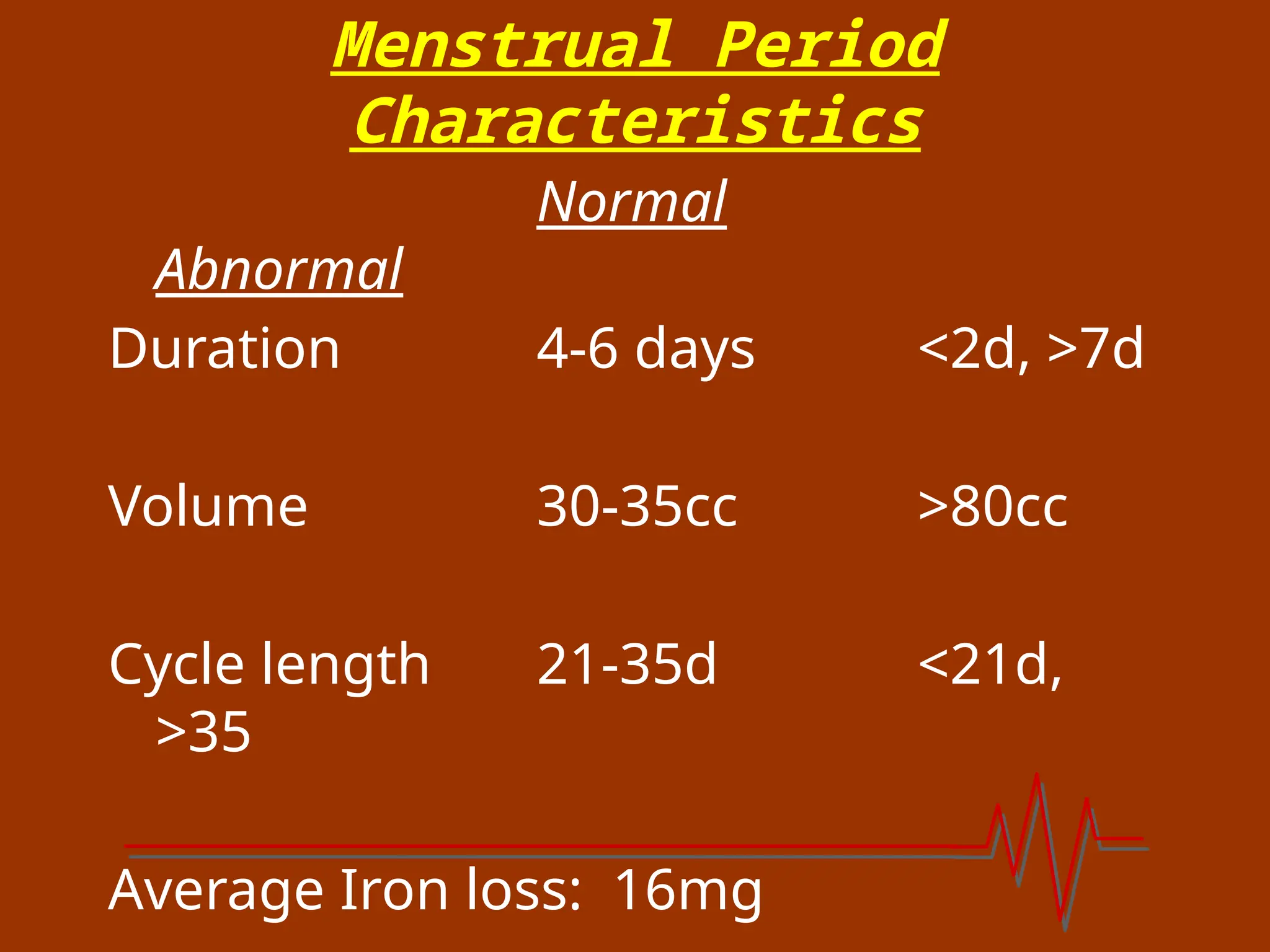
Menstrual Period
Characteristics
Normal
Abnormal
Duration 4-6 days <2d, >7d
Volume 30-35cc >80cc
Cycle length 21-35d <21d,
>35
Average Iron loss: 16mg
Pathophysiology
• Two types: anovulatory and ovulatory
• Most women with DUB do not ovulate.
– In theses women, there is continuous E2 production
without corpus luteum formation and progesterone
production.
• Ovulatory DUB occurs most commonly after the
adolescent years and before the perimenopausal
years.
– Incidence in these patients may be as high as 10%
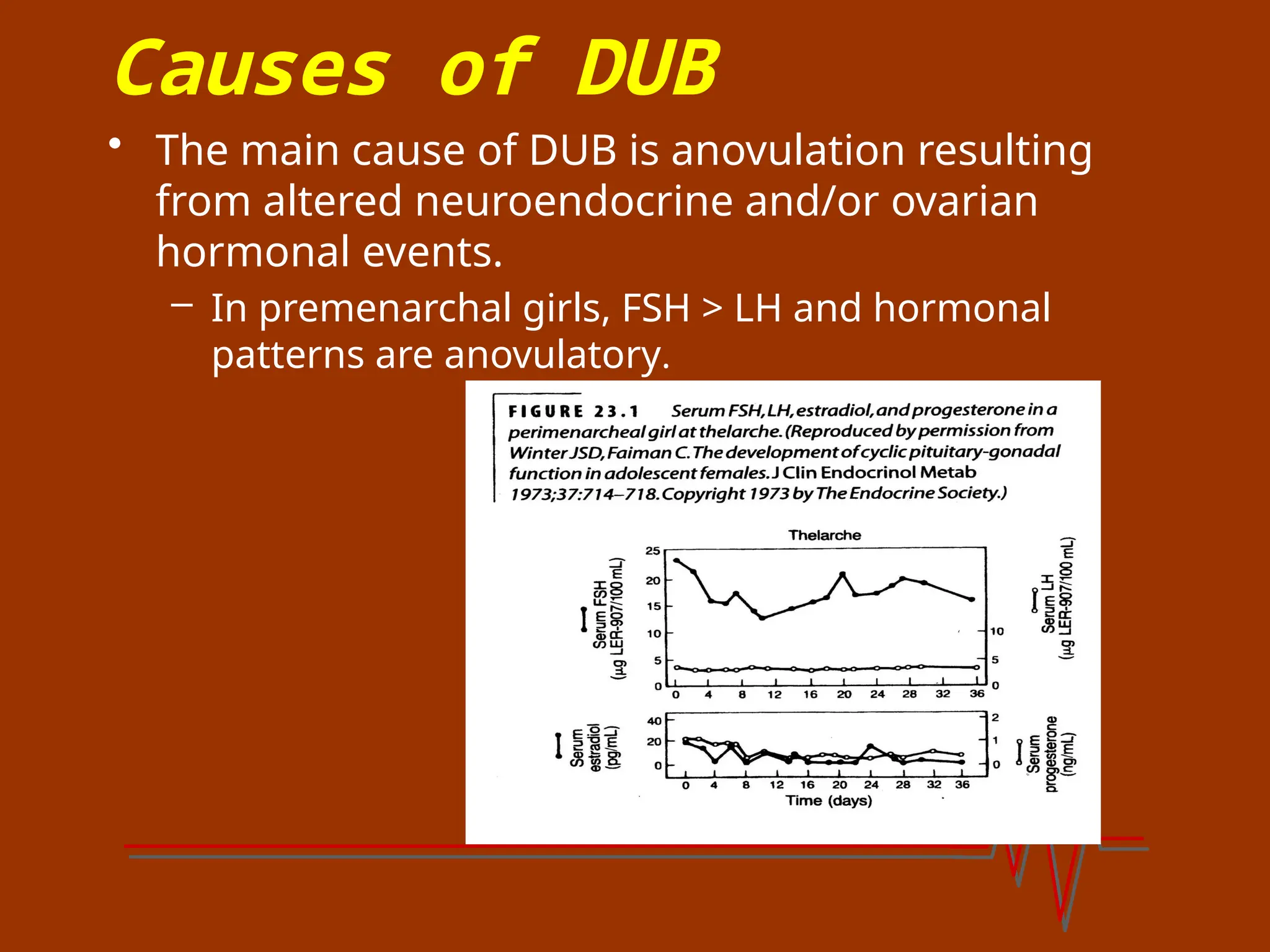
Causes of DUB
• The main cause of DUB is anovulation resulting
from altered neuroendocrine and/or ovarian
hormonal events.
– In premenarchal girls, FSH > LH and hormonal
patterns are anovulatory.
Causes of DUB
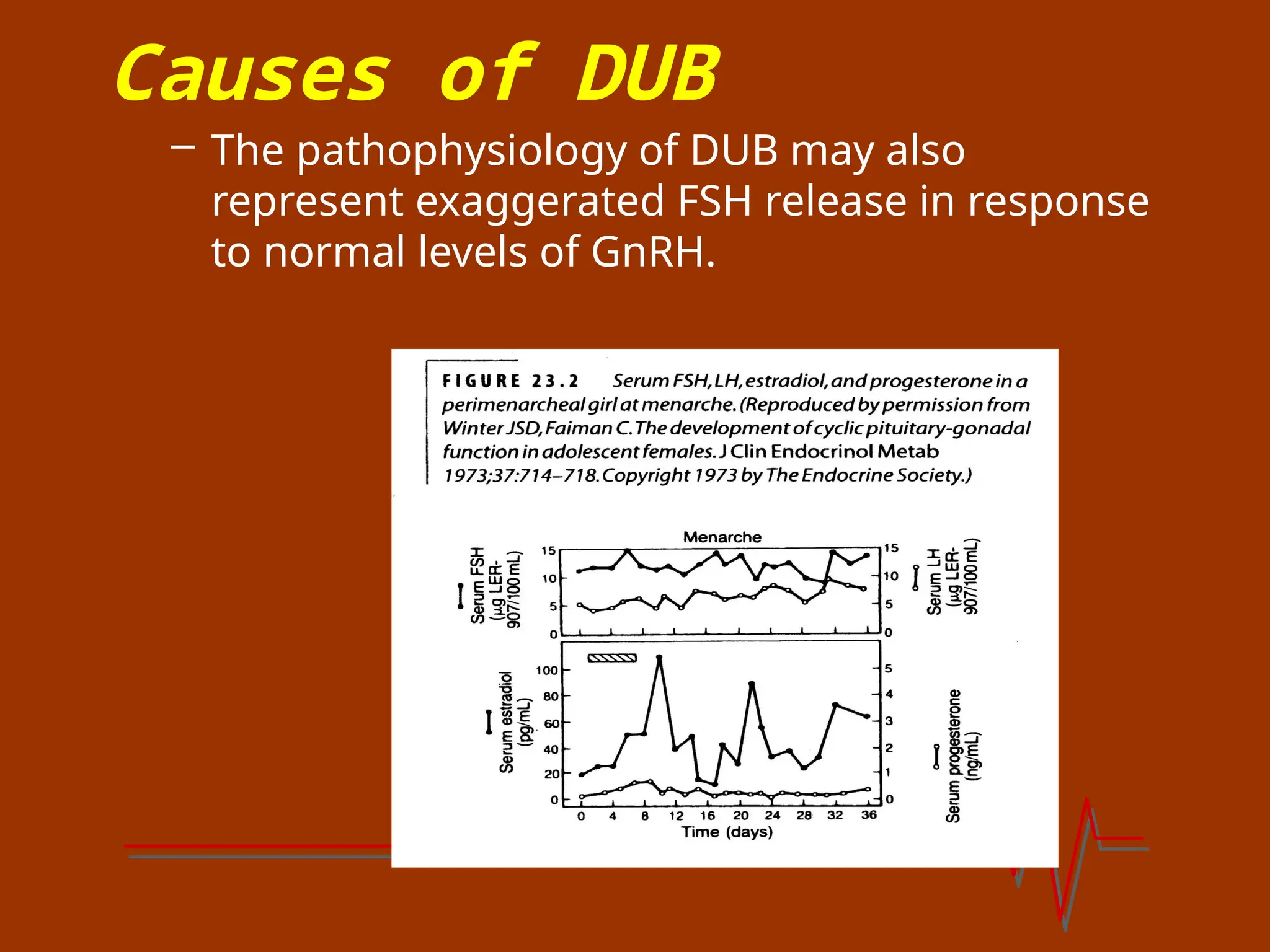
– The pathophysiology of DUB may also
represent exaggerated FSH release in response
to normal levels of GnRH.
Causes of
DUB
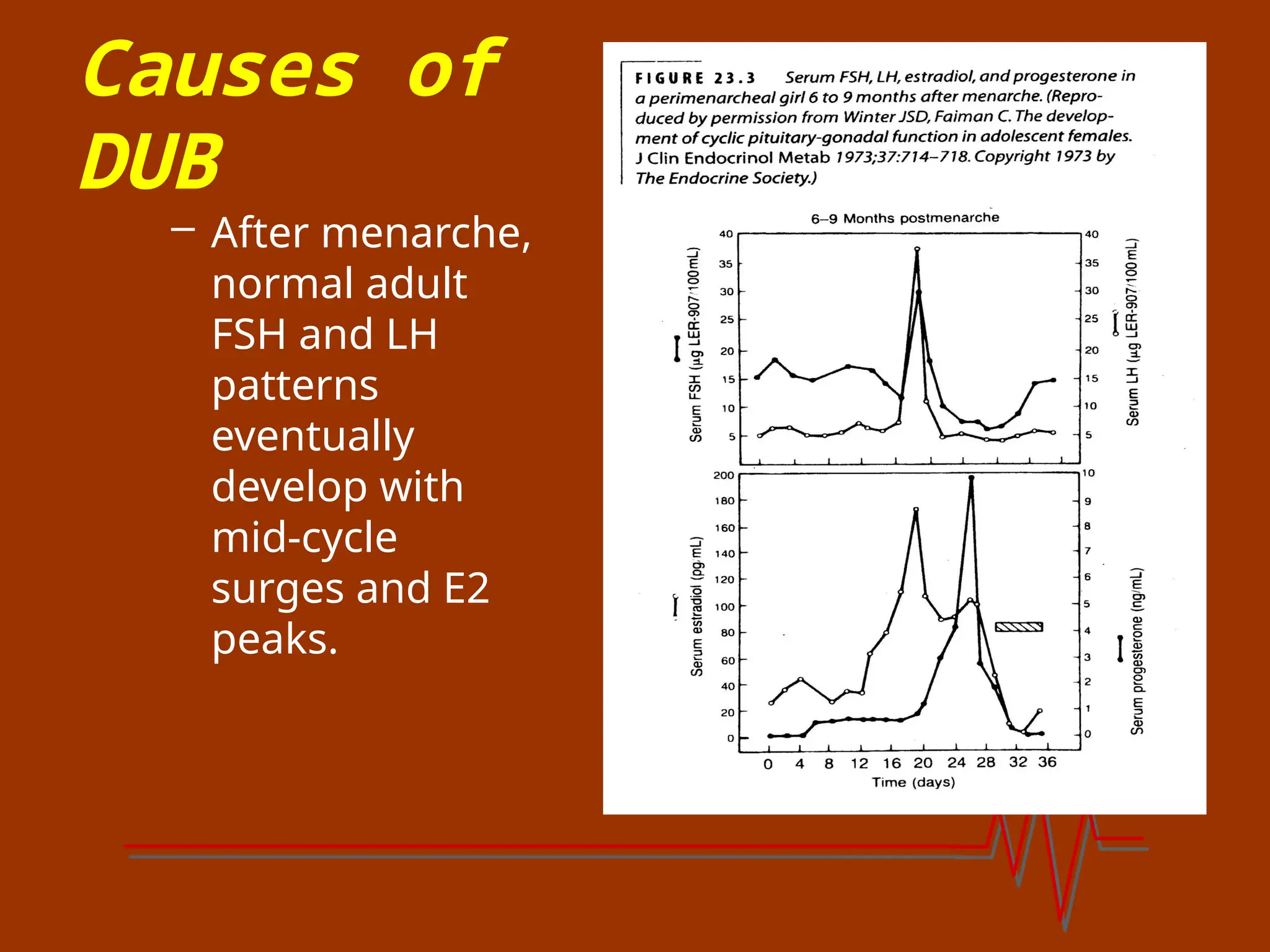
– After menarche,
normal adult
FSH and LH
patterns
eventually
develop with
mid-cycle
surges and E2
peaks.
Causes of DUB
– In perimenopausal women, the mean length of
the cycle is shorter compared to younger
women.
• Shortened follicular phase
• Diminished capacity of follicles to secrete Estradiol
– Other disorders commonly causing DUB
• Alterations in the life span of the corpus luteum.
– Prolonged (Halbans syndrome)
– Variable function or premature senescence in
patients WITH ovulatory cycles
• Luteal phase insufficiency
Differential Diagnosis of
Abnormal Uterine Bleeding
• Organic
– Reproductive tract disease
– Systemic Disease
– Iatrogenic causes
• Non-organic
– DUB
“You must exclude all organic causes
first!”
Reproductive Tract
Disease
• Complications of pregnancy
• Abortion
• Ectopic gestation
• Retained products
• Placental polyp
• Trophoblastic disease
Reproductive Tract
Disease
• Benign pelvic lesions
– Leiomyomata
– Endometrial or endocervical polyps
– Adenomyosis and endometriosis
– Pelvic infections
– Trauma
– Foreign bodies (IUD, sanitary products)
Reproductive Tract
Disease
• Malignant pelvic lesions
– Endometrial hyperplasia
– Endometrial cancer
– Cervical cancer
– Less frequently:
• vaginal,vulvar, fallopian tube cancers
• estrogen secreting ovarian tumors
– granulosa-theca cell tumors
Systemic Disease
• Coagulation disorders
– platelet deficiency
– platelet function defect
– prothrombin deficiency
• Hypothyroidism
• Liver disease
– Cirrhosis
Iatrogenic Causes
• Medications
– Steroids
– Anticoagulants
– Tranquilizers
– Antidepressants
– Digitalis
– Dilantin
• Intrauterine Devices
Evaluation
• History
– Onset, frequency, duration, cyclic vs.acyclic,
severity
– Pain, change from menstrual pattern (calendar)
– Age, parity, marital status, sexual hx,
contraception
– medications, dates of pregnancies
– symptoms of pregnancy and reproductive tract
disease
• Physical Exam
– pelvic exam
– pap smear
Evaluation
• Tests
– Choices are extensive
– Not practical or cost effective to do every
test
– They are not used as general screening
tests for all women with DUB.
– Selection should be tailored to suspected
causes from the history and physical
– Stepwise process should be considered
• Step One:
– Rapid assessment of vital signs
• Hemodynamically stable
• Hemodynamically unstable
• Step Two: (simultaneous with step 1)
– Baseline CBC, quantitative beta hCG
• Step Three (adolescents):
– Low risk for intracavitary or cancerous
lesion
– High coagulopathy risk
• coagulation profile
• if abnormal, further testing and consultation
is warranted
– If screen is normal, a diagnosis of
anovulatory DUB is assumed and
appropriate therapy begun
• Step Four (Adults):
–Transvaginal ultrasound
• Lesion present
– biopsy
– hysteroscopy
• No lesion
– High risk for neoplasia
• endometrial biopsy
– Low risk for neoplasia
• can assume DUB and treat
• Step Five (Adults):
–Secretory endometrium
• >50% have polyp or submucosal
fibroid
• next step is dx hysteroscopy
– lesion present
• biopsy/excision
– lesion absent
• consider systemic disease
• assume DUB and treat if disease
absent
• Step Six (Adults):
–Proliferative endometrium or
hyperplasia without atypia
• assume DUB
• manage according to desired fertility
–Hyperplasia with atypia or CA
• treat accordingly
Treatment of DUB
• Goals
– control bleeding
– prevent recurrence
– preserve fertility
– correct associated conditions
– induce ovulation in patients who want to
conceive
Treatment of DUB
• Medical management before Surgical
– effective methods include:
• estrogens, progestins, or both
• NSAID’s
• antifibrinolytic agents
• danazol
• GnRH agonists
Treatment of DUB
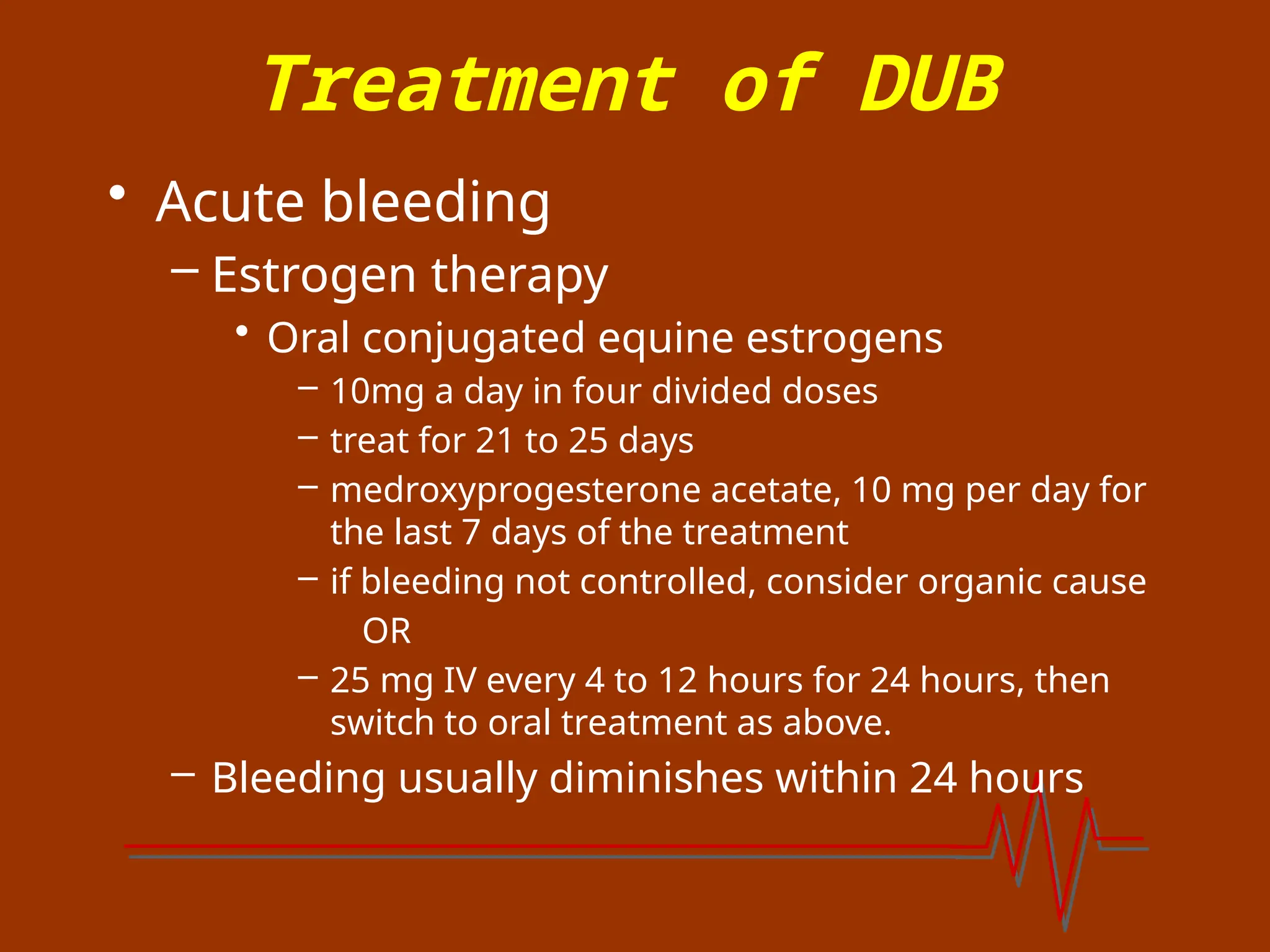
• Acute bleeding
– Estrogen therapy
• Oral conjugated equine estrogens
– 10mg a day in four divided doses
– treat for 21 to 25 days
– medroxyprogesterone acetate, 10 mg per day for
the last 7 days of the treatment
– if bleeding not controlled, consider organic cause
OR
– 25 mg IV every 4 to 12 hours for 24 hours, then
switch to oral treatment as above.
– Bleeding usually diminishes within 24 hours
Treatment of DUB
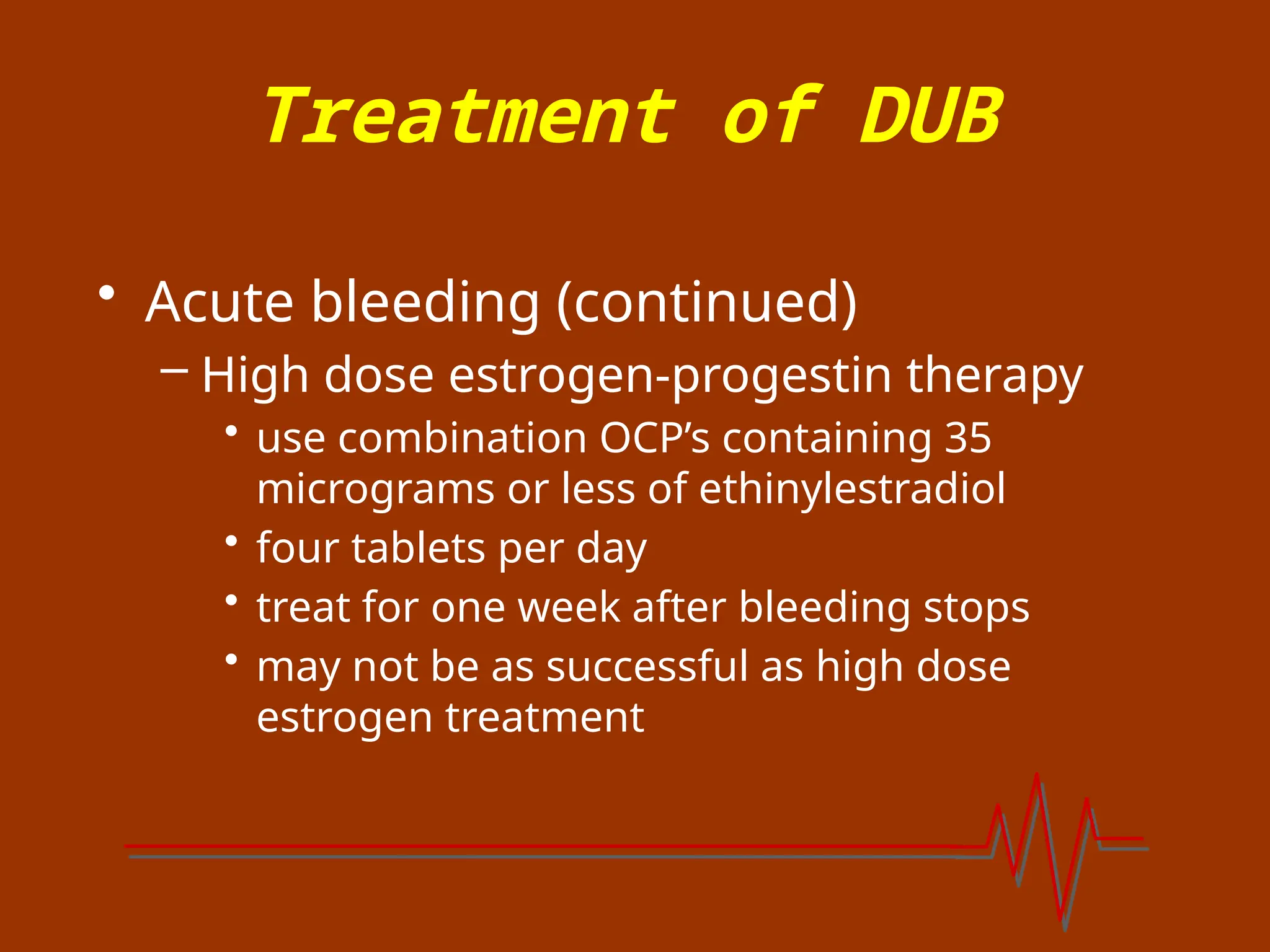
• Acute bleeding (continued)
– High dose estrogen-progestin therapy
• use combination OCP’s containing 35
micrograms or less of ethinylestradiol
• four tablets per day
• treat for one week after bleeding stops
• may not be as successful as high dose
estrogen treatment
Treatment of DUB
• Recurrent bleeding episodes
– combination OCP’s
• one tablet per day for 21 days
– intermittent progestin therapy
• medroxyprogesterone acetate, 10mg per
day, for the first 10 days of each month
• higher doses and longer therapy my be tried
if no initial response
• prolonged use of high doses is associated
with fatigue, mood swings, weight gain, lipid
changes
Treatment of DUB
• Recurrent bleeding episodes
(continued)
– Progesterone releasing IUD
• avoids side effects
• must be reinserted annually
• Levonorgestrel IUD
– 80% reduction of blood loss at 3 months
– 100% reduction at 1 year
– found to be superior to antifibrinolytic agents and
prostaglandin synthetase inhibitors
Treatment of DUB
• Immature hypothalamic-pituitary axis
– progestin therapy by itself for 10 days
every month or every other month until
full maturity of the axis provides
effective therapy.
• Older perimenopausal women
– cyclic progestin therapy
• prevents development of endometrial
hyperplasia
– low dose OCP’s
• healthy non-smokers, free of vascular
disease
Treatment of DUB
• Other options
– NSAID’s
• cyclooxygenase inhibitors
• inhibits prostacyclin formation
• administered throughout the duration of
bleeding or for the first 3 days of menses.
• treatment results in a sustained reduction in
blood loss so side effects tend to be mild
• most effective in ovulatory DUB
Treatment of DUB
• Other options
– inhibitors of fibrinolysis
• EACA (epsilon-aminocaproic acid)
• AMCA (tranexamic acid)
• PABA (para-aminomethybenzoic acid)
– use limited by side effects
• nausea, dizziness
• diarrhea, headaches
• abdominal pain
• allergic manifestations
Treatment of DUB
• Danazol
– androgenic steroid
• 200mg and 400 mg daily doses for 12 weeks
studied
• 200mg dose as effective as 400 mg
• androgenic side effects: weight gain, acne
– side effects minimized with 200mg dose
• 100 mg not effective, expensive
Treatment of DUB
• GnRH agonists
– treatment results in medical menopause
– blood loss returns to pretreatment levels when
discontinued
– treatment usually reserved for women with
ovulatory DUB that fail other medical therapy
and desire future fertility
– use add back therapy to prevent bone loss
secondary to marked hypoestrogenism
Treatment of DUB
• Surgical Treatment
– Dilation and Curettage
• quickest way to stop bleeding in patients
who are hypovolemic
• appropriate in older women (>35)to exclude
malignancy but is inferior to hysteroscopy
• follow with medroxyprogesterone acetate,
OCP’s, or NSAID’s to prevent recurrence
Treatment of DUB
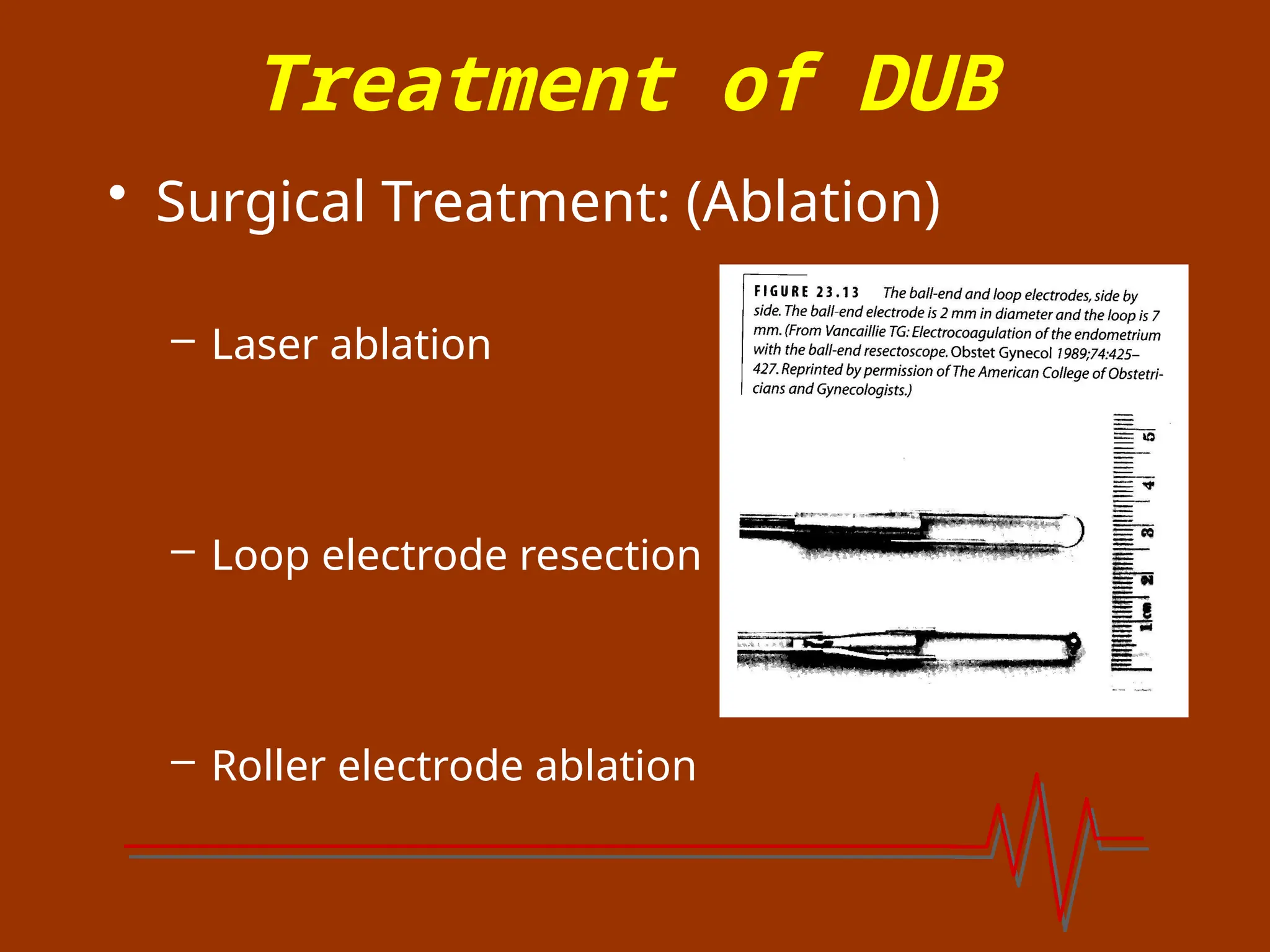
• Surgical Treatment: (Ablation)
– Laser ablation
– Loop electrode resection
– Roller electrode ablation
Treatment of DUB
• Surgical Treatment: (Ablation)
– Thermal balloon ablation
– Microwave ablation
– Electromagnetic ablation
• poor follow up
– Intracavitary radiotherapy (case report)
• was common treatment in past
• used in a patient who failed medical treatment with
multiple contraindications for surgery
• chose radiation secondary to complications with a
previous D&C and the cost of long term GnRH agonist
therapy
Treatment of DUB
• Surgical Treatment
– Hysterectomy
Thank You All

Dysfunctional Uterine Bleeding and its management.pptx

  • 1.
  • 2.
    Introduction •Dysfunctional uterine bleeding(DUB) is defined as ABNORMAL uterine bleeding with no demonstrable organic cause, genital or extragenital. •Diagnosis of EXCLUSION •Patients present with “abnormal uterine bleeding” •DUB occurs most often shortly after menarche and at the end of the reproductive years. –20% of cases are adolescents –50% of cases in 40-50 year olds
  • 3.
    Introduction • DUB ismost frequently associated with chronic anovulation. • Heavy menses, prolonged menses, or frequent irregular bleeding are the most common complaints. • Up to 20% of women will experience irregular cycles in their lifetimes.
  • 4.
    Definitions • Menorrhagia (hypermenorrhea):prolonged (>7 days) and/or excessive (>80cc) uterine bleeding occurring at REGULAR intervals. • Metorrhagia: uterine bleeding occurring at completely irregular but frequent intervals, the amount being variable. • Menometorrhagia: uterine bleeding that is prolonged AND occurs at completely irregular intervals. • Polymenorrhea: uterine bleeding at regular intervals of less than 21 days. • Intermenstrual bleeding: bleeding of variable amounts occurring between regular menstrual
  • 5.
    Definitions • Oligomenorrhea: uterinebleeding at regular intervals from 35 days to 6 months. • Amenorrhea: absence of uterine bleeding for > 6 months. • Postmenopausal bleeding: uterine bleeding that occurs more than 1 year after the last menses in a woman with ovarian failure.
  • 6.
    Normal Menstruation • LifeCycle – Menarche – 5-7 years of relatively long cycles – Increasing regularity of cycles – In the 40’s cycles begin to increase in length with increasing episodes of anovulation (2-8 years “perimenopause”) – Menopause (average age = 52) • Characteristics – By age 25, 40% of women have cycles between 25-28 days – Age 25-35, 60% of women have 25-28 day cycles. – Overall 15% have 28 day cycles – .5% have cycles < 21days – .9% have cycles >35 days
  • 7.
    Normal Menstruation • Resultsfrom fluctuations in the circulating levels of estrogen and progesterone. • Estrogen causes increased blood flow to the endometrium • A significant correlation exists between plasma Estradiol and endometrial blood flow, with both increasing in the days preceding ovulation. • These vasodilatory and vasoconstrictive effects are mediated by substances like: – acetylcholine – vasopressin – endothelin – histamine
  • 8.
    Normal Menstruation • Estradioland progesterone levels decrease several days prior to the onset of menses. – Endometrial blood flow decreases – Endometrial height decreases and vascular stasis occurs. – Tissue ischemia occurs. – Arterial relaxation – Sloughing of the endometrium. – Uterine bleeding occurs • In women with DUB secondary to anovulation, endometrial blood flow is variable and follows no orderly pattern
  • 9.
    Cessation of Menses •Two main mechanisms: – Formation of the platelet plug • important in the functional endometrium – Prostaglandin dependent vasoconstriction • important in the basalis layer
  • 10.
    Menstrual Period Characteristics Normal Abnormal Duration 4-6days <2d, >7d Volume 30-35cc >80cc Cycle length 21-35d <21d, >35 Average Iron loss: 16mg
  • 11.
    Pathophysiology • Two types:anovulatory and ovulatory • Most women with DUB do not ovulate. – In theses women, there is continuous E2 production without corpus luteum formation and progesterone production. • Ovulatory DUB occurs most commonly after the adolescent years and before the perimenopausal years. – Incidence in these patients may be as high as 10%
  • 12.
    Causes of DUB •The main cause of DUB is anovulation resulting from altered neuroendocrine and/or ovarian hormonal events. – In premenarchal girls, FSH > LH and hormonal patterns are anovulatory.
  • 13.
    Causes of DUB –The pathophysiology of DUB may also represent exaggerated FSH release in response to normal levels of GnRH.
  • 14.
    Causes of DUB – Aftermenarche, normal adult FSH and LH patterns eventually develop with mid-cycle surges and E2 peaks.
  • 15.
    Causes of DUB –In perimenopausal women, the mean length of the cycle is shorter compared to younger women. • Shortened follicular phase • Diminished capacity of follicles to secrete Estradiol – Other disorders commonly causing DUB • Alterations in the life span of the corpus luteum. – Prolonged (Halbans syndrome) – Variable function or premature senescence in patients WITH ovulatory cycles • Luteal phase insufficiency
  • 16.
    Differential Diagnosis of AbnormalUterine Bleeding • Organic – Reproductive tract disease – Systemic Disease – Iatrogenic causes • Non-organic – DUB “You must exclude all organic causes first!”
  • 17.
    Reproductive Tract Disease • Complicationsof pregnancy • Abortion • Ectopic gestation • Retained products • Placental polyp • Trophoblastic disease
  • 18.
    Reproductive Tract Disease • Benignpelvic lesions – Leiomyomata – Endometrial or endocervical polyps – Adenomyosis and endometriosis – Pelvic infections – Trauma – Foreign bodies (IUD, sanitary products)
  • 19.
    Reproductive Tract Disease • Malignantpelvic lesions – Endometrial hyperplasia – Endometrial cancer – Cervical cancer – Less frequently: • vaginal,vulvar, fallopian tube cancers • estrogen secreting ovarian tumors – granulosa-theca cell tumors
  • 20.
    Systemic Disease • Coagulationdisorders – platelet deficiency – platelet function defect – prothrombin deficiency • Hypothyroidism • Liver disease – Cirrhosis
  • 21.
    Iatrogenic Causes • Medications –Steroids – Anticoagulants – Tranquilizers – Antidepressants – Digitalis – Dilantin • Intrauterine Devices
  • 22.
    Evaluation • History – Onset,frequency, duration, cyclic vs.acyclic, severity – Pain, change from menstrual pattern (calendar) – Age, parity, marital status, sexual hx, contraception – medications, dates of pregnancies – symptoms of pregnancy and reproductive tract disease • Physical Exam – pelvic exam – pap smear
  • 23.
    Evaluation • Tests – Choicesare extensive – Not practical or cost effective to do every test – They are not used as general screening tests for all women with DUB. – Selection should be tailored to suspected causes from the history and physical – Stepwise process should be considered
  • 24.
    • Step One: –Rapid assessment of vital signs • Hemodynamically stable • Hemodynamically unstable • Step Two: (simultaneous with step 1) – Baseline CBC, quantitative beta hCG
  • 25.
    • Step Three(adolescents): – Low risk for intracavitary or cancerous lesion – High coagulopathy risk • coagulation profile • if abnormal, further testing and consultation is warranted – If screen is normal, a diagnosis of anovulatory DUB is assumed and appropriate therapy begun
  • 26.
    • Step Four(Adults): –Transvaginal ultrasound • Lesion present – biopsy – hysteroscopy • No lesion – High risk for neoplasia • endometrial biopsy – Low risk for neoplasia • can assume DUB and treat
  • 27.
    • Step Five(Adults): –Secretory endometrium • >50% have polyp or submucosal fibroid • next step is dx hysteroscopy – lesion present • biopsy/excision – lesion absent • consider systemic disease • assume DUB and treat if disease absent
  • 28.
    • Step Six(Adults): –Proliferative endometrium or hyperplasia without atypia • assume DUB • manage according to desired fertility –Hyperplasia with atypia or CA • treat accordingly
  • 29.
    Treatment of DUB •Goals – control bleeding – prevent recurrence – preserve fertility – correct associated conditions – induce ovulation in patients who want to conceive
  • 30.
    Treatment of DUB •Medical management before Surgical – effective methods include: • estrogens, progestins, or both • NSAID’s • antifibrinolytic agents • danazol • GnRH agonists
  • 31.
    Treatment of DUB •Acute bleeding – Estrogen therapy • Oral conjugated equine estrogens – 10mg a day in four divided doses – treat for 21 to 25 days – medroxyprogesterone acetate, 10 mg per day for the last 7 days of the treatment – if bleeding not controlled, consider organic cause OR – 25 mg IV every 4 to 12 hours for 24 hours, then switch to oral treatment as above. – Bleeding usually diminishes within 24 hours
  • 32.
    Treatment of DUB •Acute bleeding (continued) – High dose estrogen-progestin therapy • use combination OCP’s containing 35 micrograms or less of ethinylestradiol • four tablets per day • treat for one week after bleeding stops • may not be as successful as high dose estrogen treatment
  • 33.
    Treatment of DUB •Recurrent bleeding episodes – combination OCP’s • one tablet per day for 21 days – intermittent progestin therapy • medroxyprogesterone acetate, 10mg per day, for the first 10 days of each month • higher doses and longer therapy my be tried if no initial response • prolonged use of high doses is associated with fatigue, mood swings, weight gain, lipid changes
  • 34.
    Treatment of DUB •Recurrent bleeding episodes (continued) – Progesterone releasing IUD • avoids side effects • must be reinserted annually • Levonorgestrel IUD – 80% reduction of blood loss at 3 months – 100% reduction at 1 year – found to be superior to antifibrinolytic agents and prostaglandin synthetase inhibitors
  • 35.
    Treatment of DUB •Immature hypothalamic-pituitary axis – progestin therapy by itself for 10 days every month or every other month until full maturity of the axis provides effective therapy. • Older perimenopausal women – cyclic progestin therapy • prevents development of endometrial hyperplasia – low dose OCP’s • healthy non-smokers, free of vascular disease
  • 36.
    Treatment of DUB •Other options – NSAID’s • cyclooxygenase inhibitors • inhibits prostacyclin formation • administered throughout the duration of bleeding or for the first 3 days of menses. • treatment results in a sustained reduction in blood loss so side effects tend to be mild • most effective in ovulatory DUB
  • 37.
    Treatment of DUB •Other options – inhibitors of fibrinolysis • EACA (epsilon-aminocaproic acid) • AMCA (tranexamic acid) • PABA (para-aminomethybenzoic acid) – use limited by side effects • nausea, dizziness • diarrhea, headaches • abdominal pain • allergic manifestations
  • 38.
    Treatment of DUB •Danazol – androgenic steroid • 200mg and 400 mg daily doses for 12 weeks studied • 200mg dose as effective as 400 mg • androgenic side effects: weight gain, acne – side effects minimized with 200mg dose • 100 mg not effective, expensive
  • 39.
    Treatment of DUB •GnRH agonists – treatment results in medical menopause – blood loss returns to pretreatment levels when discontinued – treatment usually reserved for women with ovulatory DUB that fail other medical therapy and desire future fertility – use add back therapy to prevent bone loss secondary to marked hypoestrogenism
  • 40.
    Treatment of DUB •Surgical Treatment – Dilation and Curettage • quickest way to stop bleeding in patients who are hypovolemic • appropriate in older women (>35)to exclude malignancy but is inferior to hysteroscopy • follow with medroxyprogesterone acetate, OCP’s, or NSAID’s to prevent recurrence
  • 41.
    Treatment of DUB •Surgical Treatment: (Ablation) – Laser ablation – Loop electrode resection – Roller electrode ablation
  • 42.
    Treatment of DUB •Surgical Treatment: (Ablation) – Thermal balloon ablation – Microwave ablation – Electromagnetic ablation • poor follow up – Intracavitary radiotherapy (case report) • was common treatment in past • used in a patient who failed medical treatment with multiple contraindications for surgery • chose radiation secondary to complications with a previous D&C and the cost of long term GnRH agonist therapy
  • 43.
    Treatment of DUB •Surgical Treatment – Hysterectomy
  • 44.

Editor's Notes

  • #2 1. Diagnosis arrived at after pregnancy, benign and malignant dz of the reproductive tract, systemic illness, and iatrogenic causes are ruled out.
  • #3 1. DUB can also occur with ovulatory cycles and this is important to determine when deciding on appropriate therapy.
  • #4 1. When it comes to measurement of menstrual blood loss (MBL), patient reliability in the estimation of it is very poor. Halberg and colleages found that 40% of women with greater than 80 cc of MBL thought that their flow was slight to moderate. The no. of pads or tampons used is also not reliable secondary to a great variability of absorption found between products and even among products within the same package. Women also differ in their fastidiousness in changing of sanitary products. The most widely used method to measure MBL is a photometric measurement to quantify hematin found on sanitary napkins. When this method is used, women with MBL of > 80 cc have significantly lower mean hgb, hct, and serum iron levels.
  • #7 1. Many other factors influence menstruation as well but these are the main hormonal influences. 2. This effect is countered by progesterone.
  • #8 1. This stasis is initiated by constriction of the coiled arteries. 2. This is because there is usually a lack of orderly exposure to estrogen and progesterone.
  • #9 1. Platelets first adhere to the subendothelium of the damaged vessel wall. Occlusion of the site of injury by aggregation Initiates release of proaggregatory compounds such as thromboxane which accelerates aggregation and initiates coagulation This is an important interaction because vWF serves as the bridge between platelets and the damaged endothelium. This is important when considering DUB in perimenarchal adolescents. 2. Vascular occlusion by both methods is never total so blood leakage occurs until endometrial regeneration is completed.
  • #10 TO REVIEW 70% of blood loss occurs within the first 2 days, 92% by the end of the 3rd day. There is no relationship between the number of days of MBL and the amount of MBL The majority of women with DUB have increased amounts of flow during these first days of menses.
  • #11 1. This gives rise to continuously proliferating endometrium which may outgrow its blood supply or lose nutrients with varying degrees of necrosis. Asynchronous development of stroma, glands, and blood vessels as well as overdevelopment of Golgi-lysosomal complexes may occur. Uniform slough to the basalis layer does not occur, which leads to excessive and irregular uterine blood flow. Overactivity of the fibrinolytic system may be present as well, but this relationship is not well studied.
  • #12 You can see in this figure, that the premenarchal female has random, episodic fluctuations in her levels of FSH, LH, and Estradiol that are not interrelated. In postmenarchal adolescents with DUB secondary to an immature ovulatory pattern, the administration of GnRH gives rise to a greater amount of FSH than LH indicating the persistence of the premenarchal state.
  • #13 This leads to asynchronous follicle maturation. There is Estradiol production in amounts sufficient to stimulate the endometrium. However it has been shown that these women do not have an LH surge after the rise in Estradiol. (See Fig 23.2) You can see FSH has increased over LH unlike the previous figure. It also shows an increase in estradiol compared to the previous figure. The defect is in an absence of the positive feedback mechanism while the negative one remains intact.
  • #14  Maturation defects persist in some perimenarchal females who may anovulatory cycles or cycles characterized by prolonged follicular phase and/or by corpus luteum defects for various periods before a normal pattern is established. Because the hypothalamic-pituitary axis continues to mature and since bleeding in most adolescents is not severe, these women are usually managed expectantly at least initially. If severe however, workup should proceed to screen for coagulation disorders
  • #15 1. There is increased variability of the intermenstrual interval and the mean length of the cycle is shorter compared to younger women. One of several defects shown to decrease cycle length is a shortened follicular phase. Studies in some patients have also shown a diminished capacity of follicles to secrete Estradiol. Initially there is normal production of progesterone and a normal luteal phase length. As menopause approaches, progesterone and the duration of the luteal phase decrease and DUB can result. 2. Alterations in the life span of the corpus luteum could cause DUB. Prolonged life spans have been reported as a cause of bleeding but must be differentiated from early pregnancy loss. No recent studies have documented the presence of this condition however. Variable function or premature senescence in patients with ovulatory cycles could lead to DUB as well Luteal phase insufficiency by itself may also cause DUB
  • #16 Ill now briefly review some of the possible causes of abnormal bleeding that need to be ruled out before establishing the diagnosis of DUB.
  • #17 This is the most common cause of abnormal bleeding in reproductive age women should be considered this until proven otherwise because several of these conditions can be life threatening.
  • #18 Pedunculated myomas can cause intermenstrual bleeding of variable amt. Cervical polyps and ectropion may cause post coital spotting Infections usually cause bleeding in combination with a symptom complex Episodic intermenstrual spotting of varying amts and duration is the most common symptom in women with chronic endometritis Trauma and FB usually come with appropriate histories but we’ve all had that awful encounter with a patient who can FORGET that she put something in and then we have to close half of the clinic because it smells so bad.
  • #19  Endometrial cancer incidence increases with age. Other risk factors are: long history of oligo or anovulation unopposed estrogen obesity Abnormal bleeding in peri and postmenopausal patients should be considered cancer until proven otherwise it is not the most common etiology but is the most important found in 10% of perimenopausal women found in 25% of postmenopausal women Endometrial hyperplasia is a cancer precursor
  • #20 Platelet deficiency: leukemia, sepsis, ITP, hypersplenism Platelet function: won Willebrand's disease vWD or another blood dyscrasia is present in significant proportion of women in whom reproductive tract disease has been ruled out. 1% of general population 20% of adolescents hospitalized for Abnl bleeding 95% of these pts are unaware of there condition The incidence of hypothyroidism in women with menorrhagia is dependent on the sensitivity of the tests used to make the diagnosis (.3-2.5%) When TRH stim test used in pts with unexplained severe menorrhagia, up to 20% have an abnormal response. Wilansky and Griesman used this test to detect subclinical hypothyroidism in 15 of 67 women. ALL had normal TSH and thyroxine levels. With replacement all had resolution of symptoms within 3-6 months. HYPERTHYROIDISM is usually not associated with menstrual abnormalities but they have been reported With cirrhosis there is decreased metabolism of Estradiol and synthesis of procoagulant factors. Also in advanced liver disease, the ability metabolize and conjugate estrogen is decreased. This will eventually lead to hyperprothrombinemia.
  • #21 Steroids may be being used for contraception, hrt, hirsutism, dysmenorrhea, pms, acne, and endometriosis Tranquilizers may interfere with neurotransmitters responsible for hypothalamic releasing and inhibiting hormones Copper IUD’s can bleed. However, progesterone or progestin releasing IUD’s usually decrease the amount of blood loss or even result in amenorrhea
  • #22 Determine hemodynamic stability FIRST Urinalysis, stool guaiac if origin of bleeding in doubt Point of this slide is there are many questions that need to be asked Does she have sxs of infection Bleeding from multiple sights Symptoms of hypothyroidism etc... Cervical cultures and gram stain should be obtained Inspection of the vagina identifies trauma, severe infections, atrophy, foreign bodies Inspection of the cervix may identify polyps, erosions, cancerous lesions A symmetrically enlarged uterus may suggest adenomyosis if not pregnant A uterus with asymmetric contours may suggest fibroids
  • #23 CBC, hCG, hormone levels(FSH, LH, E2, PROGESTERONE, PRL,TEST, DHEA-S) COAGS, LIVER FX, THYROID FX BIOPSY, D AND C, HSG, ULTRASOUND, HYSTEROSCOPY, CT, MRI If an iatrogeniccause is identified it should be eliminated and the patient observed Overwhelming agreement does not always exist for the work up of patients with abnormal bleeding I have provided a handout out of Mishells repro text. I use this to present one example of an organized evaluation. It should only be used as a flexible guide in a stepwise process. I realize that many scenarios can be generated where this exact order of evaluation would not be the best medicine.
  • #24 Foley catheter with 30cc balloon inside the endometrial cavity IV fluid resuscitation Immediate D&C Pregnancy disorders can be diagnosed by the use of serial hCG’s and ultrasound At some point, usually early in the eval, if the women is having regular cycles with her bleeding, it is important to determine whether she is ovulating by using a luteal phase serum progesterone, a basal body temp chart, or a premenstrual sampling of the endometrium.
  • #25 Several factors influence the selection of the next diagnostic test. Adolescents, because of their young age, are at very low risk for an intracavitary, precancerous, or cancerous lesion. They do have a relatively high risk of coagulopathy if menorrhagia is their complaint.
  • #26 There is much disagreement about the extent of evaluation necessary for adults with bleeding. Most of these differences concern visualization of the endometrial cavity versus sampling of the endometrium to obtain a histologic diagnosis or detect an anatomic lesion. Endometrial bx is quick and relatively inexpensive. However, only a small portion is sampled and it is not useful for detecting anatomic defects. D&C has been estimated to miss the diagnosis in 10-25% of women. It misses up to 1/2 the pedunculated lesions and frequently less than half the endometrium is sampled. HSG is used rarely and has mostly been replaced with sono and hysteroscopy Transvaginal sono has been suggested as a possible screening test for females for detection of intracavitary polyps,submucous fibroids, endometrial thickness, and ovarian masses. Its sensitivity is increased with the addition of hydrosonography. Hysteroscopy is the gold standard among tests used to detect a lesion within the endometrial cavity. Biopsy is by direct visualization and it can be used to evaluate the endometrium at any time during the menstrual cycle In a study by Gimpleson et al. With approximately 342 pts, 60 women with submucous myomas and polyps confirmed by hysteroscopy failed to have the correct diagnosis with D&C. March et al. Reported that 1/4 of women given the diagnosis of DUB are found to have intracavitary lesions if hysteroscopy is added.. It is more invasive and expensive however
  • #27 Adults with bleeding who are not pregnant, stable and whose endometrial biopsy is secretory require additional workup. Sono hopefully should have identified these people. Regardless the next step suggested is diagnostic hysteroscopy Lesions found can then be biopsied directly If no lesion found, and systemic disease has been ruled out a diagnosis of ovulatory DUB is presumed and treatment initiated
  • #28 Adults with bleeding, who are not pregnant, and whose biopsy reveals proliferative endometrium or simple hyperplasia without atypia most likely have anovulatory DUB Manage according to desired fertility hormonal treatment if no desire ovulation induction if infertility desired as it will correct both If atypia or cancer is found, treatment is hysterectomy and referral.
  • #29 Once DUB has been diagnosed and pathologic causes ruled out, there are several goals of therapy. No single method is always effective. Many factors play a role in the decision to begin one therapy over another: age, severity of bleeding, no. of children, desire for fertility presence of associated pelvic pathology
  • #30 Medical management is the preferred initial treatment, especially if the woman desires future fertility and there is no associated pelvic pathology Selection of treatment depends primarily on whether it is used to stop acute heavy bleeding or to control recurrent episodes
  • #31 Acute bleeding can be managed by estrogen which promotes rapid regrowth of the endometrium over denuded epithelial surfaces. It also causes proliferation of the endometrial ground substance and stabilizes lysosomal membranes. There are no studies that indicate IV estrogen acts quicker or is more effective than high dose oral estrogen. After treatment is finished, all medications are stopped and the patient is allowed to have withdrawal bleeding. This can be heavy so warn patients, but it is rarely prolonged
  • #32 A third option is high dose estrogen-progestin therapy This is the preferred method for many physicians One study suggested progestins may not be as successful because simultaneous use of a progestin can inhibit the synthesis of estrogen receptors and increase Estradiol dehydrogenase in the endometrial cell. The actions of progestins serving to interfere with the rapid growth-promoting effects of unopposed high dose estrogen. Once the bleeding episode has been controlled, you can continue standard dose OCP regimens using one tablet per day for 21 days or medroxyprogesterone acetate, 10 mg each day for the first 10 days of each month.
  • #33 Recurrent episodes can be managed medically with the judicious use of hormones. Combination OCP’s for 21 days can manage this type of bleeding in reproductive age women unless conception is the goal, then use clomiphene Progestins alone is usually not very effective to stop ACUTE bleeding, but are indicated for long term treatment. Progestins alone are considered by many to be the treatment of choice for most women with chronic anovulatory DUB. Progestins stop endometrial growth, and support and organize an estrogen primed endometrium. When discontinued an organized slough of the endometrium occurs, which allows for rapid cessation of bleeding. Fraser et al. Reported the administration of 5-10 mg of medroxyprogesterone acetate or norethindrone (3x per day for 2-3 wks) significantly decreased blood loss by as much as 50% in both ovulatory and anovulatory bleeding Women with anovulatory bleeding received progestins from days 12-25 of each cycle, and women with ovulatory bleeding to the progestins on days 5-25. So these regimens were successful for women with both types of DUB.
  • #34 The progesterone IUD has been used successfully to treat women with ovulatory DUB. Bergqvist et al. Reported a decrease in MBL from an average of 138ml to 49 ml in 12 women with one year of IUD usage. Milson et al. used the levonorgestral IUD to treat DUB and reported an 80% reduction in the MBL at 3 months and 100% reduction at the end of the first year of use. It has a duration of action of 7 years or more.
  • #35 Some adolescents have anovulatory DUB because of an immature hypothalamic-pituitary axis. These patients respond ideally to progestins. Regular cyclic withdrawal bleeding can be induced until maturity of the positive feedback mechanism occurs. Progestin therapy does not interfere with the normal progression to spontaneous ovulatory cycles.
  • #36 Acute bleeding episodes are best controlled by high dose estrogen therapy; recurrent episodes by progestin therapy. Progestin therapy may be the first choice for chronic anovulatory DUB and it has been used to manage ovulatory DUB. However MBL usually is reduced by only 15% or less in these patients. There are other options for patients with ovulatory DUB. NSAIDs Prostacyclin is a vasodilator that inhibits platelet aggregation. The precise mechanism is unclear as NSAIDS generally inhibit thromboxane formation as well. Ideally, to control bleeding, inhibiting the synthesis of prostacyclin without altering thromboxane formation is desired. Currently no NSAID possesses this unique activity. Naproxen, ibuprofen, mefenamic acid, and meclogenamite sodium all studied. Most effective in women with the greatest amount of pretreatment blood loss. (decrease 20 to 50%) Treatment results in a sustained reduction in blood loss and an increase in ferritin indicating increased iron stores Usually added to hormonal therapy to achieve a greater decrease in blood loss.
  • #37 Studies of each resulted in about a 50% reduction in MBL. Have their greatest success in patients with the highest amount of MBL. Most effective in pts with ovulatory DUB. Renal failure is a contraindication Again, usually combined with other therapies
  • #38 Daily doses of danazol were given for 12 weeks reducing blood loss from over 200cc to less than 25cc. Some women will even ovulate on the 200mg dose Medication is expensive Dockery studied the 200mg dose compared with mefanamic acid and found that the 200 mg dose is more effective than NSAID but more than twice the number experienced side effects.
  • #39 No large scale studies have been done. Shaw et al. Treated 4 women for three months. MBL was decreased from 100-200cc to 0-30cc per cycle during therapy. Treatment reserved due to expense as well. Ergot derivatives are not recommended . They are not effective in the nonpregnant woman
  • #40 D&C can be both diagnostic and therapeutic. Cannot prevent recurrent excessive bleeding, however. Bleeding returns in more than 60% of patients treated with D&C alone. In anovulatory bleeding, patients should receive medroxyprogesterone acetate after D&C In women with ovulatory DUB, postop treatment should be by NSAID or OCP’s. Traditionally, D&C has been used to diagnose the cause of DUB in women over 35, when the incidence of neoplastic lesions increases or when hyperplasia is seen as determined by biopsy. Hysteroscopic exam is better as it allows direct visualization and directed biopsies of the most suspicious areas.
  • #41 Preablation endometrial sampling should be considered mandatory to rule out neoplasia prior to any type of ablative therapy. Endometrial CA has been reported as many as 5 years after endometrial ablation. In postmenopausal patients on HRT, a progestin should be added to prevent excessive stimulation of any residual endometrial cells after treatment. It is also important to ensure that the thermal energy be conducted down to the basalis layer so that the endometrium will not regenerate. Several different lasers have been tried. They are expensive, but have shown success rates of > 90% after 1 year. (i.e.. Patients with amenorrhea or severe hypomenorrhea). The new lasers are safer, require less training to use and use power 1000 times less than previous lasers. (Donnez et al. Fertil Steril 2000 Oct) Rollerball ablation of the endometrium is accomplished easily and quickly with a ball shaped electrode attatched to a resectoscope. It has advantages over the loop electrode in terms of larger contact area, easier access to the cornual areas and easier contact with the tissue. In a study in the February green journal by Teirney et al., mean blood loss had been decreased from an average of 90ml pretreatment, to 3.3ml average at 5-6 years from surgery.
  • #42 Thermal balloon ablation, where fluid is heated to temperatures greater than 80 degrees C, have been shown to be as efficacious as rollerball ablation and loop resection. Gervaise et al Human Reprod 1999 Nov. (147 women: 73 balloon, 74 resect.) 1994-1998 83% success with balloon 76% success with resection (not significantly different) Meyer et al. Green Journal 1998 Dec (255 women; randomized mulitcenter trial comparing balloon to rollerball) 12 month follow up data on 239 patients both significantly decrease MBL 80.2% success with balloon 84.2% success with rollerball Procedural time was significantly decreased in the balloon therapy group. Intraoperative complications occurred in 3.2% of rollerball treated patients and in none of the balloon treated patients. Sharp and colleagues treated 23 women with microwave ablation. Patients were pretreated with GnRH agonist of danazol daily for 4 weeks. 13 amenorrheic, 6 light menses, 4 failed 3 of 4 failed became amenorrheic after 2nd treatment mean time of treatment was 132 seconds.
  • #43 The newer ablation procedures are easier to learn and less expensive than using laser of resectoscope.(balloon, microwave) Follow up is still relatively short and studies are just now starting to show enough numbers to begin assessing their ultimate value. All patients considering ablation must be willing to accept the improbability of any future childbearing as well. Hysterectomy is the last resort for treatment of DUB. It is indicated only when all other methods fail or when the patient has no desire for future fertility and has associated pelvic pathology such as prolapse or leiomyomas. As many as 1/2 of women over 40 with menorrhagia without uterine lesions are being treated with hysterectomy, and as many as 20% of all hysterectomies in women of reproductive age are performed for menorrhagia. (Mishell)