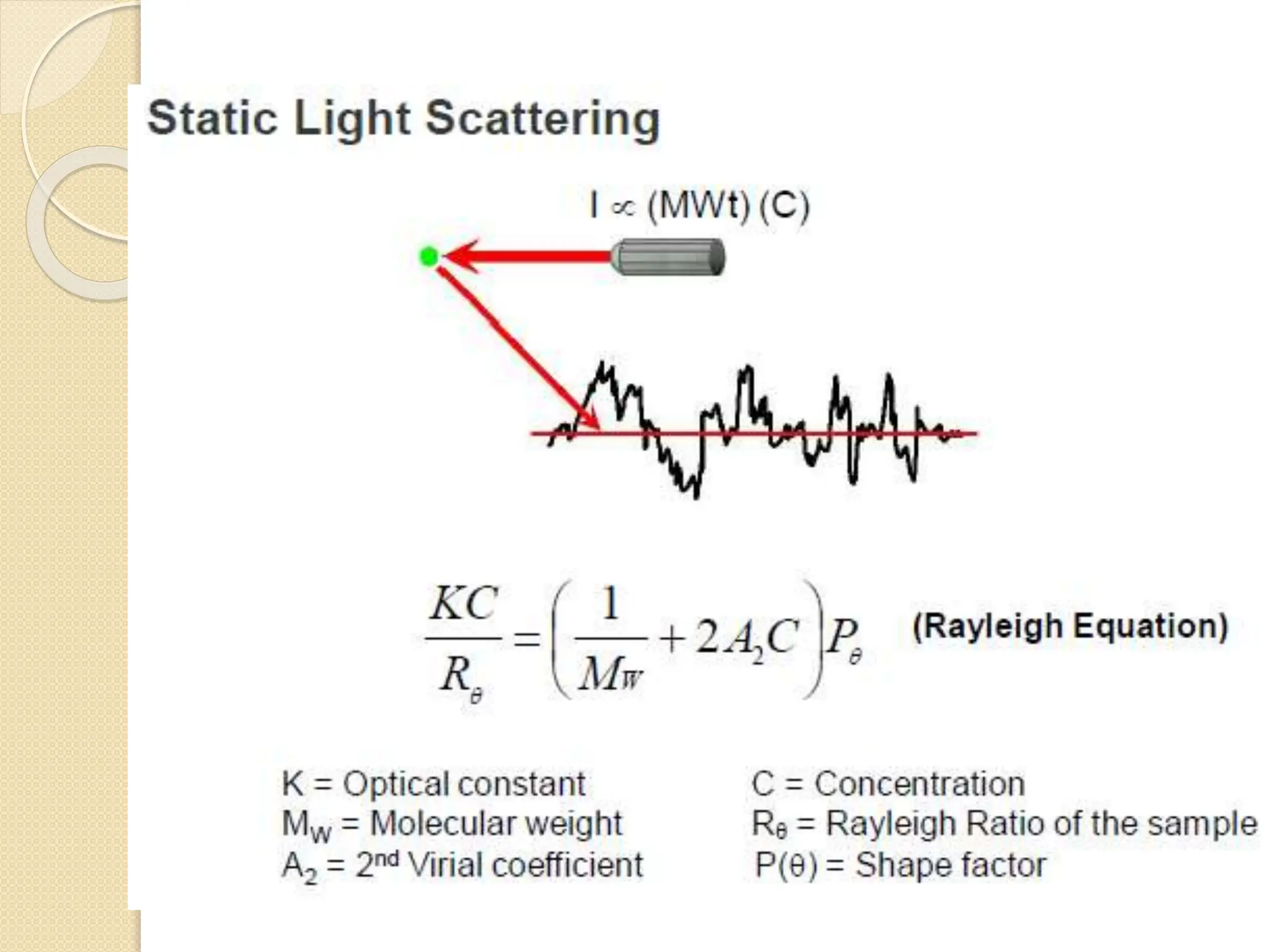
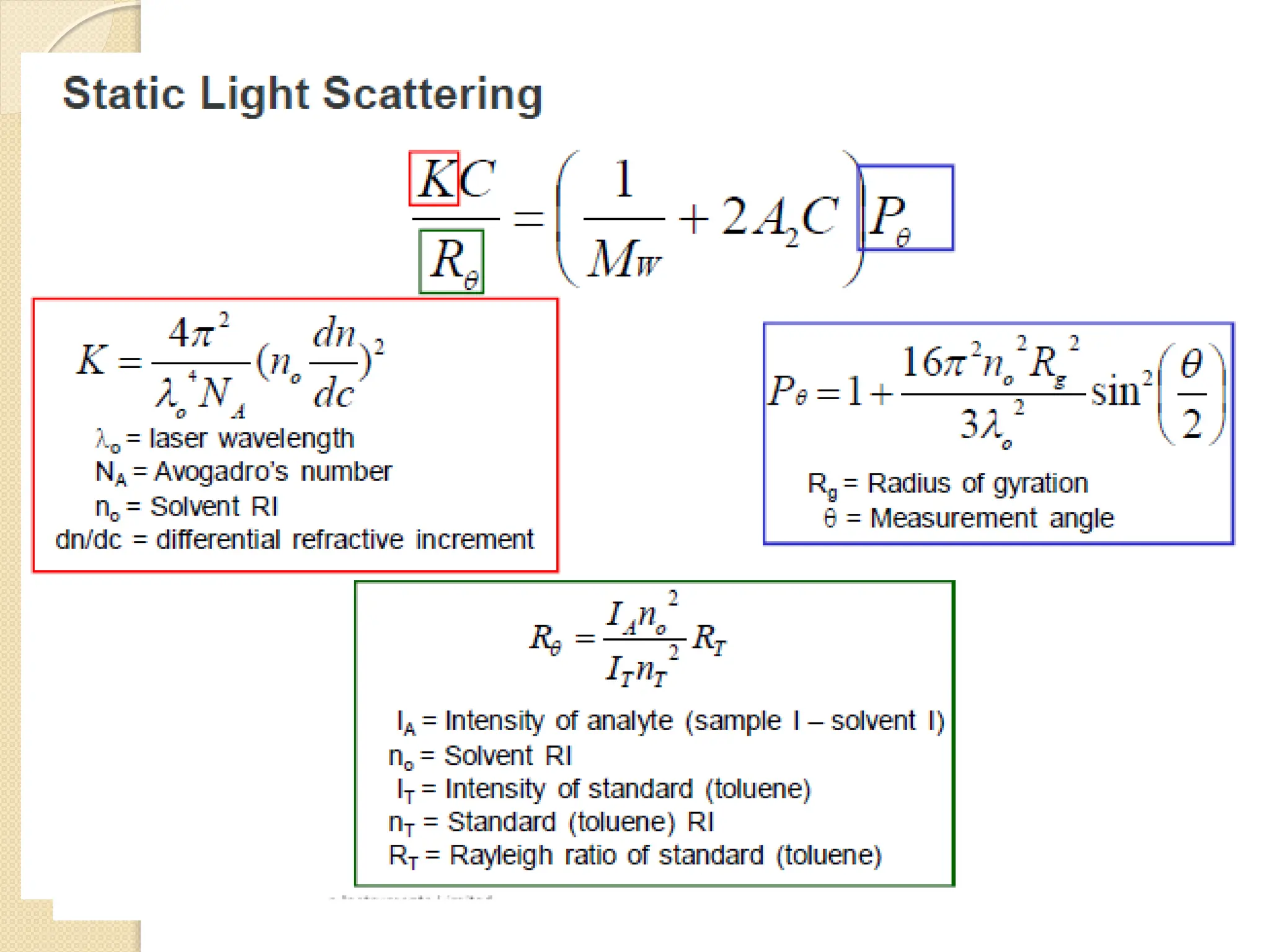
An Introduction to
Dynamic Light
Scattering, Static
Light Scattering &
LASER Doppler
Velocimetry
Dr Shibsekhar Roy, Dept. of
Biochemistry, UCS, OU,
Hyderabad
Why we need a new technique for
biomolecular investigation?
Size Issue
Conventional techniques for size measurement in nanometer scale
TEM (Transmission electron microscopy)
SEM (Scanning electron microscopy)
AFM (Atomic force microscopy)
 & many other sophisticated derivatives of the above
Limitations:
Size obtained from these methods are of the dried/ de-
hydrated form of the molecule, which is majorly
nonfunctional.
Real picture of the active state of the molecule cannot
be known
Conventional advanceed biophysical techniques—
Surface plasmon resonance (SPR),
Bio-layer interferrometry (BLI),
Isothermal titration calorimetry (ITC)
Why we need a new technique for
biomolecular investigation? Contd..
Limitations:
Poor fits of the signals to theoretical binding curves
Ambiguous determination of the appropriate association
model
Erratic or irreproducible data
Results that vary with immobilization chemistry or chip
coating
Results that depend on which binding partner is immobilized
or titrated
Results that vary greatly from lot to lot of reagent
Fouling of microfluidic channels.
What else we don’t know?
 Homogeneity of the sample
 Electrostatic property of the Surface
 Sample conductivity
 Aggregation propensity
 Molecular weight
Summation of all of these properties along
with the size measured in solution
(aqueous) phase are known as
hydrodynamic properties
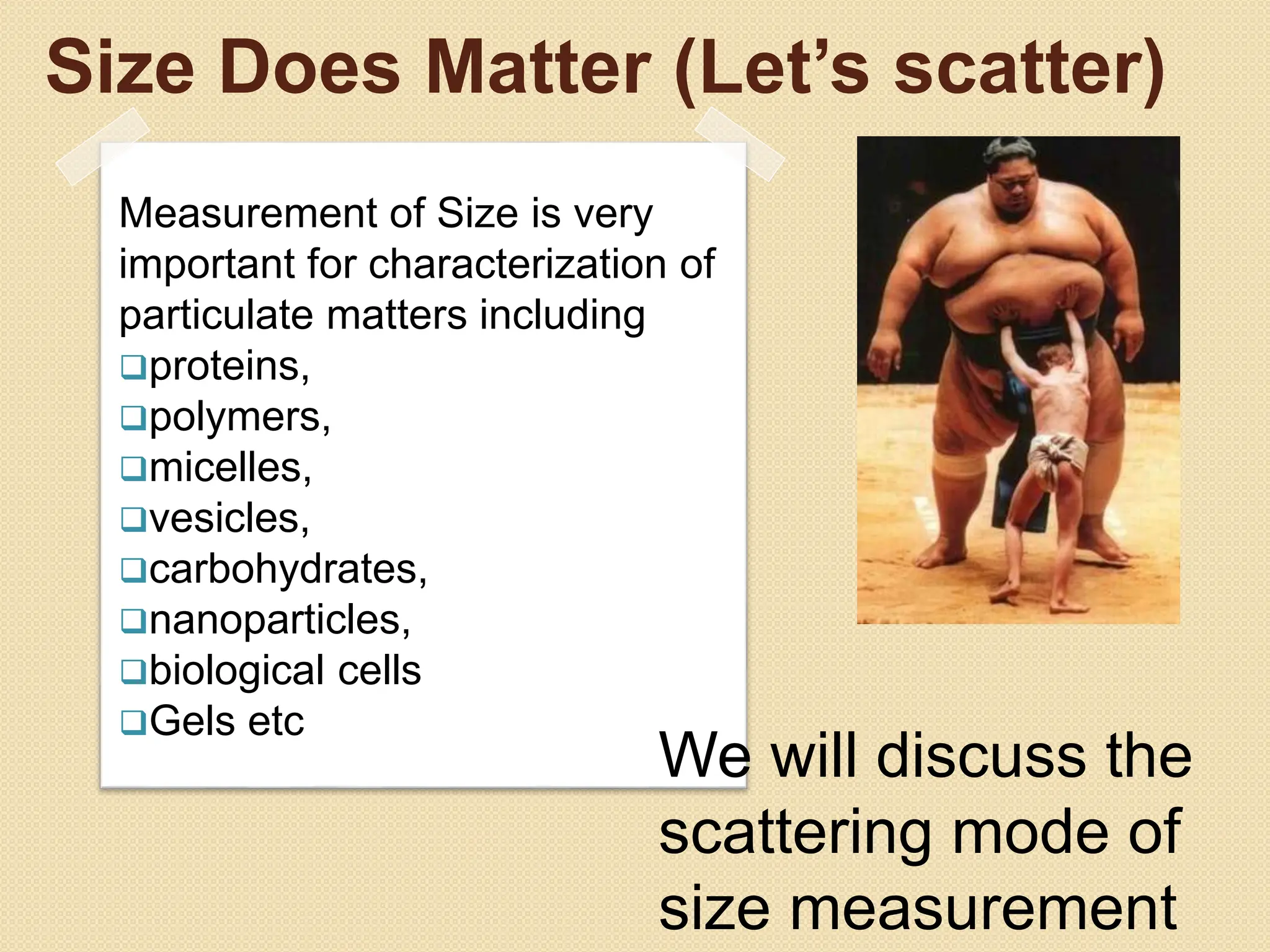
Size Does Matter (Let’s scatter)
Measurement of Size is very
important for characterization of
particulate matters including
proteins,
polymers,
micelles,
vesicles,
carbohydrates,
nanoparticles,
biological cells
Gels etc
We will discuss the
scattering mode of
size measurement
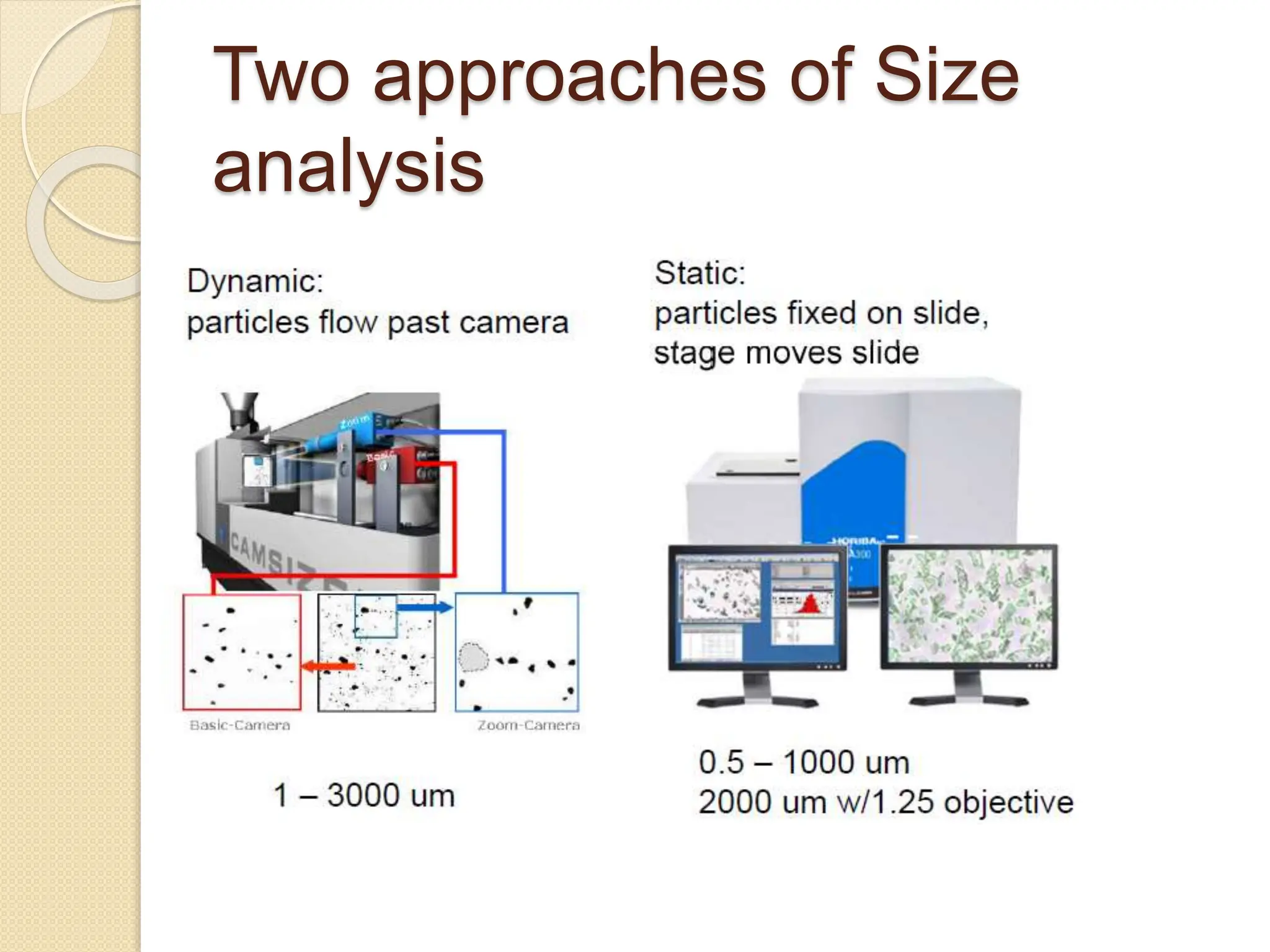
Two approaches of Size
analysis
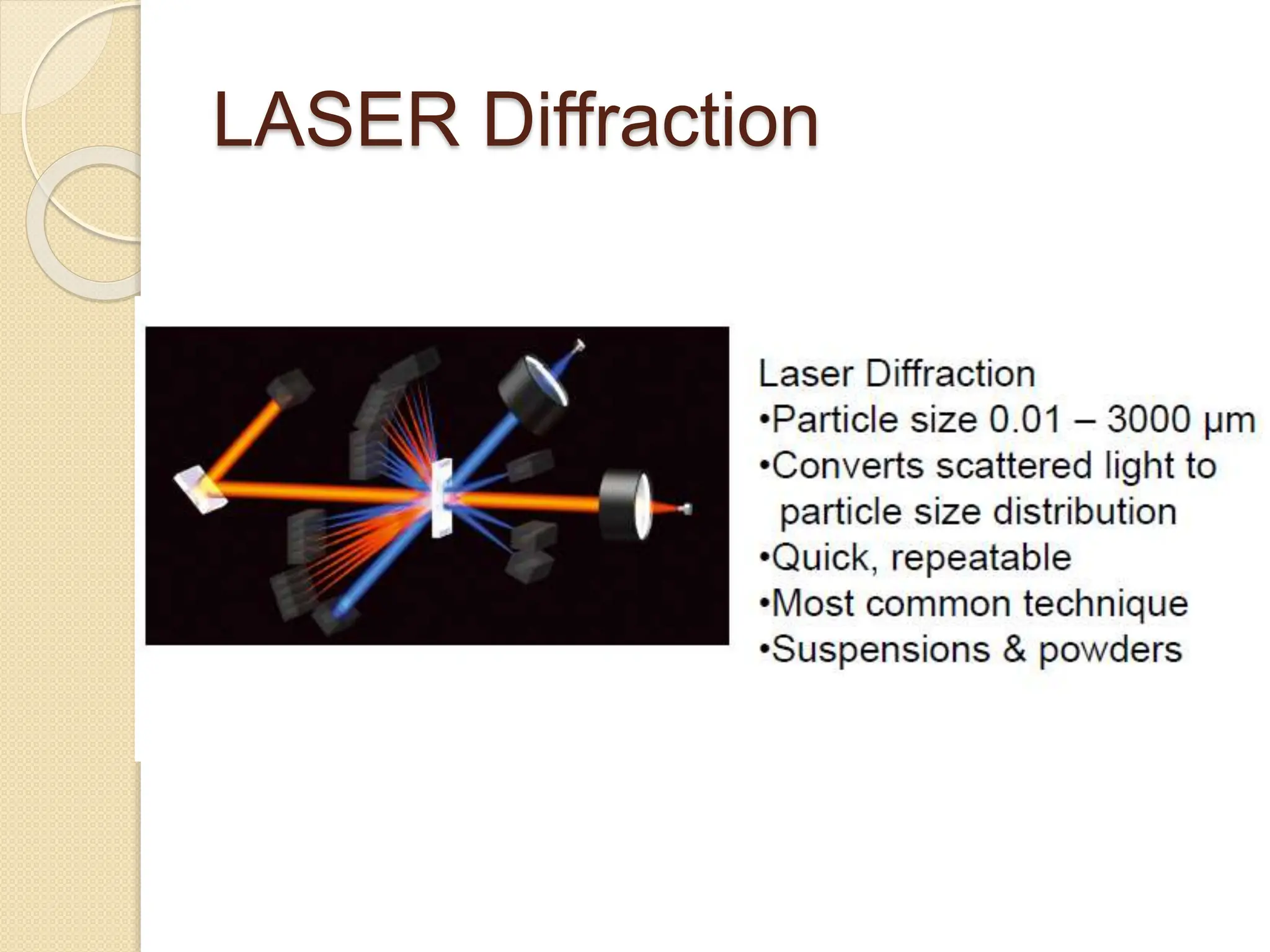
LASER Diffraction
What is Dynamic Light Scattering
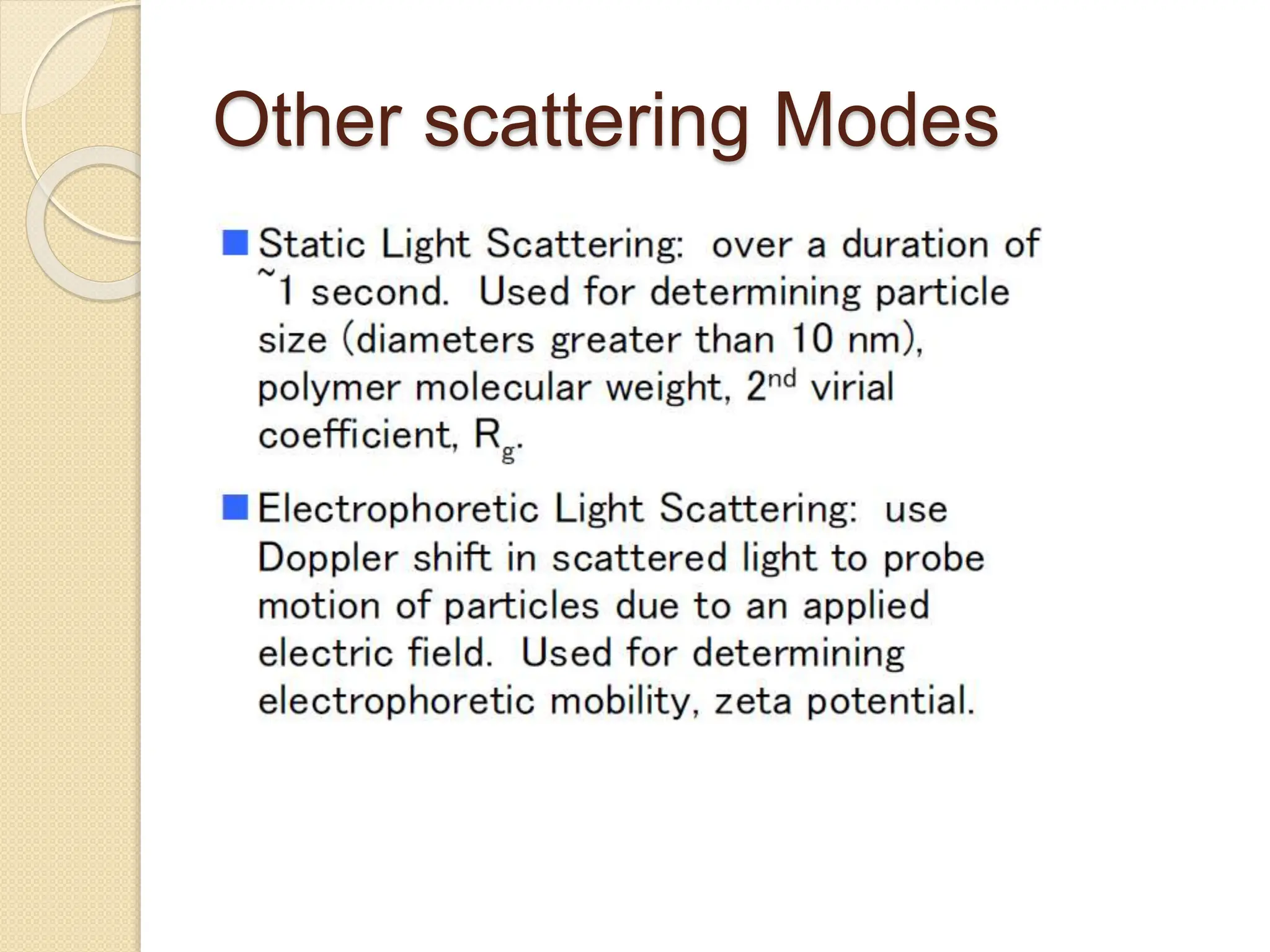
Other scattering Modes
Basic DLS Optics
[Alternatively 632nm,
558nm WLs are there
also]
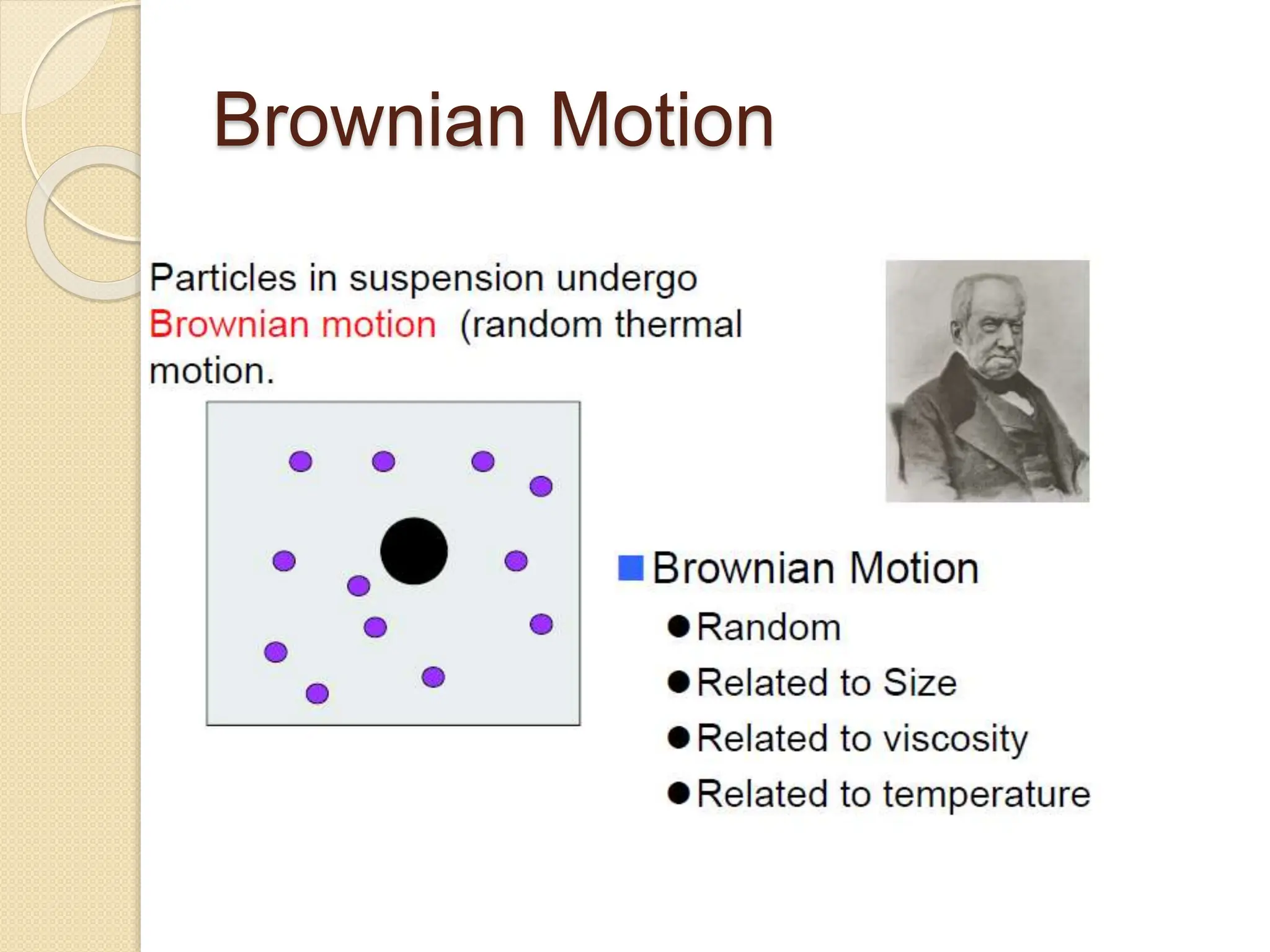
Brownian Motion
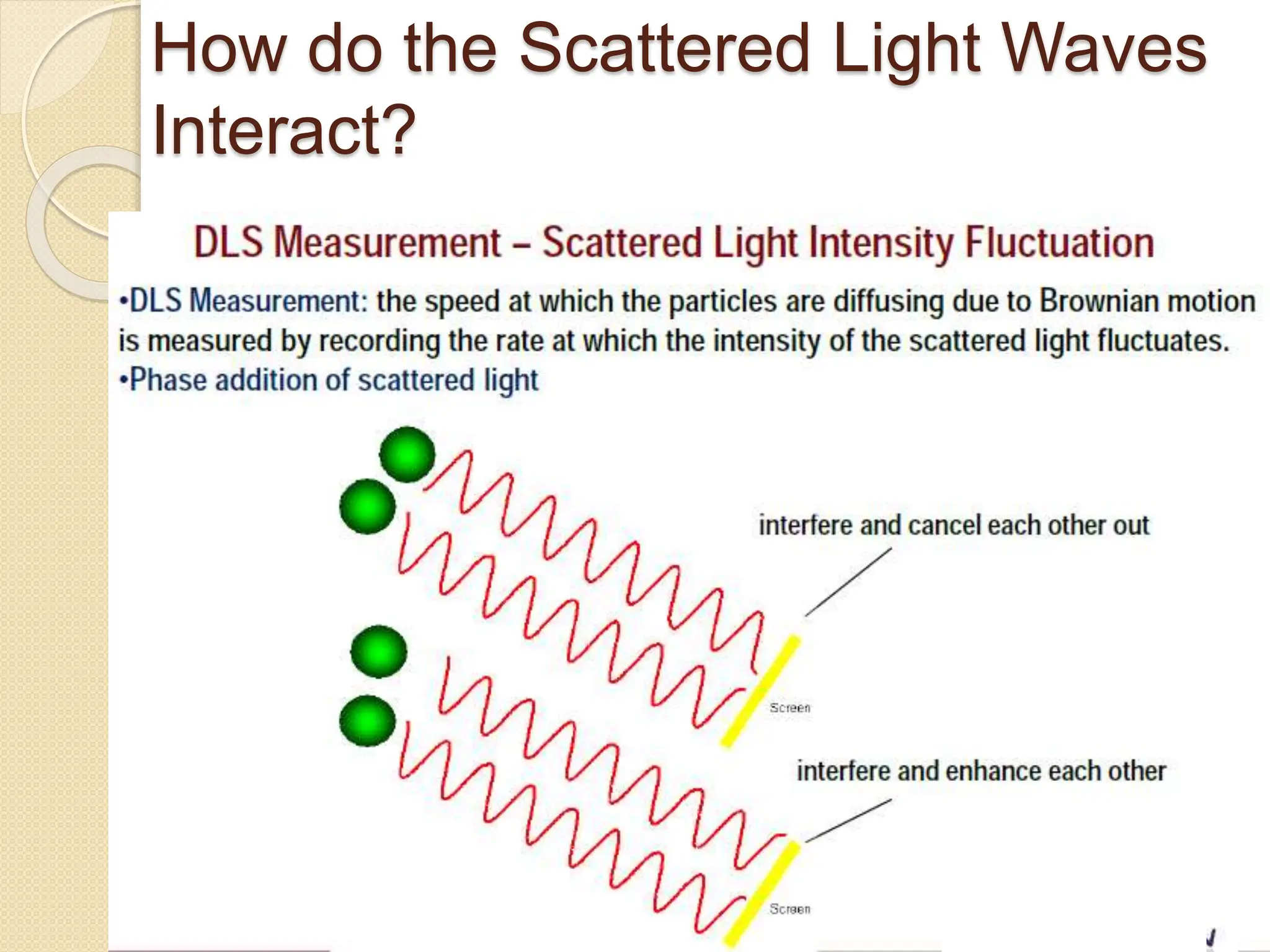
How do the Scattered Light Waves
Interact?
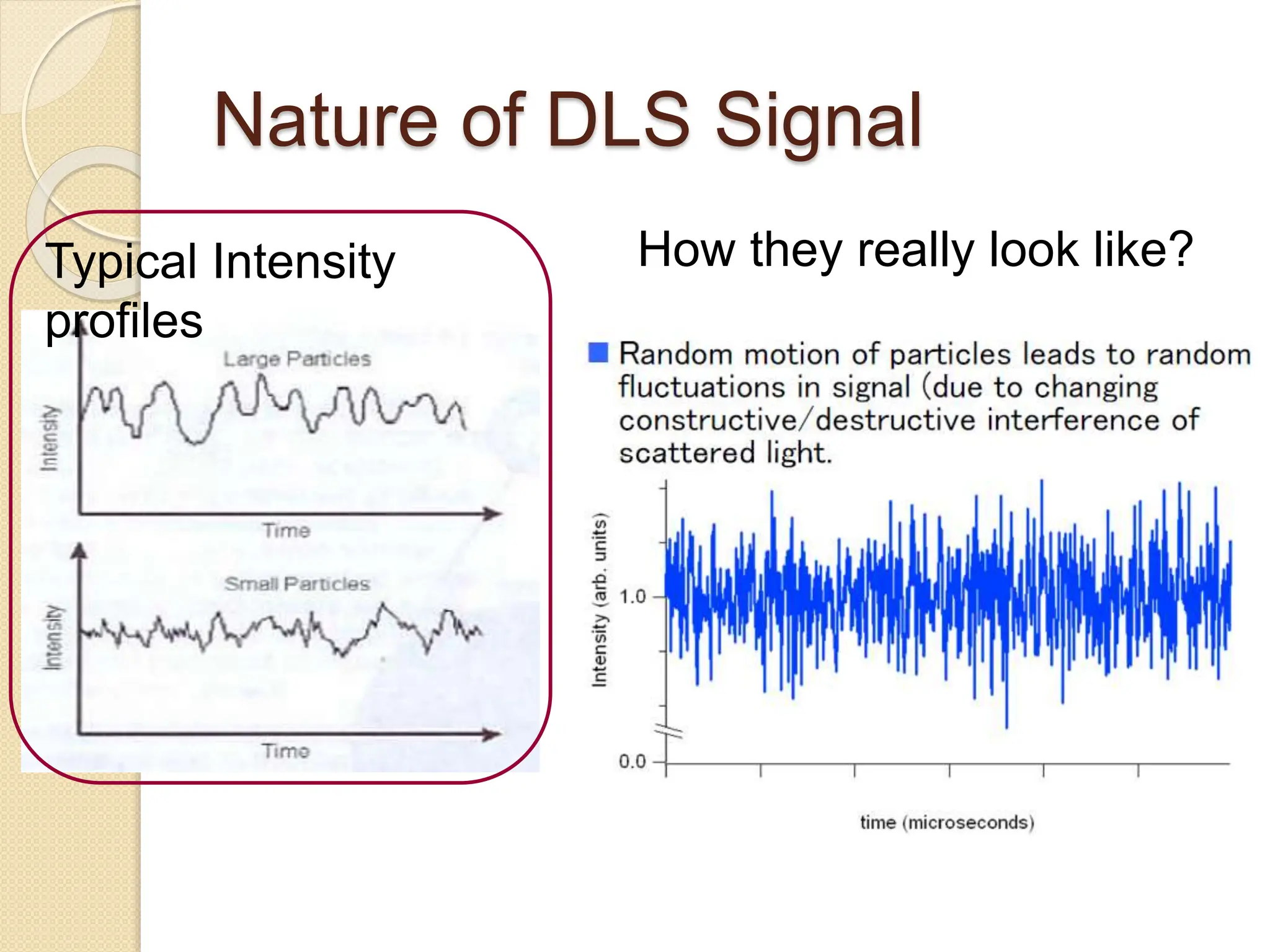
Nature of DLS Signal
Typical Intensity
profiles
How they really look like?
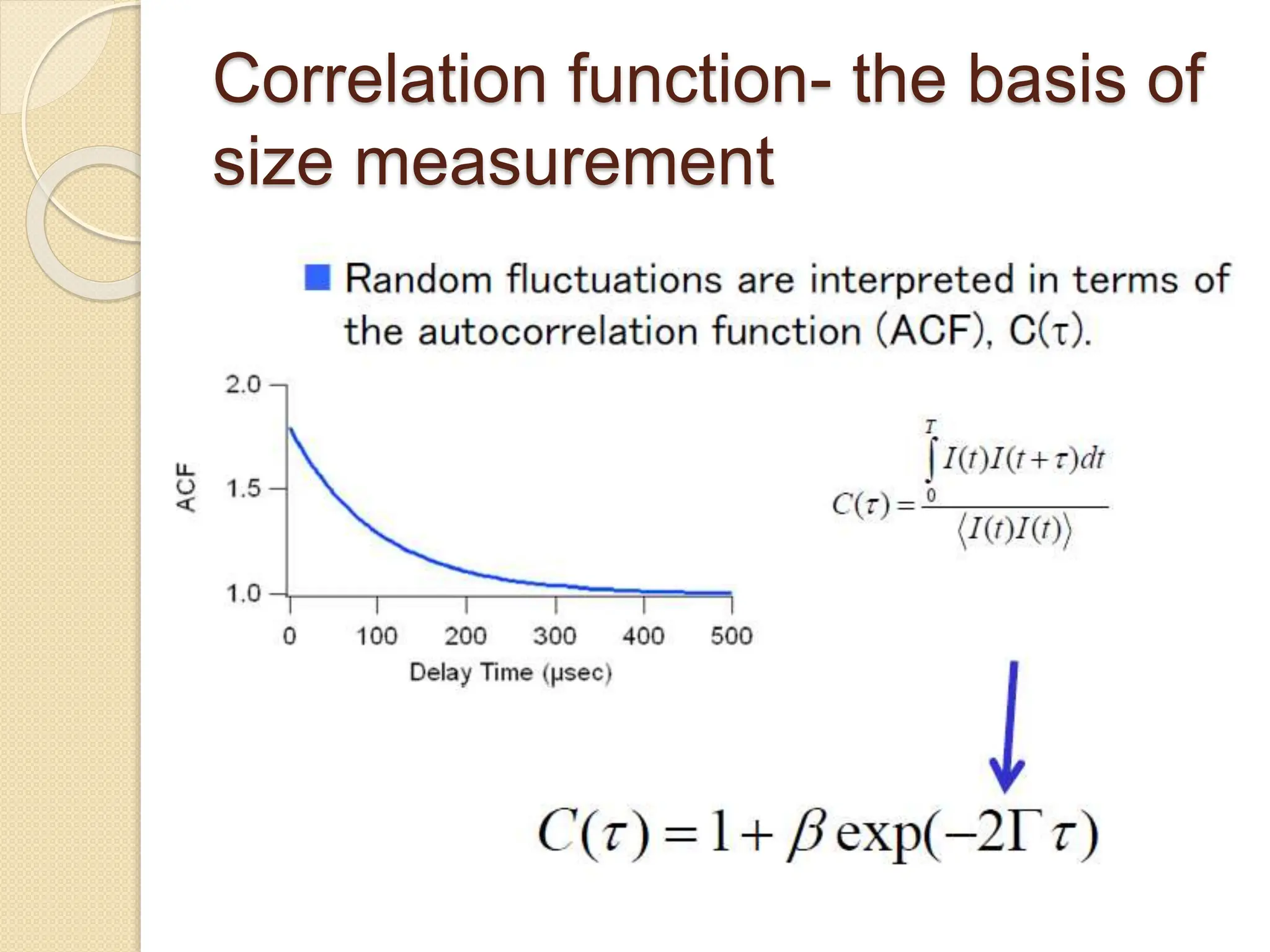
Correlation function- the basis of
size measurement
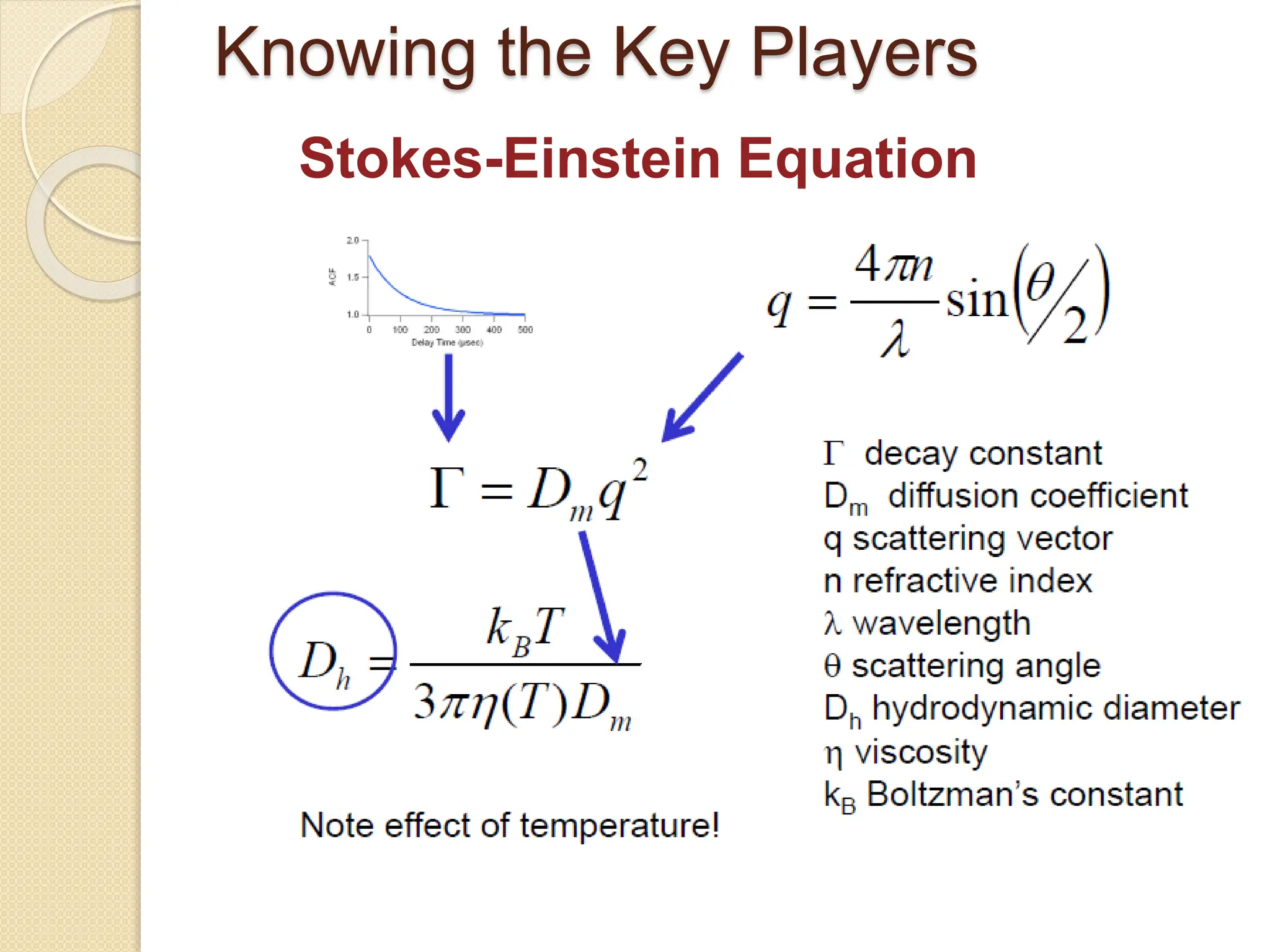
Knowing the Key Players
Stokes-Einstein Equation
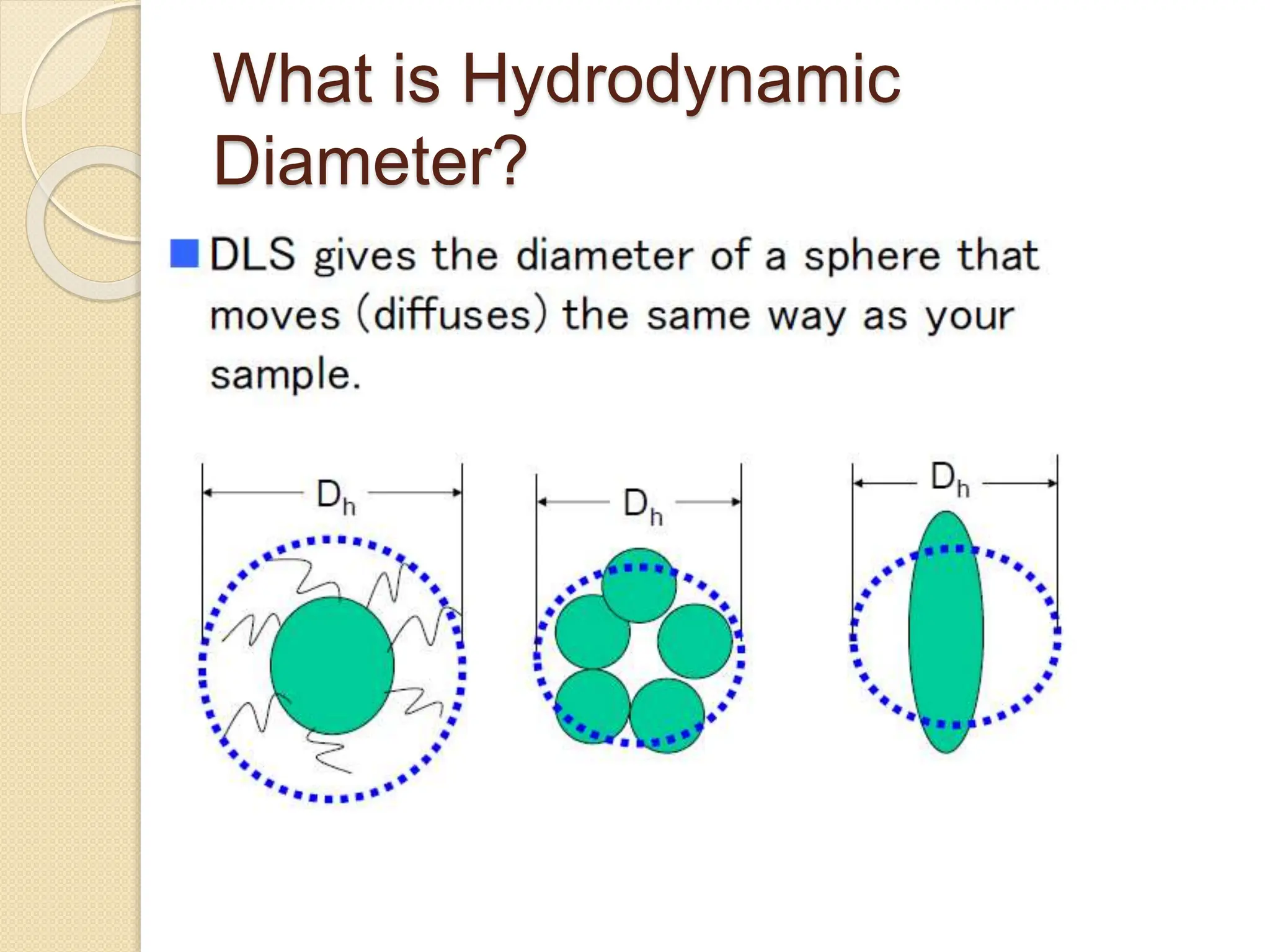
What is Hydrodynamic
Diameter?
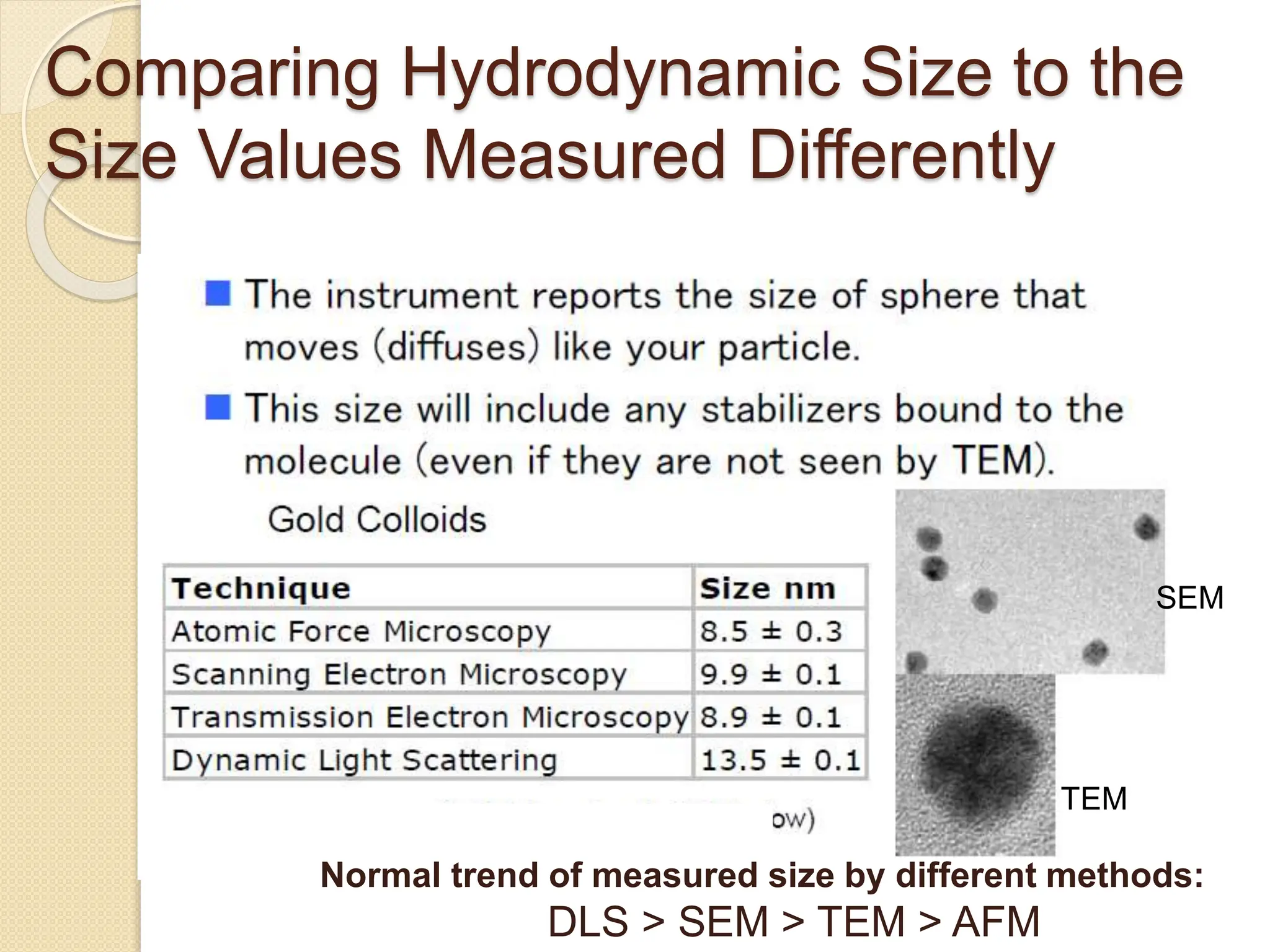
Comparing Hydrodynamic Size to the
Size Values Measured Differently
Normal trend of measured size by different methods:
DLS > SEM > TEM > AFM
SEM
TEM
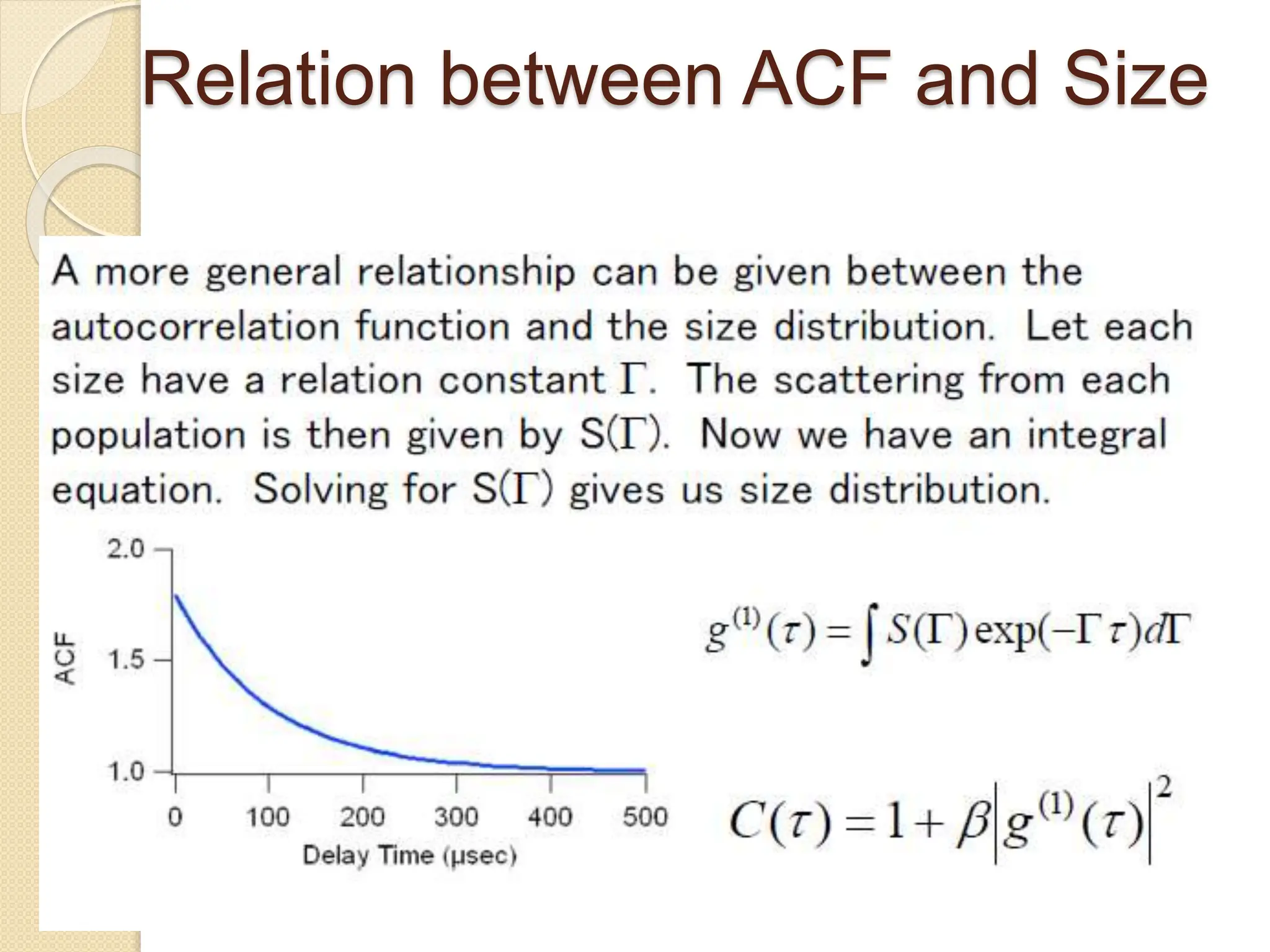
Relation between ACF and Size
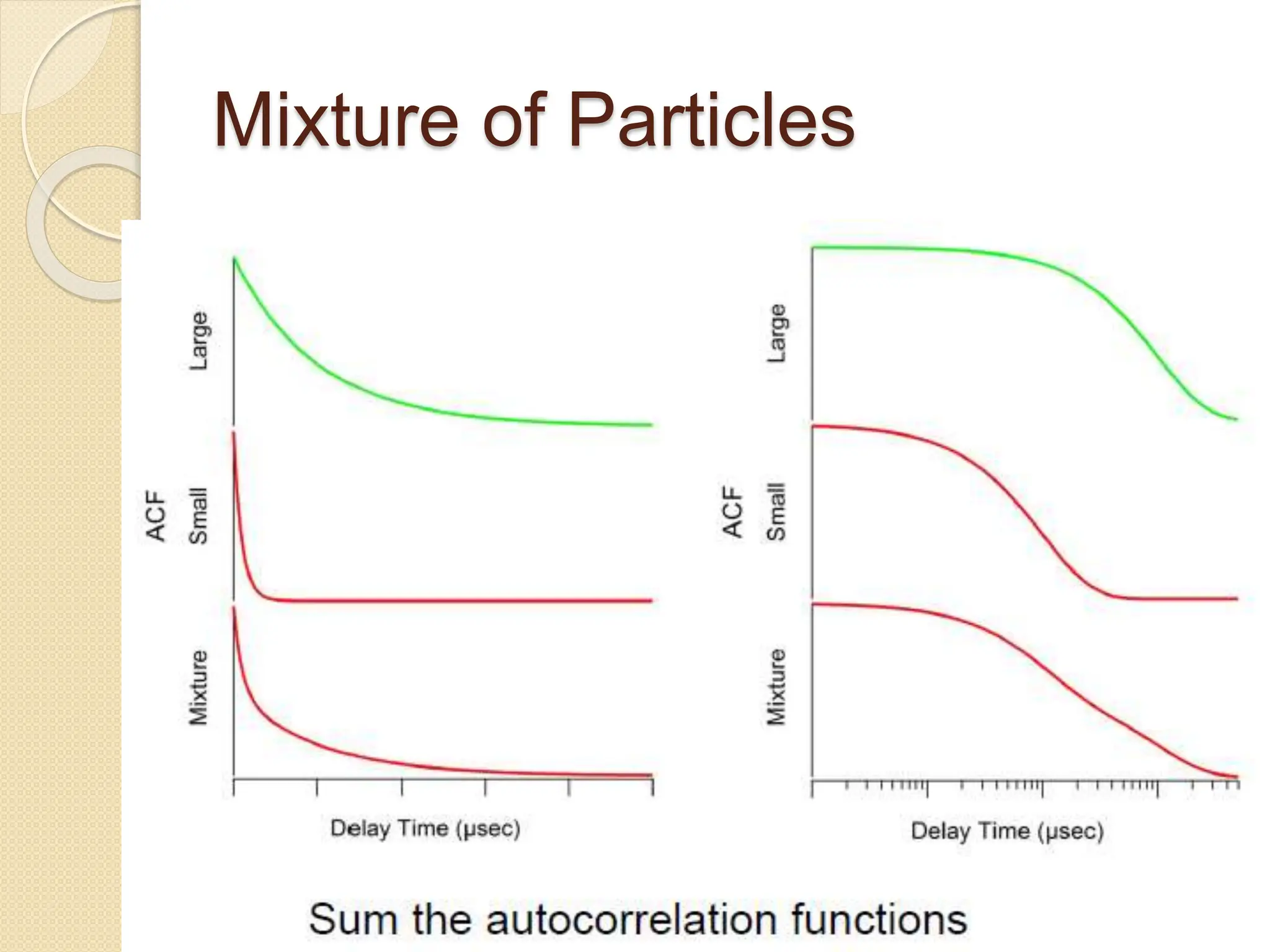
Mixture of Particles
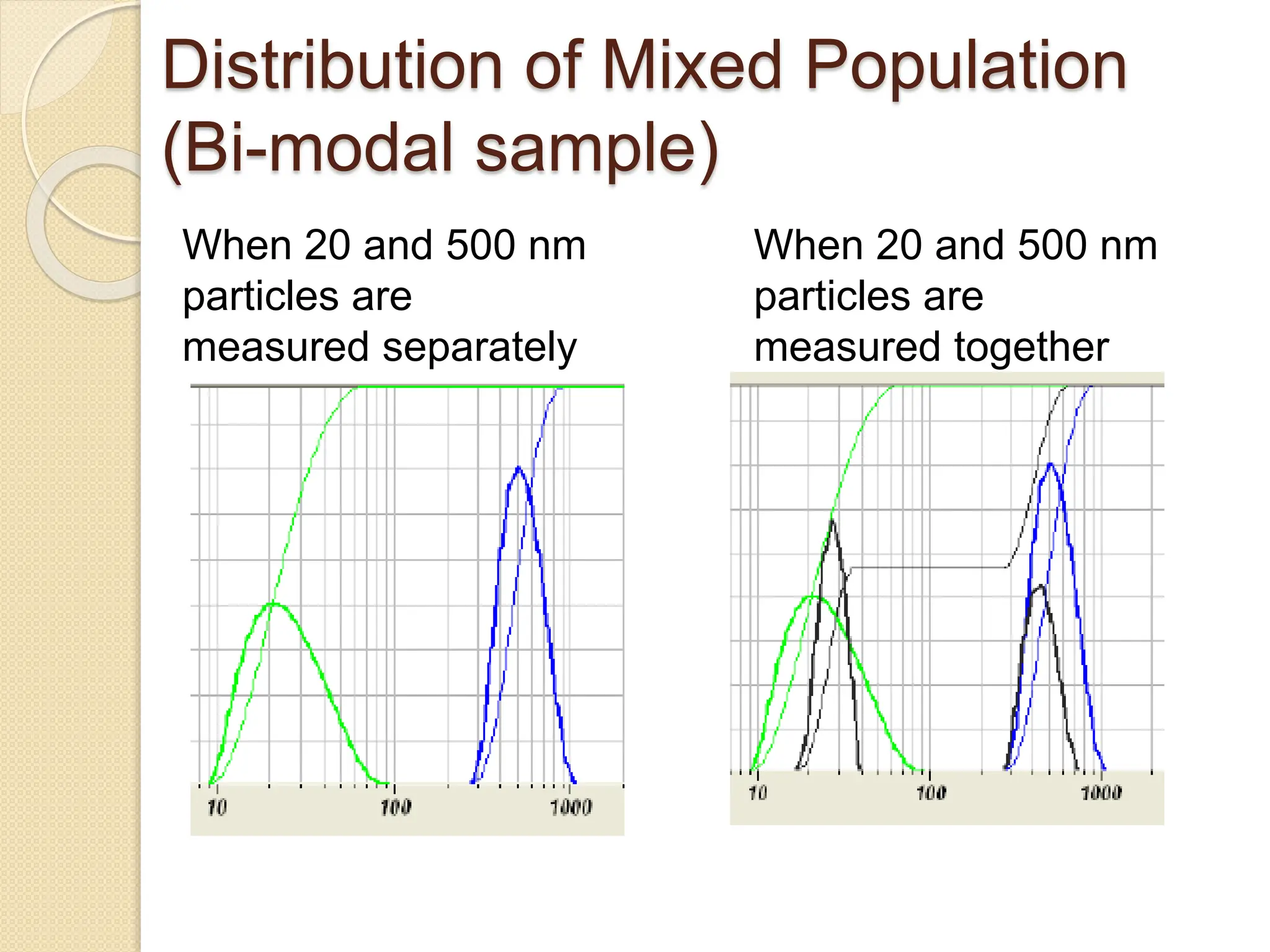
Distribution of Mixed Population
(Bi-modal sample)
When 20 and 500 nm
particles are
measured separately
When 20 and 500 nm
particles are
measured together
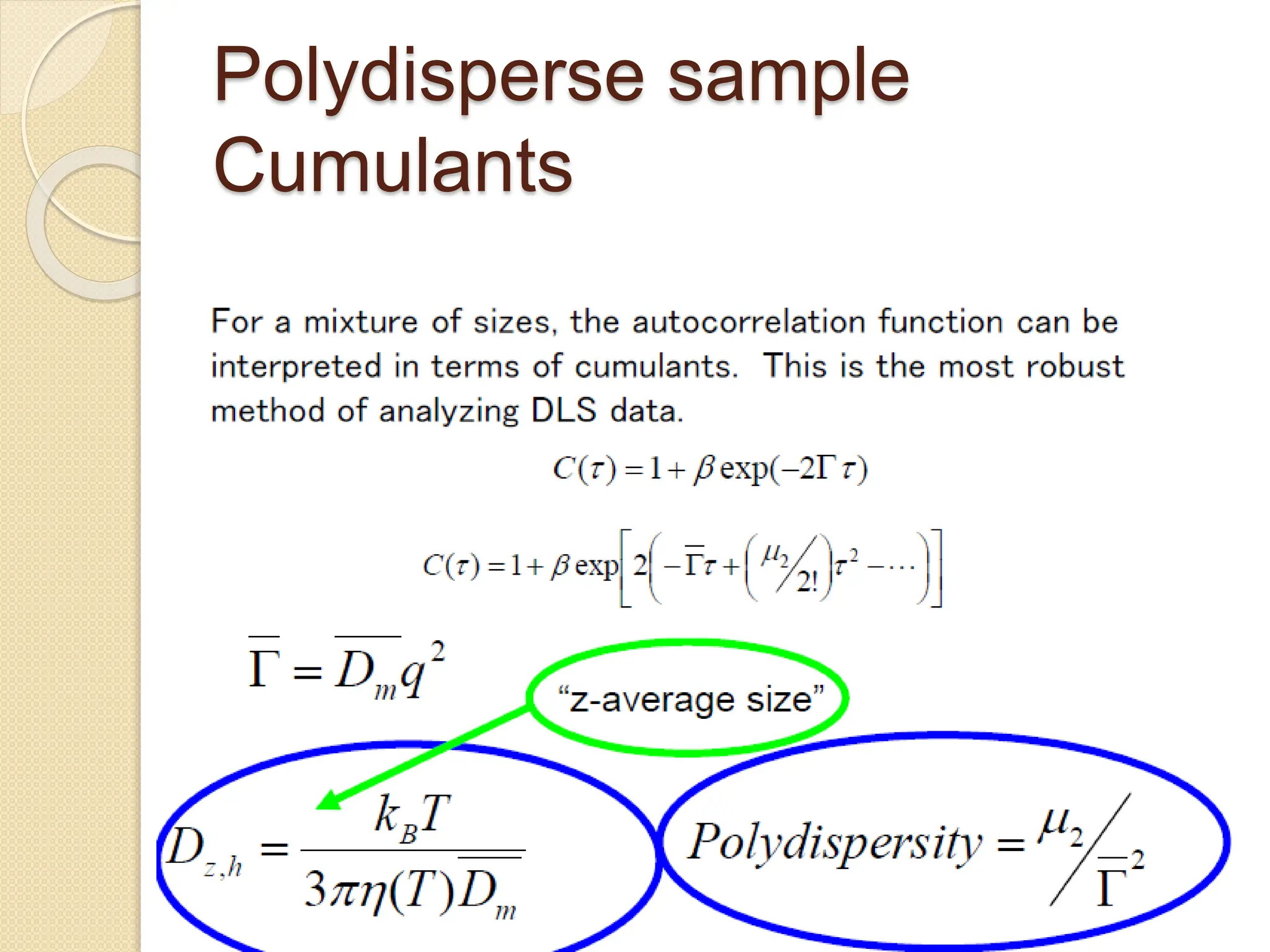
Polydisperse sample
Cumulants
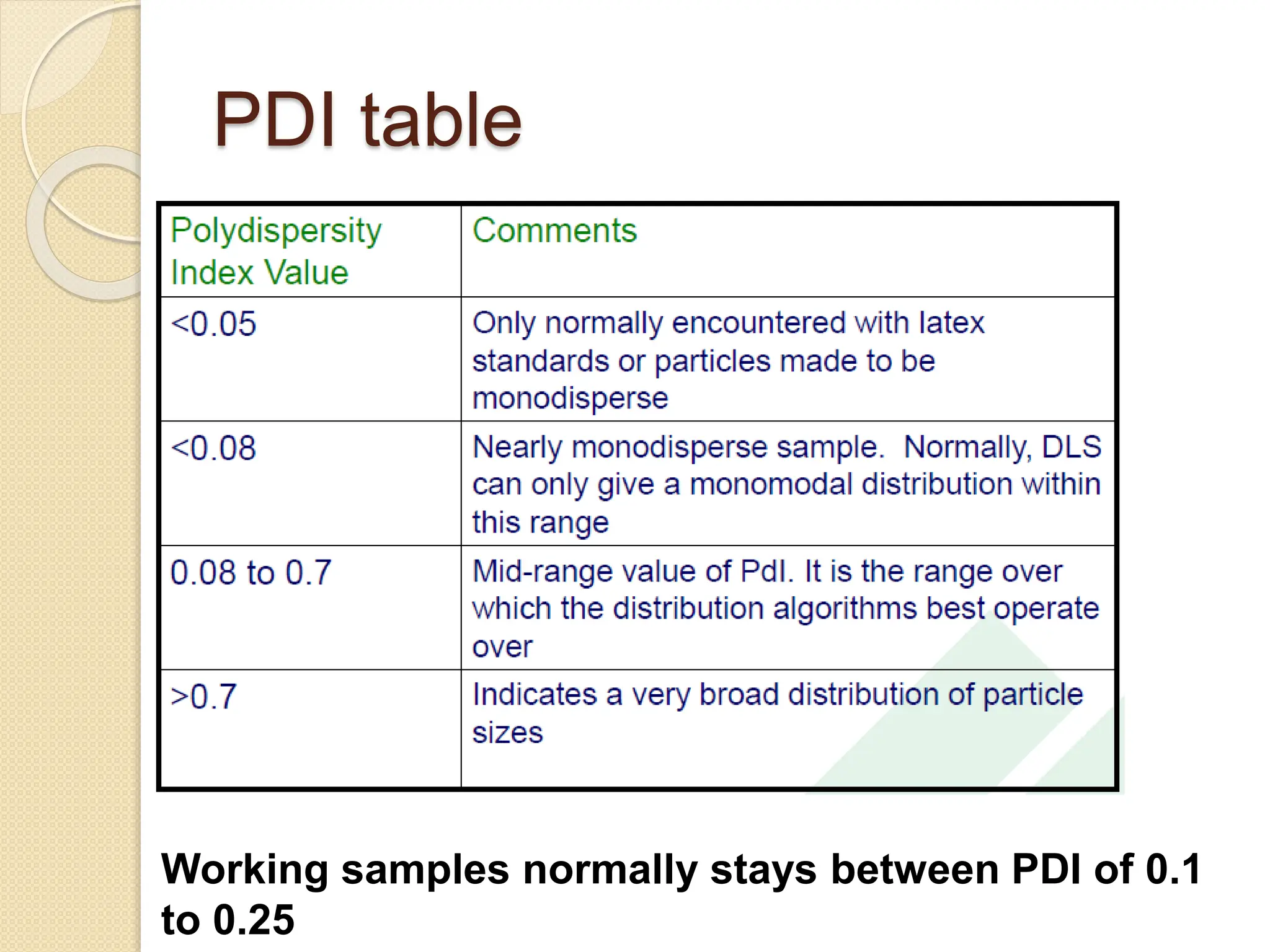
PDI table
Working samples normally stays between PDI of 0.1
to 0.25
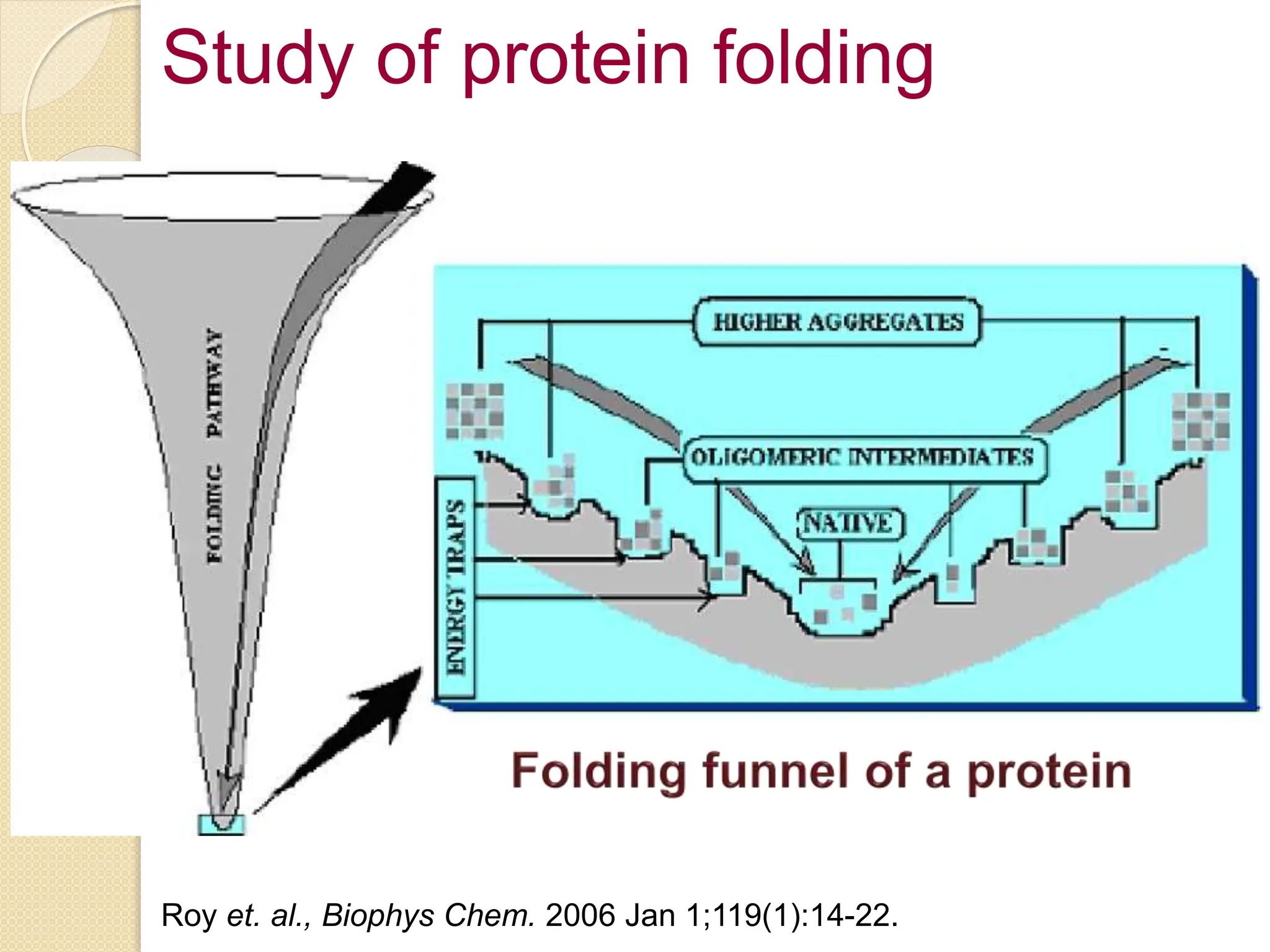
Study of protein folding
Roy et. al., Biophys Chem. 2006 Jan 1;119(1):14-22.
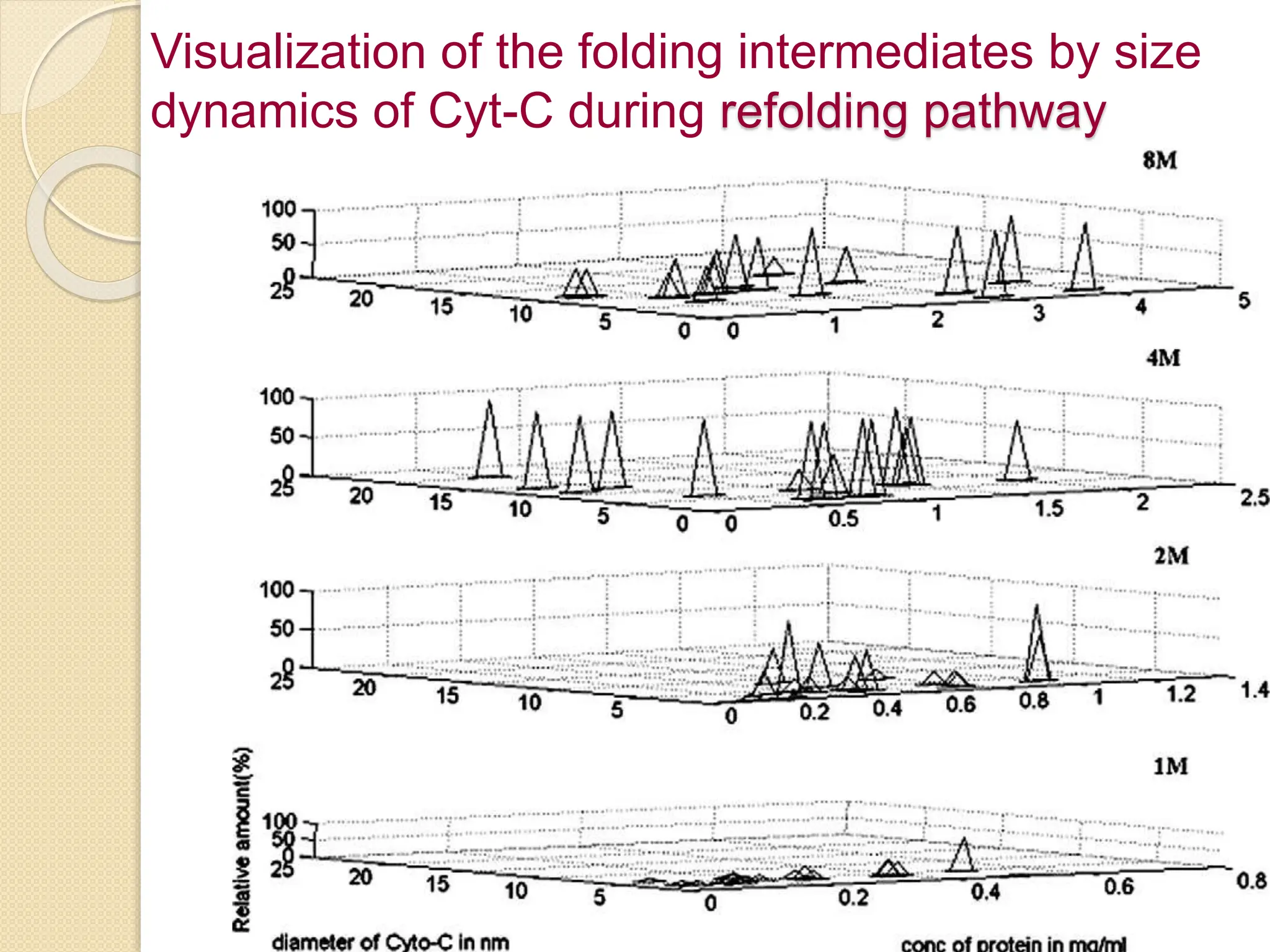
Visualization of the folding intermediates by size
dynamics of Cyt-C during refolding pathway
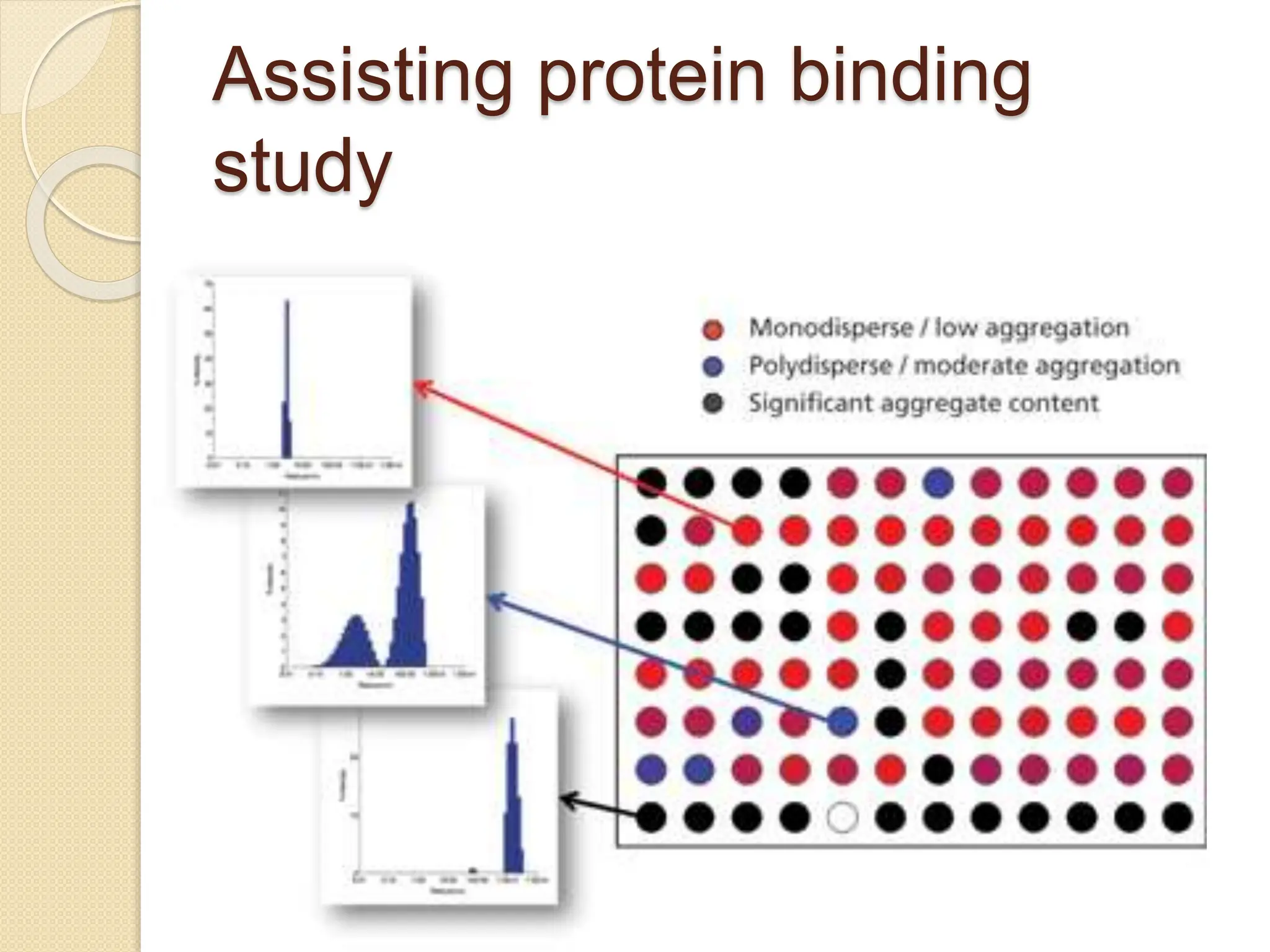
Assisting protein binding
study
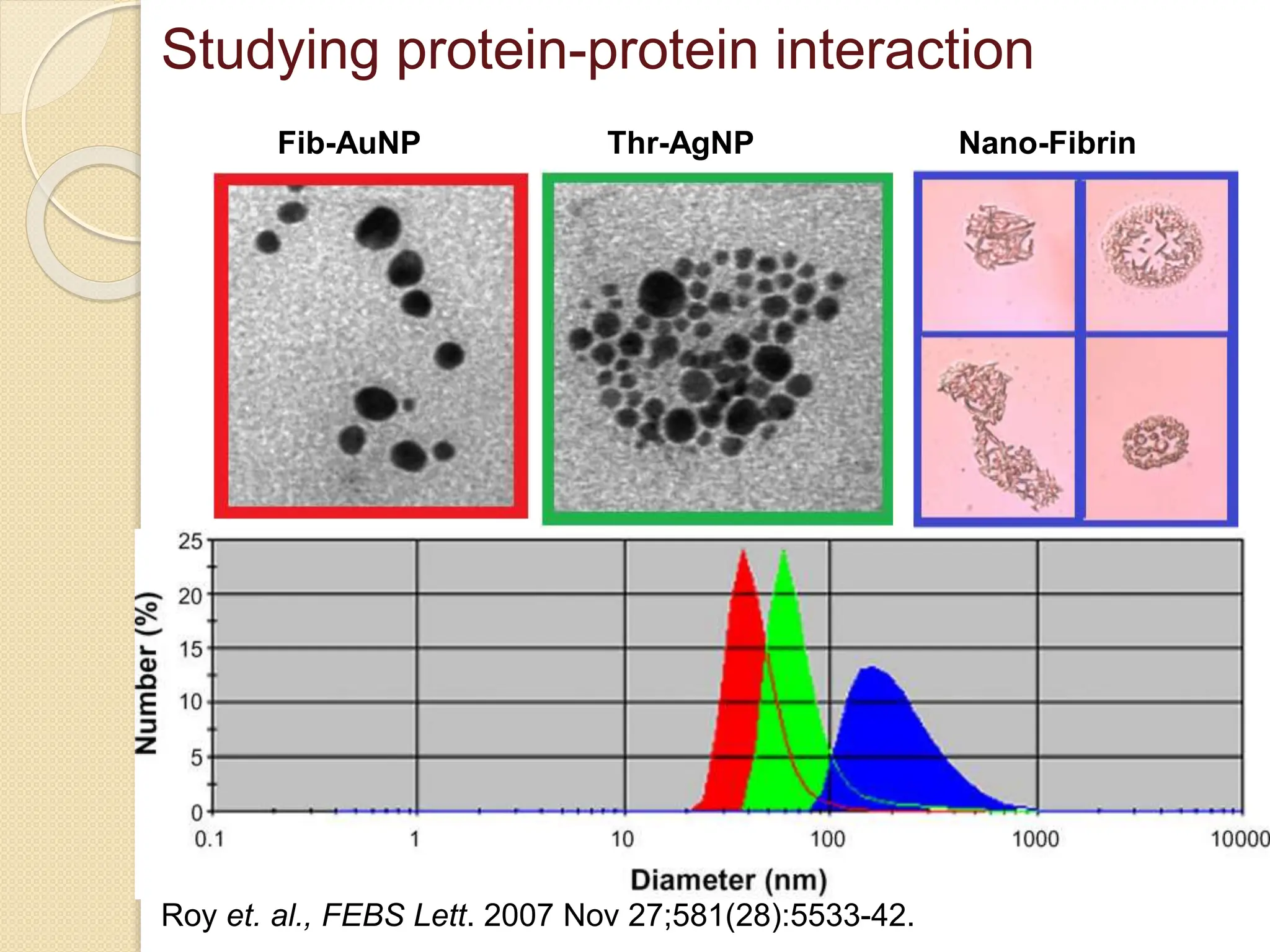
Studying protein-protein interaction
Fib-AuNP Thr-AgNP Nano-Fibrin
Roy et. al., FEBS Lett. 2007 Nov 27;581(28):5533-42.
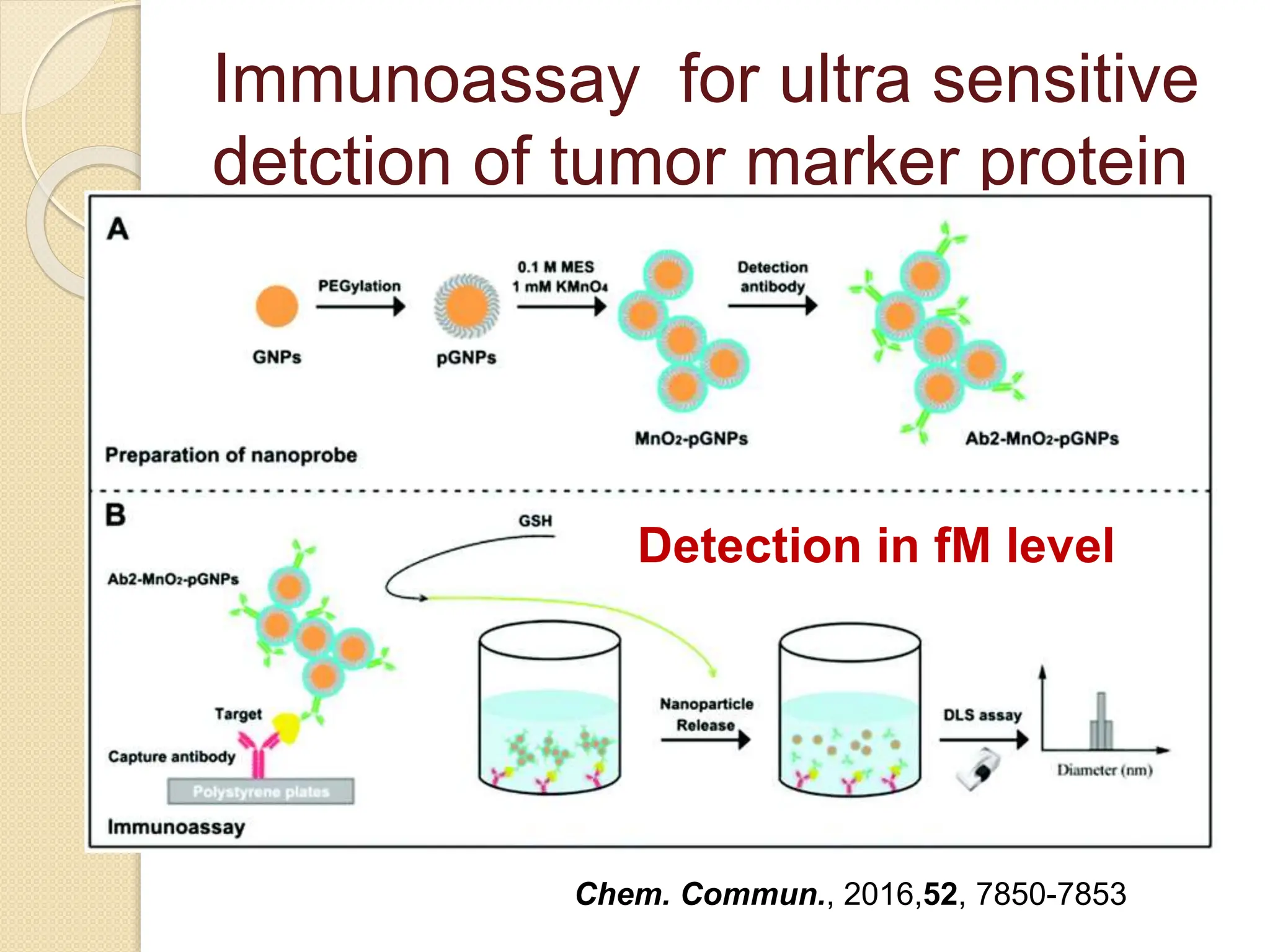
Immunoassay for ultra sensitive
detction of tumor marker protein
Chem. Commun., 2016,52, 7850-7853
Detection in fM level
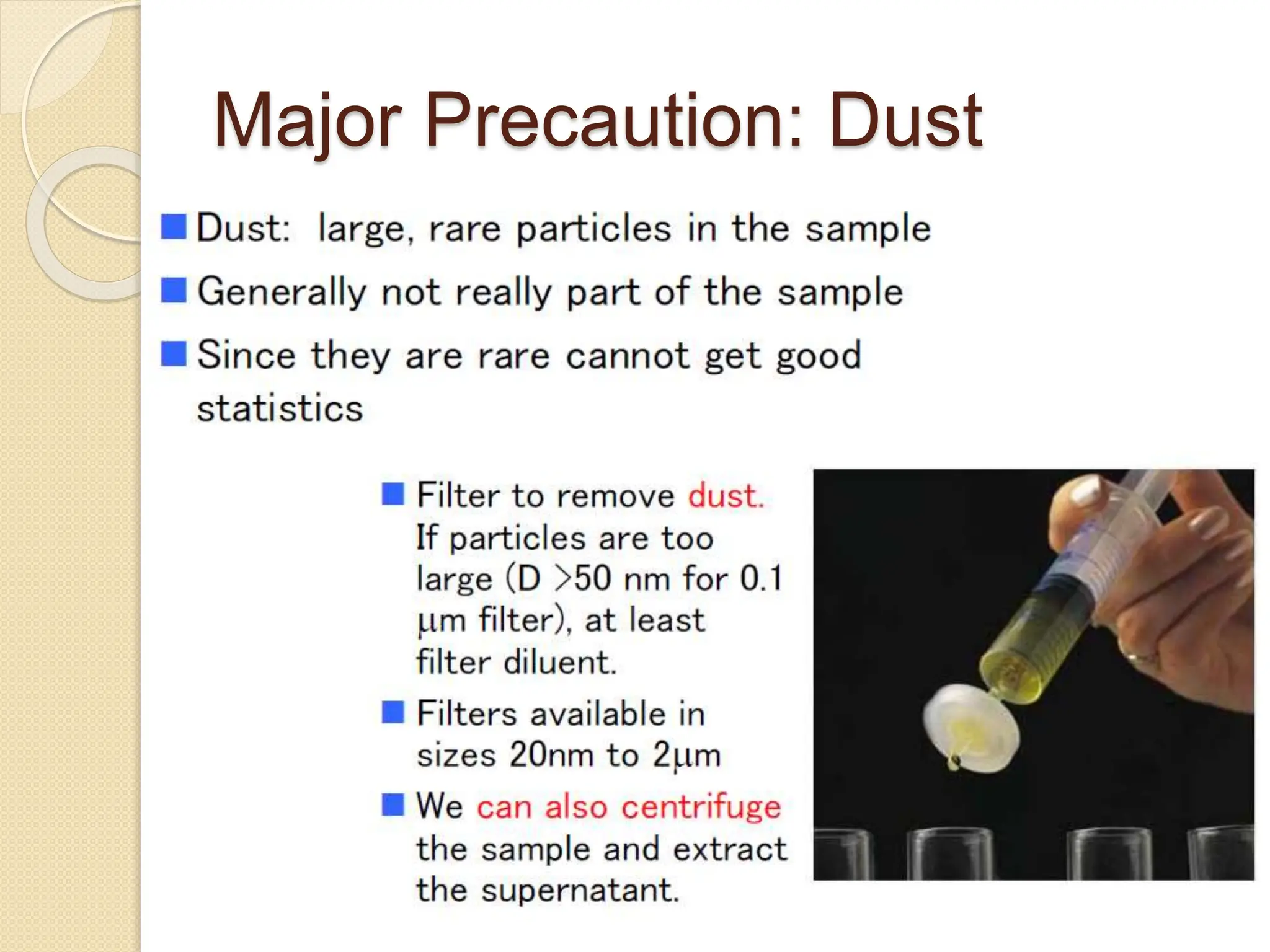
Major Precaution: Dust
Why DLS? Some Major
Advantages
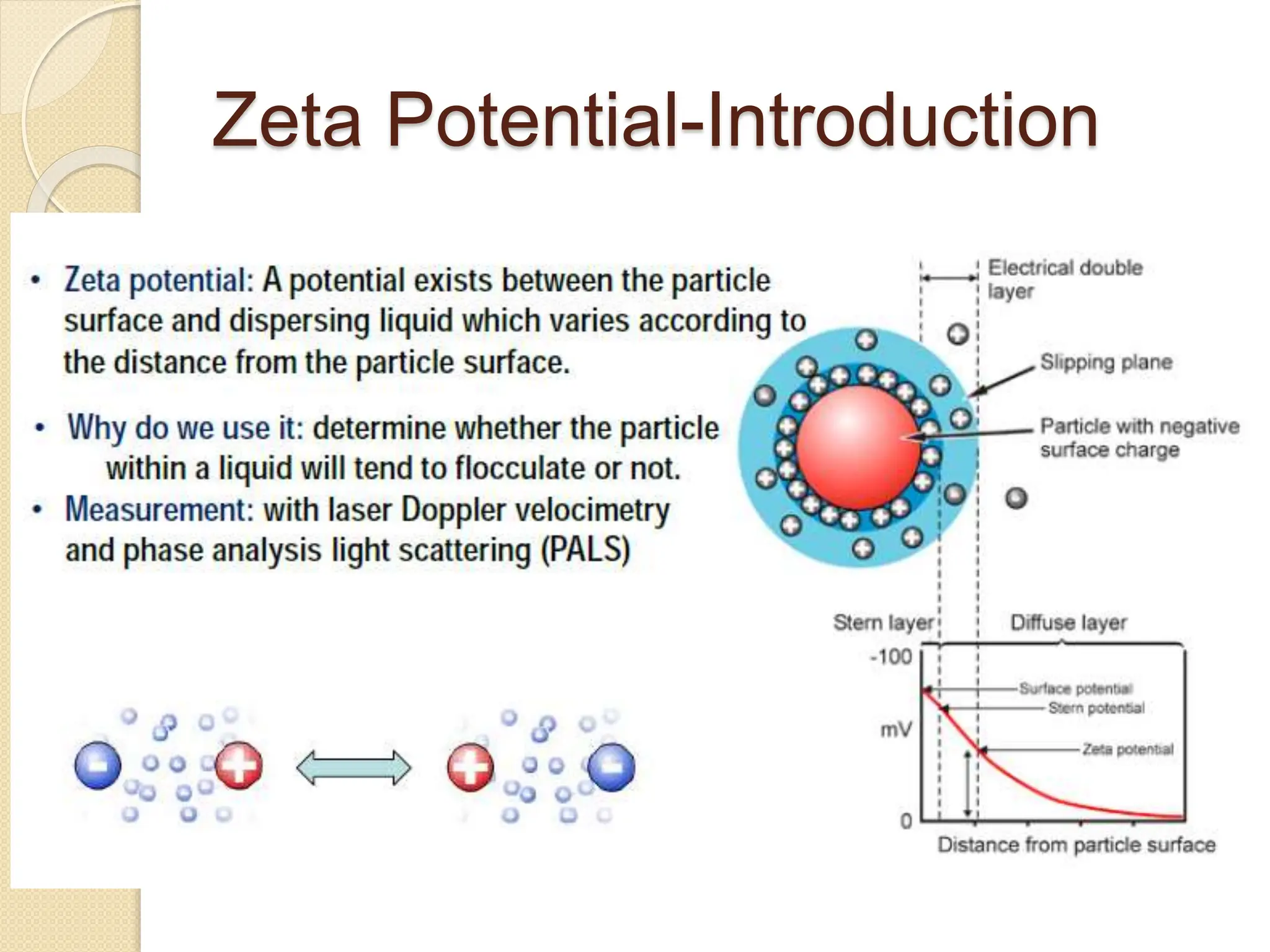
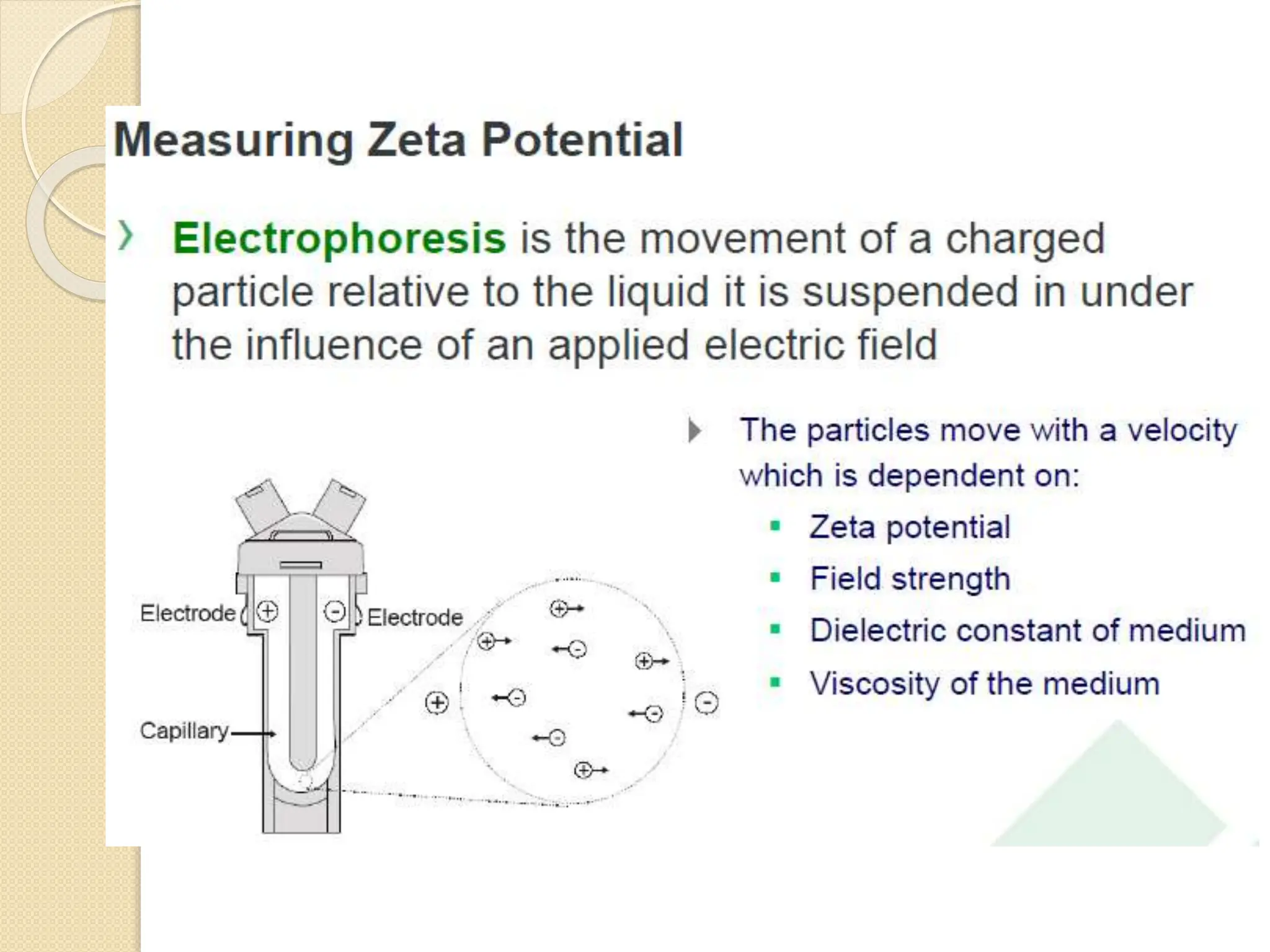
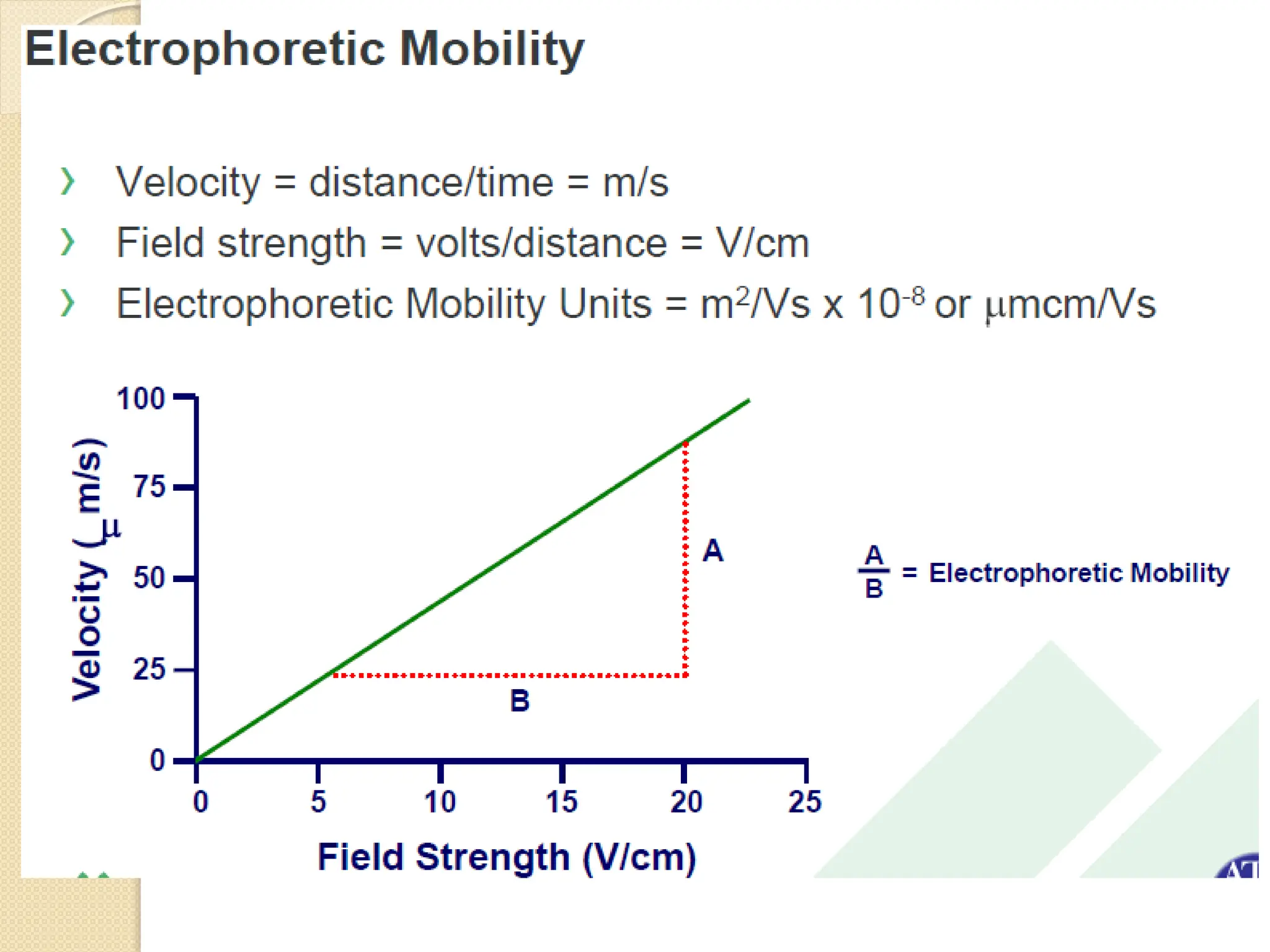
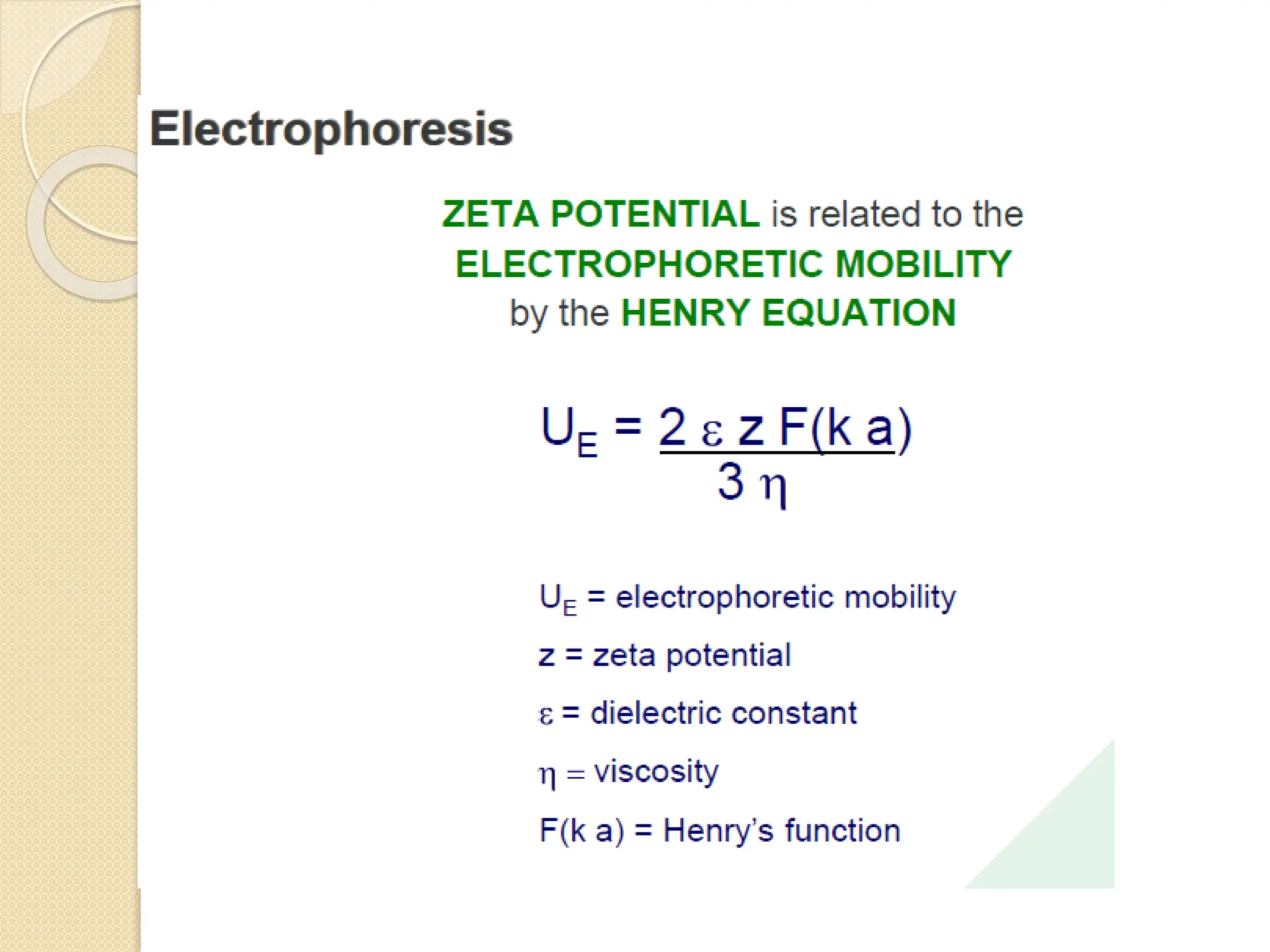
Zeta Potential-Introduction
Instrument
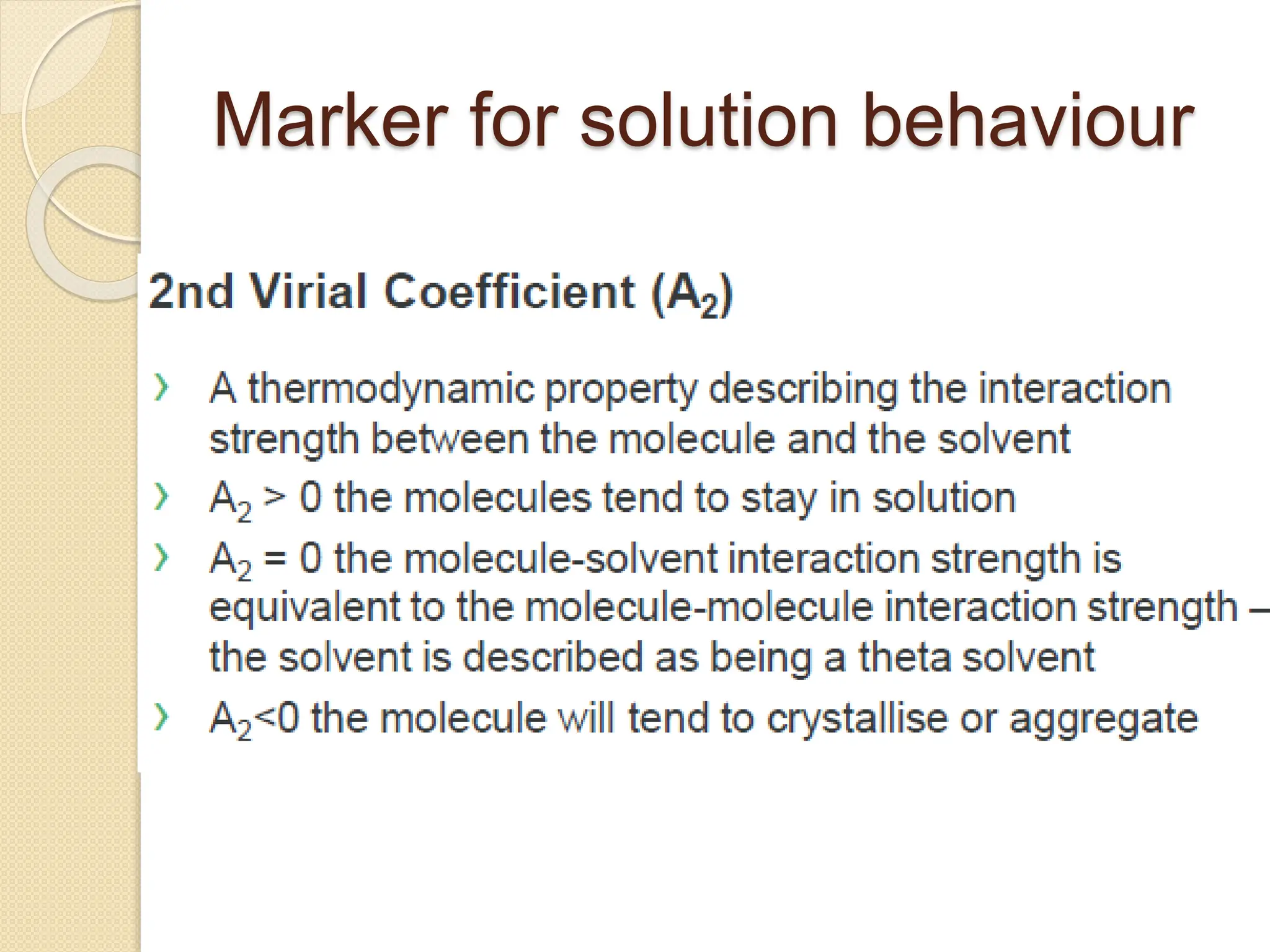
Marker for solution behaviour
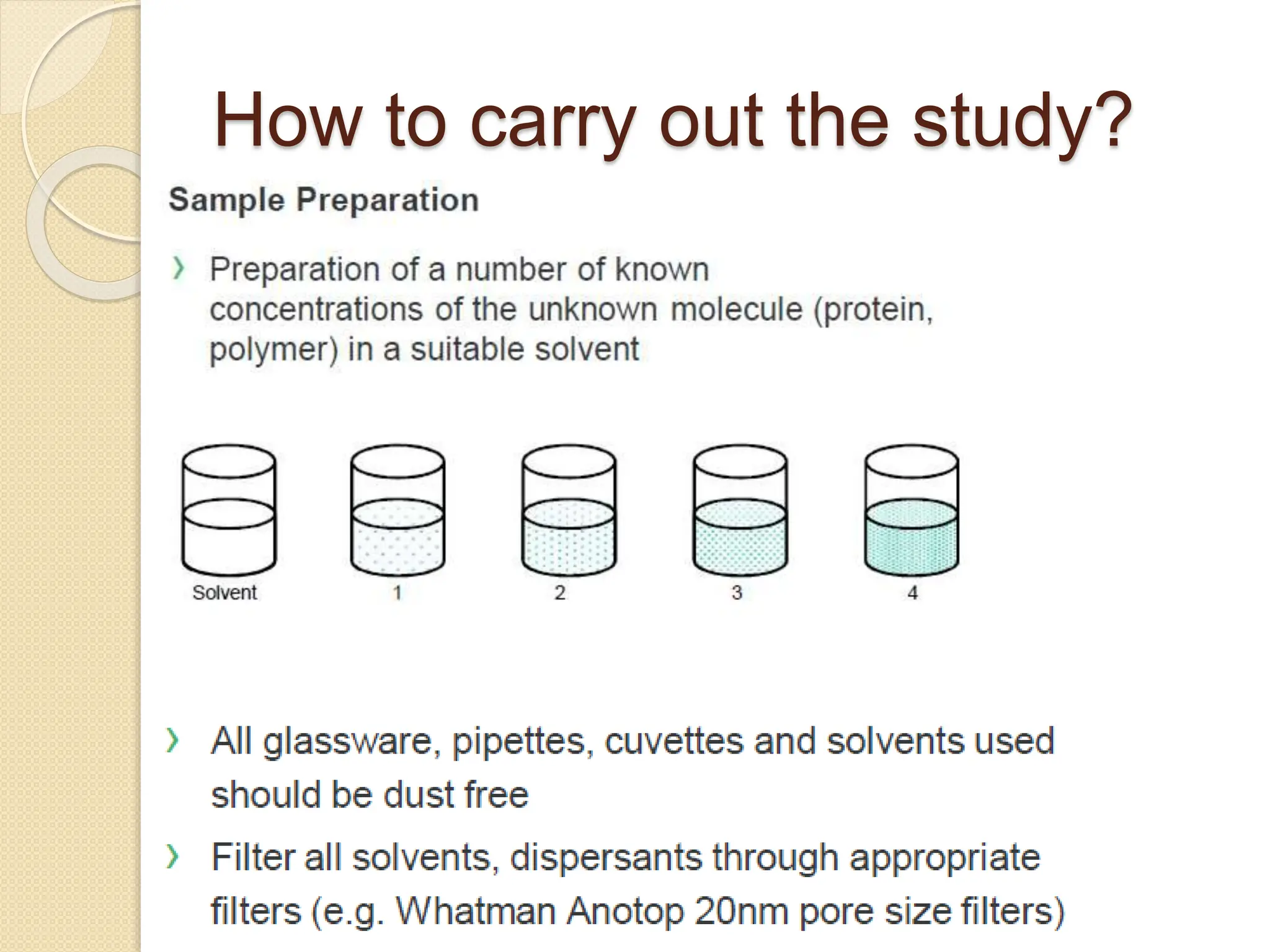
How to carry out the study?
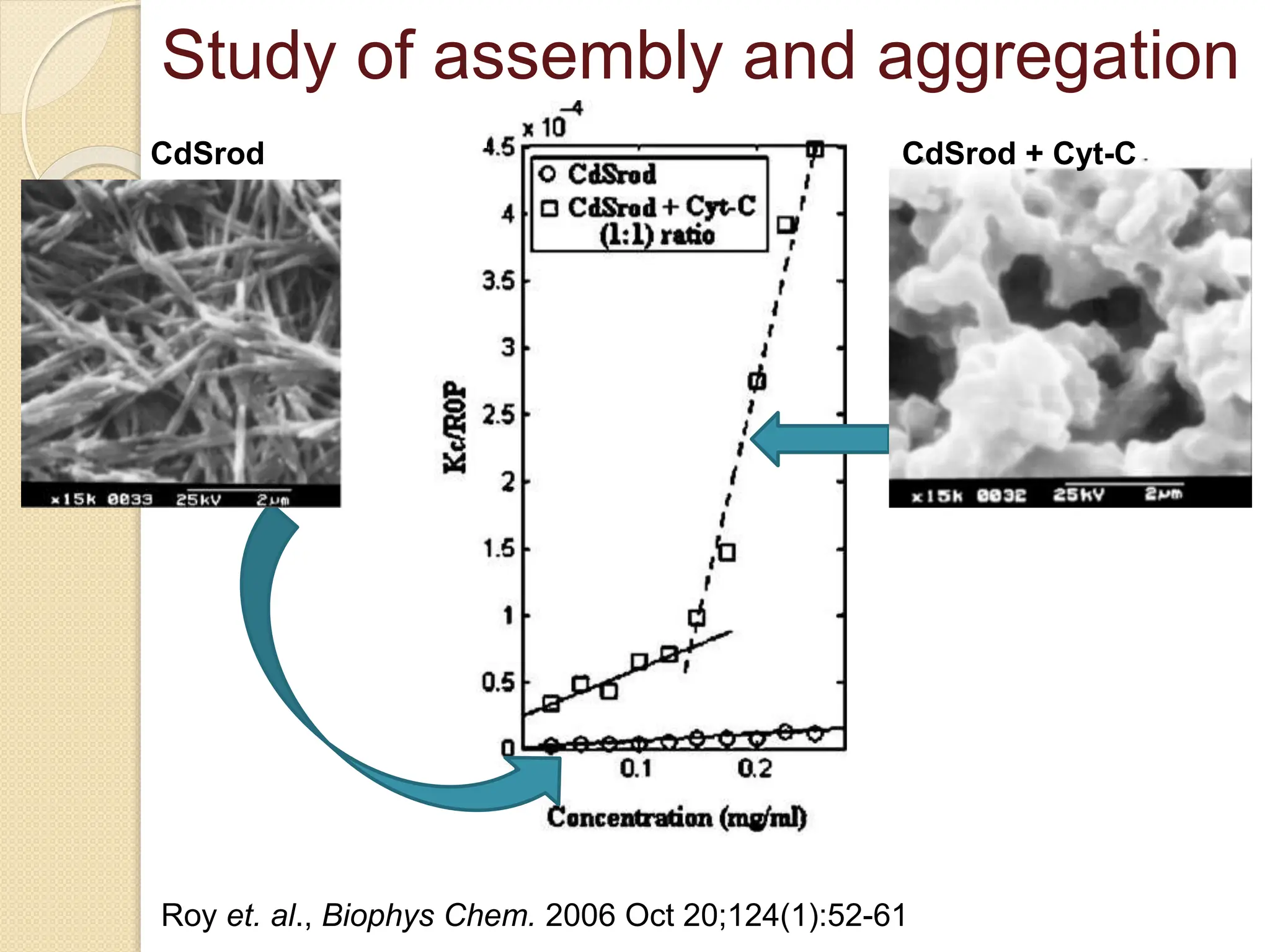
Study of assembly and aggregation
CdSrod CdSrod + Cyt-C
Roy et. al., Biophys Chem. 2006 Oct 20;124(1):52-61
Acknowledgement
 Horiba Instruments
 Malvern Instruments
 Washington State University Manuals
Dynamic_Light_Scattering_principle_and_application.pptx

Dynamic_Light_Scattering_principle_and_application.pptx