DUAL AXIS SOLAR TRACKER
MUHAMMAD IMAM, 9723
WAQAR NAWAZ, 9703
ABDUL WAHEED, 9438
Supervised By
Engr. Muhammad Farrukh Qureshi
Lecturer FEAS
RIPHAH International University
Sector I-14, Islamabad
Overview
• Solar tracker chasing the sun
• To provide a maximum efficiency
• To get striking angle perpendicular to sun as possible
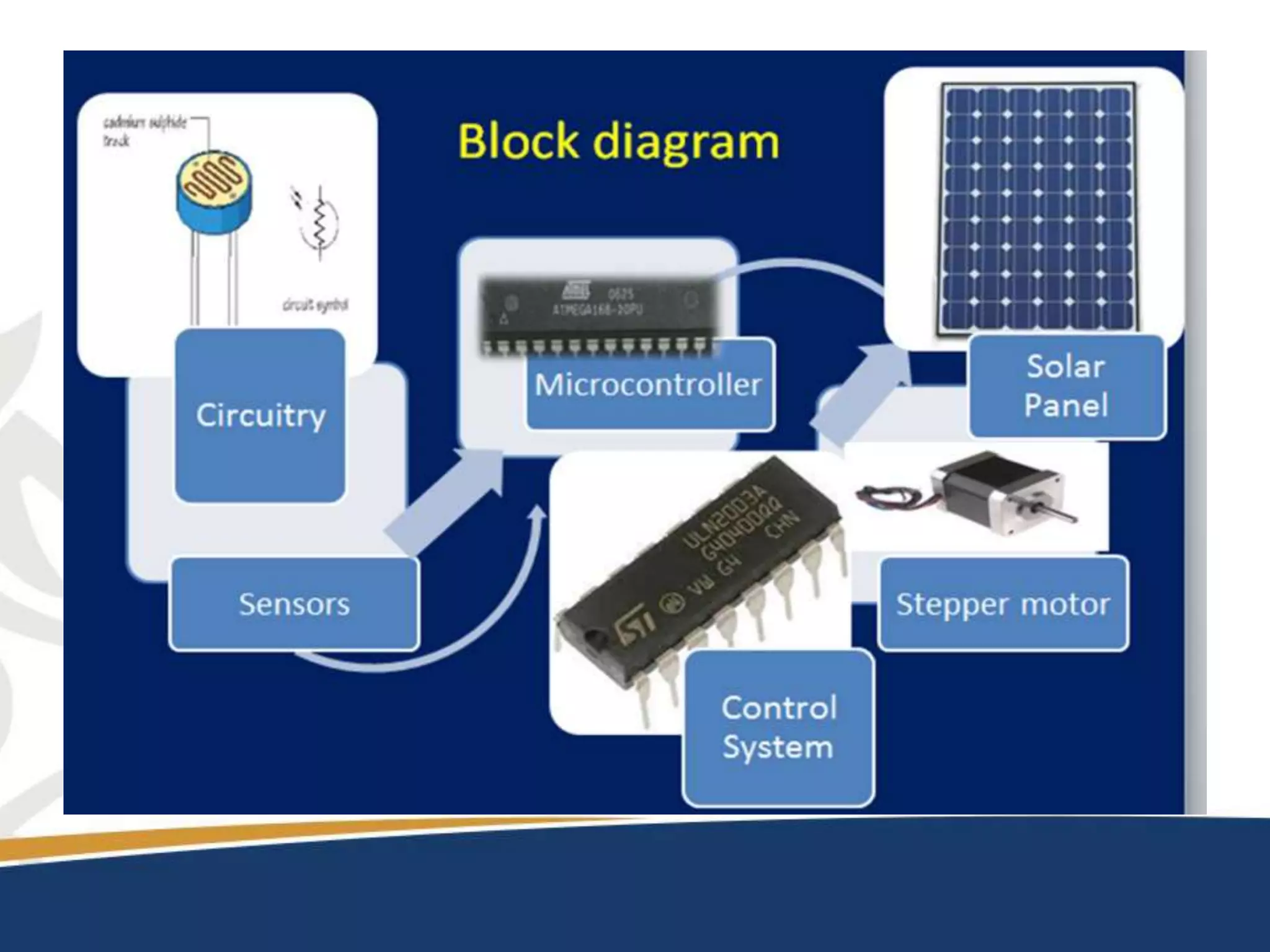
• Detection by sensors(Ldr’s)
• The use of microcontroller
• To Run the stepper motor
• It can be installed every where with less
modifications
Introduction
• Solar tracker is a system which chase the Sun during
day time as it rotate from east to west.
• This tracker will provide two or three degree
accuracy.
• Using a solar tracker will increase the solar energy
input to the panel and helps in producing more
electricity generation.
• The overall performance can be increased from 25-
35%.
Need for Solar Tracker
(continued)
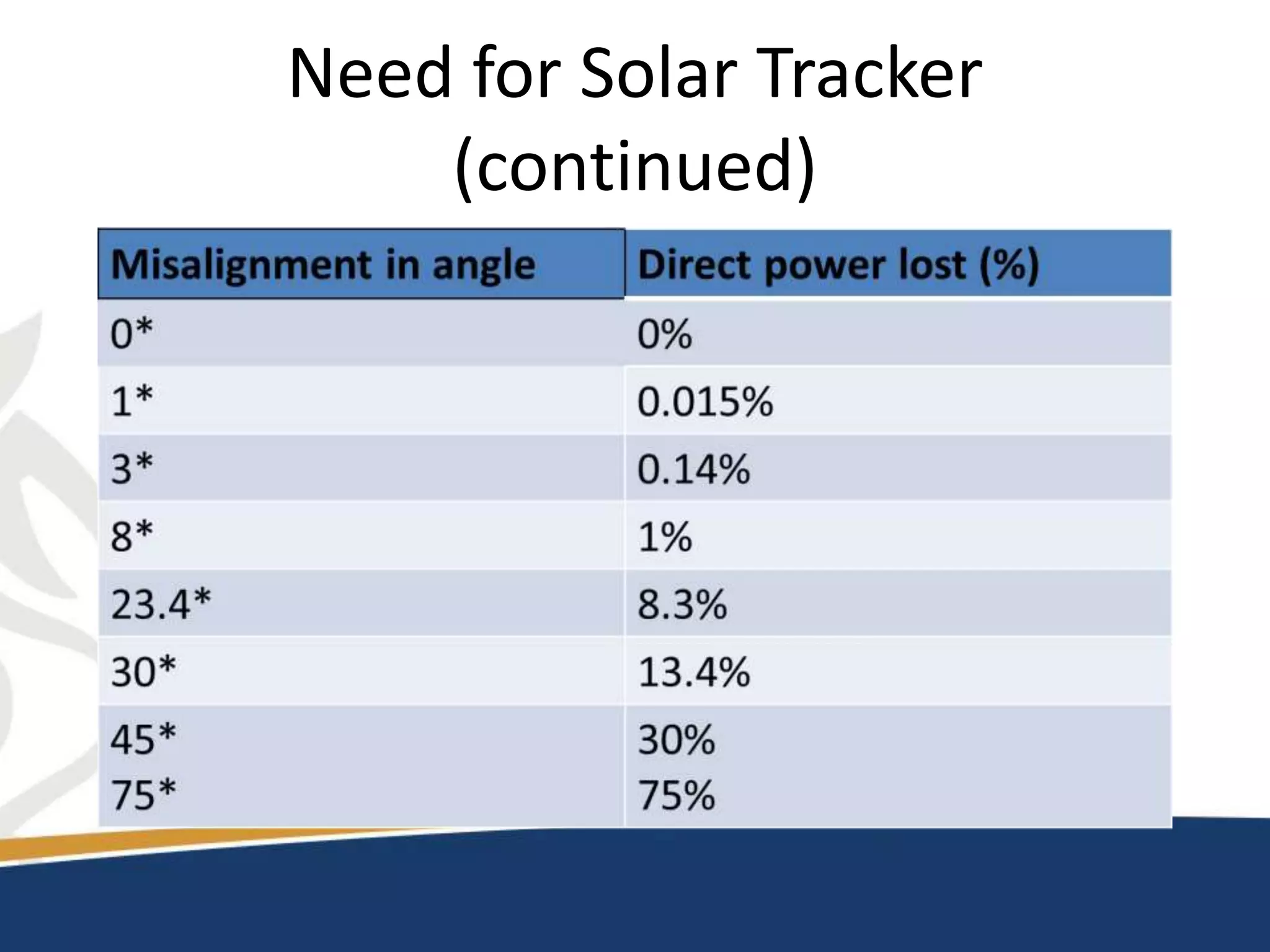
• As the sun during a day(24 hours) travel 360 degree, in which
180 degree during morning-evening is visible
• Due to some reasons , the Intensity is limited to just 150
degree approximately
• When a solar panel is fixed, now it has to bear the rise and
fall extremes of 75 degree, and there must be a loss of
approximately 75%.
• Rotating panel well help us to recover those losses
• This is the working of single axis tracker.
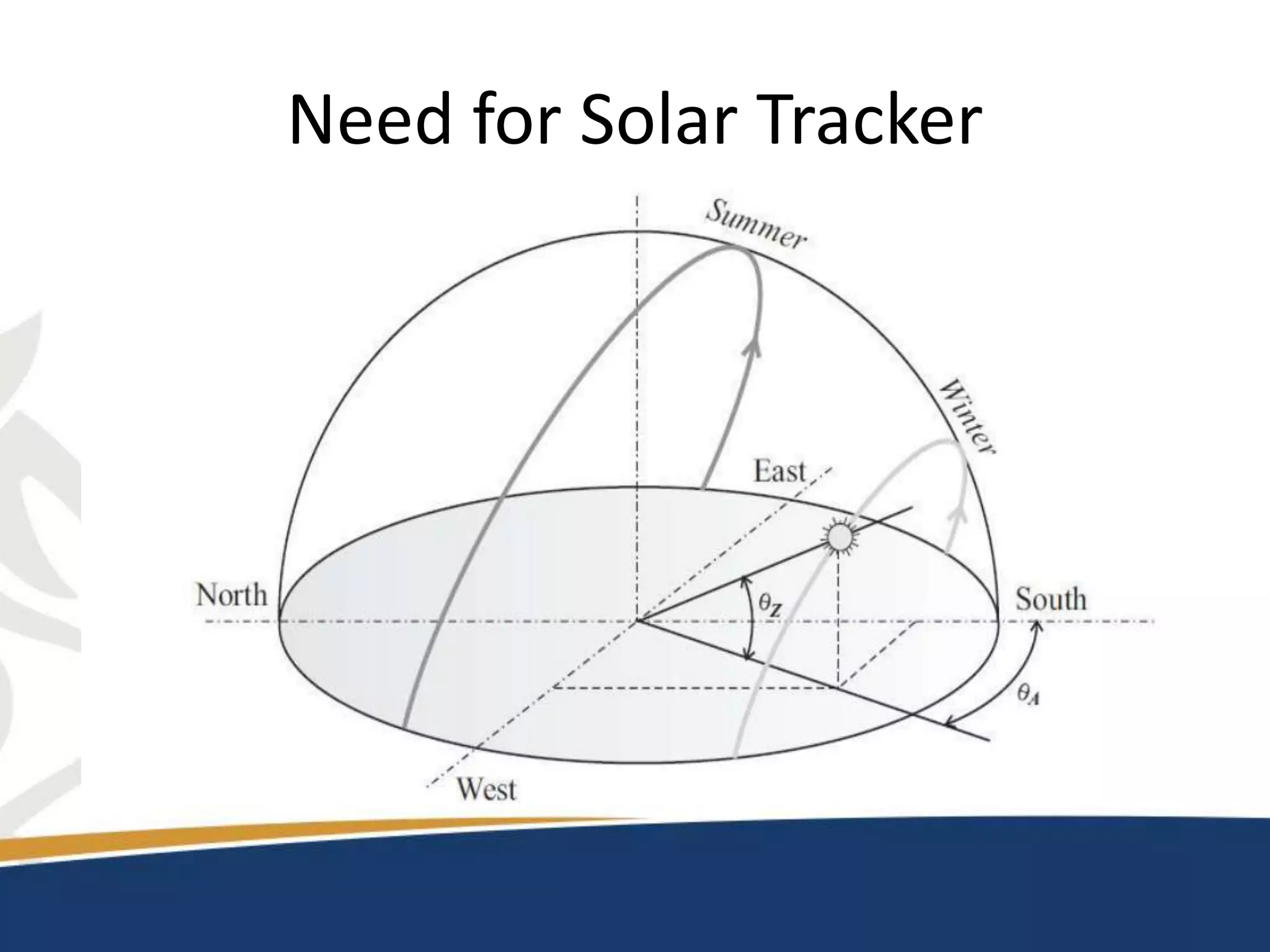
Need for Solar Tracker
(continued)
• Now during the entire year the Sun moves 46
degrees north-south.
• The panel placed at mid moving east-west will find
the sun moves 23 degree on each side north-south.
• Now when this is able to track on daily and also
depending on other axis north-south is a dual axis
solar tracker.
Need for Solar Tracker
(continued)
Block diagram
Flow chart
Working Principle
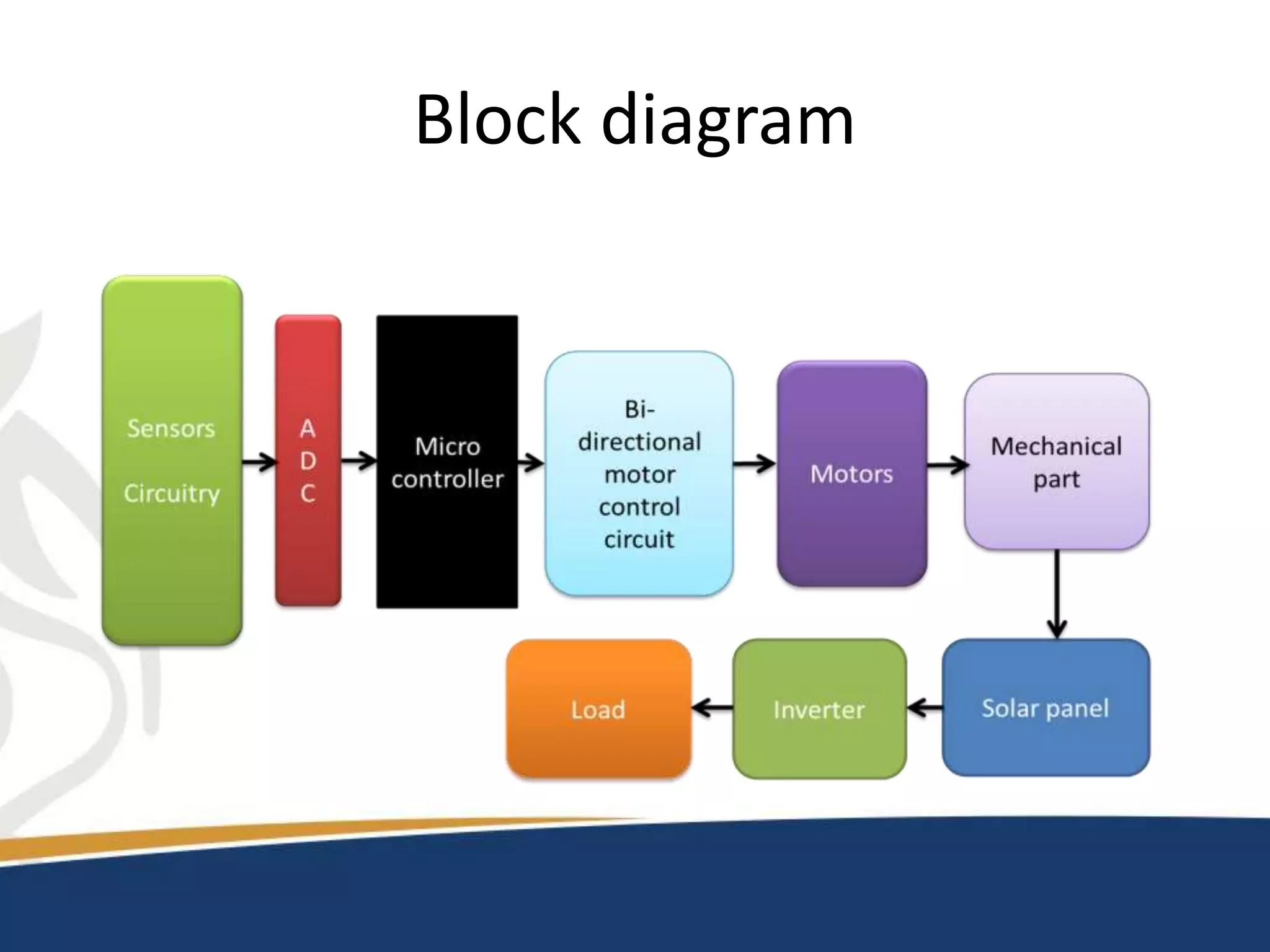
• Sensors are used in circuit to trace the exact location
of sun.
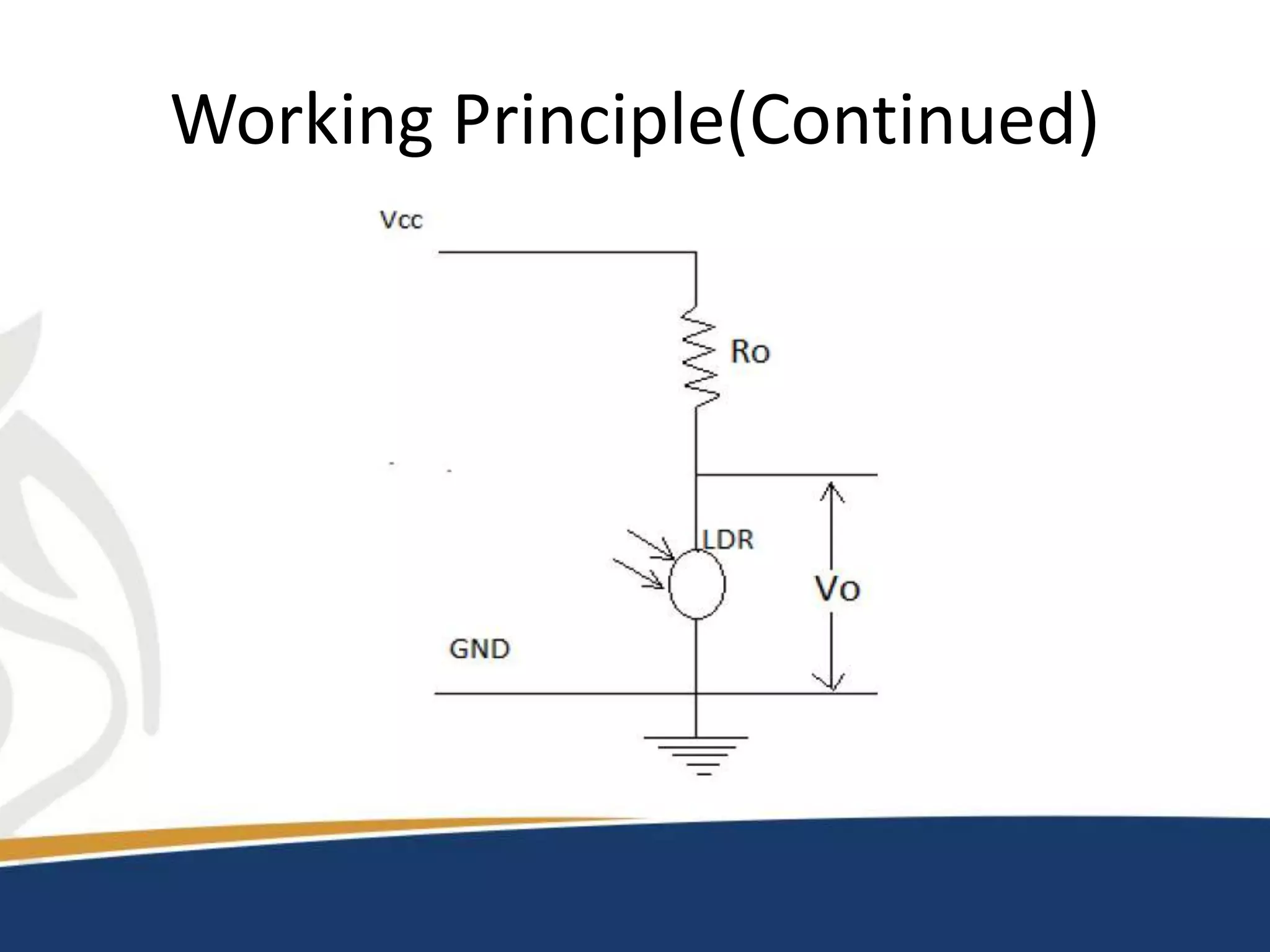
• A potential divider circuit is used to get the output
from the sensors(LDR’s).
• In potential divider circuit we get output voltage
corresponding to resistance of LDR’s which in turn is
a function of light falling on LDR,
Working Principle(Continued)
• The higher intensity of light lower the LDR resistance
and due to this the output voltage lowers and when
the light intensity is low, higher will be LDR resistance
and higher output voltage.
• Now this will feedback to the microcontroller .
• The microcontroller will process the input and give
the output to a stepper motor derived IC.
• This will act as a control system.
• This will rotate the motor and we will get our desired
result.
References
• 1. Wettergreen D., Benjamin Shamah, Paul Tompkins, William Whittaker, “Robotic Planetary
Exploration by Sun-Synchronous Navigation”, 6th International Symposium on Artificial
Intelligence and Robotics & Automation in Space,i-SAIRAS 2001, Canadian Space Agency, St-
Hubert, Quebec, Canada, June 18-22, 2001.
• 2. Hasan A Yousaf, “Design And Implementation of a Fuzzy Logic Computer- Controlled Sun
Tracking System”, Proceedings of the IEEE International Symposium on Industrial Electronics,
Volume 3, 12-16 July 1999, page 1029-1035
Thanks

Dual axis solar tracker

  • 2.
    DUAL AXIS SOLARTRACKER MUHAMMAD IMAM, 9723 WAQAR NAWAZ, 9703 ABDUL WAHEED, 9438 Supervised By Engr. Muhammad Farrukh Qureshi Lecturer FEAS RIPHAH International University Sector I-14, Islamabad
  • 3.
    Overview • Solar trackerchasing the sun • To provide a maximum efficiency • To get striking angle perpendicular to sun as possible • Detection by sensors(Ldr’s) • The use of microcontroller • To Run the stepper motor • It can be installed every where with less modifications
  • 4.
    Introduction • Solar trackeris a system which chase the Sun during day time as it rotate from east to west. • This tracker will provide two or three degree accuracy. • Using a solar tracker will increase the solar energy input to the panel and helps in producing more electricity generation. • The overall performance can be increased from 25- 35%.
  • 5.
  • 6.
    Need for SolarTracker (continued) • As the sun during a day(24 hours) travel 360 degree, in which 180 degree during morning-evening is visible • Due to some reasons , the Intensity is limited to just 150 degree approximately • When a solar panel is fixed, now it has to bear the rise and fall extremes of 75 degree, and there must be a loss of approximately 75%. • Rotating panel well help us to recover those losses • This is the working of single axis tracker.
  • 7.
    Need for SolarTracker (continued) • Now during the entire year the Sun moves 46 degrees north-south. • The panel placed at mid moving east-west will find the sun moves 23 degree on each side north-south. • Now when this is able to track on daily and also depending on other axis north-south is a dual axis solar tracker.
  • 8.
    Need for SolarTracker (continued)
  • 10.
  • 11.
  • 12.
    Working Principle • Sensorsare used in circuit to trace the exact location of sun. • A potential divider circuit is used to get the output from the sensors(LDR’s). • In potential divider circuit we get output voltage corresponding to resistance of LDR’s which in turn is a function of light falling on LDR,
  • 13.
  • 14.
    Working Principle(Continued) • Thehigher intensity of light lower the LDR resistance and due to this the output voltage lowers and when the light intensity is low, higher will be LDR resistance and higher output voltage. • Now this will feedback to the microcontroller . • The microcontroller will process the input and give the output to a stepper motor derived IC. • This will act as a control system.
  • 15.
    • This willrotate the motor and we will get our desired result.
  • 16.
    References • 1. WettergreenD., Benjamin Shamah, Paul Tompkins, William Whittaker, “Robotic Planetary Exploration by Sun-Synchronous Navigation”, 6th International Symposium on Artificial Intelligence and Robotics & Automation in Space,i-SAIRAS 2001, Canadian Space Agency, St- Hubert, Quebec, Canada, June 18-22, 2001. • 2. Hasan A Yousaf, “Design And Implementation of a Fuzzy Logic Computer- Controlled Sun Tracking System”, Proceedings of the IEEE International Symposium on Industrial Electronics, Volume 3, 12-16 July 1999, page 1029-1035
  • 17.