DRY CLEANING
PRESENTED BY
ANITA SINGH
ASSISTANT PROFESSOR
HOME SCIENCE DEPARTMENT
CRD PG COLLEGE GORAKHPUR
CONTENT
• INTRODUCTION
• REAGENTS USED IN DRY CLEANING
• DRY CLEANING BY FAT SOLVENT
• DRY CLEANING BY FAT ABSORBENT
• ADVANTAGES OF DRY CLEANING
• DISADVANTAGES OF DRY CLEANING
INTRODUCTION
• Dry cleaning is any cleaning
process for clothing and textiles
using a solvent other than water.
• Dry cleaning is use of solvents to
remove soil and stains from fabrics.
REAGENTS USED IN DRY CLEANING
Fat solvent
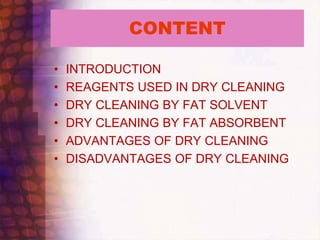
• Benzene, petrol, ether,
acetone, carbon tetra chloride,
turpentine oil etc are mainly
used as fat solvent.
• Among these benzene, petrol,
ether, acetone are intensely
flammable substance while the
vapours of turpentine oil and
carbon tetra chloride are
strong and toxic.
• They should be used carefully.
Fat absorbent
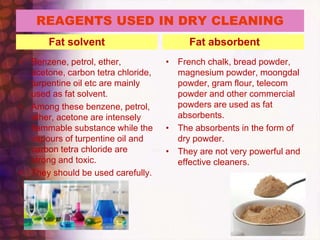
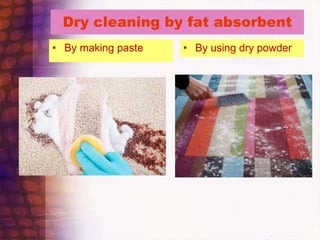
• French chalk, bread powder,
magnesium powder, moongdal
powder, gram flour, telecom
powder and other commercial
powders are used as fat
absorbents.
• The absorbents in the form of
dry powder.
• They are not very powerful and
effective cleaners.
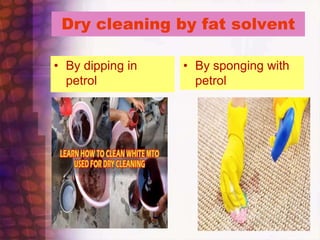
Dry cleaning by fat solvent
• By dipping in
petrol
• By sponging with
petrol
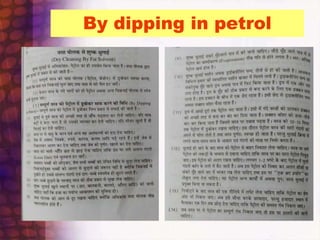
By dipping in petrol
By sponging with petrol
Dry cleaning by fat absorbent
• By making paste • By using dry powder
By making paste
By using dry powder
Advantages of
dry cleaning
• Expensive woollen coats, shawls, sweaters,
banarasi saries, blankets etc should be washed
by dry cleaning only.
• The colour, shine, attractiveness, freshness and
beauty of clothes remain intact for a long time
due to dry cleaning.
• The clothes remain soft.
• Pleats etc are not destroyed on clothes.
• The fur and felt fabrics is not suppressed.
Disadvantages
of dry cleaning
• This is an expensive method.
• Some fat solutions are highly
flammable.
• The smell of fat solutions on woollen
clothes remains for a long time.
• Dry cleaning is not done by all
people. It is mandatory for a person
to be skilled and experienced.
Dry cleaning

Dry cleaning

  • 1.
    DRY CLEANING PRESENTED BY ANITASINGH ASSISTANT PROFESSOR HOME SCIENCE DEPARTMENT CRD PG COLLEGE GORAKHPUR
  • 2.
    CONTENT • INTRODUCTION • REAGENTSUSED IN DRY CLEANING • DRY CLEANING BY FAT SOLVENT • DRY CLEANING BY FAT ABSORBENT • ADVANTAGES OF DRY CLEANING • DISADVANTAGES OF DRY CLEANING
  • 3.
    INTRODUCTION • Dry cleaningis any cleaning process for clothing and textiles using a solvent other than water. • Dry cleaning is use of solvents to remove soil and stains from fabrics.
  • 4.
    REAGENTS USED INDRY CLEANING Fat solvent • Benzene, petrol, ether, acetone, carbon tetra chloride, turpentine oil etc are mainly used as fat solvent. • Among these benzene, petrol, ether, acetone are intensely flammable substance while the vapours of turpentine oil and carbon tetra chloride are strong and toxic. • They should be used carefully. Fat absorbent • French chalk, bread powder, magnesium powder, moongdal powder, gram flour, telecom powder and other commercial powders are used as fat absorbents. • The absorbents in the form of dry powder. • They are not very powerful and effective cleaners.
  • 5.
    Dry cleaning byfat solvent • By dipping in petrol • By sponging with petrol
  • 6.
  • 7.
  • 8.
    Dry cleaning byfat absorbent • By making paste • By using dry powder
  • 9.
  • 10.
  • 11.
    Advantages of dry cleaning •Expensive woollen coats, shawls, sweaters, banarasi saries, blankets etc should be washed by dry cleaning only. • The colour, shine, attractiveness, freshness and beauty of clothes remain intact for a long time due to dry cleaning. • The clothes remain soft. • Pleats etc are not destroyed on clothes. • The fur and felt fabrics is not suppressed.
  • 12.
    Disadvantages of dry cleaning •This is an expensive method. • Some fat solutions are highly flammable. • The smell of fat solutions on woollen clothes remains for a long time. • Dry cleaning is not done by all people. It is mandatory for a person to be skilled and experienced.