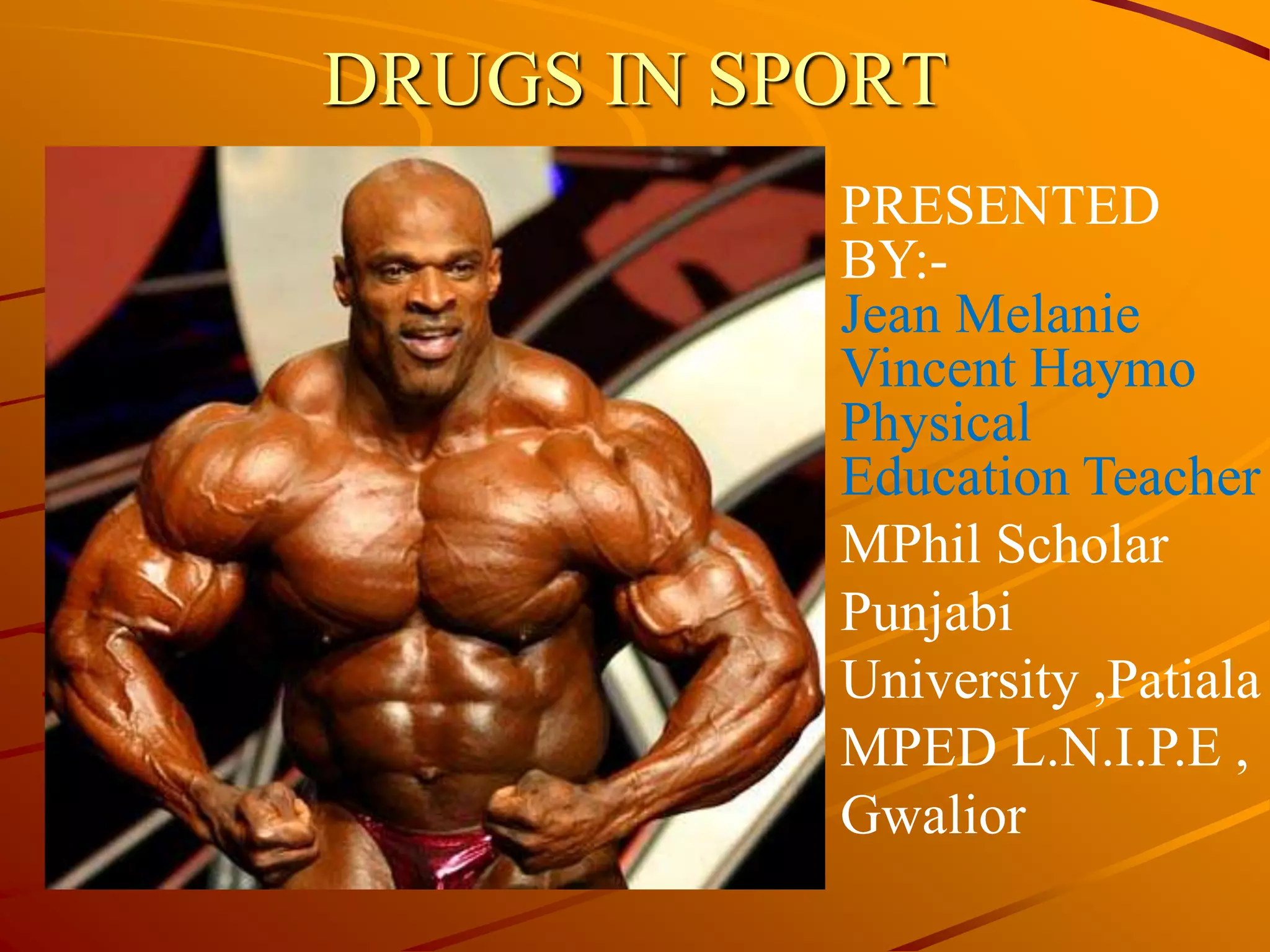
DRUGS IN SPORT
PRESENTED
BY:-
Jean Melanie
Vincent Haymo
Physical
Education Teacher
MPhil Scholar
Punjabi
University ,Patiala
MPED L.N.I.P.E ,
Gwalior
The PERFORMANCE ENHANCING DRUGS.
SO WHAT IS A DRUG ?
A substance that can be taken in a variety of ways to
produce physical and/or psychological effects on the
person taking it.
It may also cause some effects that are both unpleasant
and unwanted:
1.They can become addictive.
2.Smoking damages the heart and oxygen carrying
capability of the blood. It is also a contributing
factor to coronary heart disease.
3. Both alcohol and caffeine cause extra urine to be
disposed of, therefore add to the risks of
dehydration.
4. Long term effects of alcohol include liver damage.
WHY DO SPORTS
PEOPLE TAKE
DRUGS?
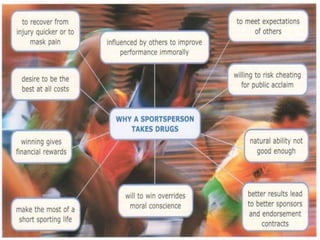
Sportspeople decide to take drugs to enhance or
improve their performance, or are encouraged to do so
by their coach.
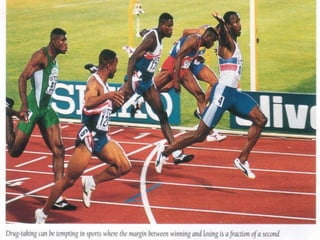
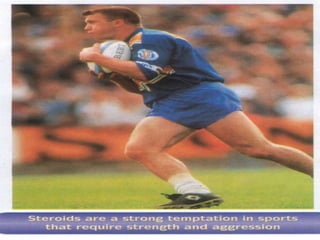
The temptation is great with such high stakes. Winning
a gold medal at the Olympics.
Even on a day to day basis, sportspeople make a lot of
money by simply competing at the highest level.
Even if they do not win, drugs may allow a lesser
athlete to take part in their sport at a level they could
not have otherwise reached.
1.Prohibited classes of substances
2.Prohibited methods.
PERFORMANCE ENHANCING
DRUGS fall into 2 categories.
WHAT ARE PROHIBITED CLASSES OF
SUBSTANCES ?
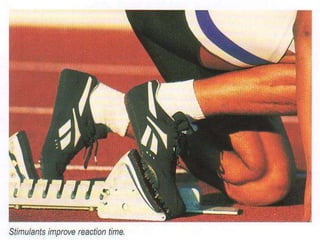
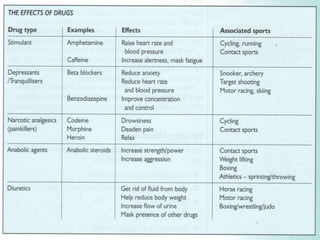
1.STIMULANTS- these help people to be more alert,
enabling them to think more quickly. Using these
drugs helps to overcome tiredness. Stimulants may
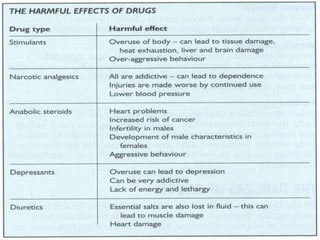
produce side effects such as Insomnia, Increased
heart rate.
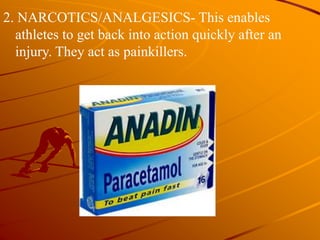
2. NARCOTICS/ANALGESICS- This enables
athletes to get back into action quickly after an
injury. They act as painkillers.
3. ANABOLIC STEROIDS- They increase muscle
mass and develop bone growth, therefore increase
strength, while at the same time allow the athlete to
train harder. It can also increase aggression.
This is the most common drug used to enhance
performance. The drug mimics the male hormone
Testosterone. Side effects include the deepening of the
voice, facial hair, mood swings and anxiety. liver
disease and infertility in women are also common side
effects.
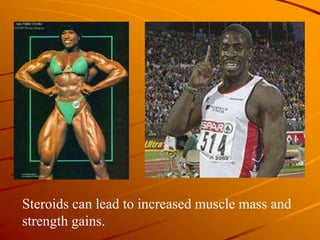
Steroids can lead to increased muscle mass and
strength gains.
4. DIURETICS- Used to increase the amount of urine
produced and to increase kidney function, thereby
speeding up the elimination of fluid from the body.
In turn this will cause rapid weight loss in sports
where performers are required to compete within strict
weight boundaries.
Side effects include dehydration, which can result
in dizziness, muscle cramps, headaches and
nausea.
5. PEPTIDE, CHEMICALAND PHYSICAL
MANIPULATION-
These type of drugs increase muscle growth, assist in
recovery from injury and increase the number of red
blood cells to carry oxygen.
WHAT ARE PROHIBITED METHODS ?
Blood doping is a banned process not a banned drug.
If an athlete trains at high altitude, the oxygen carrying
capacity of their blood increases. Athletes train at high
altitude for a period of time, and then have as much as
2 pints of blood taken from their body, and the red
blood cells frozen.
The body’s system quickly recovers and the normal 8
pints of blood is restored.
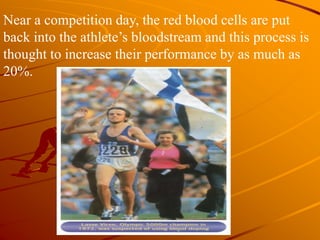
Near a competition day, the red blood cells are put
back into the athlete’s bloodstream and this process is
thought to increase their performance by as much as
20%.
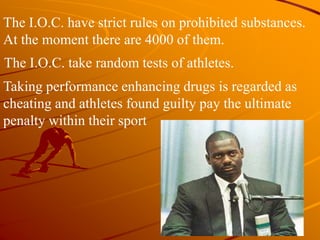
The I.O.C. take random tests of athletes.
The I.O.C. have strict rules on prohibited substances.
At the moment there are 4000 of them.
Taking performance enhancing drugs is regarded as
cheating and athletes found guilty pay the ultimate
penalty within their sport
Beta-Blockers
• Prevent the binding of norepinephrine and
decrease sympathetic nervous system activity
• May improve accuracy (for shooting sports)
• Decrease aerobic capacity but have no effect on
strength, power, or muscular endurance
• Prolonged use can cause bradycardia, heart
blockage, hypotension, bronchospasm, fatigue,
and decreased motivation
Amphetamines
• Increase mental alertness, blood pressure, heart
rate, blood glucose and FFA levels, and muscle
tension
• Decrease sense of fatigue
• Redistribute blood flow to skeletal muscles
• May enhance speed, power, endurance,
concentration, and fine motor coordination
• May be addictive and can trigger cardiac
arrhythmia or death
Caffeine
• Increases mental alertness, concentration,
catecholamine release, and mobilization and use
of FFA by the muscles
• Decreases fatigue and lowers perception of effort
• Improves endurance performance; may improve
sprint and strength performance
• Can cause nervousness, insomnia, and tremors
and can lead to dehydration
Creatine
• Supplement to better maintain muscle ATP levels
• Shown to increase strength and possibly fat-free
body mass
• Not shown to help endurance performance, sprint
running, or sprint swimming performance
Amino Acids
• L-tryptophan and BCAA
• Proposed to increase endurance performance by
delaying fatigue
• Studies are inconclusive on effects on
performance
Phosphate
Loading is thought to increase phosphate levels
throughout the body, which then
• increase potential for oxidative phosphorylation
and
PCr synthesis,
• enhance oxygen release to the cells, and
• improve cardiovascular response to exercise and
buffering and endurance capacities.
Studies are divided on results of phosphate
loading.
Bicarbonate
• Naturally part of body’s buffering system to
maintain normal pH
• Loading increases blood alkalinity so that more
lactate can be cleared (delay fatigue)
• Ingesting 300 mg per kg body weight can
increase performance in all-out exercise bouts
between 1 and 7 minutes
• Can cause gastrointestinal cramping, bloating,
and diarrhea
Oxygen Supplementation
• Breathed by athletes to increase oxygen
content of blood
• Can improve performance if administered
during exercise, but not before or after
• Too cumbersome to be practical
• No serious risks known
Human Growth Hormone
• Secreted naturally by pituitary; synthetic form
used by some athlettesting
• Proven es
• Difficult to detect synthetic from natural in drug
to increase lipolysis and blood glucose levels
• Can cause acromegaly, enlargement of internal
organs, muscle and joint weakness, diabetes,
hypertension, and heart disease

Drugs and Sports

  • 1.
    DRUGS IN SPORT PRESENTED BY:- JeanMelanie Vincent Haymo Physical Education Teacher MPhil Scholar Punjabi University ,Patiala MPED L.N.I.P.E , Gwalior
  • 2.
    The PERFORMANCE ENHANCINGDRUGS. SO WHAT IS A DRUG ? A substance that can be taken in a variety of ways to produce physical and/or psychological effects on the person taking it. It may also cause some effects that are both unpleasant and unwanted:
  • 3.
    1.They can becomeaddictive. 2.Smoking damages the heart and oxygen carrying capability of the blood. It is also a contributing factor to coronary heart disease. 3. Both alcohol and caffeine cause extra urine to be disposed of, therefore add to the risks of dehydration. 4. Long term effects of alcohol include liver damage.
  • 5.
  • 8.
    Sportspeople decide totake drugs to enhance or improve their performance, or are encouraged to do so by their coach. The temptation is great with such high stakes. Winning a gold medal at the Olympics. Even on a day to day basis, sportspeople make a lot of money by simply competing at the highest level. Even if they do not win, drugs may allow a lesser athlete to take part in their sport at a level they could not have otherwise reached.
  • 10.
    1.Prohibited classes ofsubstances 2.Prohibited methods. PERFORMANCE ENHANCING DRUGS fall into 2 categories.
  • 11.
    WHAT ARE PROHIBITEDCLASSES OF SUBSTANCES ? 1.STIMULANTS- these help people to be more alert, enabling them to think more quickly. Using these drugs helps to overcome tiredness. Stimulants may produce side effects such as Insomnia, Increased heart rate.
  • 13.
    2. NARCOTICS/ANALGESICS- Thisenables athletes to get back into action quickly after an injury. They act as painkillers.
  • 14.
    3. ANABOLIC STEROIDS-They increase muscle mass and develop bone growth, therefore increase strength, while at the same time allow the athlete to train harder. It can also increase aggression. This is the most common drug used to enhance performance. The drug mimics the male hormone Testosterone. Side effects include the deepening of the voice, facial hair, mood swings and anxiety. liver disease and infertility in women are also common side effects.
  • 16.
    Steroids can leadto increased muscle mass and strength gains.
  • 17.
    4. DIURETICS- Usedto increase the amount of urine produced and to increase kidney function, thereby speeding up the elimination of fluid from the body. In turn this will cause rapid weight loss in sports where performers are required to compete within strict weight boundaries. Side effects include dehydration, which can result in dizziness, muscle cramps, headaches and nausea.
  • 19.
    5. PEPTIDE, CHEMICALANDPHYSICAL MANIPULATION- These type of drugs increase muscle growth, assist in recovery from injury and increase the number of red blood cells to carry oxygen.
  • 22.
    WHAT ARE PROHIBITEDMETHODS ? Blood doping is a banned process not a banned drug. If an athlete trains at high altitude, the oxygen carrying capacity of their blood increases. Athletes train at high altitude for a period of time, and then have as much as 2 pints of blood taken from their body, and the red blood cells frozen. The body’s system quickly recovers and the normal 8 pints of blood is restored.
  • 23.
    Near a competitionday, the red blood cells are put back into the athlete’s bloodstream and this process is thought to increase their performance by as much as 20%.
  • 24.
    The I.O.C. takerandom tests of athletes. The I.O.C. have strict rules on prohibited substances. At the moment there are 4000 of them. Taking performance enhancing drugs is regarded as cheating and athletes found guilty pay the ultimate penalty within their sport
  • 25.
    Beta-Blockers • Prevent thebinding of norepinephrine and decrease sympathetic nervous system activity • May improve accuracy (for shooting sports) • Decrease aerobic capacity but have no effect on strength, power, or muscular endurance • Prolonged use can cause bradycardia, heart blockage, hypotension, bronchospasm, fatigue, and decreased motivation
  • 26.
    Amphetamines • Increase mentalalertness, blood pressure, heart rate, blood glucose and FFA levels, and muscle tension • Decrease sense of fatigue • Redistribute blood flow to skeletal muscles • May enhance speed, power, endurance, concentration, and fine motor coordination • May be addictive and can trigger cardiac arrhythmia or death
  • 27.
    Caffeine • Increases mentalalertness, concentration, catecholamine release, and mobilization and use of FFA by the muscles • Decreases fatigue and lowers perception of effort • Improves endurance performance; may improve sprint and strength performance • Can cause nervousness, insomnia, and tremors and can lead to dehydration
  • 28.
    Creatine • Supplement tobetter maintain muscle ATP levels • Shown to increase strength and possibly fat-free body mass • Not shown to help endurance performance, sprint running, or sprint swimming performance
  • 29.
    Amino Acids • L-tryptophanand BCAA • Proposed to increase endurance performance by delaying fatigue • Studies are inconclusive on effects on performance
  • 30.
    Phosphate Loading is thoughtto increase phosphate levels throughout the body, which then • increase potential for oxidative phosphorylation and PCr synthesis, • enhance oxygen release to the cells, and • improve cardiovascular response to exercise and buffering and endurance capacities. Studies are divided on results of phosphate loading.
  • 31.
    Bicarbonate • Naturally partof body’s buffering system to maintain normal pH • Loading increases blood alkalinity so that more lactate can be cleared (delay fatigue) • Ingesting 300 mg per kg body weight can increase performance in all-out exercise bouts between 1 and 7 minutes • Can cause gastrointestinal cramping, bloating, and diarrhea
  • 32.
    Oxygen Supplementation • Breathedby athletes to increase oxygen content of blood • Can improve performance if administered during exercise, but not before or after • Too cumbersome to be practical • No serious risks known
  • 33.
    Human Growth Hormone •Secreted naturally by pituitary; synthetic form used by some athlettesting • Proven es • Difficult to detect synthetic from natural in drug to increase lipolysis and blood glucose levels • Can cause acromegaly, enlargement of internal organs, muscle and joint weakness, diabetes, hypertension, and heart disease