MUSCLE TYPES PRESENTED BY:-
Jean Melanie Vincent Haymo
Physical Education Teacher
MPhil Scholar Punjabi University ,Patiala
MPED L.N.I.P.E , Gwalior
Types of Muscle
– The human body is comprised of 324 muscles
– Muscle makes up 30-35% (in women) and 42-47% (in men) of body mass.
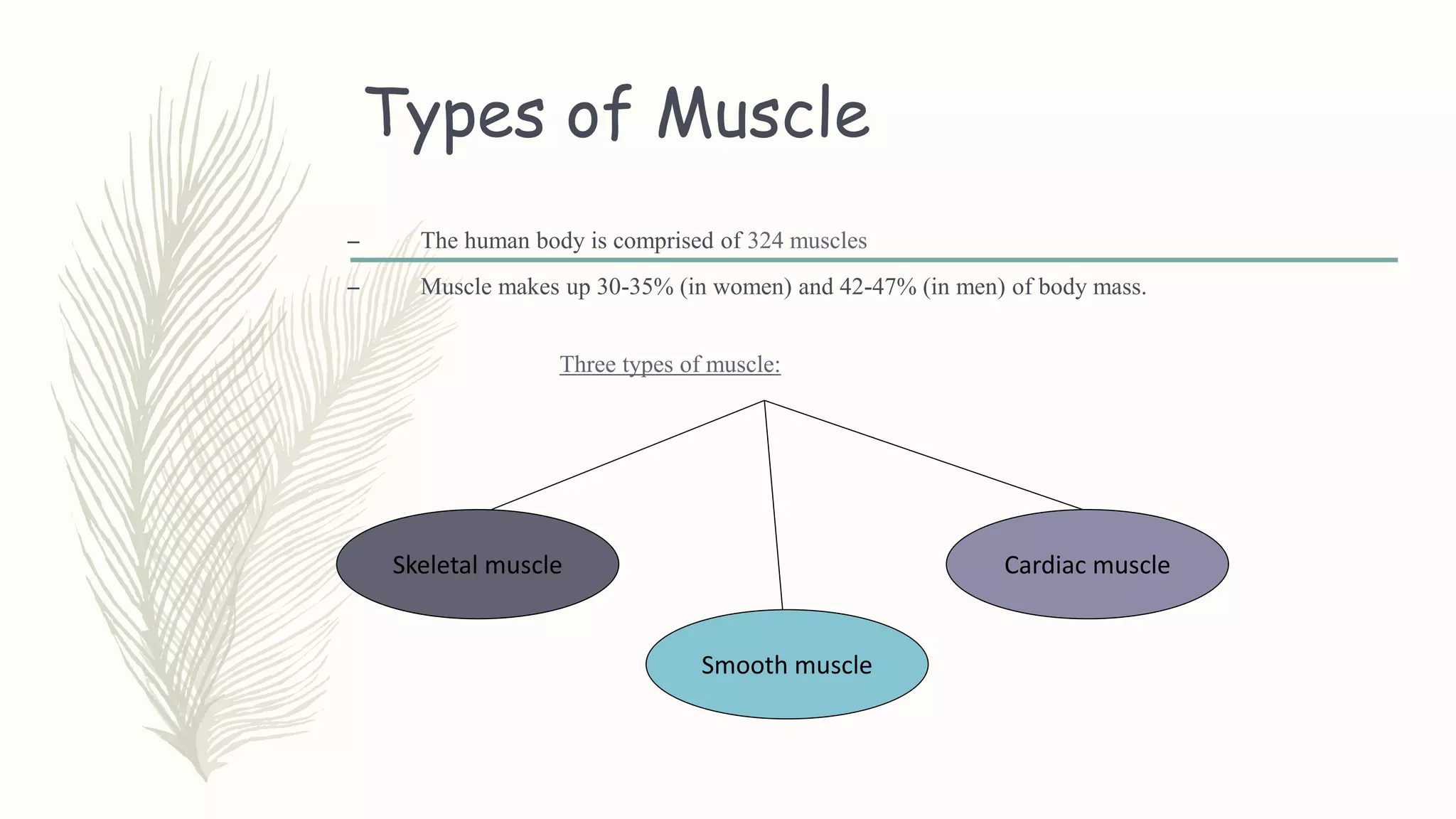
Three types of muscle:
Skeletal muscle
Smooth muscle
Cardiac muscle
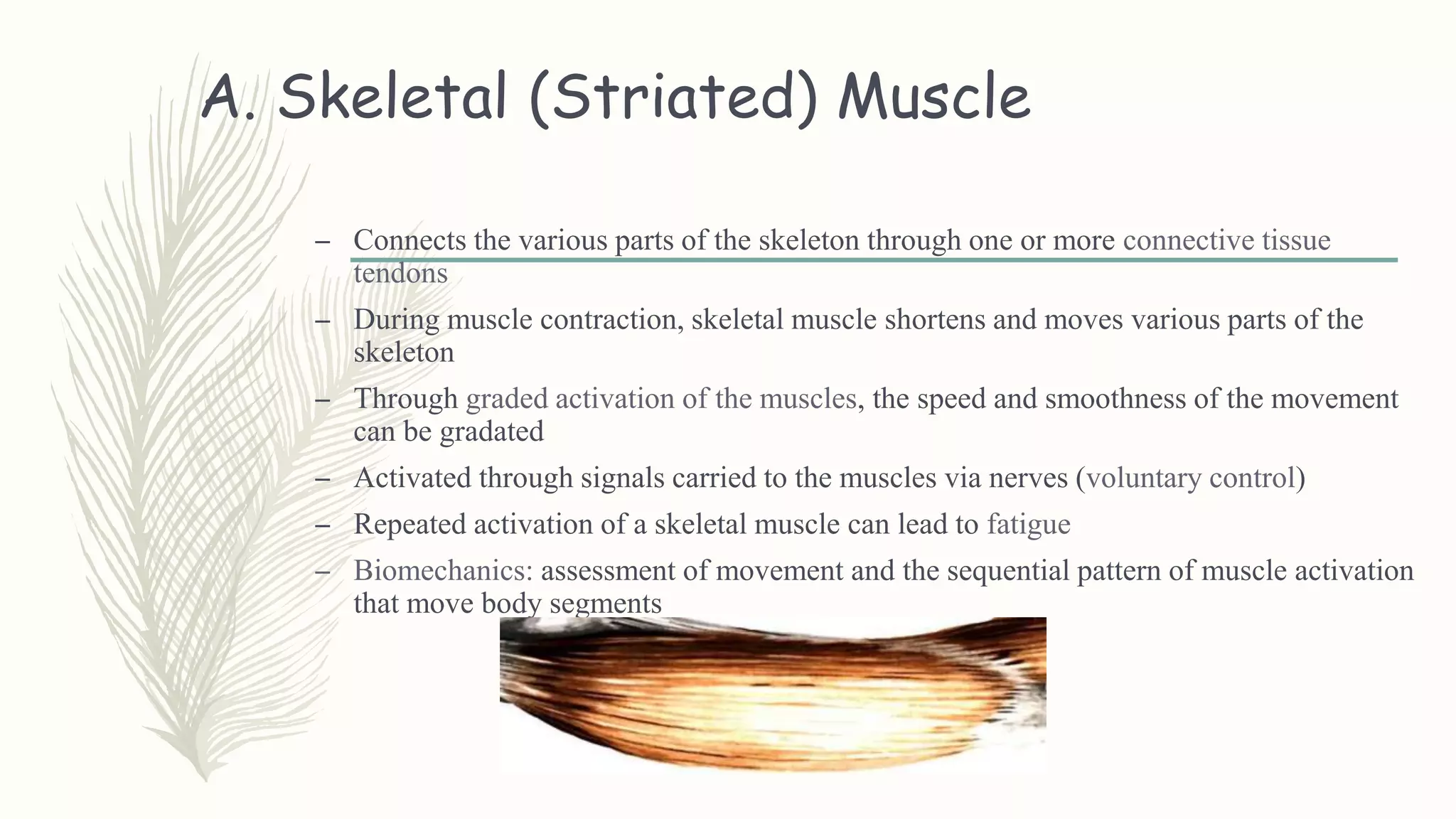
A. Skeletal (Striated) Muscle
– Connects the various parts of the skeleton through one or more connective tissue
tendons
– During muscle contraction, skeletal muscle shortens and moves various parts of the
skeleton
– Through graded activation of the muscles, the speed and smoothness of the movement
can be gradated
– Activated through signals carried to the muscles via nerves (voluntary control)
– Repeated activation of a skeletal muscle can lead to fatigue
– Biomechanics: assessment of movement and the sequential pattern of muscle activation
that move body segments
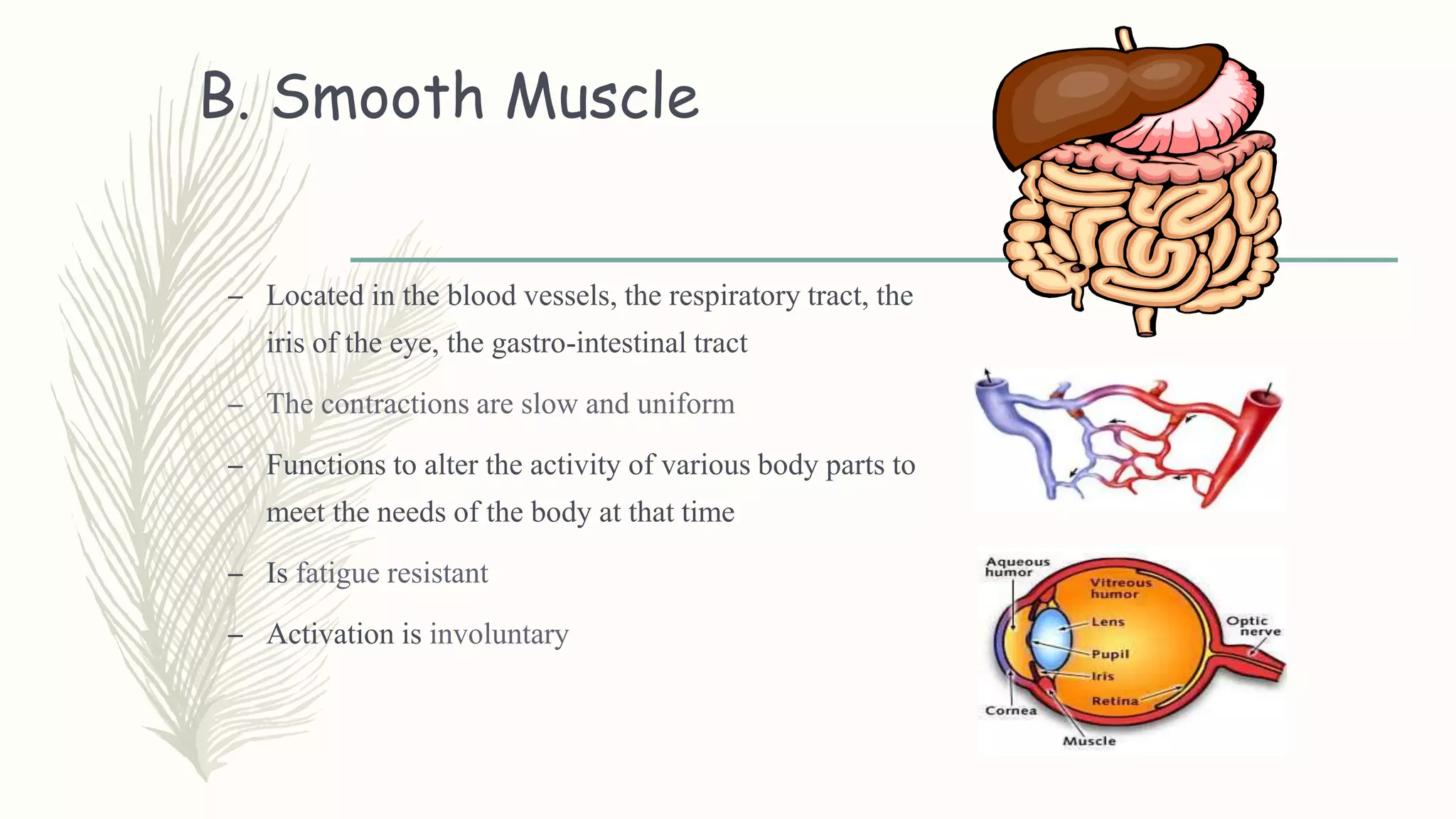
B. Smooth Muscle
– Located in the blood vessels, the respiratory tract, the
iris of the eye, the gastro-intestinal tract
– The contractions are slow and uniform
– Functions to alter the activity of various body parts to
meet the needs of the body at that time
– Is fatigue resistant
– Activation is involuntary
C. Cardiac Muscle
– Has characteristics of both skeletal and smooth muscle
– Functions to provide the contractile activity of the heart
– Contractile activity can be gradated (like skeletal muscle)
– Is very fatigue resistant
– Activation of cardiac muscle is involuntary (like smooth
muscle)
Muscle Teamwork
– Agonist (prime mover):
- the muscle or group of muscles producing a desired effect
– Antagonist:
- the muscle or group of muscles opposing the action
– Synergist:
- the muscles surrounding the joint being moved
– Fixators:
- the muscle or group of muscles that steady joints closer to the body axis so that the
desired action can occur
Bending or straightening of elbow requires the coordinated
interplay of the biceps and triceps muscles
Tendons, origin, insertion
– In order for muscles to contract, they must be attached to the bones to
create movement
– Tendons: strong fibrous tissues at the ends of each muscle that attach
muscle to bone
– Origin: the end of the muscle attached to the bone that does not
move
– Insertion: the point of attachment of the muscle on the bone that
moves
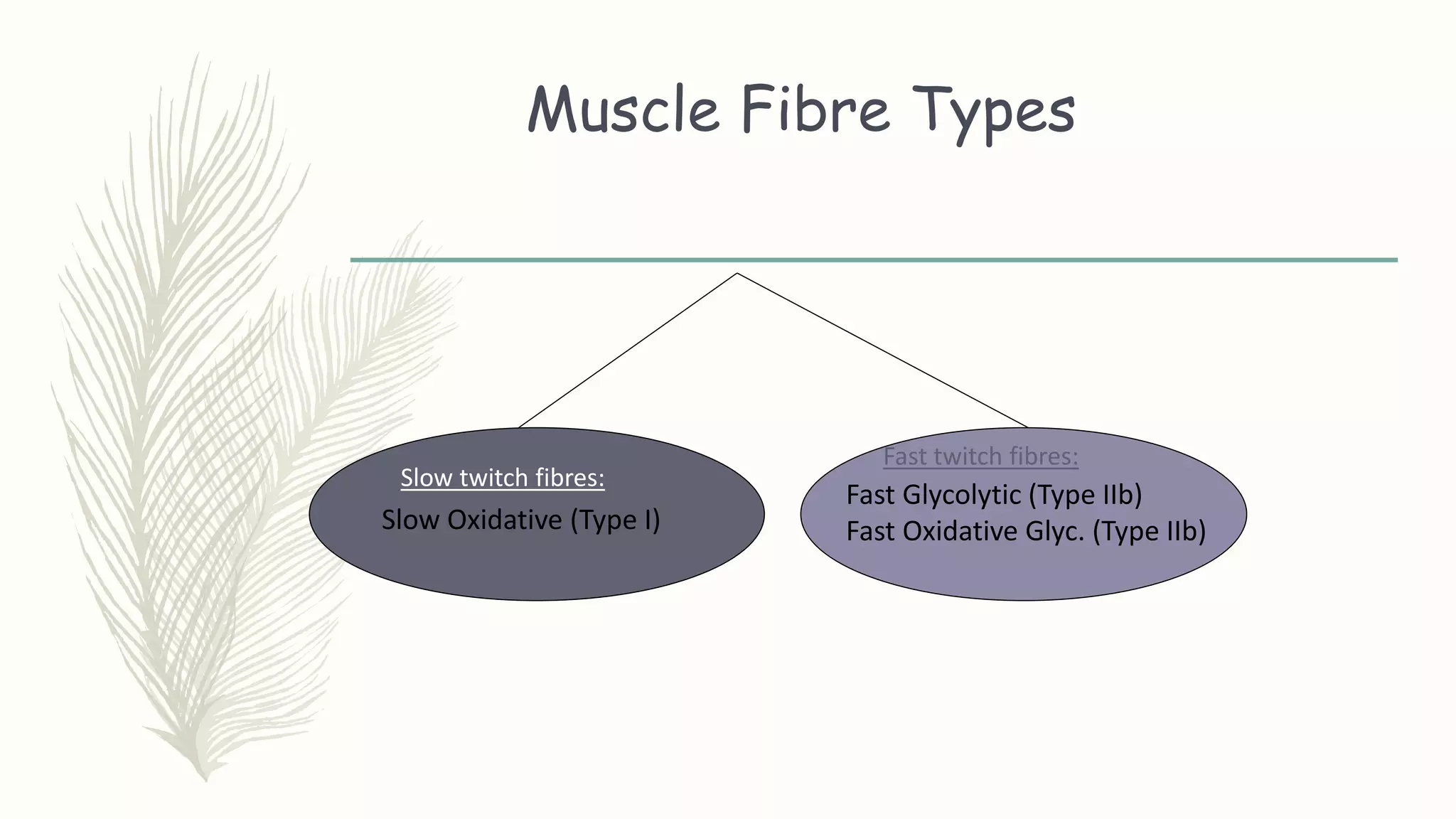
Muscle Fibre Types
Slow twitch fibres:
Slow Oxidative (Type I)
Fast twitch fibres:
Fast Glycolytic (Type IIb)
Fast Oxidative Glyc. (Type IIb)
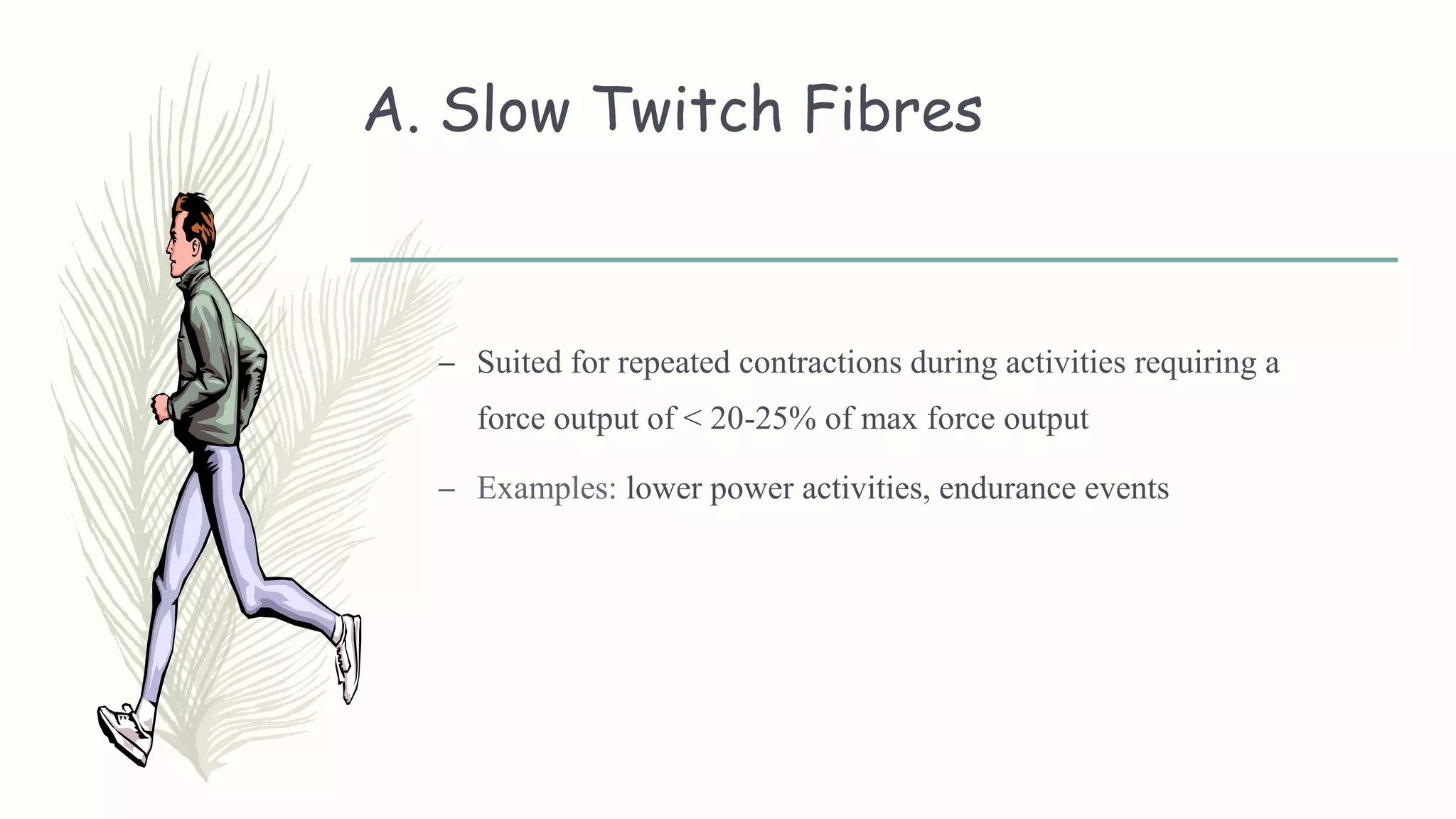
A. Slow Twitch Fibres
– Suited for repeated contractions during activities requiring a
force output of < 20-25% of max force output
– Examples: lower power activities, endurance events
B) Fast Twitch Fibers
– Significantly greater force and speed generating capability than
slow twitch fibers
– Well suited for activities involving high power
– Examples: sprinting, jumping, throwing

Muscle types

  • 1.
    MUSCLE TYPES PRESENTEDBY:- Jean Melanie Vincent Haymo Physical Education Teacher MPhil Scholar Punjabi University ,Patiala MPED L.N.I.P.E , Gwalior
  • 2.
    Types of Muscle –The human body is comprised of 324 muscles – Muscle makes up 30-35% (in women) and 42-47% (in men) of body mass. Three types of muscle: Skeletal muscle Smooth muscle Cardiac muscle
  • 3.
    A. Skeletal (Striated)Muscle – Connects the various parts of the skeleton through one or more connective tissue tendons – During muscle contraction, skeletal muscle shortens and moves various parts of the skeleton – Through graded activation of the muscles, the speed and smoothness of the movement can be gradated – Activated through signals carried to the muscles via nerves (voluntary control) – Repeated activation of a skeletal muscle can lead to fatigue – Biomechanics: assessment of movement and the sequential pattern of muscle activation that move body segments
  • 4.
    B. Smooth Muscle –Located in the blood vessels, the respiratory tract, the iris of the eye, the gastro-intestinal tract – The contractions are slow and uniform – Functions to alter the activity of various body parts to meet the needs of the body at that time – Is fatigue resistant – Activation is involuntary
  • 5.
    C. Cardiac Muscle –Has characteristics of both skeletal and smooth muscle – Functions to provide the contractile activity of the heart – Contractile activity can be gradated (like skeletal muscle) – Is very fatigue resistant – Activation of cardiac muscle is involuntary (like smooth muscle)
  • 6.
    Muscle Teamwork – Agonist(prime mover): - the muscle or group of muscles producing a desired effect – Antagonist: - the muscle or group of muscles opposing the action – Synergist: - the muscles surrounding the joint being moved – Fixators: - the muscle or group of muscles that steady joints closer to the body axis so that the desired action can occur
  • 7.
    Bending or straighteningof elbow requires the coordinated interplay of the biceps and triceps muscles
  • 8.
    Tendons, origin, insertion –In order for muscles to contract, they must be attached to the bones to create movement – Tendons: strong fibrous tissues at the ends of each muscle that attach muscle to bone – Origin: the end of the muscle attached to the bone that does not move – Insertion: the point of attachment of the muscle on the bone that moves
  • 9.
    Muscle Fibre Types Slowtwitch fibres: Slow Oxidative (Type I) Fast twitch fibres: Fast Glycolytic (Type IIb) Fast Oxidative Glyc. (Type IIb)
  • 10.
    A. Slow TwitchFibres – Suited for repeated contractions during activities requiring a force output of < 20-25% of max force output – Examples: lower power activities, endurance events
  • 11.
    B) Fast TwitchFibers – Significantly greater force and speed generating capability than slow twitch fibers – Well suited for activities involving high power – Examples: sprinting, jumping, throwing