THE PRINCIPLES OF
TRAINING
Jean Melanie Vincent Haymo
Physical Education Teacher
MPhil Scholar Punjabi University ,Patiala
MPED L.N.I.P.E , Gwalior
The main principles of training are:
•Specificity
•Progressive
•Overload (F.I.T.T)
•Reversibility
Specificity
Training must be aimed at developing your
specific sport in order to improve fitness of
the body parts that the sport uses.
For example, to meet the specific
needs of football, a goalkeeper’s
training will include lots of reaction
work.
Individual
differences/needs
When planning a training programme you
need to consider the performers individual
needs.
Age, weight, height, gender, level of
fitness
Overload
Overload means doing more than what you
normally do.
Fitness can only be improved by training
more than you normally do. You must work
hard.
*Principle of Overload Deeply relies on the
principle of FITT
•Frequency is the number of times exercise is
undertaken in a week.
Exercising between three and five times a
week is the recommended amount to reach
the minimum level of fitness.
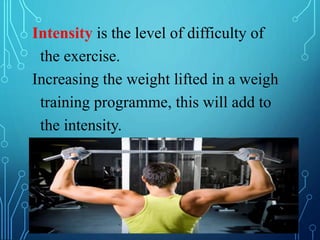
Intensity is the level of difficulty of
the exercise.
Increasing the weight lifted in a weigh
training programme, this will add to
the intensity.
•Time refers to how long an exercise
sessions lasts.
•To improve fitness you must increase
the amount of time you spend on an
exercise
•Type refers to the variety of training a
performer undertakes.
•To make improvements you must use
different training methods
Progression
Start slowly and gradually increase
the amount of exercise and keep
overloading.
This will lead to the body gaining
positive changes in strength, size,
shape.
Reversibility
Reversibility is the result of stopping
or not training frequently.
This could be through injury or lack
of motivation. This will lead to a loss
of fitness and skill levels

Principle of training

  • 1.
    THE PRINCIPLES OF TRAINING JeanMelanie Vincent Haymo Physical Education Teacher MPhil Scholar Punjabi University ,Patiala MPED L.N.I.P.E , Gwalior
  • 2.
    The main principlesof training are: •Specificity •Progressive •Overload (F.I.T.T) •Reversibility
  • 3.
    Specificity Training must beaimed at developing your specific sport in order to improve fitness of the body parts that the sport uses.
  • 4.
    For example, tomeet the specific needs of football, a goalkeeper’s training will include lots of reaction work.
  • 5.
    Individual differences/needs When planning atraining programme you need to consider the performers individual needs. Age, weight, height, gender, level of fitness
  • 6.
    Overload Overload means doingmore than what you normally do. Fitness can only be improved by training more than you normally do. You must work hard. *Principle of Overload Deeply relies on the principle of FITT
  • 7.
    •Frequency is thenumber of times exercise is undertaken in a week. Exercising between three and five times a week is the recommended amount to reach the minimum level of fitness.
  • 8.
    Intensity is thelevel of difficulty of the exercise. Increasing the weight lifted in a weigh training programme, this will add to the intensity.
  • 9.
    •Time refers tohow long an exercise sessions lasts. •To improve fitness you must increase the amount of time you spend on an exercise
  • 10.
    •Type refers tothe variety of training a performer undertakes. •To make improvements you must use different training methods
  • 11.
    Progression Start slowly andgradually increase the amount of exercise and keep overloading. This will lead to the body gaining positive changes in strength, size, shape.
  • 12.
    Reversibility Reversibility is theresult of stopping or not training frequently. This could be through injury or lack of motivation. This will lead to a loss of fitness and skill levels