Dr. Abhijit Salvi
MBBS, Masters in Sports Medicine (U.K)
BCCI Anti-Doping and Age-Verification Officer
“Dope” – from Dutch word ‘Dop’ – an alcoholic
beverage from grape skins, used by Zulu warriors
to enhance their power in battle.
Doping is defined as occurrence of one or more of the
following:
• Presence of Prohibited Substance in an Athlete’s Sample
• Use or Attempted Use
• Refusing or failing without compelling justification to submit to
Sample Collection after notification
• Violation of applicable requirements regarding Athlete availability
for Out-of-Competition Testing
• Tampering or Attempted Tampering
• Possession
• Trafficking or Attempted Trafficking
• Administration or Attempted administration to any Athlete of a
Prohibited Substance or Prohibited Method
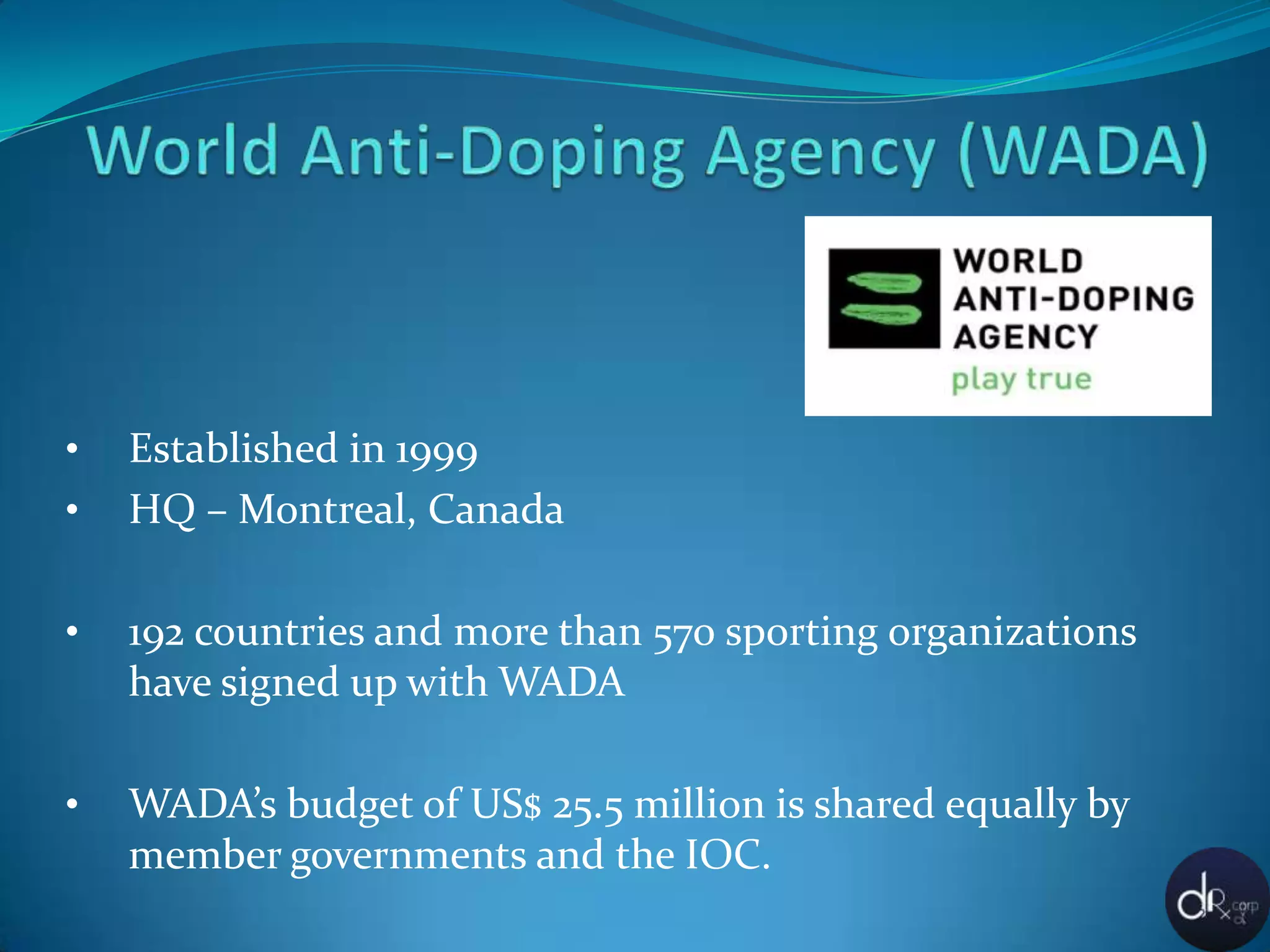
• Established in 1999
• HQ – Montreal, Canada
• 192 countries and more than 570 sporting organizations
have signed up with WADA
• WADA’s budget of US$ 25.5 million is shared equally by
member governments and the IOC.
• India has the highest number of failed dope tests
internationally.
• In 2010, 103 Indian sportspersons, including juniors,
failed dope tests.
• The 2011, 121 tested positive while more than 130 have
failed in 2012.
• At the National School Games (U-16) at New Delhi in
January 2012, 11 out of 81 samples collected tested
positive for banned substances which included 3
Wrestlers, 3 Weightlifters and 5 Boxers.
• The Weight Lifting Federation of India has been
suspended twice by the International body.
• Doping threatens Athlete’s Health
• It also threatens Integrity of Sport
• Athletes are role models to many youngsters
• Ignorance about drugs
• Amateurism to professionalism.
• Drugs, a must for Winning.
• Fame & fortune.
• To cope with stress and injuries.
• Pressure from peers, coach, support staff, family, media &
nation.
• Most athletes are victims rather than culprits. Often
only the athlete is sanctioned, as the weakest link.
• The athlete in the WADA Code Acceptance Form has to
list his coach, manager, trainer & physiotherapist.
• Any positive doping test will lead to all being watch
listed and target tested
• Re-testing of samples once new methods are available.
• Urine and blood samples are now being preserved for 8
years to identify new drugs
• WADA reviews the Prohibited list annually
• The revised list is published on 1st October every
year and comes into effect 3 months later i.e. from
the following 1st of January.
A. Substances and Methods Prohibited at all times
(In- & Out-of Competition)
B. Substances and Methods Prohibited In-
Competition
C. Substances Prohibited in Particular Sports
D. Specified Substances
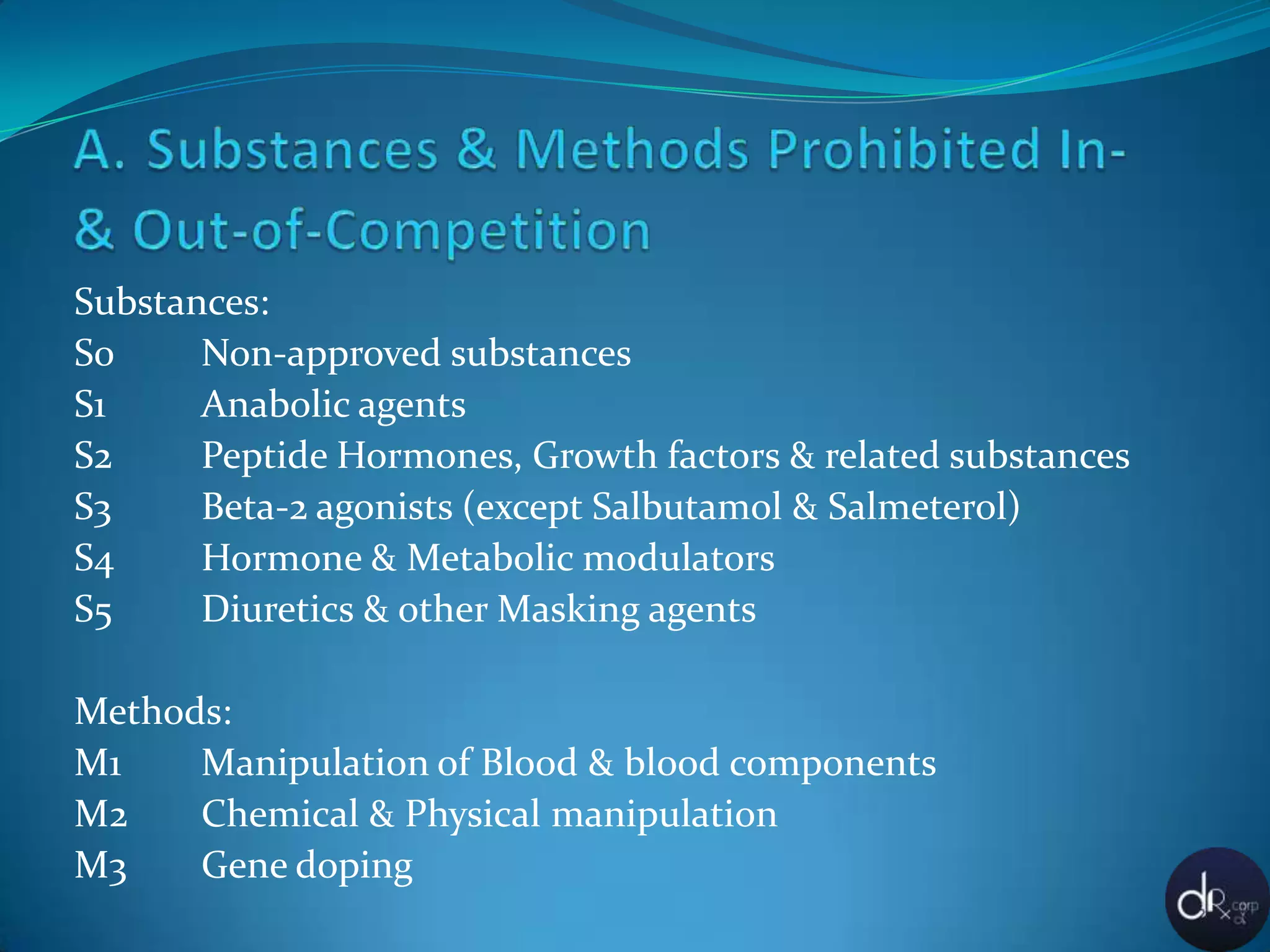
Substances:
S0 Non-approved substances
S1 Anabolic agents
S2 Peptide Hormones, Growth factors & related substances
S3 Beta-2 agonists (except Salbutamol & Salmeterol)
S4 Hormone & Metabolic modulators
S5 Diuretics & other Masking agents
Methods:
M1 Manipulation of Blood & blood components
M2 Chemical & Physical manipulation
M3 Gene doping
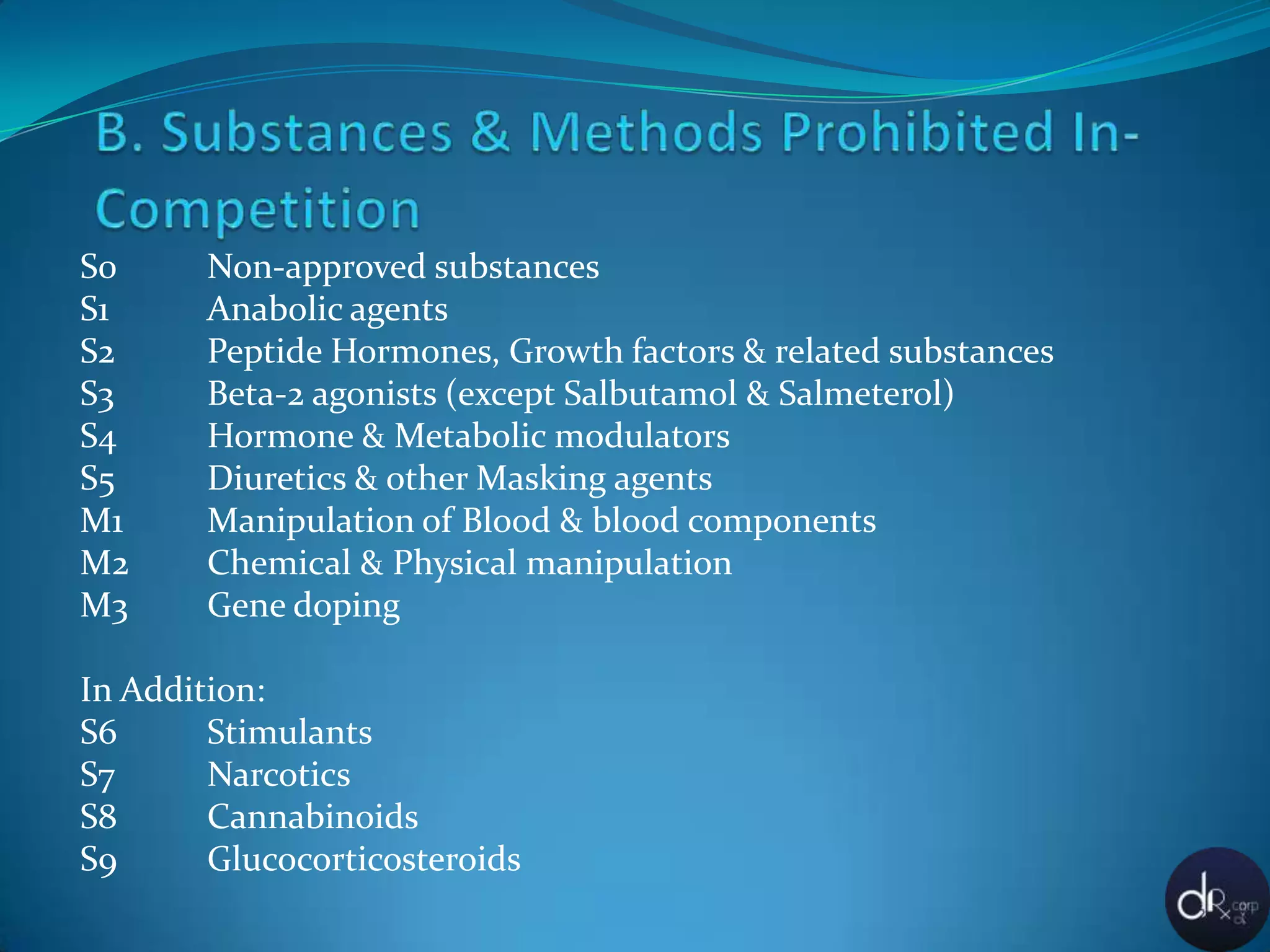
S0 Non-approved substances
S1 Anabolic agents
S2 Peptide Hormones, Growth factors & related substances
S3 Beta-2 agonists (except Salbutamol & Salmeterol)
S4 Hormone & Metabolic modulators
S5 Diuretics & other Masking agents
M1 Manipulation of Blood & blood components
M2 Chemical & Physical manipulation
M3 Gene doping
In Addition:
S6 Stimulants
S7 Narcotics
S8 Cannabinoids
S9 Glucocorticosteroids
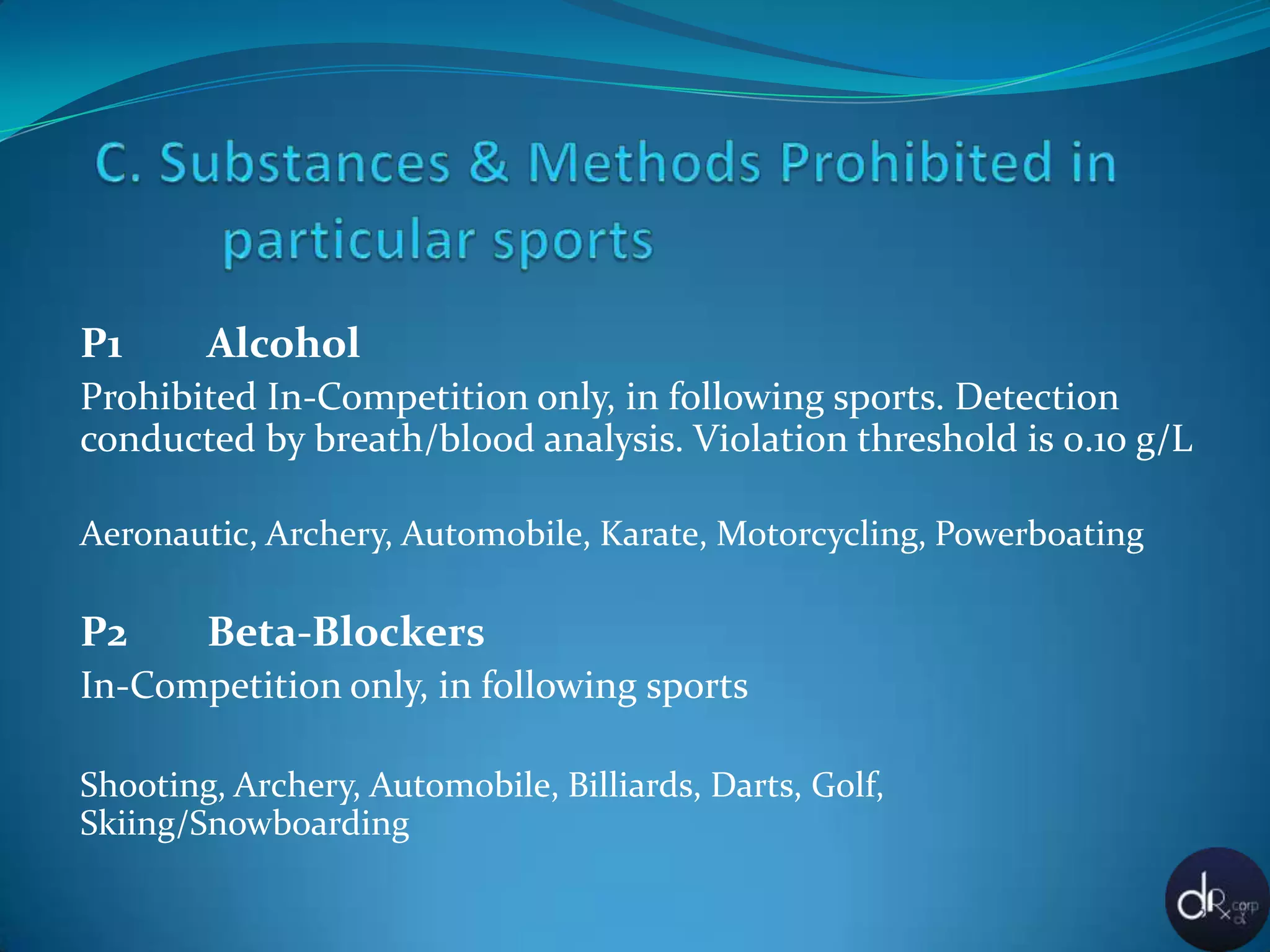
P1 Alcohol
Prohibited In-Competition only, in following sports. Detection
conducted by breath/blood analysis. Violation threshold is 0.10 g/L
Aeronautic, Archery, Automobile, Karate, Motorcycling, Powerboating
P2 Beta-Blockers
In-Competition only, in following sports
Shooting, Archery, Automobile, Billiards, Darts, Golf,
Skiing/Snowboarding
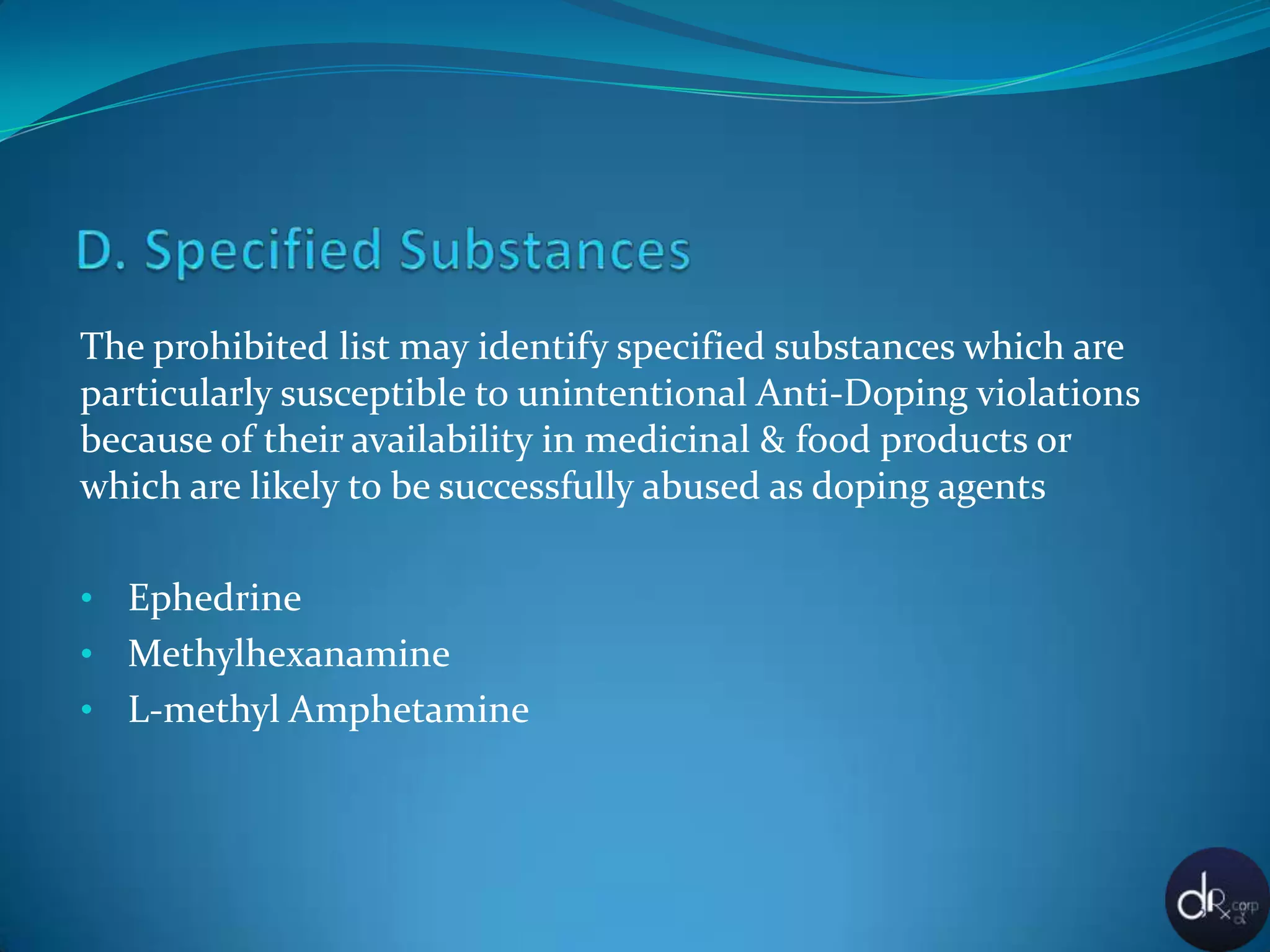
The prohibited list may identify specified substances which are
particularly susceptible to unintentional Anti-Doping violations
because of their availability in medicinal & food products or
which are likely to be successfully abused as doping agents
• Ephedrine
• Methylhexanamine
• L-methyl Amphetamine
• TUE may be granted to a player permitting the use of
prohibited substance in the prohibited list
• The player should submit a TUE application when necessary
and exemption will be granted if sanctioned in accordance
with strict criteria.
• In a medical emergency, treatment is a priority.
Player/Doctor should apply for a TUE retroactively
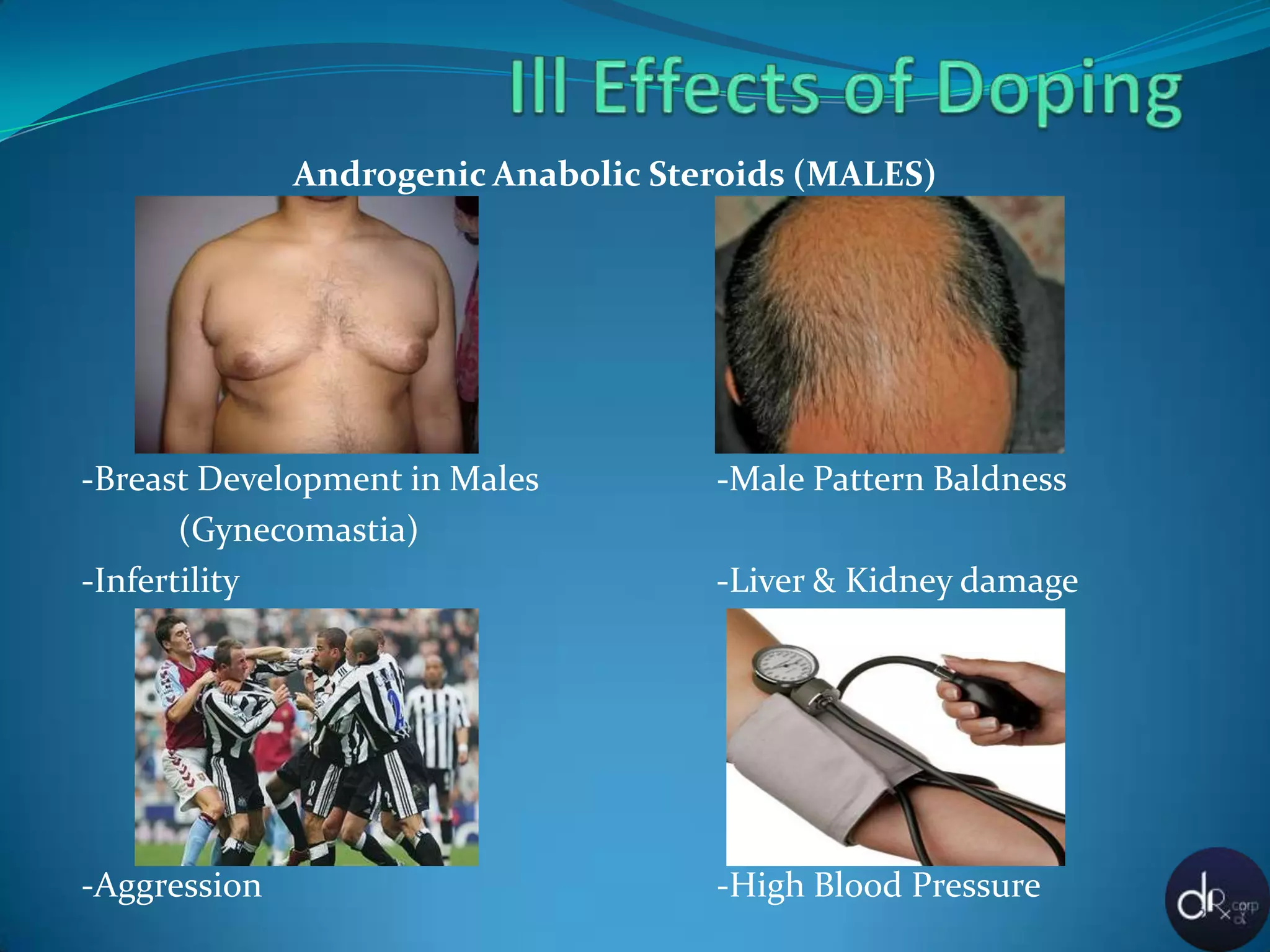
Androgenic Anabolic Steroids (MALES)
-Breast Development in Males -Male Pattern Baldness
(Gynecomastia)
-Infertility -Liver & Kidney damage
-Aggression -High Blood Pressure
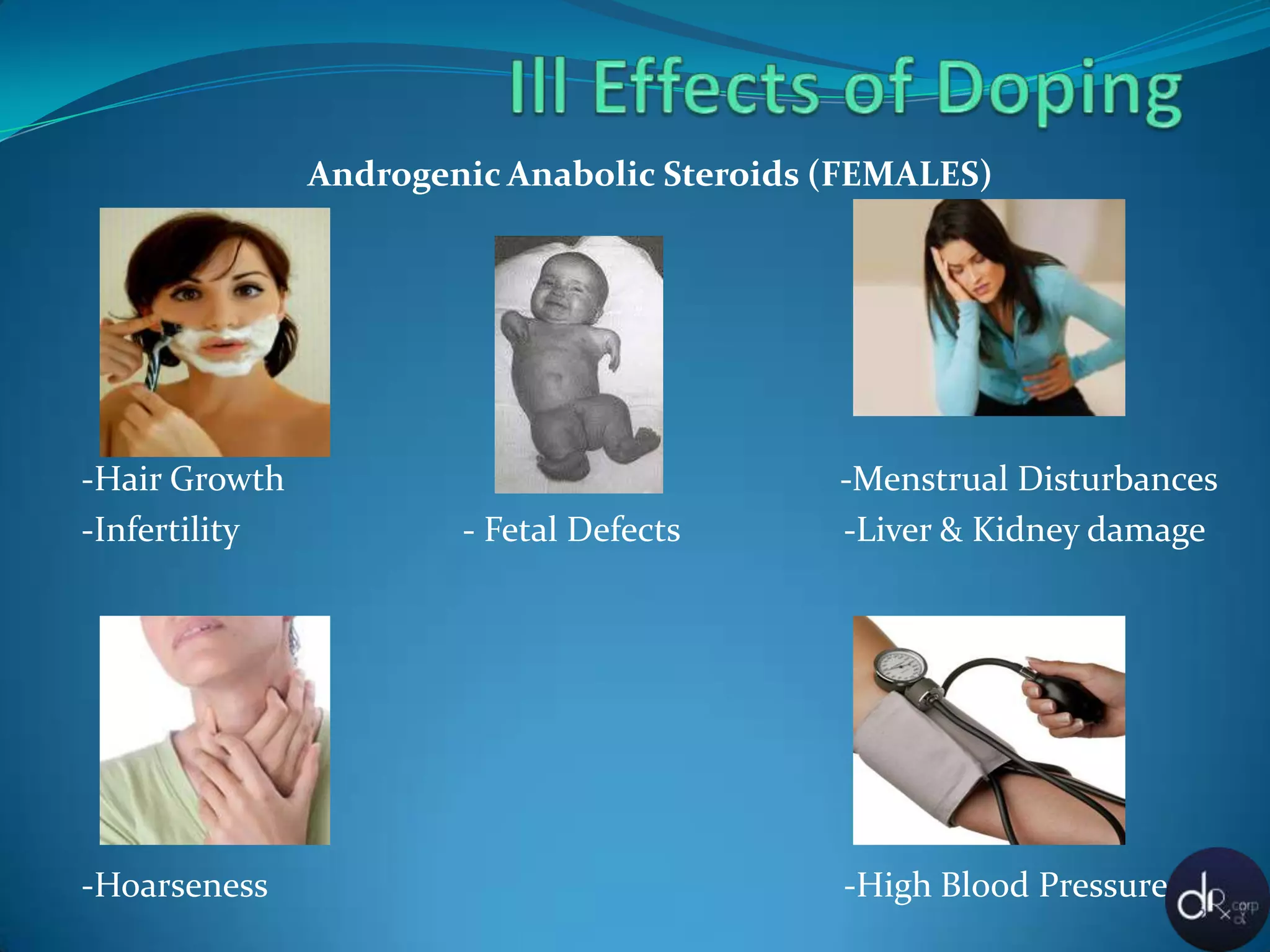
Androgenic Anabolic Steroids (FEMALES)
-Hair Growth -Menstrual Disturbances
-Infertility - Fetal Defects -Liver & Kidney damage
-Hoarseness -High Blood Pressure
• Stimulants: loss of appetite, insomnia, restlessness, high blood
pressure (HBP), palpitations and addiction
• Narcotics: aggravates injuries, loss of balance/coordination, depression
& addiction
• Peptide Hormones: masculinity, abnormal growth, HBP, diabetes
mellitus, myocardial/cerebral infarction, embolism, convulsions
• Billion $ Industry
• Widespread among sports persons
• Recommended by fitness trainers
• Not recommended by the IOC
• Not regulated by the FDA
• WADA does not accept testing certificates
• 1 in 4 Nutritional Supplements are contaminated
• Promoting adaptations to training
• Increasing energy supply
• Allows more intense training by promoting recovery
• Maintains good health & reduces interruptions to training due to
chronic fatigue, illness or injury
• Enhancing competitive performance
Carbohydrates are the main source of energy. Carbs are
stored in the liver & muscles.
Fats are the secondary & a long term source of energy. Fats
stored in fat depots in the body
Proteins are essential for muscle growth & repair. Not a
major source of energy & they cannot be stored in the
body
Amino acids from protein form building blocks for manufacture
of new tissue including muscle and repair of damaged tissue
Proteins are building blocks for hormones and enzymes that
regulate metabolism
Proteins also support the immune system
Provides a small source of fuel for the exercising muscle
Protein Supplements, High Protein bars and amino acid
preparations - biggest selling sports nutrition products
An adequate intake of protein essential for muscle growth and
repair
RDA can be easily achieved with everyday foods. Hence extra
protein seldom required
Whole proteins have advantages over individual amino
acids
Sedentary 0.8 gm/kg BW
Elite Athlete 1.2-1.6 gm/kg BW
Most athletes consume more than 1.2-1.6 gm/kg BW protein in their
normal diet and hence do not need to be encouraged or educated to
increase their protein intake
Some resistance trained athletes and body builders take up to 2-3 gm/kg
BW proteins which is not required
• 2 small eggs
• 300 ml of cow’s milk
• 20 gm. of skim milk powder
• 30 gm. of cheese
• 200 gm. yoghurt
• 35-50 gm. of meat, fish or
chicken
• 4 slices bread
• 90 gm. breakfast cereal
 2 cups cooked pasta or 3
cups rice
 400 ml soy milk
 60 gm nuts or seeds
 120 gm tofu or soy meat
 150 gm legumes or lentils
 200 gm baked beans
 150 ml fruit smoothie or
liquid meal supplement
total balance of the diet
timing of protein-carbohydrate meals and snacks in
relation to training & competition
Whole milk is 82% casein (slow absorption) + 18% whey (fast
absorption)
Whey is a by-product of whole milk after cheese production Whey
protein powder is 10 times more expensive than milk
Whey stimulates early protein synthesis but due to faster oxidation
this effect is short-acting and complete within an hour
Casein stimulates late protein synthesis which lasts for 4 to 7 hours.
Besides casein reduces muscle protein breakdown.
Recent studies show that milk is as effective or more
effective as a sports recovery drink than commercially
available sports drinks (in lactose tolerant people)
In lactose intolerant people soya milk could be
substituted.
Besides water, milk also provides high quality protein,
carbohydrates, vitamins, electrolytes and minerals such as
calcium
Athletes must be aware of the strict liability principle that
makes them responsible for everything they eat and drink
Surveys have suggested that 1 in 4 may result in a positive
test
Prohibited compounds are never declared on the label
At present, there can be no guarantee of the purity of any
commercial supplement
If there is any doubt at all, DON’T TAKE IT
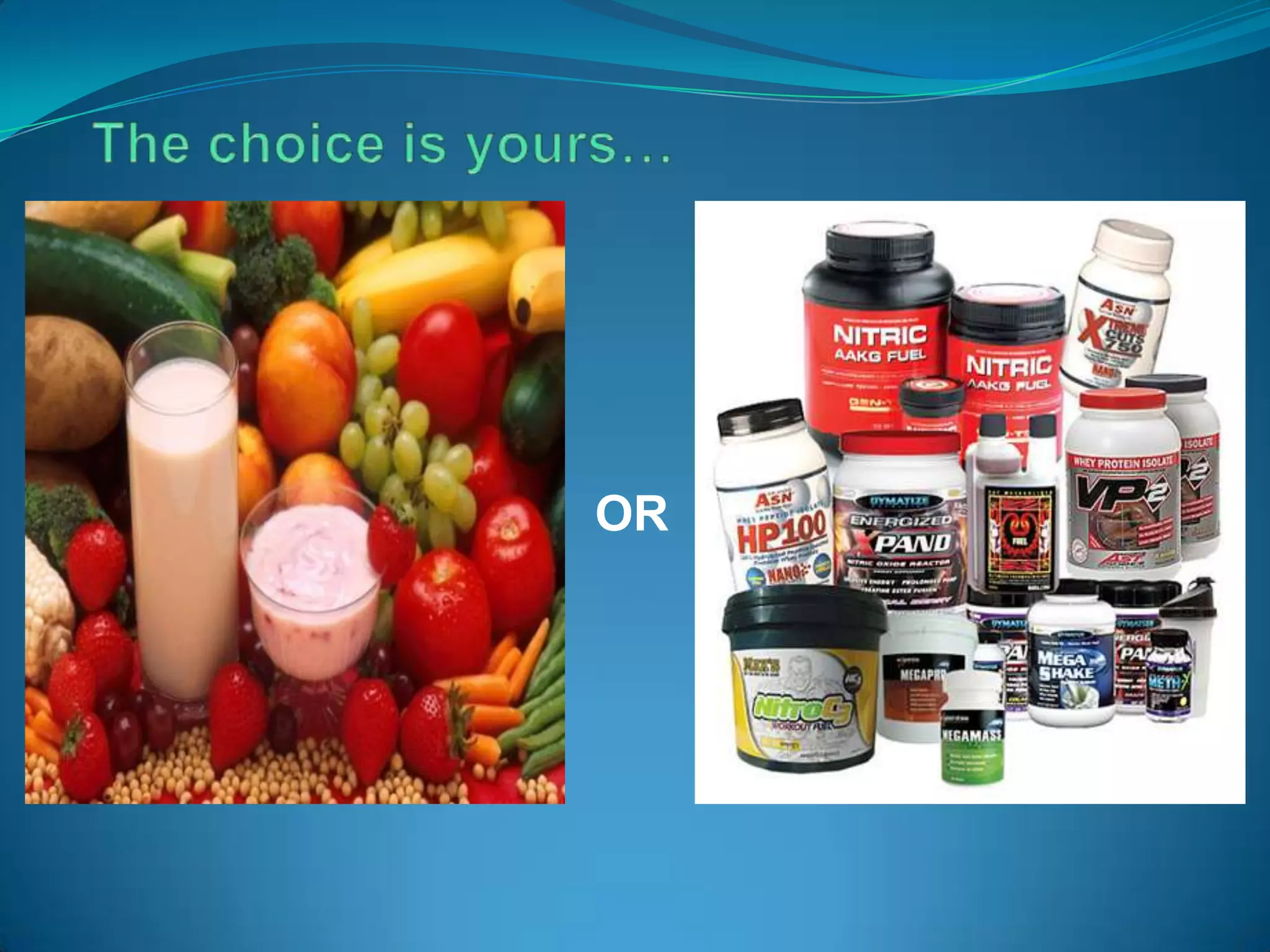
OR
Ayurveda & Homeopathy have stood
the test of time. People’s perception
is that they are effective and safe.
The fact is that the ingredients are
unknown, no effective product
labeling and not recognized by
FDA’s.
 Upul Tharanga, Sri Lankan opening
batsman, tested positive for
Prednisolone during the Cricket
World Cup 2011.
 It is presumed that this banned
substance came from his homeopathy
prescription by a popular Sri Lankan
homeopath for treatment of Bronchial
Asthma.
Doping in sports

Doping in sports

  • 1.
    Dr. Abhijit Salvi MBBS,Masters in Sports Medicine (U.K) BCCI Anti-Doping and Age-Verification Officer
  • 2.
    “Dope” – fromDutch word ‘Dop’ – an alcoholic beverage from grape skins, used by Zulu warriors to enhance their power in battle.
  • 3.
    Doping is definedas occurrence of one or more of the following: • Presence of Prohibited Substance in an Athlete’s Sample • Use or Attempted Use • Refusing or failing without compelling justification to submit to Sample Collection after notification • Violation of applicable requirements regarding Athlete availability for Out-of-Competition Testing • Tampering or Attempted Tampering • Possession • Trafficking or Attempted Trafficking • Administration or Attempted administration to any Athlete of a Prohibited Substance or Prohibited Method
  • 4.
    • Established in1999 • HQ – Montreal, Canada • 192 countries and more than 570 sporting organizations have signed up with WADA • WADA’s budget of US$ 25.5 million is shared equally by member governments and the IOC.
  • 6.
    • India hasthe highest number of failed dope tests internationally. • In 2010, 103 Indian sportspersons, including juniors, failed dope tests. • The 2011, 121 tested positive while more than 130 have failed in 2012. • At the National School Games (U-16) at New Delhi in January 2012, 11 out of 81 samples collected tested positive for banned substances which included 3 Wrestlers, 3 Weightlifters and 5 Boxers. • The Weight Lifting Federation of India has been suspended twice by the International body.
  • 7.
    • Doping threatensAthlete’s Health • It also threatens Integrity of Sport • Athletes are role models to many youngsters
  • 8.
    • Ignorance aboutdrugs • Amateurism to professionalism. • Drugs, a must for Winning. • Fame & fortune. • To cope with stress and injuries. • Pressure from peers, coach, support staff, family, media & nation.
  • 9.
    • Most athletesare victims rather than culprits. Often only the athlete is sanctioned, as the weakest link. • The athlete in the WADA Code Acceptance Form has to list his coach, manager, trainer & physiotherapist. • Any positive doping test will lead to all being watch listed and target tested • Re-testing of samples once new methods are available. • Urine and blood samples are now being preserved for 8 years to identify new drugs
  • 10.
    • WADA reviewsthe Prohibited list annually • The revised list is published on 1st October every year and comes into effect 3 months later i.e. from the following 1st of January.
  • 11.
    A. Substances andMethods Prohibited at all times (In- & Out-of Competition) B. Substances and Methods Prohibited In- Competition C. Substances Prohibited in Particular Sports D. Specified Substances
  • 12.
    Substances: S0 Non-approved substances S1Anabolic agents S2 Peptide Hormones, Growth factors & related substances S3 Beta-2 agonists (except Salbutamol & Salmeterol) S4 Hormone & Metabolic modulators S5 Diuretics & other Masking agents Methods: M1 Manipulation of Blood & blood components M2 Chemical & Physical manipulation M3 Gene doping
  • 13.
    S0 Non-approved substances S1Anabolic agents S2 Peptide Hormones, Growth factors & related substances S3 Beta-2 agonists (except Salbutamol & Salmeterol) S4 Hormone & Metabolic modulators S5 Diuretics & other Masking agents M1 Manipulation of Blood & blood components M2 Chemical & Physical manipulation M3 Gene doping In Addition: S6 Stimulants S7 Narcotics S8 Cannabinoids S9 Glucocorticosteroids
  • 14.
    P1 Alcohol Prohibited In-Competitiononly, in following sports. Detection conducted by breath/blood analysis. Violation threshold is 0.10 g/L Aeronautic, Archery, Automobile, Karate, Motorcycling, Powerboating P2 Beta-Blockers In-Competition only, in following sports Shooting, Archery, Automobile, Billiards, Darts, Golf, Skiing/Snowboarding
  • 15.
    The prohibited listmay identify specified substances which are particularly susceptible to unintentional Anti-Doping violations because of their availability in medicinal & food products or which are likely to be successfully abused as doping agents • Ephedrine • Methylhexanamine • L-methyl Amphetamine
  • 16.
    • TUE maybe granted to a player permitting the use of prohibited substance in the prohibited list • The player should submit a TUE application when necessary and exemption will be granted if sanctioned in accordance with strict criteria. • In a medical emergency, treatment is a priority. Player/Doctor should apply for a TUE retroactively
  • 17.
    Androgenic Anabolic Steroids(MALES) -Breast Development in Males -Male Pattern Baldness (Gynecomastia) -Infertility -Liver & Kidney damage -Aggression -High Blood Pressure
  • 18.
    Androgenic Anabolic Steroids(FEMALES) -Hair Growth -Menstrual Disturbances -Infertility - Fetal Defects -Liver & Kidney damage -Hoarseness -High Blood Pressure
  • 19.
    • Stimulants: lossof appetite, insomnia, restlessness, high blood pressure (HBP), palpitations and addiction • Narcotics: aggravates injuries, loss of balance/coordination, depression & addiction • Peptide Hormones: masculinity, abnormal growth, HBP, diabetes mellitus, myocardial/cerebral infarction, embolism, convulsions
  • 21.
    • Billion $Industry • Widespread among sports persons • Recommended by fitness trainers • Not recommended by the IOC • Not regulated by the FDA • WADA does not accept testing certificates • 1 in 4 Nutritional Supplements are contaminated
  • 22.
    • Promoting adaptationsto training • Increasing energy supply • Allows more intense training by promoting recovery • Maintains good health & reduces interruptions to training due to chronic fatigue, illness or injury • Enhancing competitive performance
  • 23.
    Carbohydrates are themain source of energy. Carbs are stored in the liver & muscles. Fats are the secondary & a long term source of energy. Fats stored in fat depots in the body Proteins are essential for muscle growth & repair. Not a major source of energy & they cannot be stored in the body
  • 24.
    Amino acids fromprotein form building blocks for manufacture of new tissue including muscle and repair of damaged tissue Proteins are building blocks for hormones and enzymes that regulate metabolism Proteins also support the immune system Provides a small source of fuel for the exercising muscle
  • 25.
    Protein Supplements, HighProtein bars and amino acid preparations - biggest selling sports nutrition products An adequate intake of protein essential for muscle growth and repair RDA can be easily achieved with everyday foods. Hence extra protein seldom required Whole proteins have advantages over individual amino acids
  • 26.
    Sedentary 0.8 gm/kgBW Elite Athlete 1.2-1.6 gm/kg BW Most athletes consume more than 1.2-1.6 gm/kg BW protein in their normal diet and hence do not need to be encouraged or educated to increase their protein intake Some resistance trained athletes and body builders take up to 2-3 gm/kg BW proteins which is not required
  • 27.
    • 2 smalleggs • 300 ml of cow’s milk • 20 gm. of skim milk powder • 30 gm. of cheese • 200 gm. yoghurt • 35-50 gm. of meat, fish or chicken • 4 slices bread • 90 gm. breakfast cereal  2 cups cooked pasta or 3 cups rice  400 ml soy milk  60 gm nuts or seeds  120 gm tofu or soy meat  150 gm legumes or lentils  200 gm baked beans  150 ml fruit smoothie or liquid meal supplement
  • 29.
    total balance ofthe diet timing of protein-carbohydrate meals and snacks in relation to training & competition
  • 30.
    Whole milk is82% casein (slow absorption) + 18% whey (fast absorption) Whey is a by-product of whole milk after cheese production Whey protein powder is 10 times more expensive than milk Whey stimulates early protein synthesis but due to faster oxidation this effect is short-acting and complete within an hour Casein stimulates late protein synthesis which lasts for 4 to 7 hours. Besides casein reduces muscle protein breakdown.
  • 31.
    Recent studies showthat milk is as effective or more effective as a sports recovery drink than commercially available sports drinks (in lactose tolerant people) In lactose intolerant people soya milk could be substituted. Besides water, milk also provides high quality protein, carbohydrates, vitamins, electrolytes and minerals such as calcium
  • 32.
    Athletes must beaware of the strict liability principle that makes them responsible for everything they eat and drink Surveys have suggested that 1 in 4 may result in a positive test Prohibited compounds are never declared on the label At present, there can be no guarantee of the purity of any commercial supplement If there is any doubt at all, DON’T TAKE IT
  • 33.
  • 34.
    Ayurveda & Homeopathyhave stood the test of time. People’s perception is that they are effective and safe. The fact is that the ingredients are unknown, no effective product labeling and not recognized by FDA’s.
  • 35.
     Upul Tharanga,Sri Lankan opening batsman, tested positive for Prednisolone during the Cricket World Cup 2011.  It is presumed that this banned substance came from his homeopathy prescription by a popular Sri Lankan homeopath for treatment of Bronchial Asthma.