DRUG DELIVERY
SYSTEM
Health Biotechnology
Superior University
Group 8
Ayesha Hashmi
Ayesha Yasin
Usama Mukhtar
• Drug Delivery System
• What are drug delivery devices?
• What Are the Four Drug Delivery Methods?
• Drug delivery technology
• Drug delivery technology companies
• Possible Systems for drug delivery
• Targeted drug delivery system
• Future Perspectives
Content
Drugs
Drugs have played a pivotal role in alleviating illnesses, enhancing well being, and extending
both human and animal lifespans.
Drug delivery system
Drug delivery systems describe technologies that carry drugs into or throughout the body.
What are drug delivery devices?
Drug delivery devices are specialized equipment designed to facilitate therapeutic substances to
patients.
INTRODUCTION
• Syringes and Needles
These are widely used for injections. Syringes allow for precise measurement
and controlled delivery of liquid medications.
• Auto injectors
These devices are designed to deliver a pre-measured dose of medication through a needle
with the push of a button. They are often used for severe allergic reactions.
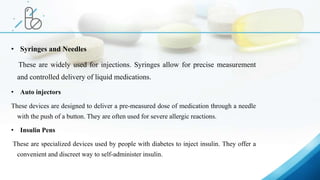
• Insulin Pens
These are specialized devices used by people with diabetes to inject insulin. They offer a
convenient and discreet way to self-administer insulin.
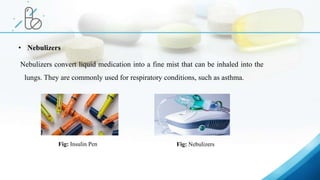
• Nebulizers
Nebulizers convert liquid medication into a fine mist that can be inhaled into the
lungs. They are commonly used for respiratory conditions, such as asthma.
Fig: Insulin Pen Fig: Nebulizers
• Immediate Release
The dosage form that is designed to give a rapid and complete release of the drug.
• Non-Immediate Release
The dosage form encompassing drugs that do not fully release upon administration.
What Are the Four Drug Delivery Methods?
• Site-Specific Release
The dosage form that offers targeted delivery of a drug directly to the
location where it is administered.
• Sustained Release
The dosage form that releases a drug continuously at a slow or controlled
rate over a prolonged period of time.
What Are the Four Drug Delivery Methods?
DRUG DELIVERY TECHNOLOGY
• Drug delivery technology means finding smart ways to give medicines
to the body in a precise and controlled manner.
• It can take various forms, including drug-loaded nanoparticles,
liposomes, micelles, implantable devices, and transdermal patches.
DRUG DELIVERY TECHNOLOGY
Pharmaceutical Technology has listed companies providing products and services related to
drug delivery, including:
• Oral drug delivery technologies
• Transdermal drug delivery systems
• Self-injection devices
• Automated test solutions for pharmaceutical drug delivery systems.
DRUG DELIVERY TECHNOLOGY COMPANIES
•Insulet: This company is headquartered in Billerica, Massachusetts. It touts the
OmniPod Delivery System, which is a tubeless system to deliver insulin.
•Becton Dickinson: As one of the largest medical device companies in the world,
Becton Dickinson is involved in innovative drug delivery development.
•Ipsen SA and Insmed Inc: These companies are key patent filers in
nanoparticles for drug delivery.
DRUG DELIVERY TECHNOLOGY COMPANIES
POSSIBLE SYSTEMS FOR DRUG DELIVERY
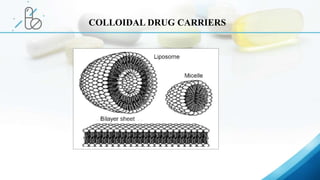
• Colloidal drug strategies involve utilizing drug carriers that contain
microscopically dispersed drug particles suspended in a colloidal suspension.
• They are tiny and invisible delivery vehicles for medicines, such as micelles
and liposomes.
• The purpose is to obtain systems with optimized drug loading and release
properties, long shelf-life and low toxicity.
COLLOIDAL DRUG CARRIERS
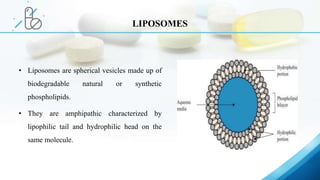
• Liposomes are spherical vesicles made up of
biodegradable natural or synthetic
phospholipids.
• They are amphipathic characterized by
lipophilic tail and hydrophilic head on the
same molecule.
LIPOSOMES
• Water-soluble drugs are trapped inside the hydrophobic core, while fat-soluble
drugs are incorporated into the phospholipid layer of liposomes.
• Liposomes attach to cellular membranes and appear to fuse with them,
releasing their or drugs into the cell.
• In the case of phagocytic cells, the liposomes are taken up, the phospholipid
walls are acted upon by organelles called lysosomes, and the medication is
released.
LIPOSOMES
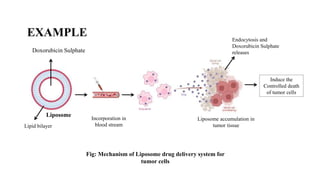
Liposome
Doxorubicin Sulphate
Lipid bilayer
Incorporation in
blood stream
Liposome accumulation in
tumor tissue
EXAMPLE
Fig: Mechanism of Liposome drug delivery system for
tumor cells
Endocytosis and
Doxorubicin Sulphate
releases
Induce the
Controlled death
of tumor cells
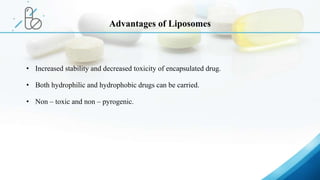
• Increased stability and decreased toxicity of encapsulated drug.
• Both hydrophilic and hydrophobic drugs can be carried.
• Non – toxic and non – pyrogenic.
Advantages of Liposomes
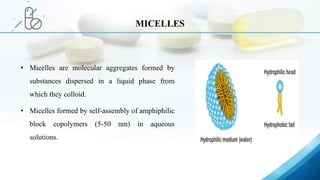
• Micelles are molecular aggregates formed by
substances dispersed in a liquid phase from
which they colloid.
• Micelles formed by self-assembly of amphiphilic
block copolymers (5-50 nm) in aqueous
solutions.
MICELLES
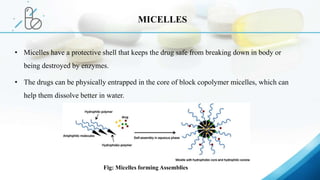
• Micelles have a protective shell that keeps the drug safe from breaking down in body or
being destroyed by enzymes.
• The drugs can be physically entrapped in the core of block copolymer micelles, which can
help them dissolve better in water.
Fig: Micelles forming Assemblies
MICELLES
• Helps medicines to dissolve in water easily.
• Protects the medicines from breaking down in the body or being
destroyed by enzymes.
Advantages of Micelles
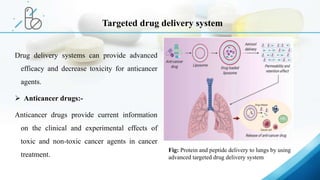
Drug delivery systems can provide advanced
efficacy and decrease toxicity for anticancer
agents.
 Anticancer drugs:-
Anticancer drugs provide current information
on the clinical and experimental effects of
toxic and non-toxic cancer agents in cancer
treatment.
Fig: Protein and peptide delivery to lungs by using
advanced targeted drug delivery system
Targeted drug delivery system
 Lung-specific drug delivery
Pulmonary drug delivery offers several advantages in the treatment of respiratory
diseases (such as pulmonary, arterial hypertension) over other routes of
administration.
 Targeting to brain
The great interest in mucosal vaccine delivery arises from the fact that mucosal
surfaces represent the major site of entry for many pathogens.
 Strategies for drug delivery to the brain:
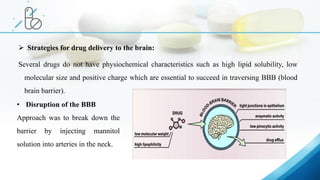
Several drugs do not have physiochemical characteristics such as high lipid solubility, low
molecular size and positive charge which are essential to succeed in traversing BBB (blood
brain barrier).
• Disruption of the BBB
Approach was to break down the
barrier by injecting mannitol
solution into arteries in the neck.
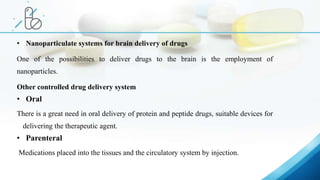
• Nanoparticulate systems for brain delivery of drugs
One of the possibilities to deliver drugs to the brain is the employment of
nanoparticles.
Other controlled drug delivery system
• Oral
There is a great need in oral delivery of protein and peptide drugs, suitable devices for
delivering the therapeutic agent.
• Parenteral
Medications placed into the tissues and the circulatory system by injection.
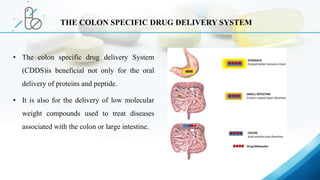
• The colon specific drug delivery System
(CDDS)is beneficial not only for the oral
delivery of proteins and peptide.
• It is also for the delivery of low molecular
weight compounds used to treat diseases
associated with the colon or large intestine.
THE COLON SPECIFIC DRUG DELIVERY SYSTEM
Advances in surface technology of nanoparticles have allowed nanocarriers to engage
applicants for future work involving targeted drug delivery and they are currently
used to diagnose or treat several types of cancer. Additionally, there are different
formulations, which are now in different stages of clinical trials to
• Enhance therapeutic efficacy
• Reducing toxicity
• Increasing patient compliance
• Enabling entirely new medical treatments.
FUTURE PROSPECTIVES
THANK YOU

Drug Delivery System.pptx

  • 1.
    DRUG DELIVERY SYSTEM Health Biotechnology SuperiorUniversity Group 8 Ayesha Hashmi Ayesha Yasin Usama Mukhtar
  • 2.
    • Drug DeliverySystem • What are drug delivery devices? • What Are the Four Drug Delivery Methods? • Drug delivery technology • Drug delivery technology companies • Possible Systems for drug delivery • Targeted drug delivery system • Future Perspectives Content
  • 3.
    Drugs Drugs have playeda pivotal role in alleviating illnesses, enhancing well being, and extending both human and animal lifespans. Drug delivery system Drug delivery systems describe technologies that carry drugs into or throughout the body. What are drug delivery devices? Drug delivery devices are specialized equipment designed to facilitate therapeutic substances to patients. INTRODUCTION
  • 4.
    • Syringes andNeedles These are widely used for injections. Syringes allow for precise measurement and controlled delivery of liquid medications. • Auto injectors These devices are designed to deliver a pre-measured dose of medication through a needle with the push of a button. They are often used for severe allergic reactions. • Insulin Pens These are specialized devices used by people with diabetes to inject insulin. They offer a convenient and discreet way to self-administer insulin.
  • 5.
    • Nebulizers Nebulizers convertliquid medication into a fine mist that can be inhaled into the lungs. They are commonly used for respiratory conditions, such as asthma. Fig: Insulin Pen Fig: Nebulizers
  • 6.
    • Immediate Release Thedosage form that is designed to give a rapid and complete release of the drug. • Non-Immediate Release The dosage form encompassing drugs that do not fully release upon administration. What Are the Four Drug Delivery Methods?
  • 7.
    • Site-Specific Release Thedosage form that offers targeted delivery of a drug directly to the location where it is administered. • Sustained Release The dosage form that releases a drug continuously at a slow or controlled rate over a prolonged period of time. What Are the Four Drug Delivery Methods?
  • 8.
  • 9.
    • Drug deliverytechnology means finding smart ways to give medicines to the body in a precise and controlled manner. • It can take various forms, including drug-loaded nanoparticles, liposomes, micelles, implantable devices, and transdermal patches. DRUG DELIVERY TECHNOLOGY
  • 10.
    Pharmaceutical Technology haslisted companies providing products and services related to drug delivery, including: • Oral drug delivery technologies • Transdermal drug delivery systems • Self-injection devices • Automated test solutions for pharmaceutical drug delivery systems. DRUG DELIVERY TECHNOLOGY COMPANIES
  • 11.
    •Insulet: This companyis headquartered in Billerica, Massachusetts. It touts the OmniPod Delivery System, which is a tubeless system to deliver insulin. •Becton Dickinson: As one of the largest medical device companies in the world, Becton Dickinson is involved in innovative drug delivery development. •Ipsen SA and Insmed Inc: These companies are key patent filers in nanoparticles for drug delivery. DRUG DELIVERY TECHNOLOGY COMPANIES
  • 12.
    POSSIBLE SYSTEMS FORDRUG DELIVERY
  • 13.
    • Colloidal drugstrategies involve utilizing drug carriers that contain microscopically dispersed drug particles suspended in a colloidal suspension. • They are tiny and invisible delivery vehicles for medicines, such as micelles and liposomes. • The purpose is to obtain systems with optimized drug loading and release properties, long shelf-life and low toxicity. COLLOIDAL DRUG CARRIERS
  • 14.
  • 15.
    • Liposomes arespherical vesicles made up of biodegradable natural or synthetic phospholipids. • They are amphipathic characterized by lipophilic tail and hydrophilic head on the same molecule. LIPOSOMES
  • 16.
    • Water-soluble drugsare trapped inside the hydrophobic core, while fat-soluble drugs are incorporated into the phospholipid layer of liposomes. • Liposomes attach to cellular membranes and appear to fuse with them, releasing their or drugs into the cell. • In the case of phagocytic cells, the liposomes are taken up, the phospholipid walls are acted upon by organelles called lysosomes, and the medication is released. LIPOSOMES
  • 17.
    Liposome Doxorubicin Sulphate Lipid bilayer Incorporationin blood stream Liposome accumulation in tumor tissue EXAMPLE Fig: Mechanism of Liposome drug delivery system for tumor cells Endocytosis and Doxorubicin Sulphate releases Induce the Controlled death of tumor cells
  • 18.
    • Increased stabilityand decreased toxicity of encapsulated drug. • Both hydrophilic and hydrophobic drugs can be carried. • Non – toxic and non – pyrogenic. Advantages of Liposomes
  • 19.
    • Micelles aremolecular aggregates formed by substances dispersed in a liquid phase from which they colloid. • Micelles formed by self-assembly of amphiphilic block copolymers (5-50 nm) in aqueous solutions. MICELLES
  • 20.
    • Micelles havea protective shell that keeps the drug safe from breaking down in body or being destroyed by enzymes. • The drugs can be physically entrapped in the core of block copolymer micelles, which can help them dissolve better in water. Fig: Micelles forming Assemblies MICELLES
  • 21.
    • Helps medicinesto dissolve in water easily. • Protects the medicines from breaking down in the body or being destroyed by enzymes. Advantages of Micelles
  • 22.
    Drug delivery systemscan provide advanced efficacy and decrease toxicity for anticancer agents.  Anticancer drugs:- Anticancer drugs provide current information on the clinical and experimental effects of toxic and non-toxic cancer agents in cancer treatment. Fig: Protein and peptide delivery to lungs by using advanced targeted drug delivery system Targeted drug delivery system
  • 23.
     Lung-specific drugdelivery Pulmonary drug delivery offers several advantages in the treatment of respiratory diseases (such as pulmonary, arterial hypertension) over other routes of administration.  Targeting to brain The great interest in mucosal vaccine delivery arises from the fact that mucosal surfaces represent the major site of entry for many pathogens.
  • 24.
     Strategies fordrug delivery to the brain: Several drugs do not have physiochemical characteristics such as high lipid solubility, low molecular size and positive charge which are essential to succeed in traversing BBB (blood brain barrier). • Disruption of the BBB Approach was to break down the barrier by injecting mannitol solution into arteries in the neck.
  • 25.
    • Nanoparticulate systemsfor brain delivery of drugs One of the possibilities to deliver drugs to the brain is the employment of nanoparticles. Other controlled drug delivery system • Oral There is a great need in oral delivery of protein and peptide drugs, suitable devices for delivering the therapeutic agent. • Parenteral Medications placed into the tissues and the circulatory system by injection.
  • 26.
    • The colonspecific drug delivery System (CDDS)is beneficial not only for the oral delivery of proteins and peptide. • It is also for the delivery of low molecular weight compounds used to treat diseases associated with the colon or large intestine. THE COLON SPECIFIC DRUG DELIVERY SYSTEM
  • 27.
    Advances in surfacetechnology of nanoparticles have allowed nanocarriers to engage applicants for future work involving targeted drug delivery and they are currently used to diagnose or treat several types of cancer. Additionally, there are different formulations, which are now in different stages of clinical trials to • Enhance therapeutic efficacy • Reducing toxicity • Increasing patient compliance • Enabling entirely new medical treatments. FUTURE PROSPECTIVES
  • 28.