Kristel Joy R. Somera
Subject Teacher
Read carefully the given
statement and tell
whether it is a FACT or a
BLUFF
DRR aims to reduce the damage
caused by natural hazards like
earthquakes, floods, droughts and
cyclones through an ethic of
prevention.
Each decision and action people
make are determinants as to
whether they are vulnerable to
disasters or more resilient.
Development does not increase or
decrease disaster risk.
DRR is the concept and practice of
increasing disaster through
systematic efforts to analyze and
increase the causal factors of
disasters.
Disaster risk reduction policies,
laws and regulations will NOT save
lives unless correctly implemented
Disaster Risk Reduction is a ‘stand
alone’ activity
Disaster risk reduction is
everyone’s business, thus, it
involves every part of society and
government.
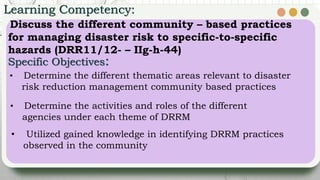
Learning Competency:
Discuss the different community – based practices
for managing disaster risk to specific-to-specific
hazards (DRR11/12- – IIg-h-44)
• Determine the different thematic areas relevant to disaster
risk reduction management community based practices
Specific Objectives:
• Determine the activities and roles of the different
agencies under each theme of DRRM
• Utilized gained knowledge in identifying DRRM practices
observed in the community
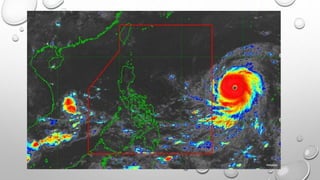
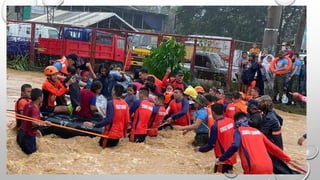
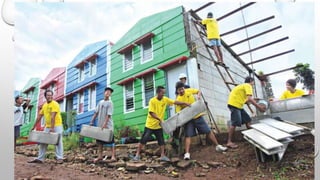
Activity 1:
Determine what is being shown or
depicted in the given pictures.
Community – Based DRRM
 ‘ a process in which at – risk communities are
actively engaged in the identification,
analysis, treatment, monitoring and
evaluation of disaster risks in order to
reduce vulnerabilities and enhance
capacities.
What are the community – based practices for
managing disaster risk to specific hazard?
Activity 2:
Your task is to determine the main
focus and the specific activities of the
Thematic area in DRRM assigned in
your group. Then, share with the
class through role play, simulation,
broadcasting, or in any creative way.
Thematic Area1: Disaster Prevention
and Mitigation
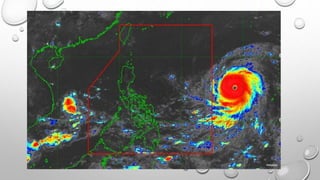
Disaster Prevention includes the
measures taken to avoid the unfavorable
impacts of hazards and related disasters.
Disaster Mitigation is the lessening or
limiting the adverse impacts of hazards
and related disasters
Thematic Area1: Disaster Prevention
and Mitigation
- Overall responsible government agency:
Department of Science and Technology
(DOST)
Other agencies involved: Office of Civil Defense (OCD),
Department of Environment and Natural Resources
(DENR), Department of Public Works and Highways
(DPWH), Department of Finance (DOF), and other
government agencies
Thematic Area1: Disaster Prevention
and Mitigation
The significant activities include:
• Early warning systems
• Flood forecasting and monitoring
• Hazard and risk mappings
• Structural and non-structural interventions
Thematic Area 2: Disaster
Preparedness
It is the knowledge and capacity to
effectively foresee, respond, and recover
from the impacts of hazard events or
conditions.
Thematic Area 2:
- Overall responsible government agency:
Department of Interior and Local Government
(DILG).
Other agencies involved: OCD, Department of
Education (DepEd), Commission on Higher
Education (CHED), Local Government Units (LGUs),
and other government agencies.
Disaster
Preparedness
Thematic Area 2:
Significant activities include:
• Contingency planning
• Prepositioning and stock-piling
• Capacitating and organizing responders
• Training, drills and exercises
• Pre-Disaster Risk Assessment
Disaster
Preparedness
Thematic Area 3: Disaster
Response
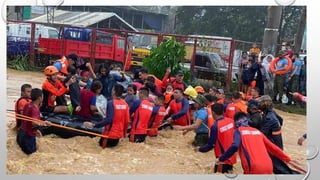
This includes the availability of services
to assist affected groups during or
immediately after a disaster, intending
to save lives, reduce impacts, ensure
safety, and meet the basic needs of
affected groups.
Thematic Area 3:
- Overall responsible government agency:
Department of Social Welfare and
Development (DSWD)
Other agencies involved: Disaster Risk Reduction
and Management Councils (DRRMCs), OCD, Department
of National Defense (DND), Department of Health (DOH),
Local Government Units (LGUs), and other government
agencies
Disaster
Response
Thematic Area 3: Disaster
Response
Significant activities include:
• Rapid Damage Assessment and Needs Analysis
(RDANA)
• Issuance of advisories and situation reports
• Activation of Response Clusters and Incident Command
System (ICS)
• Mobilization of responders
• Humanitarian assistance (eg. relief distribution)
• Provision of financial assistance
• Management of evacuation centers
Thematic Area 4: Disaster Rehabilitation
and Recovery
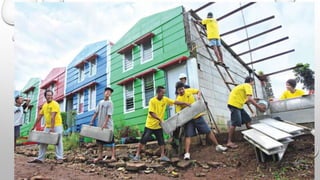
Rehabilitation refers to the ability of affected
communities to return to their normal functions by
increasing their organizational capacity to restore
livelihood and damaged facilities. Recovery includes
the actions and measures taken after a disaster to
rebuild, restore, or improve the living conditions of
the affected community while reducing the risks of
disaster.
Thematic Area 4: Disaster Rehabilitation
and Recovery
- Overall responsible government agency:
National Economic and Development
Authority (NEDA
Other agencies involved: Disaster Risk Reduction
and Management Councils (DRRMCs), OCD, Department
of National Defense (DND), Department of Health (DOH),
Local Government Units (LGUs), and other government
agencies
Thematic Area 4:
Significant activities include:
Post-Disaster Needs Assessment (PDNA)
• Enhancement of policies and plans
• Reconstruction using “build back better”
approach
• Resettlement
• Provision of new sources of livelihood
Disaster Rehabilitation
and Recovery
Activity 3
Identify the different DRRM community – based
practices that you observed in your barangay
relevant to the four thematic areas. Then, share
these to the class.
Key Questions:
1. What are the DRRM practices that you observed in your
community that is related to the four thematic areas of DRRM?
2. As a student, what are the DRRM measures and
interventions in your community that you need to accomplish,
support, and/or participate?
Finding Practical
Applications!
Let’s Generalized!
What are the community – based practices for
managing disaster risk to specific hazard?
Let’s Evaluate!
DRRR_CBDRRM.pptx

DRRR_CBDRRM.pptx

  • 1.
    Kristel Joy R.Somera Subject Teacher
  • 2.
    Read carefully thegiven statement and tell whether it is a FACT or a BLUFF
  • 3.
    DRR aims toreduce the damage caused by natural hazards like earthquakes, floods, droughts and cyclones through an ethic of prevention.
  • 4.
    Each decision andaction people make are determinants as to whether they are vulnerable to disasters or more resilient.
  • 5.
    Development does notincrease or decrease disaster risk.
  • 6.
    DRR is theconcept and practice of increasing disaster through systematic efforts to analyze and increase the causal factors of disasters.
  • 7.
    Disaster risk reductionpolicies, laws and regulations will NOT save lives unless correctly implemented
  • 8.
    Disaster Risk Reductionis a ‘stand alone’ activity
  • 9.
    Disaster risk reductionis everyone’s business, thus, it involves every part of society and government.
  • 10.
    Learning Competency: Discuss thedifferent community – based practices for managing disaster risk to specific-to-specific hazards (DRR11/12- – IIg-h-44) • Determine the different thematic areas relevant to disaster risk reduction management community based practices Specific Objectives: • Determine the activities and roles of the different agencies under each theme of DRRM • Utilized gained knowledge in identifying DRRM practices observed in the community
  • 11.
    Activity 1: Determine whatis being shown or depicted in the given pictures.
  • 16.
    Community – BasedDRRM  ‘ a process in which at – risk communities are actively engaged in the identification, analysis, treatment, monitoring and evaluation of disaster risks in order to reduce vulnerabilities and enhance capacities. What are the community – based practices for managing disaster risk to specific hazard?
  • 17.
    Activity 2: Your taskis to determine the main focus and the specific activities of the Thematic area in DRRM assigned in your group. Then, share with the class through role play, simulation, broadcasting, or in any creative way.
  • 18.
    Thematic Area1: DisasterPrevention and Mitigation Disaster Prevention includes the measures taken to avoid the unfavorable impacts of hazards and related disasters. Disaster Mitigation is the lessening or limiting the adverse impacts of hazards and related disasters
  • 20.
    Thematic Area1: DisasterPrevention and Mitigation - Overall responsible government agency: Department of Science and Technology (DOST) Other agencies involved: Office of Civil Defense (OCD), Department of Environment and Natural Resources (DENR), Department of Public Works and Highways (DPWH), Department of Finance (DOF), and other government agencies
  • 21.
    Thematic Area1: DisasterPrevention and Mitigation The significant activities include: • Early warning systems • Flood forecasting and monitoring • Hazard and risk mappings • Structural and non-structural interventions
  • 22.
    Thematic Area 2:Disaster Preparedness It is the knowledge and capacity to effectively foresee, respond, and recover from the impacts of hazard events or conditions.
  • 24.
    Thematic Area 2: -Overall responsible government agency: Department of Interior and Local Government (DILG). Other agencies involved: OCD, Department of Education (DepEd), Commission on Higher Education (CHED), Local Government Units (LGUs), and other government agencies. Disaster Preparedness
  • 25.
    Thematic Area 2: Significantactivities include: • Contingency planning • Prepositioning and stock-piling • Capacitating and organizing responders • Training, drills and exercises • Pre-Disaster Risk Assessment Disaster Preparedness
  • 26.
    Thematic Area 3:Disaster Response This includes the availability of services to assist affected groups during or immediately after a disaster, intending to save lives, reduce impacts, ensure safety, and meet the basic needs of affected groups.
  • 28.

    Thematic Area 3: -Overall responsible government agency: Department of Social Welfare and Development (DSWD) Other agencies involved: Disaster Risk Reduction and Management Councils (DRRMCs), OCD, Department of National Defense (DND), Department of Health (DOH), Local Government Units (LGUs), and other government agencies Disaster Response
  • 29.
    Thematic Area 3:Disaster Response Significant activities include: • Rapid Damage Assessment and Needs Analysis (RDANA) • Issuance of advisories and situation reports • Activation of Response Clusters and Incident Command System (ICS) • Mobilization of responders • Humanitarian assistance (eg. relief distribution) • Provision of financial assistance • Management of evacuation centers
  • 30.
    Thematic Area 4:Disaster Rehabilitation and Recovery Rehabilitation refers to the ability of affected communities to return to their normal functions by increasing their organizational capacity to restore livelihood and damaged facilities. Recovery includes the actions and measures taken after a disaster to rebuild, restore, or improve the living conditions of the affected community while reducing the risks of disaster.
  • 32.
    Thematic Area 4:Disaster Rehabilitation and Recovery - Overall responsible government agency: National Economic and Development Authority (NEDA Other agencies involved: Disaster Risk Reduction and Management Councils (DRRMCs), OCD, Department of National Defense (DND), Department of Health (DOH), Local Government Units (LGUs), and other government agencies
  • 33.
    Thematic Area 4: Significantactivities include: Post-Disaster Needs Assessment (PDNA) • Enhancement of policies and plans • Reconstruction using “build back better” approach • Resettlement • Provision of new sources of livelihood Disaster Rehabilitation and Recovery
  • 34.
    Activity 3 Identify thedifferent DRRM community – based practices that you observed in your barangay relevant to the four thematic areas. Then, share these to the class. Key Questions: 1. What are the DRRM practices that you observed in your community that is related to the four thematic areas of DRRM? 2. As a student, what are the DRRM measures and interventions in your community that you need to accomplish, support, and/or participate?
  • 35.
  • 36.
    Let’s Generalized! What arethe community – based practices for managing disaster risk to specific hazard?
  • 37.

Editor's Notes

  • #17 -
  • #35 What is the importance/ significance of learning the different DRRM community – based practices?
  • #36 What is the importance/ significance of learning the different DRRM community – based practices?
  • #37 -
  • #38 -