•DRINKING WATER AND POLLUTION
SOURCE
Drinking water
•Definition;
•Drinking water, also known
as potable water, is water that is
safe to drink or to use for food
preparation.
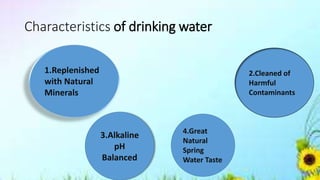
Characteristics of drinking water
1.Replenished
with Natural
Minerals
2.Cleaned of
Harmful
Contaminants
3.Alkaline
pH
Balanced
4.Great
Natural
Spring
Water Taste
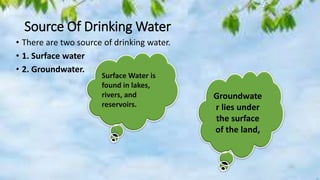
Source Of Drinking Water
• There are two source of drinking water.
• 1. Surface water
• 2. Groundwater.
Surface Water is
found in lakes,
rivers, and
reservoirs.
Groundwate
r lies under
the surface
of the land,
Source of contamination of water
• Leakage from waste disposal
• Discharges from factories, industrial
sites,
• Leaching from aerial or land
application of pesticides and fertilizers
• Leakage from underground storage
tanks.
• Improper disposal of household
wastes such as cleaning fluids, paint,
and motor oil.
Danger of contaminated ground water
Drinking
contaminated
groundwater
can have
serious health
effects Diseases such
as hepatitis
and dysentery
may be
caused by
contamination
Wildlife can
also be
harmed by
contaminated
groundwater.
Review Of Literature
• Pakistan ranks at number 80 among 122 nations
regarding drinking water quality.
• drinking water quality is being deteriorated day by day
in Pakistan
• toxic metals and pesticides cause contamination.
• . Human activities cause pollution.
• Microbial and chemical pollutants responsible for
various public health problems.
Continue…..
• About 20% of the whole population of Pakistan has access to safe
drinking water.
• The remaining 80% of population is forced to use unsafe drinking
water
The primary
source of
contamination
is sewerage
Secondary source
is chemicals
pesticides, and
fertilizers from
agriculture
Continue….
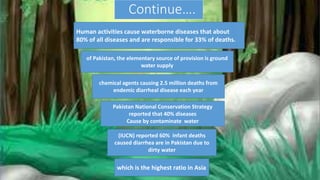
Human activities cause waterborne diseases that about
80% of all diseases and are responsible for 33% of deaths.
of Pakistan, the elementary source of provision is ground
water supply
chemical agents causing 2.5 million deaths from
endemic diarrheal disease each year
Pakistan National Conservation Strategy
reported that 40% diseases
Cause by contaminate water
(IUCN) reported 60% Infant deaths
caused diarrhea are in Pakistan due to
dirty water
which is the highest ratio in Asia
Agro-Chemicals:-
Agrochemical is any chemical
that is used in agricultural
production to improve
productivity and control of pest
and diseases.
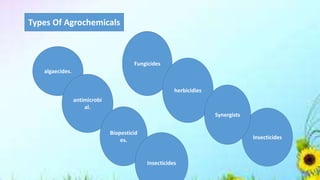
Agro-Chemicals:-
algaecides.
antimicrobi
al.
Biopesticid
es.
Fungicides
herbicidies
Insecticides
Synergists
Insecticides
Types Of Agrochemicals
History of agrochemical
• Approximately 10,000 years ago practice of agriculture started of
Crescent of Mesopotamia.
• 4500 years ago first insecticide sulphur compounds
• organic substances used to control pest up until the 1940s
• In 1946 house fly was reported resistance to DDT.
• herbicides,
• some other pesticides was used to control pest in 1970s-1980s.
• Nicotine recognized as has a potential to kill a pest in
late 1600s.
• To increase the food production pesticide are used.
Demand of pesticide increased with age
• . Water pollution is mainly caused by heavy utilization
of water for domestic, agricultural, and industrial
purposes
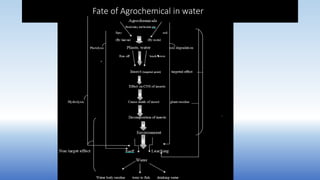
Fate of Agrochemical in water
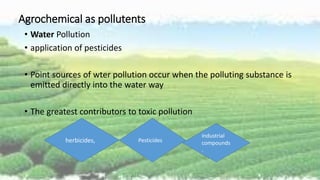
Agrochemical as pollutents
• Water Pollution
• application of pesticides
• Point sources of wter pollution occur when the polluting substance is
emitted directly into the water way
• The greatest contributors to toxic pollution
herbicides, Pesticides
industrial
compounds
.
Fertilizers pollution:
• Use of fertilizers in agriculture is recognized as a potential source of
water pollution e.g nitrogen fertilizer.
• Nitrate-Nitrogen (NO3-N) concentrations found in surface and ground
water
• agricultural fertilizers which can enter directly from the fields into the
streams or underground sources cause fatal result
Pesticide pollution
• Chemical which are used to kill pest is called pesticides
• The contaminated natural water is very harmful for the aquatic
organisms
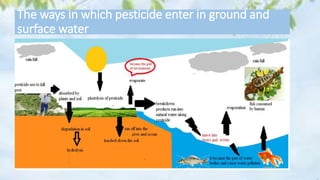
• Imidacloprid is used on large scale and became the part of surface
and ground water.
• EPA has estimated that as many as 50 out of 1000 registered
pesticides qualify for detection in groundwater pollution (Mubarik, &
Jabbar ,1992).
The ways in which pesticide enter in ground and
surface water
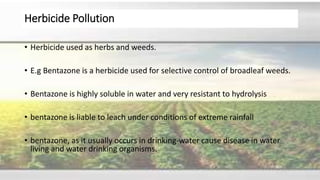
Herbicide Pollution
• Herbicide used as herbs and weeds.
• E.g Bentazone is a herbicide used for selective control of broadleaf weeds.
• Bentazone is highly soluble in water and very resistant to hydrolysis
• bentazone is liable to leach under conditions of extreme rainfall
• bentazone, as it usually occurs in drinking-water cause disease in water
living and water drinking organisms.
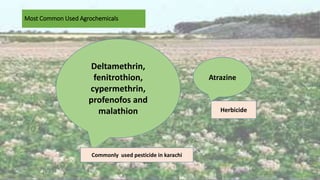
Most Common Used Agrochemicals
Atrazine
Deltamethrin,
fenitrothion,
cypermethrin,
profenofos and
malathion Herbicide
Commonly used pesticide in karachi
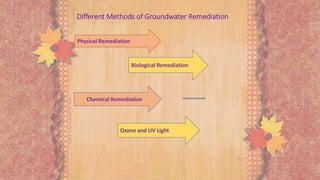
Different Methods of Groundwater Remediation
Physical Remediation
Biological Remediation
Chemical Remediation
Ozone and UV Light
Physical remediation
• Water purification starts on a physical level,
• removal of the largest particles and obstructions
• Air sparging is one physical remediation method
• involves using pressurized air to strip water clean.
• common method is to pump water directly, with filters stripping away and
large gravel or rock materials
Biological remediation
• biological remediation method microorganisms utilizes
• .
• In biological water remediation, biologic materials help to break down
unwanted chemicals that aren’t easily separated from the water
• particularly in industrial waste that forms in groundwater.
• A plus side to this method is that physically pumping groundwater out
is not required to treat it.
Chemical Remediation
• This is most costly type of water purification, and it can also take
the longe to complete
•
• . Chemical remediation can be achieved through a variety of
methods, including carbon absorption, ion exchange, oxidation, and
chemical precipitation.
• Chemical remediation is often used alongside physical water
treatment to achieve the cleanest groundwater after the fact.
Ozone and UV Light
• Some more distinct methods of remediation involve the use of either
ozone or ultraviolet light.
• Exposure to these substances helps purify water
• intention of killing any unwanted microorganisms
• Microorganisms are some of the more difficult things to treat in a
clean way, but the use of UV light and ozone help you to avoid
harsher chemicals
• . Groundwater remediation is best water treatment system by it.
Objective of study
• Monitoring and evaluation of the chemical in drinking water
• Aware the people from the hazards of contaminated water
At the end I want to say that;
save water because
water is life of ur future.
Drinking Water and POllution source

Drinking Water and POllution source

  • 2.
    •DRINKING WATER ANDPOLLUTION SOURCE
  • 3.
    Drinking water •Definition; •Drinking water,also known as potable water, is water that is safe to drink or to use for food preparation.
  • 4.
    Characteristics of drinkingwater 1.Replenished with Natural Minerals 2.Cleaned of Harmful Contaminants 3.Alkaline pH Balanced 4.Great Natural Spring Water Taste
  • 5.
    Source Of DrinkingWater • There are two source of drinking water. • 1. Surface water • 2. Groundwater. Surface Water is found in lakes, rivers, and reservoirs. Groundwate r lies under the surface of the land,
  • 6.
    Source of contaminationof water • Leakage from waste disposal • Discharges from factories, industrial sites, • Leaching from aerial or land application of pesticides and fertilizers • Leakage from underground storage tanks. • Improper disposal of household wastes such as cleaning fluids, paint, and motor oil.
  • 7.
    Danger of contaminatedground water Drinking contaminated groundwater can have serious health effects Diseases such as hepatitis and dysentery may be caused by contamination Wildlife can also be harmed by contaminated groundwater.
  • 8.
    Review Of Literature •Pakistan ranks at number 80 among 122 nations regarding drinking water quality. • drinking water quality is being deteriorated day by day in Pakistan • toxic metals and pesticides cause contamination. • . Human activities cause pollution. • Microbial and chemical pollutants responsible for various public health problems.
  • 9.
    Continue….. • About 20%of the whole population of Pakistan has access to safe drinking water. • The remaining 80% of population is forced to use unsafe drinking water The primary source of contamination is sewerage Secondary source is chemicals pesticides, and fertilizers from agriculture
  • 10.
    Continue…. Human activities causewaterborne diseases that about 80% of all diseases and are responsible for 33% of deaths. of Pakistan, the elementary source of provision is ground water supply chemical agents causing 2.5 million deaths from endemic diarrheal disease each year Pakistan National Conservation Strategy reported that 40% diseases Cause by contaminate water (IUCN) reported 60% Infant deaths caused diarrhea are in Pakistan due to dirty water which is the highest ratio in Asia
  • 11.
    Agro-Chemicals:- Agrochemical is anychemical that is used in agricultural production to improve productivity and control of pest and diseases. Agro-Chemicals:-
  • 12.
  • 13.
    History of agrochemical •Approximately 10,000 years ago practice of agriculture started of Crescent of Mesopotamia. • 4500 years ago first insecticide sulphur compounds • organic substances used to control pest up until the 1940s • In 1946 house fly was reported resistance to DDT. • herbicides, • some other pesticides was used to control pest in 1970s-1980s.
  • 14.
    • Nicotine recognizedas has a potential to kill a pest in late 1600s. • To increase the food production pesticide are used. Demand of pesticide increased with age • . Water pollution is mainly caused by heavy utilization of water for domestic, agricultural, and industrial purposes
  • 15.
  • 16.
    Agrochemical as pollutents •Water Pollution • application of pesticides • Point sources of wter pollution occur when the polluting substance is emitted directly into the water way • The greatest contributors to toxic pollution herbicides, Pesticides industrial compounds .
  • 17.
    Fertilizers pollution: • Useof fertilizers in agriculture is recognized as a potential source of water pollution e.g nitrogen fertilizer. • Nitrate-Nitrogen (NO3-N) concentrations found in surface and ground water • agricultural fertilizers which can enter directly from the fields into the streams or underground sources cause fatal result
  • 18.
    Pesticide pollution • Chemicalwhich are used to kill pest is called pesticides • The contaminated natural water is very harmful for the aquatic organisms • Imidacloprid is used on large scale and became the part of surface and ground water. • EPA has estimated that as many as 50 out of 1000 registered pesticides qualify for detection in groundwater pollution (Mubarik, & Jabbar ,1992).
  • 19.
    The ways inwhich pesticide enter in ground and surface water
  • 20.
    Herbicide Pollution • Herbicideused as herbs and weeds. • E.g Bentazone is a herbicide used for selective control of broadleaf weeds. • Bentazone is highly soluble in water and very resistant to hydrolysis • bentazone is liable to leach under conditions of extreme rainfall • bentazone, as it usually occurs in drinking-water cause disease in water living and water drinking organisms.
  • 21.
    Most Common UsedAgrochemicals Atrazine Deltamethrin, fenitrothion, cypermethrin, profenofos and malathion Herbicide Commonly used pesticide in karachi
  • 22.
    Different Methods ofGroundwater Remediation Physical Remediation Biological Remediation Chemical Remediation Ozone and UV Light
  • 23.
    Physical remediation • Waterpurification starts on a physical level, • removal of the largest particles and obstructions • Air sparging is one physical remediation method • involves using pressurized air to strip water clean. • common method is to pump water directly, with filters stripping away and large gravel or rock materials
  • 24.
    Biological remediation • biologicalremediation method microorganisms utilizes • . • In biological water remediation, biologic materials help to break down unwanted chemicals that aren’t easily separated from the water • particularly in industrial waste that forms in groundwater. • A plus side to this method is that physically pumping groundwater out is not required to treat it.
  • 25.
    Chemical Remediation • Thisis most costly type of water purification, and it can also take the longe to complete • • . Chemical remediation can be achieved through a variety of methods, including carbon absorption, ion exchange, oxidation, and chemical precipitation. • Chemical remediation is often used alongside physical water treatment to achieve the cleanest groundwater after the fact.
  • 26.
    Ozone and UVLight • Some more distinct methods of remediation involve the use of either ozone or ultraviolet light. • Exposure to these substances helps purify water • intention of killing any unwanted microorganisms • Microorganisms are some of the more difficult things to treat in a clean way, but the use of UV light and ozone help you to avoid harsher chemicals • . Groundwater remediation is best water treatment system by it.
  • 27.
    Objective of study •Monitoring and evaluation of the chemical in drinking water • Aware the people from the hazards of contaminated water At the end I want to say that; save water because water is life of ur future.