rug
eaction
osinophilia
ystamic

ymptoms

Drug reaction with eosinophilia
and systemic symptoms
Done by: Bayan Al-Ghadeer
Group ( 2)
Block 1.2
King Faisal University College
of Medicine
Learning Objectives
Adverse drug reaction

Diagnosis

DRESS Overview

Treatment

Etiology and risk factors

Complication

Pathophysiology

Prognosis

Clinical presentation
Introduction
to the topic

Adverse drug reaction
How to identify adverse drug reactions

3
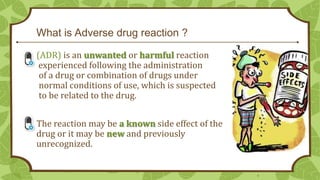
What is Adverse drug reaction ?
(ADR) is an unwanted or harmful reaction
experienced following the administration
of a drug or combination of drugs under
normal conditions of use, which is suspected
to be related to the drug.

The reaction may be a known side effect of the
drug or it may be new and previously
unrecognized.

4
How to identify adverse drug reactions ?
The patient may tell you about symptoms they have experienced
since taking a new medicine.
ADR criteria
Abnormal clinical measurements while on drug therapy
(e.g. temperature, pulse, blood pressure, blood glucose, body weight)

Abnormal biochemical or haematological laboratory results
while on drug therapy
5
Overview

Definition
Which type of hypersensitivity is it based on ?

6
What is DRESS ?
is a rare, potentially life-threatening, drug-induced severe,
unexpected hypersensitivity reaction that includes skin eruption,
hematologic abnormalities (eosinophilia, atypical lymphocytosis),
lymphadenopathy, and internal organ involvement (liver, kidney,
lung)

Drug hypersensitivity syndrome

7
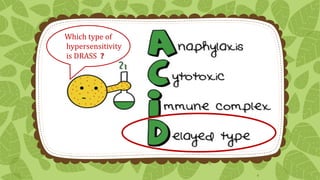
Which type of
hypersensitivity
is DRASS ?

8
Delayed hypersensitivity reactions
Or type IV hypersensitivity reactions.
inflammatory reactions initiated a secondary cellular response
by mononuclear leukocytes .
Lymphocytes (T cells )
monocytes/macrophages

9
Etiology and
risk factors

Causes
side effects of “ Carbamazepine (Tegretol)”
side effects of “Diazepam”
Who may develops DERSS ?

10
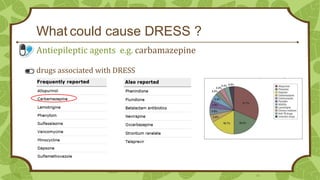
What could cause DRESS ?
Antiepileptic agents e.g. carbamazepine
drugs associated with DRESS

11
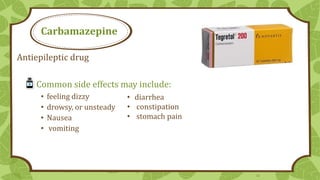
Carbamazepine
Antiepileptic drug
Common side effects may include:
•
•
•
•

feeling dizzy
drowsy, or unsteady
Nausea
vomiting

• diarrhea
• constipation
• stomach pain

12
Cont…
Serious side effect such as:
•
•
•
•
•
•
•
•
•

pale skin and skin pain
feeling light-headed
rapid heart rate,
trouble concentrating
Fever
Chills
sore throat
mouth and throat ulcers
easy bruising or bleeding,

•
•
•
•
•
•
•
•
•

severe tingling
numbness
pain and muscle weakness
Confusion
agitation
vision problems
hallucinations
feeling short of breath
swelling of your ankles or feet

• urinating less than usual
• Jaundice
(yellowing of the skin or eyes)
• severe skin reaction
• swelling in face or tongue
• burning in eyes
• a red or purple skin rash
that spreads (especially in
the face or upper body)
and causes blistering
and peeling.

13
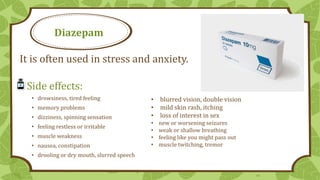
Diazepam

It is often used in stress and anxiety.
Side effects:
• drowsiness, tired feeling
• memory problems

• dizziness, spinning sensation
• feeling restless or irritable
• muscle weakness
• nausea, constipation

• blurred vision, double vision
• mild skin rash, itching
• loss of interest in sex
•
•
•
•

new or worsening seizures
weak or shallow breathing
feeling like you might pass out
muscle twitching, tremor

• drooling or dry mouth, slurred speech

14
Carbamazepine

Diazepam

If the patient takes diazepam with tegretol
decrease levels of diazepam
by increasing the elimination of diazepam
by liver enzymes.
increase level of carbamazepine
by decreasing the elimination of carbamazepine
by liver enzymes.

15
Who may develops DRESS ?
Children

adults without sex predilection
*most cases occur in adults

16
Pathophysiology

17
Pathophysiology
pathophysiology of DRESS syndrome remains unclear
A defect in the way the liver metabolizes drugs may be responsible.
immunological imbalance
Another theory is that co-infection with the human herpes virus 6 (HHV6)
is important to initiate the syndrome.
Genetic may play a role. Pharmacogenetic studies have found a relation
between certain population and certain antiepileptic in developing DRESS
18
Clinical
presentation

Signs & symptoms

19
Signs & symptoms
Symptoms and signs vary from mild to severe depending on
the patient and drug

Start up to 12 weeks or more after initiation of drug
treatment and can occur after a dose increase .
e.g. the onset of carbamazepine’s side effects
considerably long and may be reach more than 6 months !
Symptoms may persist or recur for several weeks after
stopping drug treatment.
20
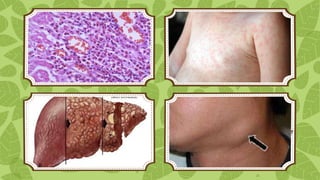
Prominent
eosinophilia

Exanthema

Hepatitis

Lymphadenopathy
21
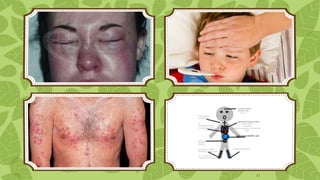
Facial swelling

Fever

Generalized
edema

Multi-organ
failure
22
Diagnosis

Investigations ( exclude & prove )
The most useful test

23
Investigations
CBC with differential and peripheral blood smear
•

eosinophilia >700/microL suggests the diagnosis of DRESS.

•

In some patients, lymphocytosis

• And/or the finding of atypical lymphocytes on
peripheral smear also support the diagnosis
of DRESS.

24
Cont...
Liver function tests
• Serum alanine aminotransferase (ALT)
greater than twice the upper limit of normal values

• and/or alkaline phosphatase greater than 1.5 times the
upper limit of normal values on at least two different dates indicate
liver involvement.
If Liver function tests were positive

Serology for viral hepatitis
(hepatitis A IgM antibody, hepatitis B surface antigen, hepatitis B core IgM
antibody, hepatitis C viral RNA) may be useful in excluding acute viral
hepatitis .
25
Cont...
Serum creatinine and urinalysis
A moderate increase in creatinine level, low grade
proteinuria, and abnormal urinary sediment
with occasional eosinophils indicate kidney involvement.

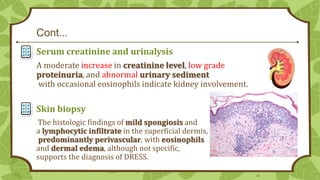
Skin biopsy
The histologic findings of mild spongiosis and
a lymphocytic infiltrate in the superficial dermis,
predominantly perivascular, with eosinophils
and dermal edema, although not specific,
supports the diagnosis of DRESS.
26
Cont...
Testing for herpes-virus infection
The search for active infection with human herpes-virus testing for
EBV, HHV-6, or HHV-7 is increasingly performed in patients with DRESS, since
viral infection reactivation may be a marker of prolonged course and increased
risk of complications

Imaging studies
In patients presenting with nonspecific symptoms of pulmonary involvement
(eg, cough, tachypnea/dyspnea), chest radiograph or CT scan may provide
evidence of interstitial pneumonitis and/or pleural effusion

27
Which drug is responsible ?
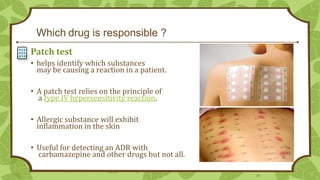
Patch test
• helps identify which substances
may be causing a reaction in a patient.
• A patch test relies on the principle of
a type IV hypersensitivity reaction.
• Allergic substance will exhibit
inflammation in the skin
• Useful for detecting an ADR with
carbamazepine and other drugs but not all.
28
Treatment

29
How to treat DRESS?
Stopping all doses of suspected medication causing the symptoms
Keeping the symptoms under control

follow up to avoid relapse

Supportive therapy ( replacement of causative medication )
Antihistamine
Corticosteroids
epinephrine if needed
30
Complication
& Prognosis

31
Prognosis & complication
Most patients with DRESS recover completely in weeks to months after
stop replace the drug
Autoimmune diseases have been reported in some patients months or
years after the resolution of the drug reaction.
In rare cases, patients developed chronic renal failure and lymphoma.

death

32
Adverse drug reaction
Adverse drug reaction could be fatal and a special care should
be provide for the patient.
DRESS in detail
If you as a doctor suspect of drug hypersensitivity reaction, it is
important to take a proper medication history with considering
the side effects.

Summary
33
http://www.dermnetnz.org/reactions/drug-hypersensitivity-syndrome.html
http://www.rxlist.com/tegretol-side-effects-drug-center.htm

http://www.rxlist.com/valium-side-effects-drug-center.htm
http://treato.com/Carbamazepine,Diazepam/?a=s
http://www.uptodate.com/contents/drug-reaction-with-eosinophilia-and-systemicsymptoms-dress
http://dermnetnz.org/reactions/drug-hypersensitivity-syndrome.html

References
35
36

DRESS

  • 1.
    rug eaction osinophilia ystamic ymptoms Drug reaction witheosinophilia and systemic symptoms Done by: Bayan Al-Ghadeer Group ( 2) Block 1.2 King Faisal University College of Medicine
  • 2.
    Learning Objectives Adverse drugreaction Diagnosis DRESS Overview Treatment Etiology and risk factors Complication Pathophysiology Prognosis Clinical presentation
  • 3.
    Introduction to the topic Adversedrug reaction How to identify adverse drug reactions 3
  • 4.
    What is Adversedrug reaction ? (ADR) is an unwanted or harmful reaction experienced following the administration of a drug or combination of drugs under normal conditions of use, which is suspected to be related to the drug. The reaction may be a known side effect of the drug or it may be new and previously unrecognized. 4
  • 5.
    How to identifyadverse drug reactions ? The patient may tell you about symptoms they have experienced since taking a new medicine. ADR criteria Abnormal clinical measurements while on drug therapy (e.g. temperature, pulse, blood pressure, blood glucose, body weight) Abnormal biochemical or haematological laboratory results while on drug therapy 5
  • 6.
    Overview Definition Which type ofhypersensitivity is it based on ? 6
  • 7.
    What is DRESS? is a rare, potentially life-threatening, drug-induced severe, unexpected hypersensitivity reaction that includes skin eruption, hematologic abnormalities (eosinophilia, atypical lymphocytosis), lymphadenopathy, and internal organ involvement (liver, kidney, lung) Drug hypersensitivity syndrome 7
  • 8.
  • 9.
    Delayed hypersensitivity reactions Ortype IV hypersensitivity reactions. inflammatory reactions initiated a secondary cellular response by mononuclear leukocytes . Lymphocytes (T cells ) monocytes/macrophages 9
  • 10.
    Etiology and risk factors Causes sideeffects of “ Carbamazepine (Tegretol)” side effects of “Diazepam” Who may develops DERSS ? 10
  • 11.
    What could causeDRESS ? Antiepileptic agents e.g. carbamazepine drugs associated with DRESS 11
  • 12.
    Carbamazepine Antiepileptic drug Common sideeffects may include: • • • • feeling dizzy drowsy, or unsteady Nausea vomiting • diarrhea • constipation • stomach pain 12
  • 13.
    Cont… Serious side effectsuch as: • • • • • • • • • pale skin and skin pain feeling light-headed rapid heart rate, trouble concentrating Fever Chills sore throat mouth and throat ulcers easy bruising or bleeding, • • • • • • • • • severe tingling numbness pain and muscle weakness Confusion agitation vision problems hallucinations feeling short of breath swelling of your ankles or feet • urinating less than usual • Jaundice (yellowing of the skin or eyes) • severe skin reaction • swelling in face or tongue • burning in eyes • a red or purple skin rash that spreads (especially in the face or upper body) and causes blistering and peeling. 13
  • 14.
    Diazepam It is oftenused in stress and anxiety. Side effects: • drowsiness, tired feeling • memory problems • dizziness, spinning sensation • feeling restless or irritable • muscle weakness • nausea, constipation • blurred vision, double vision • mild skin rash, itching • loss of interest in sex • • • • new or worsening seizures weak or shallow breathing feeling like you might pass out muscle twitching, tremor • drooling or dry mouth, slurred speech 14
  • 15.
    Carbamazepine Diazepam If the patienttakes diazepam with tegretol decrease levels of diazepam by increasing the elimination of diazepam by liver enzymes. increase level of carbamazepine by decreasing the elimination of carbamazepine by liver enzymes. 15
  • 16.
    Who may developsDRESS ? Children adults without sex predilection *most cases occur in adults 16
  • 17.
  • 18.
    Pathophysiology pathophysiology of DRESSsyndrome remains unclear A defect in the way the liver metabolizes drugs may be responsible. immunological imbalance Another theory is that co-infection with the human herpes virus 6 (HHV6) is important to initiate the syndrome. Genetic may play a role. Pharmacogenetic studies have found a relation between certain population and certain antiepileptic in developing DRESS 18
  • 19.
  • 20.
    Signs & symptoms Symptomsand signs vary from mild to severe depending on the patient and drug Start up to 12 weeks or more after initiation of drug treatment and can occur after a dose increase . e.g. the onset of carbamazepine’s side effects considerably long and may be reach more than 6 months ! Symptoms may persist or recur for several weeks after stopping drug treatment. 20
  • 21.
  • 22.
  • 23.
    Diagnosis Investigations ( exclude& prove ) The most useful test 23
  • 24.
    Investigations CBC with differentialand peripheral blood smear • eosinophilia >700/microL suggests the diagnosis of DRESS. • In some patients, lymphocytosis • And/or the finding of atypical lymphocytes on peripheral smear also support the diagnosis of DRESS. 24
  • 25.
    Cont... Liver function tests •Serum alanine aminotransferase (ALT) greater than twice the upper limit of normal values • and/or alkaline phosphatase greater than 1.5 times the upper limit of normal values on at least two different dates indicate liver involvement. If Liver function tests were positive Serology for viral hepatitis (hepatitis A IgM antibody, hepatitis B surface antigen, hepatitis B core IgM antibody, hepatitis C viral RNA) may be useful in excluding acute viral hepatitis . 25

  • 26.
    Cont... Serum creatinine andurinalysis A moderate increase in creatinine level, low grade proteinuria, and abnormal urinary sediment with occasional eosinophils indicate kidney involvement. Skin biopsy The histologic findings of mild spongiosis and a lymphocytic infiltrate in the superficial dermis, predominantly perivascular, with eosinophils and dermal edema, although not specific, supports the diagnosis of DRESS. 26
  • 27.
    Cont... Testing for herpes-virusinfection The search for active infection with human herpes-virus testing for EBV, HHV-6, or HHV-7 is increasingly performed in patients with DRESS, since viral infection reactivation may be a marker of prolonged course and increased risk of complications Imaging studies In patients presenting with nonspecific symptoms of pulmonary involvement (eg, cough, tachypnea/dyspnea), chest radiograph or CT scan may provide evidence of interstitial pneumonitis and/or pleural effusion 27
  • 28.
    Which drug isresponsible ? Patch test • helps identify which substances may be causing a reaction in a patient. • A patch test relies on the principle of a type IV hypersensitivity reaction. • Allergic substance will exhibit inflammation in the skin • Useful for detecting an ADR with carbamazepine and other drugs but not all. 28
  • 29.
  • 30.
    How to treatDRESS? Stopping all doses of suspected medication causing the symptoms Keeping the symptoms under control follow up to avoid relapse Supportive therapy ( replacement of causative medication ) Antihistamine Corticosteroids epinephrine if needed 30
  • 31.
  • 32.
    Prognosis & complication Mostpatients with DRESS recover completely in weeks to months after stop replace the drug Autoimmune diseases have been reported in some patients months or years after the resolution of the drug reaction. In rare cases, patients developed chronic renal failure and lymphoma. death 32
  • 33.
    Adverse drug reaction Adversedrug reaction could be fatal and a special care should be provide for the patient. DRESS in detail If you as a doctor suspect of drug hypersensitivity reaction, it is important to take a proper medication history with considering the side effects. Summary 33
  • 35.
  • 36.

Editor's Notes

  • #8 NOTE:DRASS also called Drug hypersensitivity syndromeEruption = طفح جلدي
  • #9 You know that we have 4 type of hypersensitivity reactions. Anaphylaxis, cytotoxic, immune complex, delayed type . Interesting point and for you to remember these names if U take first later from each, you will end up with the word “acid”. So let’s go back to DRESS, which type of these that DRASS based on ?

  • #12 80% of cases are reported as a hypersensitivity reaction to certain drugs
  • #14 The cause in the case was because of carbamazepine whichthe latency between drug exposure and onset of symptoms is considerably long may be reach more than 6 months
  • #16 Which will affect the patient in one way or another because that will lead to changing of drug concentration in the body
  • #17 may occur in children, but most cases occur in adults without sex predilectionsex predilection = with no susceptible gender more than the another
  • #19 It have been believed that
  • #24 Diagnose such a case is not easy, because the symptoms may relate to other conditions. So the investigations in DRESS depend on the aim of exclude other conditions and prove DRESS therefore the following test should be done.
  • #27 Spongiosis is mainly intercellular edema (abnormal accumulation of fluid) in the epidermis
  • #28 Testing for herpesvirus infection to avid farther complicationThe Epstein–Barr virus (EBV), Each test can support the diagnosis but not prove it ! And the combination of supportive results can be a strong evidence to diagnose a case with DRESS
  • #29 The most useful test to determine which drug is