


Dramatic Elements
of a Story
SCRIPTWRITING – SEYMOUR B. SANCHEZ
THEME
 The larger cultural meaning, message or significance of a story
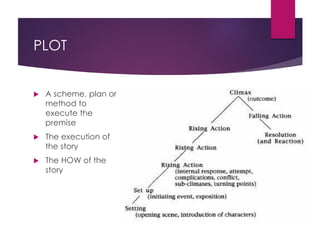
PLOT
 A scheme, plan or
method to
execute the
premise
 The execution of
the story
 The HOW of the
story
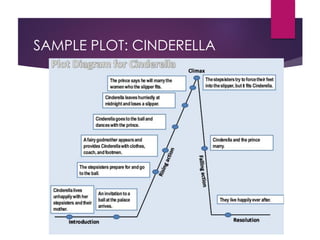
SAMPLE PLOT: CINDERELLA
SAMPLE PLOT: THREE LITTLE PIGS
SUBPLOT
 Mini-stories that may or may not be related to the
main story
 Generally involves incidents surrounding some
character(s) other than the main characters
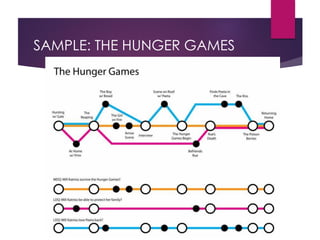
SAMPLE: THE HUNGER GAMES
CONFLICT
 Dramatic structure that is important for the story
 “man versus self”
 “man versus nature”
 “man versus man”
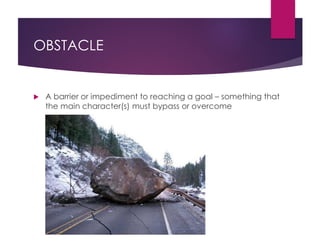
OBSTACLE
 A barrier or impediment to reaching a goal – something that
the main character(s) must bypass or overcome
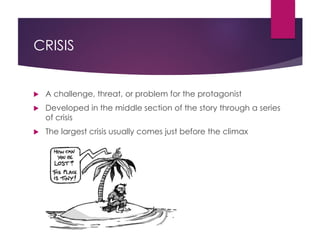
CRISIS
 A challenge, threat, or problem for the protagonist
 Developed in the middle section of the story through a series
of crisis
 The largest crisis usually comes just before the climax
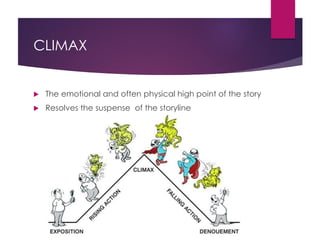
CLIMAX
 The emotional and often physical high point of the story
 Resolves the suspense of the storyline
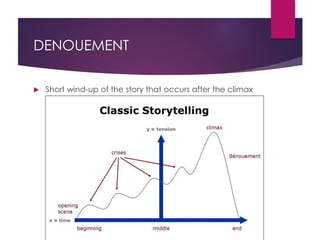
DENOUEMENT
 Short wind-up of the story that occurs after the climax
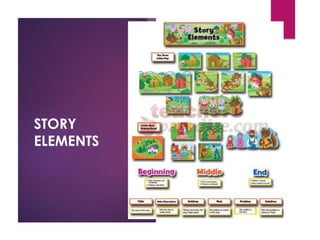
STORY
ELEMENTS
BACKSTORY
 Events that happen
before a script begins
that are important to
the story
 A character’s previous
history
EXPOSITION
 Information given to the audience
about something that happens off-
screen or before the story begins
(backstory)
 It is most commonly given in
dialogues because this is the
easiest way to communicate
information
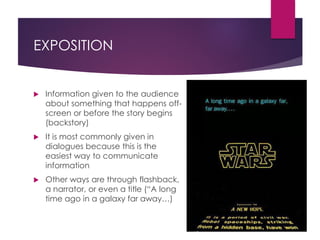
 Other ways are through flashback,
a narrator, or even a title (“A long
time ago in a galaxy far away…)
PREPARATION
 Technique to set up the audience for something that will be
important later
 It prepares us for certain actions or events, or for the
appearance of a special object or person in the story.
 Later occurrences no longer seem overly coincidental or
contrived
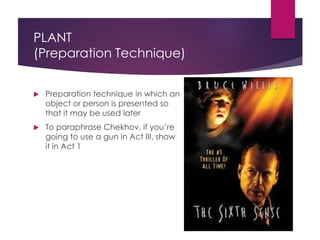
PLANT
(Preparation Technique)
 Preparation technique in which an
object or person is presented so
that it may be used later
 To paraphrase Chekhov, if you’re
going to use a gun in Act III, show
it in Act 1
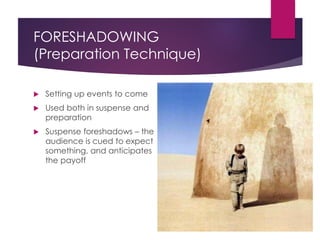
FORESHADOWING
(Preparation Technique)
 Setting up events to come
 Used both in suspense and
preparation
 Suspense foreshadows – the
audience is cued to expect
something, and anticipates
the payoff
HOOK
 A plot twist or development that
grabs the audience’s attention
and compels them to keep
watching
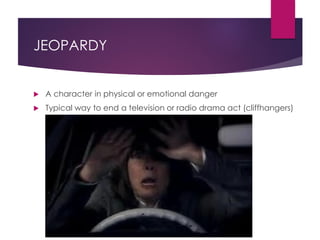
JEOPARDY
 A character in physical or emotional danger
 Typical way to end a television or radio drama act (cliffhangers)
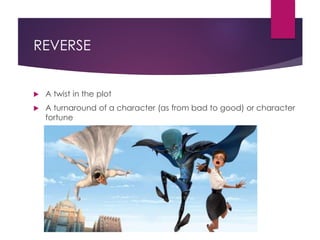
REVERSE
 A twist in the plot
 A turnaround of a character (as from bad to good) or character
fortune
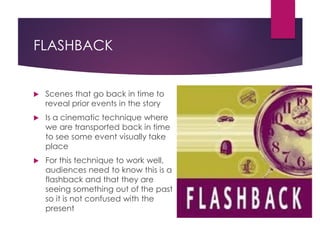
FLASHBACK
 Scenes that go back in time to
reveal prior events in the story
 Is a cinematic technique where
we are transported back in time
to see some event visually take
place
 For this technique to work well,
audiences need to know this is a
flashback and that they are
seeing something out of the past
so it is not confused with the
present
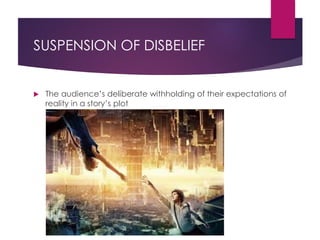
SUSPENSION OF DISBELIEF
 The audience’s deliberate withholding of their expectations of
reality in a story’s plot
ON THE FLY
 A story that begins quickly with lots of actions
WITH ADAGIO
 A term for a story that begins with a subtle, often slow opening
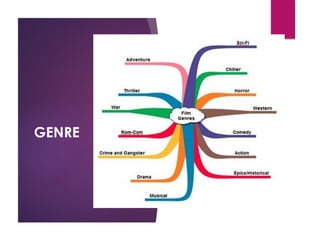
GENRE
GENRE
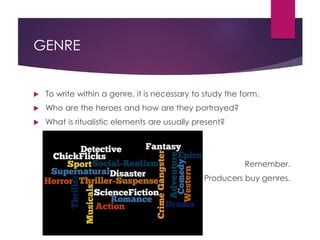
 Genres identify
similar film and
television types. This
is because of plot
similarities, typical
characters, themes,
settings, or even the
“look” of the film
 Examples: westerns,
action/adventure,
romance, comedy,
science fiction,
gangster, horror,
disaster films, etc.
GENRE
 To write within a genre, it is necessary to study the form.
 Who are the heroes and how are they portrayed?
 What is ritualistic elements are usually present?
Remember.
Producers buy genres.
COINCIDENCE,
CONVENIENCE,
and the
CONTRIVED
COINCIDENCE, CONVENIENCE,
and the CONTRIVED
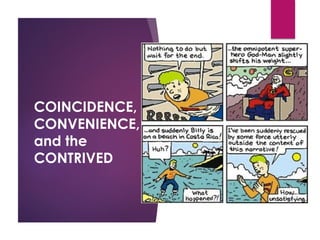
 Using incidents that seem coincidental, convenient, or
contrived strains credibility and makes the audience feel
manipulated. The audience is inclined not to believe these
things.
 Coincidences happen by chance rather than logical plotting.
They include overheard conversations, chance sightings, and
items forgotten or found
 One type of blatant convenience is the IDIOT PLOT in which
the plot develops as a result of a character’s doing something
completely stupid and idiotic

Dramatic Elements of a Story

  • 1.
    Dramatic Elements of aStory SCRIPTWRITING – SEYMOUR B. SANCHEZ
  • 2.
    THEME  The largercultural meaning, message or significance of a story
  • 3.
    PLOT  A scheme,plan or method to execute the premise  The execution of the story  The HOW of the story
  • 4.
  • 5.
    SAMPLE PLOT: THREELITTLE PIGS
  • 6.
    SUBPLOT  Mini-stories thatmay or may not be related to the main story  Generally involves incidents surrounding some character(s) other than the main characters
  • 7.
  • 8.
    CONFLICT  Dramatic structurethat is important for the story  “man versus self”  “man versus nature”  “man versus man”
  • 9.
    OBSTACLE  A barrieror impediment to reaching a goal – something that the main character(s) must bypass or overcome
  • 10.
    CRISIS  A challenge,threat, or problem for the protagonist  Developed in the middle section of the story through a series of crisis  The largest crisis usually comes just before the climax
  • 11.
    CLIMAX  The emotionaland often physical high point of the story  Resolves the suspense of the storyline
  • 12.
    DENOUEMENT  Short wind-upof the story that occurs after the climax
  • 13.
  • 14.
    BACKSTORY  Events thathappen before a script begins that are important to the story  A character’s previous history
  • 15.
    EXPOSITION  Information givento the audience about something that happens off- screen or before the story begins (backstory)  It is most commonly given in dialogues because this is the easiest way to communicate information  Other ways are through flashback, a narrator, or even a title (“A long time ago in a galaxy far away…)
  • 16.
    PREPARATION  Technique toset up the audience for something that will be important later  It prepares us for certain actions or events, or for the appearance of a special object or person in the story.  Later occurrences no longer seem overly coincidental or contrived
  • 17.
    PLANT (Preparation Technique)  Preparationtechnique in which an object or person is presented so that it may be used later  To paraphrase Chekhov, if you’re going to use a gun in Act III, show it in Act 1
  • 18.
    FORESHADOWING (Preparation Technique)  Settingup events to come  Used both in suspense and preparation  Suspense foreshadows – the audience is cued to expect something, and anticipates the payoff
  • 19.
    HOOK  A plottwist or development that grabs the audience’s attention and compels them to keep watching
  • 20.
    JEOPARDY  A characterin physical or emotional danger  Typical way to end a television or radio drama act (cliffhangers)
  • 21.
    REVERSE  A twistin the plot  A turnaround of a character (as from bad to good) or character fortune
  • 22.
    FLASHBACK  Scenes thatgo back in time to reveal prior events in the story  Is a cinematic technique where we are transported back in time to see some event visually take place  For this technique to work well, audiences need to know this is a flashback and that they are seeing something out of the past so it is not confused with the present
  • 23.
    SUSPENSION OF DISBELIEF The audience’s deliberate withholding of their expectations of reality in a story’s plot
  • 24.
    ON THE FLY A story that begins quickly with lots of actions
  • 25.
    WITH ADAGIO  Aterm for a story that begins with a subtle, often slow opening
  • 26.
  • 27.
    GENRE  Genres identify similarfilm and television types. This is because of plot similarities, typical characters, themes, settings, or even the “look” of the film  Examples: westerns, action/adventure, romance, comedy, science fiction, gangster, horror, disaster films, etc.
  • 28.
    GENRE  To writewithin a genre, it is necessary to study the form.  Who are the heroes and how are they portrayed?  What is ritualistic elements are usually present? Remember. Producers buy genres.
  • 29.
  • 30.
    COINCIDENCE, CONVENIENCE, and theCONTRIVED  Using incidents that seem coincidental, convenient, or contrived strains credibility and makes the audience feel manipulated. The audience is inclined not to believe these things.  Coincidences happen by chance rather than logical plotting. They include overheard conversations, chance sightings, and items forgotten or found  One type of blatant convenience is the IDIOT PLOT in which the plot develops as a result of a character’s doing something completely stupid and idiotic