The Crux of the Matter
Overview of the Elements
An introduction to Plot
Why We Tell The Story
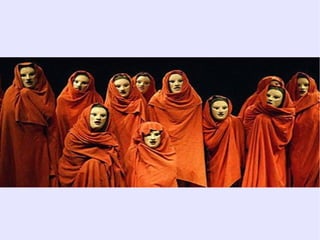
It is in human nature to make stories.
When we talk about the highlights of the day,
We vary in the telling.
We sometimes start from the very beginning,
Or at the most interesting point of our day.
FICTION

Defined as any literary narrative, whether in
prose or verse, which is invented of being an
account of events that have in fact happened
-M.H. Abrams, The Glossary of Literary Terms
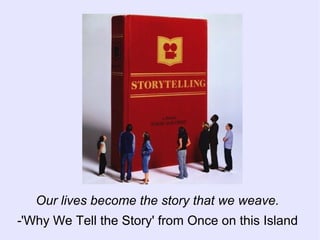
Our lives become the story that we weave.
-'Why We Tell the Story' from Once on this Island
ELEMENTS OF FICTION

PLOT

CONFLICT

SETTING

CHARACTER

POINT OF VIEW

SYMBOL AND IRONY

THEME
WHAT IS PLOT?

According to most dictionaries, it is a plan or a
scheme.

According to your high school literature classes, it is
“a sequence of causally related events”.
Plot is driven by the curious question,
“What happens next?”
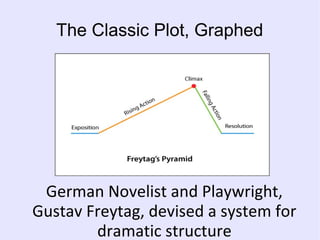
The Classic Plot, Graphed
German Novelist and Playwright,
Gustav Freytag, devised a system for
dramatic structure
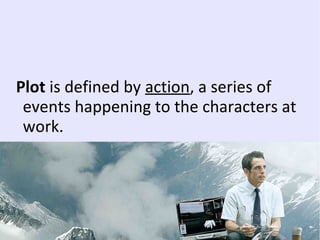
Plot is defined by action, a series of
events happening to the characters at
work.
Whether it starts at the beginning,
middle, or end, a story isn't a story
unless there is logic to its telling.
Without the logic,
you just have a mess of events.
Wait, there's more! 3 Types of Plot

Organic - with a clear beginning, middle and end

Episodic - a series of seemingly unrelated events

Static -a story without any recognizable external
action; static short stories rely on the event of an
EPIPHANY – either on the part of the character, or
on the part of the reader – in order for it to make
sense.
Hello Plot Devices!
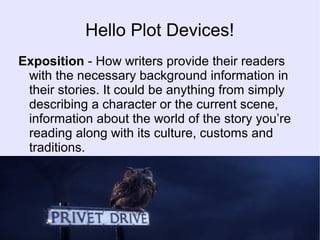
Exposition - How writers provide their readers
with the necessary background information in
their stories. It could be anything from simply
describing a character or the current scene,
information about the world of the story you’re
reading along with its culture, customs and
traditions.
Hello Plot Devices! Page 2
Beginning “in medias res” and making use of
flashbacks. Most stories begin “in medias res”, or in
the middle of the action, flashbacks are then used
to explain what had taken place before, and
sometimes end up framing what is going on now in
a new light.
Foreshadowing. Authors sometimes plug in details
that lead on to what happens later on in the story.
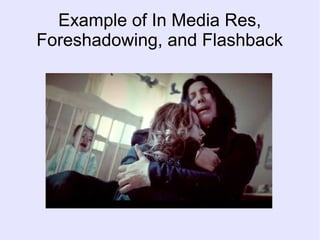
Example of In Media Res,
Foreshadowing, and Flashback
Hello Plot Devices! Part 3!
Deus ex machina - (translated: “God from the
machine”) – the writer relies on “divine
interventions”, coincidences or chance in order to
tie up loose ends in the plot or to make the plot
move.
Surprise endings - unlike the DeM plots, these
outcomes seem to be plausible and adequately
prepared for.
THANK YOU!
Download and View the presentation at
http://slideshare.net/miamarci
Love is why we tell the story,
Faith is why we tell the story
You are why...
-Once on This Island
CREDITS
Prepared by Mia Marci, with some text by Pamela
Punzalan (used with permission).
Free for non-commercial use, with due credit
given.

Lit13: Introduction to Fiction and the Plot

  • 1.
    The Crux ofthe Matter Overview of the Elements An introduction to Plot
  • 2.
    Why We TellThe Story It is in human nature to make stories. When we talk about the highlights of the day, We vary in the telling. We sometimes start from the very beginning, Or at the most interesting point of our day.
  • 3.
    FICTION  Defined as anyliterary narrative, whether in prose or verse, which is invented of being an account of events that have in fact happened -M.H. Abrams, The Glossary of Literary Terms
  • 4.
    Our lives becomethe story that we weave. -'Why We Tell the Story' from Once on this Island
  • 5.
  • 6.
    WHAT IS PLOT?  Accordingto most dictionaries, it is a plan or a scheme.  According to your high school literature classes, it is “a sequence of causally related events”.
  • 7.
    Plot is drivenby the curious question, “What happens next?”
  • 8.
    The Classic Plot,Graphed German Novelist and Playwright, Gustav Freytag, devised a system for dramatic structure
  • 9.
    Plot is definedby action, a series of events happening to the characters at work.
  • 10.
    Whether it startsat the beginning, middle, or end, a story isn't a story unless there is logic to its telling. Without the logic, you just have a mess of events.
  • 11.
    Wait, there's more!3 Types of Plot  Organic - with a clear beginning, middle and end  Episodic - a series of seemingly unrelated events  Static -a story without any recognizable external action; static short stories rely on the event of an EPIPHANY – either on the part of the character, or on the part of the reader – in order for it to make sense.
  • 12.
    Hello Plot Devices! Exposition- How writers provide their readers with the necessary background information in their stories. It could be anything from simply describing a character or the current scene, information about the world of the story you’re reading along with its culture, customs and traditions.
  • 13.
    Hello Plot Devices!Page 2 Beginning “in medias res” and making use of flashbacks. Most stories begin “in medias res”, or in the middle of the action, flashbacks are then used to explain what had taken place before, and sometimes end up framing what is going on now in a new light. Foreshadowing. Authors sometimes plug in details that lead on to what happens later on in the story.
  • 14.
    Example of InMedia Res, Foreshadowing, and Flashback
  • 15.
    Hello Plot Devices!Part 3! Deus ex machina - (translated: “God from the machine”) – the writer relies on “divine interventions”, coincidences or chance in order to tie up loose ends in the plot or to make the plot move. Surprise endings - unlike the DeM plots, these outcomes seem to be plausible and adequately prepared for.
  • 17.
    THANK YOU! Download andView the presentation at http://slideshare.net/miamarci Love is why we tell the story, Faith is why we tell the story You are why... -Once on This Island
  • 18.
    CREDITS Prepared by MiaMarci, with some text by Pamela Punzalan (used with permission). Free for non-commercial use, with due credit given.