Learning Strategy
in a Mobile Work
Styles Environment
Dr. Robin Yap, JD, PhD
“Mobile devices are misnamed. They
should be called gateways to human
knowledge.”
Ray Kurzweil
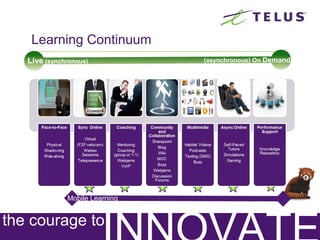
Learning Continuum
Mobile Learning
Live (synchronous) (asynchronous) On Demand
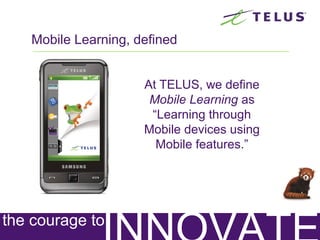
Mobile Learning, defined
At TELUS, we define
Mobile Learning as
“Learning through
Mobile devices using
Mobile features.”
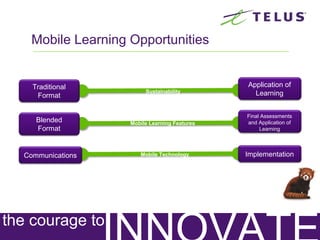
Mobile Learning Opportunities
Sustainability
Traditional
Format
Blended
Format
Application of
Learning
Final Assessments
and Application of
Learning
Mobile Learning Features
Communications Mobile Technology Implementation
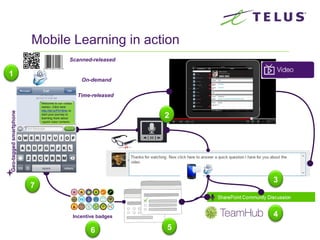
Mobile Learning in action
Incentive badges
Geo-taggedsmartphone
Time-released
2
1
3
4
56
7
Scanned-released
On-demand
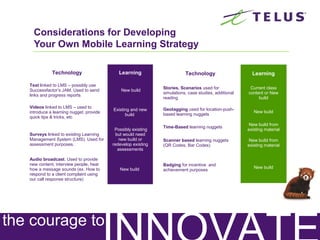
Considerations for Developing
Your Own Mobile Learning Strategy
Technology Learning
Text linked to LMS – possibly use
Successfactor’s JAM. Used to send
links and progress reports
New build
Videos linked to LMS – used to
introduce a learning nugget, provide
quick tips & tricks, etc
Existing and new
build
Surveys linked to existing Learning
Management System (LMS). Used for
assessment purposes.
Possibly existing
but would need
new build or
redevelop existing
assessments
Audio broadcast. Used to provide
new content, interview people, hear
how a message sounds (ex. How to
respond to a client complaint using
our call response structure)
New build
Technology Learning
Stories, Scenarios used for
simulations, case studies, additional
reading
Current class
content or New
build
Geotagging used for location-push-
based learning nuggets
New build
Time-Based learning nuggets
New build from
existing material
Scanner based learning nuggets
(QR Codes, Bar Codes)
New build from
existing material
Badging for incentive and
achievement purposes
New build
Considerations When Linking
Mobile Strategy to Corporate Goals
 Research
 Requirements
 Governance
 Technology
 Data
 Security
 Device
 User experience
 Compliance
Strategy Challenges
 Lack of money
 Security concerns
 Technology issues
 Adaptability
Key Questions to Consider
1. What are some of the challenges and considerations that
need to be considered when selling mobile learning?
2. How does mobile learning fit into our existing curriculum?
3. What infrastructure, decisions, need to be examined for
mobile learning requirements?
4. How can we address adoption challenges?
5. At what speed are we ready to launch a mobile learning
initiative?
6. What kinds of financial impact will it have on our
organization?
7. How can we capitalize on mobile learning to leverage the
learning we already have invested in our organization?
Thank You!
Dr. Robin Yap, JD, PhD
www.robinyap.com
Twitter @robinyap

Learning Strategy in a Mobile WorkStyles Environment

  • 1.
    Learning Strategy in aMobile Work Styles Environment Dr. Robin Yap, JD, PhD
  • 2.
    “Mobile devices aremisnamed. They should be called gateways to human knowledge.” Ray Kurzweil
  • 3.
    Learning Continuum Mobile Learning Live(synchronous) (asynchronous) On Demand
  • 4.
    Mobile Learning, defined AtTELUS, we define Mobile Learning as “Learning through Mobile devices using Mobile features.”
  • 5.
    Mobile Learning Opportunities Sustainability Traditional Format Blended Format Applicationof Learning Final Assessments and Application of Learning Mobile Learning Features Communications Mobile Technology Implementation
  • 6.
    Mobile Learning inaction Incentive badges Geo-taggedsmartphone Time-released 2 1 3 4 56 7 Scanned-released On-demand
  • 7.
    Considerations for Developing YourOwn Mobile Learning Strategy Technology Learning Text linked to LMS – possibly use Successfactor’s JAM. Used to send links and progress reports New build Videos linked to LMS – used to introduce a learning nugget, provide quick tips & tricks, etc Existing and new build Surveys linked to existing Learning Management System (LMS). Used for assessment purposes. Possibly existing but would need new build or redevelop existing assessments Audio broadcast. Used to provide new content, interview people, hear how a message sounds (ex. How to respond to a client complaint using our call response structure) New build Technology Learning Stories, Scenarios used for simulations, case studies, additional reading Current class content or New build Geotagging used for location-push- based learning nuggets New build Time-Based learning nuggets New build from existing material Scanner based learning nuggets (QR Codes, Bar Codes) New build from existing material Badging for incentive and achievement purposes New build
  • 8.
    Considerations When Linking MobileStrategy to Corporate Goals  Research  Requirements  Governance  Technology  Data  Security  Device  User experience  Compliance
  • 9.
    Strategy Challenges  Lackof money  Security concerns  Technology issues  Adaptability
  • 10.
    Key Questions toConsider 1. What are some of the challenges and considerations that need to be considered when selling mobile learning? 2. How does mobile learning fit into our existing curriculum? 3. What infrastructure, decisions, need to be examined for mobile learning requirements? 4. How can we address adoption challenges? 5. At what speed are we ready to launch a mobile learning initiative? 6. What kinds of financial impact will it have on our organization? 7. How can we capitalize on mobile learning to leverage the learning we already have invested in our organization?
  • 11.
    Thank You! Dr. RobinYap, JD, PhD www.robinyap.com Twitter @robinyap

Editor's Notes

  • #3 Raymond "Ray" Kurzweil is an American author, scientist, inventor, futurist, and is a director of engineering at Google.
  • #4 This is the learning curriculum as we know it. The opportunity for Mobile learning exists in all but the face-to-face environment http://www.cognitivedesignsolutions.com/ELearning/BlendedLearning.htm
  • #5 Definition of mobile learning Reference: Wang, R., Wiesemes, R., & Gibbons, C. (2012) Developing digital fluency through ubiquitous mobile devices: Findings from a small-scale study. Computers & Education, 58(1), 570-578. http://dx.doi.org/10.1016/j.compedu.2011.04.013  
  • #7 One of the many examples mobile learning can be incorporated into an existing learning program Blending takes into account the four basic instructional architectures described by Ruth Clark (1998): Receptive (information acquisition), Directive(response strengthening), Guided Discovery (knowledge construction), andExploratory (linking to real world tasks and resources). It creates a blend of activities and instructional strategies that will effectively engage the learning preferences of the students.
  • #12 Thank you! www.robinyap.com