-srinath
-srinath
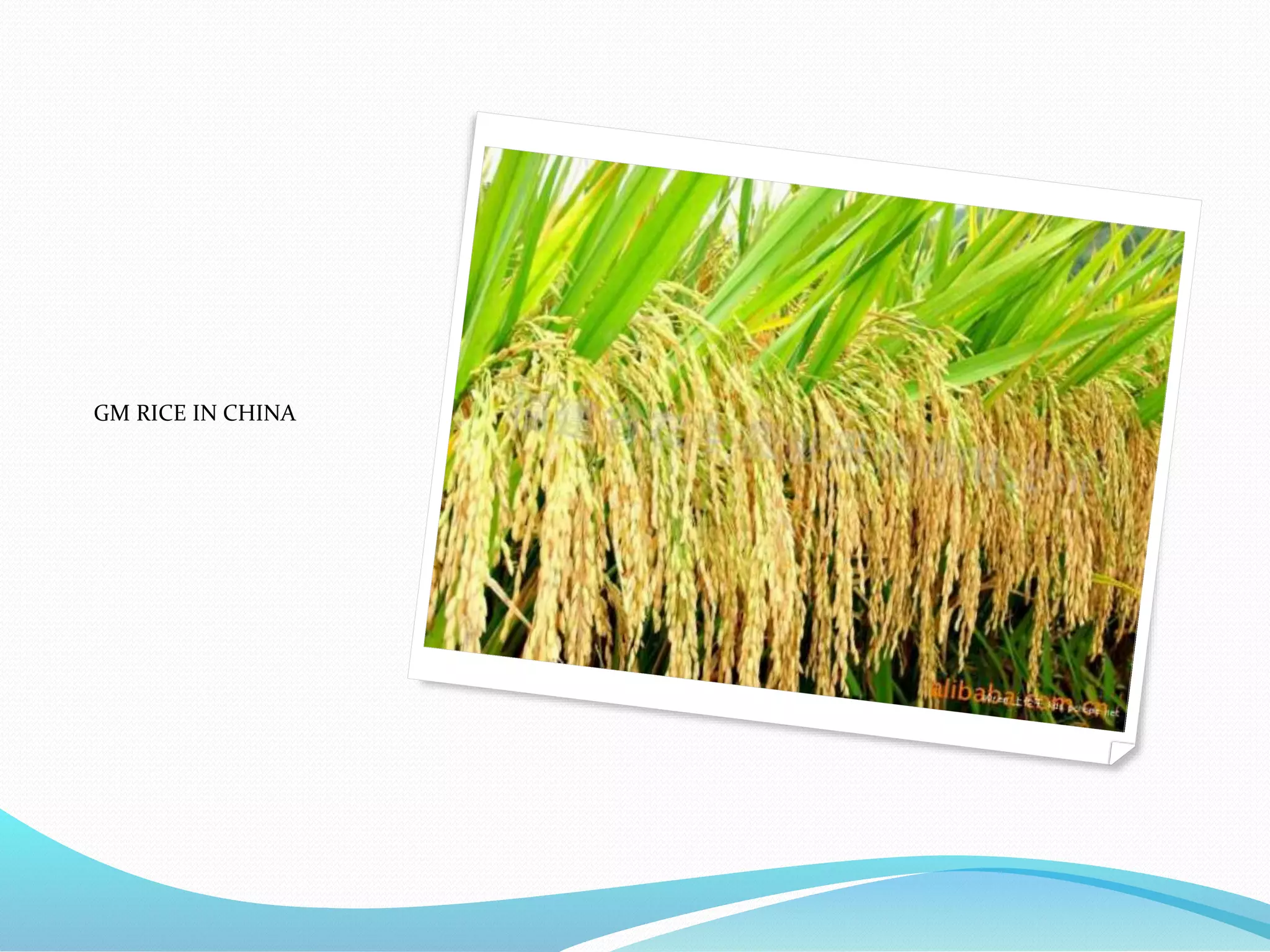
GM RICE IN CHINA
TRANSGENIC PLANTS
 DNA is modified using Genetic Engineering
techniques.
 Transgenic Plant contains Genes inserted Artificially
called Transgenes.
 Provides advantages in producing plants wich are
Drought Resistant,cold tolerance, pest resistant, etc…
Methods Employed for
Transformation
 Direct gene Transfer-Electroporation,Particle
Bombardment,Micro injection,PEG mediated.
 In-direct gene Transfer-Virus mediated,Agrobacterium
mediated
 Agrobacterium mediated transformation is the only
high Efficient Transformation Till date
than,Remaining Transformation Techniques.
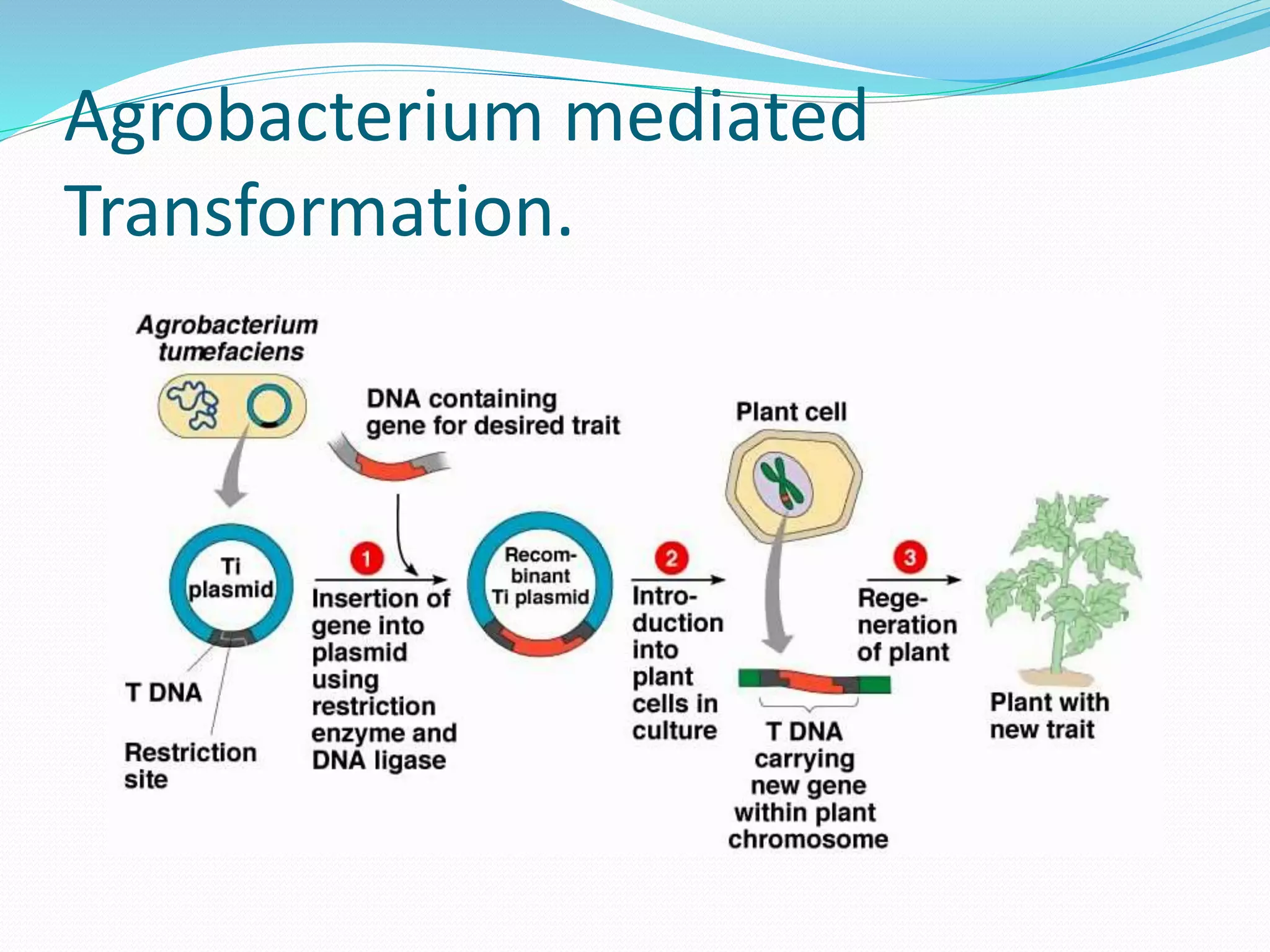
Agrobacterium mediated
Transformation.
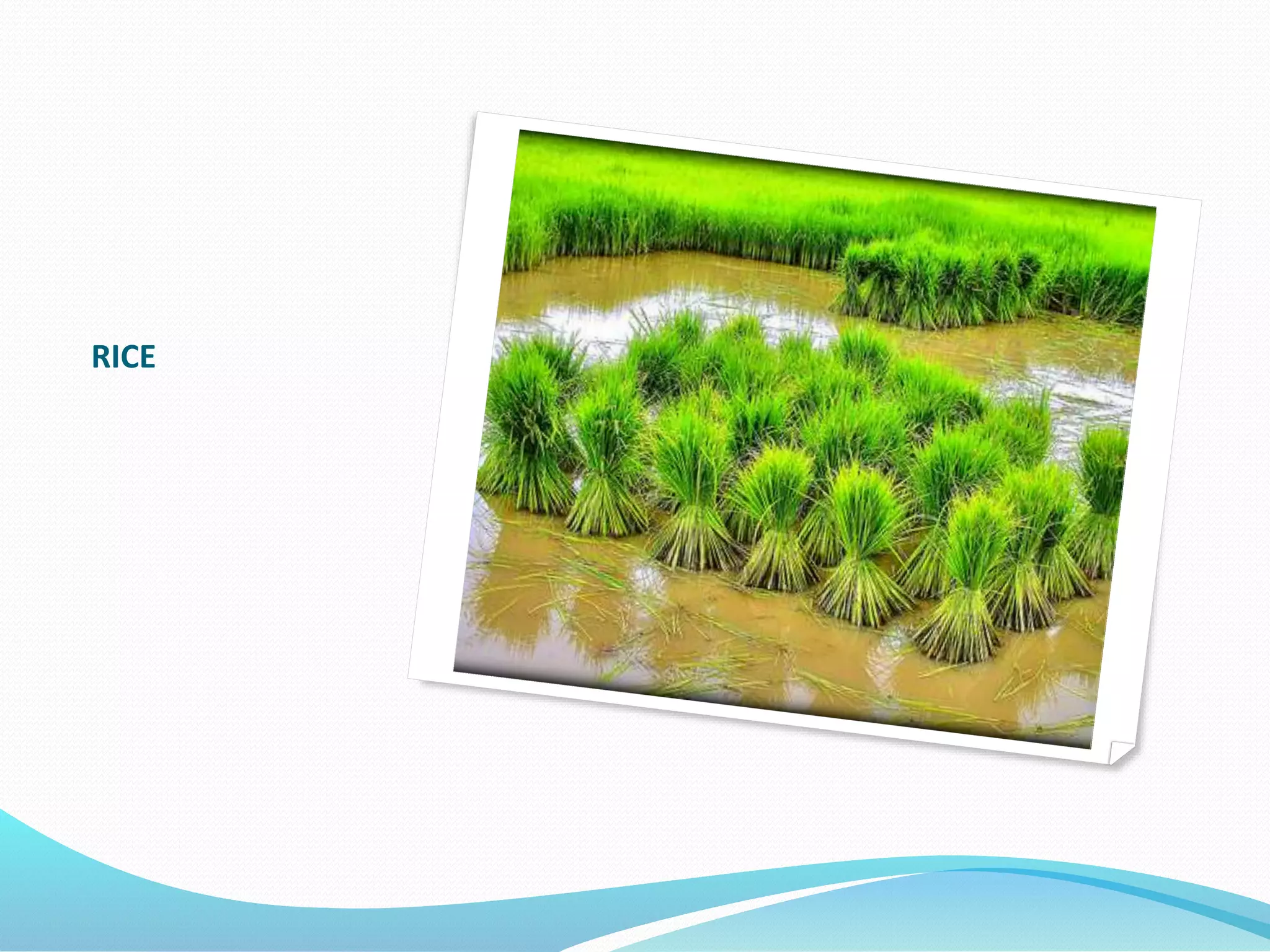
RICE
RICE
 Rice,wheat,maize are worlds 3 leading food crops
 Rice is staple food of more than half of the worlds
population
 More than 3.5 billion people depend on rice
Challenges in Rice
 Disease,many disease such as bacterial,fungal,viral
diseases,pests
 Create huge loss to farmers
 Some fungal disease like Blast created Famines.like the
great bengal famine
 Rice requires huge water for cultivation
 Rice is not a salt tolerant plant.
 Rice is not a Drought Resistant crop.
Rice plant affected
with Blast disease.
TRANSGENIC RICE
 Pid2-Rice plants
resistant to Rice blast
 Cry1la5-rice resistant to
stemborrer
 Am sod-rice plant
showing high level salt
tolerance
 AtDREBIA-plants
showing improved
drought tolerance
Agb,mediatedTransformation in
Rice
 First step is to Transform
the Agrobacterium by
using molecular biology
tools
 Inserting our GOI with
Marker,into the bacteria.
 Once Agrobacterium is
engineered it can be
multiplied easily.
 Agrobacterium with
GOI,is streaked on LB
plates.
 Agb,is selected with
R,K,T,S
 LB plates are stored at 4
0 c .
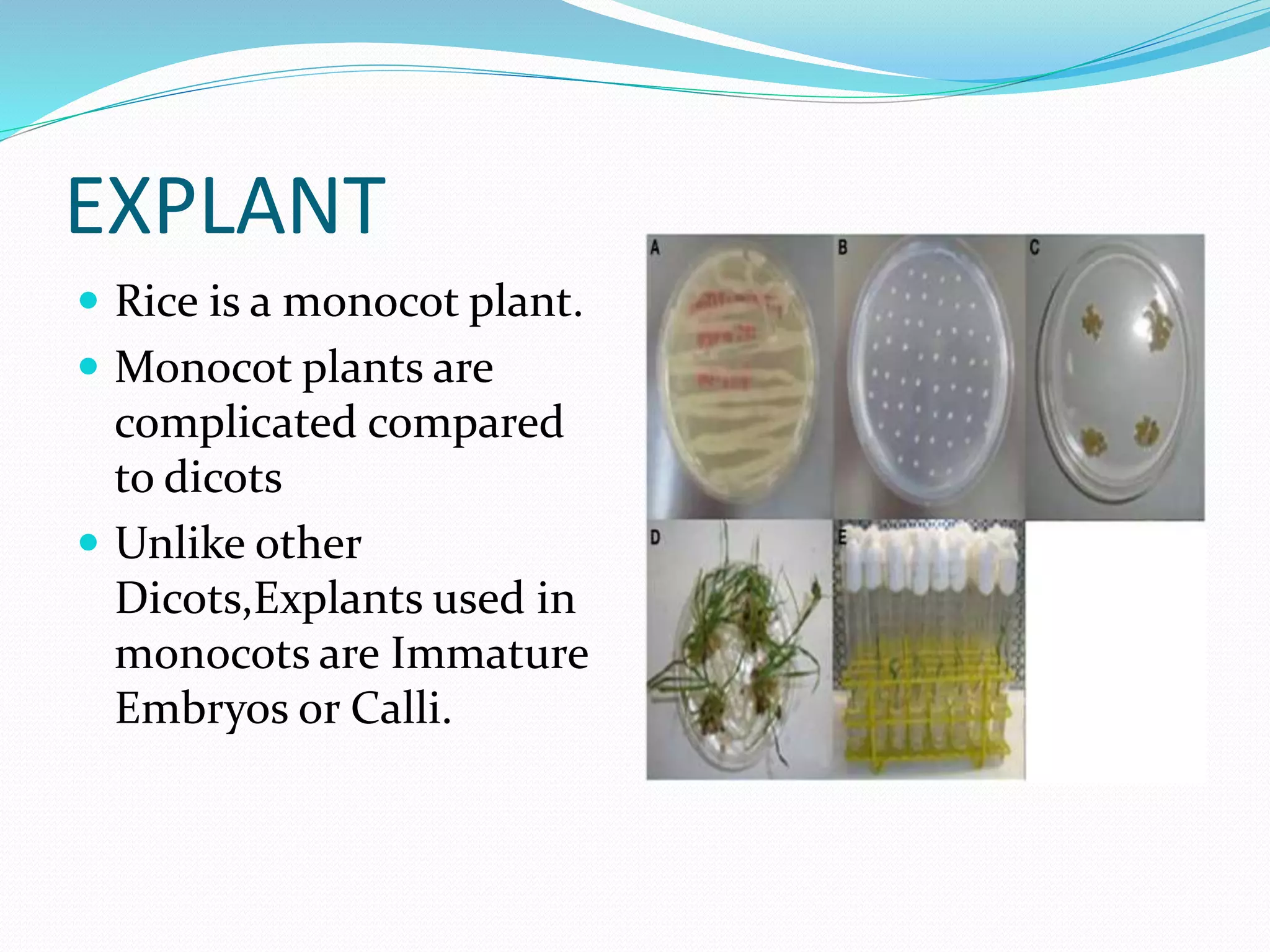
EXPLANT
 Rice is a monocot plant.
 Monocot plants are
complicated compared
to dicots
 Unlike other
Dicots,Explants used in
monocots are Immature
Embryos or Calli.
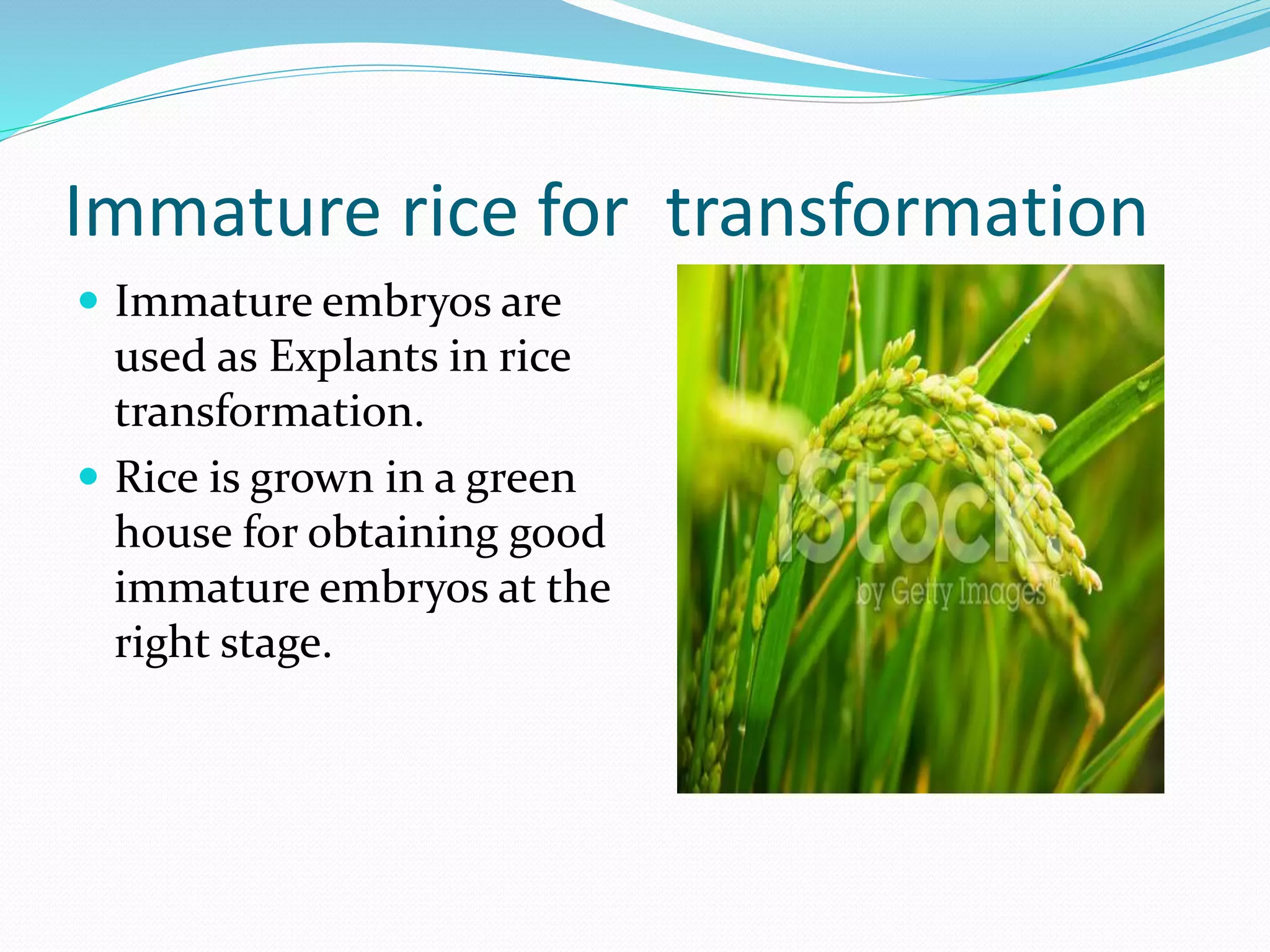
Immature rice for transformation
 Immature embryos are
used as Explants in rice
transformation.
 Rice is grown in a green
house for obtaining good
immature embryos at the
right stage.
Sterilization and isolation of
embryos
 Immature rice is de-
husked,surface sterilized
with 2% Naocl,for 20
mins.
 Using a
microscope,immature
embryos are dissected.
 Embryos are collected in
liquid media (infection
media)in ependorf tubes
Transformation
 All the Embryos are
collected in liquid
media.
 Collected embryos are
pre treated,that means
they are kept in water
bath at 430Cfor 30
mins,and ice shock for 1
min.
 Agrobacterium culture is
freashly streaked on LB
plates,one day before
Transformation.
 O.D for infection should
be set as desired.
 Desired OD is adjusted
and culture is
resuspended in liquid
infection media.
Infection and co-cultivation
 Embryos after pre
treatment are infected with
agrobacterium suspended
media for 15 mins
 Agrobacterium suspension
is removed,and embryos
are kept in co-cultivation
media,in dark for 7 days.
 This step is called co-
cultivation.
RESTING AND SELECTION
 The embryos are kept in resting
media,ie..media can kill
agrobacterium but withou any
selection pressure.so embryos
can grow(both transformed and
non-transformed).
 After Resting,embryos are
moved to Selection
Media.ie..media with
hygromycin or kanamycin…
 Selection media is that in wich
only Transformed cells survive
and remaining cells die,so
Transformed embryo forming
calli survive and Remaining Die.
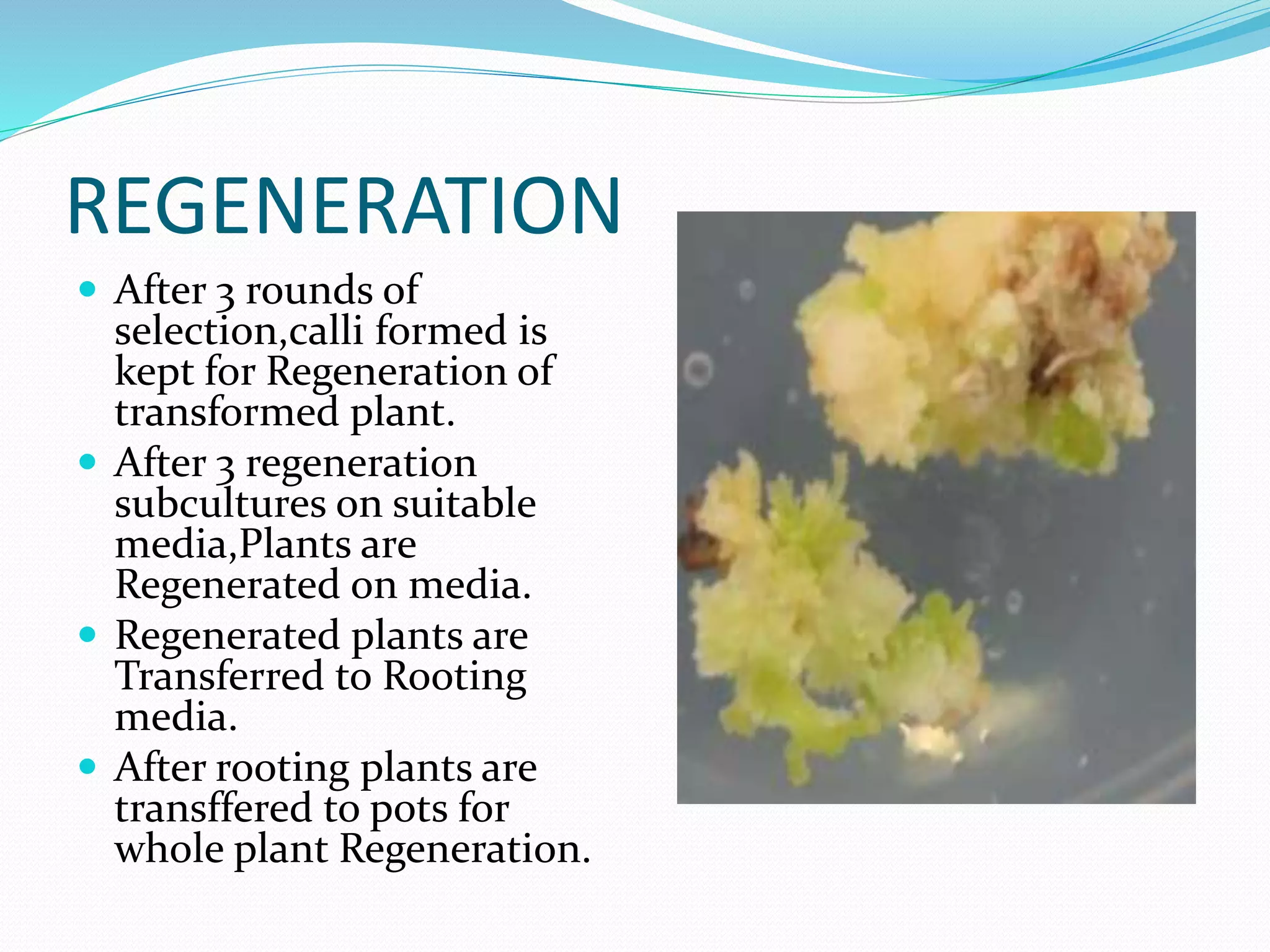
REGENERATION
 After 3 rounds of
selection,calli formed is
kept for Regeneration of
transformed plant.
 After 3 regeneration
subcultures on suitable
media,Plants are
Regenerated on media.
 Regenerated plants are
Transferred to Rooting
media.
 After rooting plants are
transffered to pots for
whole plant Regeneration.
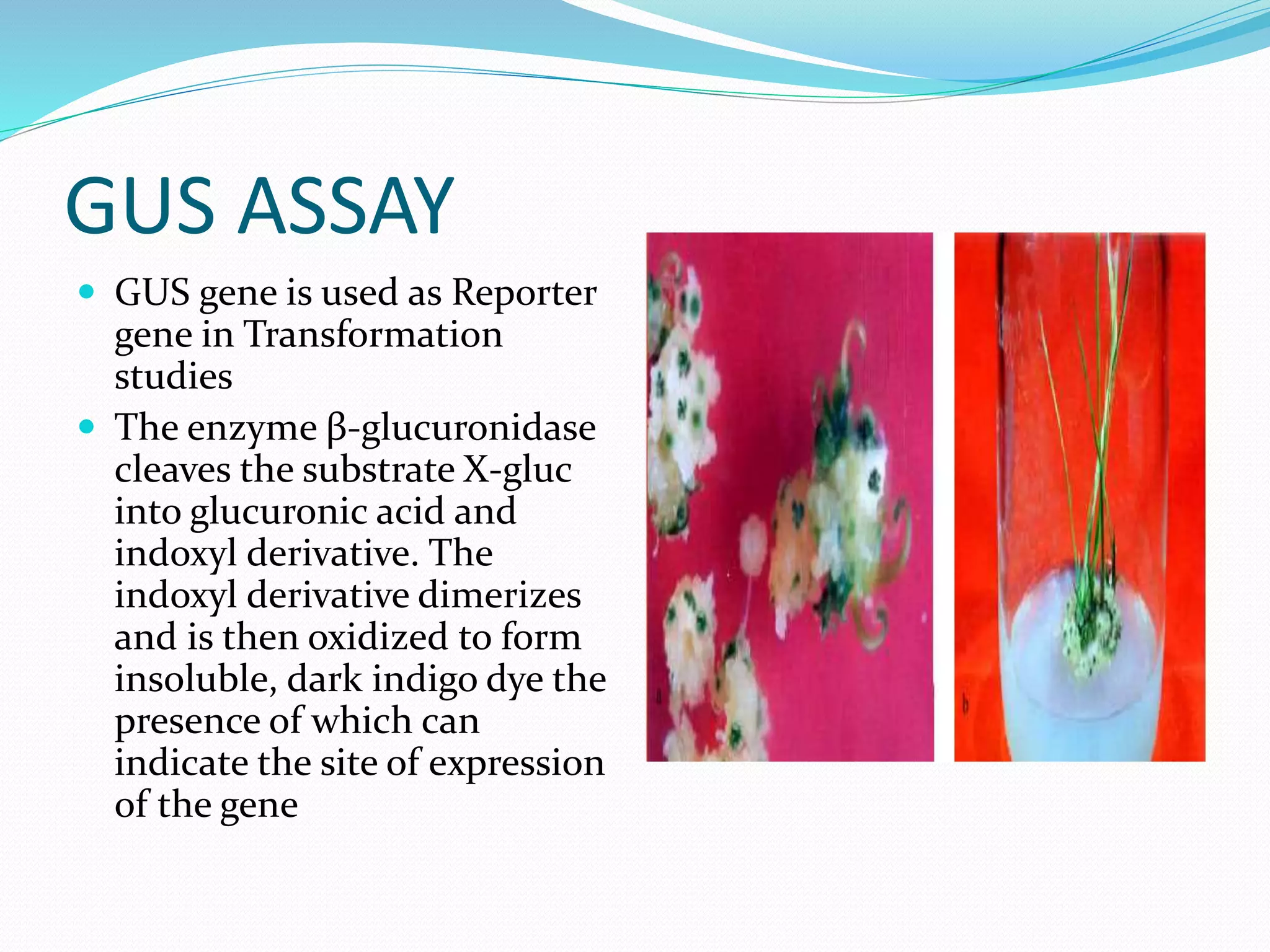
GUS ASSAY
 GUS gene is used as Reporter
gene in Transformation
studies
 The enzyme β-glucuronidase
cleaves the substrate X-gluc
into glucuronic acid and
indoxyl derivative. The
indoxyl derivative dimerizes
and is then oxidized to form
insoluble, dark indigo dye the
presence of which can
indicate the site of expression
of the gene
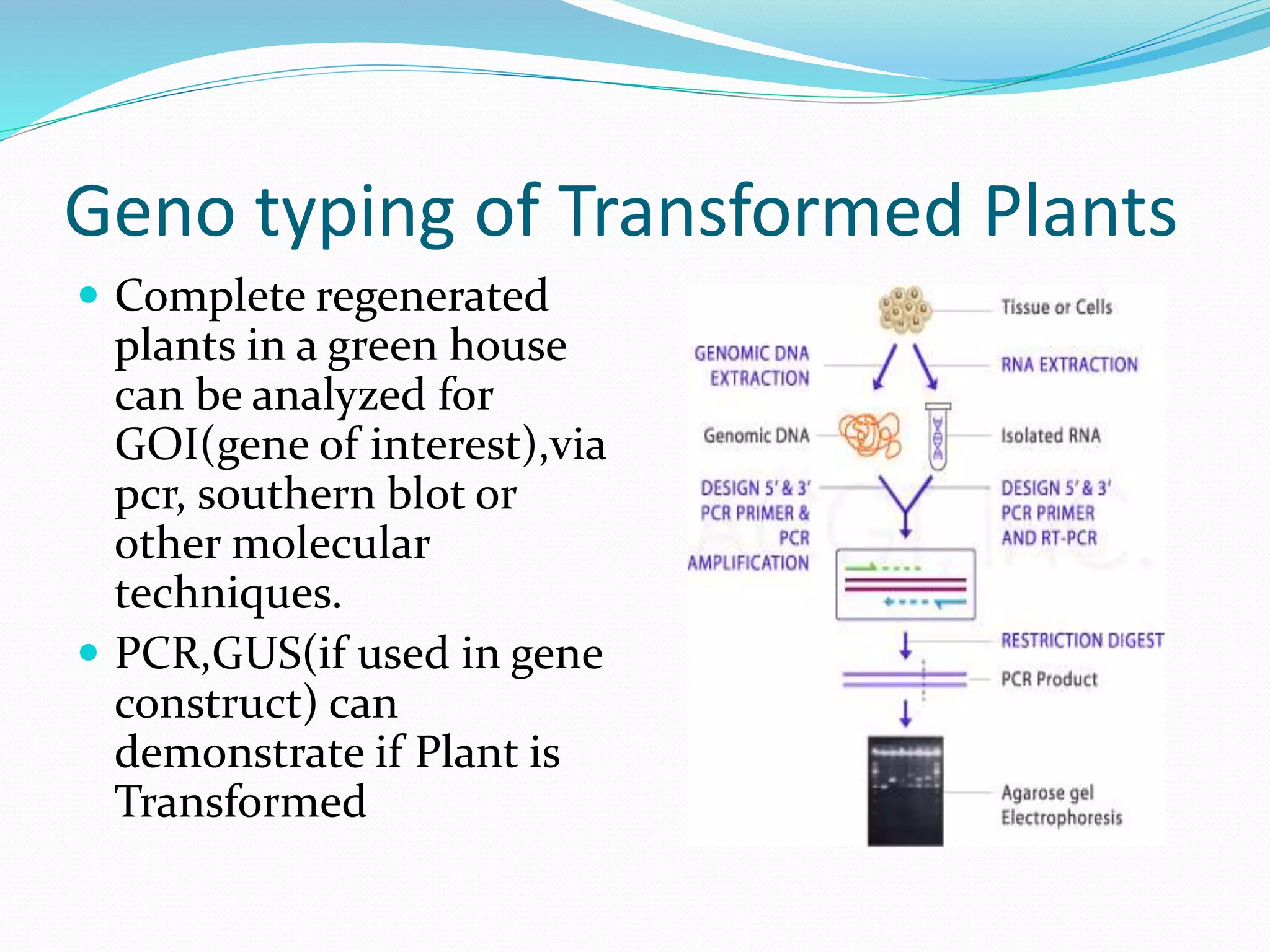
Geno typing of Transformed Plants
 Complete regenerated
plants in a green house
can be analyzed for
GOI(gene of interest),via
pcr, southern blot or
other molecular
techniques.
 PCR,GUS(if used in gene
construct) can
demonstrate if Plant is
Transformed

Agrobacterium mediated Transformation in rice

  • 1.
  • 2.
  • 3.
  • 4.
    TRANSGENIC PLANTS  DNAis modified using Genetic Engineering techniques.  Transgenic Plant contains Genes inserted Artificially called Transgenes.  Provides advantages in producing plants wich are Drought Resistant,cold tolerance, pest resistant, etc…
  • 5.
    Methods Employed for Transformation Direct gene Transfer-Electroporation,Particle Bombardment,Micro injection,PEG mediated.  In-direct gene Transfer-Virus mediated,Agrobacterium mediated  Agrobacterium mediated transformation is the only high Efficient Transformation Till date than,Remaining Transformation Techniques.
  • 6.
  • 7.
  • 8.
    RICE  Rice,wheat,maize areworlds 3 leading food crops  Rice is staple food of more than half of the worlds population  More than 3.5 billion people depend on rice
  • 9.
    Challenges in Rice Disease,many disease such as bacterial,fungal,viral diseases,pests  Create huge loss to farmers  Some fungal disease like Blast created Famines.like the great bengal famine  Rice requires huge water for cultivation  Rice is not a salt tolerant plant.  Rice is not a Drought Resistant crop.
  • 10.
  • 11.
    TRANSGENIC RICE  Pid2-Riceplants resistant to Rice blast  Cry1la5-rice resistant to stemborrer  Am sod-rice plant showing high level salt tolerance  AtDREBIA-plants showing improved drought tolerance
  • 12.
    Agb,mediatedTransformation in Rice  Firststep is to Transform the Agrobacterium by using molecular biology tools  Inserting our GOI with Marker,into the bacteria.  Once Agrobacterium is engineered it can be multiplied easily.  Agrobacterium with GOI,is streaked on LB plates.  Agb,is selected with R,K,T,S  LB plates are stored at 4 0 c .
  • 13.
    EXPLANT  Rice isa monocot plant.  Monocot plants are complicated compared to dicots  Unlike other Dicots,Explants used in monocots are Immature Embryos or Calli.
  • 14.
    Immature rice fortransformation  Immature embryos are used as Explants in rice transformation.  Rice is grown in a green house for obtaining good immature embryos at the right stage.
  • 15.
    Sterilization and isolationof embryos  Immature rice is de- husked,surface sterilized with 2% Naocl,for 20 mins.  Using a microscope,immature embryos are dissected.  Embryos are collected in liquid media (infection media)in ependorf tubes
  • 16.
    Transformation  All theEmbryos are collected in liquid media.  Collected embryos are pre treated,that means they are kept in water bath at 430Cfor 30 mins,and ice shock for 1 min.  Agrobacterium culture is freashly streaked on LB plates,one day before Transformation.  O.D for infection should be set as desired.  Desired OD is adjusted and culture is resuspended in liquid infection media.
  • 17.
    Infection and co-cultivation Embryos after pre treatment are infected with agrobacterium suspended media for 15 mins  Agrobacterium suspension is removed,and embryos are kept in co-cultivation media,in dark for 7 days.  This step is called co- cultivation.
  • 18.
    RESTING AND SELECTION The embryos are kept in resting media,ie..media can kill agrobacterium but withou any selection pressure.so embryos can grow(both transformed and non-transformed).  After Resting,embryos are moved to Selection Media.ie..media with hygromycin or kanamycin…  Selection media is that in wich only Transformed cells survive and remaining cells die,so Transformed embryo forming calli survive and Remaining Die.
  • 19.
    REGENERATION  After 3rounds of selection,calli formed is kept for Regeneration of transformed plant.  After 3 regeneration subcultures on suitable media,Plants are Regenerated on media.  Regenerated plants are Transferred to Rooting media.  After rooting plants are transffered to pots for whole plant Regeneration.
  • 20.
    GUS ASSAY  GUSgene is used as Reporter gene in Transformation studies  The enzyme β-glucuronidase cleaves the substrate X-gluc into glucuronic acid and indoxyl derivative. The indoxyl derivative dimerizes and is then oxidized to form insoluble, dark indigo dye the presence of which can indicate the site of expression of the gene
  • 21.
    Geno typing ofTransformed Plants  Complete regenerated plants in a green house can be analyzed for GOI(gene of interest),via pcr, southern blot or other molecular techniques.  PCR,GUS(if used in gene construct) can demonstrate if Plant is Transformed