Looking ahead:
Science and Data Needs
2018 NIAA Antibiotics Symposium
Brian Lubbers, DVM, PhD, DACVCP
Director of Clinical Microbiology
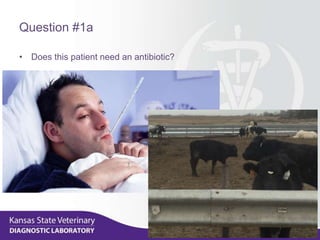
Question #1a
• Does this patient need an antibiotic?
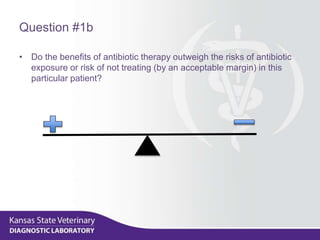
Question #1b
• Do the benefits of antibiotic therapy outweigh the risks of antibiotic
exposure or risk of not treating (by an acceptable margin) in this
particular patient?
Science and Data Needs
• DEFINED ACCEPTABLE RISK
– Promotion of antibiotic resistance
• Risk to individual
• Risk to society
– Serious drug adverse events
– Negative outcomes from withholding therapy
• Improved (better, faster, less invasive & cheaper) diagnostics
– Detection of underlying resistance
– Disease confirmation
• Effective adjunct / alternative therapies
• Optimal dosing regimens
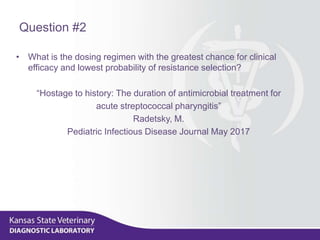
Question #2
• What is the dosing regimen with the greatest chance for clinical
efficacy and lowest probability of resistance selection?
“Hostage to history: The duration of antimicrobial treatment for
acute streptococcal pharyngitis”
Radetsky, M.
Pediatric Infectious Disease Journal May 2017
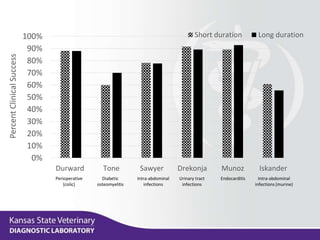
0%
10%
20%
30%
40%
50%
60%
70%
80%
90%
100%
Durward Tone Sawyer Drekonja Munoz Iskander
PercentClinicalSuccess
Short duration Long duration
Diabetic
osteomyelitis
Intra-abdominal
infections
Intra-abdominal
infections (murine)
Urinary tract
infections
EndocarditisPerioperative
(colic)
Science and Data Needs
• Balance clinical outcome with resistance consequences of specific
exposures
– Drug
– Dose
– Duration
– Frequency
Thank You!

Dr. Brian Lubbers - Looking ahead: Science and Data Needs

  • 1.
    Looking ahead: Science andData Needs 2018 NIAA Antibiotics Symposium Brian Lubbers, DVM, PhD, DACVCP Director of Clinical Microbiology
  • 2.
    Question #1a • Doesthis patient need an antibiotic?
  • 3.
    Question #1b • Dothe benefits of antibiotic therapy outweigh the risks of antibiotic exposure or risk of not treating (by an acceptable margin) in this particular patient?
  • 4.
    Science and DataNeeds • DEFINED ACCEPTABLE RISK – Promotion of antibiotic resistance • Risk to individual • Risk to society – Serious drug adverse events – Negative outcomes from withholding therapy • Improved (better, faster, less invasive & cheaper) diagnostics – Detection of underlying resistance – Disease confirmation • Effective adjunct / alternative therapies • Optimal dosing regimens
  • 5.
    Question #2 • Whatis the dosing regimen with the greatest chance for clinical efficacy and lowest probability of resistance selection? “Hostage to history: The duration of antimicrobial treatment for acute streptococcal pharyngitis” Radetsky, M. Pediatric Infectious Disease Journal May 2017
  • 6.
    0% 10% 20% 30% 40% 50% 60% 70% 80% 90% 100% Durward Tone SawyerDrekonja Munoz Iskander PercentClinicalSuccess Short duration Long duration Diabetic osteomyelitis Intra-abdominal infections Intra-abdominal infections (murine) Urinary tract infections EndocarditisPerioperative (colic)
  • 7.
    Science and DataNeeds • Balance clinical outcome with resistance consequences of specific exposures – Drug – Dose – Duration – Frequency
  • 8.