“Get Smart About Antibiotics”
An Introduction to Prudent Antibiotic Use
Antibiotic Stewardship Curriculum
Developed by:
Vera P. Luther, M.D.
Christopher A. Ohl, M.D.
Wake Forest School of Medicine
With Support from the Centers for Disease
Control and Prevention
Objectives
1. Discuss untoward effects of antibiotic use
2. Define antibiotic stewardship
3. Describe 6 goals of antibiotic stewardship
programs
4. Describe a rationale for antibiotic selection
5. Describe directed and empiric antibiotic therapy
6. Describe and give examples of 4 tenets of
appropriate antibiotic use
Outline
• Introduction
• Untoward Effects of Antibiotics
• Antibiotic Stewardship
• Principles of Antibiotic Selection
• Tenets of Appropriate Antibiotic Use
• Conclusion
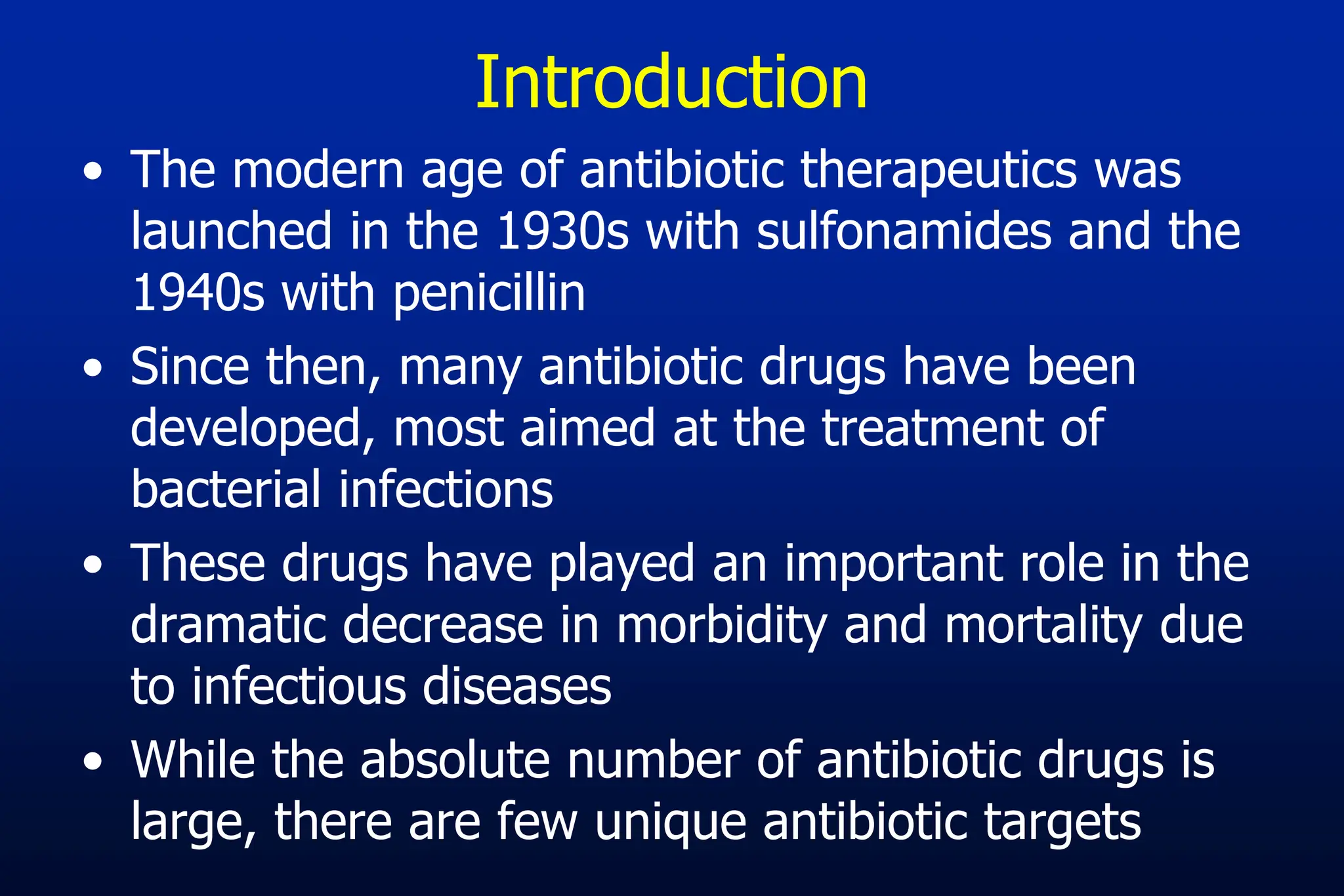
Introduction
• The modern age of antibiotic therapeutics was
launched in the 1930s with sulfonamides and the
1940s with penicillin
• Since then, many antibiotic drugs have been
developed, most aimed at the treatment of
bacterial infections
• These drugs have played an important role in the
dramatic decrease in morbidity and mortality due
to infectious diseases
• While the absolute number of antibiotic drugs is
large, there are few unique antibiotic targets
Outline
• Introduction
• Untoward Effects of Antibiotics
• Antibiotic Stewardship
• Principles of Antibiotic Selection
• Tenets of Appropriate Antibiotic Use
• Conclusion
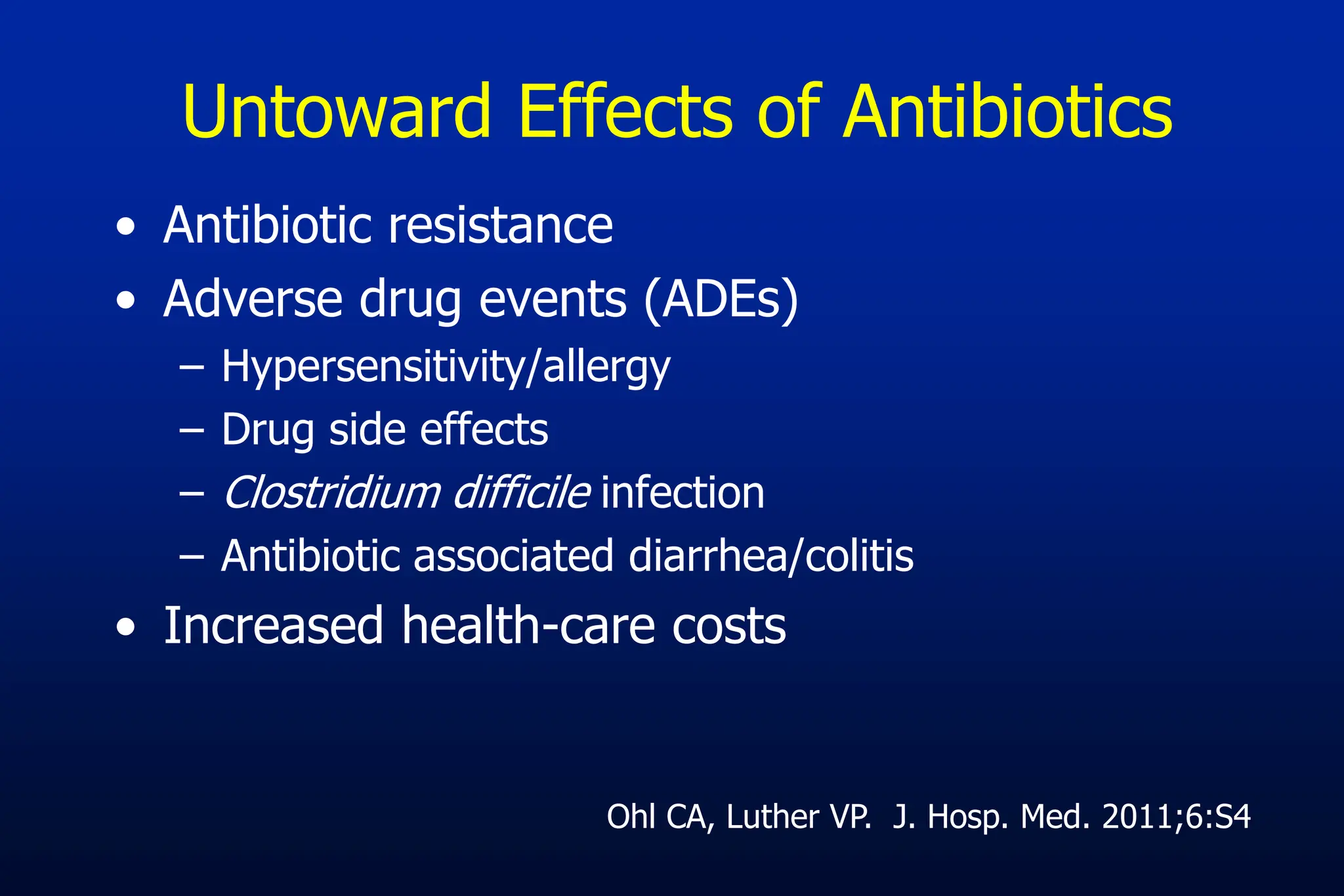
Untoward Effects of Antibiotics
• Antibiotic resistance
• Adverse drug events (ADEs)
– Hypersensitivity/allergy
– Drug side effects
– Clostridium difficile infection
– Antibiotic associated diarrhea/colitis
• Increased health-care costs
Ohl CA, Luther VP. J. Hosp. Med. 2011;6:S4
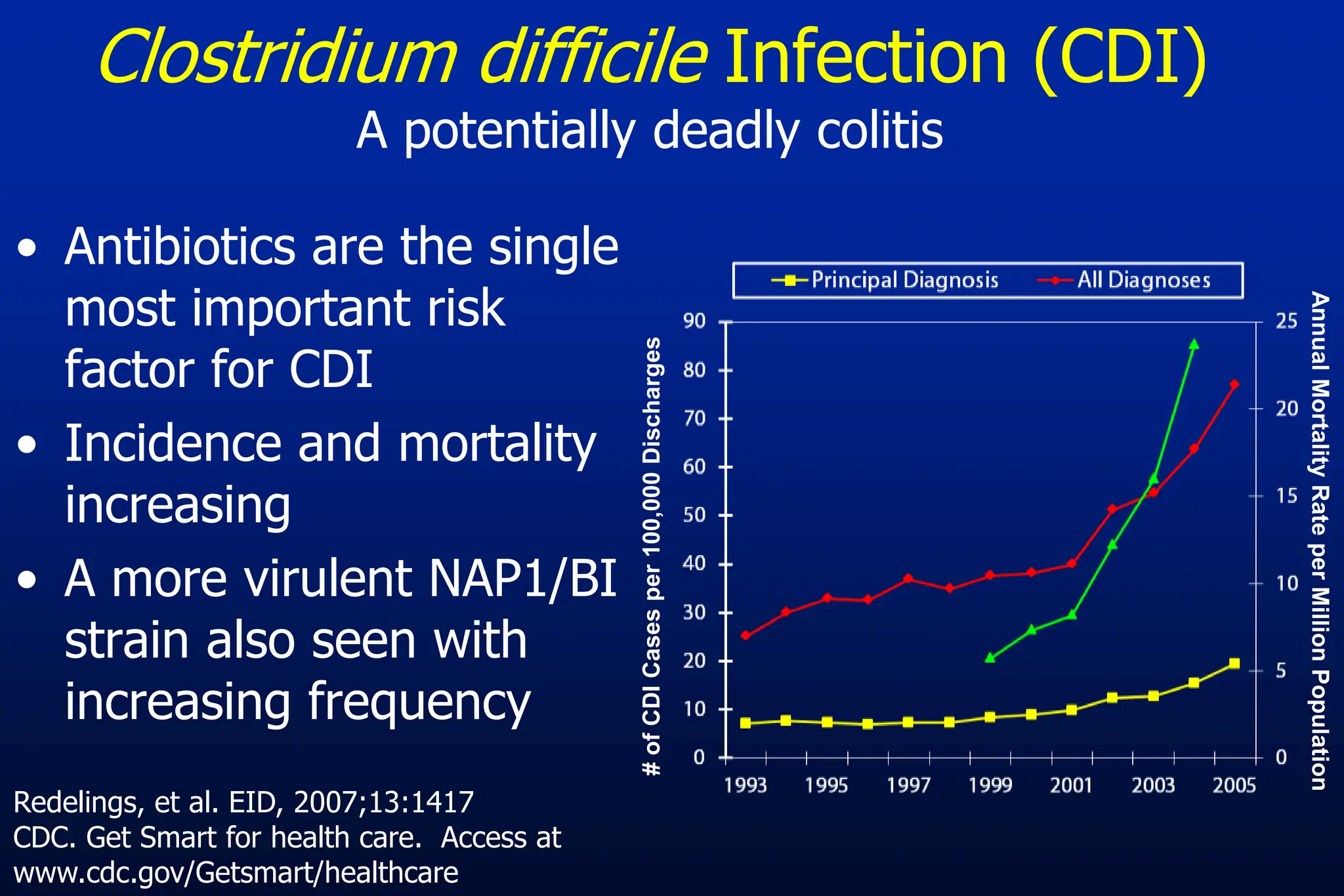
Clostridium difficile Infection (CDI)
A potentially deadly colitis
• Antibiotics are the single
most important risk
factor for CDI
• Incidence and mortality
increasing
• A more virulent NAP1/BI
strain also seen with
increasing frequency
Redelings, et al. EID, 2007;13:1417
CDC. Get Smart for health care. Access at
www.cdc.gov/Getsmart/healthcare
#
of
CDI
Cases
per
100,000
Discharges
Annual
Mortality
Rate
per
Million
Population
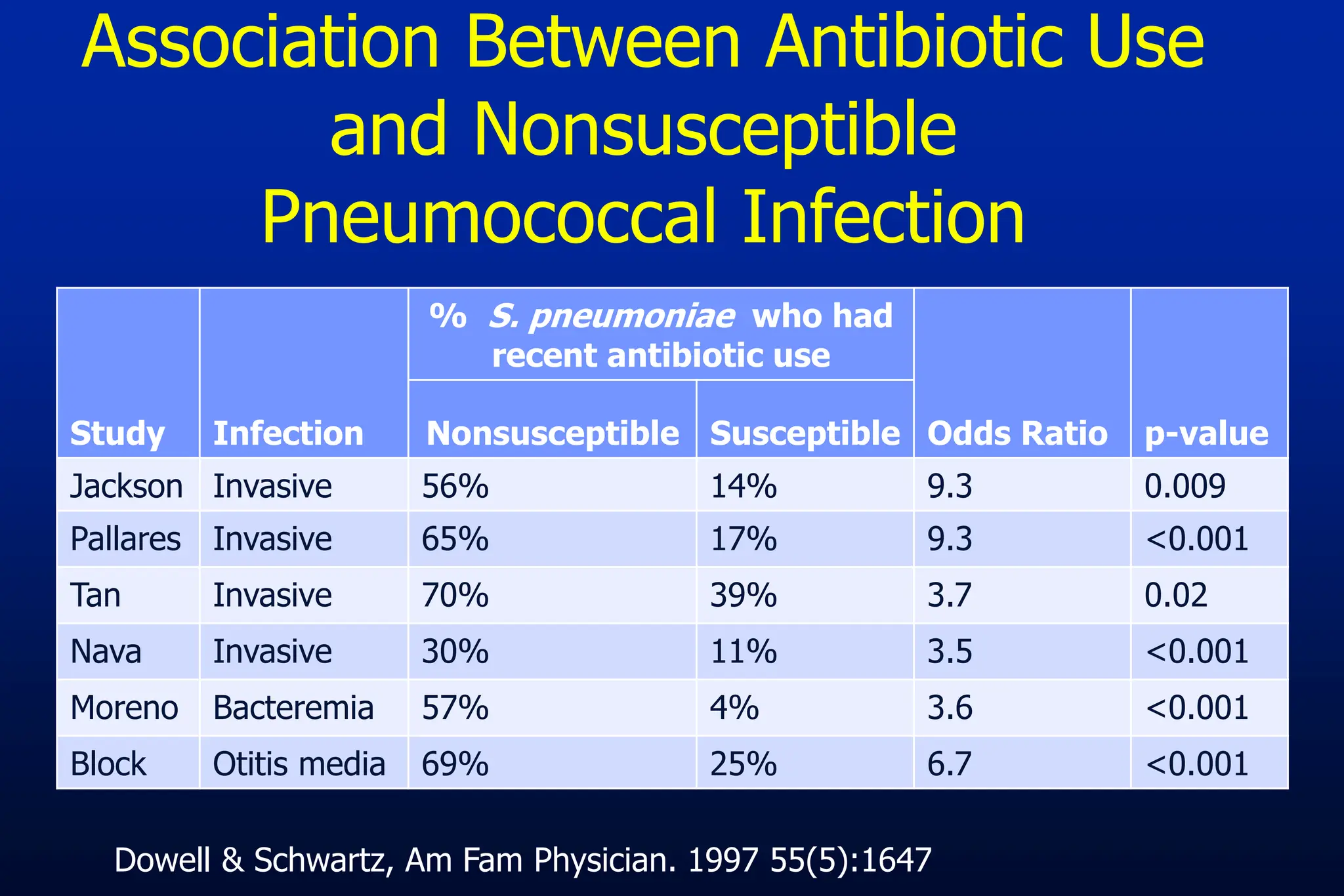
Association Between Antibiotic Use
and Nonsusceptible
Pneumococcal Infection
% S. pneumoniae who had
recent antibiotic use
Study Infection Nonsusceptible Susceptible Odds Ratio p-value
Jackson Invasive 56% 14% 9.3 0.009
Pallares Invasive 65% 17% 9.3 <0.001
Tan Invasive 70% 39% 3.7 0.02
Nava Invasive 30% 11% 3.5 <0.001
Moreno Bacteremia 57% 4% 3.6 <0.001
Block Otitis media 69% 25% 6.7 <0.001
Dowell & Schwartz, Am Fam Physician. 1997 55(5):1647
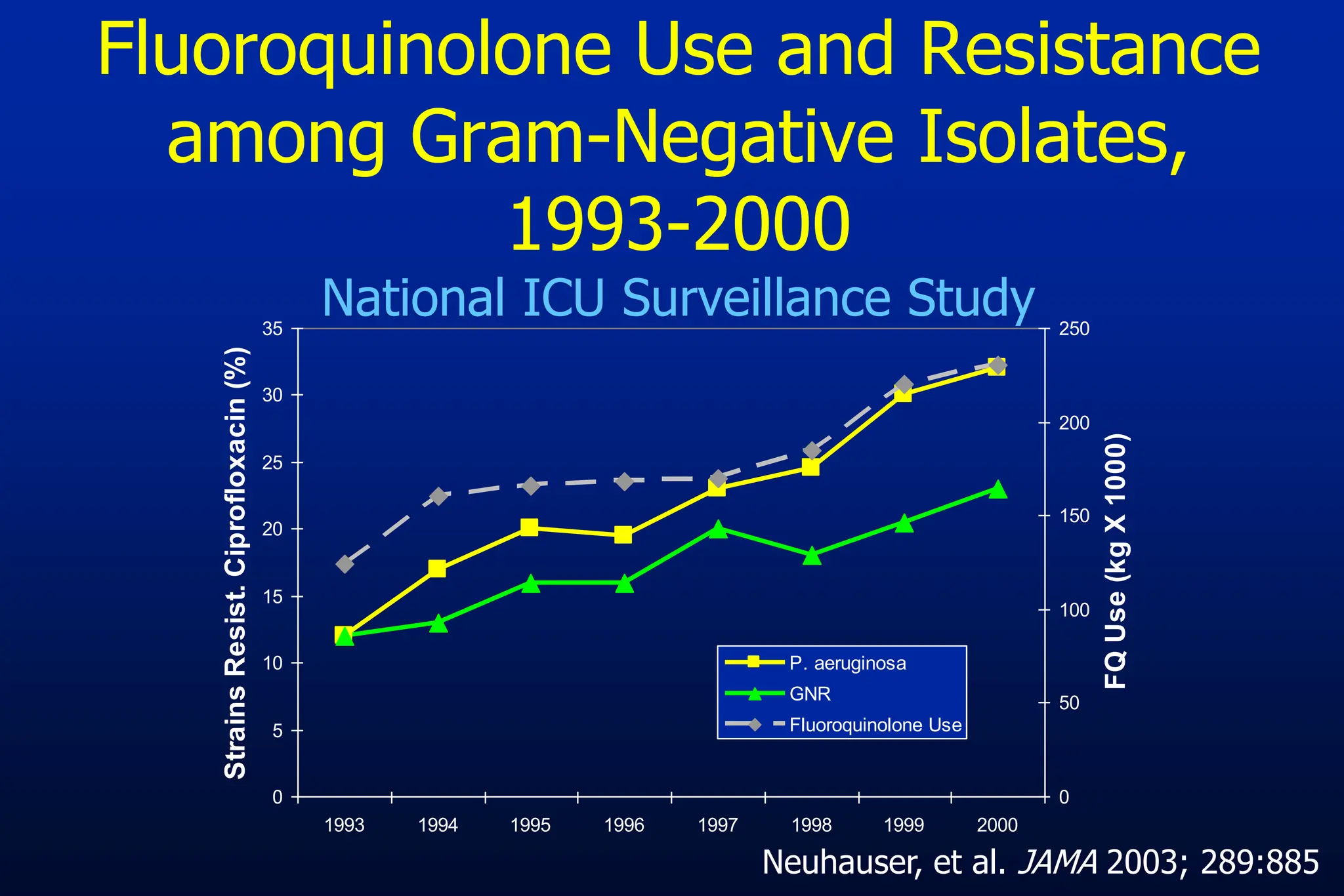
Fluoroquinolone Use and Resistance
among Gram-Negative Isolates,
1993-2000
National ICU Surveillance Study
0
5
10
15
20
25
30
35
1993 1994 1995 1996 1997 1998 1999 2000
Strains
Resist.
Ciprofloxacin
(%)
0
50
100
150
200
250
FQ
Use
(kg
X
1000)
P. aeruginosa
GNR
Fluoroquinolone Use
Neuhauser, et al. JAMA 2003; 289:885
Limited Number of New Antibiotics to
Combat Antibiotic Resistance
New Systemic Antibiotics Approved by the FDA
Clin Infect Dis. 2011;52:S397-S428
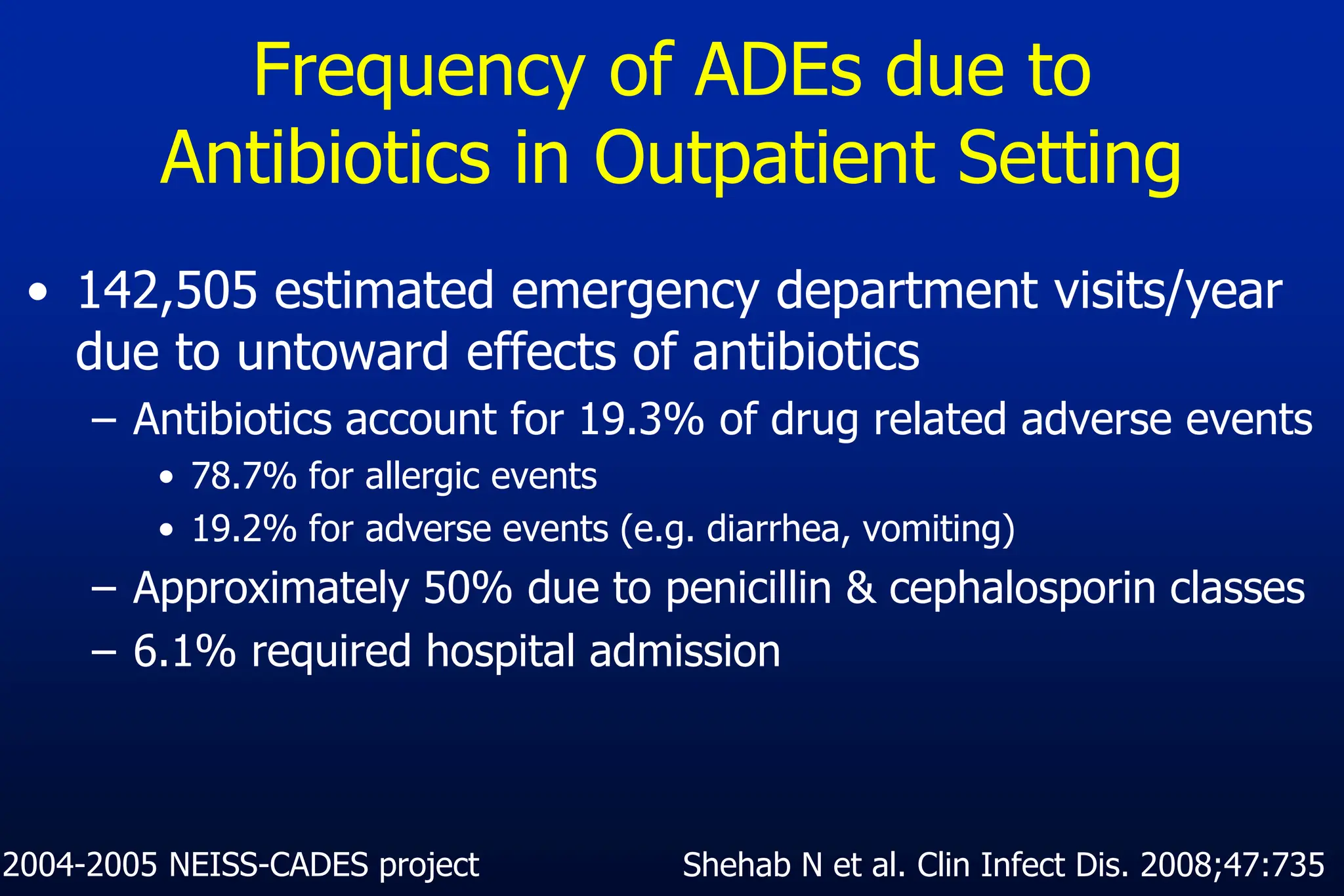
Frequency of ADEs due to
Antibiotics in Outpatient Setting
• 142,505 estimated emergency department visits/year
due to untoward effects of antibiotics
– Antibiotics account for 19.3% of drug related adverse events
• 78.7% for allergic events
• 19.2% for adverse events (e.g. diarrhea, vomiting)
– Approximately 50% due to penicillin & cephalosporin classes
– 6.1% required hospital admission
2004-2005 NEISS-CADES project Shehab N et al. Clin Infect Dis. 2008;47:735
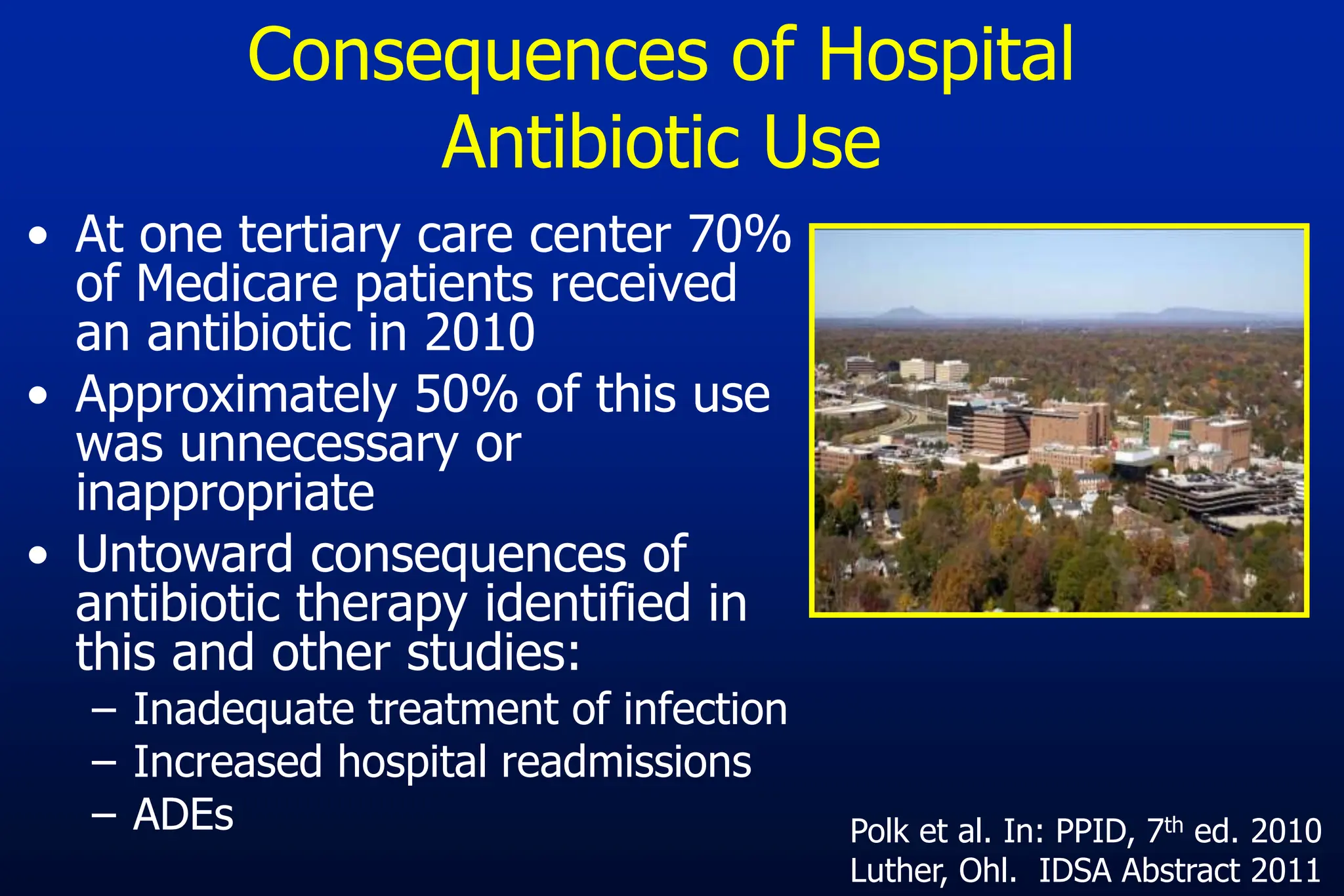
Consequences of Hospital
Antibiotic Use
• At one tertiary care center 70%
of Medicare patients received
an antibiotic in 2010
• Approximately 50% of this use
was unnecessary or
inappropriate
• Untoward consequences of
antibiotic therapy identified in
this and other studies:
– Inadequate treatment of infection
– Increased hospital readmissions
– ADEs Polk et al. In: PPID, 7th ed. 2010
Luther, Ohl. IDSA Abstract 2011
Outline
• Introduction
• Untoward Effects of Antibiotics
• Antibiotic Stewardship
• Principles of Antibiotic Selection
• Tenets of Appropriate Antibiotic Use
• Conclusion
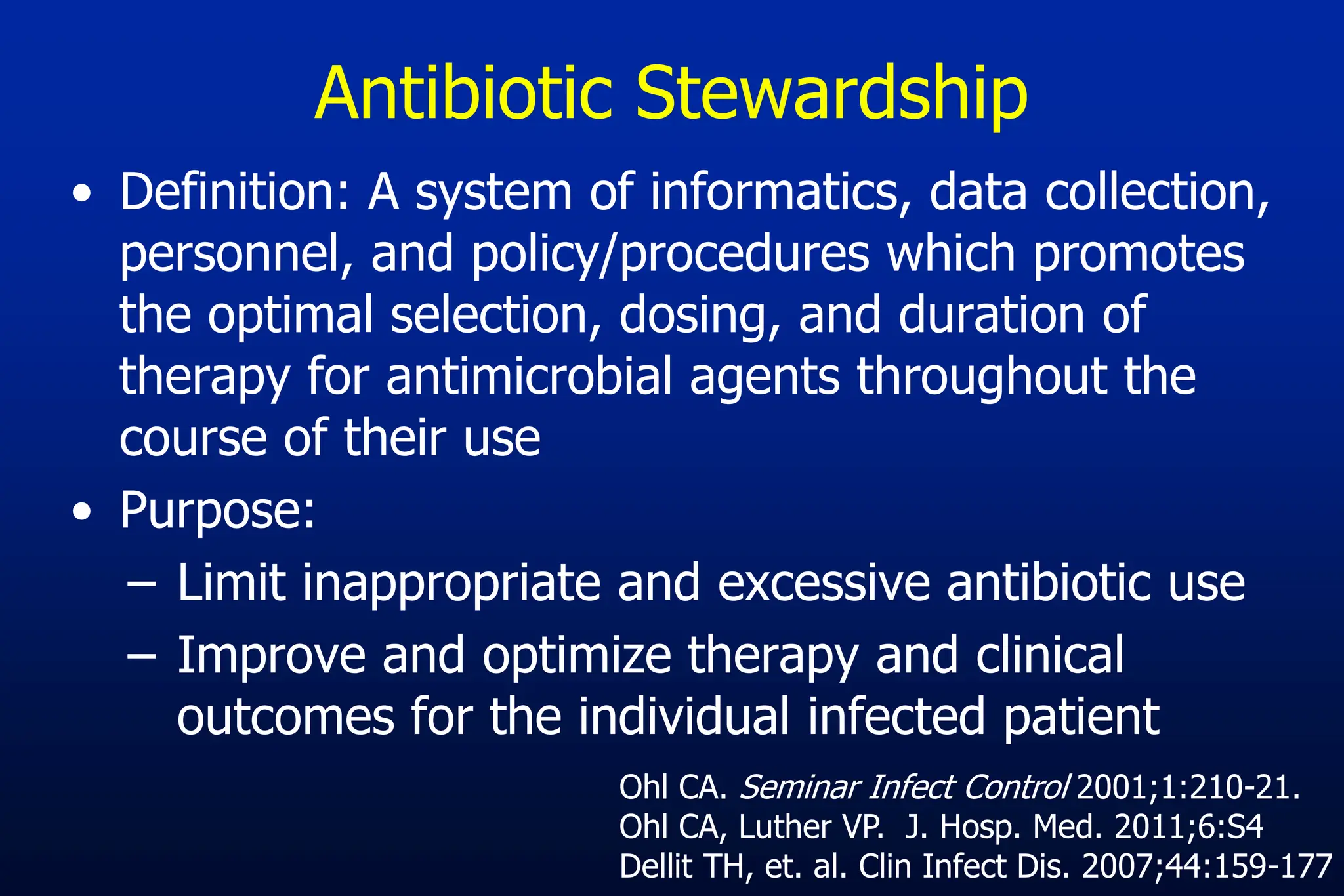
Antibiotic Stewardship
• Definition: A system of informatics, data collection,
personnel, and policy/procedures which promotes
the optimal selection, dosing, and duration of
therapy for antimicrobial agents throughout the
course of their use
• Purpose:
– Limit inappropriate and excessive antibiotic use
– Improve and optimize therapy and clinical
outcomes for the individual infected patient
Ohl CA. Seminar Infect Control 2001;1:210-21.
Ohl CA, Luther VP. J. Hosp. Med. 2011;6:S4
Dellit TH, et. al. Clin Infect Dis. 2007;44:159-177
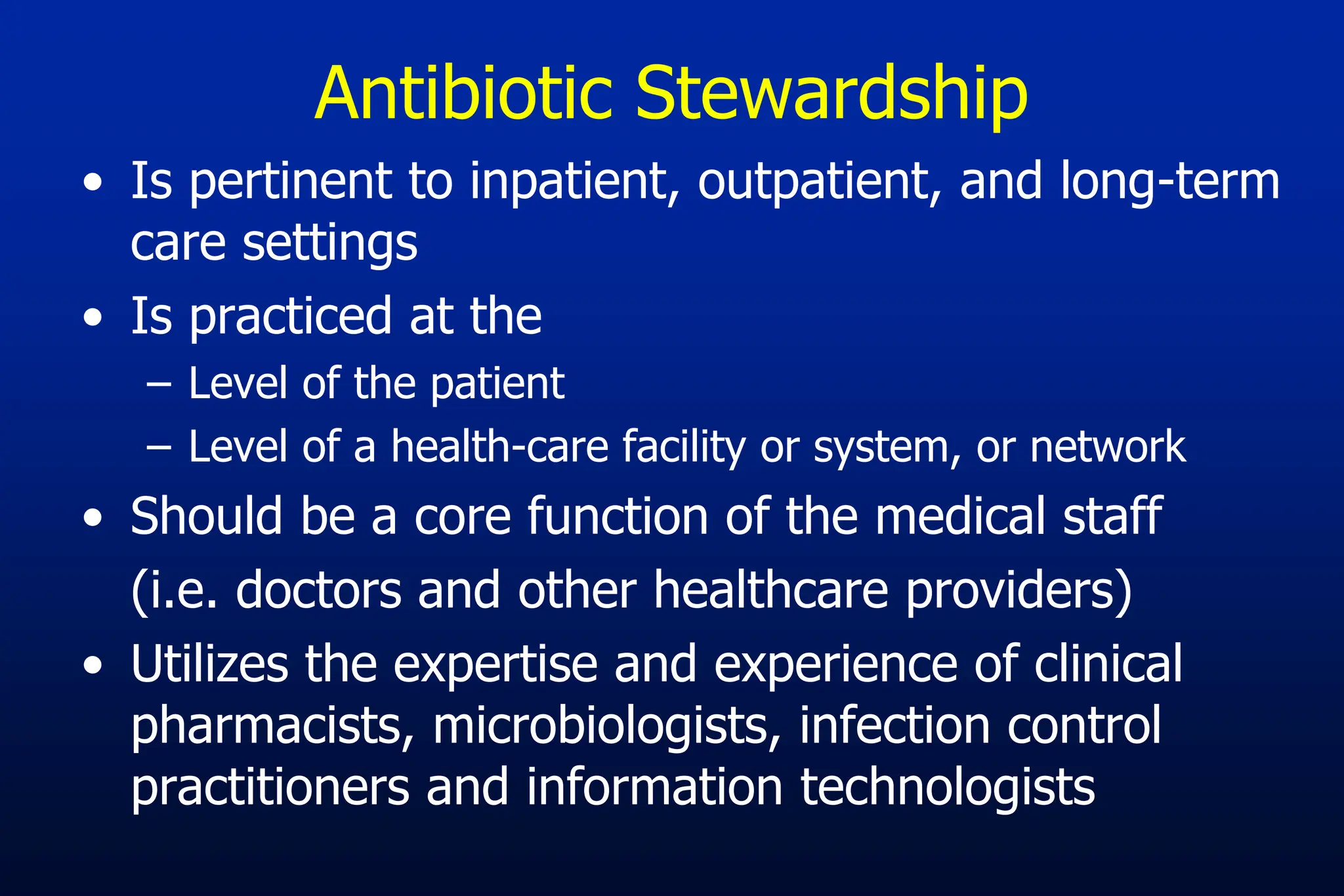
• Is pertinent to inpatient, outpatient, and long-term
care settings
• Is practiced at the
– Level of the patient
– Level of a health-care facility or system, or network
• Should be a core function of the medical staff
(i.e. doctors and other healthcare providers)
• Utilizes the expertise and experience of clinical
pharmacists, microbiologists, infection control
practitioners and information technologists
Antibiotic Stewardship
Six Goals of Antibiotic
Stewardship Programs
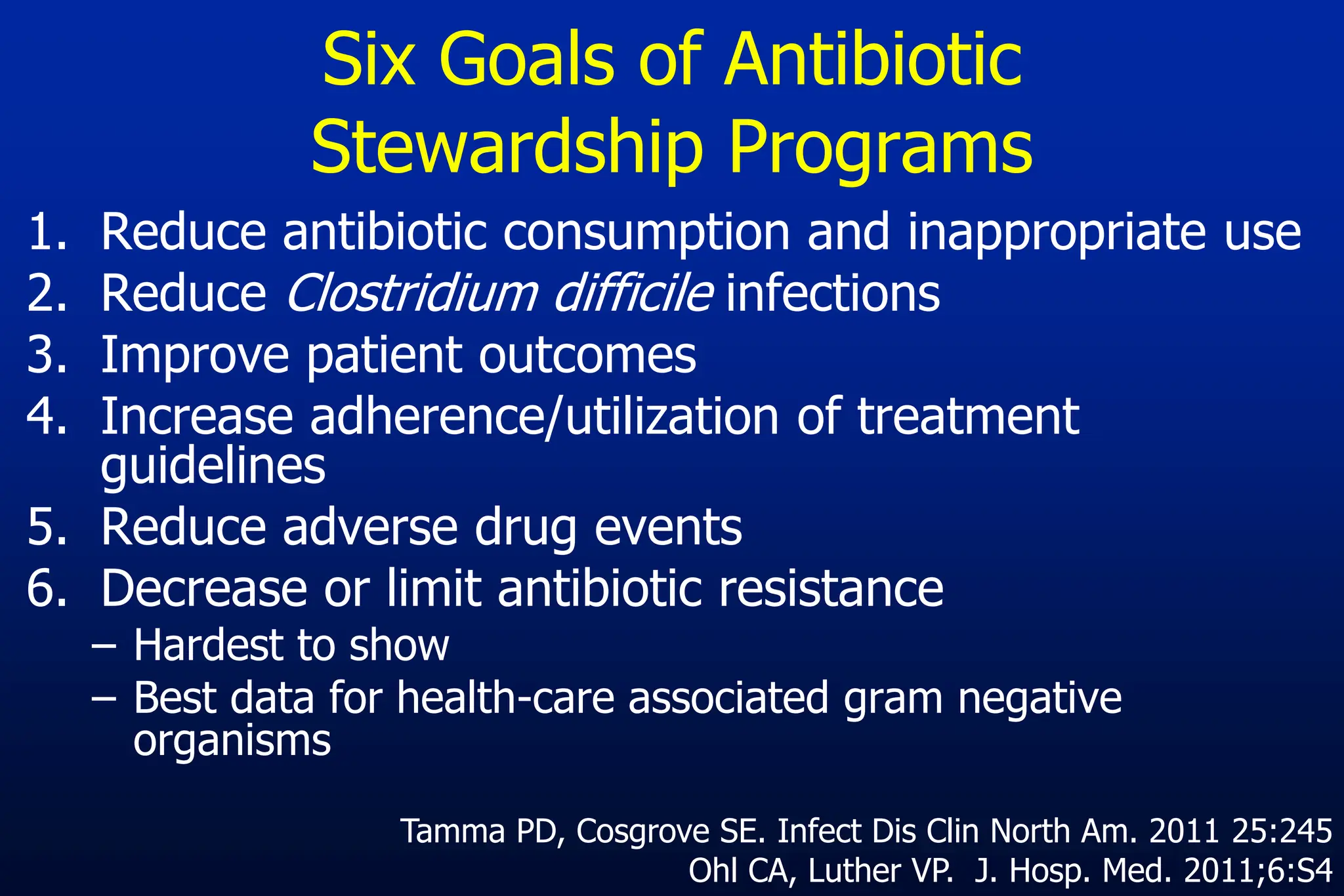
1. Reduce antibiotic consumption and inappropriate use
2. Reduce Clostridium difficile infections
3. Improve patient outcomes
4. Increase adherence/utilization of treatment
guidelines
5. Reduce adverse drug events
6. Decrease or limit antibiotic resistance
– Hardest to show
– Best data for health-care associated gram negative
organisms
Tamma PD, Cosgrove SE. Infect Dis Clin North Am. 2011 25:245
Ohl CA, Luther VP. J. Hosp. Med. 2011;6:S4
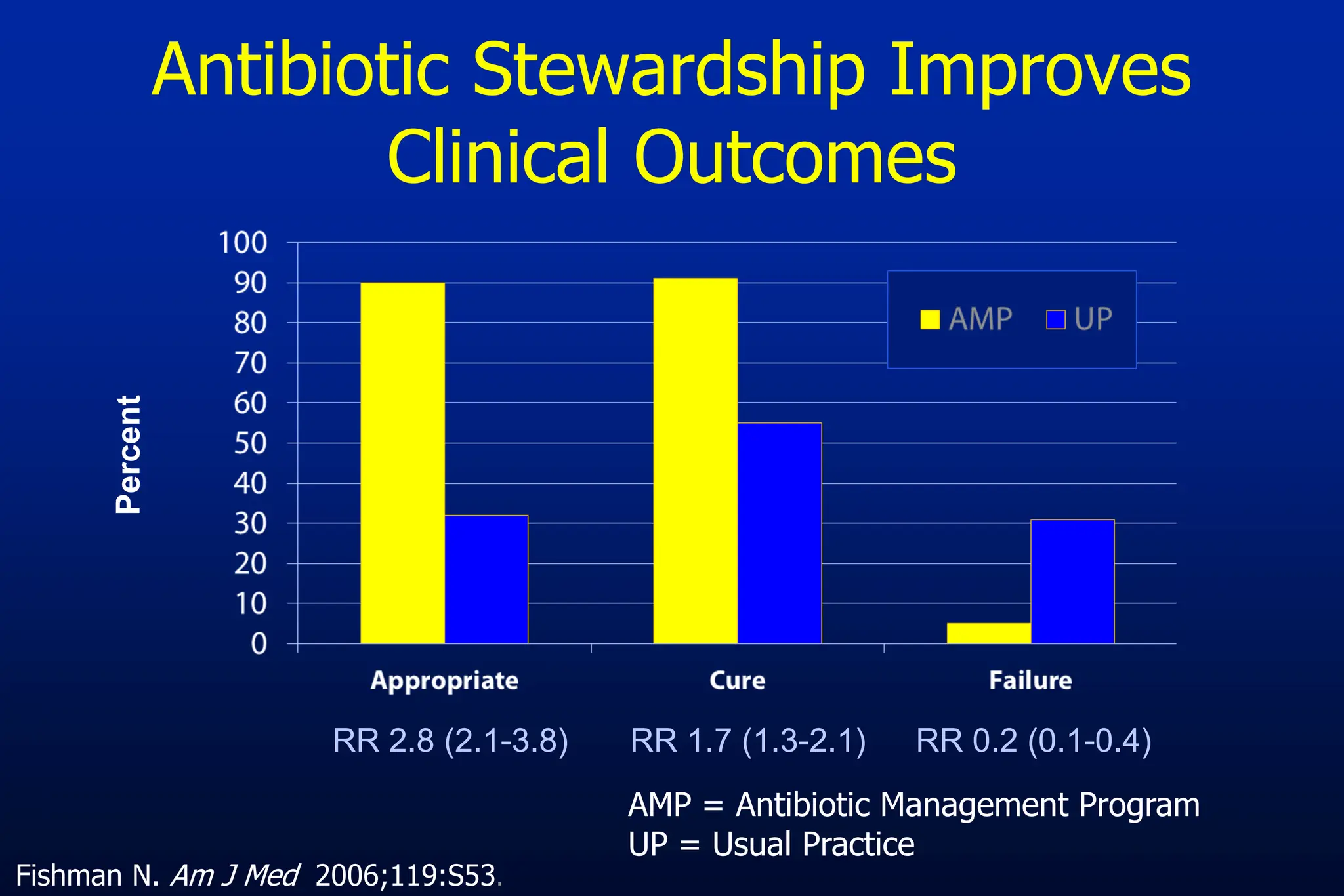
Antibiotic Stewardship Improves
Clinical Outcomes
RR 2.8 (2.1-3.8) RR 1.7 (1.3-2.1) RR 0.2 (0.1-0.4)
Percent
AMP = Antibiotic Management Program
UP = Usual Practice
Fishman N. Am J Med 2006;119:S53.
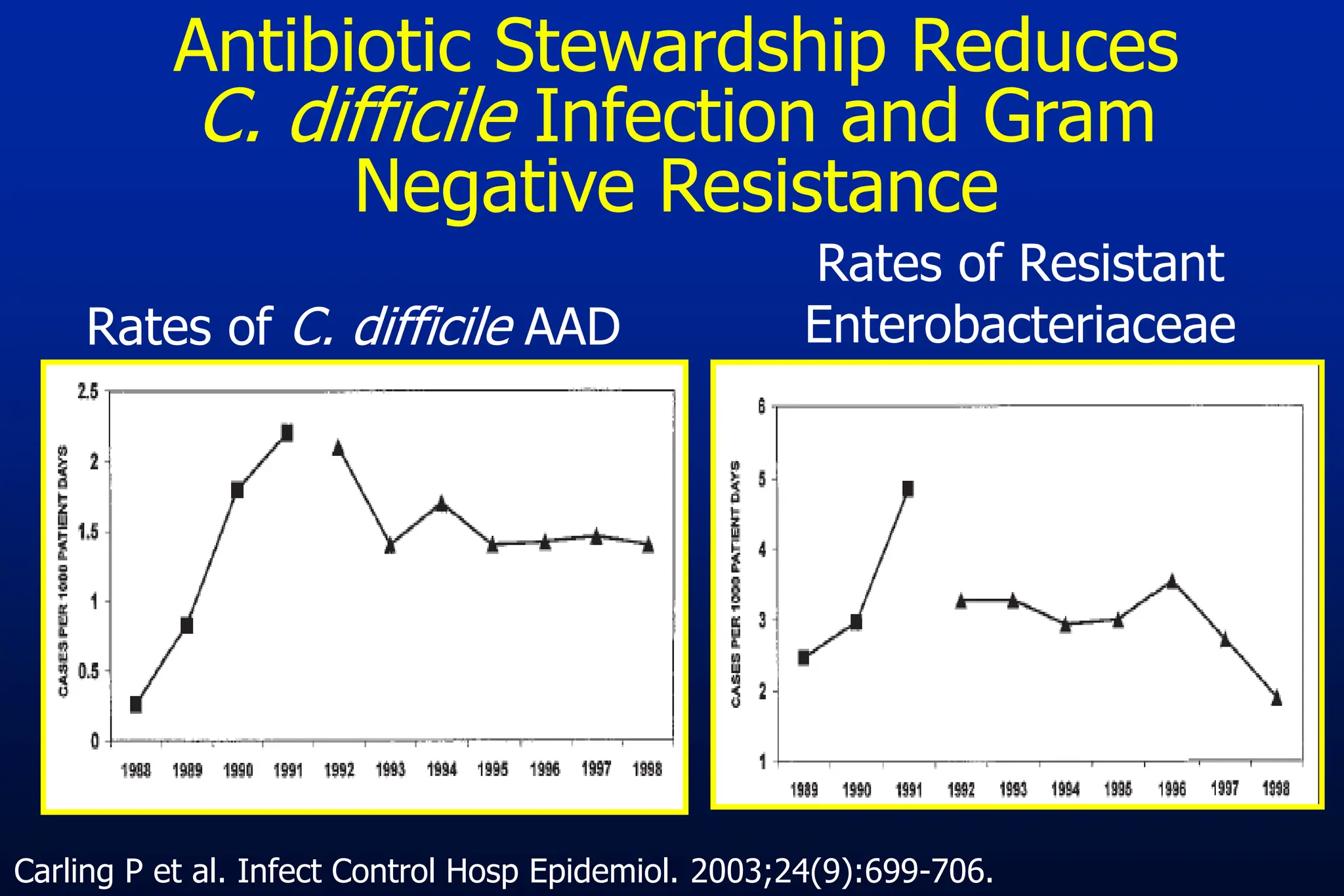
Rates of C. difficile AAD
Rates of Resistant
Enterobacteriaceae
Carling P et al. Infect Control Hosp Epidemiol. 2003;24(9):699-706.
Antibiotic Stewardship Reduces
C. difficile Infection and Gram
Negative Resistance
Outline
• Introduction
• Untoward Effects of Antibiotics
• Antibiotic Stewardship
• Principles of Antibiotic Selection
• Tenets of Appropriate Antibiotic Use
• Conclusion
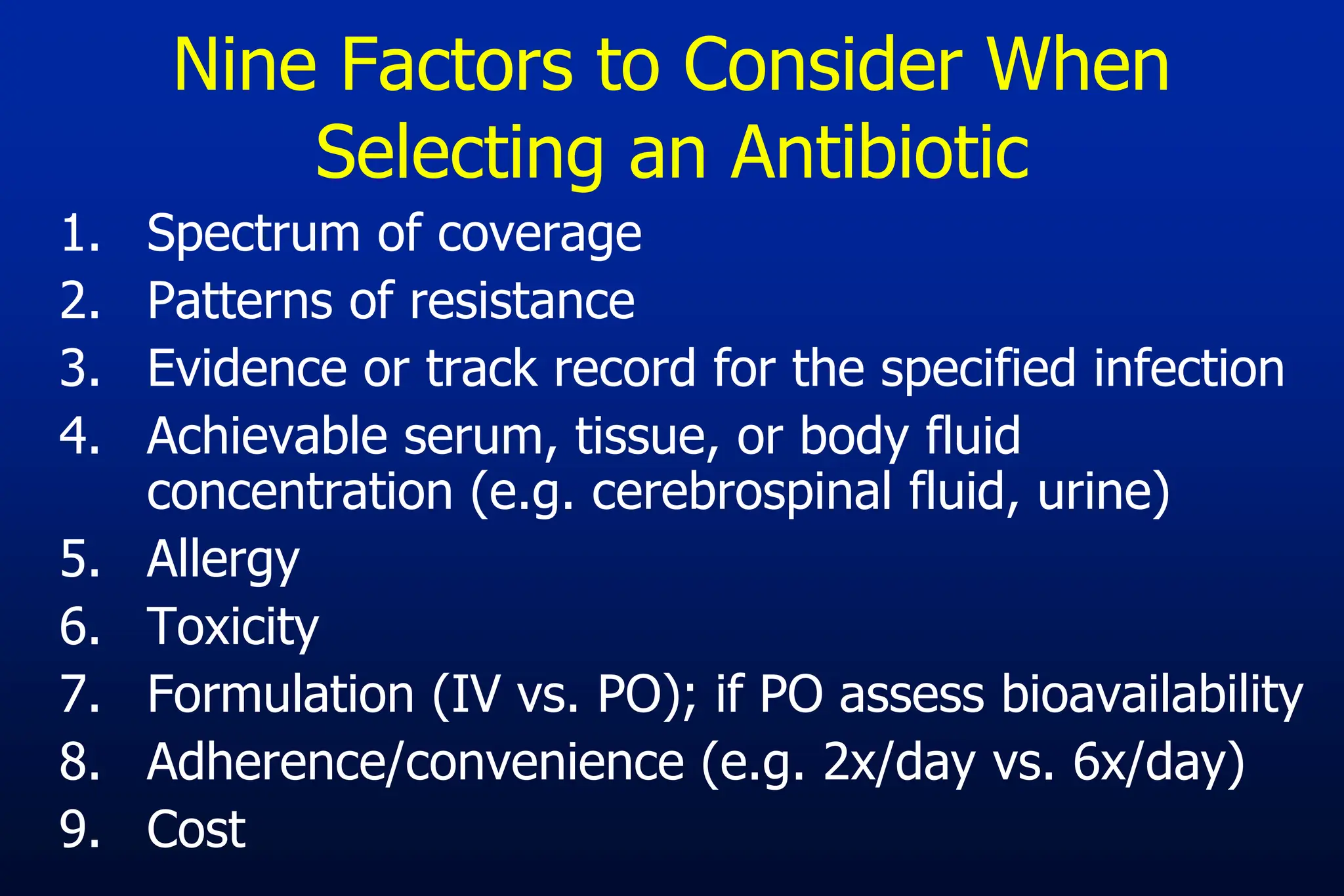
Nine Factors to Consider When
Selecting an Antibiotic
1. Spectrum of coverage
2. Patterns of resistance
3. Evidence or track record for the specified infection
4. Achievable serum, tissue, or body fluid
concentration (e.g. cerebrospinal fluid, urine)
5. Allergy
6. Toxicity
7. Formulation (IV vs. PO); if PO assess bioavailability
8. Adherence/convenience (e.g. 2x/day vs. 6x/day)
9. Cost
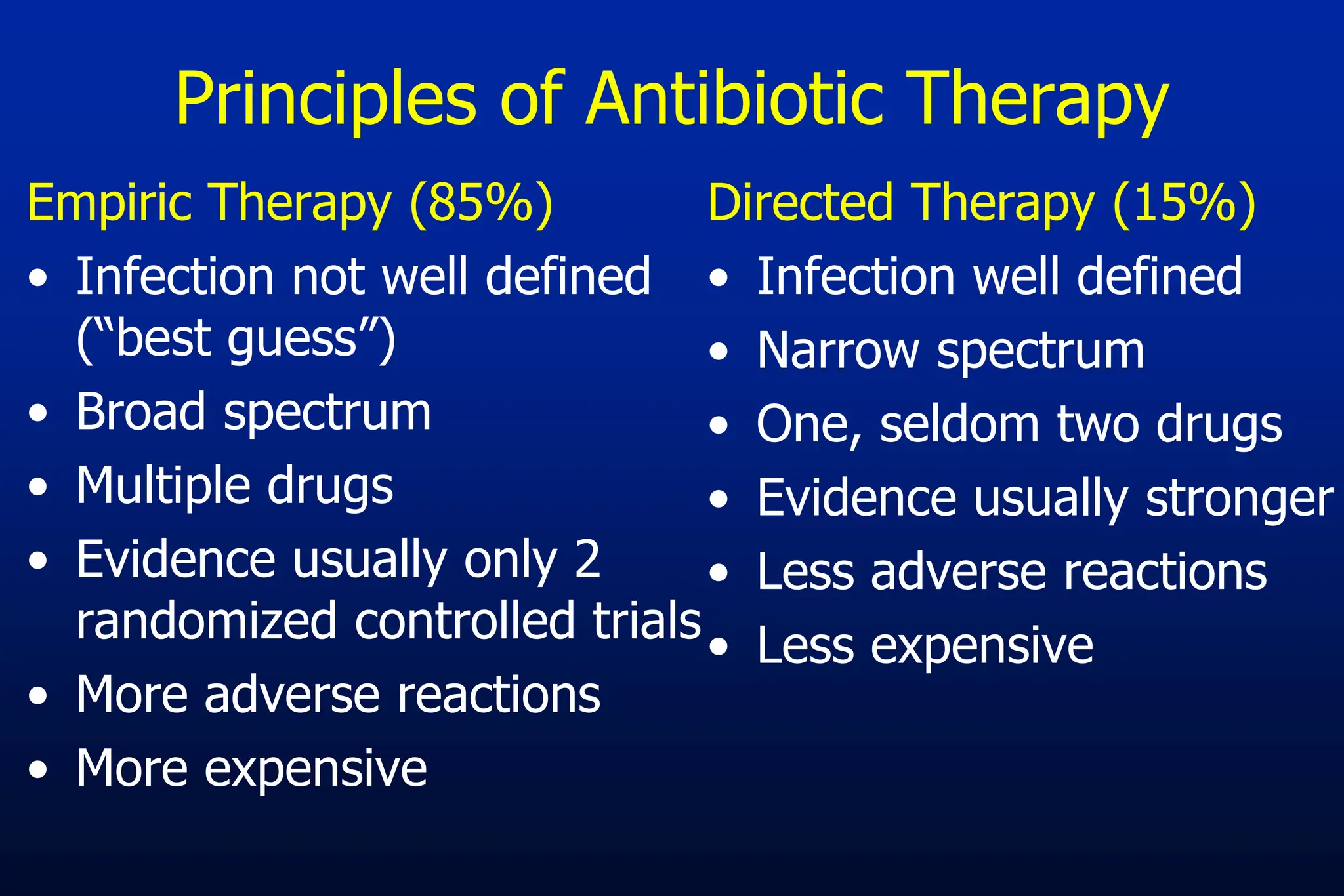
Principles of Antibiotic Therapy
Directed Therapy (15%)
• Infection well defined
• Narrow spectrum
• One, seldom two drugs
• Evidence usually stronger
• Less adverse reactions
• Less expensive
Empiric Therapy (85%)
• Infection not well defined
(“best guess”)
• Broad spectrum
• Multiple drugs
• Evidence usually only 2
randomized controlled trials
• More adverse reactions
• More expensive
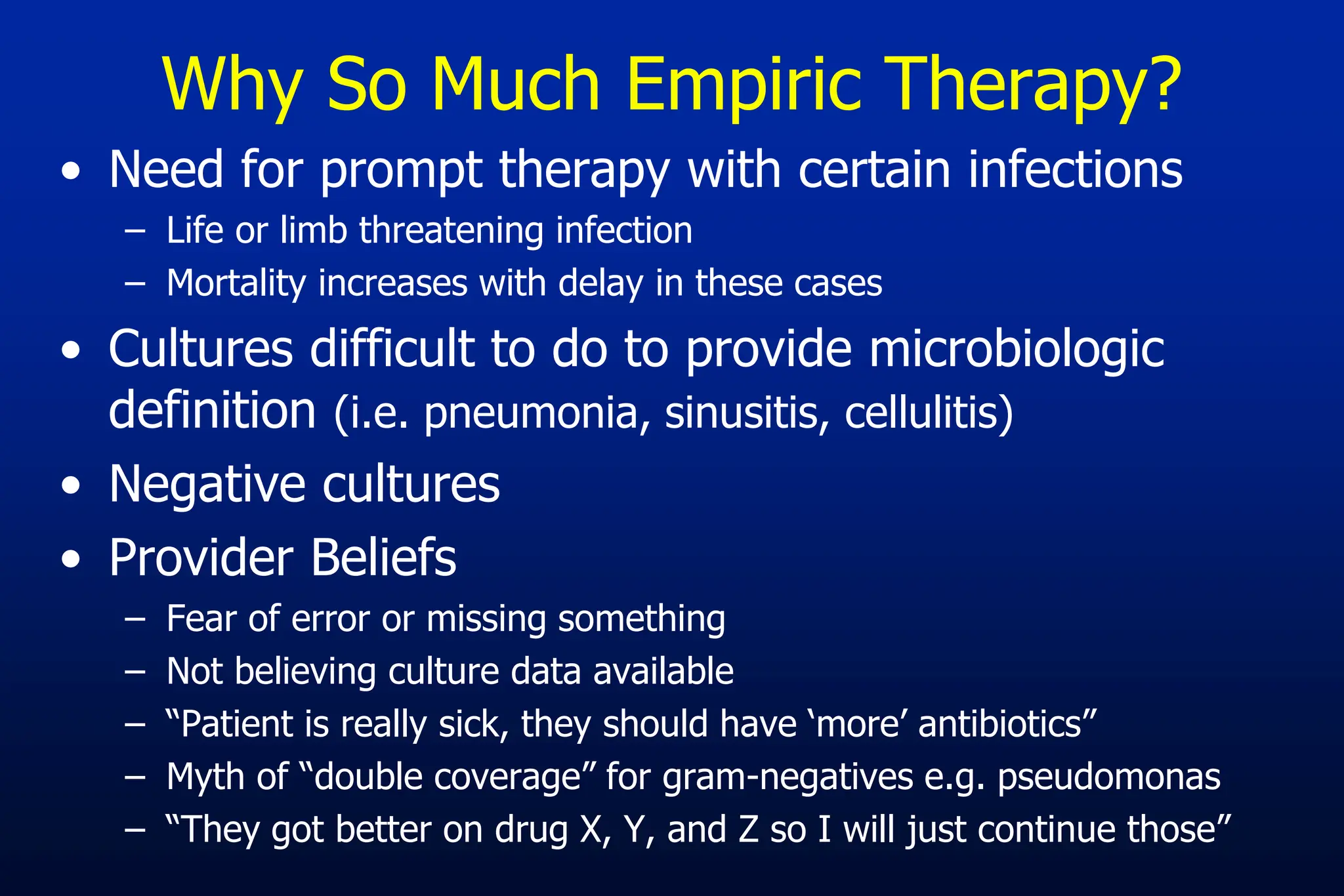
Why So Much Empiric Therapy?
• Need for prompt therapy with certain infections
– Life or limb threatening infection
– Mortality increases with delay in these cases
• Cultures difficult to do to provide microbiologic
definition (i.e. pneumonia, sinusitis, cellulitis)
• Negative cultures
• Provider Beliefs
– Fear of error or missing something
– Not believing culture data available
– “Patient is really sick, they should have ‘more’ antibiotics”
– Myth of “double coverage” for gram-negatives e.g. pseudomonas
– “They got better on drug X, Y, and Z so I will just continue those”
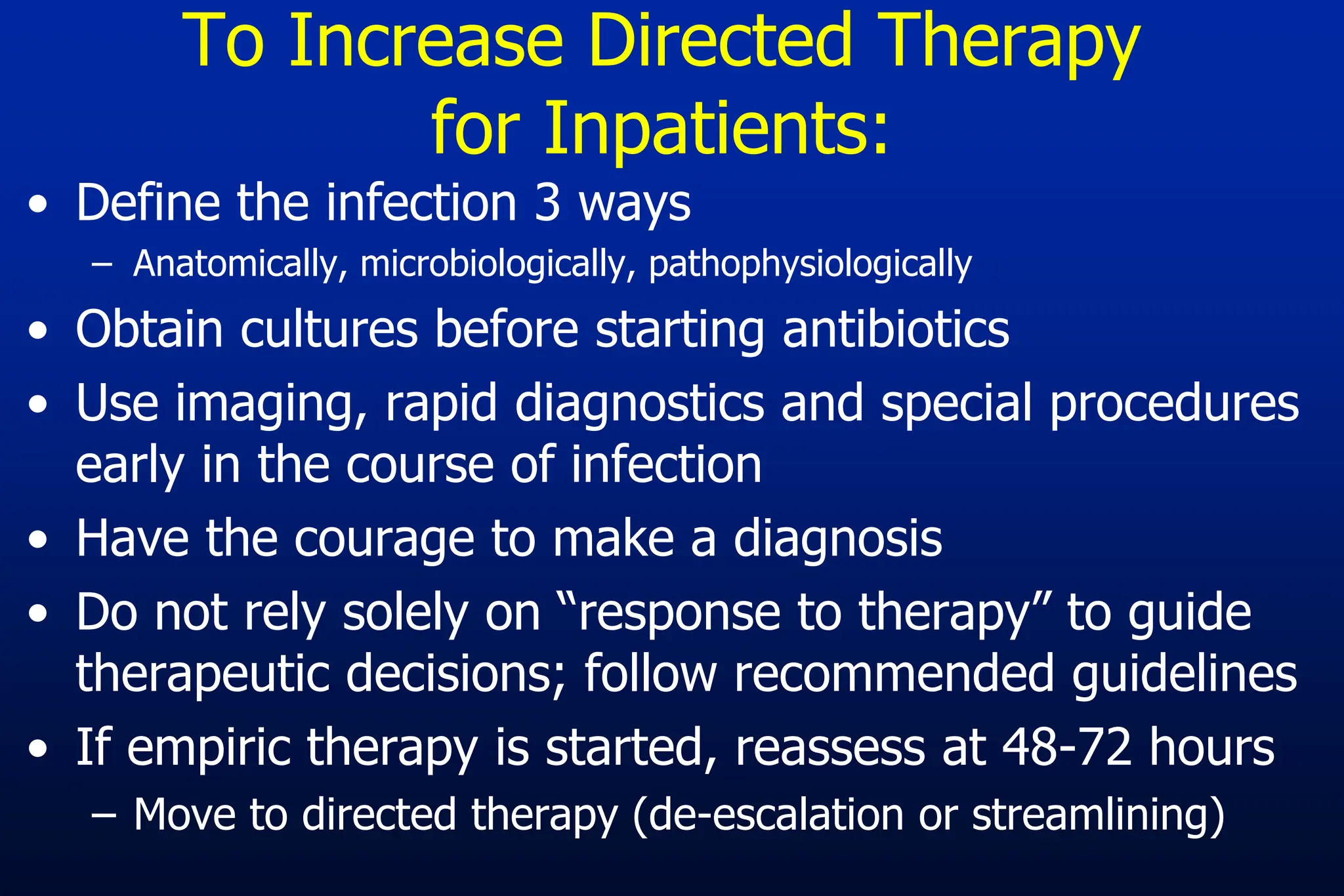
To Increase Directed Therapy
for Inpatients:
• Define the infection 3 ways
– Anatomically, microbiologically, pathophysiologically
• Obtain cultures before starting antibiotics
• Use imaging, rapid diagnostics and special procedures
early in the course of infection
• Have the courage to make a diagnosis
• Do not rely solely on “response to therapy” to guide
therapeutic decisions; follow recommended guidelines
• If empiric therapy is started, reassess at 48-72 hours
– Move to directed therapy (de-escalation or streamlining)
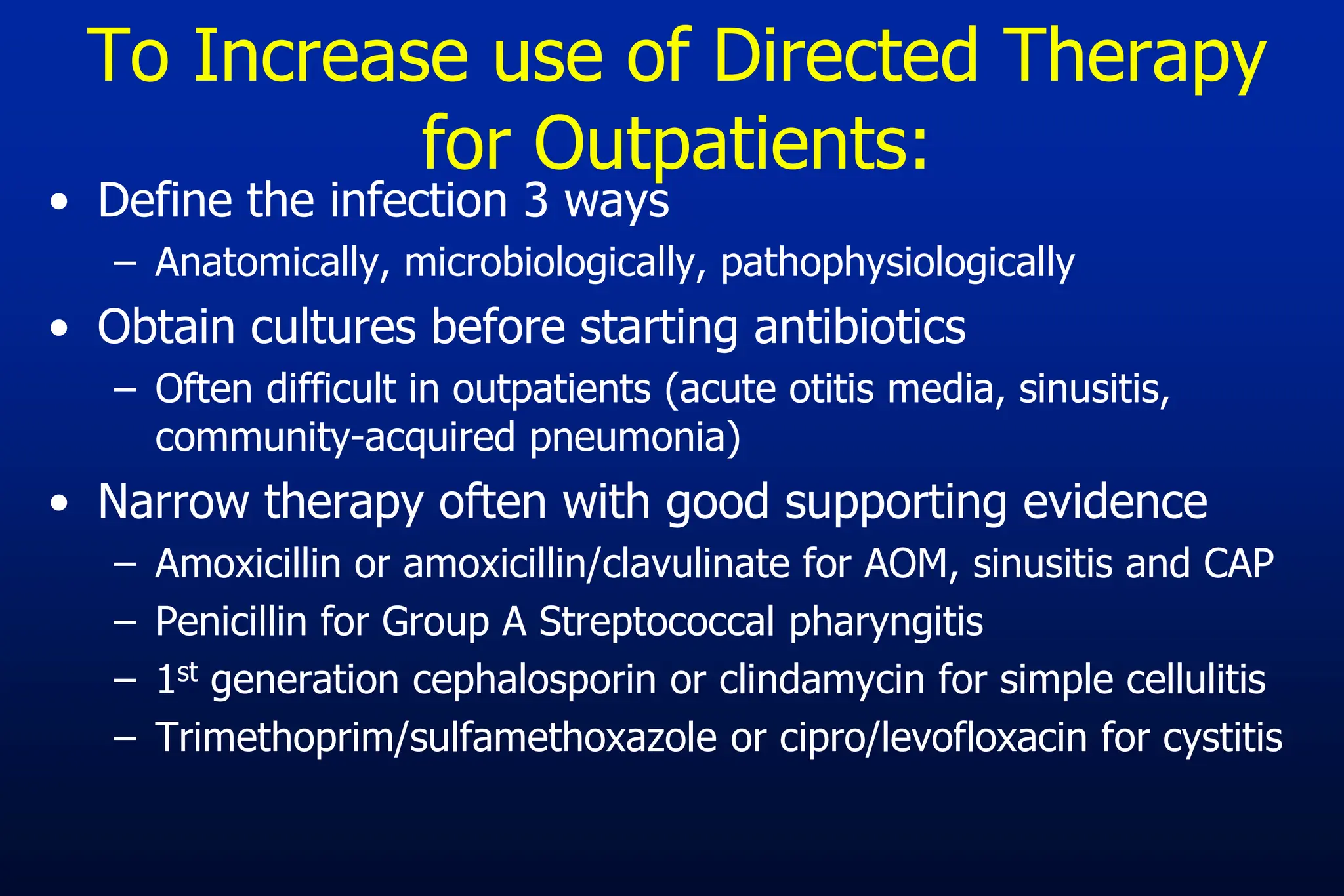
To Increase use of Directed Therapy
for Outpatients:
• Define the infection 3 ways
– Anatomically, microbiologically, pathophysiologically
• Obtain cultures before starting antibiotics
– Often difficult in outpatients (acute otitis media, sinusitis,
community-acquired pneumonia)
• Narrow therapy often with good supporting evidence
– Amoxicillin or amoxicillin/clavulinate for AOM, sinusitis and CAP
– Penicillin for Group A Streptococcal pharyngitis
– 1st generation cephalosporin or clindamycin for simple cellulitis
– Trimethoprim/sulfamethoxazole or cipro/levofloxacin for cystitis
Outline
• Introduction
• Untoward Effects of Antibiotics
• Antibiotic Stewardship
• Principles of Antibiotic Selection
• Tenets of Appropriate Antibiotic Use
• Conclusion
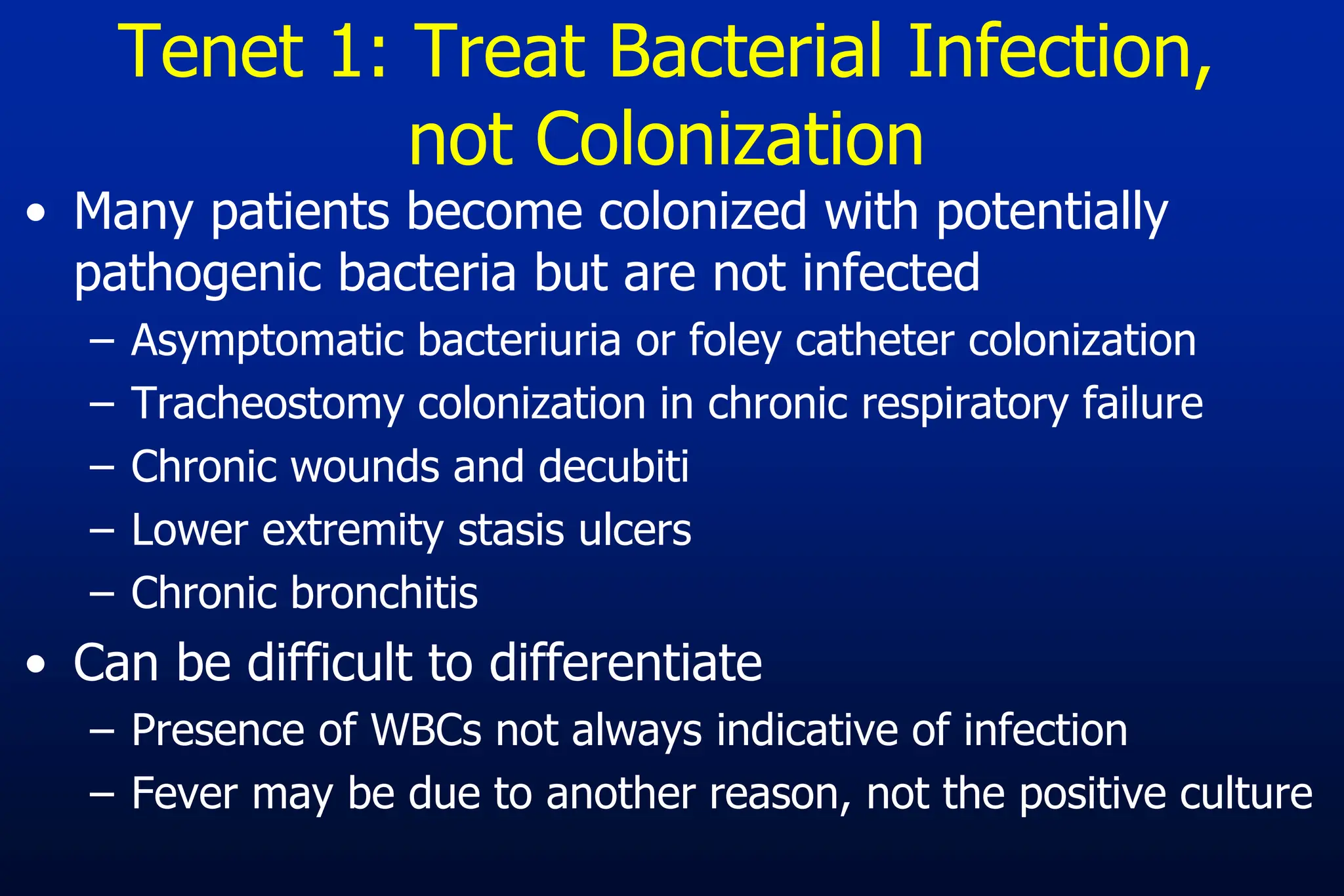
Tenet 1: Treat Bacterial Infection,
not Colonization
• Many patients become colonized with potentially
pathogenic bacteria but are not infected
– Asymptomatic bacteriuria or foley catheter colonization
– Tracheostomy colonization in chronic respiratory failure
– Chronic wounds and decubiti
– Lower extremity stasis ulcers
– Chronic bronchitis
• Can be difficult to differentiate
– Presence of WBCs not always indicative of infection
– Fever may be due to another reason, not the positive culture
Tenet 1: Treat Bacterial Infection,
not Colonization
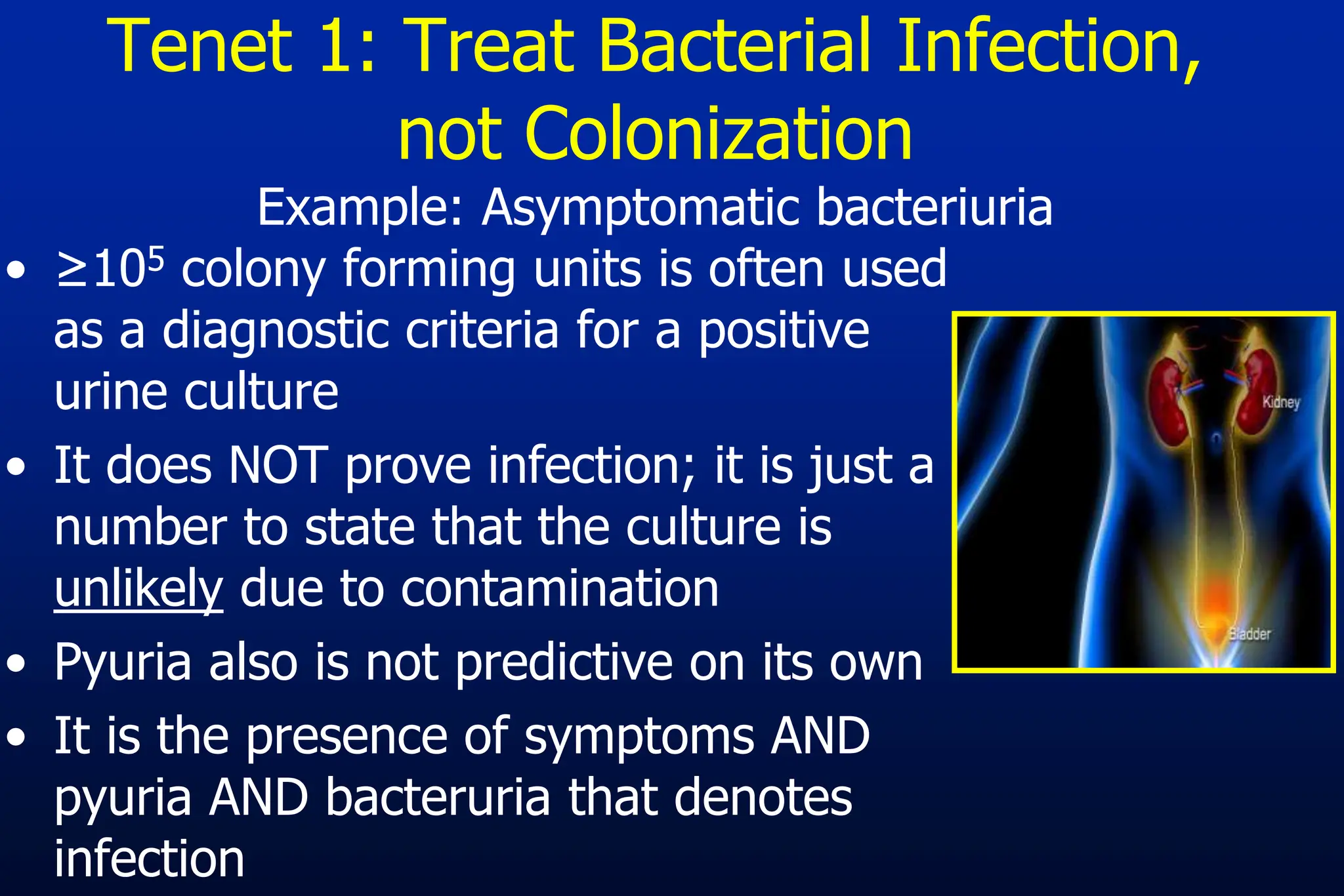
Example: Asymptomatic bacteriuria
• ≥105 colony forming units is often used
as a diagnostic criteria for a positive
urine culture
• It does NOT prove infection; it is just a
number to state that the culture is
unlikely due to contamination
• Pyuria also is not predictive on its own
• It is the presence of symptoms AND
pyuria AND bacteruria that denotes
infection
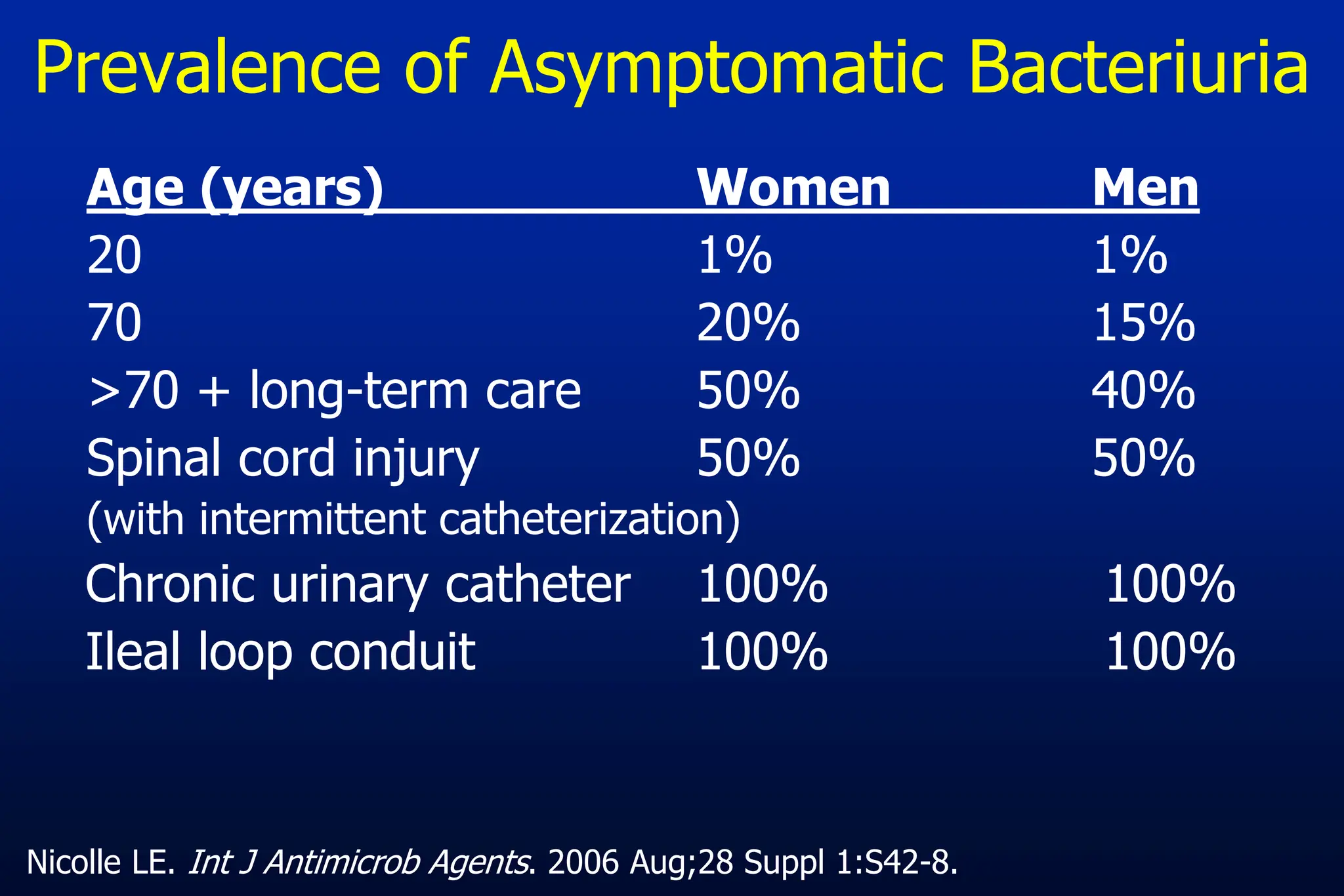
Prevalence of Asymptomatic Bacteriuria
Age (years) Women Men
20 1% 1%
70 20% 15%
>70 + long-term care 50% 40%
Spinal cord injury 50% 50%
(with intermittent catheterization)
Chronic urinary catheter 100% 100%
Ileal loop conduit 100% 100%
Nicolle LE. Int J Antimicrob Agents. 2006 Aug;28 Suppl 1:S42-8.
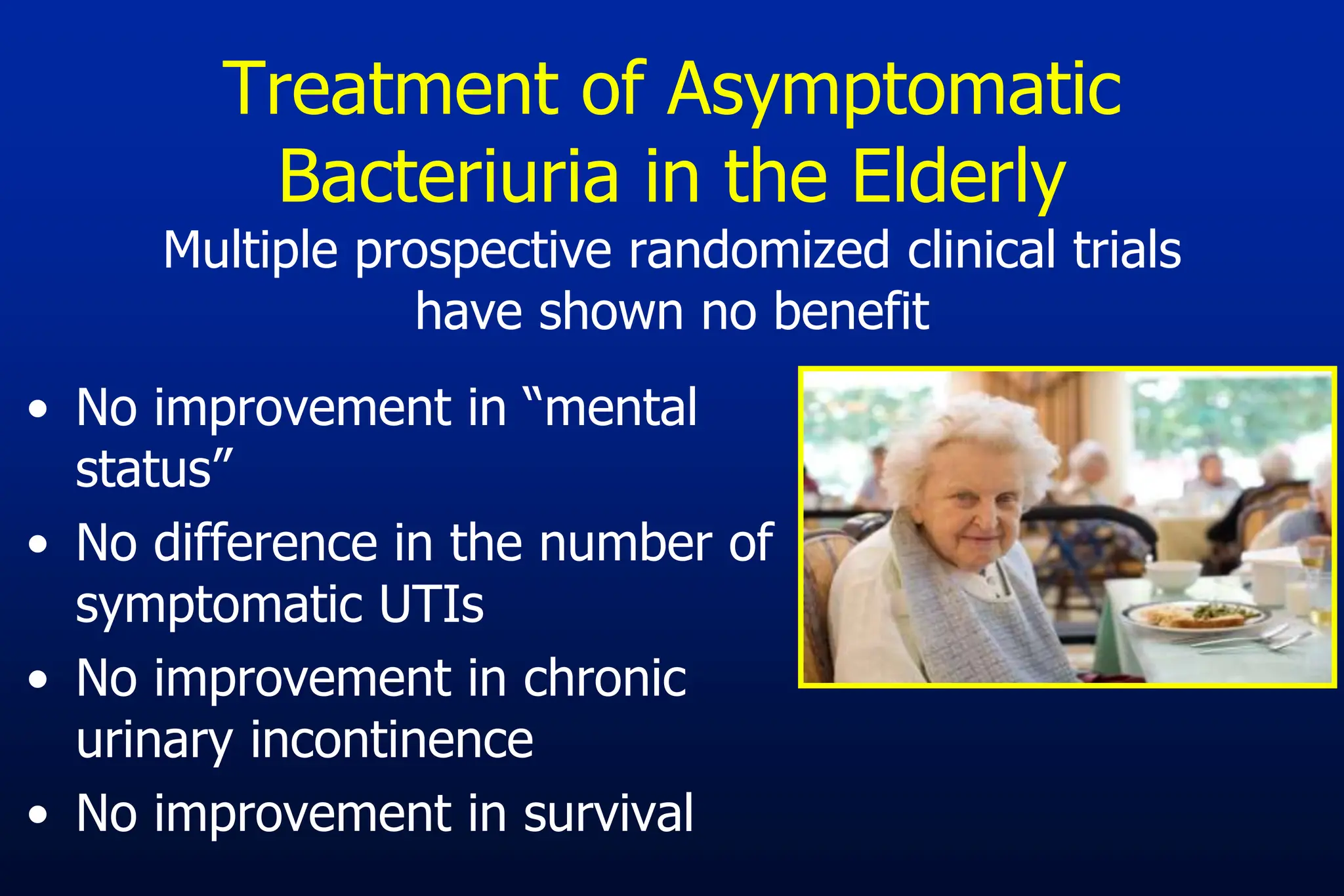
Treatment of Asymptomatic
Bacteriuria in the Elderly
Multiple prospective randomized clinical trials
have shown no benefit
• No improvement in “mental
status”
• No difference in the number of
symptomatic UTIs
• No improvement in chronic
urinary incontinence
• No improvement in survival
Summary of Asymptomatic
Bacteriuria Treatment
• Treat symptomatic patients with pyuria and bacteriuria
• Don’t treat asymptomatic patients with pyuria and/or
bacteriuria
• Define the symptomatic infection anatomically
• Dysuria and frequency without fever equals cystitis
• Dysuria and frequency with fever, flank pain, and/or
nausea and vomiting equals pyelonephritis
• Remember prostatitis in the male with cystitis
symptoms
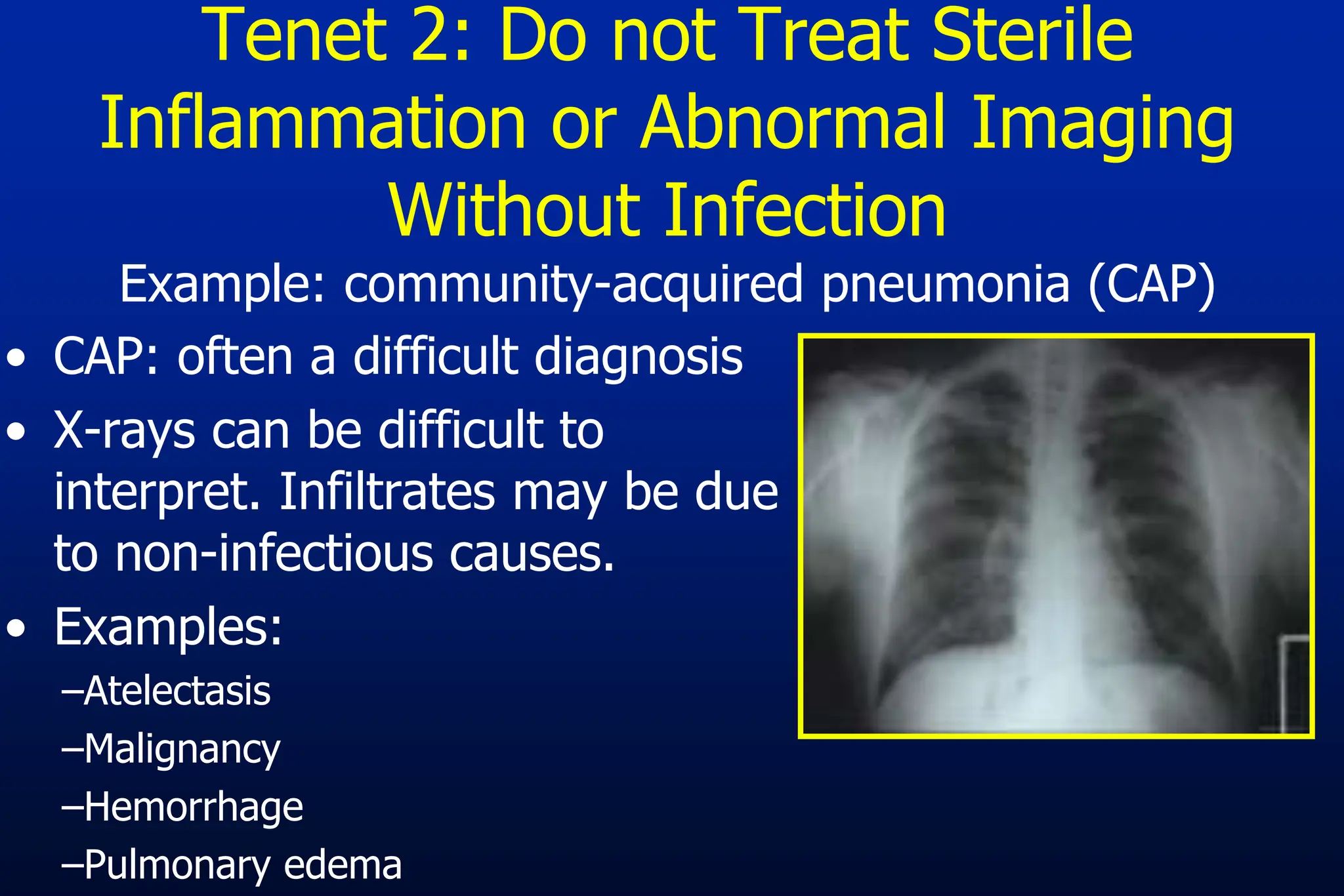
• CAP: often a difficult diagnosis
• X-rays can be difficult to
interpret. Infiltrates may be due
to non-infectious causes.
• Examples:
–Atelectasis
–Malignancy
–Hemorrhage
–Pulmonary edema
Tenet 2: Do not Treat Sterile
Inflammation or Abnormal Imaging
Without Infection
Example: community-acquired pneumonia (CAP)
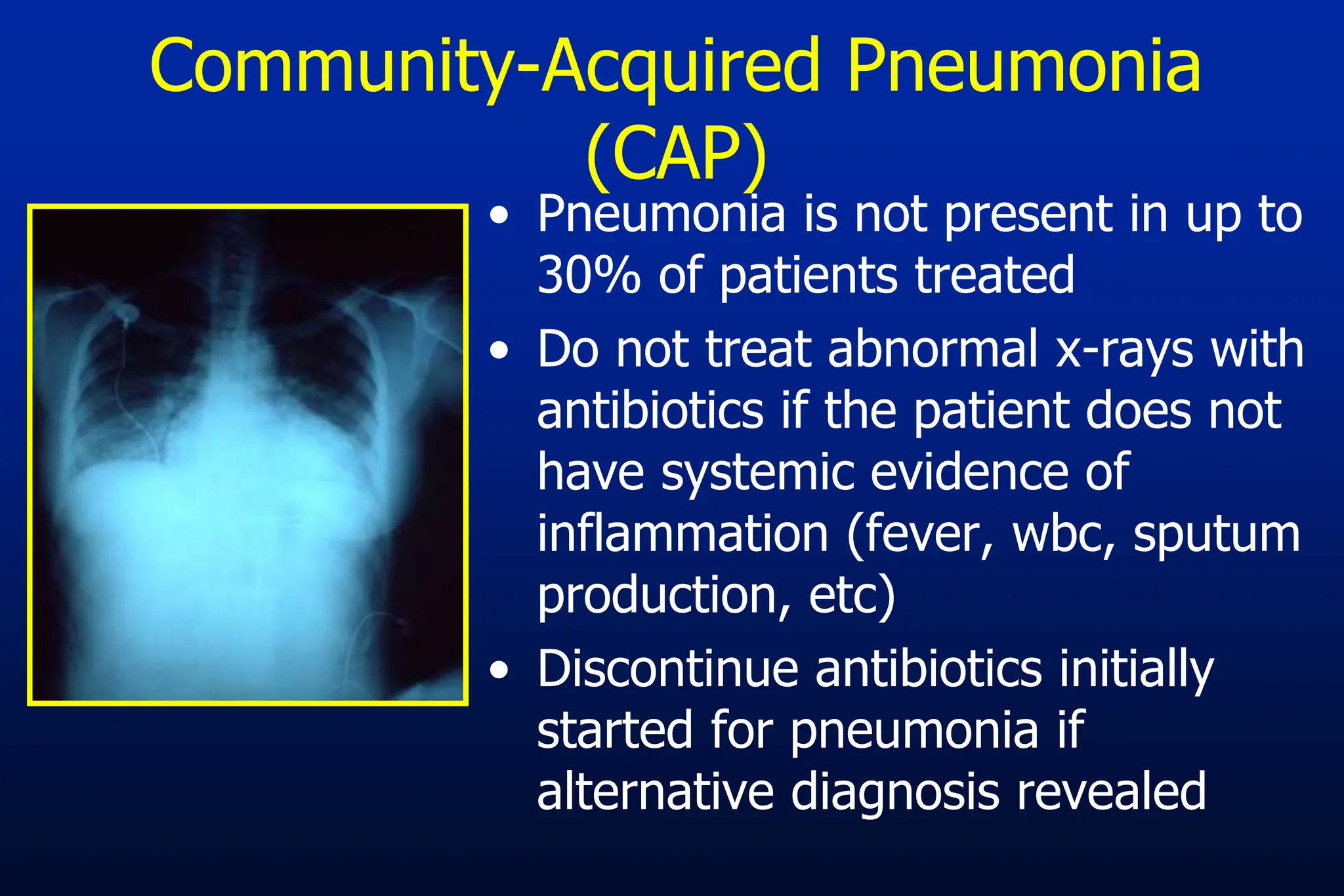
• Pneumonia is not present in up to
30% of patients treated
• Do not treat abnormal x-rays with
antibiotics if the patient does not
have systemic evidence of
inflammation (fever, wbc, sputum
production, etc)
• Discontinue antibiotics initially
started for pneumonia if
alternative diagnosis revealed
Community-Acquired Pneumonia
(CAP)
• Acute bronchitis
• Common colds
• Sinusitis with symptoms
less than 7 days
• Sinusitis not localized to
the maxillary sinuses
• Pharyngitis not due to
Group A Streptococcus spp.
Gonzales R, et al. Annals of Intern Med 2001;134:479
Gonzales R, et al. Annals of Intern Med 2001;134:400
Gonzales R, et al. Annals of Intern Med 2001;134:521
Tenet 3: Do not Treat Viral
Infections with Antibiotics
Tenet 4: Limit Duration of Antibiotic
Therapy to the Appropriate Length
• Ventilator-associated pneumonia: 8 days
• Most community-acquired pneumonia: 5 days
• Cystitis: 3 days
• Pyelonephritis: 7 days if fluoroquinolone used
• Intra-abdominal with source control: 4-7 days
• Cellulitis: 5-7 days
Hayashi Y, Paterson DL. Clin Infect Dis 2011; 52:1232
Other Tenets of Antibiotic Stewardship
• Re-evaluate, de-escalate or stop therapy at 48-72
hours based on diagnosis and microbiologic results
• Re-evaluate, de-escalate or stop therapy with
transitions of care (e.g. ICU to step-down or ward)
• Do not give antibiotic with overlapping activity
• Do not “double-cover” gram-negative rods (i.e.
Pseudomonas sp.) with 2 drugs with overlapping
activity
• Limit duration of surgical prophylaxis to <24 hours
perioperatively
• Use rapid diagnostics if available
(e.g. respiratory viral PCR)
• Solicit expert opinion if needed
• Prevent infection
– Use good hand hygiene and infection control practices
– Remove catheters
Other Tenets of Antibiotic Stewardship
Outline
• Introduction
• Untoward Effects of Antibiotics
• Antibiotic Stewardship
• Principles of Antibiotic Selection
• Tenets of Appropriate Antibiotic Use
• Conclusion
Conclusion
• The therapeutic benefit of antibiotics should be
balanced with their unintended adverse
consequences
• Inappropriate antibiotic use is associated with
increased antibiotic resistance, adverse drug effects
and Clostridium difficile infection
• Antibiotic stewardship is important for preserving
existing antibiotics and improving patient outcomes
• Antibiotic prescribing should be prudent, thoughtful
and rational

AS_Pharmacology_and_Appropriate_Antibiotic_Use_Sep_2012.ppt

  • 1.
    “Get Smart AboutAntibiotics” An Introduction to Prudent Antibiotic Use Antibiotic Stewardship Curriculum Developed by: Vera P. Luther, M.D. Christopher A. Ohl, M.D. Wake Forest School of Medicine With Support from the Centers for Disease Control and Prevention
  • 2.
    Objectives 1. Discuss untowardeffects of antibiotic use 2. Define antibiotic stewardship 3. Describe 6 goals of antibiotic stewardship programs 4. Describe a rationale for antibiotic selection 5. Describe directed and empiric antibiotic therapy 6. Describe and give examples of 4 tenets of appropriate antibiotic use
  • 3.
    Outline • Introduction • UntowardEffects of Antibiotics • Antibiotic Stewardship • Principles of Antibiotic Selection • Tenets of Appropriate Antibiotic Use • Conclusion
  • 4.
    Introduction • The modernage of antibiotic therapeutics was launched in the 1930s with sulfonamides and the 1940s with penicillin • Since then, many antibiotic drugs have been developed, most aimed at the treatment of bacterial infections • These drugs have played an important role in the dramatic decrease in morbidity and mortality due to infectious diseases • While the absolute number of antibiotic drugs is large, there are few unique antibiotic targets
  • 5.
    Outline • Introduction • UntowardEffects of Antibiotics • Antibiotic Stewardship • Principles of Antibiotic Selection • Tenets of Appropriate Antibiotic Use • Conclusion
  • 6.
    Untoward Effects ofAntibiotics • Antibiotic resistance • Adverse drug events (ADEs) – Hypersensitivity/allergy – Drug side effects – Clostridium difficile infection – Antibiotic associated diarrhea/colitis • Increased health-care costs Ohl CA, Luther VP. J. Hosp. Med. 2011;6:S4
  • 7.
    Clostridium difficile Infection(CDI) A potentially deadly colitis • Antibiotics are the single most important risk factor for CDI • Incidence and mortality increasing • A more virulent NAP1/BI strain also seen with increasing frequency Redelings, et al. EID, 2007;13:1417 CDC. Get Smart for health care. Access at www.cdc.gov/Getsmart/healthcare # of CDI Cases per 100,000 Discharges Annual Mortality Rate per Million Population
  • 8.
    Association Between AntibioticUse and Nonsusceptible Pneumococcal Infection % S. pneumoniae who had recent antibiotic use Study Infection Nonsusceptible Susceptible Odds Ratio p-value Jackson Invasive 56% 14% 9.3 0.009 Pallares Invasive 65% 17% 9.3 <0.001 Tan Invasive 70% 39% 3.7 0.02 Nava Invasive 30% 11% 3.5 <0.001 Moreno Bacteremia 57% 4% 3.6 <0.001 Block Otitis media 69% 25% 6.7 <0.001 Dowell & Schwartz, Am Fam Physician. 1997 55(5):1647
  • 9.
    Fluoroquinolone Use andResistance among Gram-Negative Isolates, 1993-2000 National ICU Surveillance Study 0 5 10 15 20 25 30 35 1993 1994 1995 1996 1997 1998 1999 2000 Strains Resist. Ciprofloxacin (%) 0 50 100 150 200 250 FQ Use (kg X 1000) P. aeruginosa GNR Fluoroquinolone Use Neuhauser, et al. JAMA 2003; 289:885
  • 10.
    Limited Number ofNew Antibiotics to Combat Antibiotic Resistance New Systemic Antibiotics Approved by the FDA Clin Infect Dis. 2011;52:S397-S428
  • 11.
    Frequency of ADEsdue to Antibiotics in Outpatient Setting • 142,505 estimated emergency department visits/year due to untoward effects of antibiotics – Antibiotics account for 19.3% of drug related adverse events • 78.7% for allergic events • 19.2% for adverse events (e.g. diarrhea, vomiting) – Approximately 50% due to penicillin & cephalosporin classes – 6.1% required hospital admission 2004-2005 NEISS-CADES project Shehab N et al. Clin Infect Dis. 2008;47:735
  • 12.
    Consequences of Hospital AntibioticUse • At one tertiary care center 70% of Medicare patients received an antibiotic in 2010 • Approximately 50% of this use was unnecessary or inappropriate • Untoward consequences of antibiotic therapy identified in this and other studies: – Inadequate treatment of infection – Increased hospital readmissions – ADEs Polk et al. In: PPID, 7th ed. 2010 Luther, Ohl. IDSA Abstract 2011
  • 13.
    Outline • Introduction • UntowardEffects of Antibiotics • Antibiotic Stewardship • Principles of Antibiotic Selection • Tenets of Appropriate Antibiotic Use • Conclusion
  • 14.
    Antibiotic Stewardship • Definition:A system of informatics, data collection, personnel, and policy/procedures which promotes the optimal selection, dosing, and duration of therapy for antimicrobial agents throughout the course of their use • Purpose: – Limit inappropriate and excessive antibiotic use – Improve and optimize therapy and clinical outcomes for the individual infected patient Ohl CA. Seminar Infect Control 2001;1:210-21. Ohl CA, Luther VP. J. Hosp. Med. 2011;6:S4 Dellit TH, et. al. Clin Infect Dis. 2007;44:159-177
  • 15.
    • Is pertinentto inpatient, outpatient, and long-term care settings • Is practiced at the – Level of the patient – Level of a health-care facility or system, or network • Should be a core function of the medical staff (i.e. doctors and other healthcare providers) • Utilizes the expertise and experience of clinical pharmacists, microbiologists, infection control practitioners and information technologists Antibiotic Stewardship
  • 16.
    Six Goals ofAntibiotic Stewardship Programs 1. Reduce antibiotic consumption and inappropriate use 2. Reduce Clostridium difficile infections 3. Improve patient outcomes 4. Increase adherence/utilization of treatment guidelines 5. Reduce adverse drug events 6. Decrease or limit antibiotic resistance – Hardest to show – Best data for health-care associated gram negative organisms Tamma PD, Cosgrove SE. Infect Dis Clin North Am. 2011 25:245 Ohl CA, Luther VP. J. Hosp. Med. 2011;6:S4
  • 17.
    Antibiotic Stewardship Improves ClinicalOutcomes RR 2.8 (2.1-3.8) RR 1.7 (1.3-2.1) RR 0.2 (0.1-0.4) Percent AMP = Antibiotic Management Program UP = Usual Practice Fishman N. Am J Med 2006;119:S53.
  • 18.
    Rates of C.difficile AAD Rates of Resistant Enterobacteriaceae Carling P et al. Infect Control Hosp Epidemiol. 2003;24(9):699-706. Antibiotic Stewardship Reduces C. difficile Infection and Gram Negative Resistance
  • 19.
    Outline • Introduction • UntowardEffects of Antibiotics • Antibiotic Stewardship • Principles of Antibiotic Selection • Tenets of Appropriate Antibiotic Use • Conclusion
  • 20.
    Nine Factors toConsider When Selecting an Antibiotic 1. Spectrum of coverage 2. Patterns of resistance 3. Evidence or track record for the specified infection 4. Achievable serum, tissue, or body fluid concentration (e.g. cerebrospinal fluid, urine) 5. Allergy 6. Toxicity 7. Formulation (IV vs. PO); if PO assess bioavailability 8. Adherence/convenience (e.g. 2x/day vs. 6x/day) 9. Cost
  • 21.
    Principles of AntibioticTherapy Directed Therapy (15%) • Infection well defined • Narrow spectrum • One, seldom two drugs • Evidence usually stronger • Less adverse reactions • Less expensive Empiric Therapy (85%) • Infection not well defined (“best guess”) • Broad spectrum • Multiple drugs • Evidence usually only 2 randomized controlled trials • More adverse reactions • More expensive
  • 22.
    Why So MuchEmpiric Therapy? • Need for prompt therapy with certain infections – Life or limb threatening infection – Mortality increases with delay in these cases • Cultures difficult to do to provide microbiologic definition (i.e. pneumonia, sinusitis, cellulitis) • Negative cultures • Provider Beliefs – Fear of error or missing something – Not believing culture data available – “Patient is really sick, they should have ‘more’ antibiotics” – Myth of “double coverage” for gram-negatives e.g. pseudomonas – “They got better on drug X, Y, and Z so I will just continue those”
  • 23.
    To Increase DirectedTherapy for Inpatients: • Define the infection 3 ways – Anatomically, microbiologically, pathophysiologically • Obtain cultures before starting antibiotics • Use imaging, rapid diagnostics and special procedures early in the course of infection • Have the courage to make a diagnosis • Do not rely solely on “response to therapy” to guide therapeutic decisions; follow recommended guidelines • If empiric therapy is started, reassess at 48-72 hours – Move to directed therapy (de-escalation or streamlining)
  • 24.
    To Increase useof Directed Therapy for Outpatients: • Define the infection 3 ways – Anatomically, microbiologically, pathophysiologically • Obtain cultures before starting antibiotics – Often difficult in outpatients (acute otitis media, sinusitis, community-acquired pneumonia) • Narrow therapy often with good supporting evidence – Amoxicillin or amoxicillin/clavulinate for AOM, sinusitis and CAP – Penicillin for Group A Streptococcal pharyngitis – 1st generation cephalosporin or clindamycin for simple cellulitis – Trimethoprim/sulfamethoxazole or cipro/levofloxacin for cystitis
  • 25.
    Outline • Introduction • UntowardEffects of Antibiotics • Antibiotic Stewardship • Principles of Antibiotic Selection • Tenets of Appropriate Antibiotic Use • Conclusion
  • 26.
    Tenet 1: TreatBacterial Infection, not Colonization • Many patients become colonized with potentially pathogenic bacteria but are not infected – Asymptomatic bacteriuria or foley catheter colonization – Tracheostomy colonization in chronic respiratory failure – Chronic wounds and decubiti – Lower extremity stasis ulcers – Chronic bronchitis • Can be difficult to differentiate – Presence of WBCs not always indicative of infection – Fever may be due to another reason, not the positive culture
  • 27.
    Tenet 1: TreatBacterial Infection, not Colonization Example: Asymptomatic bacteriuria • ≥105 colony forming units is often used as a diagnostic criteria for a positive urine culture • It does NOT prove infection; it is just a number to state that the culture is unlikely due to contamination • Pyuria also is not predictive on its own • It is the presence of symptoms AND pyuria AND bacteruria that denotes infection
  • 28.
    Prevalence of AsymptomaticBacteriuria Age (years) Women Men 20 1% 1% 70 20% 15% >70 + long-term care 50% 40% Spinal cord injury 50% 50% (with intermittent catheterization) Chronic urinary catheter 100% 100% Ileal loop conduit 100% 100% Nicolle LE. Int J Antimicrob Agents. 2006 Aug;28 Suppl 1:S42-8.
  • 29.
    Treatment of Asymptomatic Bacteriuriain the Elderly Multiple prospective randomized clinical trials have shown no benefit • No improvement in “mental status” • No difference in the number of symptomatic UTIs • No improvement in chronic urinary incontinence • No improvement in survival
  • 30.
    Summary of Asymptomatic BacteriuriaTreatment • Treat symptomatic patients with pyuria and bacteriuria • Don’t treat asymptomatic patients with pyuria and/or bacteriuria • Define the symptomatic infection anatomically • Dysuria and frequency without fever equals cystitis • Dysuria and frequency with fever, flank pain, and/or nausea and vomiting equals pyelonephritis • Remember prostatitis in the male with cystitis symptoms
  • 31.
    • CAP: oftena difficult diagnosis • X-rays can be difficult to interpret. Infiltrates may be due to non-infectious causes. • Examples: –Atelectasis –Malignancy –Hemorrhage –Pulmonary edema Tenet 2: Do not Treat Sterile Inflammation or Abnormal Imaging Without Infection Example: community-acquired pneumonia (CAP)
  • 32.
    • Pneumonia isnot present in up to 30% of patients treated • Do not treat abnormal x-rays with antibiotics if the patient does not have systemic evidence of inflammation (fever, wbc, sputum production, etc) • Discontinue antibiotics initially started for pneumonia if alternative diagnosis revealed Community-Acquired Pneumonia (CAP)
  • 33.
    • Acute bronchitis •Common colds • Sinusitis with symptoms less than 7 days • Sinusitis not localized to the maxillary sinuses • Pharyngitis not due to Group A Streptococcus spp. Gonzales R, et al. Annals of Intern Med 2001;134:479 Gonzales R, et al. Annals of Intern Med 2001;134:400 Gonzales R, et al. Annals of Intern Med 2001;134:521 Tenet 3: Do not Treat Viral Infections with Antibiotics
  • 34.
    Tenet 4: LimitDuration of Antibiotic Therapy to the Appropriate Length • Ventilator-associated pneumonia: 8 days • Most community-acquired pneumonia: 5 days • Cystitis: 3 days • Pyelonephritis: 7 days if fluoroquinolone used • Intra-abdominal with source control: 4-7 days • Cellulitis: 5-7 days Hayashi Y, Paterson DL. Clin Infect Dis 2011; 52:1232
  • 35.
    Other Tenets ofAntibiotic Stewardship • Re-evaluate, de-escalate or stop therapy at 48-72 hours based on diagnosis and microbiologic results • Re-evaluate, de-escalate or stop therapy with transitions of care (e.g. ICU to step-down or ward) • Do not give antibiotic with overlapping activity • Do not “double-cover” gram-negative rods (i.e. Pseudomonas sp.) with 2 drugs with overlapping activity
  • 36.
    • Limit durationof surgical prophylaxis to <24 hours perioperatively • Use rapid diagnostics if available (e.g. respiratory viral PCR) • Solicit expert opinion if needed • Prevent infection – Use good hand hygiene and infection control practices – Remove catheters Other Tenets of Antibiotic Stewardship
  • 37.
    Outline • Introduction • UntowardEffects of Antibiotics • Antibiotic Stewardship • Principles of Antibiotic Selection • Tenets of Appropriate Antibiotic Use • Conclusion
  • 38.
    Conclusion • The therapeuticbenefit of antibiotics should be balanced with their unintended adverse consequences • Inappropriate antibiotic use is associated with increased antibiotic resistance, adverse drug effects and Clostridium difficile infection • Antibiotic stewardship is important for preserving existing antibiotics and improving patient outcomes • Antibiotic prescribing should be prudent, thoughtful and rational

Editor's Notes

  • #2 Targeted for 1st year medical students for use during their microbiology or fundamental infectious diseases or pharmacology (antibiotic) blocks.
  • #5 While antibiotics have played a role in decreasing infectious disease related deaths, improved sanitation and vaccine development are extremely important advances as well.
  • #10 35,790 GN aerobic isolates from ICU pts from 43 US states plus D.C. Overall susceptibility to cipro decreased from 86% in 1994 to 76% in 2000 and was significantly associated with increased national use of fluoroquinolones.
  • #11 The problem of resistance is compounded by the small number of novel antibiotics in development. This slide shows the Number of New Molecular Entity (NME) Systemic Antibiotics Approved by the US FDA Per Five-year Period, Through 3/11. The number is at an extreme low and not expected to increase soon. There are no new novel gram negative agents that are expected in the next few years. The reasons for this are complex and there is no clear response planned by government or the pharmaceutical industry at this time. Legislation has been written and supported by medical professional groups but has not yet moved forward. Despite increasing antimicrobial resistance in the outpatient and inpatient arenas, there has been a decreasing number of novel antimicrobial agents developed in the last 2 decades. This has been labelled as a public health crisis by the Infectious Diseases Society of America, the Centers for Disease Control and Prevention and other governmental agencies.
  • #15 I will likely substitute the very recent definition on the draft IDSA/SHEA position paper now circulating.
  • #16 I will add later a set of notes here to help guide the lecturer. Also, my presentation audio files for this slide will be very helpful
  • #19 Antimicrobial Stewardship Reduces Incidence of Clostridium difficile Infection as well as rates of resistant Enterobacteriaceae. Addt’l resource on decreased CDI with antimicrobial stewardship (tertiary care hospital, Quebec) Valiquette, et al. Clin Infect Dis 2007:45 S112
  • #22 Compare and contrast directed and empiric therapy. Which therapy would you rather have if you were the patient? In most medical centers only 15-20% of therapy is directed leaving 85-80% as empiric. Why is this?
  • #23 Compare and contrast directed and empiric therapy. Which therapy would you rather have if you were the patient? In most medical centers only 15-20% of therapy is directed leaving 85-80% as empiric. Why is this?
  • #24 Do not use “response to therapy” to guide therapy as the patient’s “response” is often not directly attributable to your antibiotic prescription.
  • #31 Note: The two scenarios in which the treatment of asymptomatic bacteriuria is appropriate are: pregnancy and patients undergoing a urologic procedure for which bleeding is anticipated.
  • #32 Additional examples of non-infectious causes of pulmonary infiltrates: Heart failure, pulmonary embolism, pulmonary effusions, chronic fibrosis
  • #34 Role of bacteria in acute bronchitis is minimal. Mostly due to viral infections of the upper airways including: influenza A and B, parainfluenza, coronavirus, rhinovirus, respiratory syncytial virus, and human metapneumovirus. Note: May want to make a point that acute bronchitis is different from acute exacerbations of chronic bronchitis which in some situations have better outcomes on antibiotics.
  • #37 Use of biomarkers of inflammation (e.g. procalcitonin) is an emerging area in antibiotic stewardship