
computer networkingBasicsA guide for teachersDeborah DotsonSeptember 12, 2010
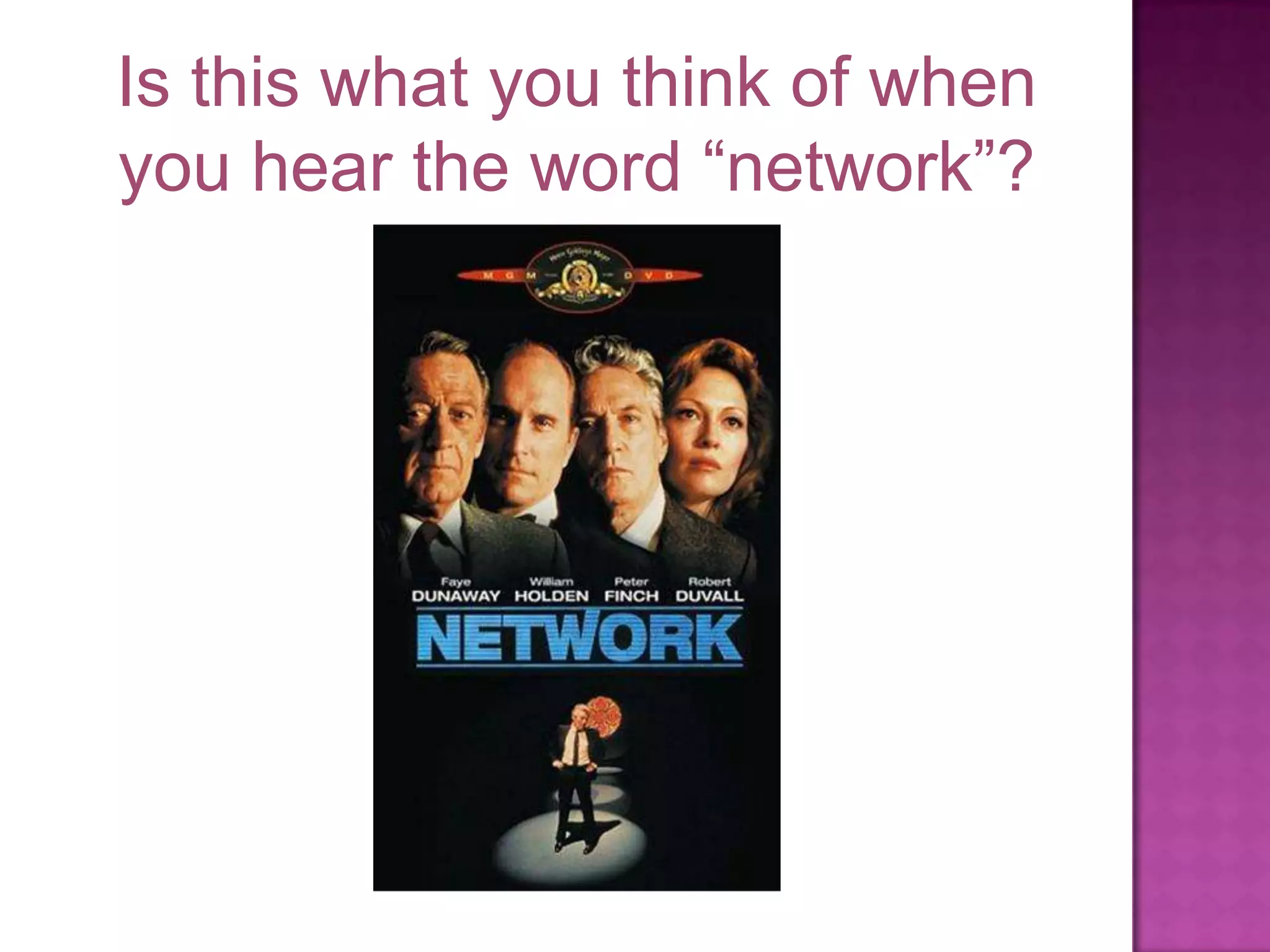
Is this what you think of when you hear the word “network”?
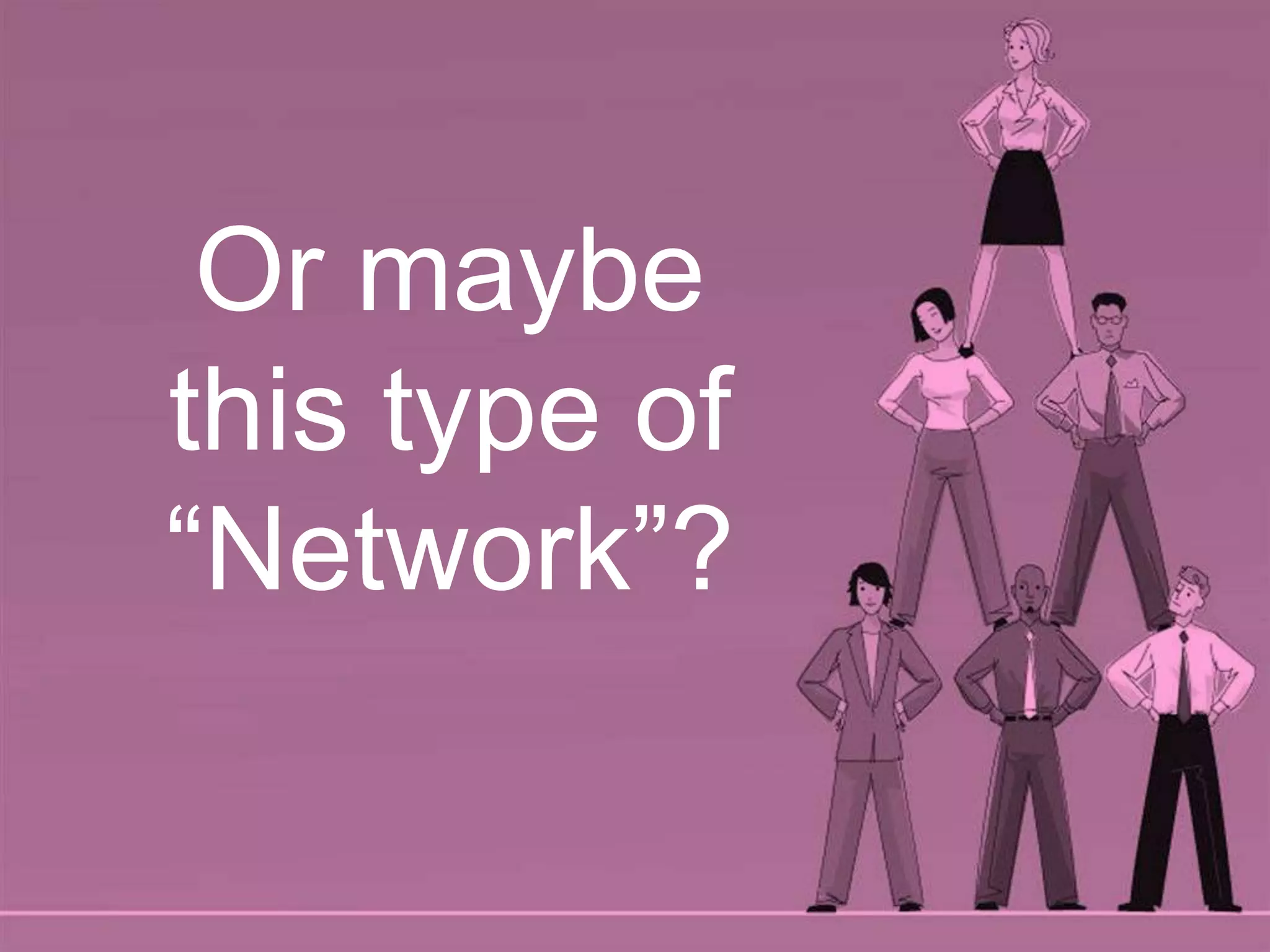
Or maybe this type of “Network”?
What do you knowalready know about Computer Networks?
GlossaryNetworksInfrastructureBackboneSwitchesDevicesProtocolHardwareTopologyRoutersOSIInternet
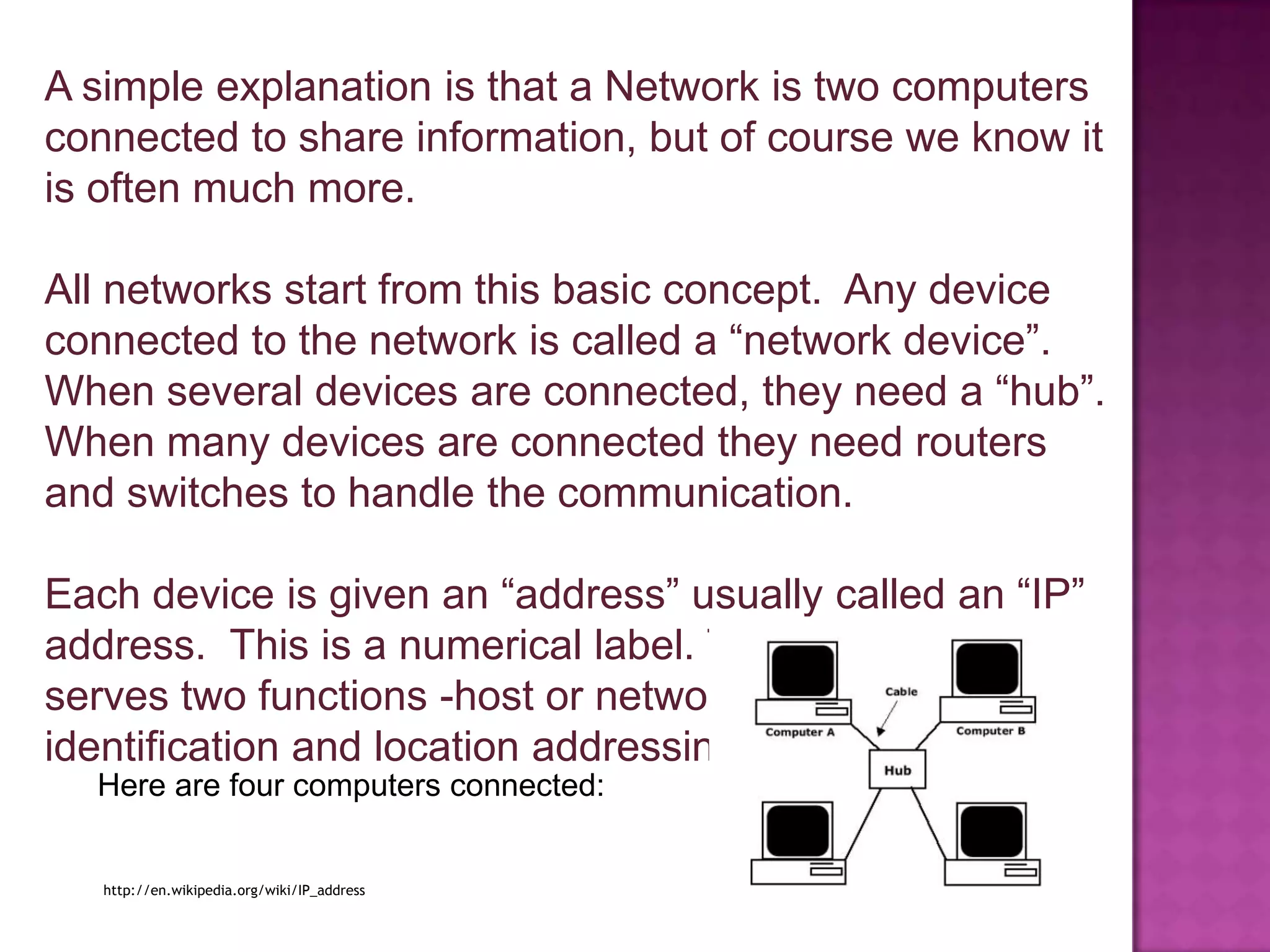
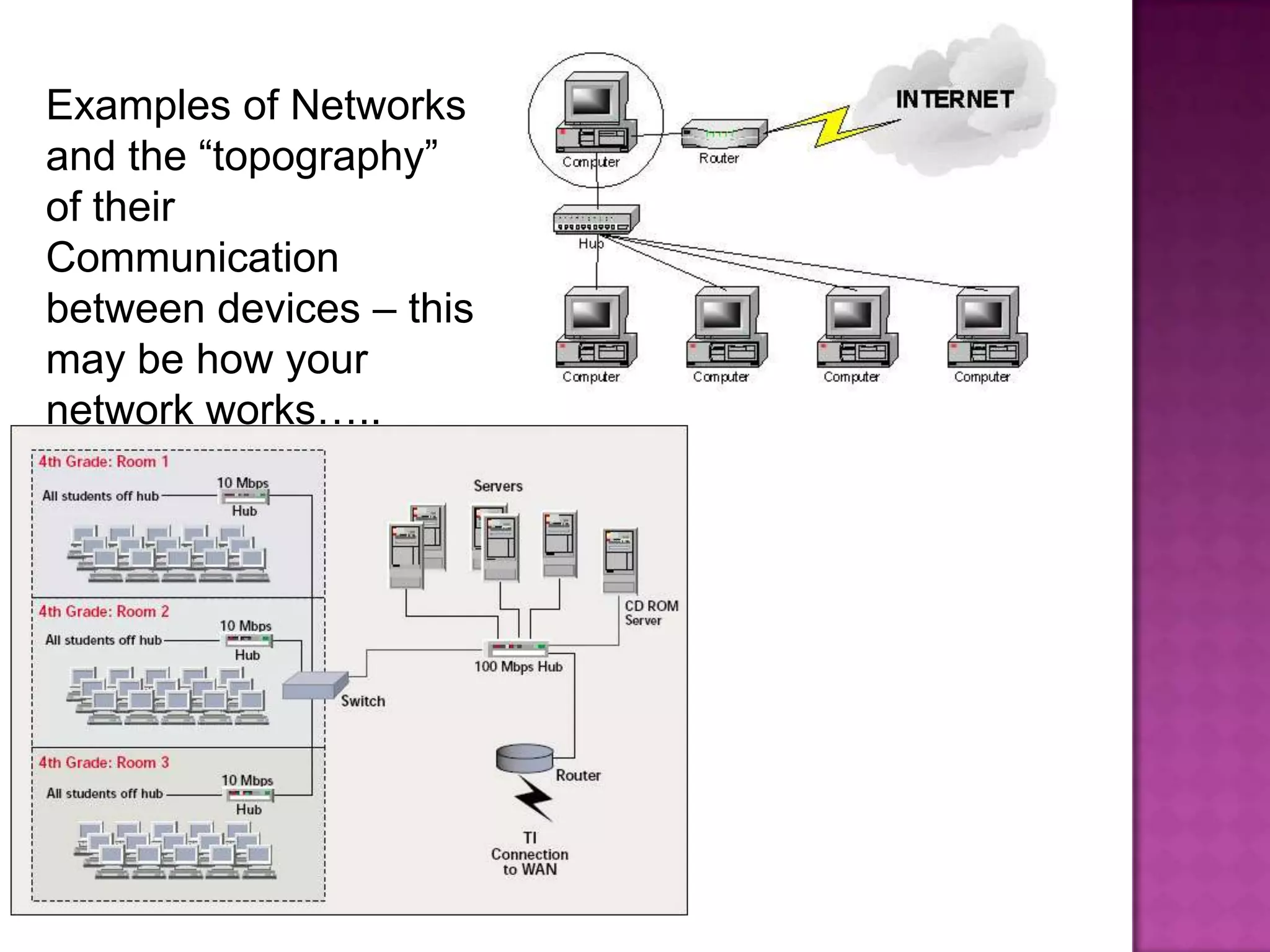
A simple explanation is that a Network is two computers connected to shareinformation, but of course we know it is often much more.All networks start from this basic concept.  Any device connected to the network is called a “network device”.  When several devices are connected, they need a “hub”.  When many devices are connected they need routers and switches to handle the communication.Each device is given an “address” usually called an “IP” address.  This is a numerical label. The IP Address serves two functions -host or network interface identification and location addressingHere are four computers connected: http://en.wikipedia.org/wiki/IP_address
When considering a Network, you probably think about the Internet….Definitions of internet on the Web: A computer network consisting of a worldwide network of computer networks that use the TCP/IP network protocols to facilitate data transmission and exchangewordnetweb.princeton.edu/perl/webwn
The Internet is a global system of interconnected computer networks that use the standard Internet Protocol Suite (TCP/IP) to serve billions of users worldwide. ...en.wikipedia.org/wiki/Internet
Any set of computer networks that communicate using the Internet Protocol. (An intranet.); The Internet, the largest global interneten.wiktionary.org/wiki/internet
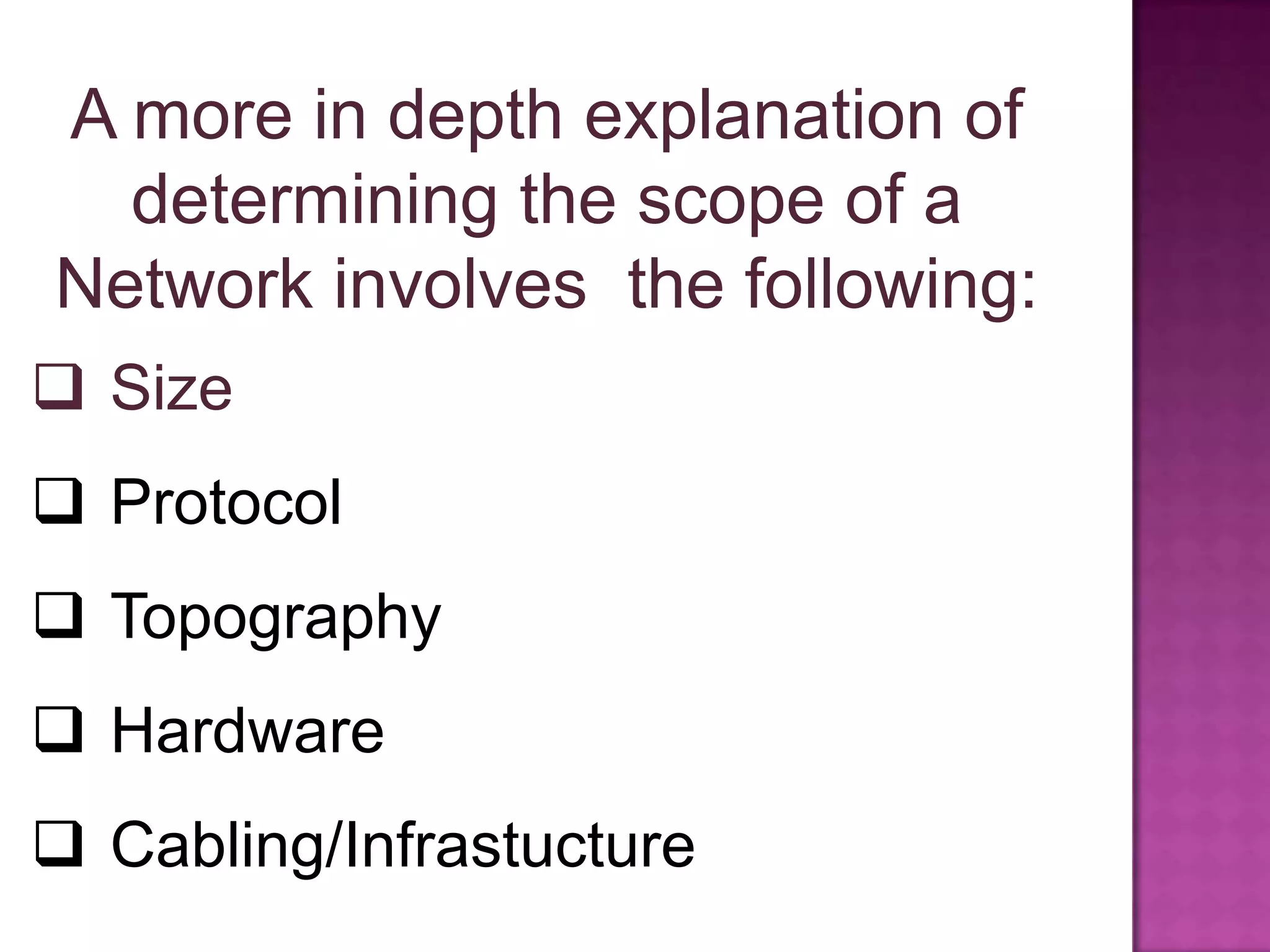
Often confused with the World Wide Web, the term Internet actually refers to the combined collection of academic, commercial, and government networks connected over international telecommunication backbones and routed using IP addressing.nsit.uchicago.edu/docs/glossary/A more in depth explanation of determining the scope of aNetwork involves  the following:Size
Protocol
Topography
Hardware
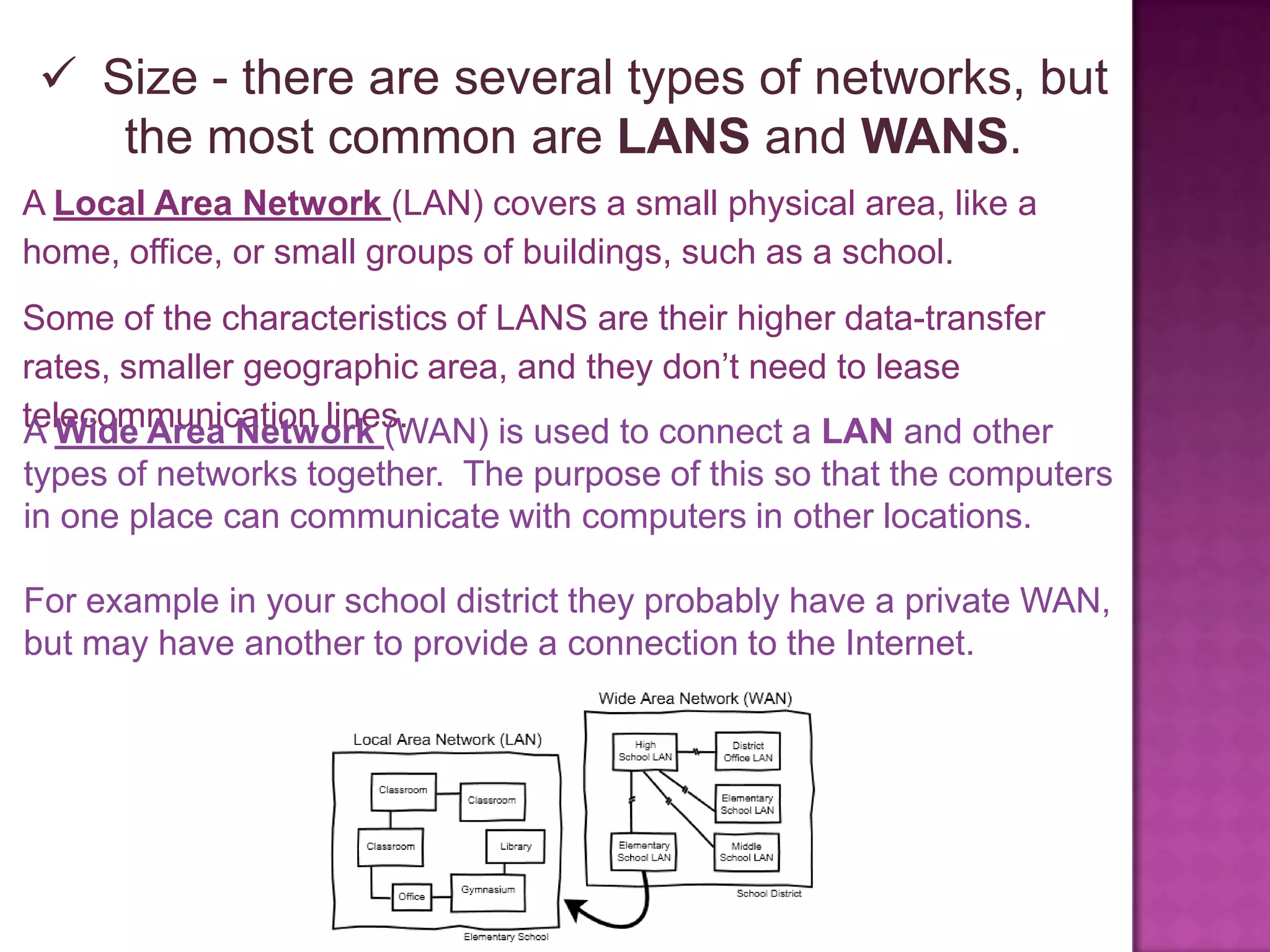
Cabling/InfrastuctureSize - there are several types of networks, but the most common are LANS and WANS.A Local Area Network (LAN) covers a small physical area, like a home, office, or small groups of buildings, such as a school.   Some of the characteristics of LANS are their higher data-transfer rates, smaller geographic area, and they don’t need to lease telecommunication lines.AWide Area Network (WAN) is used to connect a LAN and other types of networks together.  The purpose of this so that the computers in one place can communicate with computers in other locations.  For example in your school district they probably have a private WAN, but may have another to provide a connection to the Internet.
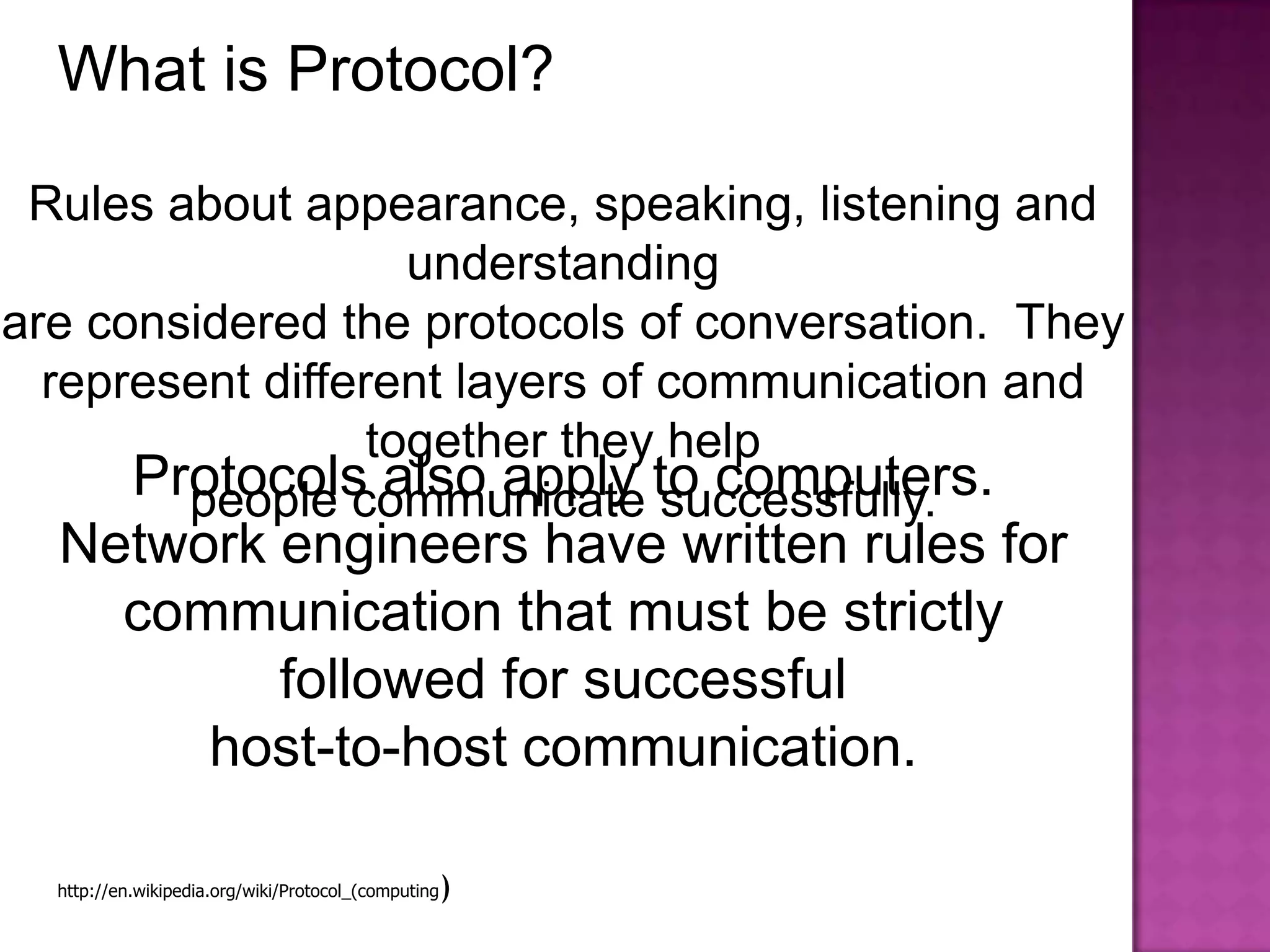
What is Protocol?Rules about appearance, speaking, listening and understanding are considered the protocols of conversation.  They represent different layers of communication and together they help people communicate successfully. Protocols also apply to computers. Network engineers have written rules for communication that must be strictly followed for successful host-to-host communication. http://en.wikipedia.org/wiki/Protocol_(computing)
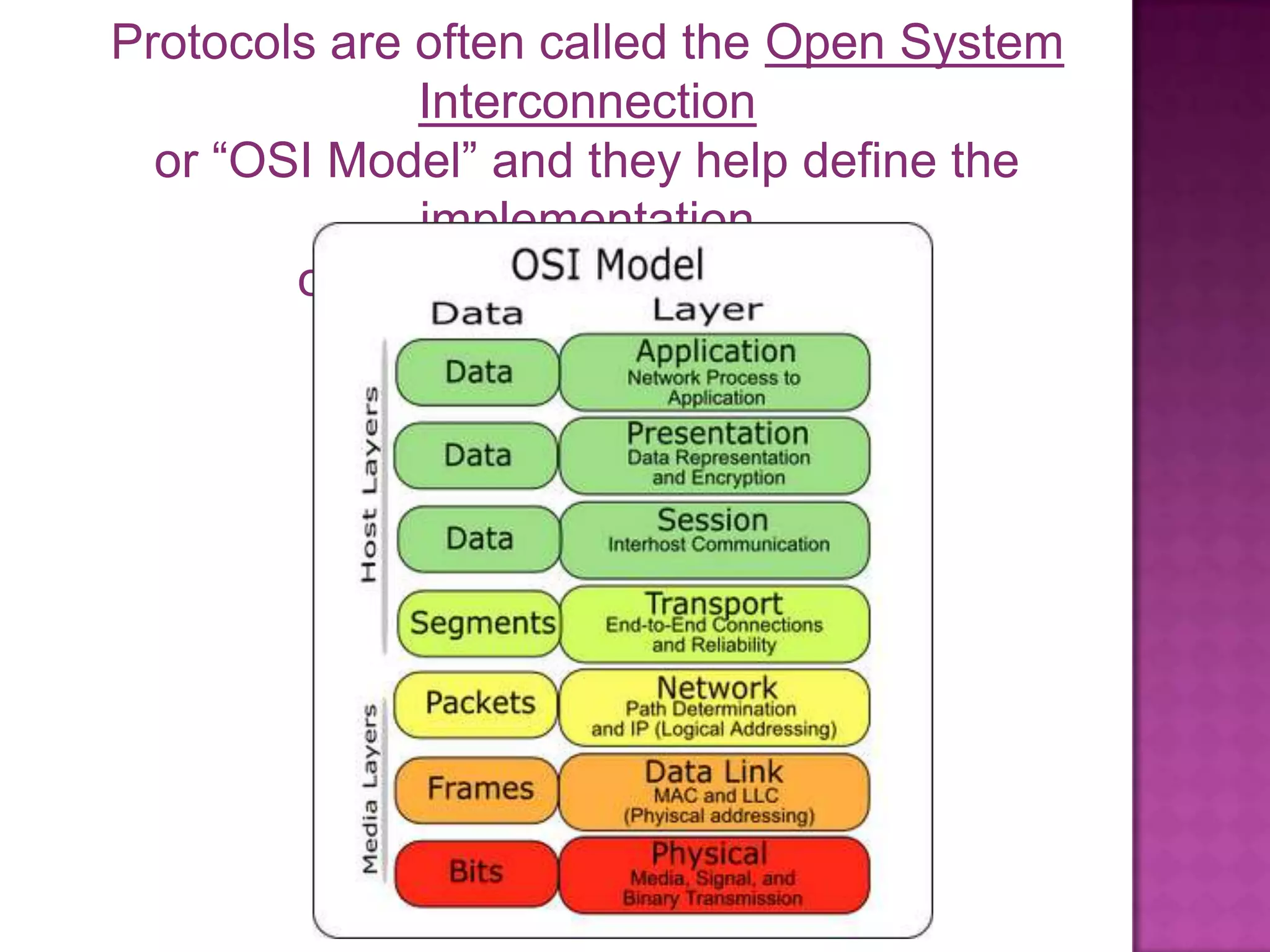
Protocols are often called the Open System Interconnection or “OSI Model” and they help define the implementationof a networking framework
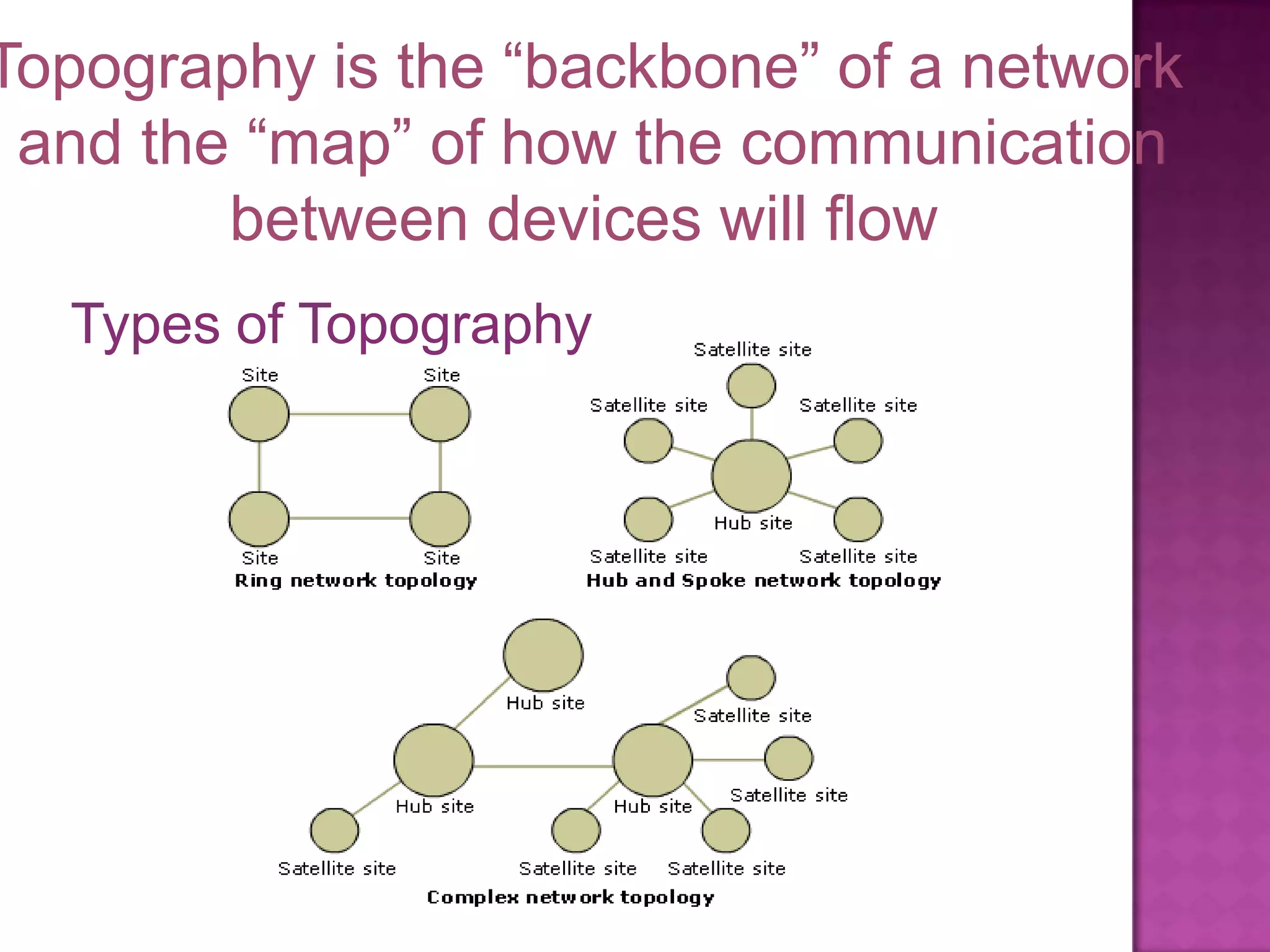
Topography is the “backbone” of a network and the “map” of how the communication between devices will flowTypes of Topography
Hardware - Computer networks normally consists of three parts:Clients: The user workstations and peripherals (such as printers)
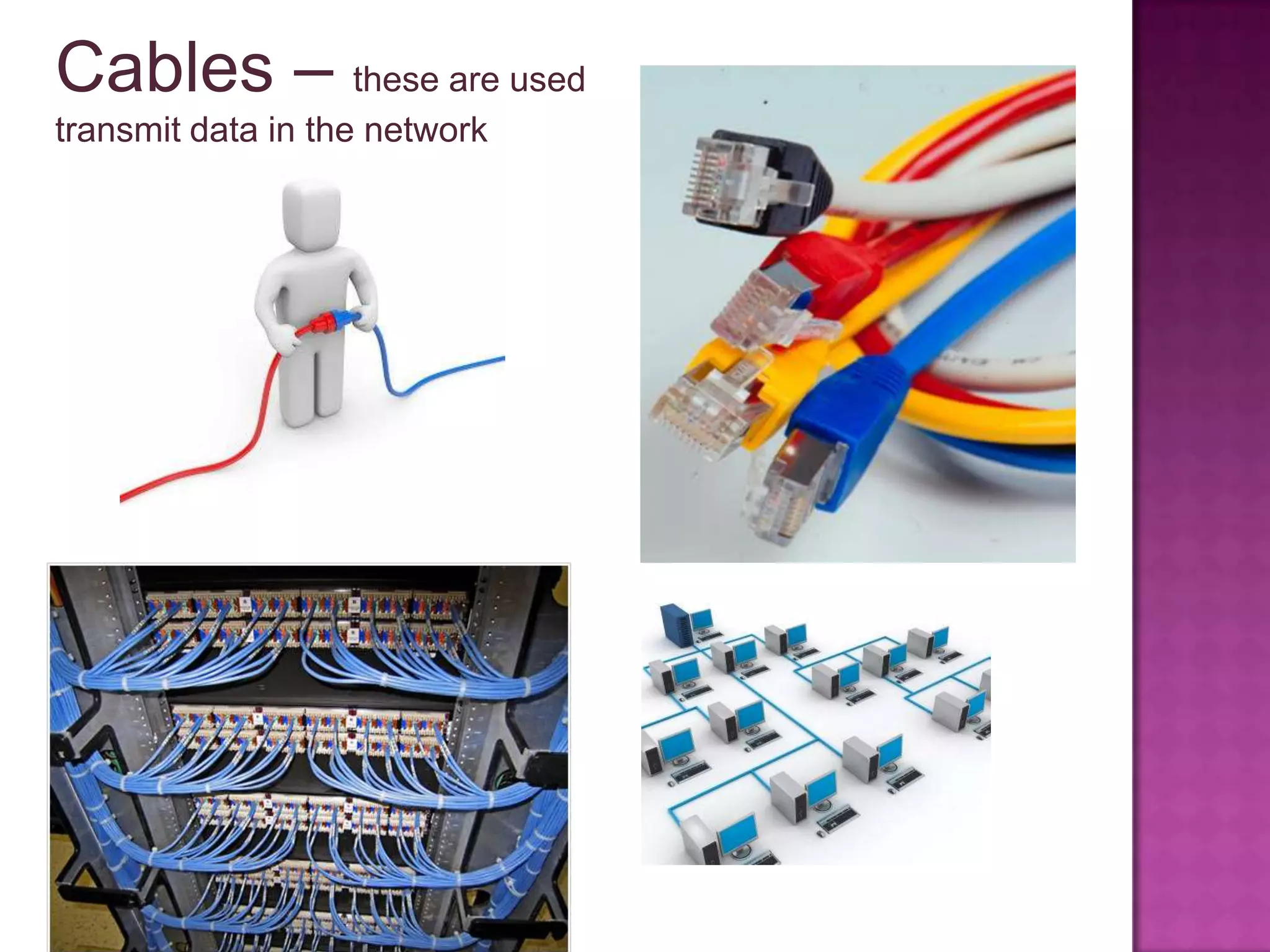
Infrastructure/Cables -The wires, fiber optics, or transmission media that the data moves through
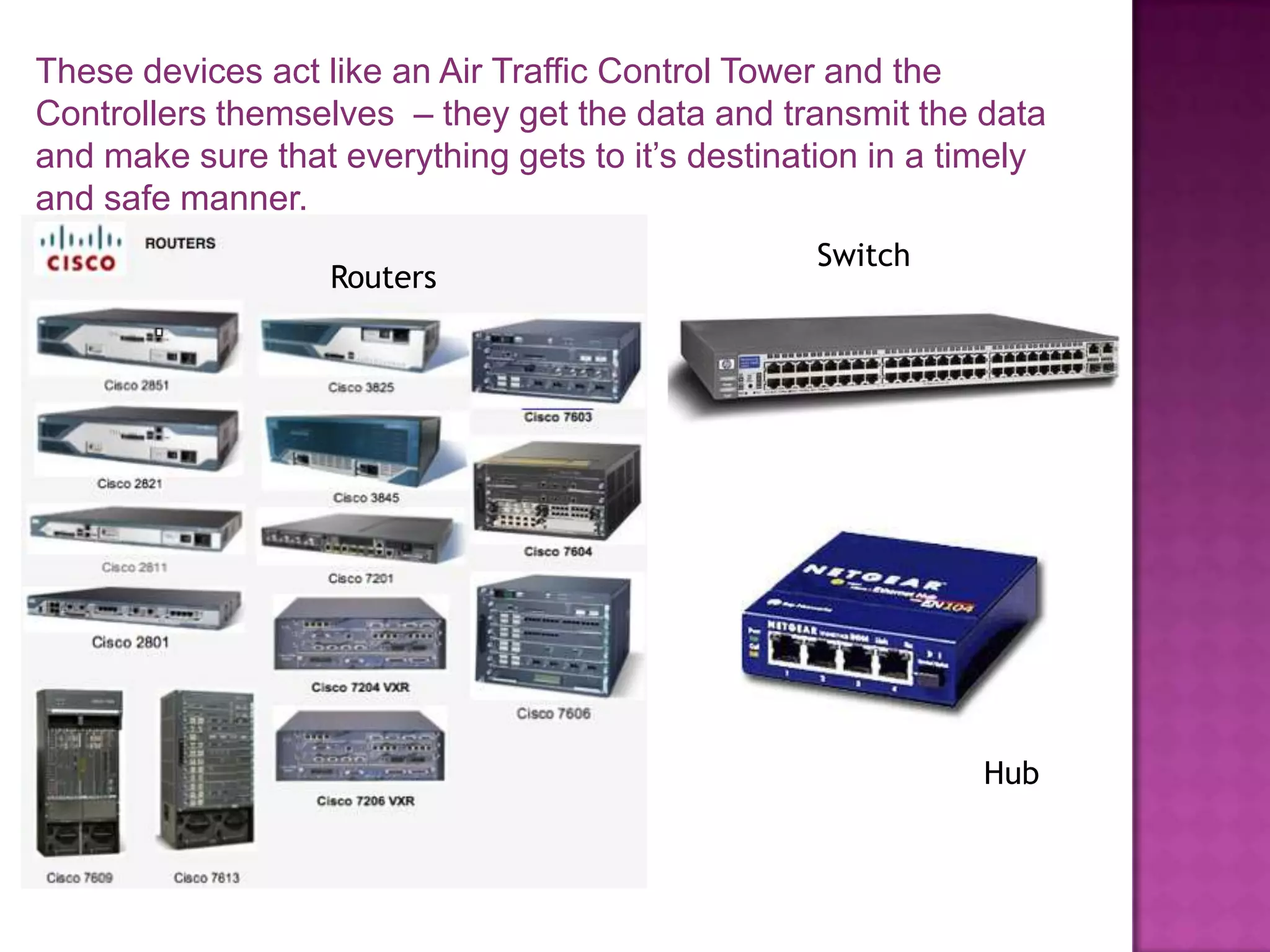
Networking electronics: Devices that move, route, and store data for usersThese devices act like an Air Traffic Control Tower and the Controllers themselves  – they get the data and transmit the data and make sure that everything gets to it’s destination in a timely and safe manner. SwitchRouters Hub

Dotson - Network Tutorial

Editor's Notes

  • #5 Write down what you know about networks
  • #12 There are two types of layers – The host and the media.
  • #16 There are multiple types of cabling – “Ethernet” is the most common in school settings.