DNA MODIFYING ENZYMES
PRESENTED BY
DASTHAGIRI PASHA S
1. DNA modifying enzymes
2. Polymerase
3. DNase
4. RNase
5. Polynucleotide kinase
6. Alkaline phosphatase
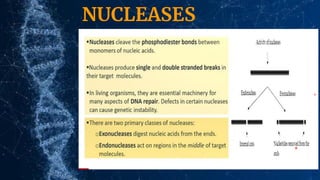
7. Nucleases
CONTENT
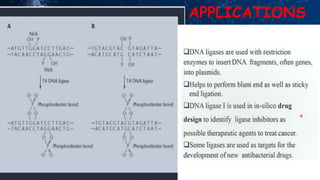
APPLICATIONS
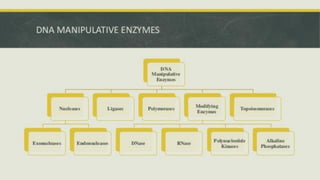
DNA modifying enzymes --
❖ DNA modifying enzymes are involved in
genetic engineering.
❖ Restriction enzymes and DNA ligase
represent the cutting and joining
function in DNA manipulation.
❖ These enzymes are involved in the
degradation, synthesis and alternation of
the nucleic acid
POLYMERASES
❖ DNA polymerase are enzymes that synthsis a new
strand of DNA complementary to an existing DNA or
RNA template .
❖ Polymerases can function only if the template
possess a double strandedregion that act as a
primer for initiation of polymerization.
❖ The polymerase and nuclease activities of DNA
polymerase 1 are controlled by different parts of
enzyme molecule.
❖ These enzymes attaches to a short single - stranded
region in a mainly double stranded DNA molecule ,
and then synthesis a completely new strand ,
degrading the existing strand as it proceed
The polymerase can be
classified into 3 types they are
a) DNA dependentDNA polymerase that
copies DNA from DNA .
b)RNA dependentRNA polymerase that
synthesis DNA from RNA
c) DNA dependant RNA polymerase that
produces RNA from DNA.
DEOXY RIBONUCLEASE
❏ A nucleaseenzymethat can catalyse the hydrolytic cleavage
of phosphodiesterbond in the DNA backbone are known as
Deoxy ribonuclease.
❏ These enzymes are broadly classified as endo and exo
deoxyribonuclease
❏ DNase does not have specieficrecognition site and cleave
DNA sequenceat random location
❏ DNase are wide variety which known different substrate
specificities,chemicalmechanism , and biological functions.
➢ They are two types of DNase -
➢ DNase1
➢ DNase2
○ 1.DNase1 :-
○ They which cleavedouble strandedDNA or single
strandedDNA.
○ The major products are 5’- phosphorylated,bi,tri, and
tetranucleotides.
○ The presence of manganeseions ,DNase1 hydrolyze each
strand of duplex DNA producingsingle strandedNick's
in the DNA backbone,generating variousrandom
cleavages.
Applications of DNase 1
➢Eliminating DNA contamination
from preparation of RNA.
➢Analyzing the DNA -protien
interaction via DNA foot printing.
➢Nicking DNA prior to radio labeling
by Nick translation.
DNase 2 :-
● It's a non speciefic endonucleases
pH is (4.5-5.5)
● Dnase 2 initially introduce multiple
single stranded Nick's in DNA
backbone .
● Generating single stranded Nick's by
producing of acid soluble nucleotide
and oligonucleotide .
Applications of DNase 2 :-
❖ DNA fragmentation
❖ Molecular weight marker
❖ Cell apoptosis assays etc...
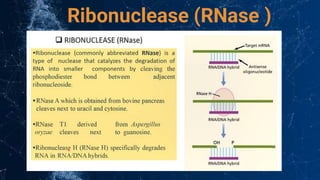
Ribonuclease (RNase )
● Nuclease that can catalyse hydrolysis of
ribonucleotide from either single
stranded or double stranded RNA
sequence are called ribonucleotide .
● RNA is important for RNA maturation
and processing .
● RNase A and RNase H play important
role in initial defence mechanism against
RNA viral infection.
Applications of RNase :-
● Eliminating or reducing RNA
contamination in preparation of plasmid
DNA.
● Mapping mutation in DNA or RNA by
mismatch cleavage .RNase will cleave
the RNA in RNA-DNA hybrid at sites of
single base mismatch & the cleavage
product can be analysed.
● Useful of RNA sequencing.
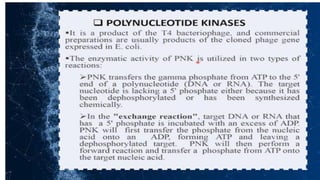
POLYNUCLEOTIDE KINASE
➔ PNK is a tetramer with phosphatase
activity at 3’ end and kinase at 5’ end
with tunnellike active site.
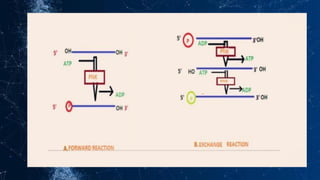
➔ PNK catelysed the transfer of a p04
group from gamma position of ATP to
the 5’end of either DNA or RNA .
➔ Basic residue of active site of PNK
8nteract with -vely charged phosphate
of the DNA .
APPLICATIONS OF PNK
❏ The linkers and adapter are
phosphorylated along with the
fragment of DNA before
ligation,which requires a 5’
phophate .this include products of
PCR ,which are generated by using
non phosphorylated primer
❏ PNK is also used for radiolabelling
oligonucleotides
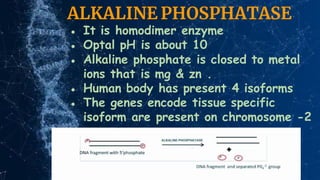
ALKALINE PHOSPHATASE
● It is homodimer enzyme
● Optal pH is about 10
● Alkaline phosphate is closed to metal
ions that is mg & zn .
● Human body has present 4 isoforms
● The genes encode tissue specific
isoform are present on chromosome -2
They are 3 Alkaline phosphate are
used in gene manipulation
❖ Bacterial alkaline phosphate
(BAP)
❖ Calf intestinal alkaline
phosphate (CIP)
❖ Shrimp alkaline phophate (SAP)
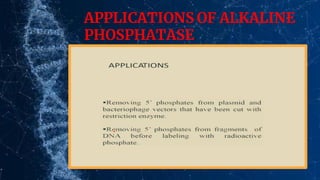
APPLICATIONS OF ALKALINE
PHOSPHATASE
NUCLEASES
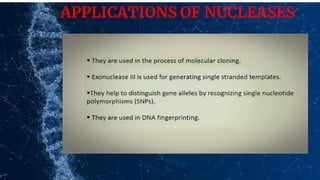
APPLICATIONS OF NUCLEASES
CONCLUSION
References
➢ Paul A .genetic engineering.in.genetic from gene to
genome
➢ Garden j e principle of genetics wily India pvt.ltd
new delhi
➢ Old R W and primrose H B (1980) principle og gene
manipulation.
➢ http//www.onlinebiologynotes.com
DNA modifying enzymes

DNA modifying enzymes

  • 1.
    DNA MODIFYING ENZYMES PRESENTEDBY DASTHAGIRI PASHA S
  • 2.
    1. DNA modifyingenzymes 2. Polymerase 3. DNase 4. RNase 5. Polynucleotide kinase 6. Alkaline phosphatase 7. Nucleases CONTENT
  • 6.
  • 7.
    DNA modifying enzymes-- ❖ DNA modifying enzymes are involved in genetic engineering. ❖ Restriction enzymes and DNA ligase represent the cutting and joining function in DNA manipulation. ❖ These enzymes are involved in the degradation, synthesis and alternation of the nucleic acid
  • 8.
    POLYMERASES ❖ DNA polymeraseare enzymes that synthsis a new strand of DNA complementary to an existing DNA or RNA template . ❖ Polymerases can function only if the template possess a double strandedregion that act as a primer for initiation of polymerization. ❖ The polymerase and nuclease activities of DNA polymerase 1 are controlled by different parts of enzyme molecule. ❖ These enzymes attaches to a short single - stranded region in a mainly double stranded DNA molecule , and then synthesis a completely new strand , degrading the existing strand as it proceed
  • 9.
    The polymerase canbe classified into 3 types they are a) DNA dependentDNA polymerase that copies DNA from DNA . b)RNA dependentRNA polymerase that synthesis DNA from RNA c) DNA dependant RNA polymerase that produces RNA from DNA.
  • 10.
    DEOXY RIBONUCLEASE ❏ Anucleaseenzymethat can catalyse the hydrolytic cleavage of phosphodiesterbond in the DNA backbone are known as Deoxy ribonuclease. ❏ These enzymes are broadly classified as endo and exo deoxyribonuclease ❏ DNase does not have specieficrecognition site and cleave DNA sequenceat random location ❏ DNase are wide variety which known different substrate specificities,chemicalmechanism , and biological functions.
  • 11.
    ➢ They aretwo types of DNase - ➢ DNase1 ➢ DNase2 ○ 1.DNase1 :- ○ They which cleavedouble strandedDNA or single strandedDNA. ○ The major products are 5’- phosphorylated,bi,tri, and tetranucleotides. ○ The presence of manganeseions ,DNase1 hydrolyze each strand of duplex DNA producingsingle strandedNick's in the DNA backbone,generating variousrandom cleavages.
  • 12.
    Applications of DNase1 ➢Eliminating DNA contamination from preparation of RNA. ➢Analyzing the DNA -protien interaction via DNA foot printing. ➢Nicking DNA prior to radio labeling by Nick translation.
  • 13.
    DNase 2 :- ●It's a non speciefic endonucleases pH is (4.5-5.5) ● Dnase 2 initially introduce multiple single stranded Nick's in DNA backbone . ● Generating single stranded Nick's by producing of acid soluble nucleotide and oligonucleotide .
  • 14.
    Applications of DNase2 :- ❖ DNA fragmentation ❖ Molecular weight marker ❖ Cell apoptosis assays etc...
  • 15.
  • 16.
    ● Nuclease thatcan catalyse hydrolysis of ribonucleotide from either single stranded or double stranded RNA sequence are called ribonucleotide . ● RNA is important for RNA maturation and processing . ● RNase A and RNase H play important role in initial defence mechanism against RNA viral infection.
  • 17.
    Applications of RNase:- ● Eliminating or reducing RNA contamination in preparation of plasmid DNA. ● Mapping mutation in DNA or RNA by mismatch cleavage .RNase will cleave the RNA in RNA-DNA hybrid at sites of single base mismatch & the cleavage product can be analysed. ● Useful of RNA sequencing.
  • 18.
    POLYNUCLEOTIDE KINASE ➔ PNKis a tetramer with phosphatase activity at 3’ end and kinase at 5’ end with tunnellike active site. ➔ PNK catelysed the transfer of a p04 group from gamma position of ATP to the 5’end of either DNA or RNA . ➔ Basic residue of active site of PNK 8nteract with -vely charged phosphate of the DNA .
  • 21.
    APPLICATIONS OF PNK ❏The linkers and adapter are phosphorylated along with the fragment of DNA before ligation,which requires a 5’ phophate .this include products of PCR ,which are generated by using non phosphorylated primer ❏ PNK is also used for radiolabelling oligonucleotides
  • 22.
    ALKALINE PHOSPHATASE ● Itis homodimer enzyme ● Optal pH is about 10 ● Alkaline phosphate is closed to metal ions that is mg & zn . ● Human body has present 4 isoforms ● The genes encode tissue specific isoform are present on chromosome -2
  • 23.
    They are 3Alkaline phosphate are used in gene manipulation ❖ Bacterial alkaline phosphate (BAP) ❖ Calf intestinal alkaline phosphate (CIP) ❖ Shrimp alkaline phophate (SAP)
  • 24.
  • 25.
  • 26.
  • 27.
  • 28.
    References ➢ Paul A.genetic engineering.in.genetic from gene to genome ➢ Garden j e principle of genetics wily India pvt.ltd new delhi ➢ Old R W and primrose H B (1980) principle og gene manipulation. ➢ http//www.onlinebiologynotes.com