HR MEET 2016
INTRODUCTION
 HR meet 2016 was held on 25th and 26th March
2016 which was organized by growth sellers.
 Venue : Yak and Yeti
 Different Industry and business house
(Nebico,shivam Cement)had sponsored that
programme)
RESOURCE PERSONS (SPEAKER)
 Deepak Babu Tiwari (Joint Vice president at
Realiance spinning Mills)
 Anand Munsi (Top motivational Speaker from India)
 Dr Malvika Desai (Doctorate in Organizational
Behiviour)
 Dr Malvika Desai
THE FIELD OF ORGANIZATIONAL BEHAVIOR
 OB is the one important function of HR
• Organizational Behavior studies the
behavior on each and one individual which help in the
contribution of organization.
• Its Main target is to apply that knowledge toward
improving an organization’s effectiveness.
1-5
MOTIVATION
 Strength of people to make them able choose the
specific work and to stay work hard in given
position.
 No one can motivate only people can inspire
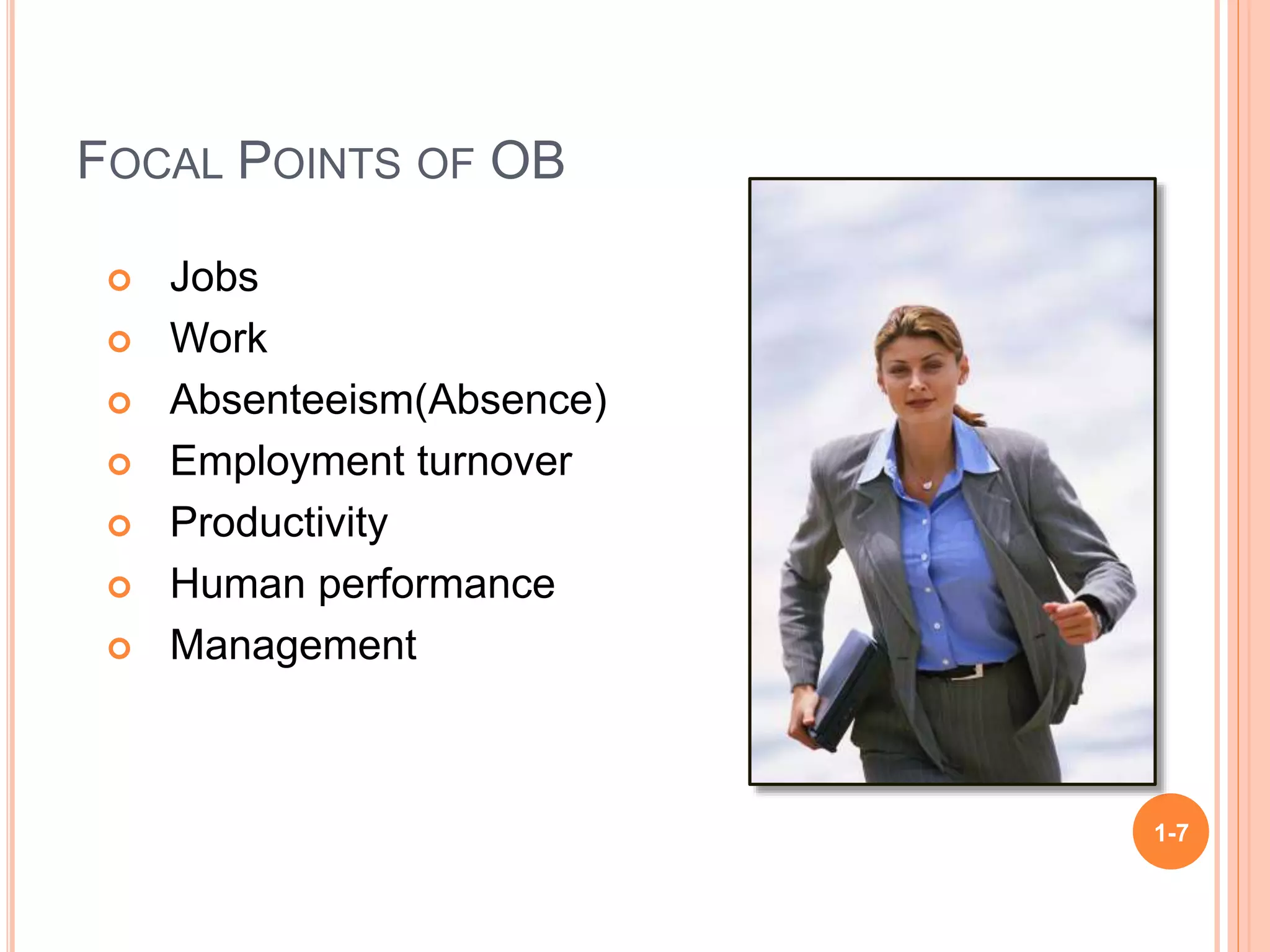
FOCAL POINTS OF OB
 Jobs
 Work
 Absenteeism(Absence)
 Employment turnover
 Productivity
 Human performance
 Management
1-7
CHALLENGES AND OPPORTUNITIES FOR OB
 The workplace is contains a wide mix of
cultures, races, ethnic groups, genders and
ages
 Employees have to learn to survive with rapid
change due to global competition
 Corporate loyalty has decreased due to
corporate downsizing and use of temp workers
 Managers can benefit from OB theory and
concepts
1-8
THREE LEVELS OF OB ANALYSIS
1-9
Plan of the Book
KEEP IN MIND…
 OB’s goal is to understand and predict human behavior in
organizations.
 Fundamental consistencies motivate behavior.
 It is more important than ever to learn OB concepts.
 Both managers and employees must learn to manage with
temporariness.
1-10
MR ANAND MUNSI
SUPER SUCCESS SEQUENCE
THREE DIFFERENT CS
 Accruing Challenges
 Overwhelming Complexities
 Tremendous Competition
THREE GOLDEN RULES (FOR SUCCESS)
 Be a learner (IF you don’t learn you cant earn)
 Participate and contribute
 Take Initiatives
MR DEEPAK BABU TIWARI
 MR tiwari has speak only about his expericnce in
his given time
 He is the past employee of Chaudhary Group and
soaltee Crown plaza and now he is working as an
joint vice president at realiance spinning Mills from
1994 AD.

CHALLENGES OF HR IN NEPAL
 Family Run Business
 Government policy
 Labor unions
 High employee turnover
MANAGING DIVERSITY AT
WORKPLACE
By-
Group 1
DIVERSITY:
 The concept of diversity is based on individual
acceptance and respect.
 It is an understanding that individuals are unique
and different.
 Cultural diversity acknowledges the existence of
broad cultural groups within Indian culture.
 Cultural diversity has been part of India's history,
and through it, India culture is constantly
developing.
Cultural diversity
ELEMENTS OF DIVERSITY
 Age
 Gender
 Ethnicity
 Race
 Physical Ability
 Sexual Orientation
 Physical
Characteristics
 Income
 Education
 Marital Status
 Religious Beliefs
 Geographic Location
 Parental Status
 Personality Type
WAYS TO INCORPORATE DIVERSITY:
Businesses find ways to incorporate diversity into
their workplaces without causing major changes to
the way their companies operate.
Incorporating diversity practices in a workplace can
include
 Recruiting from diverse talent pools to make the
company open to employees from various
backgrounds.
 Diversity may be infused into advertising practices
to ensure products and services are targeted to all
consumers who represent the target market,
Managing Diversity is defined has the “planning and implementing
organizational systems and practices to manage people so that the
potential advantages of diversity are maximized while its potential
disadvantages are minimized”.
MULTICULTURALISM
Multiculturalism is a system of beliefs and behaviors that
recognizes and respects the presence of all diverse groups
in an organization or society, acknowledges and values
their socio-cultural differences, and encourages and
enables their continued contribution within an inclusive
cultural context which empowers all within the organization
or society.
WOMEN IN THE WORKPLACE:
 The need to understand diversity is also driven by women in the
workplace.
 Today's workforce has the highest levels of employment
participation ever by women.
 The number of dual income families and single working mothers
has increased.
 Change in the family structure means that there are fewer men
and women in traditional family roles.
 Therefore, diversity issues cut across both race and gender.
HOW DIVERSITY INITIATIVES HELP AN
ORGANIZATION KEEP A COMPETITIVE HUMAN
RESOURCES ADVANTAGE
 Improves corporate culture
 Improves employee
morale
 Easier recruitment of
employees
 Enables the organization
to move into emerging
markets
 Increases creativity
 Access to overseas
markets.
 Reduction in skill
shortages.
 Decreased interpersonal
conflict among employees
 Improves client relations
 Increases productivity
 Improves the
organization`s bottom line
 Maximizes brand identity
 Responsive service
delivery and enhanced
staff skills
BENEFITS OF DIVERSE WORKPLACE:
 Customer service improves when staff understand and can
communicate skillfully with customers from a range of backgrounds.
 The community is also more likely to identify with and relate to
companies that reflect its level of diversity
 Workplace diversity where staff are encouraged to work in their
areas of strength and capability.
 Valuing diversity where staff potential is recognized and developed.
 Productive diversity is valuing different experience, perspectives,
skills and the cross-transfer and integration of these into the
company and local economy.
HOW TO MANAGE DIVERSITY
Steps in Managing Diversity Effectively
Secure top management commitment
 Alternative work arrangements
 Increase diversity skills
Organizational assessment
 Attracting employees
 Accommodating work and family needs
DIVERSITY AWARENESS PROGRAMS
 Provide members with accurate information
about diversity
 Uncover personal biases and stereotypes
 Assess personal beliefs, attitudes, and values
and learning about other points of view
 Develop an atmosphere in which people feel
free to share their differing perspectives
 Improve understanding of others who are
different
5-28
CONSIDERATIONS AND WARNINGS:
 As workplaces become more diverse, employers are encouraged to
take note of communication, training, recruiting practices and
management.
 Diverse workforces may be plagued with problems if employees aren't
equipped with the knowledge they need to communicate effectively
with their coworkers, regardless of their differences.
 Diversity training can help reduce interpersonal conflicts within a
company. As a result of efforts to train employees on diversity issues,
management may see an increase in training and development costs.
 Allbusiness.com, an online resource for entrepreneurs, notes some
businesses believe that costs of diversity are higher than its benefits
because of potential issues with communication and training.
Conclusion:
 A diverse workforce is a reflection of a changing world and
marketplace.
 Diverse work teams bring high value to organizations.
 Respecting individual differences will benefit the workplace by
creating a competitive edge and increasing work productivity.
 Diversity management benefits associates by creating a fair and safe
environment where everyone has access to opportunities and
challenges.
 Management tools in a diverse workforce should be used to educate
everyone about diversity and its issues, including laws and
regulations.
 Most workplaces are made up of diverse cultures, so organizations
need to learn how to adapt to be successful.

Presentation

  • 1.
  • 2.
    INTRODUCTION  HR meet2016 was held on 25th and 26th March 2016 which was organized by growth sellers.  Venue : Yak and Yeti  Different Industry and business house (Nebico,shivam Cement)had sponsored that programme)
  • 3.
    RESOURCE PERSONS (SPEAKER) Deepak Babu Tiwari (Joint Vice president at Realiance spinning Mills)  Anand Munsi (Top motivational Speaker from India)  Dr Malvika Desai (Doctorate in Organizational Behiviour)
  • 4.
  • 5.
    THE FIELD OFORGANIZATIONAL BEHAVIOR  OB is the one important function of HR • Organizational Behavior studies the behavior on each and one individual which help in the contribution of organization. • Its Main target is to apply that knowledge toward improving an organization’s effectiveness. 1-5
  • 6.
    MOTIVATION  Strength ofpeople to make them able choose the specific work and to stay work hard in given position.  No one can motivate only people can inspire
  • 7.
    FOCAL POINTS OFOB  Jobs  Work  Absenteeism(Absence)  Employment turnover  Productivity  Human performance  Management 1-7
  • 8.
    CHALLENGES AND OPPORTUNITIESFOR OB  The workplace is contains a wide mix of cultures, races, ethnic groups, genders and ages  Employees have to learn to survive with rapid change due to global competition  Corporate loyalty has decreased due to corporate downsizing and use of temp workers  Managers can benefit from OB theory and concepts 1-8
  • 9.
    THREE LEVELS OFOB ANALYSIS 1-9 Plan of the Book
  • 10.
    KEEP IN MIND… OB’s goal is to understand and predict human behavior in organizations.  Fundamental consistencies motivate behavior.  It is more important than ever to learn OB concepts.  Both managers and employees must learn to manage with temporariness. 1-10
  • 11.
  • 12.
  • 14.
    THREE DIFFERENT CS Accruing Challenges  Overwhelming Complexities  Tremendous Competition
  • 15.
    THREE GOLDEN RULES(FOR SUCCESS)  Be a learner (IF you don’t learn you cant earn)  Participate and contribute  Take Initiatives
  • 16.
    MR DEEPAK BABUTIWARI  MR tiwari has speak only about his expericnce in his given time  He is the past employee of Chaudhary Group and soaltee Crown plaza and now he is working as an joint vice president at realiance spinning Mills from 1994 AD. 
  • 17.
    CHALLENGES OF HRIN NEPAL  Family Run Business  Government policy  Labor unions  High employee turnover
  • 18.
  • 19.
    DIVERSITY:  The conceptof diversity is based on individual acceptance and respect.  It is an understanding that individuals are unique and different.  Cultural diversity acknowledges the existence of broad cultural groups within Indian culture.  Cultural diversity has been part of India's history, and through it, India culture is constantly developing. Cultural diversity
  • 20.
    ELEMENTS OF DIVERSITY Age  Gender  Ethnicity  Race  Physical Ability  Sexual Orientation  Physical Characteristics  Income  Education  Marital Status  Religious Beliefs  Geographic Location  Parental Status  Personality Type
  • 21.
    WAYS TO INCORPORATEDIVERSITY: Businesses find ways to incorporate diversity into their workplaces without causing major changes to the way their companies operate. Incorporating diversity practices in a workplace can include  Recruiting from diverse talent pools to make the company open to employees from various backgrounds.  Diversity may be infused into advertising practices to ensure products and services are targeted to all consumers who represent the target market,
  • 22.
    Managing Diversity isdefined has the “planning and implementing organizational systems and practices to manage people so that the potential advantages of diversity are maximized while its potential disadvantages are minimized”.
  • 23.
    MULTICULTURALISM Multiculturalism is asystem of beliefs and behaviors that recognizes and respects the presence of all diverse groups in an organization or society, acknowledges and values their socio-cultural differences, and encourages and enables their continued contribution within an inclusive cultural context which empowers all within the organization or society.
  • 24.
    WOMEN IN THEWORKPLACE:  The need to understand diversity is also driven by women in the workplace.  Today's workforce has the highest levels of employment participation ever by women.  The number of dual income families and single working mothers has increased.  Change in the family structure means that there are fewer men and women in traditional family roles.  Therefore, diversity issues cut across both race and gender.
  • 25.
    HOW DIVERSITY INITIATIVESHELP AN ORGANIZATION KEEP A COMPETITIVE HUMAN RESOURCES ADVANTAGE  Improves corporate culture  Improves employee morale  Easier recruitment of employees  Enables the organization to move into emerging markets  Increases creativity  Access to overseas markets.  Reduction in skill shortages.  Decreased interpersonal conflict among employees  Improves client relations  Increases productivity  Improves the organization`s bottom line  Maximizes brand identity  Responsive service delivery and enhanced staff skills
  • 26.
    BENEFITS OF DIVERSEWORKPLACE:  Customer service improves when staff understand and can communicate skillfully with customers from a range of backgrounds.  The community is also more likely to identify with and relate to companies that reflect its level of diversity  Workplace diversity where staff are encouraged to work in their areas of strength and capability.  Valuing diversity where staff potential is recognized and developed.  Productive diversity is valuing different experience, perspectives, skills and the cross-transfer and integration of these into the company and local economy.
  • 27.
    HOW TO MANAGEDIVERSITY Steps in Managing Diversity Effectively Secure top management commitment  Alternative work arrangements  Increase diversity skills Organizational assessment  Attracting employees  Accommodating work and family needs
  • 28.
    DIVERSITY AWARENESS PROGRAMS Provide members with accurate information about diversity  Uncover personal biases and stereotypes  Assess personal beliefs, attitudes, and values and learning about other points of view  Develop an atmosphere in which people feel free to share their differing perspectives  Improve understanding of others who are different 5-28
  • 29.
    CONSIDERATIONS AND WARNINGS: As workplaces become more diverse, employers are encouraged to take note of communication, training, recruiting practices and management.  Diverse workforces may be plagued with problems if employees aren't equipped with the knowledge they need to communicate effectively with their coworkers, regardless of their differences.  Diversity training can help reduce interpersonal conflicts within a company. As a result of efforts to train employees on diversity issues, management may see an increase in training and development costs.  Allbusiness.com, an online resource for entrepreneurs, notes some businesses believe that costs of diversity are higher than its benefits because of potential issues with communication and training.
  • 30.
    Conclusion:  A diverseworkforce is a reflection of a changing world and marketplace.  Diverse work teams bring high value to organizations.  Respecting individual differences will benefit the workplace by creating a competitive edge and increasing work productivity.  Diversity management benefits associates by creating a fair and safe environment where everyone has access to opportunities and challenges.  Management tools in a diverse workforce should be used to educate everyone about diversity and its issues, including laws and regulations.  Most workplaces are made up of diverse cultures, so organizations need to learn how to adapt to be successful.