
Diversity, equality and inclusion 
by Toronto Training and HR 
September 2014 
1
CONTENTS 
3-4 Introduction 
5-6 Definitions 
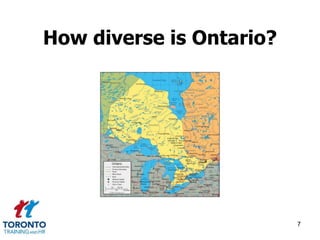
7-9 How diverse is Ontario? 
10-12 Code grounds of the Ontario Human Rights Commission 
13-14 The business case for diversity 
15-16 Dimensions of diversity 
17-21 A diversity strategy 
22-23 Additional considerations 
24-25 Characteristics of adaptation to the global work context 
26-27 Ways to embed equality and inclusion 
28-29 Enhancing inclusion 
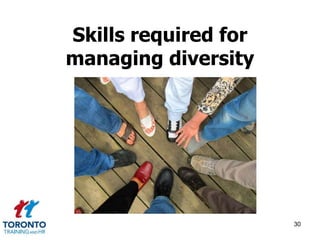
30-32 Skills required for managing diversity 
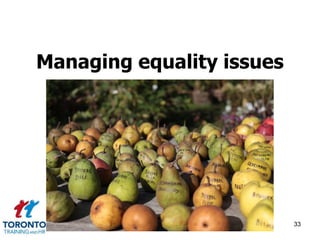
33-36 Managing equality issues 
37-41 Engaging personal commitment 
42-43 Diversity in the boardroom 
44-45 Social class differences 
46-47 LGBTQ issues 
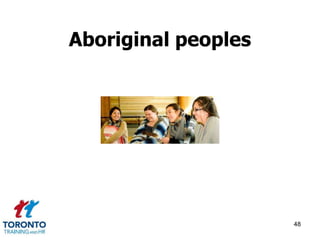
48-50 Aboriginal peoples 
51-52 Conclusion, summary and questions 
2
Introduction 
3
Introduction to Toronto Training 
and HR 
Toronto Training and HR is a specialist training and 
human resources consultancy headed by Timothy Holden 
10 years in banking 
15 years in training and human resources 
Freelance practitioner since 2006 
The core services provided by Toronto Training and HR 
are: 
Training event design 
Training event delivery 
HR support with an emphasis on reducing 
costs, saving time plus improving employee 
engagement and morale 
Services for job seekers 
4
Definitions 
5
• Diversity 
• Equality 
• Inclusion 
6 
Definitions
How diverse is Ontario? 
7
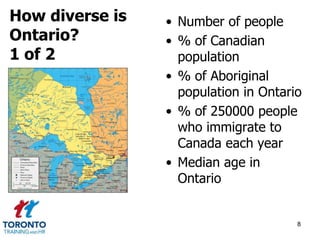
• Number of people 
• % of Canadian 
population 
• % of Aboriginal 
population in Ontario 
• % of 250000 people 
who immigrate to 
Canada each year 
• Median age in 
Ontario 
8 
How diverse is 
Ontario? 
1 of 2
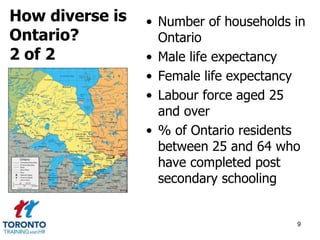
• Number of households in 
Ontario 
• Male life expectancy 
• Female life expectancy 
• Labour force aged 25 
and over 
• % of Ontario residents 
between 25 and 64 who 
have completed post 
secondary schooling 
9 
How diverse is 
Ontario? 
2 of 2
Code grounds of the 
Ontario Human Rights 
Commission 
10
• Age 
• Creed 
• Disability 
• Family and 
marital status 
• Gender identity 
and gender 
expression 
• Race and 
related 
grounds 
11 
Code grounds of 
the Ontario Human 
Rights Commission 
1 of 2
• Receipt of 
public 
assistance 
• Record of 
offences 
• Sex 
• Sexual 
orientation 
12 
Code grounds of 
the Ontario Human 
Rights Commission 
2 of 2
The business case for 
diversity 
13
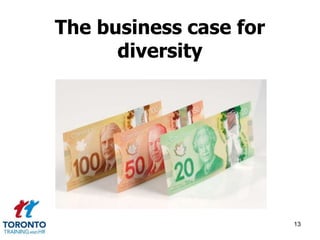
• People issues 
• Market 
competitiveness 
• Corporate 
reputation 
14 
The business 
case for 
diversity
Dimensions of diversity 
15
• Primary 
dimensions 
• Secondary 
dimensions 
16 
Dimensions 
of diversity
A diversity strategy 
17
• Ensure that initiatives and 
policies have the support of 
the board and senior 
management 
• Remember that managing 
diversity is a continuous 
process of improvement, not a 
one-off initiative 
• Develop a diversity strategy to 
support the achievement of 
business goals, including ways 
of addressing the diverse 
needs of customers 18 
A diversity 
strategy 
1 of 4
• Focus on fairness and 
inclusion, ensuring that merit, 
competence and potential are 
the basis for all decisions 
about recruitment and 
development 
• Keep up to date with the law 
and review policies through 
checks, audits and consultation 
• Address work-life balance 
challenges in ways that take 
account of employee and 
organizational needs and offer 
19 
suitable choices and options 
A diversity 
strategy 
2 of 4
• Encourage ownership and 
discourage risk aversion, 
aiming to create an 
empowering culture so that 
decisions are not passed 
upwards without good reason 
• Design guidelines for line 
managers to help them 
respond appropriately to 
diversity needs, as they are 
vital change agents, but give 
them scope for flexible 
decision-making 
20 
A diversity 
strategy 
3 of 4
• Be aware that if your 
organization operates 
internationally, its approach to 
managing diversity will need to 
take account of the ways that 
individual working styles and 
personal preferences are 
influenced by national cultures 
21 
A diversity 
strategy 
4 of 4
Additional considerations 
22
• Workplace behaviour 
• Communication 
• Training 
• Measures 
• Review and reinforce 
23 
Additional 
considerations
Characteristics of 
adaptation to the global 
work context 
24
• Cultural intelligence 
• Global identity 
• Trust 
25 
Characteristics of 
adaptation to the 
global work context
Ways to embed equality 
and inclusion 
26
• Make the business case 
explicit 
• Obtain executive 
sponsorship 
• Create a systemic 
approach 
• Share success stories 
• Establish accountability 
• Use formal and informal 
approaches 
• Have a long-term 
perspective 
27 
Ways to 
embed 
equality and 
inclusion
Enhancing inclusion 
28
• People need to be of 
approximate equal status 
• Have opportunities to get 
to know each other in 
more personal ways, 
establish cross-cutting 
ties, and rely less on 
stereotypes 
• Work together across 
roles, levels, and 
demographic boundaries 
to solve shared problems 
through participative 
decision making 
29 
Enhancing 
inclusion
Skills required for 
managing diversity 
30
• Use a holistic, integrated 
approach 
• Obtain top management 
commitment and 
accountability 
• Consciously work to 
integrate diversity values 
into the broader 
organizational values 
• Use a participative 
management style 
31 
Skills required for 
managing 
diversity 1 of 2
• Integrate responsibility 
for diversity initiatives 
into other management 
functions such as 
continuous performance 
management and self-directed 
work teams 
• Integrate diversity 
efforts with existing 
objectives and programs 
• Expect resistance to 
change, and take steps 
to minimize it 32 
Skills required for 
managing 
diversity 2 of 2
Managing equality issues 
33
• Promoting a culture of 
personal responsibility 
for treating people with 
respect and dignity 
• Raising awareness 
about the importance of 
different perspectives 
views and ideas in 
connection with 
business performance 
34 
Managing 
equality issues 
1 of 3
• Drawing up 
an organization business 
case for managing 
diversity and making this 
clear to everyone 
• Assigning responsibility 
to key change agents 
and influencers to 
ensure diversity 
management is driven 
into core business 
practices 
35 
Managing 
equality issues 
2 of 3
• Thinking inclusively when 
devising policies and 
procedures to make sure 
they are practical and aim 
to cater appropriately for 
diverse needs and 
preferences 
• Monitoring and evaluating 
policies and practices 
regularly to refresh them 
and ensure they work 
• Tracking the impact of 
policies and practices with 
relevant facts and figures 36 
Managing 
equality issues 
3 of 3
Engaging personal 
commitment 
37
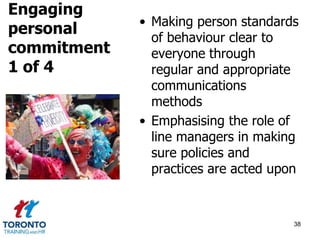
• Making person standards 
of behaviour clear to 
everyone through 
regular and appropriate 
communications 
methods 
• Emphasising the role of 
line managers in making 
sure policies and 
practices are acted upon 
38 
Engaging 
personal 
commitment 
1 of 4
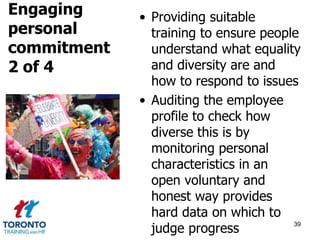
• Providing suitable 
training to ensure people 
understand what equality 
and diversity are and 
how to respond to issues 
• Auditing the employee 
profile to check how 
diverse this is by 
monitoring personal 
characteristics in an 
open voluntary and 
honest way provides 
hard data on which to 
judge progress 39 
Engaging 
personal 
commitment 
2 of 4
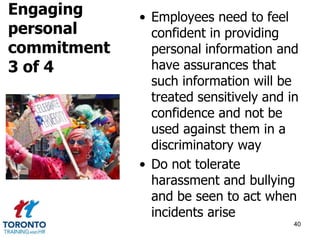
• Employees need to feel 
confident in providing 
personal information and 
have assurances that 
such information will be 
treated sensitively and in 
confidence and not be 
used against them in a 
discriminatory way 
• Do not tolerate 
harassment and bullying 
and be seen to act when 
incidents arise 
40 
Engaging 
personal 
commitment 
3 of 4
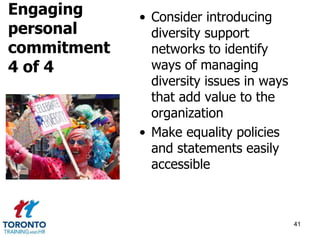
• Consider introducing 
diversity support 
networks to identify 
ways of managing 
diversity issues in ways 
that add value to the 
organization 
• Make equality policies 
and statements easily 
accessible 
41 
Engaging 
personal 
commitment 
4 of 4
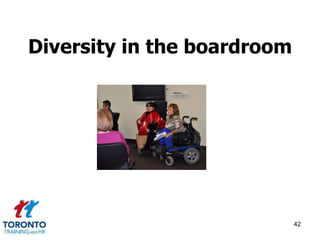
Diversity in the boardroom 
42
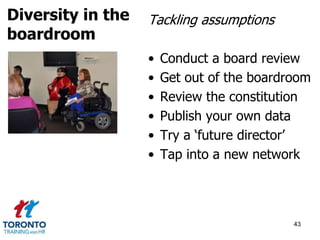
Tackling assumptions 
• Conduct a board review 
• Get out of the boardroom 
• Review the constitution 
• Publish your own data 
• Try a ‘future director’ 
• Tap into a new network 
43 
Diversity in the 
boardroom
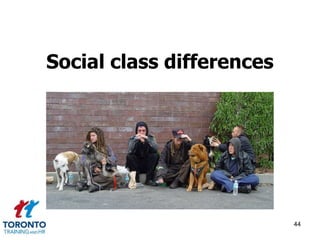
Social class differences 
44
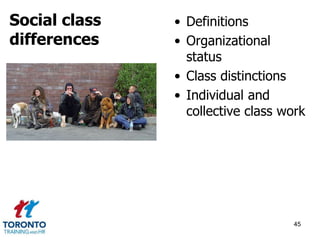
• Definitions 
• Organizational 
status 
• Class distinctions 
• Individual and 
collective class work 
45 
Social class 
differences
LGBTQ issues 
46
• Sexual 
orientation 
• Gender identity 
• Gender 
expression 
• Restrooms and 
lockers 
• Dress codes 
47 
LGBTQ issues
Aboriginal peoples 
48
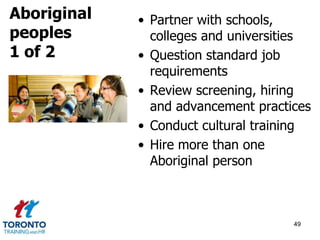
• Partner with schools, 
colleges and universities 
• Question standard job 
requirements 
• Review screening, hiring 
and advancement practices 
• Conduct cultural training 
• Hire more than one 
Aboriginal person 
49 
Aboriginal 
peoples 
1 of 2
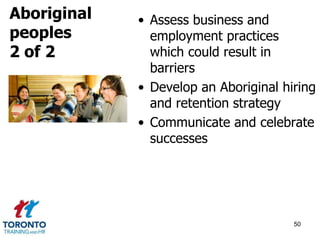
• Assess business and 
employment practices 
which could result in 
barriers 
• Develop an Aboriginal hiring 
and retention strategy 
• Communicate and celebrate 
successes 
50 
Aboriginal 
peoples 
2 of 2
Conclusion, summary and 
questions 
51
Conclusion, summary and 
questions 
Conclusion 
Summary 
Videos 
Questions 
52

Diversity, equality and inclusion September 2014

  • 1.
    Diversity, equality andinclusion by Toronto Training and HR September 2014 1
  • 2.
    CONTENTS 3-4 Introduction 5-6 Definitions 7-9 How diverse is Ontario? 10-12 Code grounds of the Ontario Human Rights Commission 13-14 The business case for diversity 15-16 Dimensions of diversity 17-21 A diversity strategy 22-23 Additional considerations 24-25 Characteristics of adaptation to the global work context 26-27 Ways to embed equality and inclusion 28-29 Enhancing inclusion 30-32 Skills required for managing diversity 33-36 Managing equality issues 37-41 Engaging personal commitment 42-43 Diversity in the boardroom 44-45 Social class differences 46-47 LGBTQ issues 48-50 Aboriginal peoples 51-52 Conclusion, summary and questions 2
  • 3.
  • 4.
    Introduction to TorontoTraining and HR Toronto Training and HR is a specialist training and human resources consultancy headed by Timothy Holden 10 years in banking 15 years in training and human resources Freelance practitioner since 2006 The core services provided by Toronto Training and HR are: Training event design Training event delivery HR support with an emphasis on reducing costs, saving time plus improving employee engagement and morale Services for job seekers 4
  • 5.
  • 6.
    • Diversity •Equality • Inclusion 6 Definitions
  • 7.
    How diverse isOntario? 7
  • 8.
    • Number ofpeople • % of Canadian population • % of Aboriginal population in Ontario • % of 250000 people who immigrate to Canada each year • Median age in Ontario 8 How diverse is Ontario? 1 of 2
  • 9.
    • Number ofhouseholds in Ontario • Male life expectancy • Female life expectancy • Labour force aged 25 and over • % of Ontario residents between 25 and 64 who have completed post secondary schooling 9 How diverse is Ontario? 2 of 2
  • 10.
    Code grounds ofthe Ontario Human Rights Commission 10
  • 11.
    • Age •Creed • Disability • Family and marital status • Gender identity and gender expression • Race and related grounds 11 Code grounds of the Ontario Human Rights Commission 1 of 2
  • 12.
    • Receipt of public assistance • Record of offences • Sex • Sexual orientation 12 Code grounds of the Ontario Human Rights Commission 2 of 2
  • 13.
    The business casefor diversity 13
  • 14.
    • People issues • Market competitiveness • Corporate reputation 14 The business case for diversity
  • 15.
  • 16.
    • Primary dimensions • Secondary dimensions 16 Dimensions of diversity
  • 17.
  • 18.
    • Ensure thatinitiatives and policies have the support of the board and senior management • Remember that managing diversity is a continuous process of improvement, not a one-off initiative • Develop a diversity strategy to support the achievement of business goals, including ways of addressing the diverse needs of customers 18 A diversity strategy 1 of 4
  • 19.
    • Focus onfairness and inclusion, ensuring that merit, competence and potential are the basis for all decisions about recruitment and development • Keep up to date with the law and review policies through checks, audits and consultation • Address work-life balance challenges in ways that take account of employee and organizational needs and offer 19 suitable choices and options A diversity strategy 2 of 4
  • 20.
    • Encourage ownershipand discourage risk aversion, aiming to create an empowering culture so that decisions are not passed upwards without good reason • Design guidelines for line managers to help them respond appropriately to diversity needs, as they are vital change agents, but give them scope for flexible decision-making 20 A diversity strategy 3 of 4
  • 21.
    • Be awarethat if your organization operates internationally, its approach to managing diversity will need to take account of the ways that individual working styles and personal preferences are influenced by national cultures 21 A diversity strategy 4 of 4
  • 22.
  • 23.
    • Workplace behaviour • Communication • Training • Measures • Review and reinforce 23 Additional considerations
  • 24.
    Characteristics of adaptationto the global work context 24
  • 25.
    • Cultural intelligence • Global identity • Trust 25 Characteristics of adaptation to the global work context
  • 26.
    Ways to embedequality and inclusion 26
  • 27.
    • Make thebusiness case explicit • Obtain executive sponsorship • Create a systemic approach • Share success stories • Establish accountability • Use formal and informal approaches • Have a long-term perspective 27 Ways to embed equality and inclusion
  • 28.
  • 29.
    • People needto be of approximate equal status • Have opportunities to get to know each other in more personal ways, establish cross-cutting ties, and rely less on stereotypes • Work together across roles, levels, and demographic boundaries to solve shared problems through participative decision making 29 Enhancing inclusion
  • 30.
    Skills required for managing diversity 30
  • 31.
    • Use aholistic, integrated approach • Obtain top management commitment and accountability • Consciously work to integrate diversity values into the broader organizational values • Use a participative management style 31 Skills required for managing diversity 1 of 2
  • 32.
    • Integrate responsibility for diversity initiatives into other management functions such as continuous performance management and self-directed work teams • Integrate diversity efforts with existing objectives and programs • Expect resistance to change, and take steps to minimize it 32 Skills required for managing diversity 2 of 2
  • 33.
  • 34.
    • Promoting aculture of personal responsibility for treating people with respect and dignity • Raising awareness about the importance of different perspectives views and ideas in connection with business performance 34 Managing equality issues 1 of 3
  • 35.
    • Drawing up an organization business case for managing diversity and making this clear to everyone • Assigning responsibility to key change agents and influencers to ensure diversity management is driven into core business practices 35 Managing equality issues 2 of 3
  • 36.
    • Thinking inclusivelywhen devising policies and procedures to make sure they are practical and aim to cater appropriately for diverse needs and preferences • Monitoring and evaluating policies and practices regularly to refresh them and ensure they work • Tracking the impact of policies and practices with relevant facts and figures 36 Managing equality issues 3 of 3
  • 37.
  • 38.
    • Making personstandards of behaviour clear to everyone through regular and appropriate communications methods • Emphasising the role of line managers in making sure policies and practices are acted upon 38 Engaging personal commitment 1 of 4
  • 39.
    • Providing suitable training to ensure people understand what equality and diversity are and how to respond to issues • Auditing the employee profile to check how diverse this is by monitoring personal characteristics in an open voluntary and honest way provides hard data on which to judge progress 39 Engaging personal commitment 2 of 4
  • 40.
    • Employees needto feel confident in providing personal information and have assurances that such information will be treated sensitively and in confidence and not be used against them in a discriminatory way • Do not tolerate harassment and bullying and be seen to act when incidents arise 40 Engaging personal commitment 3 of 4
  • 41.
    • Consider introducing diversity support networks to identify ways of managing diversity issues in ways that add value to the organization • Make equality policies and statements easily accessible 41 Engaging personal commitment 4 of 4
  • 42.
    Diversity in theboardroom 42
  • 43.
    Tackling assumptions •Conduct a board review • Get out of the boardroom • Review the constitution • Publish your own data • Try a ‘future director’ • Tap into a new network 43 Diversity in the boardroom
  • 44.
  • 45.
    • Definitions •Organizational status • Class distinctions • Individual and collective class work 45 Social class differences
  • 46.
  • 47.
    • Sexual orientation • Gender identity • Gender expression • Restrooms and lockers • Dress codes 47 LGBTQ issues
  • 48.
  • 49.
    • Partner withschools, colleges and universities • Question standard job requirements • Review screening, hiring and advancement practices • Conduct cultural training • Hire more than one Aboriginal person 49 Aboriginal peoples 1 of 2
  • 50.
    • Assess businessand employment practices which could result in barriers • Develop an Aboriginal hiring and retention strategy • Communicate and celebrate successes 50 Aboriginal peoples 2 of 2
  • 51.
  • 52.
    Conclusion, summary and questions Conclusion Summary Videos Questions 52