DIURETICS
Dr. Ajay Kumar
M. Pharm., Ph.D.
DIURETICS
DEFINITION :
These are drugs which cause a net loss of Na+ and
water in urine
There are several categories of diuretics. All diuretics
increases the excretion of water from body.
CLASSIFICATION
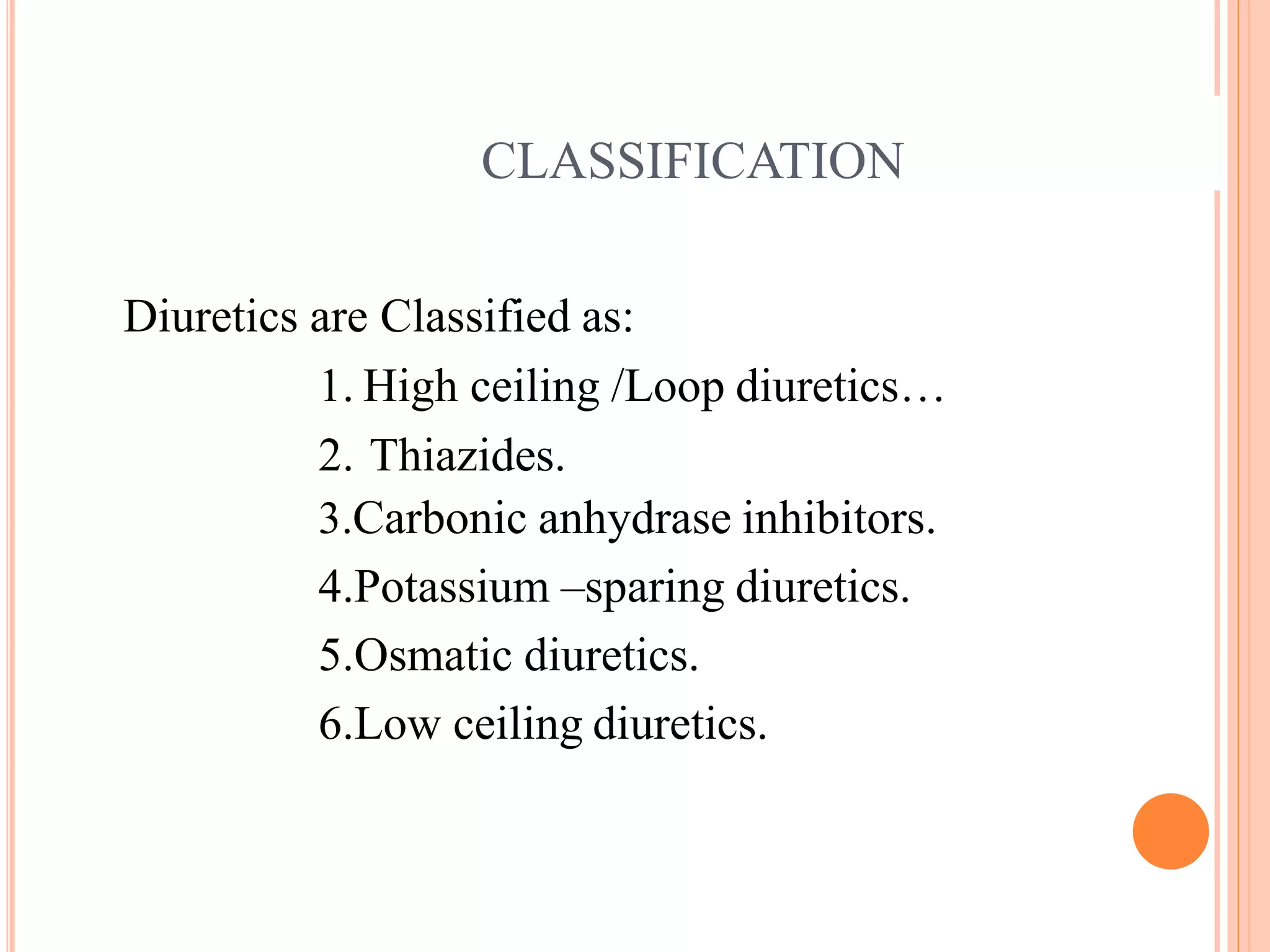
Diuretics are Classified as:
1. High ceiling /Loop diuretics…
2. Thiazides.
3.Carbonic anhydrase inhibitors.
4.Potassium –sparing diuretics.
5.Osmatic diuretics.
6.Low ceiling diuretics.
DIURETICS CLASSIFICATION
1.HIGH EFFICACY DIURETICS:
(Inhibitors of Na+,K+,2Cl- cotransport)
(a) Sulphamoyl deravatives:
Furosemide.
Bumetanide.
Torasemide.
(b) Phenoxyacetic acid derivative:
Ethacrynic acid.
MEDIUM EFFICACY DIURETICS
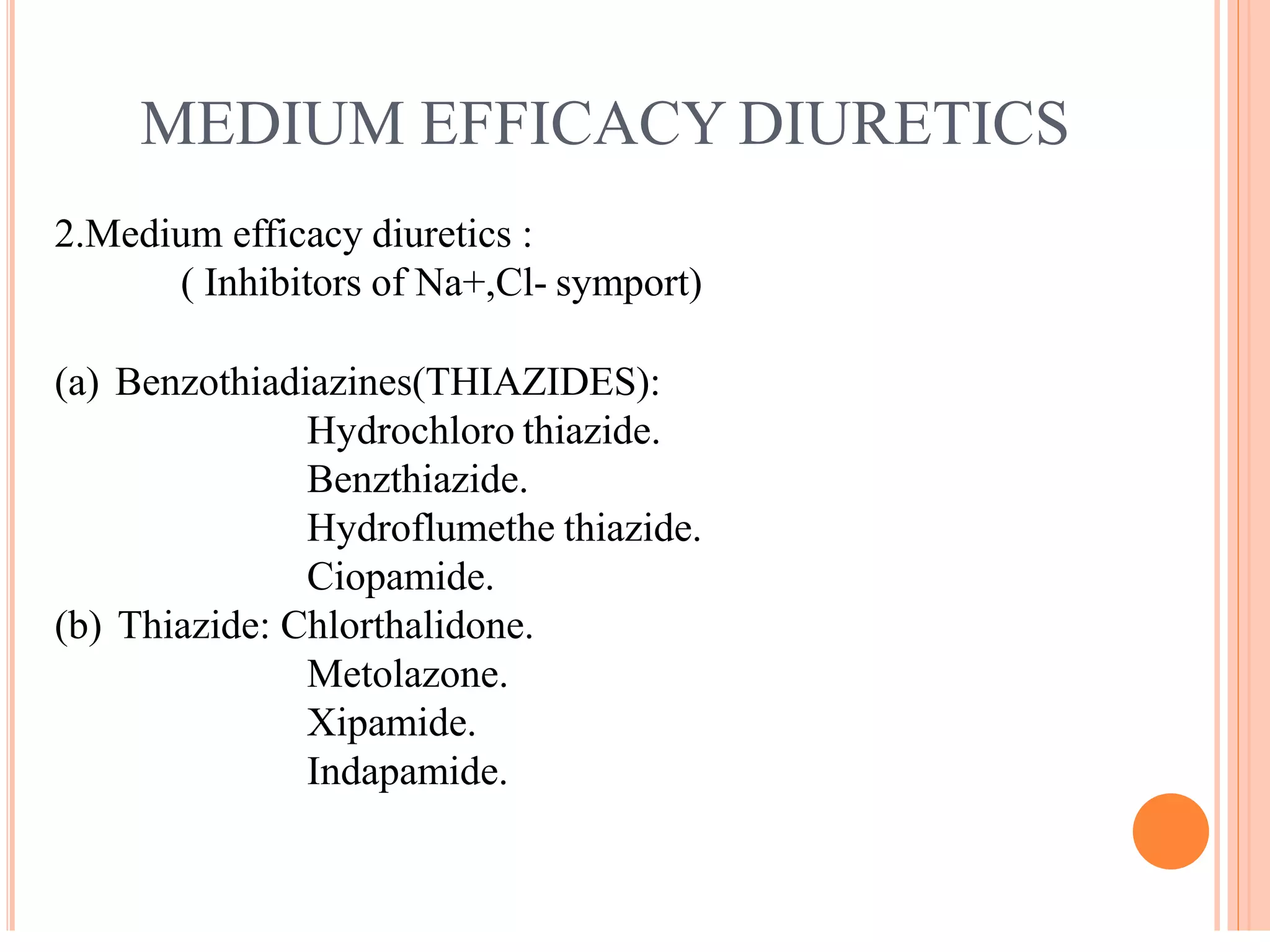
2.Medium efficacy diuretics :
( Inhibitors of Na+,Cl- symport)
(a) Benzothiadiazines(THIAZIDES):
Hydrochloro thiazide.
Benzthiazide.
Hydroflumethe thiazide.
Ciopamide.
(b) Thiazide: Chlorthalidone.
Metolazone.
Xipamide.
Indapamide.
WEAK OR ADJUNCTIVE DIURETICS
3. Weak or adjunctive diuretics:
a. Carbonic anhydrase inhibitors: Acetazolamide
b. Potassium –sparing diuretics:
1) Aldosterone antagonist: Spironolactone, Eplerenone.
2) Inhibitors of renal epithial Na+ channel: Trimterene, Amiloride.
c. Osmotic diuretics: Mannitol. Isosorbide. Glycerol.
d. Xanthines: Theophlline.
MECHANISM OF DIURETICS
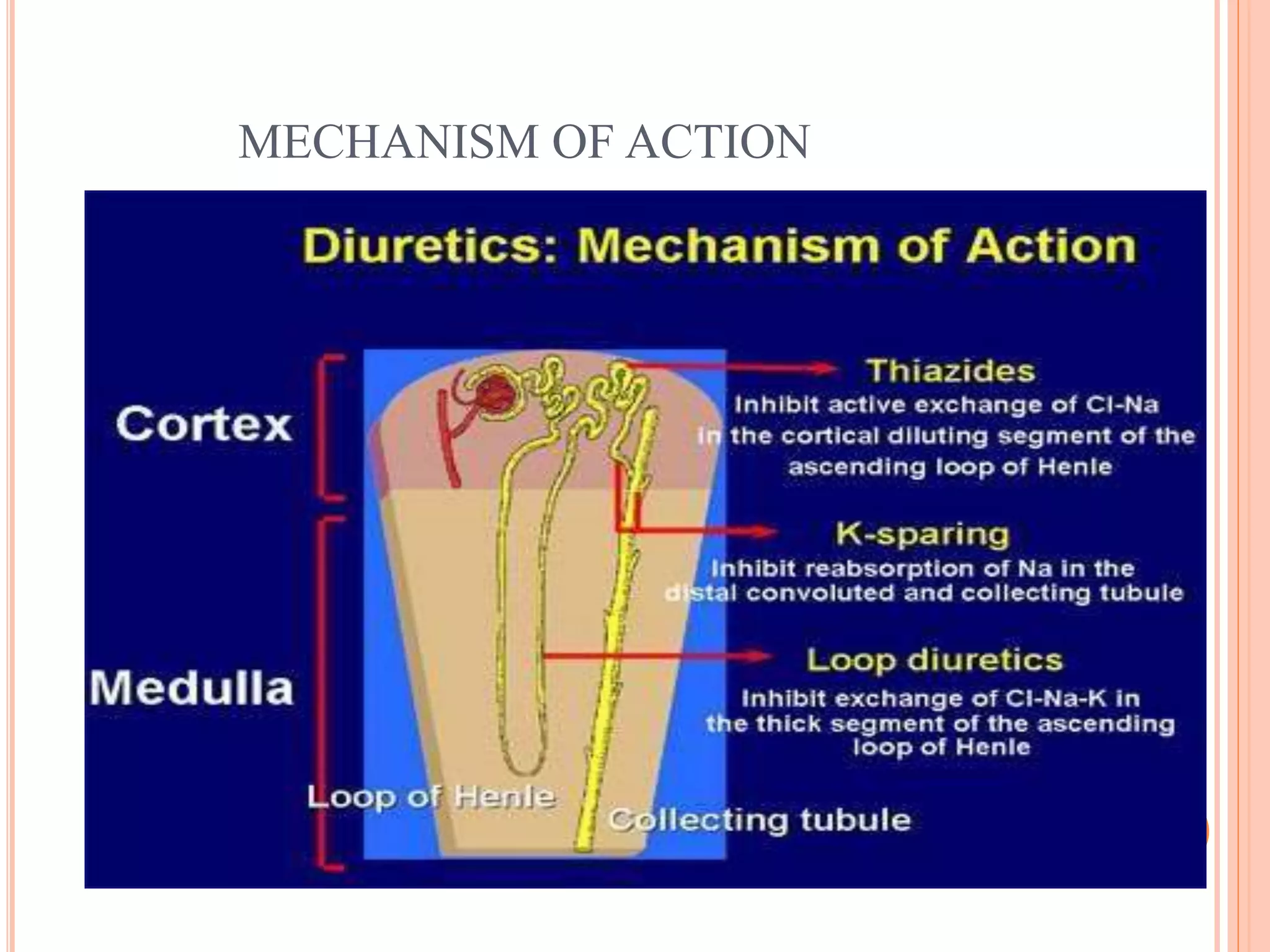
MECHANISM OF ACTION
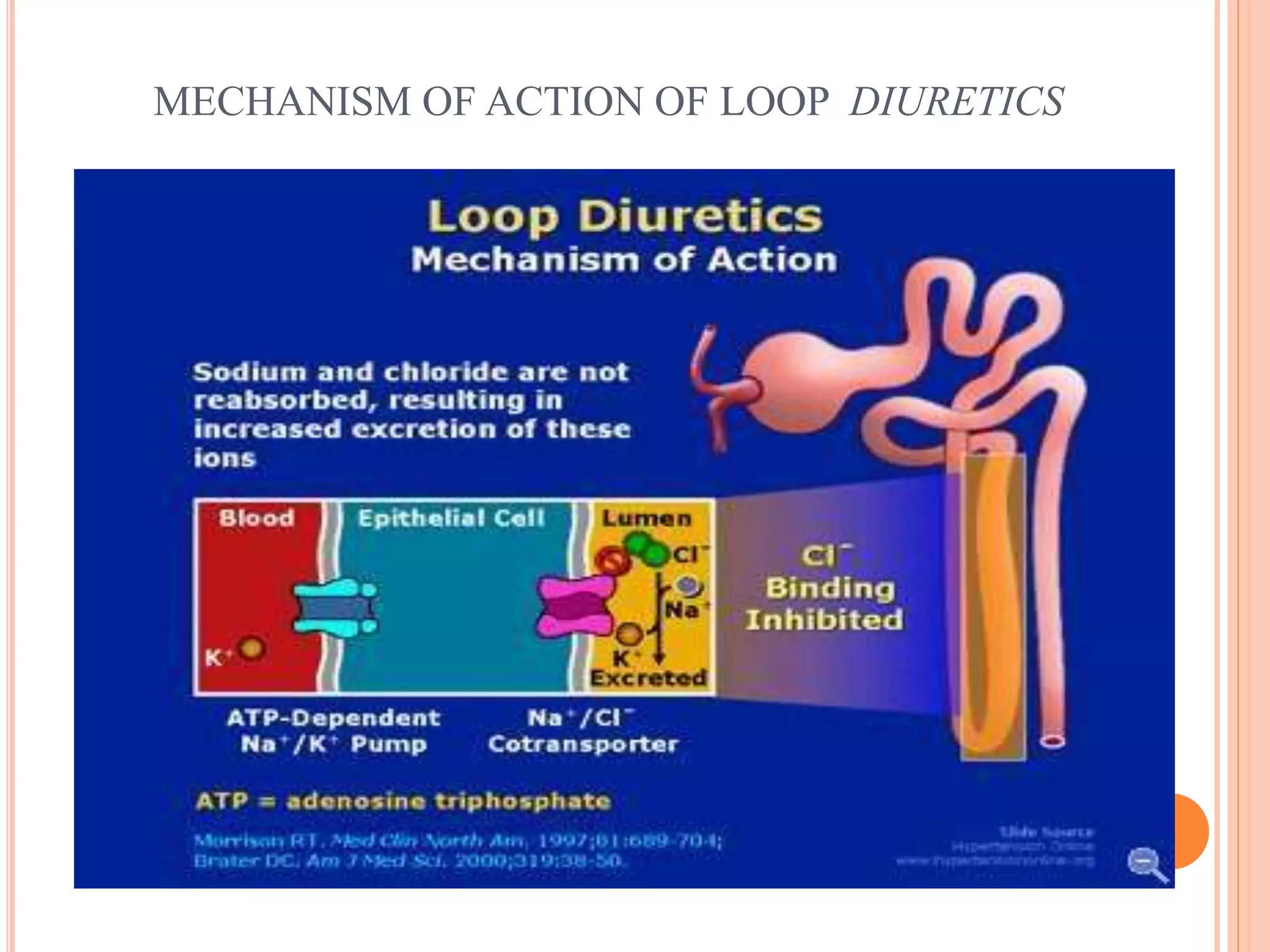
MECHANISM OF ACTION OF LOOP DIURETICS
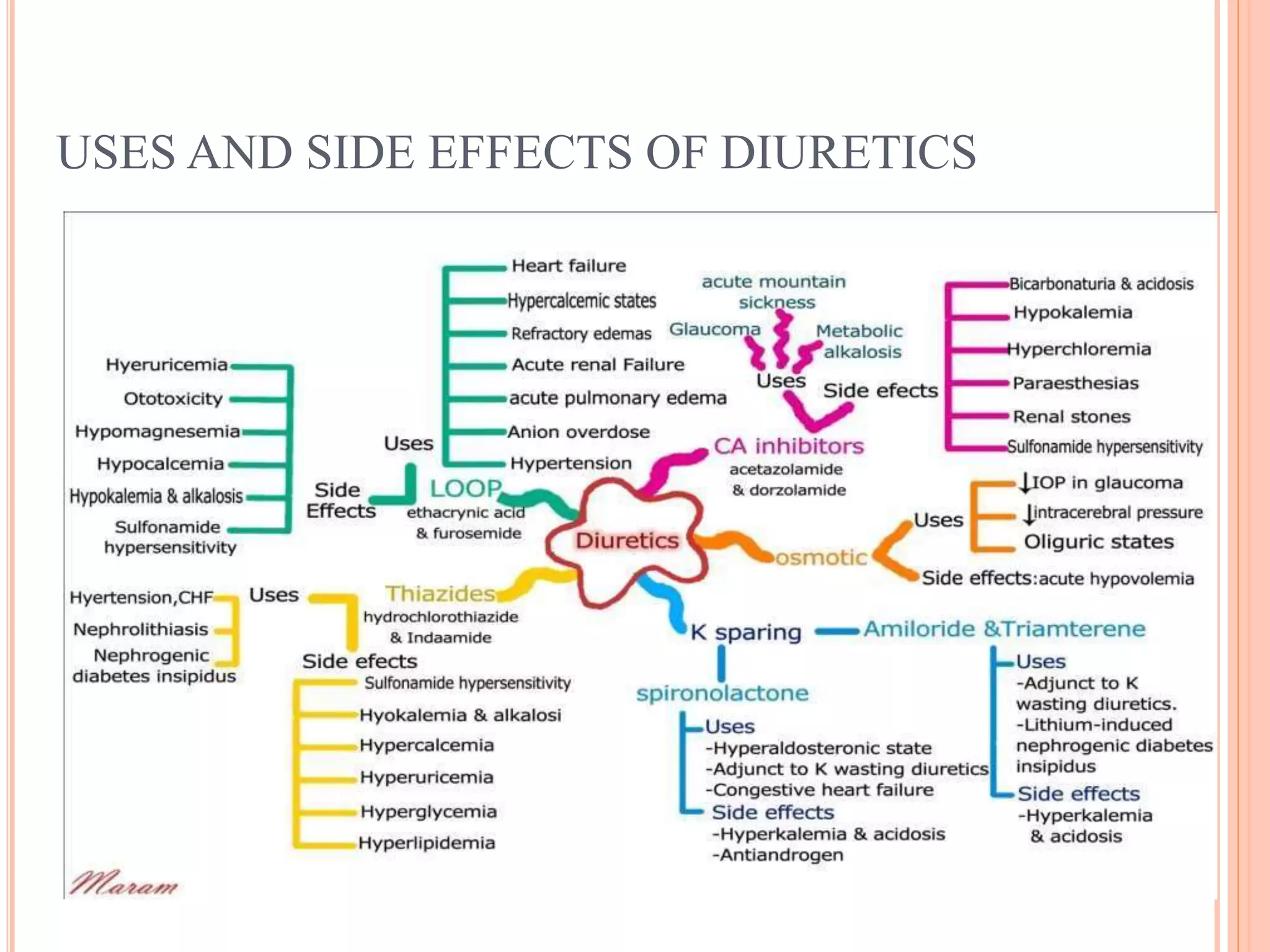
INDICATIONS AND SIDE EFFECTS
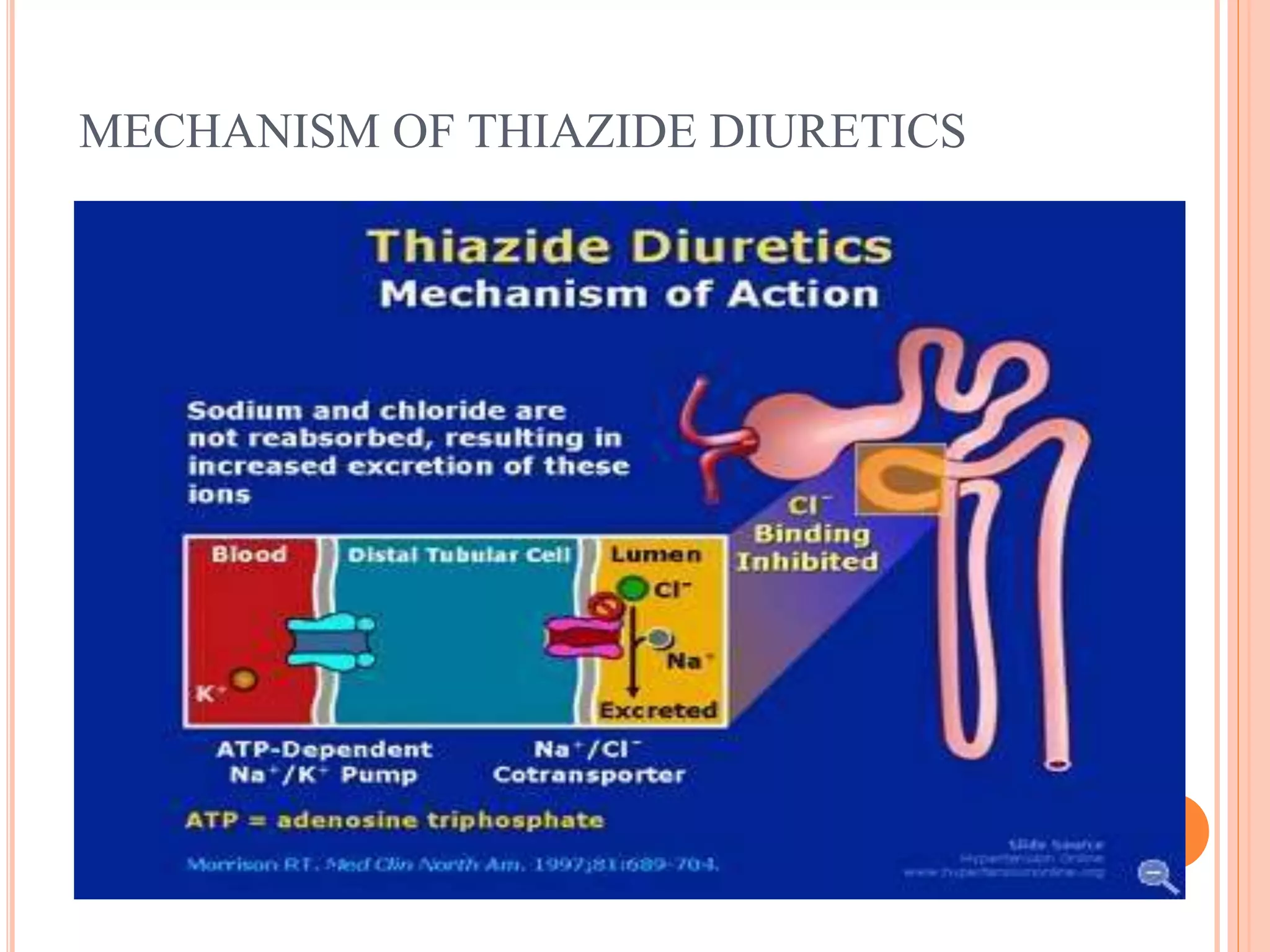
MECHANISM OF THIAZIDE DIURETICS
POTASSIUM- SPARING DIURETICS
PHARMACOLOGICAL ACTIONS OF
DIURETICS
HIGH CEILING/LOOP DIURETICS
High ceiling diuretics may cause a substantial decrease
upto 20%of the filtered load of Nacl and water.
Loop diuretics such as FUROSEMIDE inhibits the body’s
ability to reabsorb sodium at the ascending loop in
NEPHRON.
THIAZIDES
Thiazide diuretics such as Hydrochlorothiazide act on the
distal convoluted tubule and inhibits the sodium- chloride
symporter leading to retention of water in the urine.
Frequent urination is due to the increased loss of water.
The long term anti –hypertensive action is based on the
thiazides which decrease preload and blood pressure.
CARBONIC ANHYDRASE INHIBITORS
Carbonic anhydrase inhibitors inhibits the enzyme
carbonic anhydrase which is found in proximal
convoluted tubule.
This results in several effects including biocarbonate
retention in the urine.
Potassium retention in urine.
Decreased sodium absorption.
Eg: Acetazolamide.
Methazolamine.
POTASSIUM-SPARING DIURETICS
These are diuretics which do not promote the
secretion of potassium into the urine.
Potassium is retained and not lost as much as with
other diuretics.
The term potassium sparing refers to an effects
rather than a mechanism or location.
Eg: Aldosterone antagonists Spironolactone
Which is a competitive antagonist of aldosterone.
Aldosterone adds sodium channels in the cells of
collecting duct and late distal tubule of the Nephron.
Spirnolactone prevents aldosterone from entering
the cells, and preventing sodium reabsorption.
Eg: Eplerenone.
Potassium canrenonate.
Epithelial sodium channel blockers
Eg: Amiloride.
Triamterence.
OSMOTIC DIURETICS
The compounds as Mannitol are filtered in the
glomerulus, but cannot be reabsorbed.
Their presence lead to an increases in the osmolarity
of the filtrate.
To maintain osmotic balance ,water is retained in the
urine.
Glucose like mannitol behave as an osmotic diuretic.
Glucosuria causes a loss of hypotonic water & Na+,
leading to a hypertonic state with signs of volume
depletion.
Such as Hypotention,Tachycardia.
LOW CEILING DIURETICS
The low celing diuretics are used to indicate an
diuretic has a rapid flatting dose effect curve.
It refers to a pharmacological profile, not a chemical
structure.
USES AND SIDE EFFECTS OF DIURETICS
Diuretics

Diuretics

  • 1.
  • 2.
    DIURETICS DEFINITION : These aredrugs which cause a net loss of Na+ and water in urine There are several categories of diuretics. All diuretics increases the excretion of water from body.
  • 4.
    CLASSIFICATION Diuretics are Classifiedas: 1. High ceiling /Loop diuretics… 2. Thiazides. 3.Carbonic anhydrase inhibitors. 4.Potassium –sparing diuretics. 5.Osmatic diuretics. 6.Low ceiling diuretics.
  • 5.
    DIURETICS CLASSIFICATION 1.HIGH EFFICACYDIURETICS: (Inhibitors of Na+,K+,2Cl- cotransport) (a) Sulphamoyl deravatives: Furosemide. Bumetanide. Torasemide. (b) Phenoxyacetic acid derivative: Ethacrynic acid.
  • 6.
    MEDIUM EFFICACY DIURETICS 2.Mediumefficacy diuretics : ( Inhibitors of Na+,Cl- symport) (a) Benzothiadiazines(THIAZIDES): Hydrochloro thiazide. Benzthiazide. Hydroflumethe thiazide. Ciopamide. (b) Thiazide: Chlorthalidone. Metolazone. Xipamide. Indapamide.
  • 7.
    WEAK OR ADJUNCTIVEDIURETICS 3. Weak or adjunctive diuretics: a. Carbonic anhydrase inhibitors: Acetazolamide b. Potassium –sparing diuretics: 1) Aldosterone antagonist: Spironolactone, Eplerenone. 2) Inhibitors of renal epithial Na+ channel: Trimterene, Amiloride. c. Osmotic diuretics: Mannitol. Isosorbide. Glycerol. d. Xanthines: Theophlline.
  • 8.
  • 9.
  • 10.
    MECHANISM OF ACTIONOF LOOP DIURETICS
  • 12.
  • 13.
  • 15.
  • 16.
  • 17.
    HIGH CEILING/LOOP DIURETICS Highceiling diuretics may cause a substantial decrease upto 20%of the filtered load of Nacl and water. Loop diuretics such as FUROSEMIDE inhibits the body’s ability to reabsorb sodium at the ascending loop in NEPHRON.
  • 18.
    THIAZIDES Thiazide diuretics suchas Hydrochlorothiazide act on the distal convoluted tubule and inhibits the sodium- chloride symporter leading to retention of water in the urine. Frequent urination is due to the increased loss of water. The long term anti –hypertensive action is based on the thiazides which decrease preload and blood pressure.
  • 19.
    CARBONIC ANHYDRASE INHIBITORS Carbonicanhydrase inhibitors inhibits the enzyme carbonic anhydrase which is found in proximal convoluted tubule. This results in several effects including biocarbonate retention in the urine. Potassium retention in urine. Decreased sodium absorption. Eg: Acetazolamide. Methazolamine.
  • 20.
    POTASSIUM-SPARING DIURETICS These arediuretics which do not promote the secretion of potassium into the urine. Potassium is retained and not lost as much as with other diuretics. The term potassium sparing refers to an effects rather than a mechanism or location. Eg: Aldosterone antagonists Spironolactone
  • 21.
    Which is acompetitive antagonist of aldosterone. Aldosterone adds sodium channels in the cells of collecting duct and late distal tubule of the Nephron. Spirnolactone prevents aldosterone from entering the cells, and preventing sodium reabsorption. Eg: Eplerenone. Potassium canrenonate. Epithelial sodium channel blockers Eg: Amiloride. Triamterence.
  • 22.
    OSMOTIC DIURETICS The compoundsas Mannitol are filtered in the glomerulus, but cannot be reabsorbed. Their presence lead to an increases in the osmolarity of the filtrate. To maintain osmotic balance ,water is retained in the urine. Glucose like mannitol behave as an osmotic diuretic. Glucosuria causes a loss of hypotonic water & Na+, leading to a hypertonic state with signs of volume depletion. Such as Hypotention,Tachycardia.
  • 23.
    LOW CEILING DIURETICS Thelow celing diuretics are used to indicate an diuretic has a rapid flatting dose effect curve. It refers to a pharmacological profile, not a chemical structure.
  • 24.
    USES AND SIDEEFFECTS OF DIURETICS