2
SYNONYM- Jesuit’s bark,
Peruvian bark
• BIOLOGICAL SOURCE: Cinchona consists of
dried bark of the cultivated trees of
Cinchona officinalis linn,
C.ledgeriana,
C. calisaya
C. succirubra
Family-Rubiaceae.
3
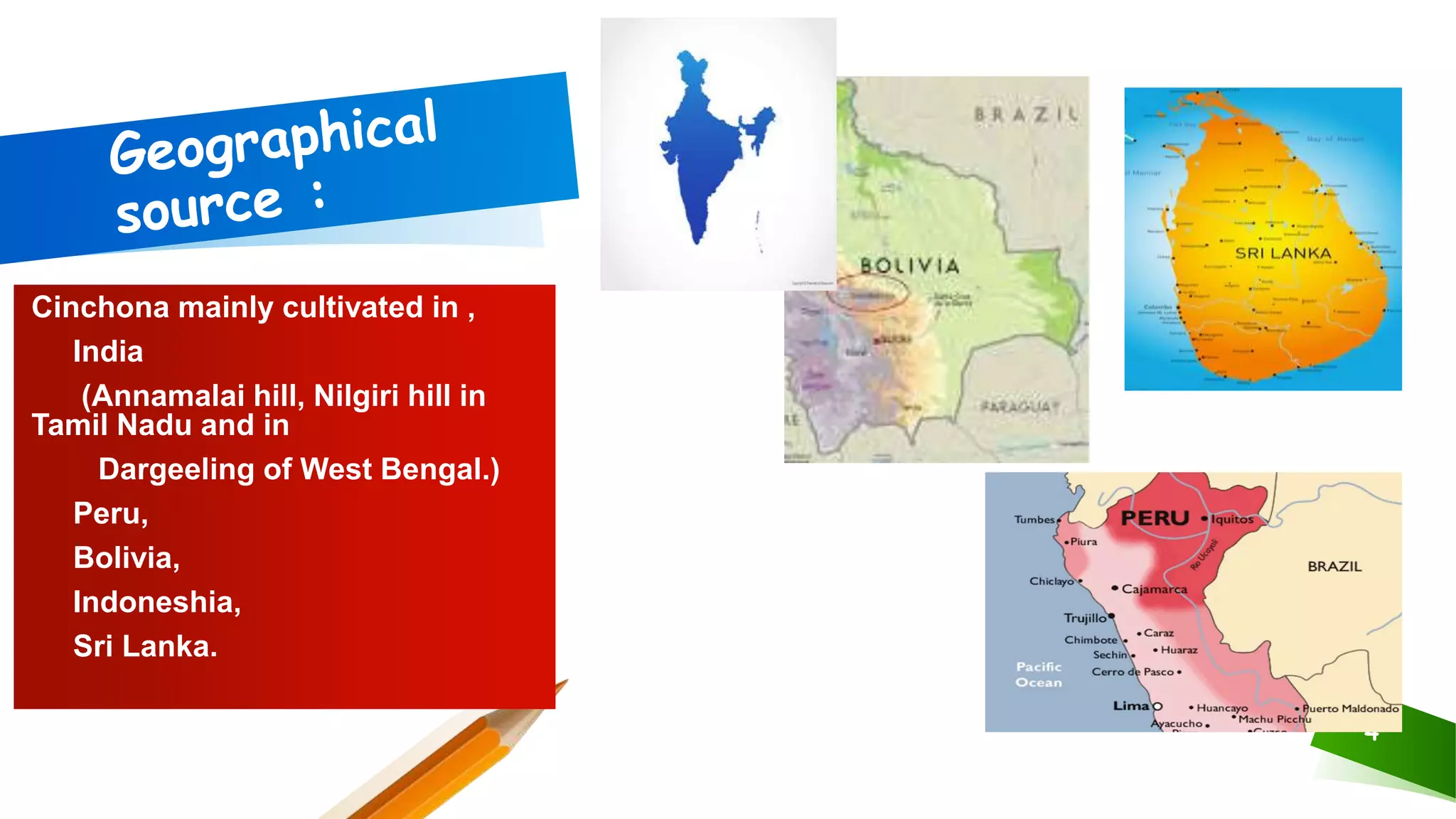
Cinchona mainly cultivated in ,
India
(Annamalai hill, Nilgiri hill in
Tamil Nadu and in
Dargeeling of West Bengal.)
Peru,
Bolivia,
Indoneshia,
Sri Lanka.
4
5
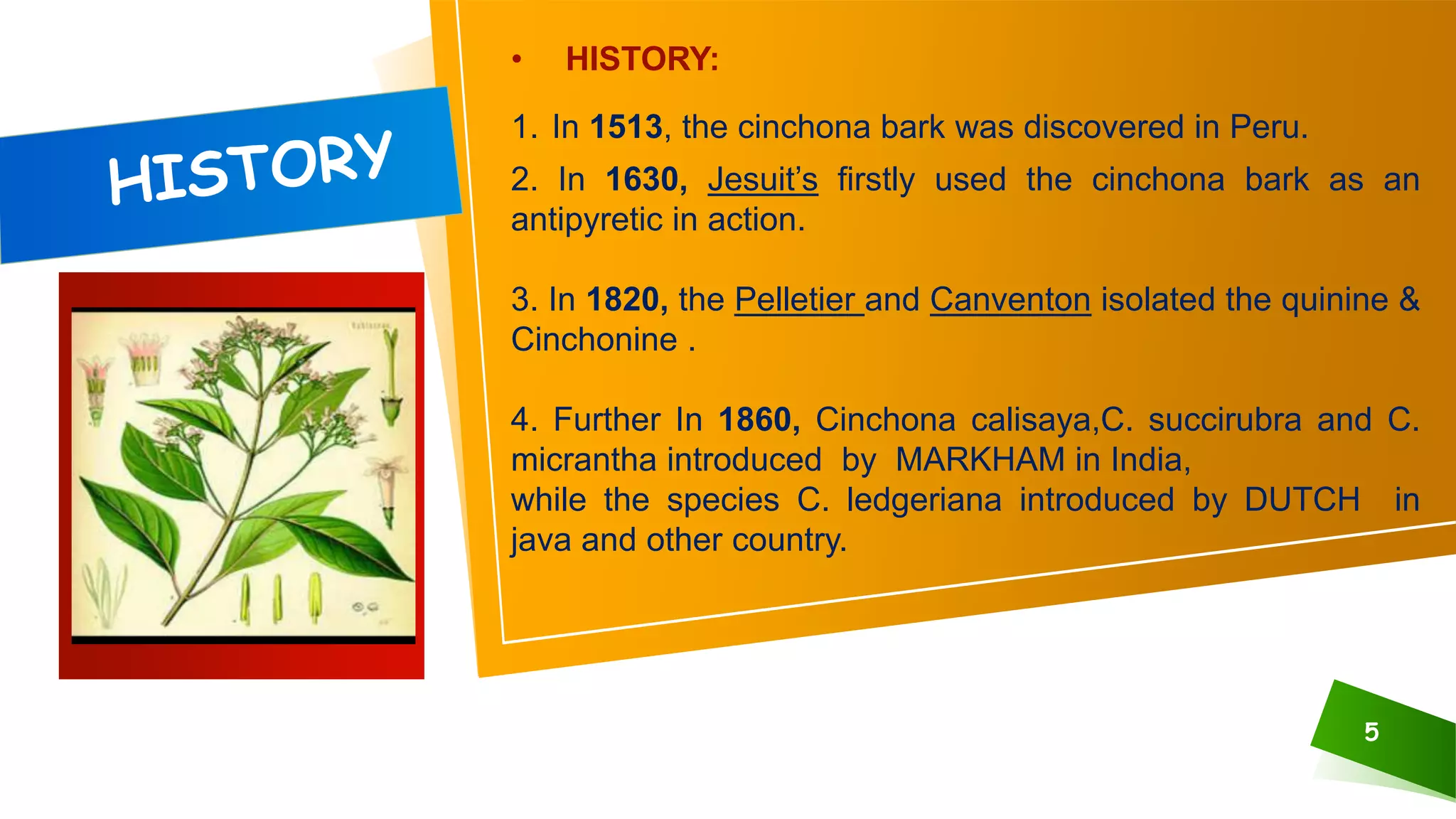
• HISTORY:
1. In 1513, the cinchona bark was discovered in Peru.
2. In 1630, Jesuit’s firstly used the cinchona bark as an
antipyretic in action.
3. In 1820, the Pelletier and Canventon isolated the quinine &
Cinchonine .
4. Further In 1860, Cinchona calisaya,C. succirubra and C.
micrantha introduced by MARKHAM in India,
while the species C. ledgeriana introduced by DUTCH in
java and other country.
6
 In West Bengal, only budding method was practised while in
Tamil Nadu, budding and layering method were practised.
 Cinchona bark was mainly cultivated by three methods.
a. Coppicing method
b. Uprooting method
c. Fehling method
A) Coppicing
method
7
 It is an economical method which is used for cultivation of stem
bark.
 Vertical incisions are made on branches ,trunk of the tree and
these incisions are connected by horizontal circles.
 The bark is then stripped off and dried in sunlight(drying below
175°F) & further by artificial heat.
 Further the quills of drug are packed in gunny bags and marketed.
B) Uprooting method
8
 When trees are grow to an age of 12 year, Root bark
is collected by uprooting the trees and further bark is
separated manually.
 In this method there is a destruction
of the plant so this method generally not used.
c) Fehling method
9
1. COLOUR:
C. succirubra – red colour.
C. ledgeriana and C. calisaya – yellow colour.
C. officinalis – pale colour.
2. ODOUR: slight and characteristics.
3. TASTE: Astringent and Bitter taste.
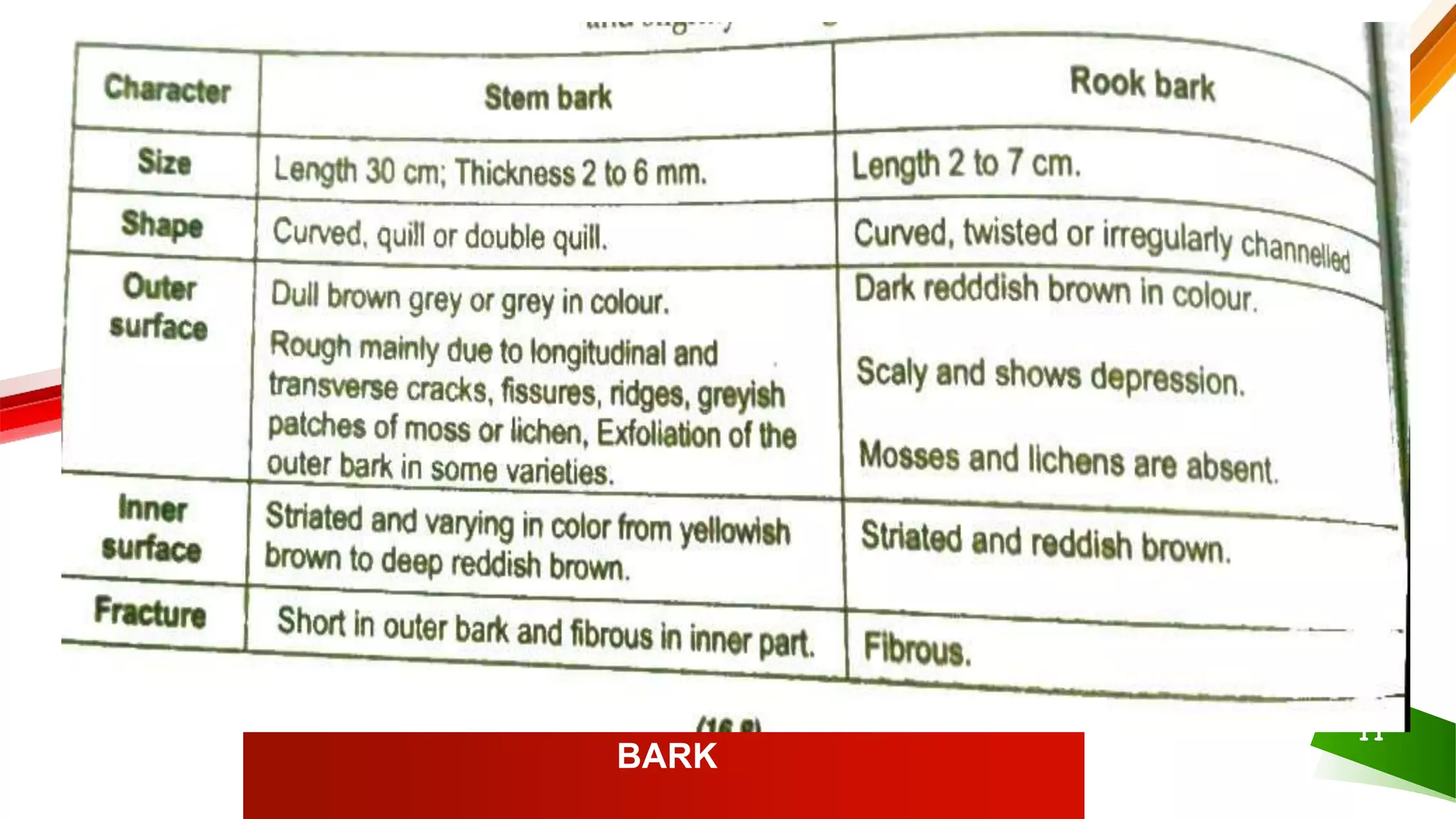
The size and shape of the cinchona species varies from species
to species as follows:
10
CHARACTERS OF STEM BARK AND ROOT
BARK
11
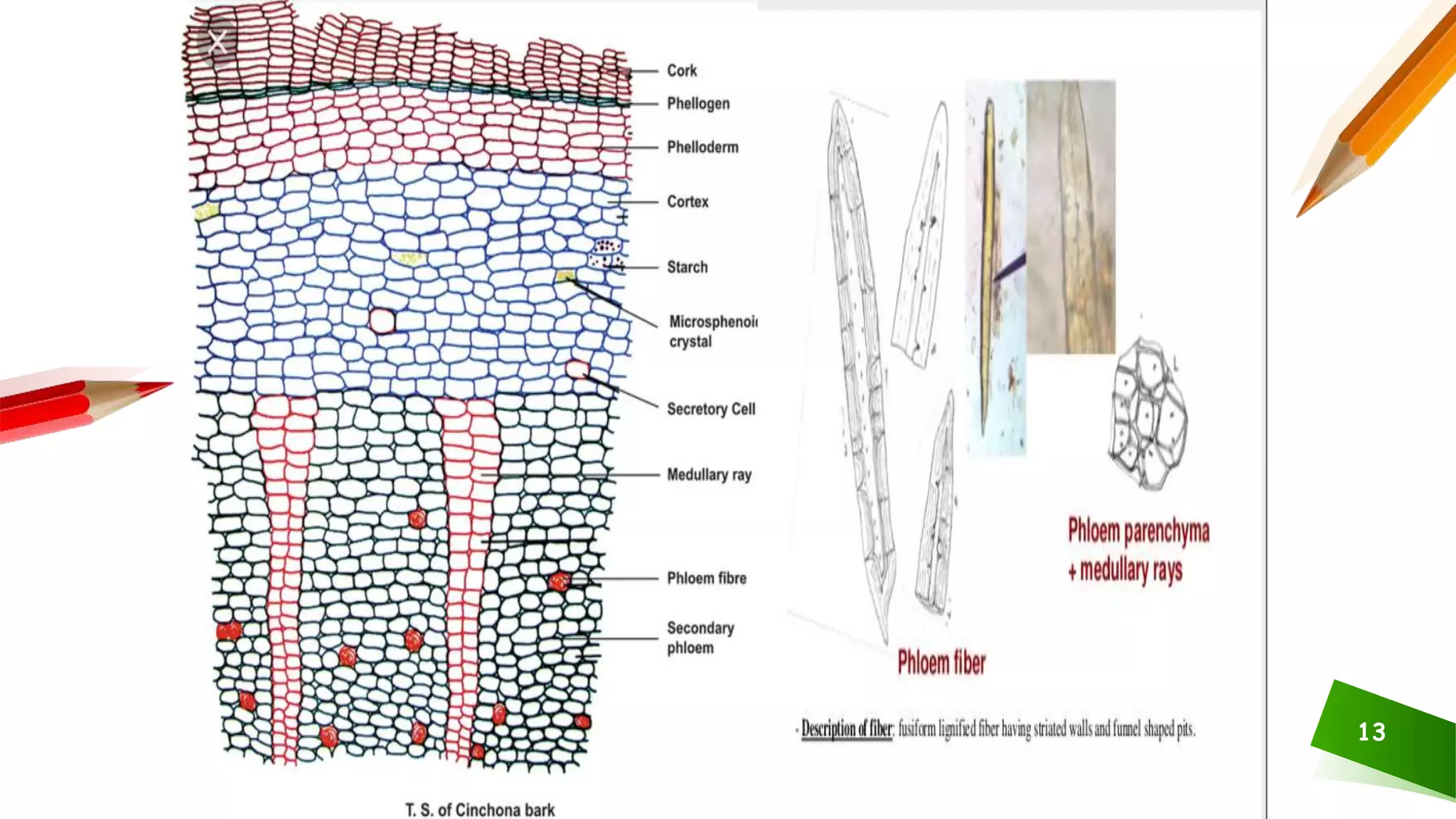
MICROSCOPICAL
CHARACTER:
12
13
14
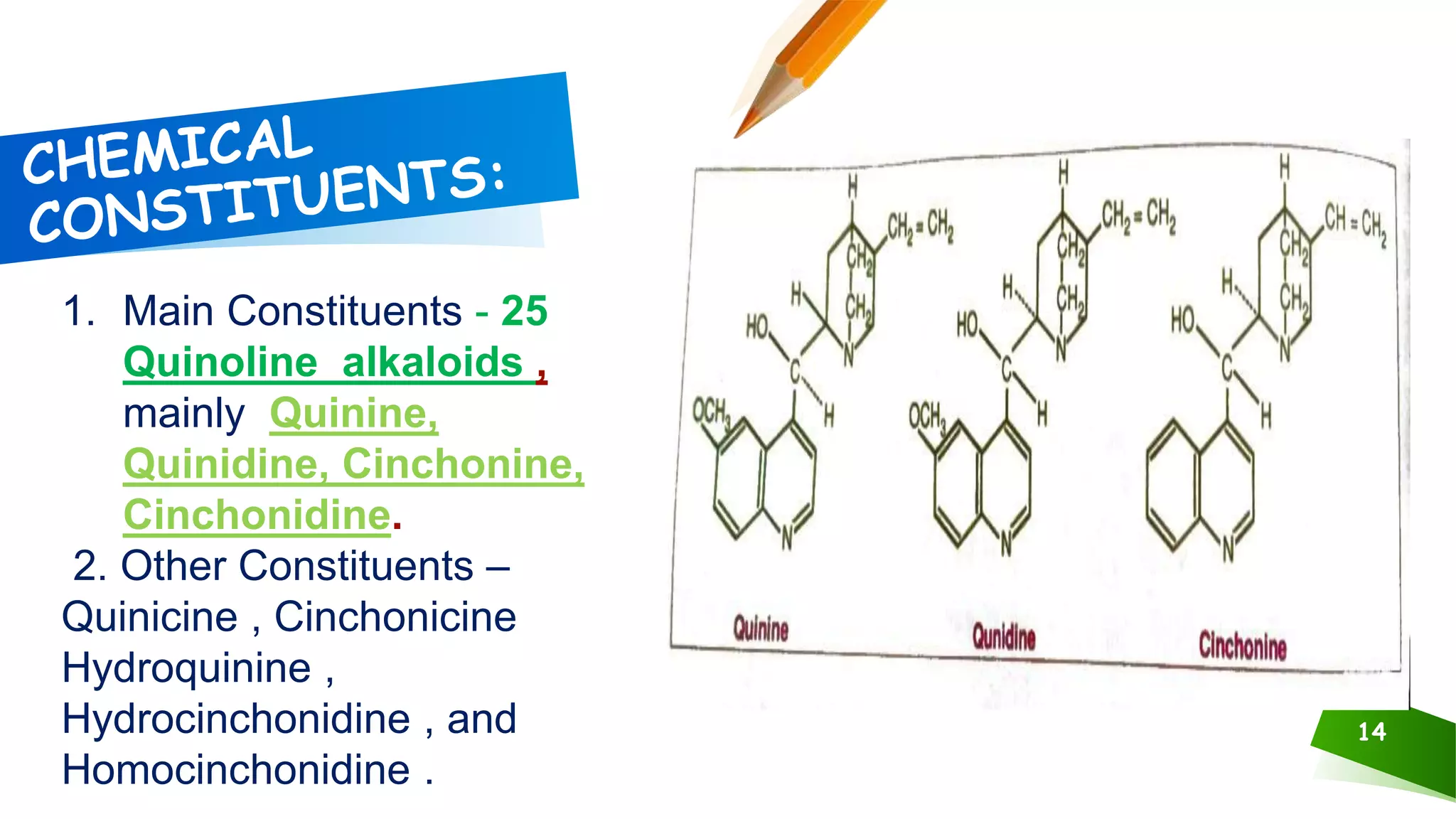
1. Main Constituents - 25
Quinoline alkaloids ,
mainly Quinine,
Quinidine, Cinchonine,
Cinchonidine.
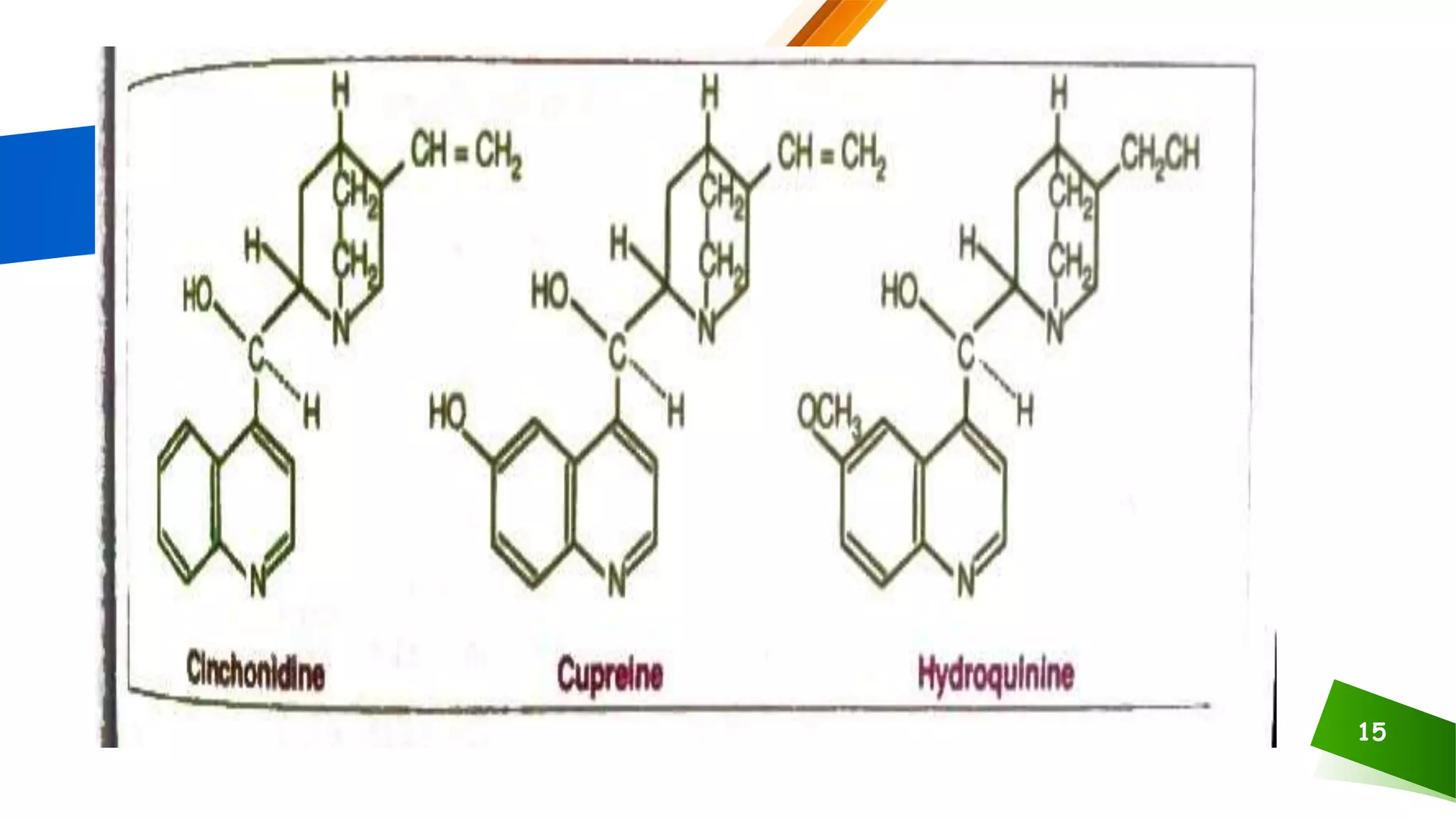
2. Other Constituents –
Quinicine , Cinchonicine
Hydroquinine ,
Hydrocinchonidine , and
Homocinchonidine .
15
16
1. THALLEOQUIN TEST: Powdered drug + Bromine water + dilute
ammonia solution gives GREEN colour.
2. TEST FOR QUININE: Powdered alcoholic extract + dilute H2SO4
gives BLUE fluorescence.
3. Powdered drug + Glacial Acetic Acid, PURPLE vapours are produced in
the upper part of the test tube.
4 . TEST FOR QUINIDINE: Quinidine solution +Silver Nitrate Solution gives
WHITE Precipitate which is soluble in nitric acid.
17
1. Cuprea Bark (Quinine,
Quinidine)
2. False Cuprea Bark (
cinchonine ,
cinchonamine , no Quinine )
18
1. Antimalarial (due to Quinine).
2. Used in cinchona extract,
cinchona tincture.
3. Bitter stomachic.
4. Antipyretic.
5. In Arrhythmias and in the Atrial
Fibrillation.
Cinchona bark

Cinchona bark

  • 2.
  • 3.
    SYNONYM- Jesuit’s bark, Peruvianbark • BIOLOGICAL SOURCE: Cinchona consists of dried bark of the cultivated trees of Cinchona officinalis linn, C.ledgeriana, C. calisaya C. succirubra Family-Rubiaceae. 3
  • 4.
    Cinchona mainly cultivatedin , India (Annamalai hill, Nilgiri hill in Tamil Nadu and in Dargeeling of West Bengal.) Peru, Bolivia, Indoneshia, Sri Lanka. 4
  • 5.
    5 • HISTORY: 1. In1513, the cinchona bark was discovered in Peru. 2. In 1630, Jesuit’s firstly used the cinchona bark as an antipyretic in action. 3. In 1820, the Pelletier and Canventon isolated the quinine & Cinchonine . 4. Further In 1860, Cinchona calisaya,C. succirubra and C. micrantha introduced by MARKHAM in India, while the species C. ledgeriana introduced by DUTCH in java and other country.
  • 6.
    6  In WestBengal, only budding method was practised while in Tamil Nadu, budding and layering method were practised.  Cinchona bark was mainly cultivated by three methods. a. Coppicing method b. Uprooting method c. Fehling method
  • 7.
    A) Coppicing method 7  Itis an economical method which is used for cultivation of stem bark.  Vertical incisions are made on branches ,trunk of the tree and these incisions are connected by horizontal circles.  The bark is then stripped off and dried in sunlight(drying below 175°F) & further by artificial heat.  Further the quills of drug are packed in gunny bags and marketed.
  • 8.
    B) Uprooting method 8 When trees are grow to an age of 12 year, Root bark is collected by uprooting the trees and further bark is separated manually.  In this method there is a destruction of the plant so this method generally not used. c) Fehling method
  • 9.
    9 1. COLOUR: C. succirubra– red colour. C. ledgeriana and C. calisaya – yellow colour. C. officinalis – pale colour. 2. ODOUR: slight and characteristics. 3. TASTE: Astringent and Bitter taste. The size and shape of the cinchona species varies from species to species as follows:
  • 10.
  • 11.
    CHARACTERS OF STEMBARK AND ROOT BARK 11
  • 12.
  • 13.
  • 14.
    14 1. Main Constituents- 25 Quinoline alkaloids , mainly Quinine, Quinidine, Cinchonine, Cinchonidine. 2. Other Constituents – Quinicine , Cinchonicine Hydroquinine , Hydrocinchonidine , and Homocinchonidine .
  • 15.
  • 16.
    16 1. THALLEOQUIN TEST:Powdered drug + Bromine water + dilute ammonia solution gives GREEN colour. 2. TEST FOR QUININE: Powdered alcoholic extract + dilute H2SO4 gives BLUE fluorescence. 3. Powdered drug + Glacial Acetic Acid, PURPLE vapours are produced in the upper part of the test tube. 4 . TEST FOR QUINIDINE: Quinidine solution +Silver Nitrate Solution gives WHITE Precipitate which is soluble in nitric acid.
  • 17.
    17 1. Cuprea Bark(Quinine, Quinidine) 2. False Cuprea Bark ( cinchonine , cinchonamine , no Quinine )
  • 18.
    18 1. Antimalarial (dueto Quinine). 2. Used in cinchona extract, cinchona tincture. 3. Bitter stomachic. 4. Antipyretic. 5. In Arrhythmias and in the Atrial Fibrillation.