DİJİTAL İNDEKS
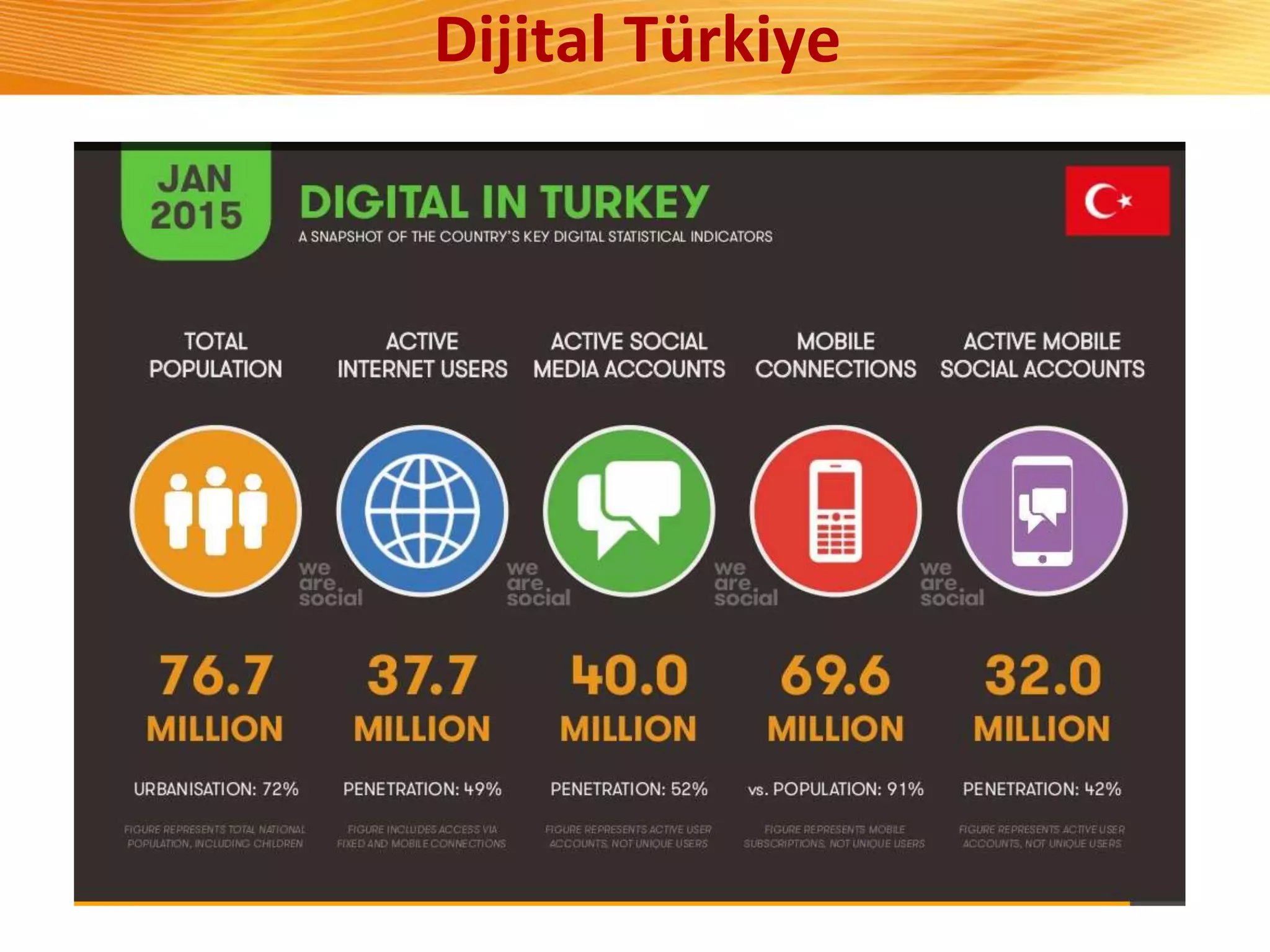
Dijital Türkiye
Dijital Medya Nedir?
Kaynak : http://wtfisonline.com/blogs/digital-media-improving-the-symbiotic-relationship-
with-web-social-media-and-digital/
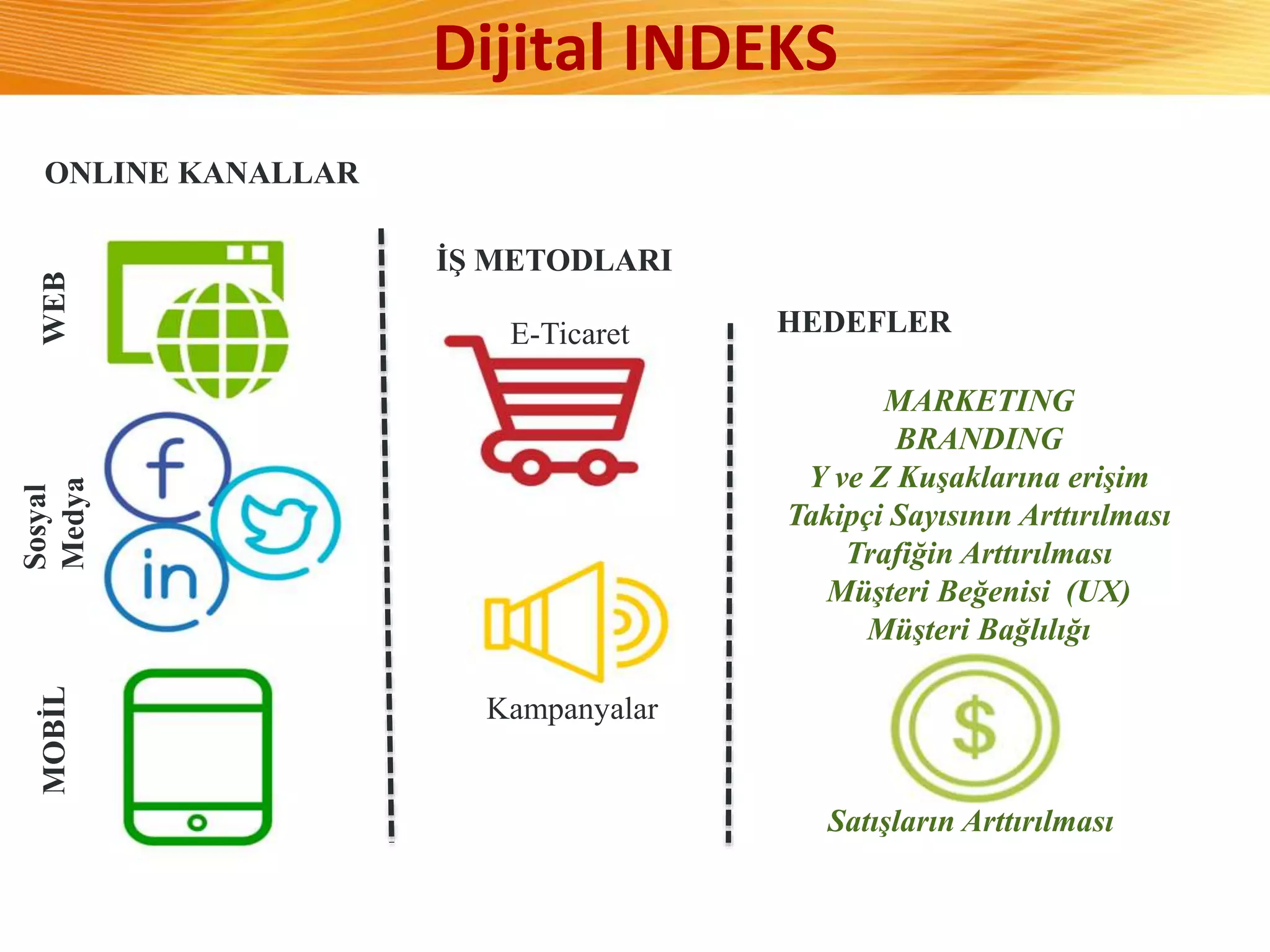
Dijital INDEKS
ONLINE KANALLAR
İŞ METODLARI
Satışların Arttırılması
Sosyal
Medya
WEBMOBİL
E-Ticaret
Kampanyalar
MARKETING
BRANDING
Y ve Z Kuşaklarına erişim
Takipçi Sayısının Arttırılması
Trafiğin Arttırılması
Müşteri Beğenisi (UX)
Müşteri Bağlılığı
HEDEFLER
 1000 üzerinden toplam sayısal değer
 Markaların Dijital Etki Skoru
(Satış ve Marketing/Branding Ağırlıklı)
 User Experience Değerlendirmesi
 Müşteri Deneyim Değerlendirmesi
 Farklı Konseptlerin Değerlendirmesi
 E-Ticaret Değerlendirmesi
 Firmaların Sektöre Göre Değerlendirilmesi
 Sektörler arası Know-How paylaşımı
Dijital INDEKS
 Instagram’dan Satış
 Follower ve Like Sayıları (Facebook, …)
 Lojistik Seçenekler (E-Ticaret)
 Mobil App, Mobil Loyalty
 WEB (SSL, Slider, Blog, E-Mail, MKK, SSS,
Müşteri Hizmetleri Erişim Bilgileri, Sosyal
Medya Bağlantıları, Mobil App Bağlantısı)
 Mobil Uygulama Etkisi, IVN, SMS
 E-Ticaret Oranları
Copyright © 2012 Pearson Education, Inc. Slide 6-6
Dijital INDEKS – Örnek Kriterler
Slide 6-8
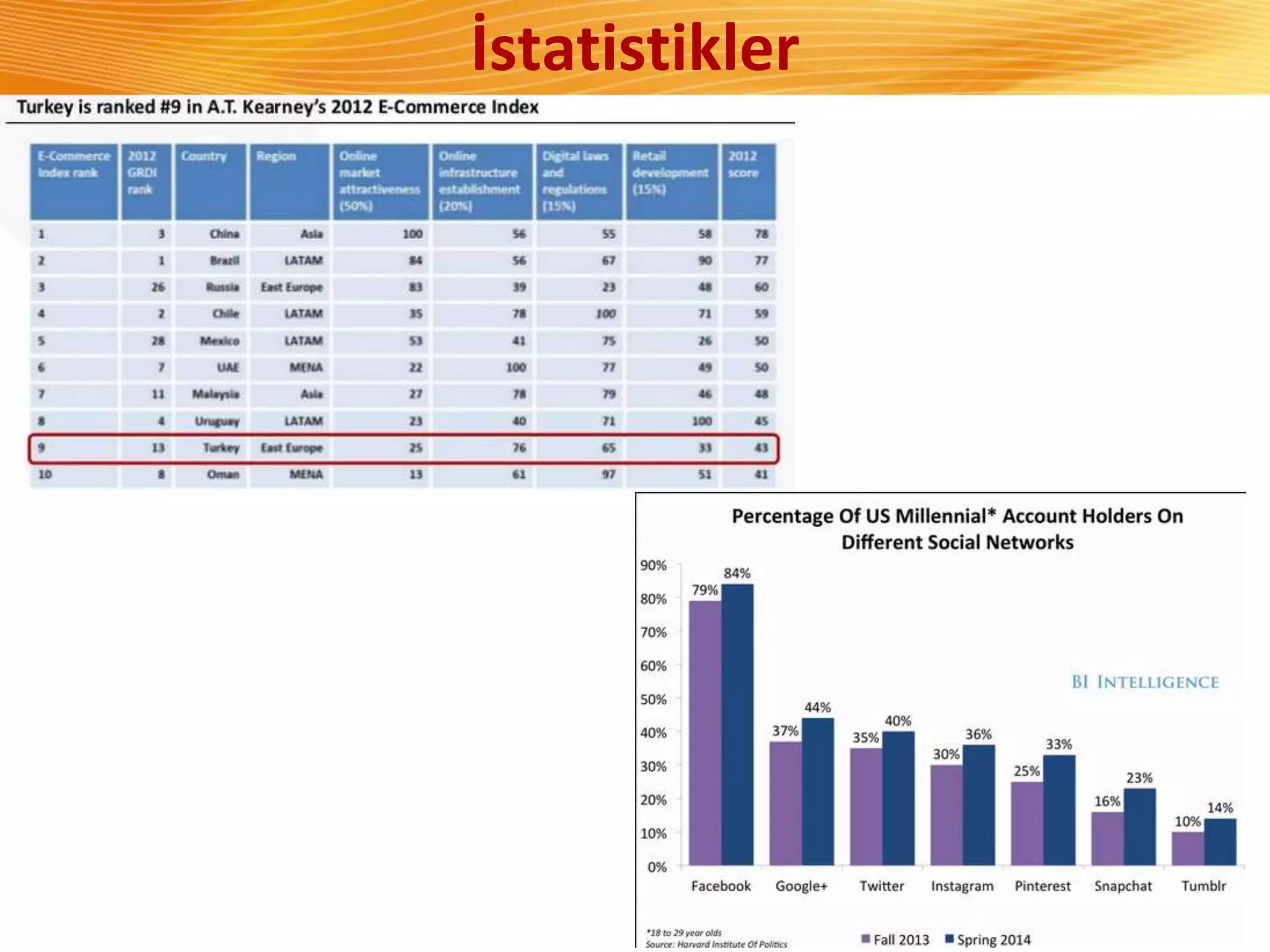
İstatistikler
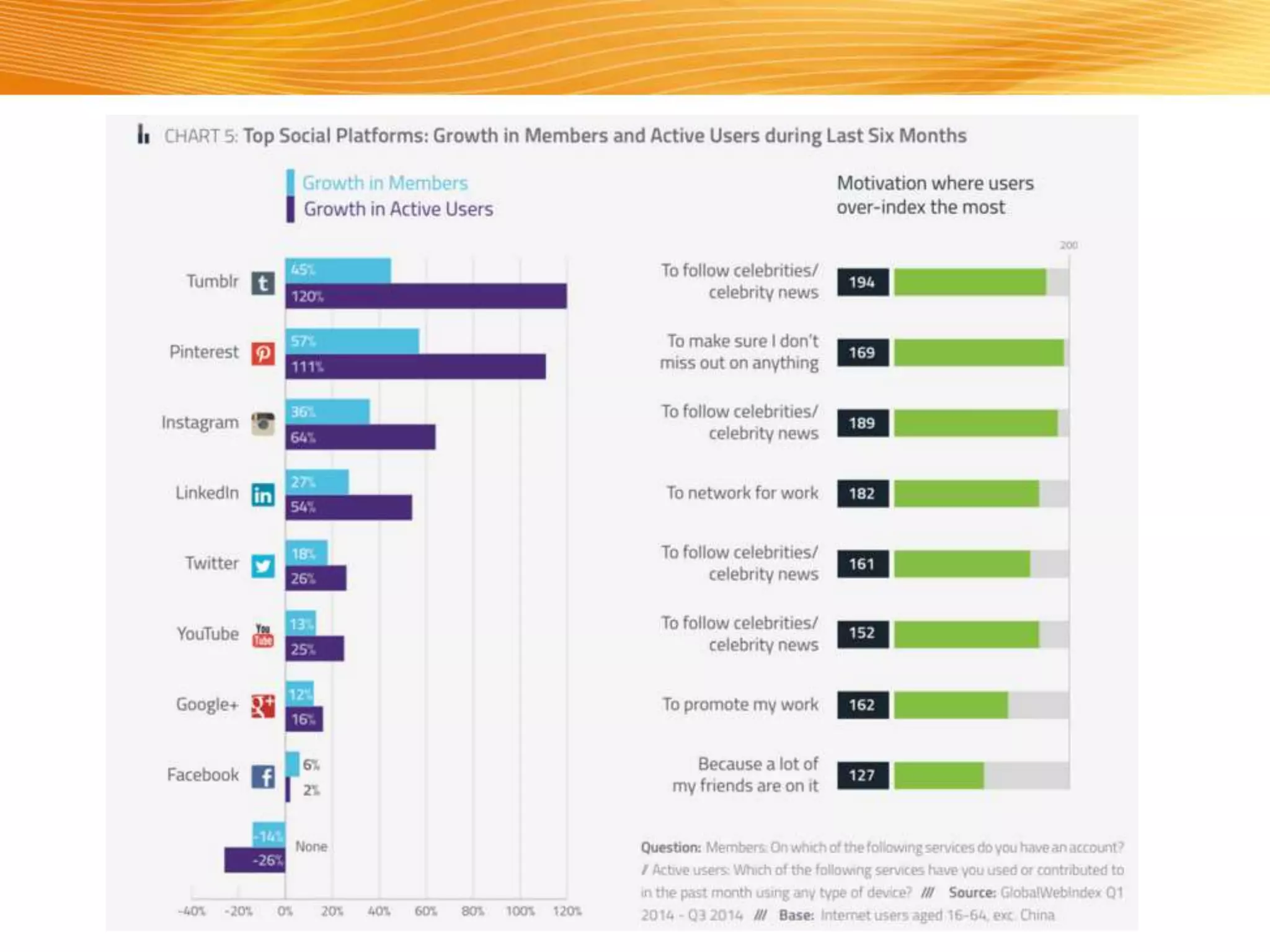
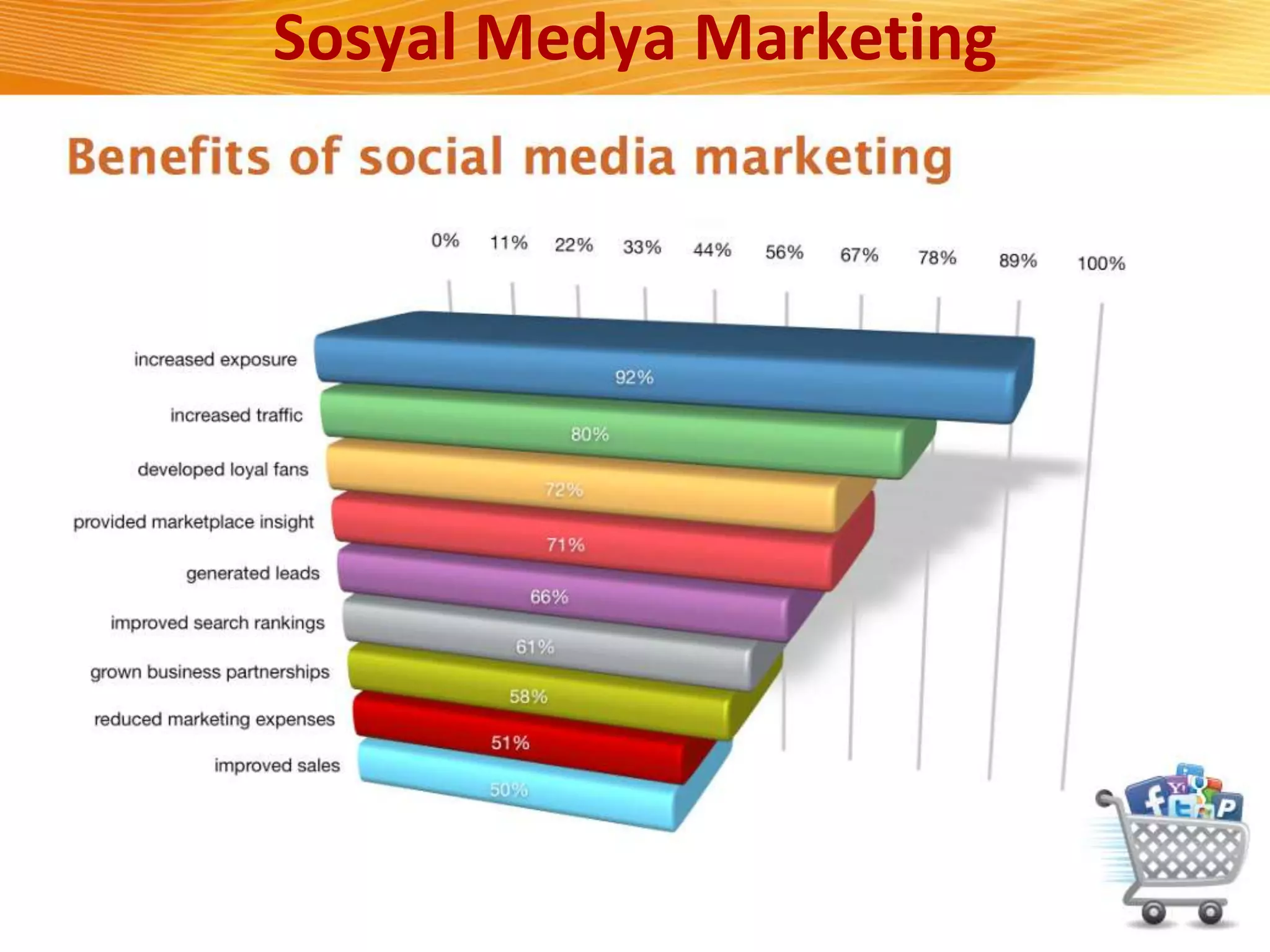
2015 Sosyal Medya Marketin Trends
Sosyal Medya Marketing
Social Commerce
A Model of Online Consumer Behavior
Figure 6.3, Page 360
Copyright © 2012 Pearson Education, Inc.
A Model of Online Consumer Behavior
 Decision process similar for online and
offline behavior
 General online behavior model
 Consumer skills
 Product characteristics
 Attitudes toward online purchasing
 Perceptions about control over Web environment
 Web site features: latency, usability, security
 Clickstream behavior
Copyright © 2012 Pearson Education, Inc.
Slide 6-13
A Model of Online Consumer Behavior (cont.)
 Clickstream factors include:
 Number of days since last visit
 Speed of clickstream behavior
 Number of products viewed during last visit
 Number of pages viewed
 Supplying personal information
 Number of days since last purchase
 Number of past purchases
 Clickstream marketing
 Developed dynamically as customers use Internet
Copyright © 2012 Pearson Education, Inc. Slide 6-14
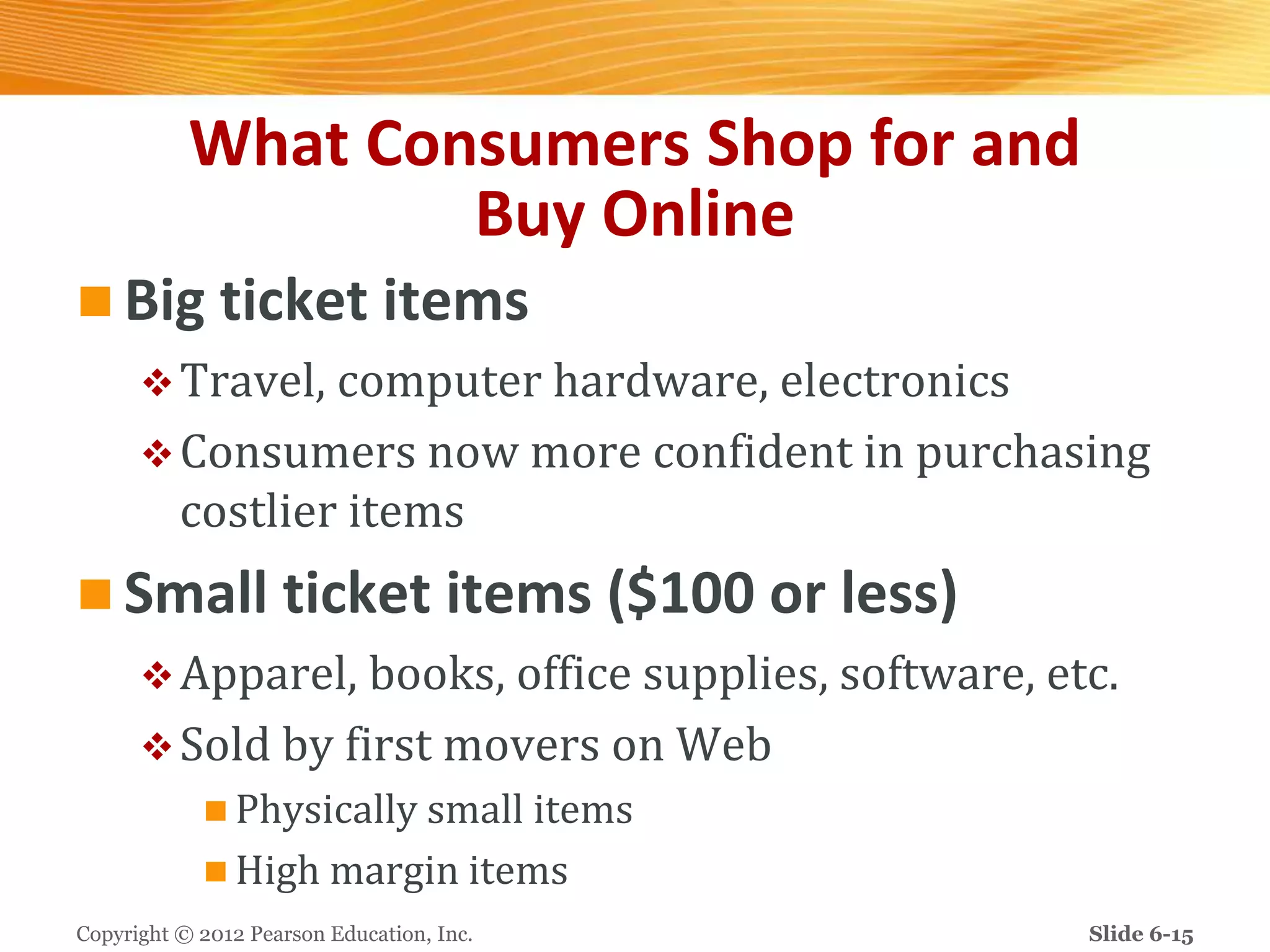
What Consumers Shop for and
Buy Online
 Big ticket items
Travel, computer hardware, electronics
Consumers now more confident in purchasing
costlier items
 Small ticket items ($100 or less)
Apparel, books, office supplies, software, etc.
Sold by first movers on Web
 Physically small items
 High margin items
Copyright © 2012 Pearson Education, Inc. Slide 6-15
What Consumers Buy Online
Figure 6.5, Page 365
Copyright © 2012 Pearson Education, Inc.
SOURCES: Based on data from Internet Retailer, 2011.
Slide 6-16
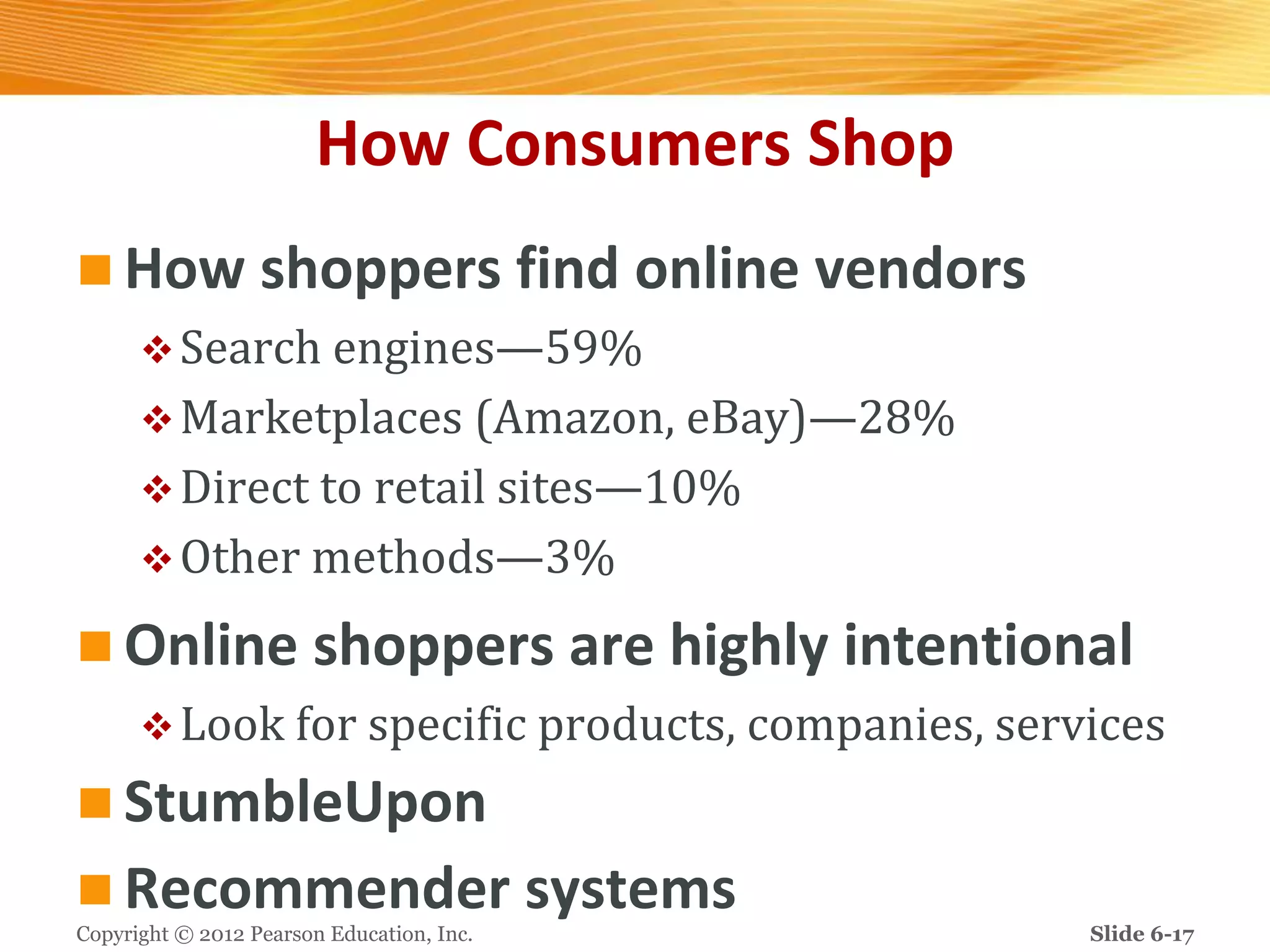
How Consumers Shop
 How shoppers find online vendors
Search engines—59%
Marketplaces (Amazon, eBay)—28%
Direct to retail sites—10%
Other methods—3%
 Online shoppers are highly intentional
Look for specific products, companies, services
 StumbleUpon
 Recommender systems
Copyright © 2012 Pearson Education, Inc. Slide 6-17
Table 6.7, Page 366
Copyright © 2012 Pearson Education, Inc.
SOURCES: Based on data from eMarketer, Inc., 2011d.
Slide 6-18
Trust, Utility, and Opportunism
in Online Markets
 Two most important factors shaping
decision to purchase online:
Utility:
 Better prices, convenience, speed
Trust:
 Asymmetry of information can lead to opportunistic
behavior by sellers
 Sellers can develop trust by building strong
reputations for honesty, fairness, delivery
Copyright © 2012 Pearson Education, Inc. Slide 6-19
Basic Marketing Concepts
 Marketing
Strategies and actions to establish relationship
with consumer and encourage purchases
Addresses competitive situation of industries
and firms
Seeks to create unique, highly differentiated
products or services that are produced or
supplied by one trusted firm
 Unmatchable feature set
 Avoidance of becoming commodity
Copyright © 2012 Pearson Education, Inc. Slide 6-20
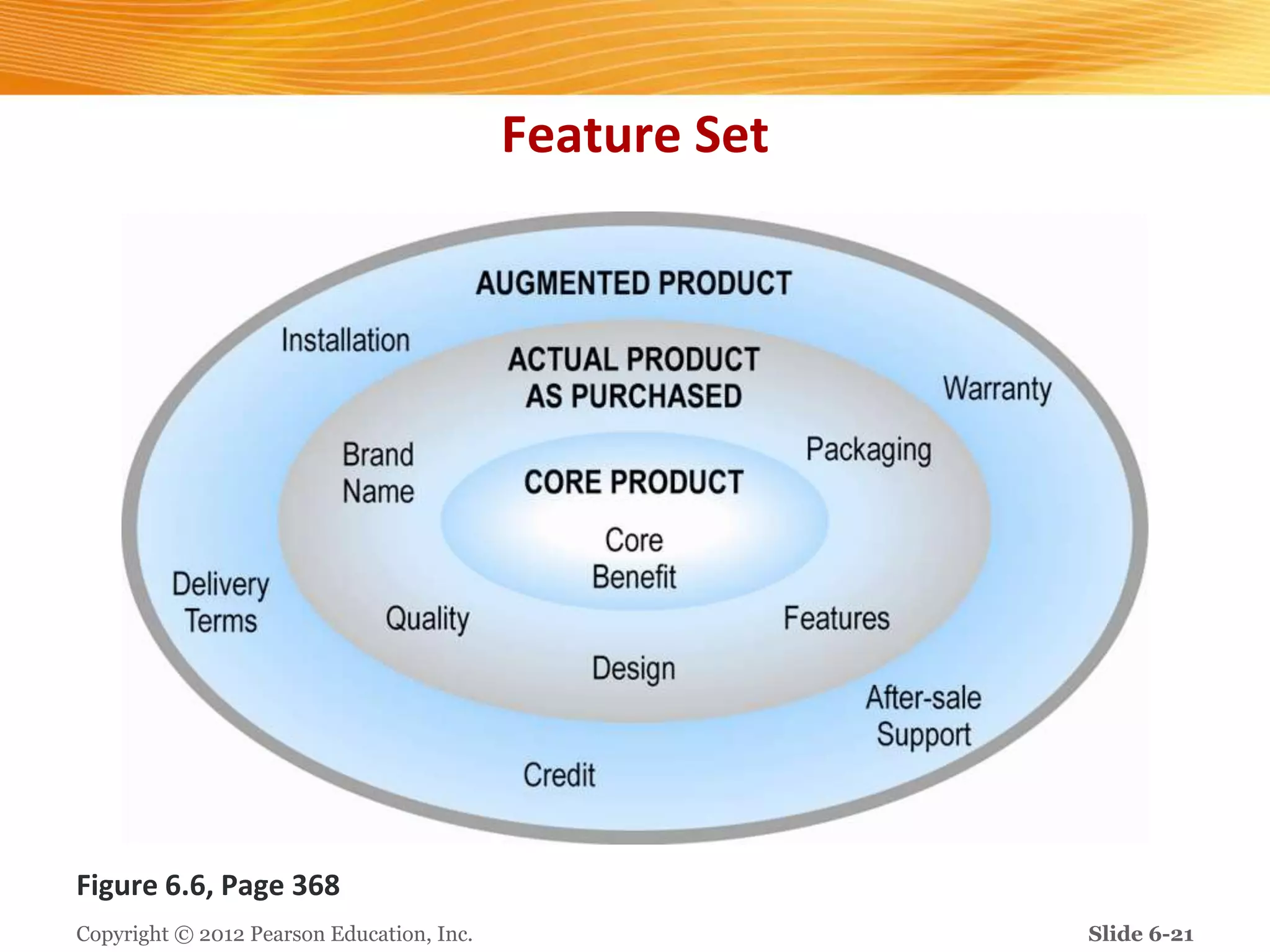
Feature Set
Figure 6.6, Page 368
Copyright © 2012 Pearson Education, Inc. Slide 6-21
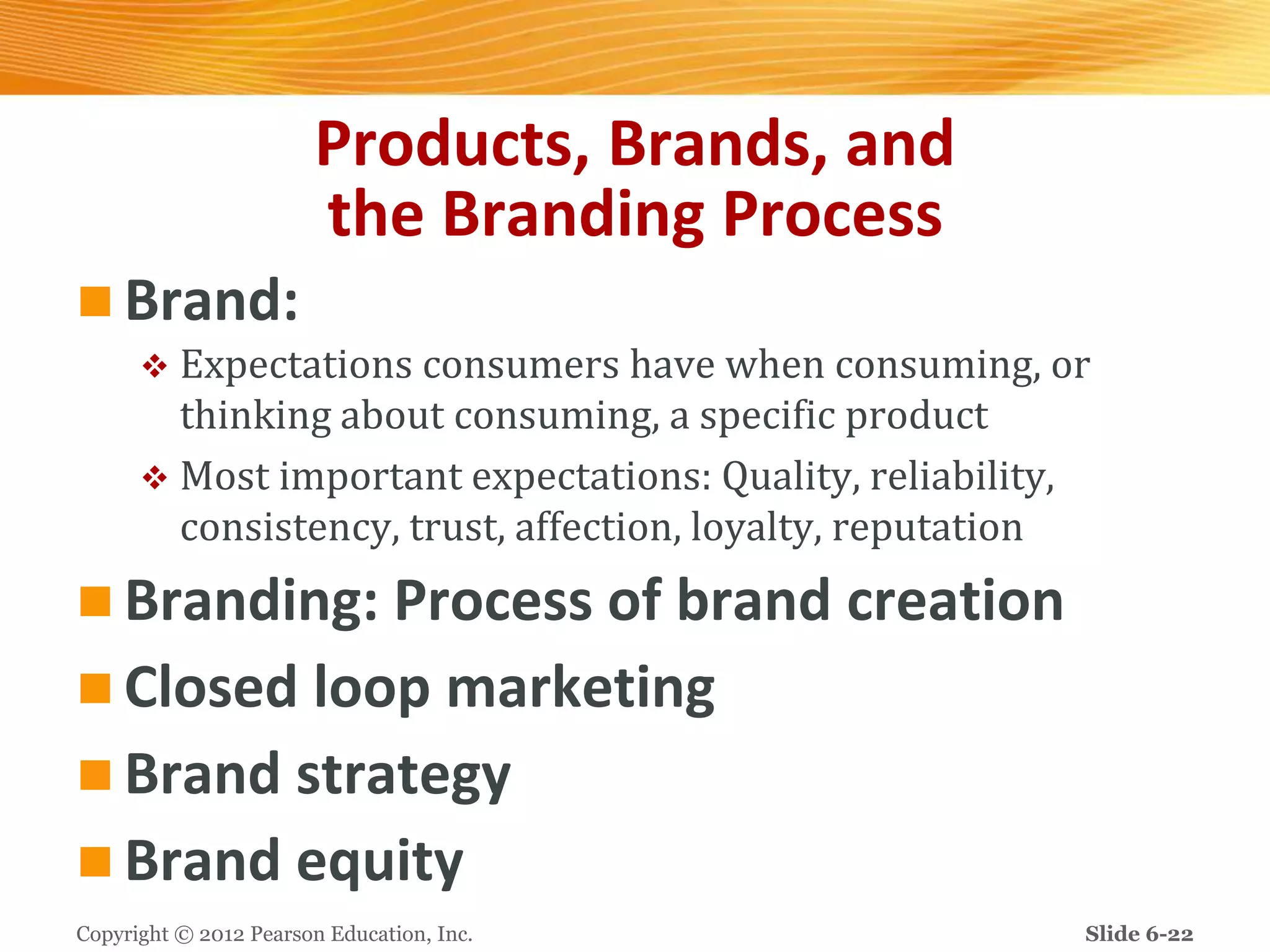
Products, Brands, and
the Branding Process
 Brand:
 Expectations consumers have when consuming, or
thinking about consuming, a specific product
 Most important expectations: Quality, reliability,
consistency, trust, affection, loyalty, reputation
 Branding: Process of brand creation
 Closed loop marketing
 Brand strategy
 Brand equity
Copyright © 2012 Pearson Education, Inc. Slide 6-22
Marketing Activities:
from Products to Brands
Figure 6.7, Page 369
Copyright © 2012 Pearson Education, Inc. Slide 6-23
The Revolution in
Internet Marketing Technologies
 Three broad impacts:
 Scope of marketing communications broadened
 Richness of marketing communications increased
 Information intensity of marketplace expanded
 Internet marketing technologies:
 Web transaction logs
 Tracking files
 Databases, data warehouses, data mining
 Advertising networks
 Customer relationship management systems
Copyright © 2012 Pearson Education, Inc. Slide 6-24
A Customer Relationship Management System
Figure 6.10, Page 389
Copyright © 2012 Pearson Education, Inc. Slide 6-25
Establishing the Customer Relationship
 Viral marketing
 Blog marketing
 Social network marketing
Driven by social e-commerce
 Social sign-on
 Collaborative shopping
 Network notification
 Social search (recommendation)
 Mobile marketing
Copyright © 2012 Pearson Education, Inc. Slide 6-26
Insight on Business: Class Discussion
Social Network Marketing: Let’s Buy Together
 Why do social networks represent such a
promising opportunity for marketers?
 What are some of the new types of marketing
that social networks have spawned?
 What are some of the risks of social network
marketing? What makes it dangerous?
 Have you ever responded to marketing
messages on Facebook or another network?
Copyright © 2012 Pearson Education, Inc. Slide 6-27
Establishing the Customer Relationship
 Social marketing and wisdom of crowds
Large aggregates produce better estimates and
judgments, e.g.,
 “Like” button
 Folksonomies
 Social tagging
 Mobile platform marketing
 Local marketing
 Brand leveraging
Copyright © 2012 Pearson Education, Inc. Slide 6-28
Customer Retention
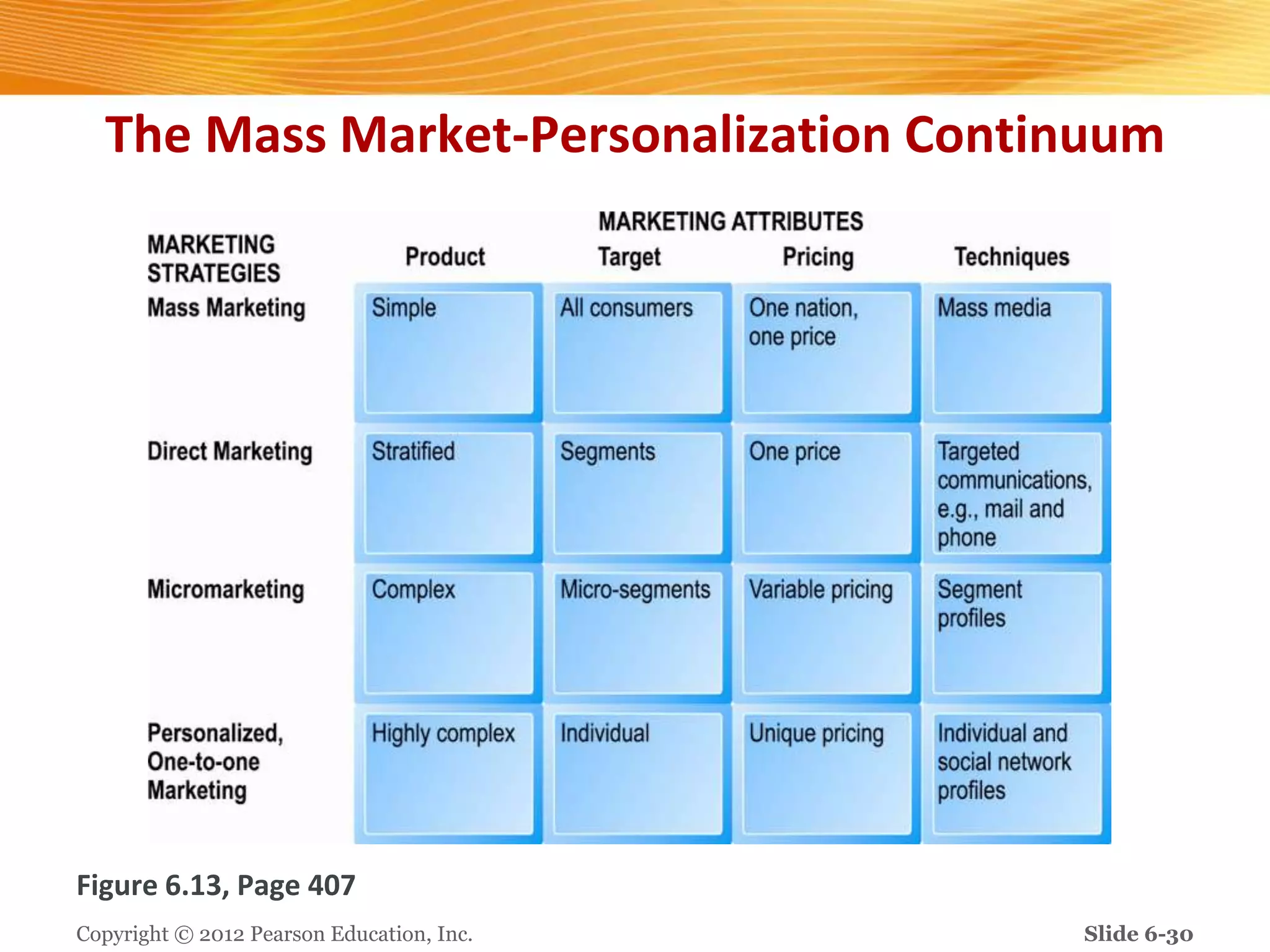
 Mass marketing
 Direct marketing
 Micromarketing
 Personalized, one-to-one marketing
 Segmenting market on precise and timely understanding of individual’s
needs
 Targeting specific marketing messages to these individuals
 Positioning product vis-à-vis competitors to be truly unique
 Personalization
 Can increase consumers sense of control, freedom
 Can also result in unwanted offers or reduced anonymity
Copyright © 2012 Pearson Education, Inc. Slide 6-29
The Mass Market-Personalization Continuum
Figure 6.13, Page 407
Copyright © 2012 Pearson Education, Inc. Slide 6-30
Other Customer Retention
Marketing Techniques
 Customization
 Customizing product to user preferences
 Customer co-production
 Customer interactively involved in product creation
 Customer service
 FAQs
 Real-time customer service chat systems
 Automated response systems
Copyright © 2012 Pearson Education, Inc. Slide 6-31
Net Pricing Strategies
 Pricing
Integral part of marketing strategy
Traditionally based on:
 Fixed cost
 Variable costs
 Demand curve
 Price discrimination
Selling products to different people and groups
based on willingness to pay
Copyright © 2012 Pearson Education, Inc. Slide 6-32
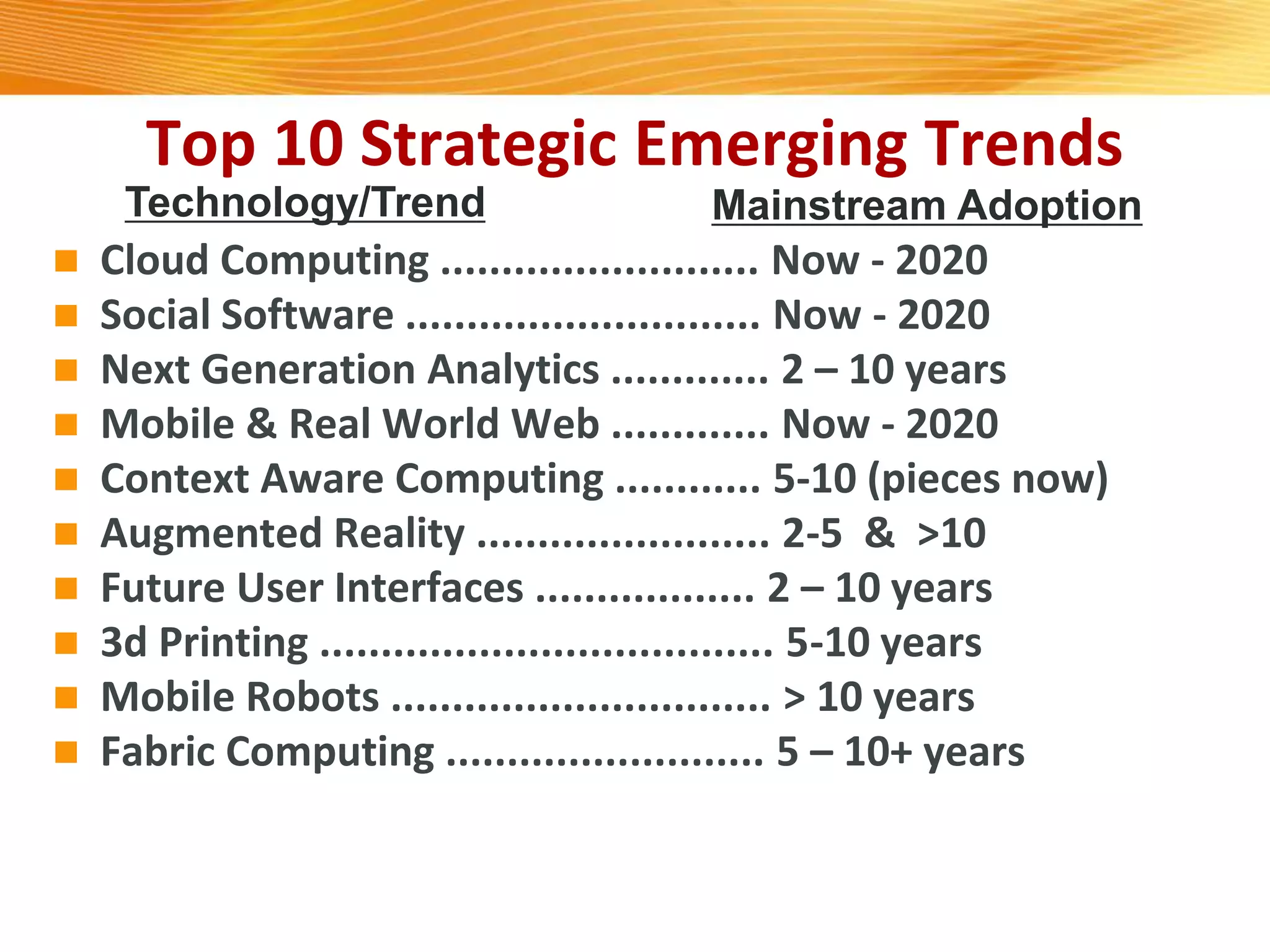
Top 10 Strategic Emerging Trends
 Cloud Computing .......................... Now - 2020
 Social Software ............................. Now - 2020
 Next Generation Analytics ............. 2 – 10 years
 Mobile & Real World Web ............. Now - 2020
 Context Aware Computing ............ 5-10 (pieces now)
 Augmented Reality ........................ 2-5 & >10
 Future User Interfaces .................. 2 – 10 years
 3d Printing ..................................... 5-10 years
 Mobile Robots ............................... > 10 years
 Fabric Computing .......................... 5 – 10+ years
Technology/Trend Mainstream Adoption
ATTRACT
ENGAGE
SPEAK
LISTEN
TRANSACT
WHY YOU NEED A WEB SITE
IT’S ALL ABOUT
YOUR USERS
34

Dijital i̇ndeks-2015_v1

  • 1.
  • 2.
  • 3.
    Dijital Medya Nedir? Kaynak: http://wtfisonline.com/blogs/digital-media-improving-the-symbiotic-relationship- with-web-social-media-and-digital/
  • 4.
    Dijital INDEKS ONLINE KANALLAR İŞMETODLARI Satışların Arttırılması Sosyal Medya WEBMOBİL E-Ticaret Kampanyalar MARKETING BRANDING Y ve Z Kuşaklarına erişim Takipçi Sayısının Arttırılması Trafiğin Arttırılması Müşteri Beğenisi (UX) Müşteri Bağlılığı HEDEFLER
  • 5.
     1000 üzerindentoplam sayısal değer  Markaların Dijital Etki Skoru (Satış ve Marketing/Branding Ağırlıklı)  User Experience Değerlendirmesi  Müşteri Deneyim Değerlendirmesi  Farklı Konseptlerin Değerlendirmesi  E-Ticaret Değerlendirmesi  Firmaların Sektöre Göre Değerlendirilmesi  Sektörler arası Know-How paylaşımı Dijital INDEKS
  • 6.
     Instagram’dan Satış Follower ve Like Sayıları (Facebook, …)  Lojistik Seçenekler (E-Ticaret)  Mobil App, Mobil Loyalty  WEB (SSL, Slider, Blog, E-Mail, MKK, SSS, Müşteri Hizmetleri Erişim Bilgileri, Sosyal Medya Bağlantıları, Mobil App Bağlantısı)  Mobil Uygulama Etkisi, IVN, SMS  E-Ticaret Oranları Copyright © 2012 Pearson Education, Inc. Slide 6-6 Dijital INDEKS – Örnek Kriterler
  • 8.
  • 9.
    2015 Sosyal MedyaMarketin Trends
  • 10.
  • 11.
  • 12.
    A Model ofOnline Consumer Behavior Figure 6.3, Page 360 Copyright © 2012 Pearson Education, Inc.
  • 13.
    A Model ofOnline Consumer Behavior  Decision process similar for online and offline behavior  General online behavior model  Consumer skills  Product characteristics  Attitudes toward online purchasing  Perceptions about control over Web environment  Web site features: latency, usability, security  Clickstream behavior Copyright © 2012 Pearson Education, Inc. Slide 6-13
  • 14.
    A Model ofOnline Consumer Behavior (cont.)  Clickstream factors include:  Number of days since last visit  Speed of clickstream behavior  Number of products viewed during last visit  Number of pages viewed  Supplying personal information  Number of days since last purchase  Number of past purchases  Clickstream marketing  Developed dynamically as customers use Internet Copyright © 2012 Pearson Education, Inc. Slide 6-14
  • 15.
    What Consumers Shopfor and Buy Online  Big ticket items Travel, computer hardware, electronics Consumers now more confident in purchasing costlier items  Small ticket items ($100 or less) Apparel, books, office supplies, software, etc. Sold by first movers on Web  Physically small items  High margin items Copyright © 2012 Pearson Education, Inc. Slide 6-15
  • 16.
    What Consumers BuyOnline Figure 6.5, Page 365 Copyright © 2012 Pearson Education, Inc. SOURCES: Based on data from Internet Retailer, 2011. Slide 6-16
  • 17.
    How Consumers Shop How shoppers find online vendors Search engines—59% Marketplaces (Amazon, eBay)—28% Direct to retail sites—10% Other methods—3%  Online shoppers are highly intentional Look for specific products, companies, services  StumbleUpon  Recommender systems Copyright © 2012 Pearson Education, Inc. Slide 6-17
  • 18.
    Table 6.7, Page366 Copyright © 2012 Pearson Education, Inc. SOURCES: Based on data from eMarketer, Inc., 2011d. Slide 6-18
  • 19.
    Trust, Utility, andOpportunism in Online Markets  Two most important factors shaping decision to purchase online: Utility:  Better prices, convenience, speed Trust:  Asymmetry of information can lead to opportunistic behavior by sellers  Sellers can develop trust by building strong reputations for honesty, fairness, delivery Copyright © 2012 Pearson Education, Inc. Slide 6-19
  • 20.
    Basic Marketing Concepts Marketing Strategies and actions to establish relationship with consumer and encourage purchases Addresses competitive situation of industries and firms Seeks to create unique, highly differentiated products or services that are produced or supplied by one trusted firm  Unmatchable feature set  Avoidance of becoming commodity Copyright © 2012 Pearson Education, Inc. Slide 6-20
  • 21.
    Feature Set Figure 6.6,Page 368 Copyright © 2012 Pearson Education, Inc. Slide 6-21
  • 22.
    Products, Brands, and theBranding Process  Brand:  Expectations consumers have when consuming, or thinking about consuming, a specific product  Most important expectations: Quality, reliability, consistency, trust, affection, loyalty, reputation  Branding: Process of brand creation  Closed loop marketing  Brand strategy  Brand equity Copyright © 2012 Pearson Education, Inc. Slide 6-22
  • 23.
    Marketing Activities: from Productsto Brands Figure 6.7, Page 369 Copyright © 2012 Pearson Education, Inc. Slide 6-23
  • 24.
    The Revolution in InternetMarketing Technologies  Three broad impacts:  Scope of marketing communications broadened  Richness of marketing communications increased  Information intensity of marketplace expanded  Internet marketing technologies:  Web transaction logs  Tracking files  Databases, data warehouses, data mining  Advertising networks  Customer relationship management systems Copyright © 2012 Pearson Education, Inc. Slide 6-24
  • 25.
    A Customer RelationshipManagement System Figure 6.10, Page 389 Copyright © 2012 Pearson Education, Inc. Slide 6-25
  • 26.
    Establishing the CustomerRelationship  Viral marketing  Blog marketing  Social network marketing Driven by social e-commerce  Social sign-on  Collaborative shopping  Network notification  Social search (recommendation)  Mobile marketing Copyright © 2012 Pearson Education, Inc. Slide 6-26
  • 27.
    Insight on Business:Class Discussion Social Network Marketing: Let’s Buy Together  Why do social networks represent such a promising opportunity for marketers?  What are some of the new types of marketing that social networks have spawned?  What are some of the risks of social network marketing? What makes it dangerous?  Have you ever responded to marketing messages on Facebook or another network? Copyright © 2012 Pearson Education, Inc. Slide 6-27
  • 28.
    Establishing the CustomerRelationship  Social marketing and wisdom of crowds Large aggregates produce better estimates and judgments, e.g.,  “Like” button  Folksonomies  Social tagging  Mobile platform marketing  Local marketing  Brand leveraging Copyright © 2012 Pearson Education, Inc. Slide 6-28
  • 29.
    Customer Retention  Massmarketing  Direct marketing  Micromarketing  Personalized, one-to-one marketing  Segmenting market on precise and timely understanding of individual’s needs  Targeting specific marketing messages to these individuals  Positioning product vis-à-vis competitors to be truly unique  Personalization  Can increase consumers sense of control, freedom  Can also result in unwanted offers or reduced anonymity Copyright © 2012 Pearson Education, Inc. Slide 6-29
  • 30.
    The Mass Market-PersonalizationContinuum Figure 6.13, Page 407 Copyright © 2012 Pearson Education, Inc. Slide 6-30
  • 31.
    Other Customer Retention MarketingTechniques  Customization  Customizing product to user preferences  Customer co-production  Customer interactively involved in product creation  Customer service  FAQs  Real-time customer service chat systems  Automated response systems Copyright © 2012 Pearson Education, Inc. Slide 6-31
  • 32.
    Net Pricing Strategies Pricing Integral part of marketing strategy Traditionally based on:  Fixed cost  Variable costs  Demand curve  Price discrimination Selling products to different people and groups based on willingness to pay Copyright © 2012 Pearson Education, Inc. Slide 6-32
  • 33.
    Top 10 StrategicEmerging Trends  Cloud Computing .......................... Now - 2020  Social Software ............................. Now - 2020  Next Generation Analytics ............. 2 – 10 years  Mobile & Real World Web ............. Now - 2020  Context Aware Computing ............ 5-10 (pieces now)  Augmented Reality ........................ 2-5 & >10  Future User Interfaces .................. 2 – 10 years  3d Printing ..................................... 5-10 years  Mobile Robots ............................... > 10 years  Fabric Computing .......................... 5 – 10+ years Technology/Trend Mainstream Adoption
  • 34.
    ATTRACT ENGAGE SPEAK LISTEN TRANSACT WHY YOU NEEDA WEB SITE IT’S ALL ABOUT YOUR USERS 34