PAGE1
DEVOPS INDONESIA
PAGE
1
Dirgantara Rahadian
IT Infrastructure Head, BTPN Syariah
Jakarta, 10 Juni 2020
Digital Transformation in Infrastructure
“ NetOps in The Era of Modern IT”
Dirgantara Rahadian
Digital Transformation in Infrastructure
“ NetOps in The Era of Modern IT”
10 June 2020
Instagram
Twitter:
facebook
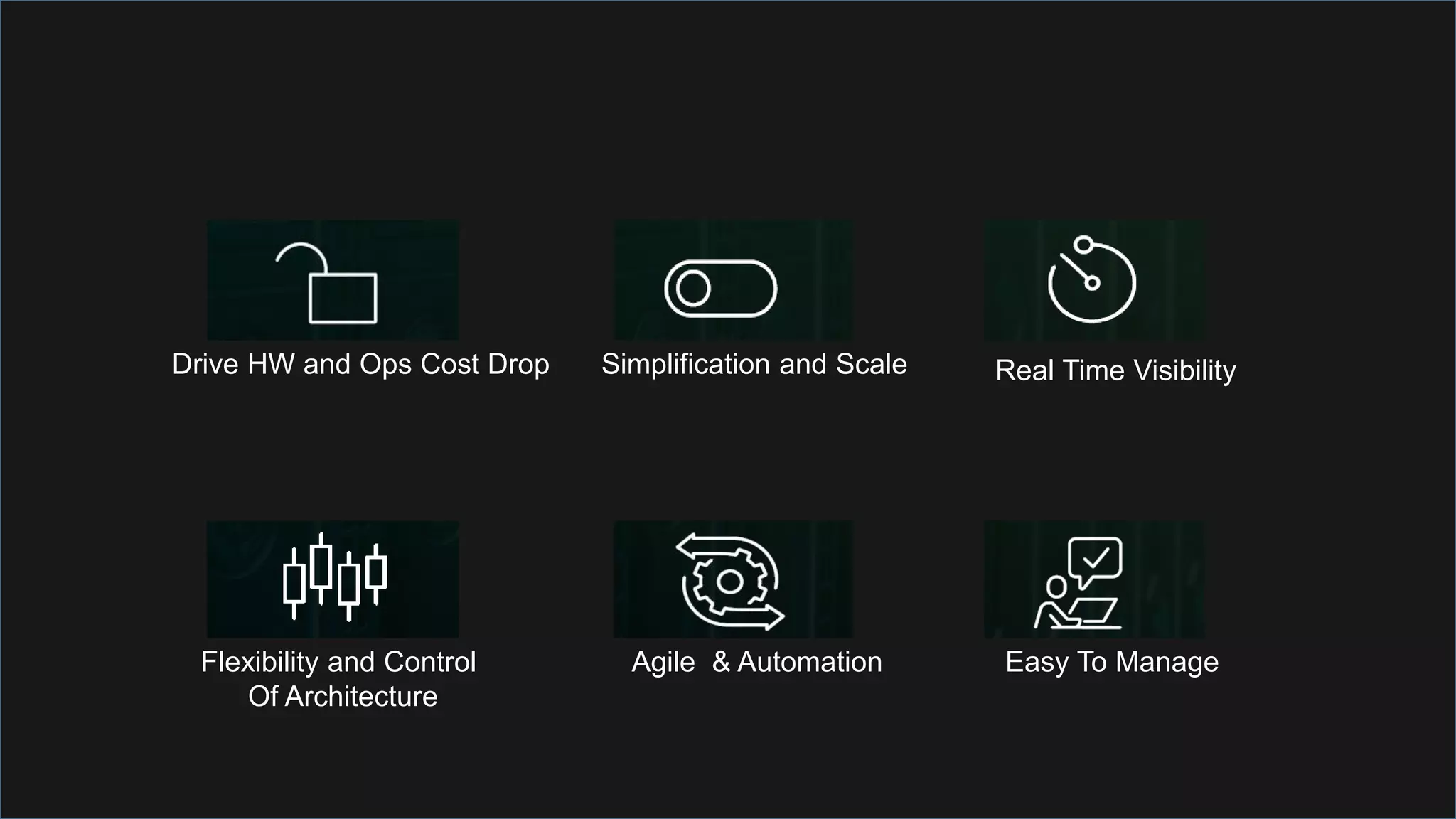
Drive HW and Ops Cost Drop Simplification and Scale Real Time Visibility
Flexibility and Control
Of Architecture
Agile & Automation Easy To Manage
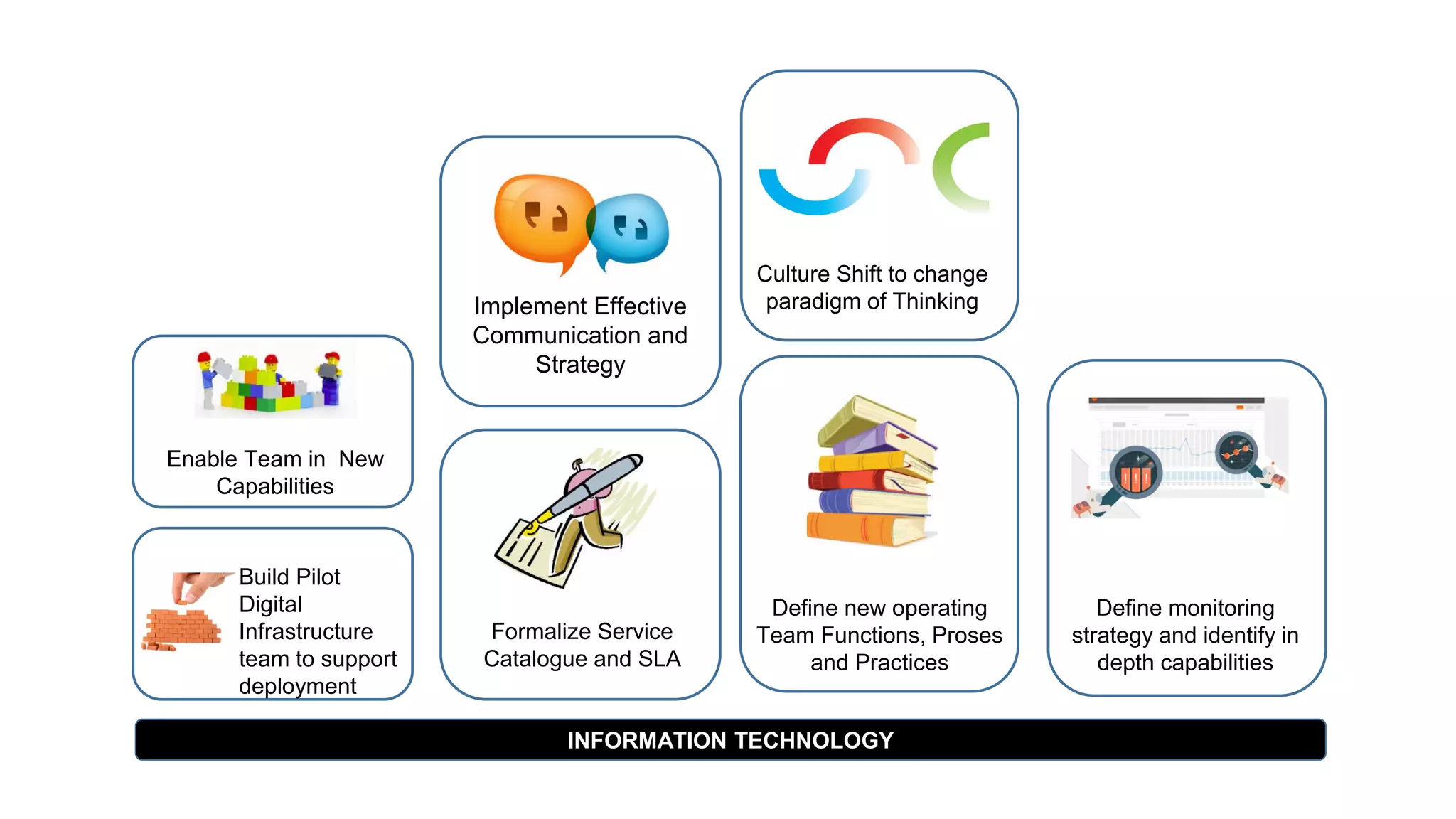
Enable Team in New
Capabilities
Build Pilot
Digital
Infrastructure
team to support
deployment
Formalize Service
Catalogue and SLA
Implement Effective
Communication and
Strategy
Culture Shift to change
paradigm of Thinking
Define monitoring
strategy and identify in
depth capabilities
Define new operating
Team Functions, Proses
and Practices
INFORMATION TECHNOLOGY
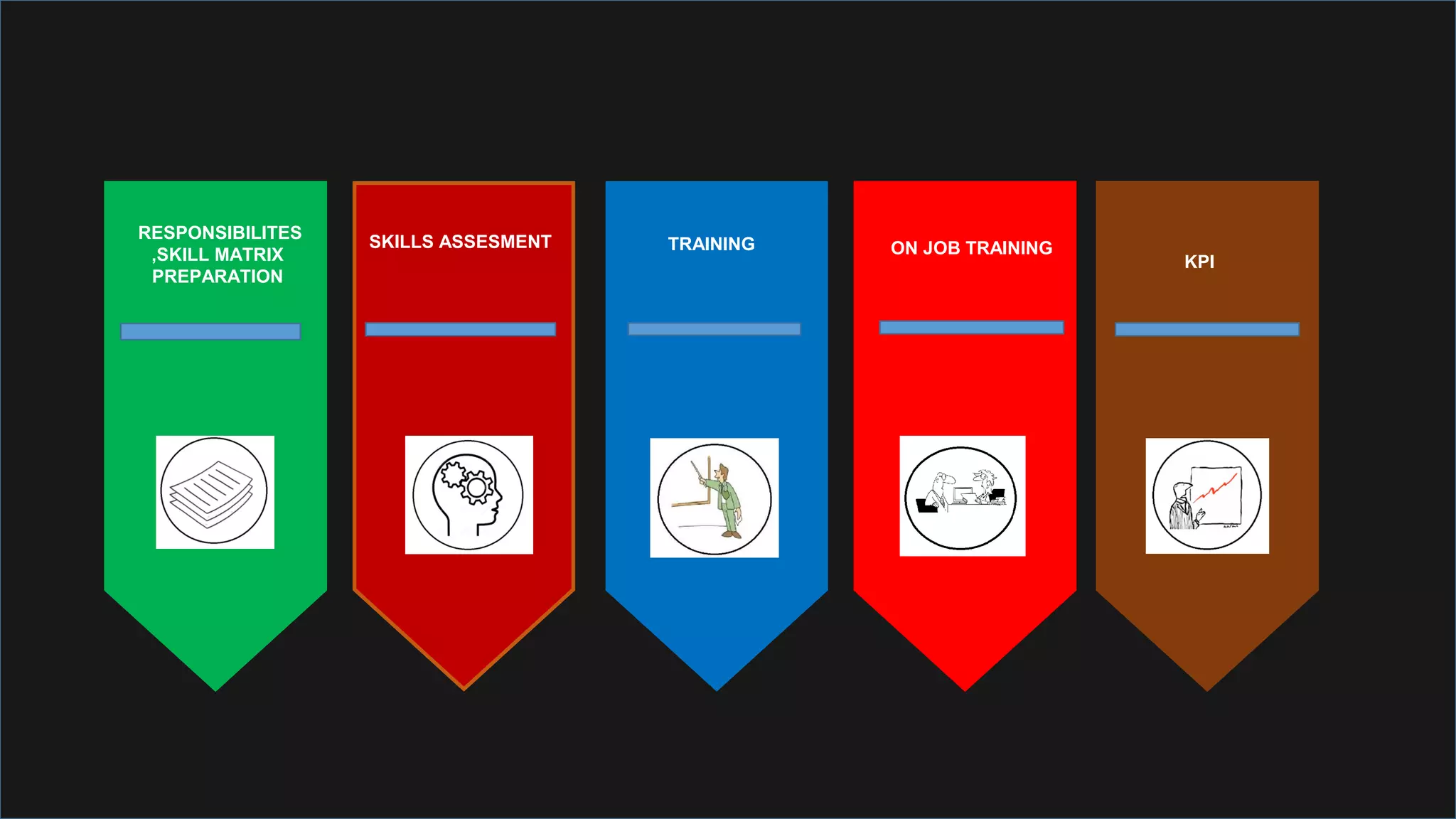
RESPONSIBILITES
,SKILL MATRIX
PREPARATION
SKILLS ASSESMENT TRAINING ON JOB TRAINING
KPI
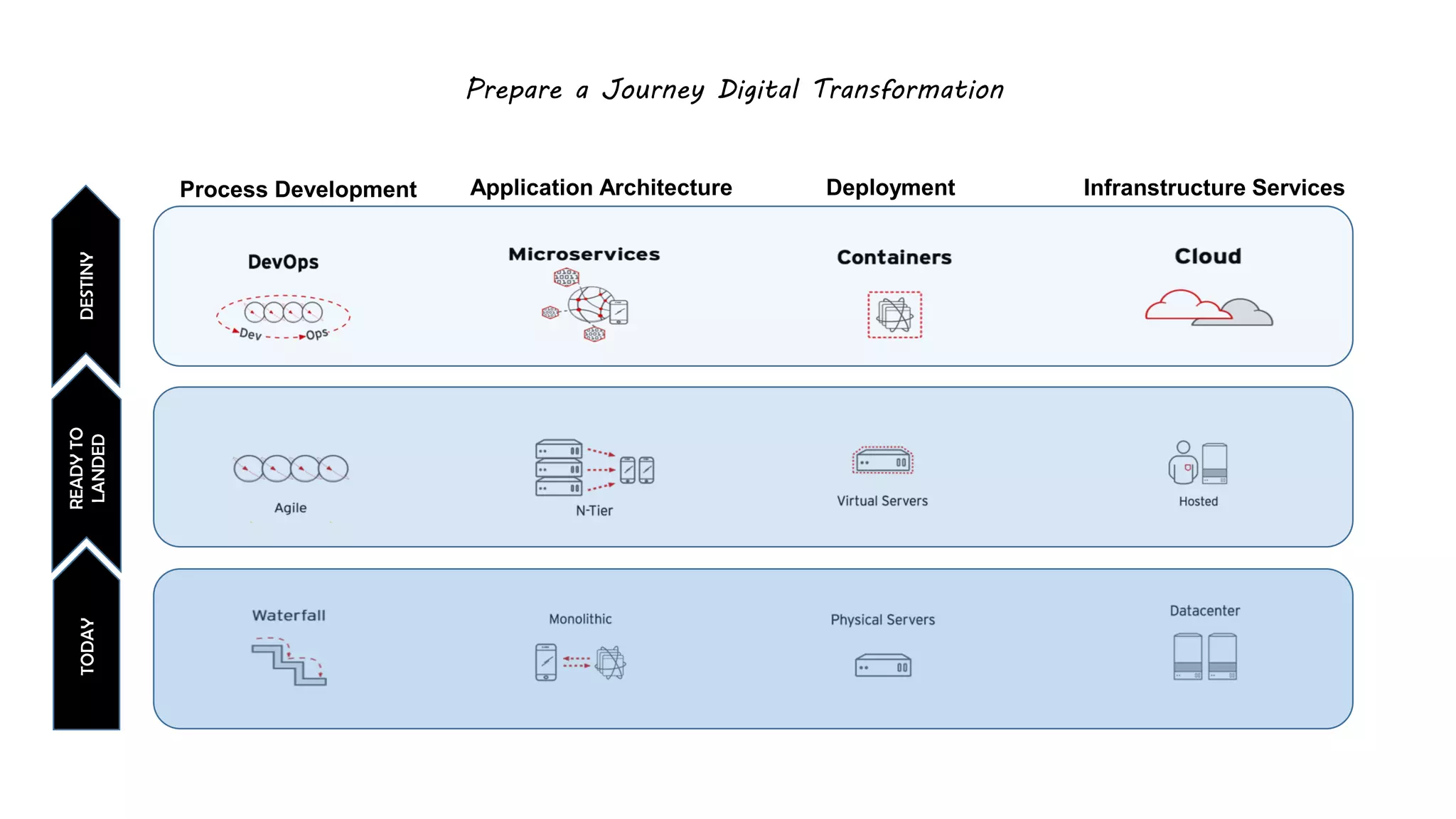
Prepare a Journey Digital Transformation
Process Development Application Architecture Deployment Infranstructure Services
 Team culture and behaviors are becoming consistent with reliability engineering that is combined
with smaller, more frequent deployment that leads to high performing teams and companies.
 With DevNetOps, it allows speedier integration of vendor systems, especially software upgrades
and patches.
 It also shortens the gap between the vendor’s time – to – Market and operator time – to –
deployment.
 For engineers, DevNetOps reduces the deployment stress and boosts their job satisfaction.
+
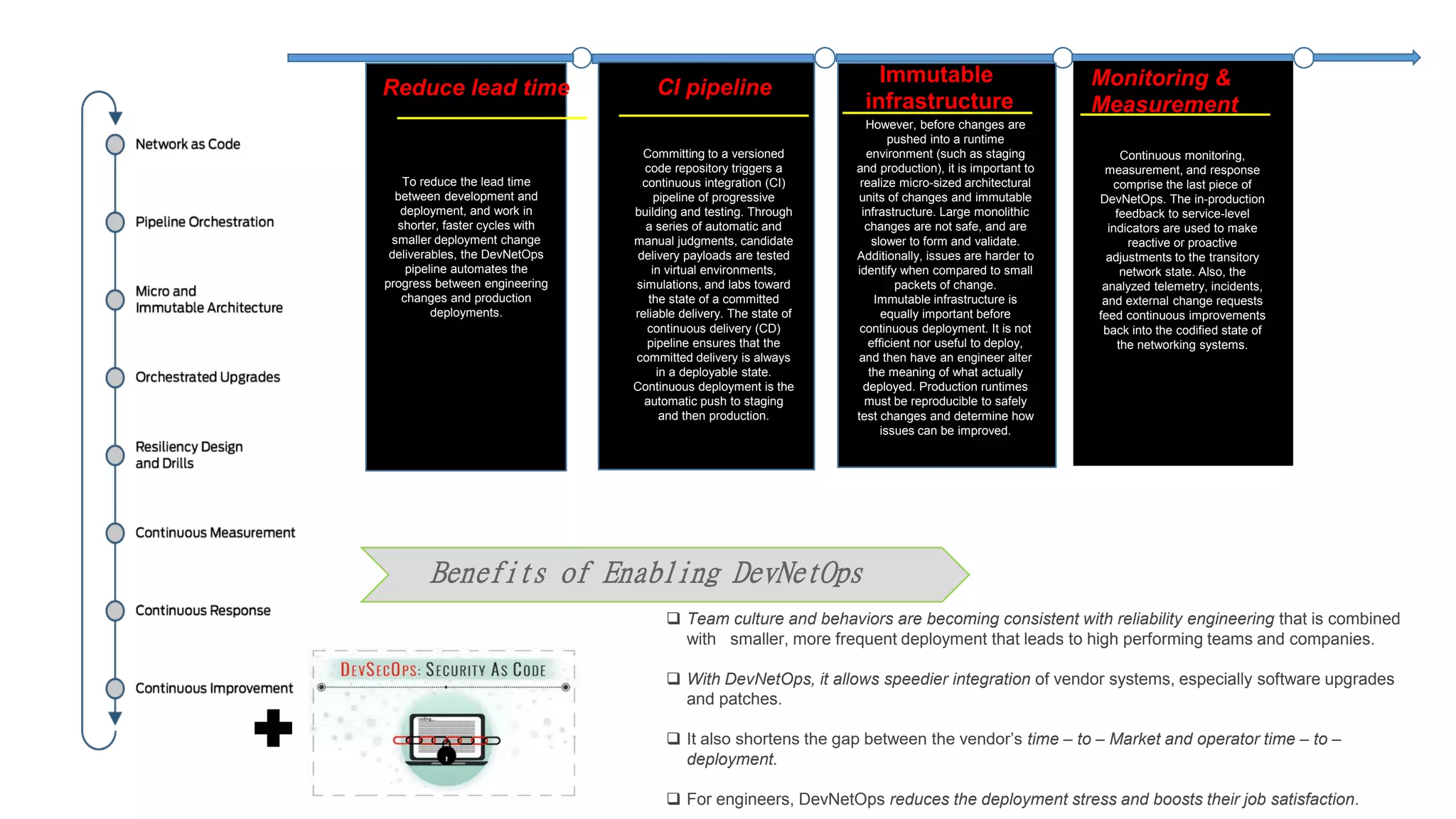
Reduce lead time CI pipeline
Immutable
infrastructure
Monitoring &
Measurement
To reduce the lead time
between development and
deployment, and work in
shorter, faster cycles with
smaller deployment change
deliverables, the DevNetOps
pipeline automates the
progress between engineering
changes and production
deployments.
Committing to a versioned
code repository triggers a
continuous integration (CI)
pipeline of progressive
building and testing. Through
a series of automatic and
manual judgments, candidate
delivery payloads are tested
in virtual environments,
simulations, and labs toward
the state of a committed
reliable delivery. The state of
continuous delivery (CD)
pipeline ensures that the
committed delivery is always
in a deployable state.
Continuous deployment is the
automatic push to staging
and then production.
However, before changes are
pushed into a runtime
environment (such as staging
and production), it is important to
realize micro-sized architectural
units of changes and immutable
infrastructure. Large monolithic
changes are not safe, and are
slower to form and validate.
Additionally, issues are harder to
identify when compared to small
packets of change.
Immutable infrastructure is
equally important before
continuous deployment. It is not
efficient nor useful to deploy,
and then have an engineer alter
the meaning of what actually
deployed. Production runtimes
must be reproducible to safely
test changes and determine how
issues can be improved.
Continuous monitoring,
measurement, and response
comprise the last piece of
DevNetOps. The in-production
feedback to service-level
indicators are used to make
reactive or proactive
adjustments to the transitory
network state. Also, the
analyzed telemetry, incidents,
and external change requests
feed continuous improvements
back into the codified state of
the networking systems.
Benefits of Enabling DevNetOps
NETWORK RELIABILITY ENGINEERING
Network operator / Administrator or network architect but to embrace the new title as Network Reliability Engineer Just like sys-
admins have evolved form technicians to technologists entitled with SRE,
Site Reliability Engineer, the NRE is the title declared for modern network engineers. A professional who can implement a network
in a reliable
NRE principles are a derivative of DevOps Principle –
Enable automation
Have workflow transparency
Metrics for monitoring
Design for failure
Learn to evolve continuously / Innovation
“NRE culture keeps reliability on the top of
its hierarchy requirements, ensuring
security, agility, velocity, and efficiency while
delivering the required performance. The
goal is to move fast, but it’s not about how
quickly you can drive, it how you drive fast.”
NETWORK RELIABILITY ENGINEERING
Network Reliability Engineering Conduct
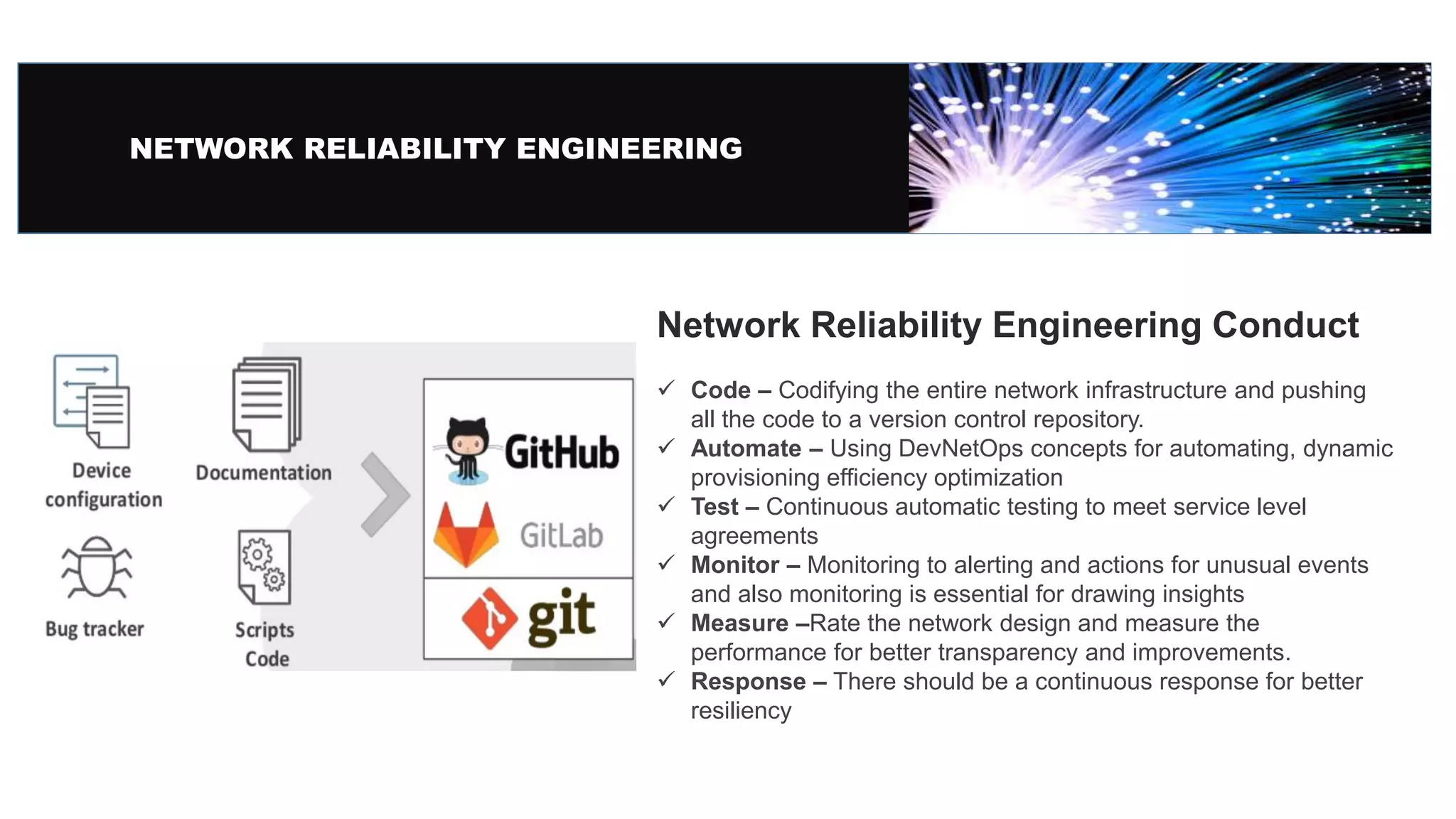
 Code – Codifying the entire network infrastructure and pushing
all the code to a version control repository.
 Automate – Using DevNetOps concepts for automating, dynamic
provisioning efficiency optimization
 Test – Continuous automatic testing to meet service level
agreements
 Monitor – Monitoring to alerting and actions for unusual events
and also monitoring is essential for drawing insights
 Measure –Rate the network design and measure the
performance for better transparency and improvements.
 Response – There should be a continuous response for better
resiliency
Thank You
PAGE12
DEVOPS INDONESIA
Stay Connected
@devopsindonesia
http://www.devopsindonesia.com
@IDDevOps
@DevOpsIndonesia
@IDDevOps DevOps Indonesia
PAGE13
DEVOPS INDONESIA
Alone We are smart, together We are brilliant
THANK YOU !
Quote by Steve Anderson

Digital Transformation in Infrastructure "NetOps in The Era of Modern IT"

  • 1.
    PAGE1 DEVOPS INDONESIA PAGE 1 Dirgantara Rahadian ITInfrastructure Head, BTPN Syariah Jakarta, 10 Juni 2020 Digital Transformation in Infrastructure “ NetOps in The Era of Modern IT”
  • 2.
    Dirgantara Rahadian Digital Transformationin Infrastructure “ NetOps in The Era of Modern IT” 10 June 2020 Instagram Twitter: facebook
  • 3.
    Drive HW andOps Cost Drop Simplification and Scale Real Time Visibility Flexibility and Control Of Architecture Agile & Automation Easy To Manage
  • 4.
    Enable Team inNew Capabilities Build Pilot Digital Infrastructure team to support deployment Formalize Service Catalogue and SLA Implement Effective Communication and Strategy Culture Shift to change paradigm of Thinking Define monitoring strategy and identify in depth capabilities Define new operating Team Functions, Proses and Practices INFORMATION TECHNOLOGY
  • 5.
  • 6.
    Prepare a JourneyDigital Transformation Process Development Application Architecture Deployment Infranstructure Services
  • 8.
     Team cultureand behaviors are becoming consistent with reliability engineering that is combined with smaller, more frequent deployment that leads to high performing teams and companies.  With DevNetOps, it allows speedier integration of vendor systems, especially software upgrades and patches.  It also shortens the gap between the vendor’s time – to – Market and operator time – to – deployment.  For engineers, DevNetOps reduces the deployment stress and boosts their job satisfaction. + Reduce lead time CI pipeline Immutable infrastructure Monitoring & Measurement To reduce the lead time between development and deployment, and work in shorter, faster cycles with smaller deployment change deliverables, the DevNetOps pipeline automates the progress between engineering changes and production deployments. Committing to a versioned code repository triggers a continuous integration (CI) pipeline of progressive building and testing. Through a series of automatic and manual judgments, candidate delivery payloads are tested in virtual environments, simulations, and labs toward the state of a committed reliable delivery. The state of continuous delivery (CD) pipeline ensures that the committed delivery is always in a deployable state. Continuous deployment is the automatic push to staging and then production. However, before changes are pushed into a runtime environment (such as staging and production), it is important to realize micro-sized architectural units of changes and immutable infrastructure. Large monolithic changes are not safe, and are slower to form and validate. Additionally, issues are harder to identify when compared to small packets of change. Immutable infrastructure is equally important before continuous deployment. It is not efficient nor useful to deploy, and then have an engineer alter the meaning of what actually deployed. Production runtimes must be reproducible to safely test changes and determine how issues can be improved. Continuous monitoring, measurement, and response comprise the last piece of DevNetOps. The in-production feedback to service-level indicators are used to make reactive or proactive adjustments to the transitory network state. Also, the analyzed telemetry, incidents, and external change requests feed continuous improvements back into the codified state of the networking systems. Benefits of Enabling DevNetOps
  • 9.
    NETWORK RELIABILITY ENGINEERING Networkoperator / Administrator or network architect but to embrace the new title as Network Reliability Engineer Just like sys- admins have evolved form technicians to technologists entitled with SRE, Site Reliability Engineer, the NRE is the title declared for modern network engineers. A professional who can implement a network in a reliable NRE principles are a derivative of DevOps Principle – Enable automation Have workflow transparency Metrics for monitoring Design for failure Learn to evolve continuously / Innovation “NRE culture keeps reliability on the top of its hierarchy requirements, ensuring security, agility, velocity, and efficiency while delivering the required performance. The goal is to move fast, but it’s not about how quickly you can drive, it how you drive fast.”
  • 10.
    NETWORK RELIABILITY ENGINEERING NetworkReliability Engineering Conduct  Code – Codifying the entire network infrastructure and pushing all the code to a version control repository.  Automate – Using DevNetOps concepts for automating, dynamic provisioning efficiency optimization  Test – Continuous automatic testing to meet service level agreements  Monitor – Monitoring to alerting and actions for unusual events and also monitoring is essential for drawing insights  Measure –Rate the network design and measure the performance for better transparency and improvements.  Response – There should be a continuous response for better resiliency
  • 11.
  • 12.
  • 13.
    PAGE13 DEVOPS INDONESIA Alone Weare smart, together We are brilliant THANK YOU ! Quote by Steve Anderson