Digital Storytelling:
Narratives for the 21st Century


Stories move in circles they don’t move in straight
lines…there are stories inside stories, between
stories, and finding your way through them is as
easy and as hard as finding your way home.

                             Source: Digital Storytelling Cookbook


                                                                     Kristen R. Stephens, Ph.D.
                                                                           Duke University
What is Digital Storytelling?
• The practice of using computer-based tools to tell
  stories.
• Digital stories usually contain some mixture of
  computer-based images, text, recorded audio
  narration, video clips and/or music.
• They can vary in length, but most of the stories used in
  education typically last between two and ten minutes.
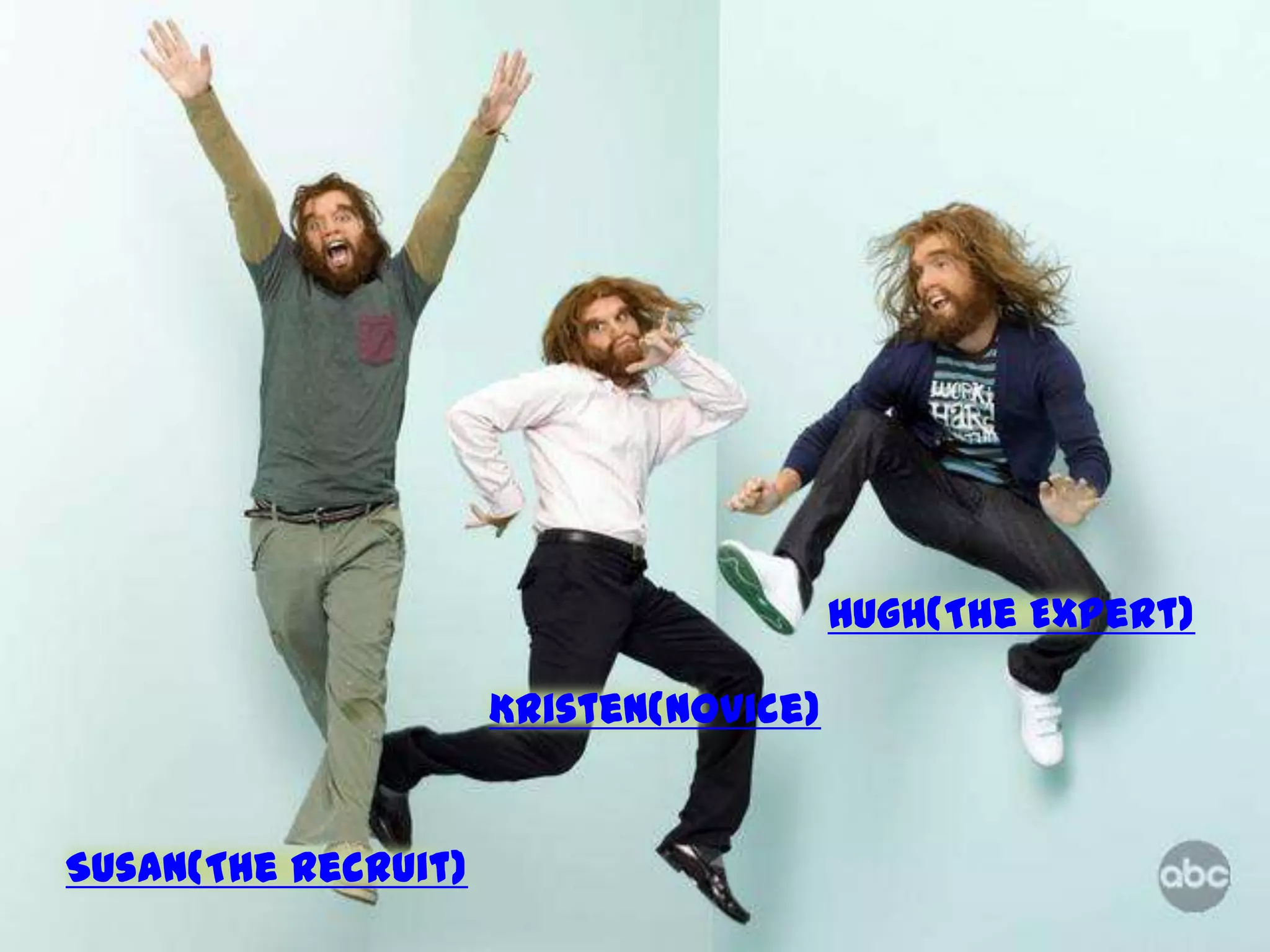
So Easy…
             Even WE Can Do It!


                                       Hugh(The Expert)

                     Kristen(Novice)


Susan(The Recruit)
Benefits for Teachers & Learners

Digital Stories …
• Serve as a multi-dimensional assessment tool (Content AND
  Skill Mastery)
• Foster innovative teaching and learning methods that
  integrate technology, problem-based learning, and higher
  order thinking skills
• Integrate 21st Century Skills
• Support different types of intelligences and learning styles
• Foster creativity
• Engage learners in individual and group projects that result in
  academically-oriented social event
All six of the National Education Technology
Standards (NETS) for students are addressed by
                 digital storytelling

1. Creativity and innovation
2. Communication and collaboration
3. Research and information fluency
4. Critical thinking, problem-solving, and
   decision-making
5. Digital citizenship
6. Technology operations and concepts
Kinds of Stories…
• Personal Narratives
   –   About someone important
   –   An event in my life
   –   Place in my life
   –   What I do
• Discipline-Based
   – Big ideas/themes within a content area
   – Demonstrating content knowledge
   – Enrichment /depth and breadth of a topic within
     a content area or unit
• Combination of Personal Narrative and
  Discipline-Based
Script Writing Elements
•   Point of View
•   Dramatic Question or Hook
•   Emotional Content
•   Economy
•   Voice
•   Soundtrack
•   Pacing
The Dramatic Question or Hook
• Established suspense and creates a story arc
• Usually a statement at the beginning of the story—
  often the first sentence.
• Creates a question in the mind of the people who are
  listening to the story.
• The hook that draws in the listener. The listener wants
  to know more about the situation.
• Example: When I was younger I confused friendship
  with popularity.
Emotional Content
Star Points
1. Who are the main characters of the story? Include yourself.
2. Where is the story set? It could be in more than one place.
3. Think of your story as a mini-movie running in your head. How do
   you feel at the beginning of the story?
4. What happens during the most important moment of the story?
5. How does this event (or realization) change your life, or the way you
   feel about the world?

In the center of the star: Write the answer to: Why do you want to tell
    this particular story?
Underneath the star: Begin writing the first few sentences of your story.
Economy
• Digital stories are short. Great stories are often just 200
  words long.
• They take a poetic form where the writer must be very
  thoughtful about every word, phrase, and pause.
• During the editing phase, prune away ideas that are
  redundant or do not contribute to the central focus of
  the story.
• Keep in mind that editing can also be informed by
  visual narrative (i.e., descriptive language can be
  deleted altogether because an image will convey the
  same information)
Story Circle
• Guidelines for participating in a story:
   – The storyteller is allowed to tell or read their complete story
     without any interruption.
   – Feedback should always begin with a specific affirmation about the
     story.
   – Suggestions are couched by saying “If it were my story, I ...”

• If your students need more structure, you can give them
  specific aspects of the digital story on which to comment:
   –   What I liked about your story...
   –   What stood out about the story...
   –   What I didn’t understand about the story...
   –   The feeling I got from the story...
   –   Your story makes me think of these pictures/images...
Ideas for Using Digital Stories in the Classroom

  •   Novel Study
  •   Content-Specific Presentations
  •   End-of-Unit Assessment Tool (Summative)
  •   Writing Assignments (reflections, journals,
      critiques, essay, etc.)
  •   Autobiography
  •   Documentary
  •   Commentary
  •   Others?
Contact Information


 • Kstephen@duke.edu

Digital Storytelling

  • 1.
    Digital Storytelling: Narratives forthe 21st Century Stories move in circles they don’t move in straight lines…there are stories inside stories, between stories, and finding your way through them is as easy and as hard as finding your way home. Source: Digital Storytelling Cookbook Kristen R. Stephens, Ph.D. Duke University
  • 2.
    What is DigitalStorytelling? • The practice of using computer-based tools to tell stories. • Digital stories usually contain some mixture of computer-based images, text, recorded audio narration, video clips and/or music. • They can vary in length, but most of the stories used in education typically last between two and ten minutes.
  • 3.
    So Easy… Even WE Can Do It! Hugh(The Expert) Kristen(Novice) Susan(The Recruit)
  • 4.
    Benefits for Teachers& Learners Digital Stories … • Serve as a multi-dimensional assessment tool (Content AND Skill Mastery) • Foster innovative teaching and learning methods that integrate technology, problem-based learning, and higher order thinking skills • Integrate 21st Century Skills • Support different types of intelligences and learning styles • Foster creativity • Engage learners in individual and group projects that result in academically-oriented social event
  • 5.
    All six ofthe National Education Technology Standards (NETS) for students are addressed by digital storytelling 1. Creativity and innovation 2. Communication and collaboration 3. Research and information fluency 4. Critical thinking, problem-solving, and decision-making 5. Digital citizenship 6. Technology operations and concepts
  • 6.
    Kinds of Stories… •Personal Narratives – About someone important – An event in my life – Place in my life – What I do • Discipline-Based – Big ideas/themes within a content area – Demonstrating content knowledge – Enrichment /depth and breadth of a topic within a content area or unit • Combination of Personal Narrative and Discipline-Based
  • 7.
    Script Writing Elements • Point of View • Dramatic Question or Hook • Emotional Content • Economy • Voice • Soundtrack • Pacing
  • 8.
    The Dramatic Questionor Hook • Established suspense and creates a story arc • Usually a statement at the beginning of the story— often the first sentence. • Creates a question in the mind of the people who are listening to the story. • The hook that draws in the listener. The listener wants to know more about the situation. • Example: When I was younger I confused friendship with popularity.
  • 9.
    Emotional Content Star Points 1.Who are the main characters of the story? Include yourself. 2. Where is the story set? It could be in more than one place. 3. Think of your story as a mini-movie running in your head. How do you feel at the beginning of the story? 4. What happens during the most important moment of the story? 5. How does this event (or realization) change your life, or the way you feel about the world? In the center of the star: Write the answer to: Why do you want to tell this particular story? Underneath the star: Begin writing the first few sentences of your story.
  • 10.
    Economy • Digital storiesare short. Great stories are often just 200 words long. • They take a poetic form where the writer must be very thoughtful about every word, phrase, and pause. • During the editing phase, prune away ideas that are redundant or do not contribute to the central focus of the story. • Keep in mind that editing can also be informed by visual narrative (i.e., descriptive language can be deleted altogether because an image will convey the same information)
  • 11.
    Story Circle • Guidelinesfor participating in a story: – The storyteller is allowed to tell or read their complete story without any interruption. – Feedback should always begin with a specific affirmation about the story. – Suggestions are couched by saying “If it were my story, I ...” • If your students need more structure, you can give them specific aspects of the digital story on which to comment: – What I liked about your story... – What stood out about the story... – What I didn’t understand about the story... – The feeling I got from the story... – Your story makes me think of these pictures/images...
  • 12.
    Ideas for UsingDigital Stories in the Classroom • Novel Study • Content-Specific Presentations • End-of-Unit Assessment Tool (Summative) • Writing Assignments (reflections, journals, critiques, essay, etc.) • Autobiography • Documentary • Commentary • Others?
  • 13.
    Contact Information •Kstephen@duke.edu