Photo Story of taps year in review 2009-1010
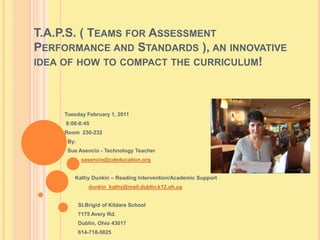
  T.A.P.S. ( Teams for Assessment       Performance and Standards ), an innovative     idea of how to compact the curriculum!Tuesday February 1, 2011 8:00-8:45Room  230-232  By:  Sue Asencio - Technology Teachersasencio@cdeducation.org       Kathy Dunkin – Reading Intervention/Academic Supportdunkin_kathy@mail.dublin.k12.oh.us         St.Brigid of Kildare School         7175 Avery Rd.         Dublin, Ohio 43017         614-718-5825
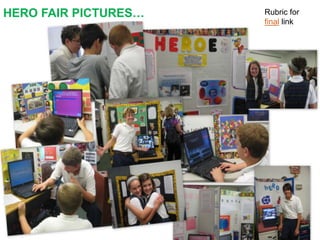
HERO FAIR PICTURES…Rubric for final link
21st Century Wheel AlignmentUsing graphic organizers on KidspirationCreated brochures using Print Shop on  the topic of reviewing the media  and how  heroes are depictedDiscovery Ed WritingPromptsText to speech program   w/ Read & Write GoldAbolitionist assessmentusing interactive Response SystemWordle for characteristics of HeroesStandards exampleFrom Infohio 21st Century Skills – The Learning Commons
STUDENT TAPS EXIT QUESTIONSWhat did you enjoy the most about TAPS?How did it impact your learning? What would you do to make the program better?How did working in small groups benefit you or not?  What particular lesson stands out the most to you? How do you feel about the integration of technology into these lessons?Use of the SmartboardUse of the microphoneRead & Write GoldResearch Other ___________________________________________________Name (optional) ___________________________________________________________ Thank you for your time and attention during this process.Mrs. AsencioMrs. Dunkin
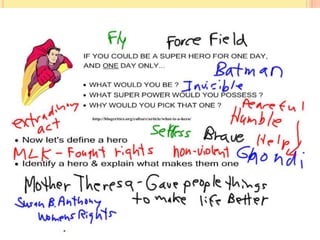
Quotes from studentsTaught us different ways to learnHelped me to find deeper meaning of thingsWriting skills got betterLiked the integration of other subjectsTaught me to think outside of the boxGot to hear the thoughts of other people on certain topics because of the small groupCould express emotionsDeepened knowledge of heroes, and gave me the desire to be a hero in someone else’s eyes
Things that worked …Standards were met, collaboration was done, students learned content, tech skills, artistic creations, they had a voice, camaraderie with fellow students and team leaders, and feedback from exit questions was valuable   And things that did not…Timely unit plans for team teachers, some used technology and some did not, not all team leaders bought into the program, we did not collect data or do a exit survey for the team leaders involved on the program, needed to do a tech skills pre-assessment, work out better planning timesWhere to go from here…Build on the great aspects of the program. Share model ideas with  the other grade levels, think and plan a possible  K-8 curriculum map and how to attack it
“I hear and I forget. I see and I remember. I do and I understand.”ConfuciusRemember that… 	Students retain:10 percent of what they read20 percent of what they hear30 percent of what they see50 percent of what they see and hear70 percent of what they say90 percent of what they say and doSandra Rief, 1993
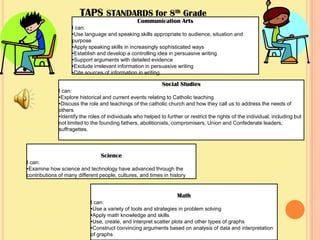
Communication ArtsI can:Use language and speaking skills appropriate to audience, situation and purpose
Apply speaking skills in increasingly sophisticated ways

Presentation etech 2011 ppt

  • 1.
    Photo Story oftaps year in review 2009-1010
  • 2.
    T.A.P.S.( Teams for Assessment Performance and Standards ), an innovative idea of how to compact the curriculum!Tuesday February 1, 2011 8:00-8:45Room 230-232 By: Sue Asencio - Technology Teachersasencio@cdeducation.org Kathy Dunkin – Reading Intervention/Academic Supportdunkin_kathy@mail.dublin.k12.oh.us St.Brigid of Kildare School 7175 Avery Rd. Dublin, Ohio 43017 614-718-5825
  • 3.
  • 4.
    21st Century WheelAlignmentUsing graphic organizers on KidspirationCreated brochures using Print Shop on the topic of reviewing the media and how heroes are depictedDiscovery Ed WritingPromptsText to speech program w/ Read & Write GoldAbolitionist assessmentusing interactive Response SystemWordle for characteristics of HeroesStandards exampleFrom Infohio 21st Century Skills – The Learning Commons
  • 5.
    STUDENT TAPS EXITQUESTIONSWhat did you enjoy the most about TAPS?How did it impact your learning? What would you do to make the program better?How did working in small groups benefit you or not?  What particular lesson stands out the most to you? How do you feel about the integration of technology into these lessons?Use of the SmartboardUse of the microphoneRead & Write GoldResearch Other ___________________________________________________Name (optional) ___________________________________________________________ Thank you for your time and attention during this process.Mrs. AsencioMrs. Dunkin
  • 6.
    Quotes from studentsTaughtus different ways to learnHelped me to find deeper meaning of thingsWriting skills got betterLiked the integration of other subjectsTaught me to think outside of the boxGot to hear the thoughts of other people on certain topics because of the small groupCould express emotionsDeepened knowledge of heroes, and gave me the desire to be a hero in someone else’s eyes
  • 7.
    Things that worked…Standards were met, collaboration was done, students learned content, tech skills, artistic creations, they had a voice, camaraderie with fellow students and team leaders, and feedback from exit questions was valuable And things that did not…Timely unit plans for team teachers, some used technology and some did not, not all team leaders bought into the program, we did not collect data or do a exit survey for the team leaders involved on the program, needed to do a tech skills pre-assessment, work out better planning timesWhere to go from here…Build on the great aspects of the program. Share model ideas with the other grade levels, think and plan a possible K-8 curriculum map and how to attack it
  • 8.
    “I hear andI forget. I see and I remember. I do and I understand.”ConfuciusRemember that… Students retain:10 percent of what they read20 percent of what they hear30 percent of what they see50 percent of what they see and hear70 percent of what they say90 percent of what they say and doSandra Rief, 1993
  • 10.
    Communication ArtsI can:Uselanguage and speaking skills appropriate to audience, situation and purpose
  • 11.
    Apply speaking skillsin increasingly sophisticated ways