Innovating In And Around Organizations
PLATFORM
ECONOMY
The Driving Business Model
of Digital Economy
➔ Fundamental change in business logic
➔ Basics of platform economy
➔ Value of data
➔ Connecting themes
➔ Platform economy business models
➔ Case: Startup Commons
➔ Designing platform economy business models
Today's Topics
@valto
@valto
Valto Loikkanen
International Serial Entrepreneur
Startup Ecosystem Developer
Digital Finance Innovator
As an Entrepreneur
● 20+ years as international Serial Entrepreneur (US, EU, Asia) &
Portfolio Entrepreneur, with personal hard earned success &
failures (currently 10 companies)
● 17 years experience in developing digital tools to support
various business processes
● 8 years of developing equity crowdfunding and other digital
investment market solutions globally
● 8 years for Startup Ecosystem development combined with
online support tools, platforms & metrics
As a Support Provider
● 10 years of startup mentoring
○ 2000+ one to one mentoring sessions and workshops
○ 1000+ entrepreneurs and hundreds of startups around the
world at various development stages and industries
● 10 years developing Startup Support services, with
entrepreneurial mind and lean methodology
As a Ecosystem Developer
● 6 years of “living lab” development for Startup Ecosystems
● 4 years in European Commission Horizon 2020 Advisory:
○ Access to Risk Finance, Spreading Excellence & Widening
participation, International Cooperation
2009
Creating the first
equity
crowdfunding
platform in the
world
2012- Digital Platforms And Business Models For Global Finance
Markets (100+ platforms)
Research
Organization
Higher
Education
Support
Organization
Big
Company
Funding
Organization
Service
Provider
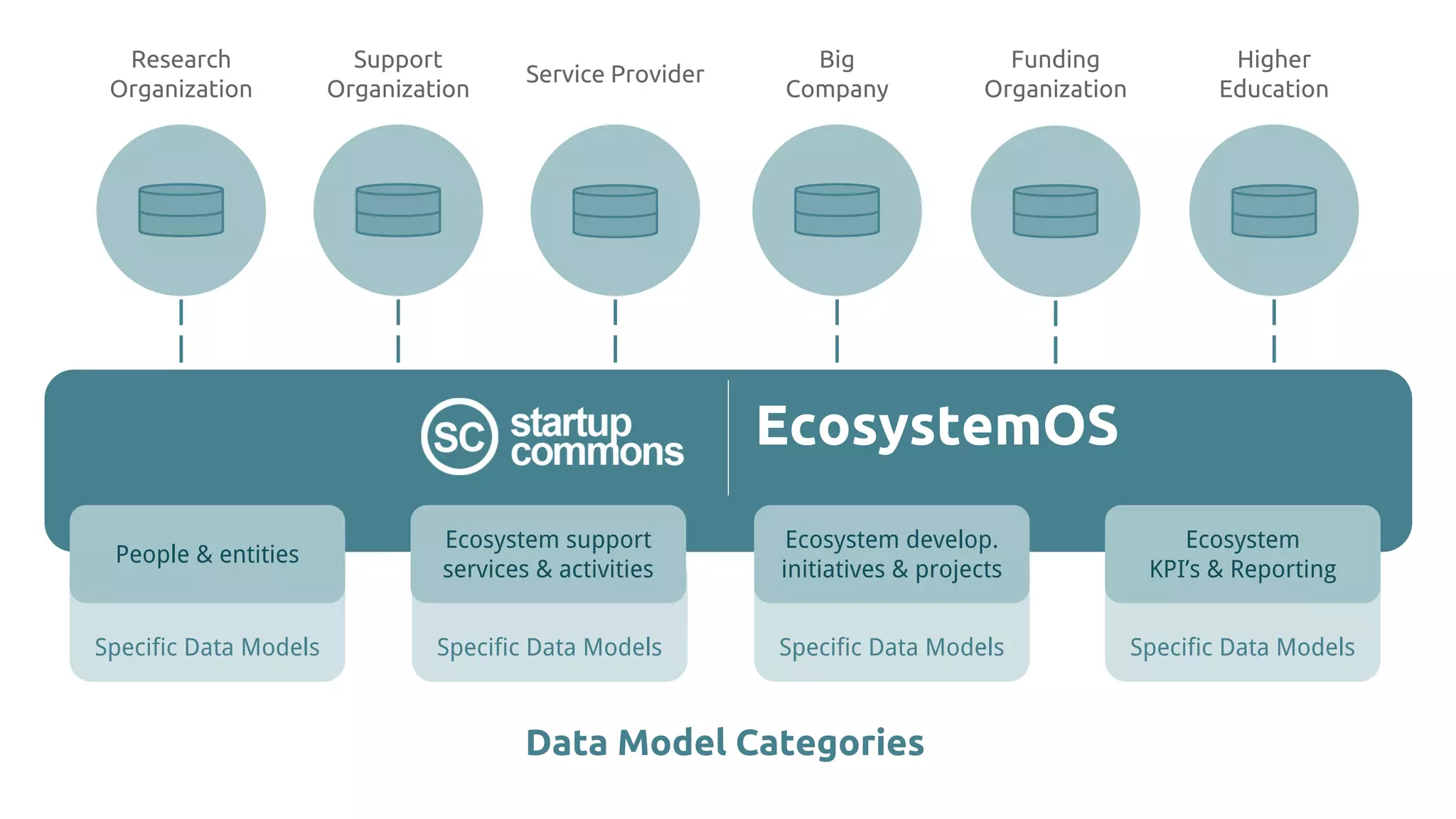
Specific Data Models Specific Data Models Specific Data ModelsSpecific Data Models
People & entities
Ecosystem support
services & activities
Ecosystem develop.
initiatives & projects
Ecosystem
KPI’s & Reporting
Developing & Digitizing Startup Ecosystems To Enable Data
Flow Within And Between Ecosystems Globally
2014-
ROADMAP TO DIGITAL
PLATFORM ECONOMY
2017
Platform Economy
It’s not about...
...new technology...
...or passing trend.
“New”
Business Models
Enabled By Internet And Constant Flow Of
New Digital Technologies.
Impact To Society And Economy
Finnish Economy Transformation (forecast) 1950 - 2030
Digitalization
● Portion of services from the relative volume of overall value produced will
continue to grow
● Data business will also take growing portion of the service markets
● In next 3-5 years, AI solutions will change the productivity of labor and base
logic in business with unforeseen ways
● Digital balance of trade and balance of current accounts, work as measures
for platform economy (but unclear how those are or should be measured
today)
Growing portion of national economy is
coming from value creation based on data
Basics Of
Platform Economy
Digital Ecosystems
Digital
Platforms
Customers & Users Supply & Producers
Digital Platform Economy
Production
Delivery Marketing
Customers
Production Delivery Marketing Customers
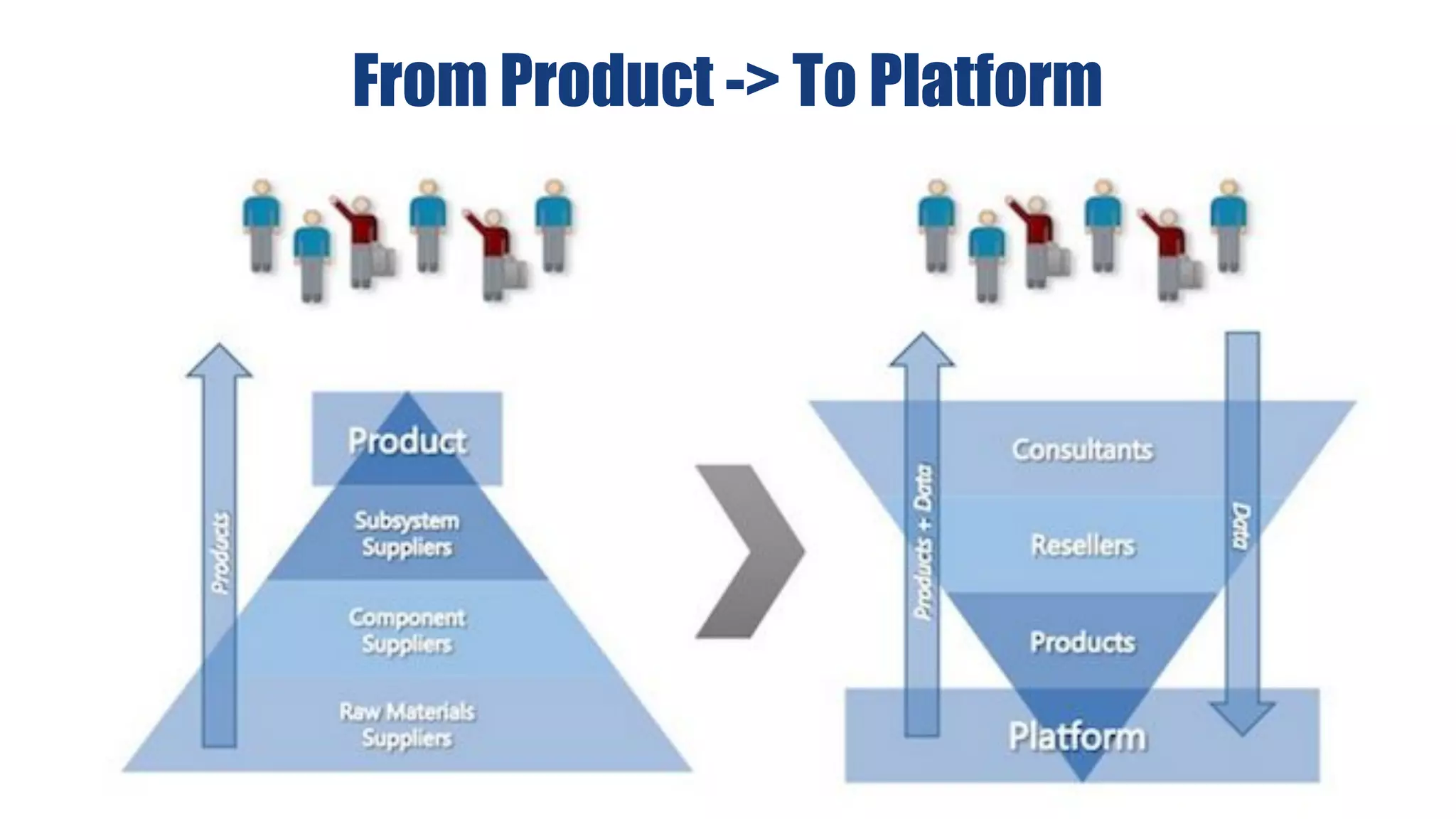
From Value Chains
To Platform Economy
Platforms Ecosystems
Platform Economy
challenges the business logic in
All Industries
● Service layer: entire service business logic
● Data layer: data as new raw material in value creation
● Systemic layer: more complete solutions to customers needs by
combining systems and data
➔ Machines + equipments + services + communication capabilities + real-time
monitoring & data collection + analytics + business model changes etc.
(digital/application driven companies)
➔ Ongoing 24/7 value creation
In future, manufacturer of machines &
equipments, must enhance their products
Product
Product
Service
Data
Networked Systems
Service
= 1 : 8 => 10X
From Digital -> To Digital Platform Economy
From Product -> To Platform
10X
Business
Competing in one dimension.
Cost, by applying economies of
scale.
Competing in both dimensions.
Due network effect, higher marginal
value at lower marginal cost.
Value
Cost
Business
Size
Player 1 Player 2
Value
Cost
Business
Size
Platform 1 Platform 2
Linear Business Platform Business
Based on own resources,
innovation occurs at
given rate.
Harnessing third party
resources, innovation can
occur at higher combined
rate
Even if platform starts from behind or has higher variability,
its value can overtake the product leader.
From resource control
-> to resource orchestration
Value of Data
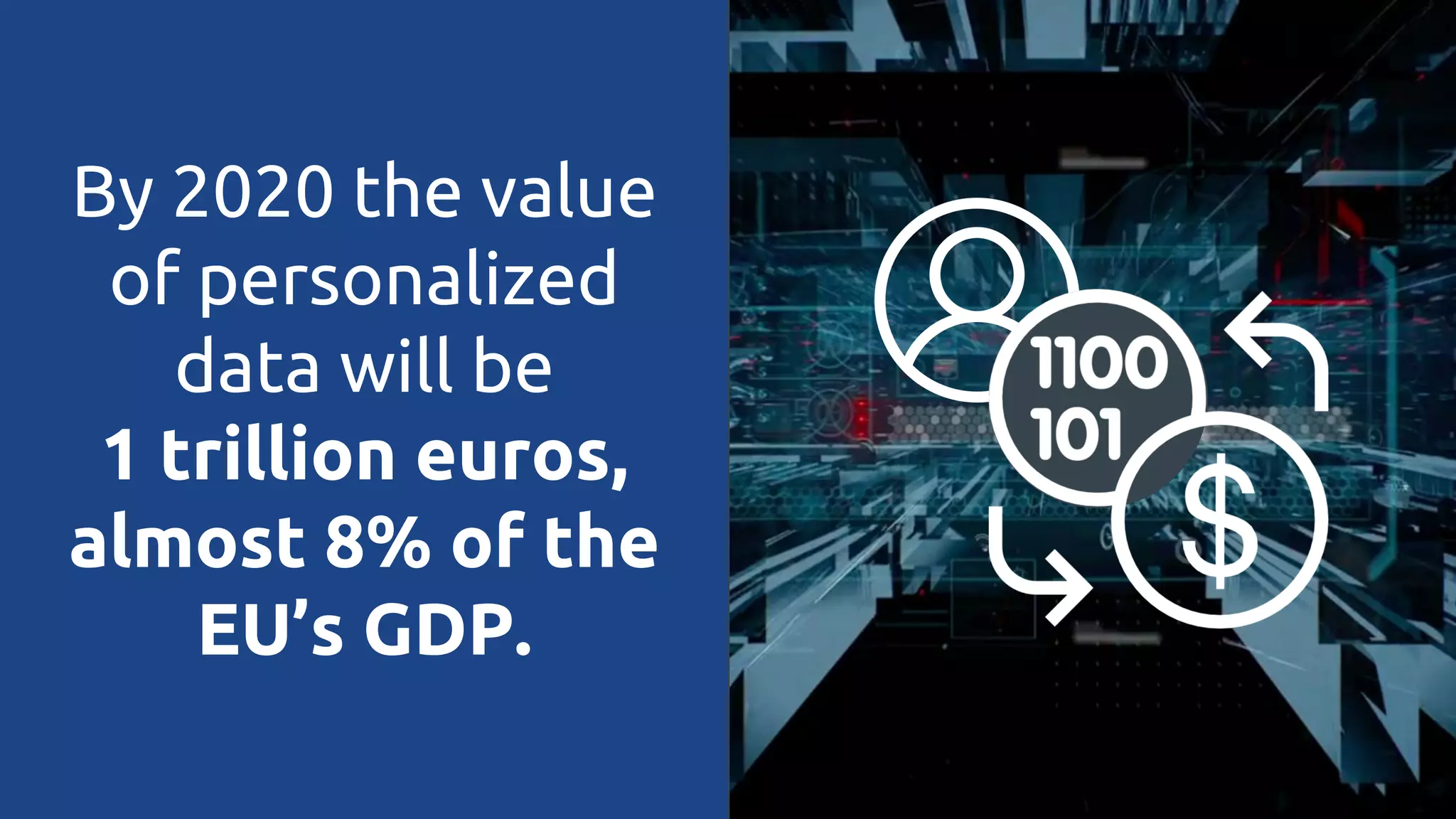
By 2020 the value
of personalized
data will be
1 trillion euros,
almost 8% of the
EU’s GDP.
Global data
economy is
predicted at
3 trillion.
● Data makes everything digitally transparent
● Data can be collected, stored, combined and multiplied
almost endlessly with nominal cost
● By reading and analyzing data, we learn to understand
societal and economical trends: changes in characteristics,
behavior, activity, wearing, consuming, preferences etc.
Data is the new raw material of digital
economy
Data = Power...
Fact
No DATA = No AI
Poor DATA = Poor AI
Connecting
Themes
AI
GDPR
API Economy
Data Economy
Sharing Economy
Digital Single Market...
ONLY WEEKS TO GO...
GDPR
5
About me, my
profile,
documents,
records, etc.
What I do,
what is done
for me, my
interactions
etc.
About service,
target, details,
availability,
operator etc.
Process steps,
interactions,
timestamps
etc.
“Personal”
DATA
“Transaction”
DATA
User A
DATA
Service A
DATA
About service,
target, details,
availability,
operator etc.
Process steps,
interactions,
timestamps
etc.
Service B
DATA
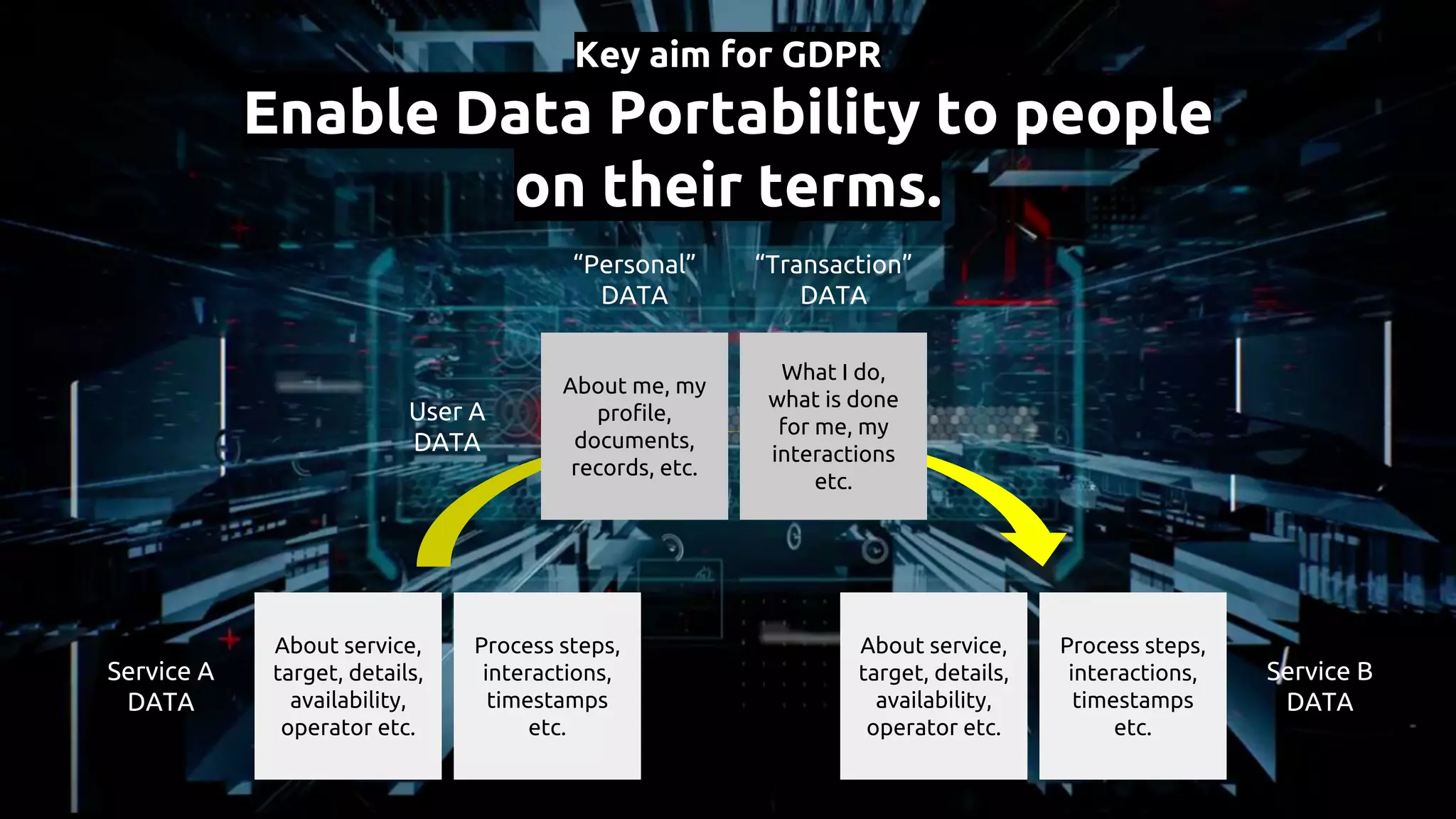
Key aim for GDPR
Enable Data Portability to people
on their terms.
MyData
A Nordic Model for
human-centered
personal data
management and
processing
https://julkaisut.valtioneuvosto
.fi/handle/10024/78439
mydata.org
Ecosystemic
Benefits
Separated
MyData
User Accounts.
“data accounts”
for individuals &
SME’s.
Data Accounts
Connected with
API’s
to multiple
services.
About me, my
profile,
documents,
records, etc.
What I do,
what is done
for me,
profiling,
interactions,
etc.
About service,
target, details,
availability,
provider etc.
Process/servic
e steps,
interactions,
service records
etc.
“My
Personal”
DATA
“My
Transaction”
DATA
User Accounts
In Service(s)
Used
Service(s)
Used
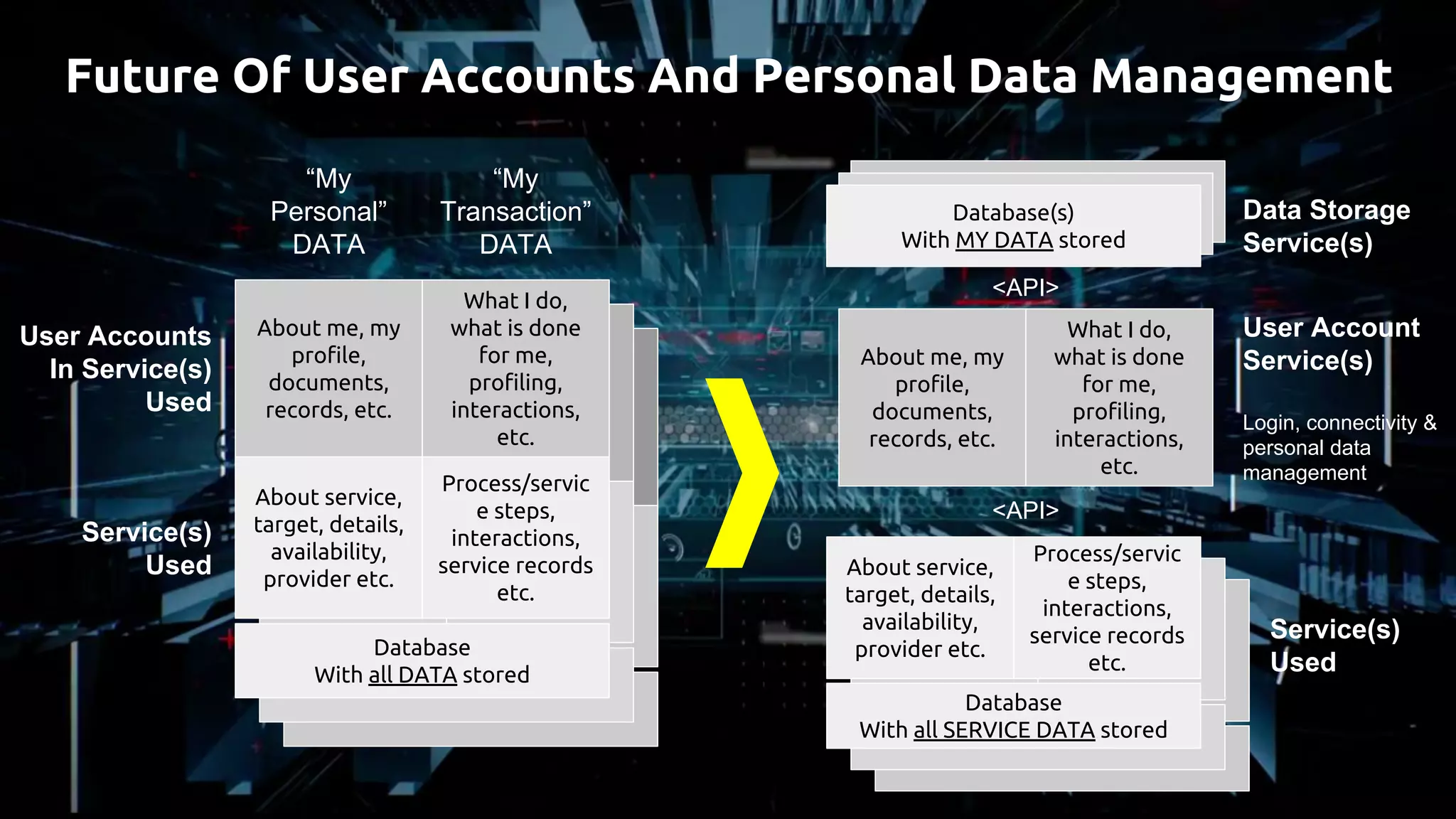
Future Of User Accounts And Personal Data Management
About me, my
profile,
documents,
records, etc.
What I do,
what is done
for me,
profiling,
interactions,
etc.
About service,
target, details,
availability,
provider etc.
Process/servic
e steps,
interactions,
service records
etc.
<API>
Database
With all DATA stored
Database
With all SERVICE DATA stored
Database(s)
With MY DATA stored
User Account
Service(s)
Login, connectivity &
personal data
management
Service(s)
Used
Data Storage
Service(s)
<API>
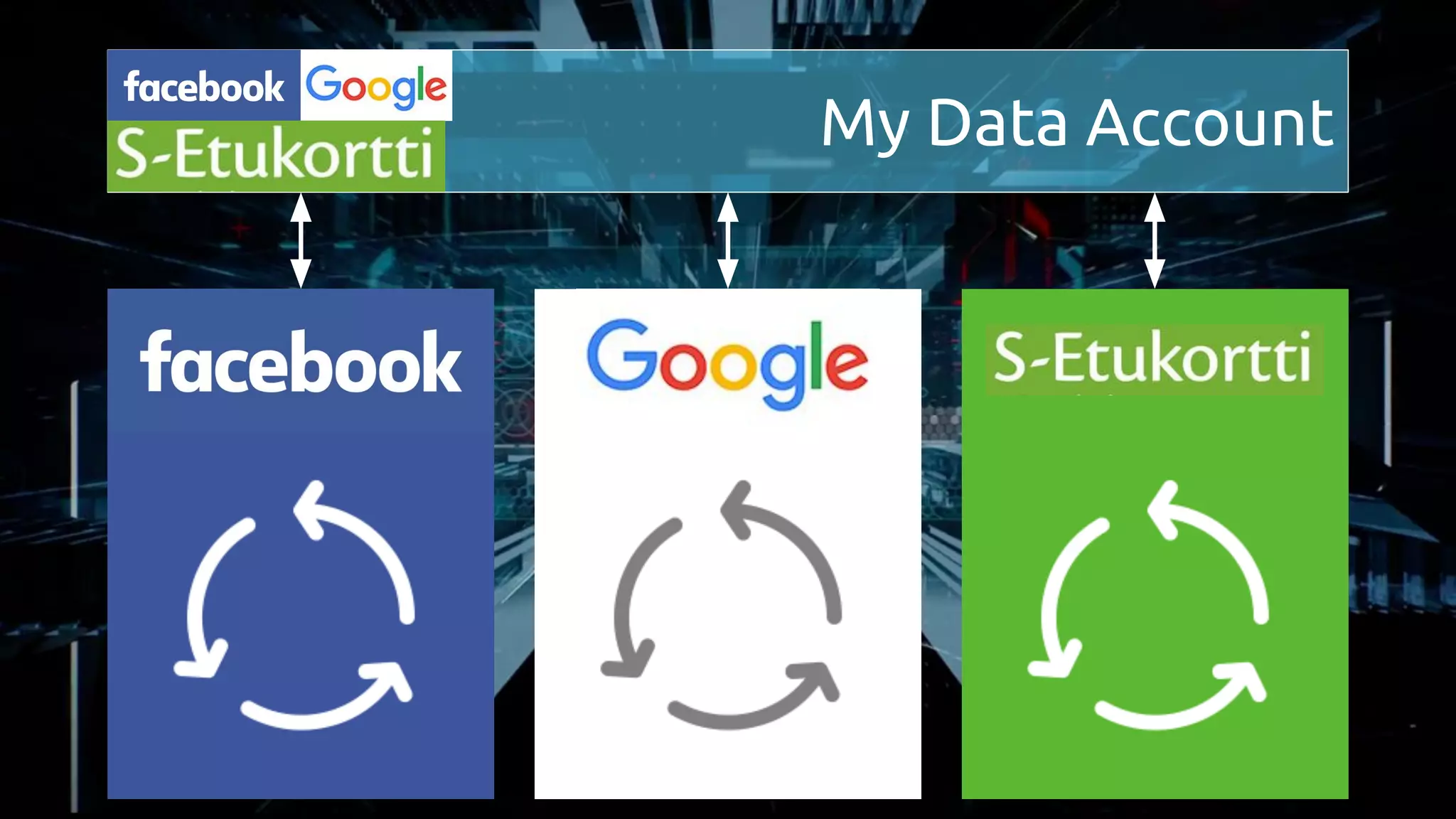
My Data Account
My Data Account
My Personal AI
applied to My Data
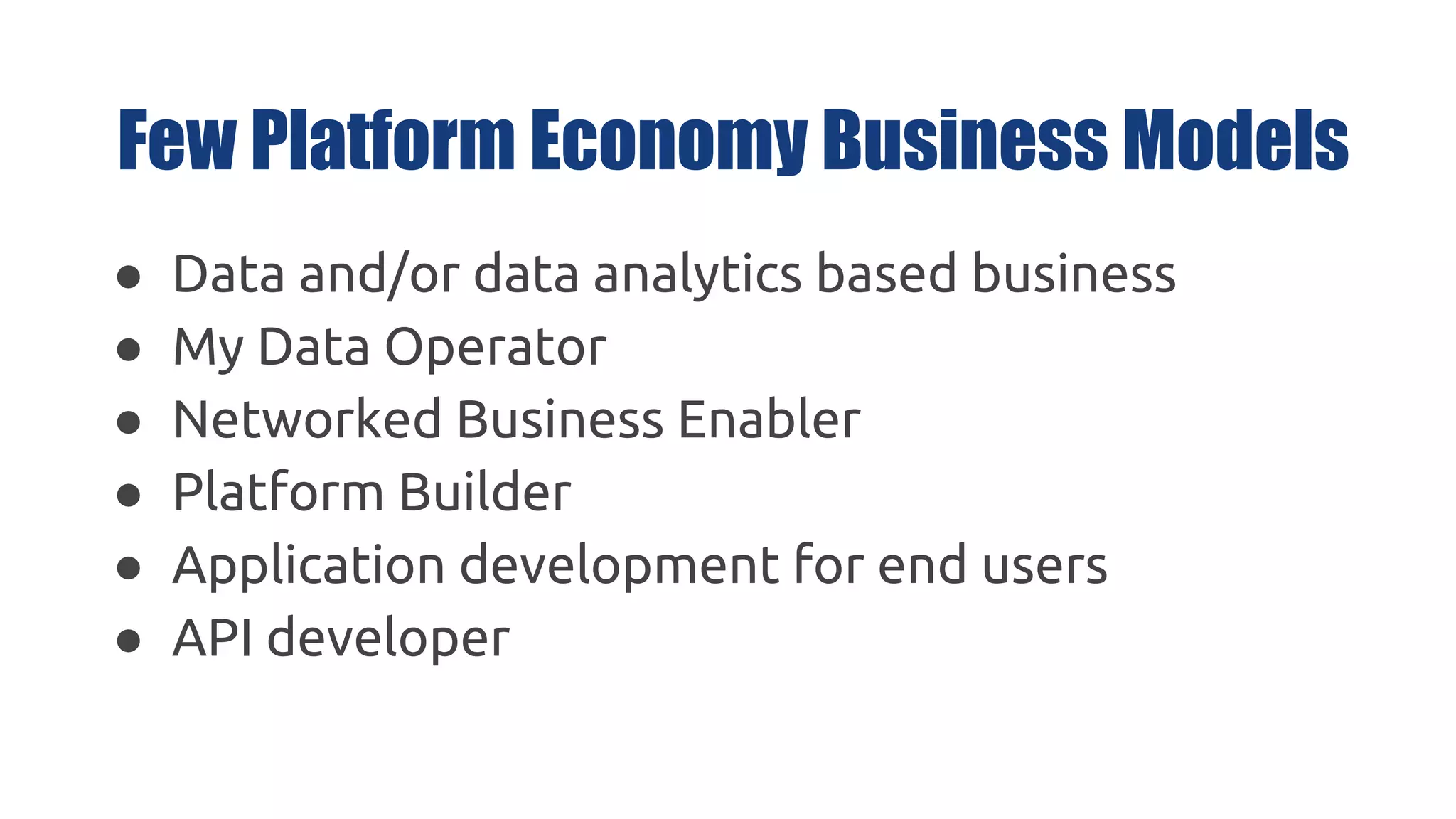
Platform Economy
Business Models
● Data and/or data analytics based business
● My Data Operator
● Networked Business Enabler
● Platform Builder
● Application development for end users
● API developer
Few Platform Economy Business Models
Models For Organizing Platforms
Comparing Models
Case Study
Startup Commons
“Mobile Operator”
analogy
?
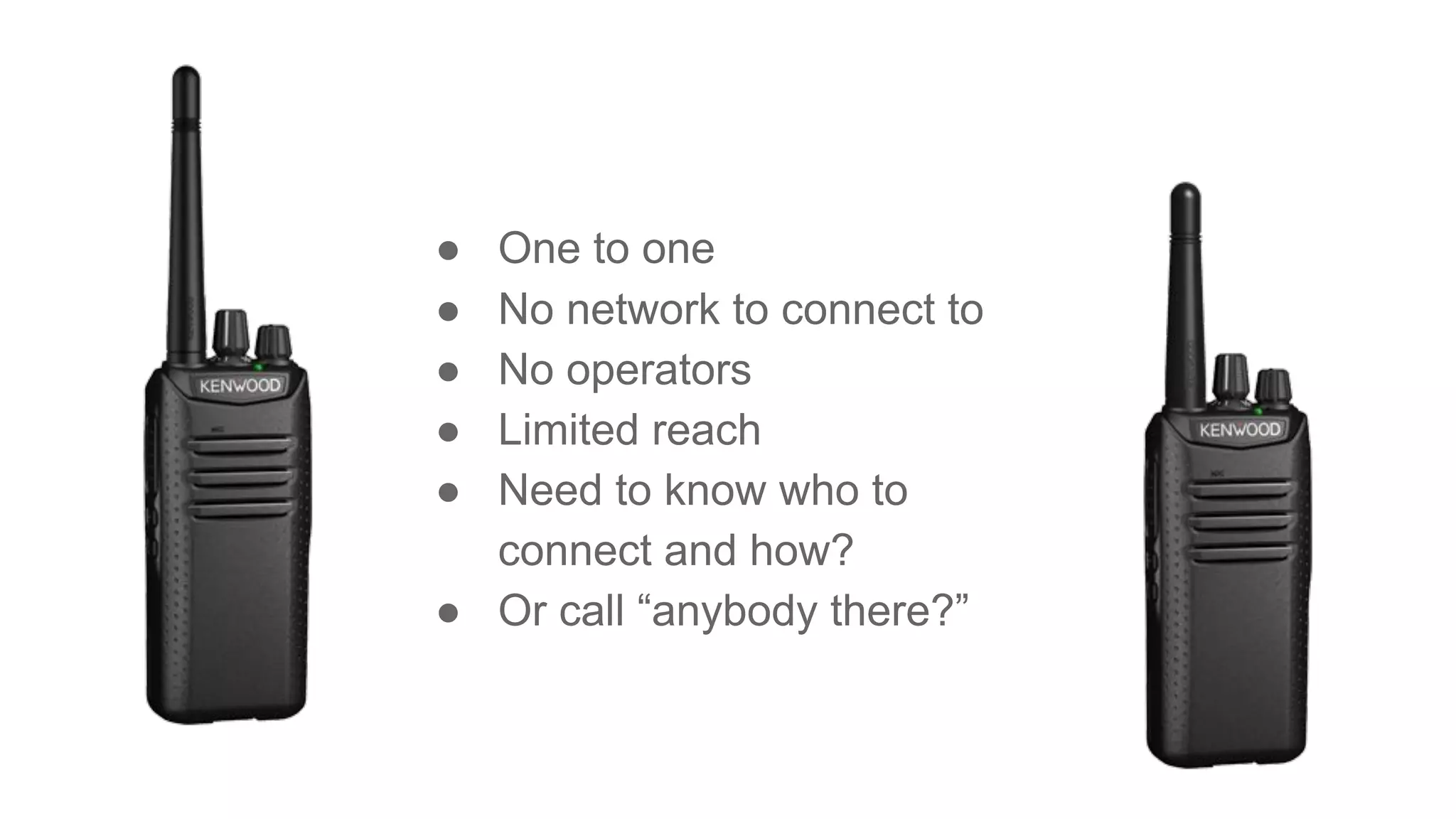
● One to one
● No network to connect to
● No operators
● Limited reach
● Need to know who to
connect and how?
● Or call “anybody there?”
Startup Commons provide standardized
“Operator Network Infra” and help enable “roaming”
Applications are “Devices” connecting to “Operators Network”
Ecosystem Operators is the “Operators”
Ecosystem Operator.
Digital
“Digital tools, eLearning, user data portability & KPI data...”
Support Providers
Product build & validation,
Biz model design & testing.
Product scaling &
business model validation
Ideation & product design
Team building, training,
mentoring, seed investor &
experts matching
VC Investors, Corporate &
international partnership
Education, inspiration,
Co-founder matching
Product BusinessIdeas
Founders OrganizationTalents
Ecosystem Operators
“Strategically developing ecosystem as a whole from holistic perspective”
C
D
Business Creators-2 2 3-1
B
B
A 0 Business Creators
Research
Organization
Higher
Education
Support
Organization
Big
Company
Funding
Organization
Service
Provider
Ideas?
Entrepreneurs?
Talent?
Startups?
What
Data?
Connection
method?
Data
ownership?
Access
rights?
Data
model?
Documentation?
6 applications
15 two way connections
5 per each application
With only one
organization and one
application per each...
Research
Organization
Higher
Education
Support
Organization
Big
Company
Funding
Organization
Service Provider
EcosystemOS
Data Model Categories
Specific Data Models Specific Data Models Specific Data ModelsSpecific Data Models
People & entities
Ecosystem support
services & activities
Ecosystem develop.
initiatives & projects
Ecosystem
KPI’s & Reporting
Project mng. Tools
Service Data
Customer Data
Service Data
Customer Data
Service Data
Customer Data
Service Data Service Data Service Data
Event Systems Canvas & Dev Tools Biz Plan Tool
Online Forums Mentoring Accounting
Service Data
Customer Data
Service Data
Customer Data
Evaluating Tools
Service Data
Matchmaking
Service Data
Funding platforms
Ecosystem API’s
Standards and Documentation for Connections, Data Models & Data Sharing principles
Ecosystem DataProject Data KPI DataServices Data
Ecosystem Portal KPI DashboardEco.Dev. ProjectsService Mapping
Automated AutomatedManagedSemi Automated
Circle Pass Accounts & API’s - User Data Ownership, portability and Sharing
Customer Data Customer Data Customer DataCustomer Data Customer Data
User Data
Business Data
Activity Data
Statistical & Benchmarking Data
Information & Analytics Data
Profiling Data
Public
Local
Regional
Global
Private
& Sharable
Email Updates
Suggested Training
Knowledge Automation
Social Media Updates
CRM record updates
Business Intell
Analytic alerts
Data flow adjustments
Open Application
Respond to Notification
Development Phase Update
View In App Message
Inactivity
Use Service
Entered Geolocation
Data flows to automated actions
Ecosystem Operator Core Areas
Ecosystem
Framework
Digital
Connectivity
Protect User
Data Rights
Real time
Data & KPI’s
● Focus on key elements from holistic and
neutral ecosystem perspective
○ User Account, related API’s, data & KPI’s
○ Service Function basic data, KPI’s &
related API’s
● Support User Experience at ecosystem level
● Support local business growth via local
connected application and business model
development
● Maintain sustainability of overall strategy,
processes and resources (funding, knowledge
base and related shorter & longer processes).
Designing
Platform Business Models
Ecosystem
Framework
Designing
a Platform
Platform
Owner(s)
Customers &
Users
Creators &
Producers
Partners
Parties
Value
Proposition
Value
Creation
By Resolute HQ. Modified from original version by Digital Ahead.
This template is licensed under the Creative Commons Attribution-Share Alike 4.0 Unported License.
Parties Key Enablers
Platform
Owner(s)
Customers &
Users
Creators &
Producers
Partners
Parties
Value
Proposition
Value
Creation
By Resolute HQ. Modified from original version by Digital Ahead.
This template is licensed under the Creative Commons Attribution-Share Alike 4.0 Unported License.
Parties Key Enablers
Parties
Define key parties in each corner.
Name and describe as detailed as
possible. Typical parties are owner,
customers/users, creators and
partners.
Platform
Owner(s)
Customers &
Users
Creators &
Producers
Partners
Parties
Value
Proposition
Value
Creation
By Resolute HQ. Modified from original version by Digital Ahead.
This template is licensed under the Creative Commons Attribution-Share Alike 4.0 Unported License.
Parties Key Enablers
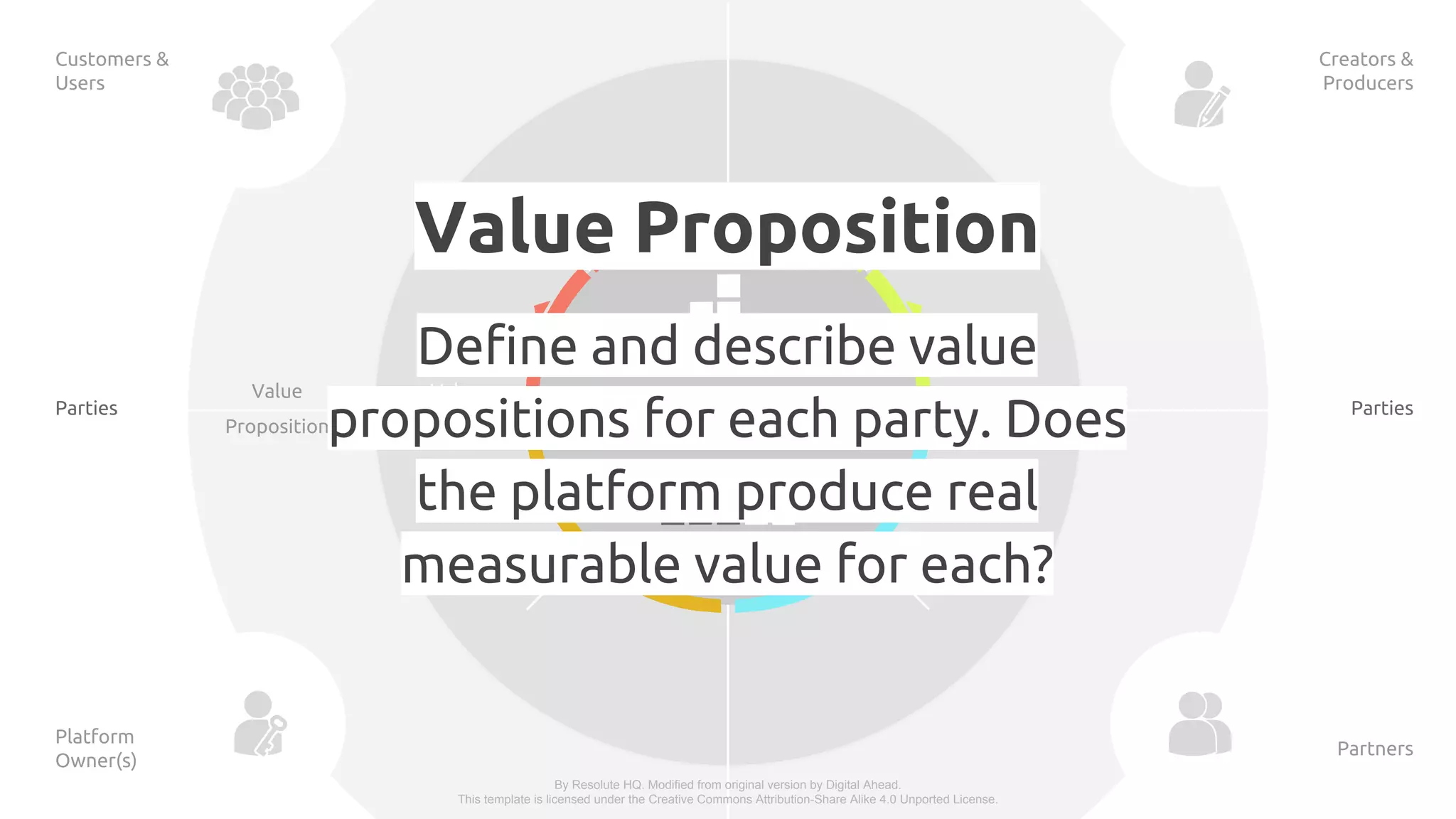
Value Proposition
Define and describe value
propositions for each party. Does
the platform produce real
measurable value for each?
Platform
Owner(s)
Customers &
Users
Creators &
Producers
Partners
Parties
Value
Proposition
Value
Creation
By Resolute HQ. Modified from original version by Digital Ahead.
This template is licensed under the Creative Commons Attribution-Share Alike 4.0 Unported License.
Parties Key Enablers
Value Creation
Describe what each party is
expected to contribute and what
will they gain. What does these
parties want to give and get?
Platform
Owner(s)
Customers &
Users
Creators &
Producers
Partners
Parties
Value
Proposition
Value
Creation
By Resolute HQ. Modified from original version by Digital Ahead.
This template is licensed under the Creative Commons Attribution-Share Alike 4.0 Unported License.
Parties Key Enablers
Key Enablers
Think and describe nessesary technologies,
technical enablers, data sets, data collection
processes, tools, services, rules & standards,
etc. that are required for digital platform to
function in such way that it will produce the
described values and fulfill the expected value
propositions of each party.
Growing the volume of
participants
Tools &
Services
Operate & Develop
Matching Rules &
Standards
Connect demand / supply
ConsumeCreate
Compensate / Monetize
Platform
transactions
Growing the volume of participants
● Attract parties to join the platform, to grow the volume of each party in the
network in balanced manner, considering supply and demand.
● So that exchange of value can start to emerge.
Operate & Develop
Matching
● Match each parties with those parties whos supply is meaningful for the
matching other party.
● Or else, all parties are looking for the “needle in a haystack”.
Operate & Develop
Rules & Standards
● Platform needs to create the rules that define what is allowed and what is
not. For example; what type of behavior is encouraged and what is not. This
include two main component;
○ Entry and usage moderation; Who can join, who can’t and why?
○ Usage moderation; moderation of the quality of activities and support,
based on feedback by each parties
● If these are not managed properly, quality will diminish as the volume of each
party grows.
Operate & Develop
Tools & Services
● Platform offers key tools and services like; technology that supports each
step in the key transactions. Tools are self service and “plug & play” type of
solutions.
● Services on the other hand are things that platform centralizes and manages
itself. As an example these are be insurances to parties, marketplace and user
support.
Operate & Develop
Create Supply
● Parties in the platform need to produce something of value like; content,
services, products, solutions etc.
● This is the supply that platform offers.
Platform Transactions
Connect
● Platform need to help connect the demand with relevant supply
Platform Transactions
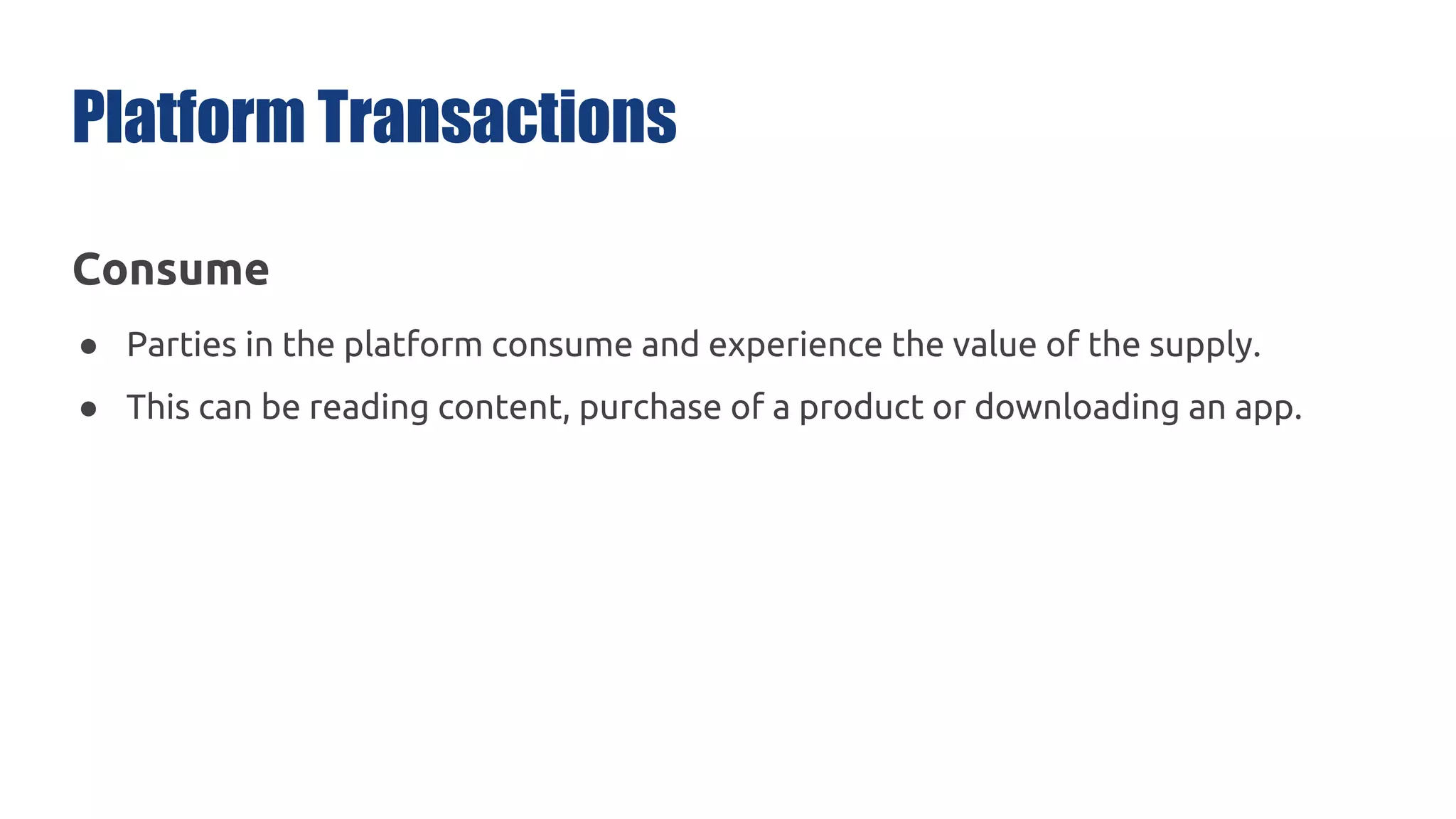
Consume
● Parties in the platform consume and experience the value of the supply.
● This can be reading content, purchase of a product or downloading an app.
Platform Transactions
Compensate
● Party that is consuming supply also produce value in return when they
consume the supply.
● This is not necessarily money, but can also be “liking”, recommendation,
attention etc.
Platform Transactions
Trends in Enabling
Technologies
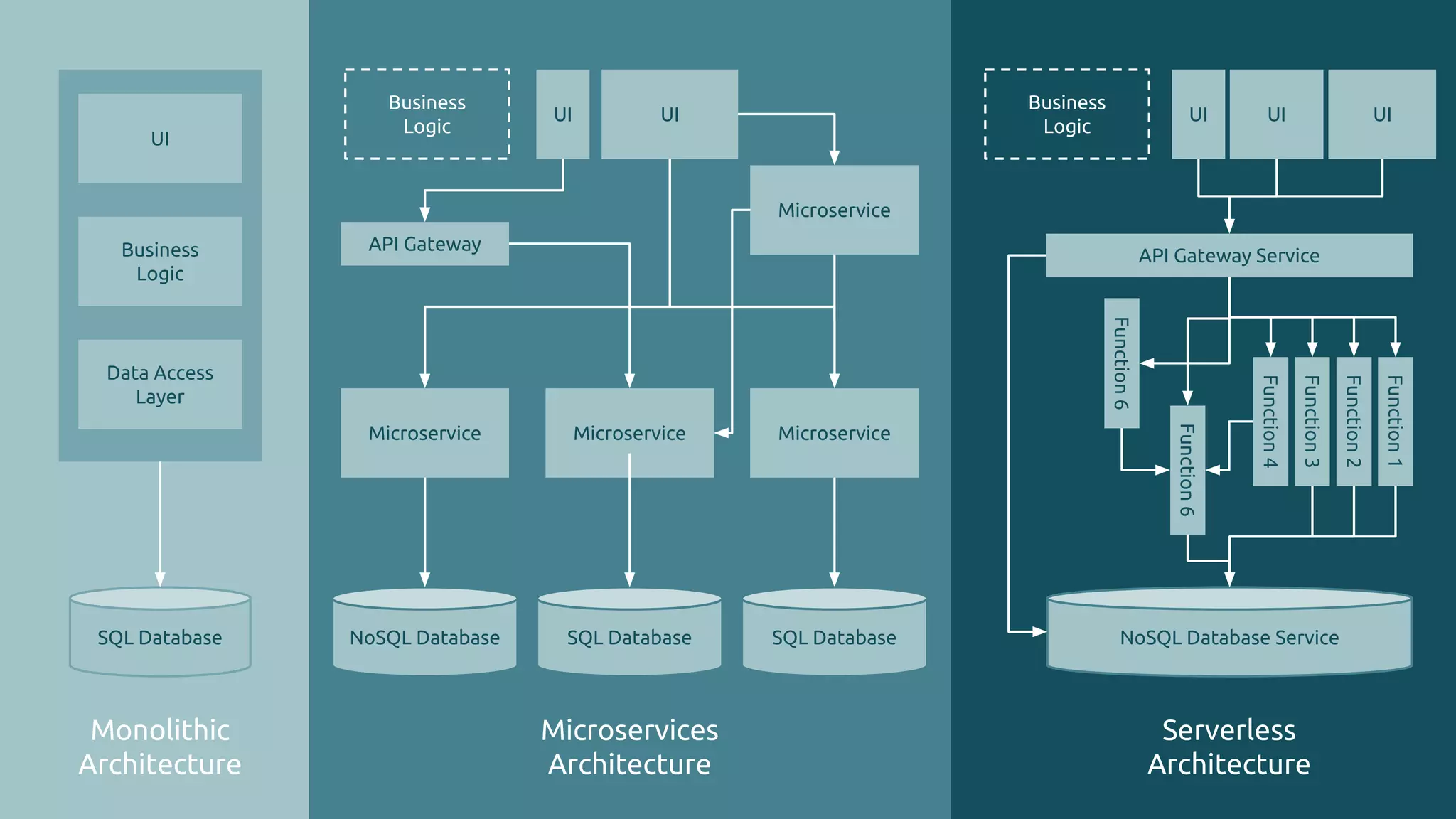
Trends in application development
UI
UI
Business
Logic
Data Access
Layer
UI
Microservice Microservice Microservice
SQL Database NoSQL Database SQL Database Database
Microservice
Monolithic
Architecture
Microservices
Architecture
Business
Logic
Function1
Function2
Function3
Function4
Function6
Function6
API Gateway Service
UIUI UI
SQL Database NoSQL Database Service
Serverless
Architecture
Business
Logic
API Gateway
UI
How
Outdating Current Emerging
What
Where
Traditional
Waterfall Agile DevOps NoOps
Monolithic Apps N-Tiers Apps Microservices & API’s Functions As A Service
Physical Private Virtualization
Hybrid Cloud Cloud Network OS
Containers Serverless Computing
Aim to Become
“Industry Standard”
National
Standards
International
Standard
VS
Thank You!
Questions
Or Comments?
valto@growvc.com

Digital Platform Economy

  • 1.
    Innovating In AndAround Organizations PLATFORM ECONOMY The Driving Business Model of Digital Economy
  • 2.
    ➔ Fundamental changein business logic ➔ Basics of platform economy ➔ Value of data ➔ Connecting themes ➔ Platform economy business models ➔ Case: Startup Commons ➔ Designing platform economy business models Today's Topics
  • 3.
  • 4.
    @valto Valto Loikkanen International SerialEntrepreneur Startup Ecosystem Developer Digital Finance Innovator As an Entrepreneur ● 20+ years as international Serial Entrepreneur (US, EU, Asia) & Portfolio Entrepreneur, with personal hard earned success & failures (currently 10 companies) ● 17 years experience in developing digital tools to support various business processes ● 8 years of developing equity crowdfunding and other digital investment market solutions globally ● 8 years for Startup Ecosystem development combined with online support tools, platforms & metrics As a Support Provider ● 10 years of startup mentoring ○ 2000+ one to one mentoring sessions and workshops ○ 1000+ entrepreneurs and hundreds of startups around the world at various development stages and industries ● 10 years developing Startup Support services, with entrepreneurial mind and lean methodology As a Ecosystem Developer ● 6 years of “living lab” development for Startup Ecosystems ● 4 years in European Commission Horizon 2020 Advisory: ○ Access to Risk Finance, Spreading Excellence & Widening participation, International Cooperation
  • 5.
  • 6.
    2012- Digital PlatformsAnd Business Models For Global Finance Markets (100+ platforms)
  • 7.
    Research Organization Higher Education Support Organization Big Company Funding Organization Service Provider Specific Data ModelsSpecific Data Models Specific Data ModelsSpecific Data Models People & entities Ecosystem support services & activities Ecosystem develop. initiatives & projects Ecosystem KPI’s & Reporting Developing & Digitizing Startup Ecosystems To Enable Data Flow Within And Between Ecosystems Globally 2014-
  • 8.
  • 9.
  • 10.
  • 11.
  • 12.
  • 13.
    “New” Business Models Enabled ByInternet And Constant Flow Of New Digital Technologies.
  • 15.
    Impact To SocietyAnd Economy
  • 16.
    Finnish Economy Transformation(forecast) 1950 - 2030 Digitalization
  • 17.
    ● Portion ofservices from the relative volume of overall value produced will continue to grow ● Data business will also take growing portion of the service markets ● In next 3-5 years, AI solutions will change the productivity of labor and base logic in business with unforeseen ways ● Digital balance of trade and balance of current accounts, work as measures for platform economy (but unclear how those are or should be measured today) Growing portion of national economy is coming from value creation based on data
  • 18.
  • 19.
    Digital Ecosystems Digital Platforms Customers &Users Supply & Producers Digital Platform Economy
  • 20.
    Production Delivery Marketing Customers Production DeliveryMarketing Customers From Value Chains To Platform Economy Platforms Ecosystems
  • 21.
    Platform Economy challenges thebusiness logic in All Industries
  • 22.
    ● Service layer:entire service business logic ● Data layer: data as new raw material in value creation ● Systemic layer: more complete solutions to customers needs by combining systems and data ➔ Machines + equipments + services + communication capabilities + real-time monitoring & data collection + analytics + business model changes etc. (digital/application driven companies) ➔ Ongoing 24/7 value creation In future, manufacturer of machines & equipments, must enhance their products
  • 23.
    Product Product Service Data Networked Systems Service = 1: 8 => 10X From Digital -> To Digital Platform Economy
  • 24.
    From Product ->To Platform
  • 25.
  • 26.
    Competing in onedimension. Cost, by applying economies of scale. Competing in both dimensions. Due network effect, higher marginal value at lower marginal cost. Value Cost Business Size Player 1 Player 2 Value Cost Business Size Platform 1 Platform 2 Linear Business Platform Business
  • 27.
    Based on ownresources, innovation occurs at given rate. Harnessing third party resources, innovation can occur at higher combined rate Even if platform starts from behind or has higher variability, its value can overtake the product leader. From resource control -> to resource orchestration
  • 28.
  • 29.
    By 2020 thevalue of personalized data will be 1 trillion euros, almost 8% of the EU’s GDP.
  • 30.
  • 31.
    ● Data makeseverything digitally transparent ● Data can be collected, stored, combined and multiplied almost endlessly with nominal cost ● By reading and analyzing data, we learn to understand societal and economical trends: changes in characteristics, behavior, activity, wearing, consuming, preferences etc. Data is the new raw material of digital economy
  • 32.
  • 36.
  • 37.
    Poor DATA =Poor AI
  • 38.
  • 39.
    AI GDPR API Economy Data Economy SharingEconomy Digital Single Market...
  • 40.
    ONLY WEEKS TOGO... GDPR 5
  • 41.
    About me, my profile, documents, records,etc. What I do, what is done for me, my interactions etc. About service, target, details, availability, operator etc. Process steps, interactions, timestamps etc. “Personal” DATA “Transaction” DATA User A DATA Service A DATA About service, target, details, availability, operator etc. Process steps, interactions, timestamps etc. Service B DATA Key aim for GDPR Enable Data Portability to people on their terms.
  • 42.
    MyData A Nordic Modelfor human-centered personal data management and processing https://julkaisut.valtioneuvosto .fi/handle/10024/78439 mydata.org
  • 43.
  • 44.
  • 45.
  • 46.
    About me, my profile, documents, records,etc. What I do, what is done for me, profiling, interactions, etc. About service, target, details, availability, provider etc. Process/servic e steps, interactions, service records etc. “My Personal” DATA “My Transaction” DATA User Accounts In Service(s) Used Service(s) Used Future Of User Accounts And Personal Data Management About me, my profile, documents, records, etc. What I do, what is done for me, profiling, interactions, etc. About service, target, details, availability, provider etc. Process/servic e steps, interactions, service records etc. <API> Database With all DATA stored Database With all SERVICE DATA stored Database(s) With MY DATA stored User Account Service(s) Login, connectivity & personal data management Service(s) Used Data Storage Service(s) <API>
  • 48.
  • 49.
  • 50.
  • 51.
  • 52.
    ● Data and/ordata analytics based business ● My Data Operator ● Networked Business Enabler ● Platform Builder ● Application development for end users ● API developer Few Platform Economy Business Models
  • 53.
  • 54.
  • 55.
  • 56.
  • 57.
  • 58.
    ● One toone ● No network to connect to ● No operators ● Limited reach ● Need to know who to connect and how? ● Or call “anybody there?”
  • 59.
    Startup Commons providestandardized “Operator Network Infra” and help enable “roaming” Applications are “Devices” connecting to “Operators Network” Ecosystem Operators is the “Operators”
  • 60.
  • 61.
    Digital “Digital tools, eLearning,user data portability & KPI data...” Support Providers Product build & validation, Biz model design & testing. Product scaling & business model validation Ideation & product design Team building, training, mentoring, seed investor & experts matching VC Investors, Corporate & international partnership Education, inspiration, Co-founder matching Product BusinessIdeas Founders OrganizationTalents Ecosystem Operators “Strategically developing ecosystem as a whole from holistic perspective” C D Business Creators-2 2 3-1 B B A 0 Business Creators
  • 62.
  • 63.
    Research Organization Higher Education Support Organization Big Company Funding Organization Service Provider EcosystemOS Data ModelCategories Specific Data Models Specific Data Models Specific Data ModelsSpecific Data Models People & entities Ecosystem support services & activities Ecosystem develop. initiatives & projects Ecosystem KPI’s & Reporting
  • 64.
    Project mng. Tools ServiceData Customer Data Service Data Customer Data Service Data Customer Data Service Data Service Data Service Data Event Systems Canvas & Dev Tools Biz Plan Tool Online Forums Mentoring Accounting Service Data Customer Data Service Data Customer Data Evaluating Tools Service Data Matchmaking Service Data Funding platforms Ecosystem API’s Standards and Documentation for Connections, Data Models & Data Sharing principles Ecosystem DataProject Data KPI DataServices Data Ecosystem Portal KPI DashboardEco.Dev. ProjectsService Mapping Automated AutomatedManagedSemi Automated Circle Pass Accounts & API’s - User Data Ownership, portability and Sharing Customer Data Customer Data Customer DataCustomer Data Customer Data
  • 65.
    User Data Business Data ActivityData Statistical & Benchmarking Data Information & Analytics Data Profiling Data Public Local Regional Global Private & Sharable
  • 66.
    Email Updates Suggested Training KnowledgeAutomation Social Media Updates CRM record updates Business Intell Analytic alerts Data flow adjustments Open Application Respond to Notification Development Phase Update View In App Message Inactivity Use Service Entered Geolocation Data flows to automated actions
  • 67.
    Ecosystem Operator CoreAreas Ecosystem Framework Digital Connectivity Protect User Data Rights Real time Data & KPI’s ● Focus on key elements from holistic and neutral ecosystem perspective ○ User Account, related API’s, data & KPI’s ○ Service Function basic data, KPI’s & related API’s ● Support User Experience at ecosystem level ● Support local business growth via local connected application and business model development ● Maintain sustainability of overall strategy, processes and resources (funding, knowledge base and related shorter & longer processes).
  • 68.
  • 69.
  • 71.
  • 76.
    Platform Owner(s) Customers & Users Creators & Producers Partners Parties Value Proposition Value Creation ByResolute HQ. Modified from original version by Digital Ahead. This template is licensed under the Creative Commons Attribution-Share Alike 4.0 Unported License. Parties Key Enablers
  • 77.
    Platform Owner(s) Customers & Users Creators & Producers Partners Parties Value Proposition Value Creation ByResolute HQ. Modified from original version by Digital Ahead. This template is licensed under the Creative Commons Attribution-Share Alike 4.0 Unported License. Parties Key Enablers Parties Define key parties in each corner. Name and describe as detailed as possible. Typical parties are owner, customers/users, creators and partners.
  • 78.
    Platform Owner(s) Customers & Users Creators & Producers Partners Parties Value Proposition Value Creation ByResolute HQ. Modified from original version by Digital Ahead. This template is licensed under the Creative Commons Attribution-Share Alike 4.0 Unported License. Parties Key Enablers Value Proposition Define and describe value propositions for each party. Does the platform produce real measurable value for each?
  • 79.
    Platform Owner(s) Customers & Users Creators & Producers Partners Parties Value Proposition Value Creation ByResolute HQ. Modified from original version by Digital Ahead. This template is licensed under the Creative Commons Attribution-Share Alike 4.0 Unported License. Parties Key Enablers Value Creation Describe what each party is expected to contribute and what will they gain. What does these parties want to give and get?
  • 80.
    Platform Owner(s) Customers & Users Creators & Producers Partners Parties Value Proposition Value Creation ByResolute HQ. Modified from original version by Digital Ahead. This template is licensed under the Creative Commons Attribution-Share Alike 4.0 Unported License. Parties Key Enablers Key Enablers Think and describe nessesary technologies, technical enablers, data sets, data collection processes, tools, services, rules & standards, etc. that are required for digital platform to function in such way that it will produce the described values and fulfill the expected value propositions of each party.
  • 81.
    Growing the volumeof participants Tools & Services Operate & Develop Matching Rules & Standards Connect demand / supply ConsumeCreate Compensate / Monetize Platform transactions
  • 82.
    Growing the volumeof participants ● Attract parties to join the platform, to grow the volume of each party in the network in balanced manner, considering supply and demand. ● So that exchange of value can start to emerge. Operate & Develop
  • 83.
    Matching ● Match eachparties with those parties whos supply is meaningful for the matching other party. ● Or else, all parties are looking for the “needle in a haystack”. Operate & Develop
  • 84.
    Rules & Standards ●Platform needs to create the rules that define what is allowed and what is not. For example; what type of behavior is encouraged and what is not. This include two main component; ○ Entry and usage moderation; Who can join, who can’t and why? ○ Usage moderation; moderation of the quality of activities and support, based on feedback by each parties ● If these are not managed properly, quality will diminish as the volume of each party grows. Operate & Develop
  • 85.
    Tools & Services ●Platform offers key tools and services like; technology that supports each step in the key transactions. Tools are self service and “plug & play” type of solutions. ● Services on the other hand are things that platform centralizes and manages itself. As an example these are be insurances to parties, marketplace and user support. Operate & Develop
  • 86.
    Create Supply ● Partiesin the platform need to produce something of value like; content, services, products, solutions etc. ● This is the supply that platform offers. Platform Transactions
  • 87.
    Connect ● Platform needto help connect the demand with relevant supply Platform Transactions
  • 88.
    Consume ● Parties inthe platform consume and experience the value of the supply. ● This can be reading content, purchase of a product or downloading an app. Platform Transactions
  • 89.
    Compensate ● Party thatis consuming supply also produce value in return when they consume the supply. ● This is not necessarily money, but can also be “liking”, recommendation, attention etc. Platform Transactions
  • 90.
  • 91.
  • 92.
    UI UI Business Logic Data Access Layer UI Microservice MicroserviceMicroservice SQL Database NoSQL Database SQL Database Database Microservice Monolithic Architecture Microservices Architecture Business Logic Function1 Function2 Function3 Function4 Function6 Function6 API Gateway Service UIUI UI SQL Database NoSQL Database Service Serverless Architecture Business Logic API Gateway UI
  • 93.
    How Outdating Current Emerging What Where Traditional WaterfallAgile DevOps NoOps Monolithic Apps N-Tiers Apps Microservices & API’s Functions As A Service Physical Private Virtualization Hybrid Cloud Cloud Network OS Containers Serverless Computing
  • 94.
  • 95.
  • 96.
  • 97.