A Historical Shift in the Economy and Society Irving Wladawsky-Berger
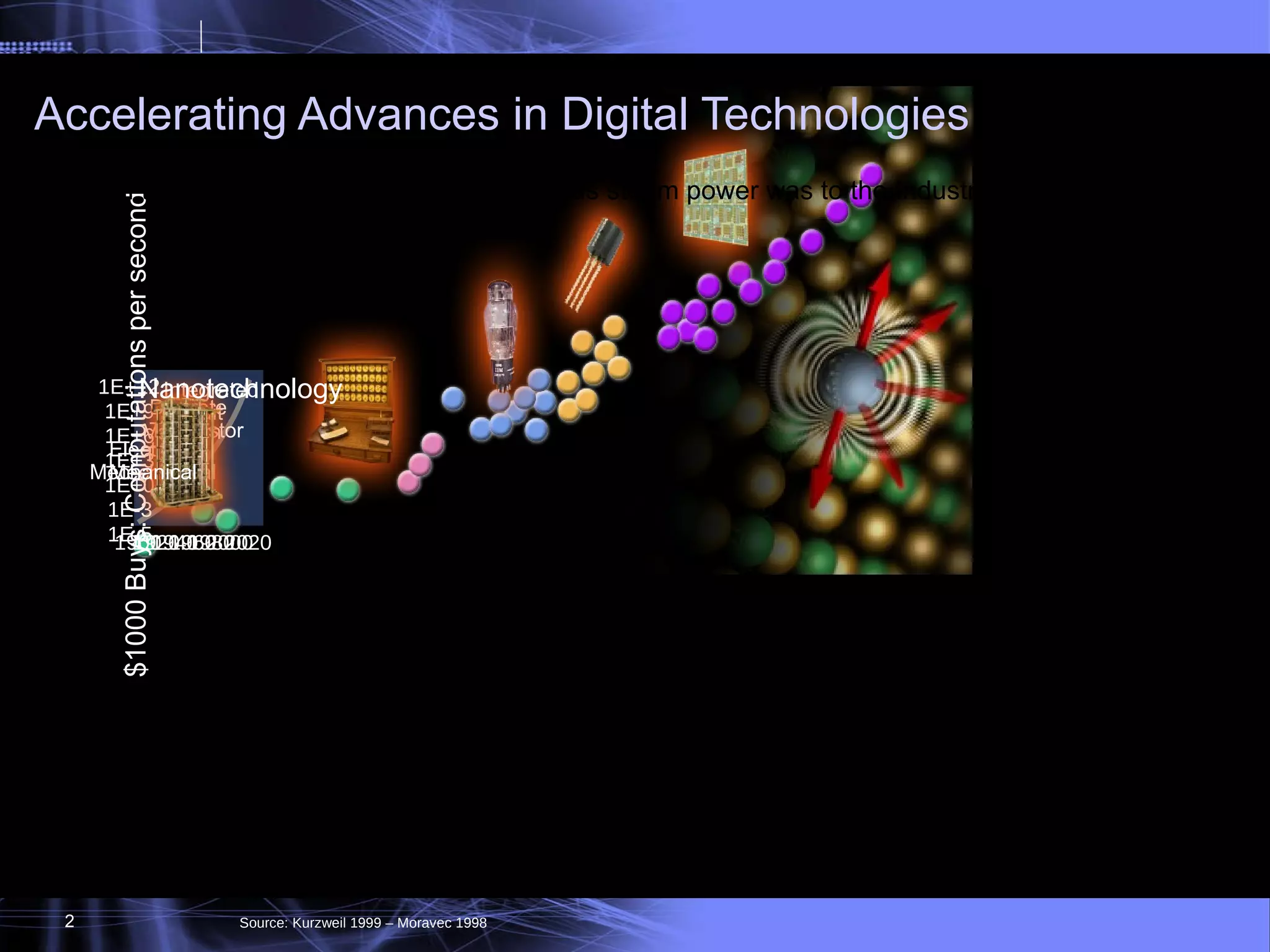
Accelerating Advances in Digital Technologies Source: Kurzweil 1999 – Moravec 1998 Digital technologies are to the 21st century as steam power was to the Industrial Revolution 1900 1920 1940 1960 1E-5 1E-3 1E+0 1E+3 1E+6 1E+9 1E+12 $1000 Buys: Computations per second Integrated Circuit Discrete Transistor Vacuum Tube Electro- Mechanical Mechanical 2020 2000 1980 Nanotechnology
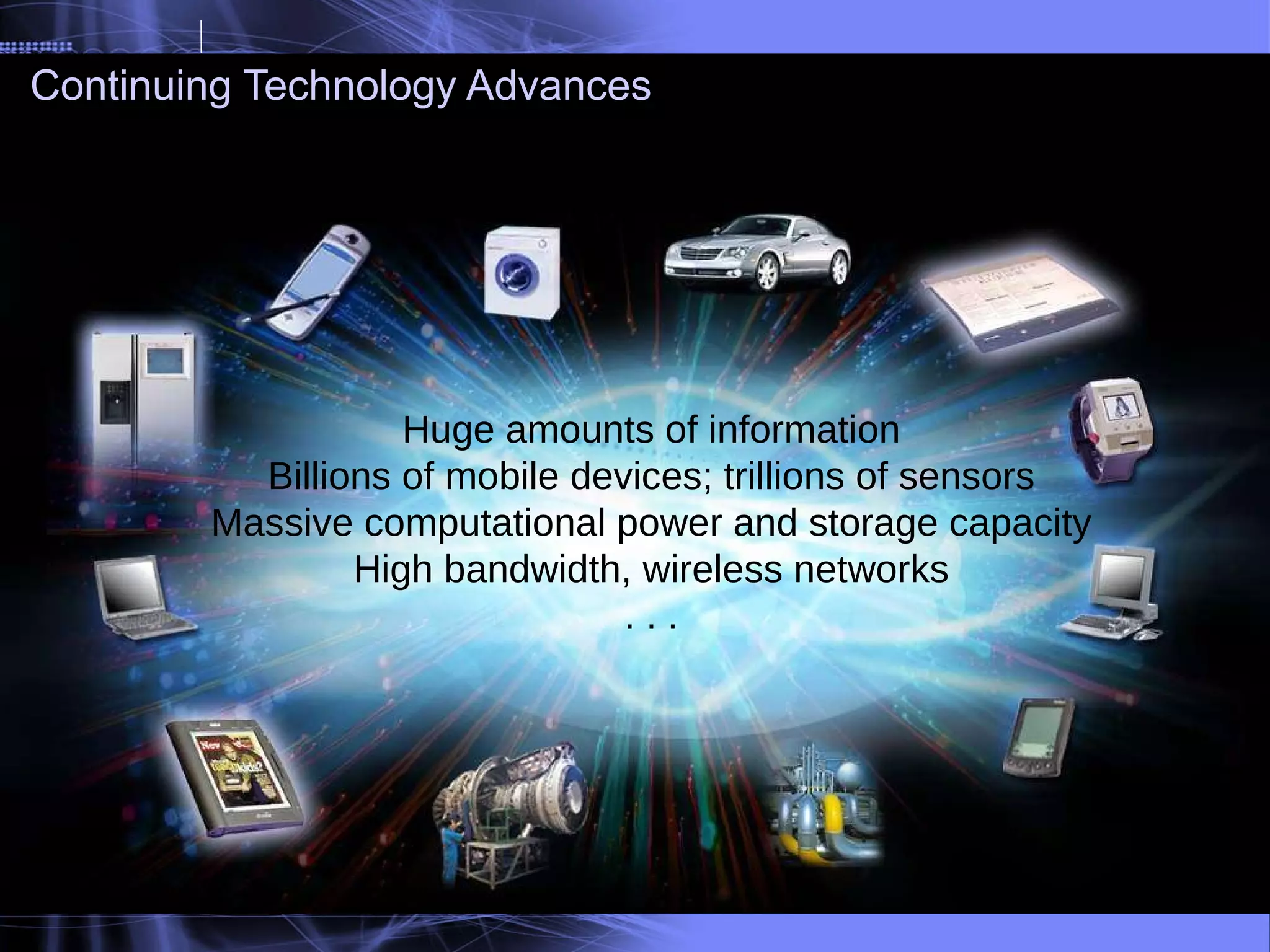
Continuing Technology Advances Huge amounts of information Billions of mobile devices; trillions of sensors Massive computational power and storage capacity High bandwidth, wireless networks . . .
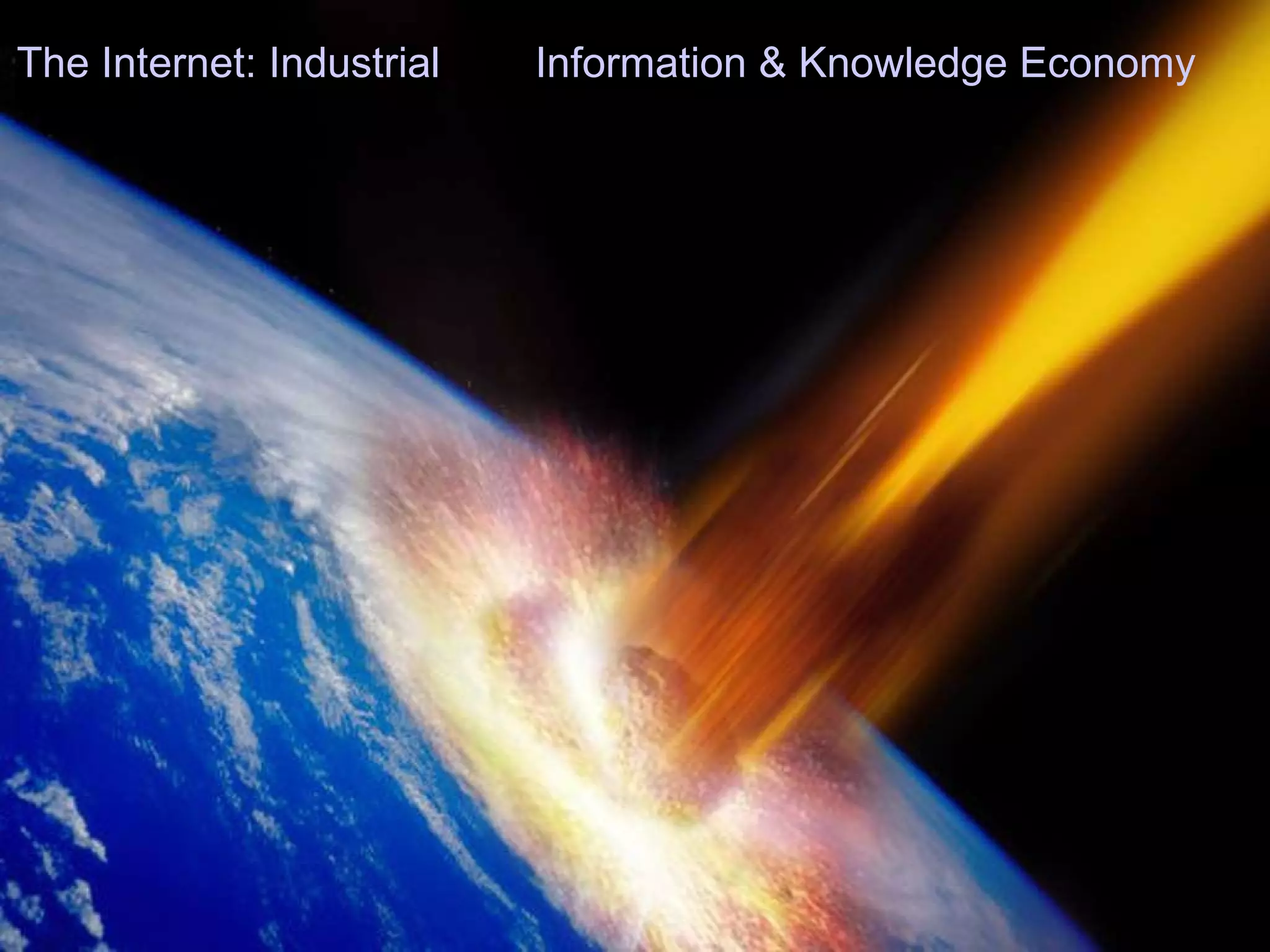
The Internet: Industrial  Information & Knowledge Economy
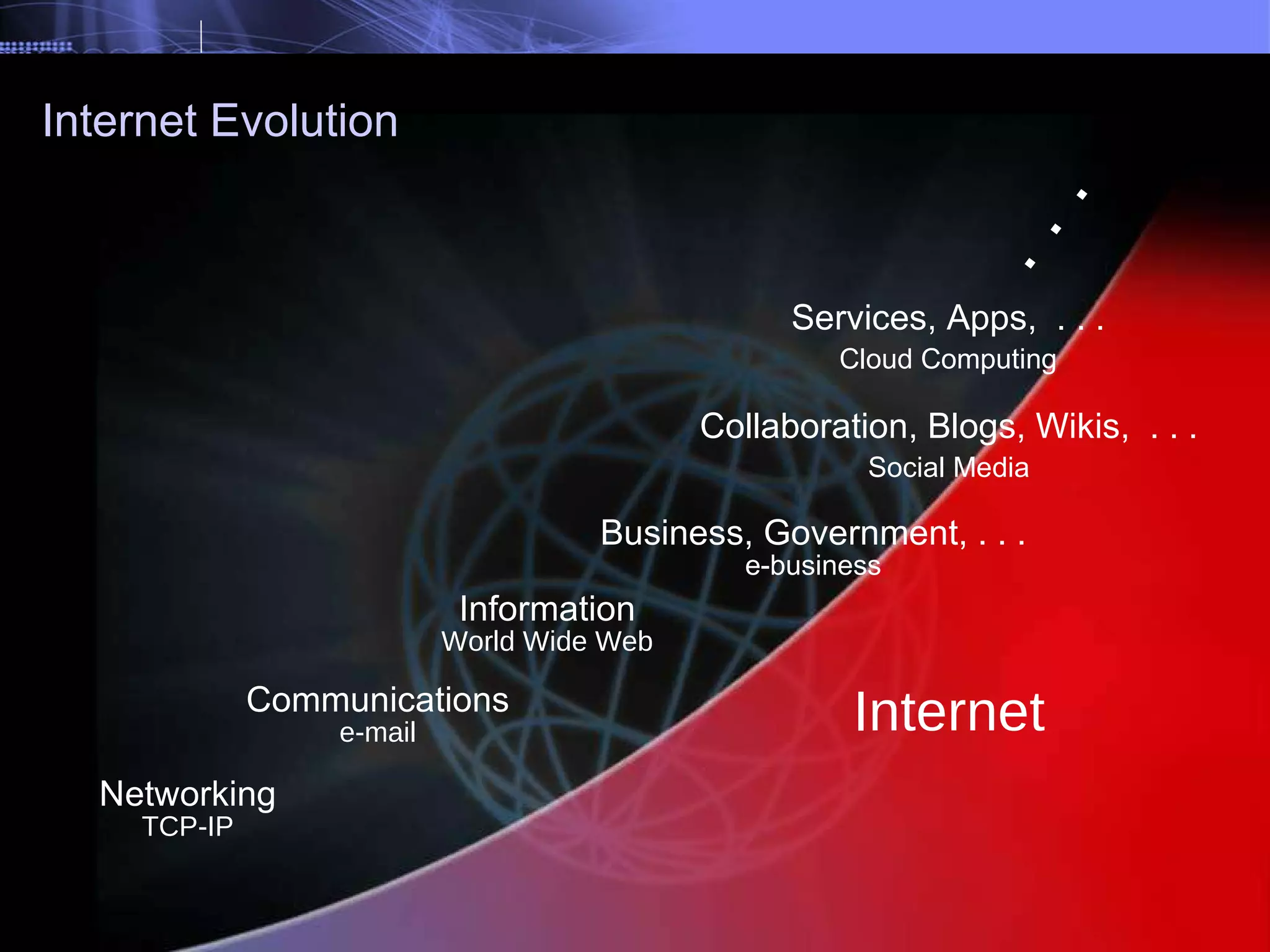
Internet Evolution Networking TCP-IP Information World Wide Web Communications e-mail . . . Business, Government, . . . e-business Services, Apps,  . . . Cloud Computing Internet Collaboration, Blogs, Wikis,  . . . Social Media
 
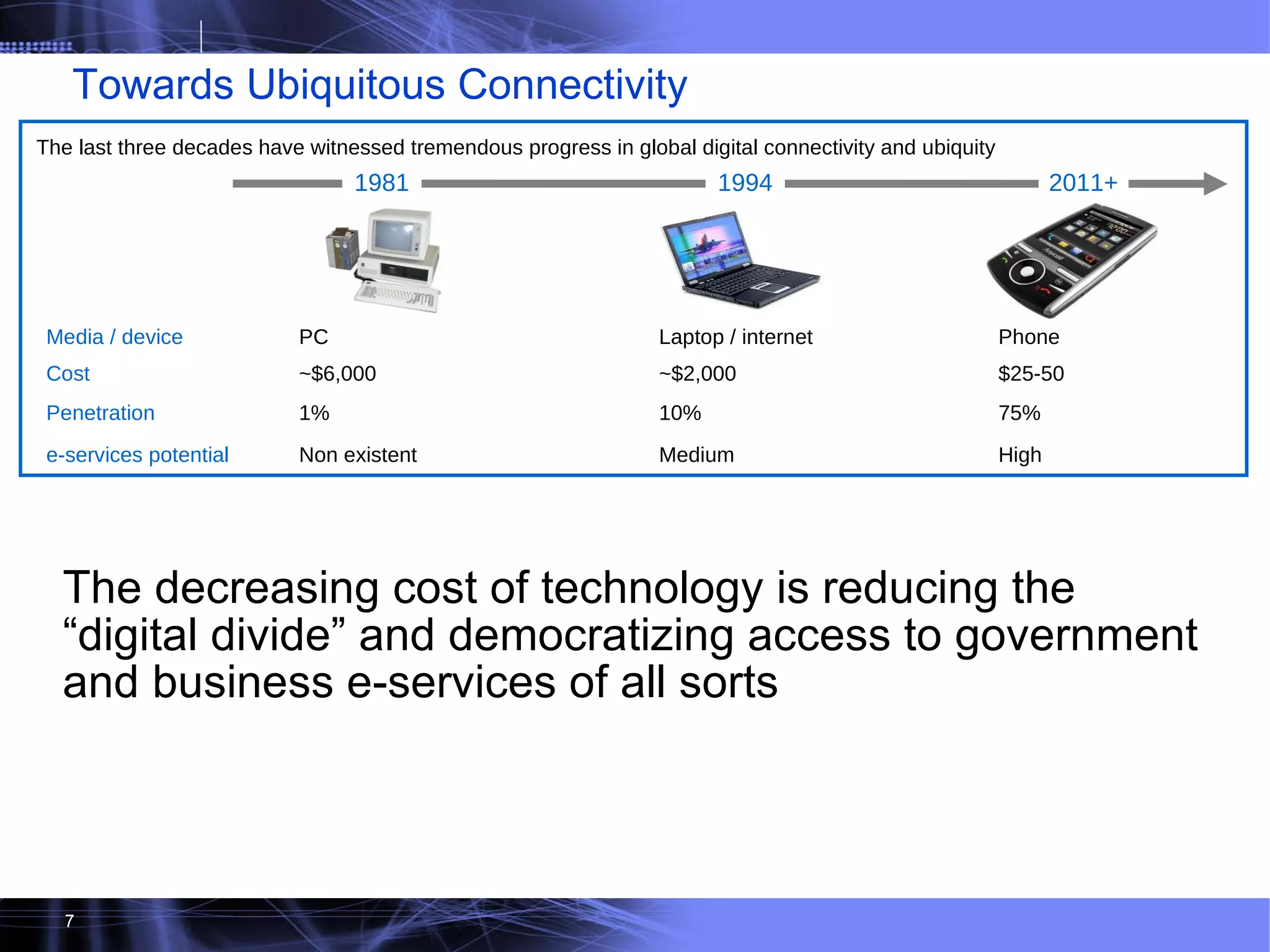
The decreasing cost of technology is reducing the “digital divide” and democratizing access to government and business e-services of all sorts ~$6,000 1981 1994 2011+ Cost ~$2,000 $25-50 1% Penetration 10% 75% PC Media / device Laptop / internet Phone Non existent e-services potential Medium High The last three decades have witnessed tremendous progress in global digital connectivity and ubiquity Towards Ubiquitous Connectivity
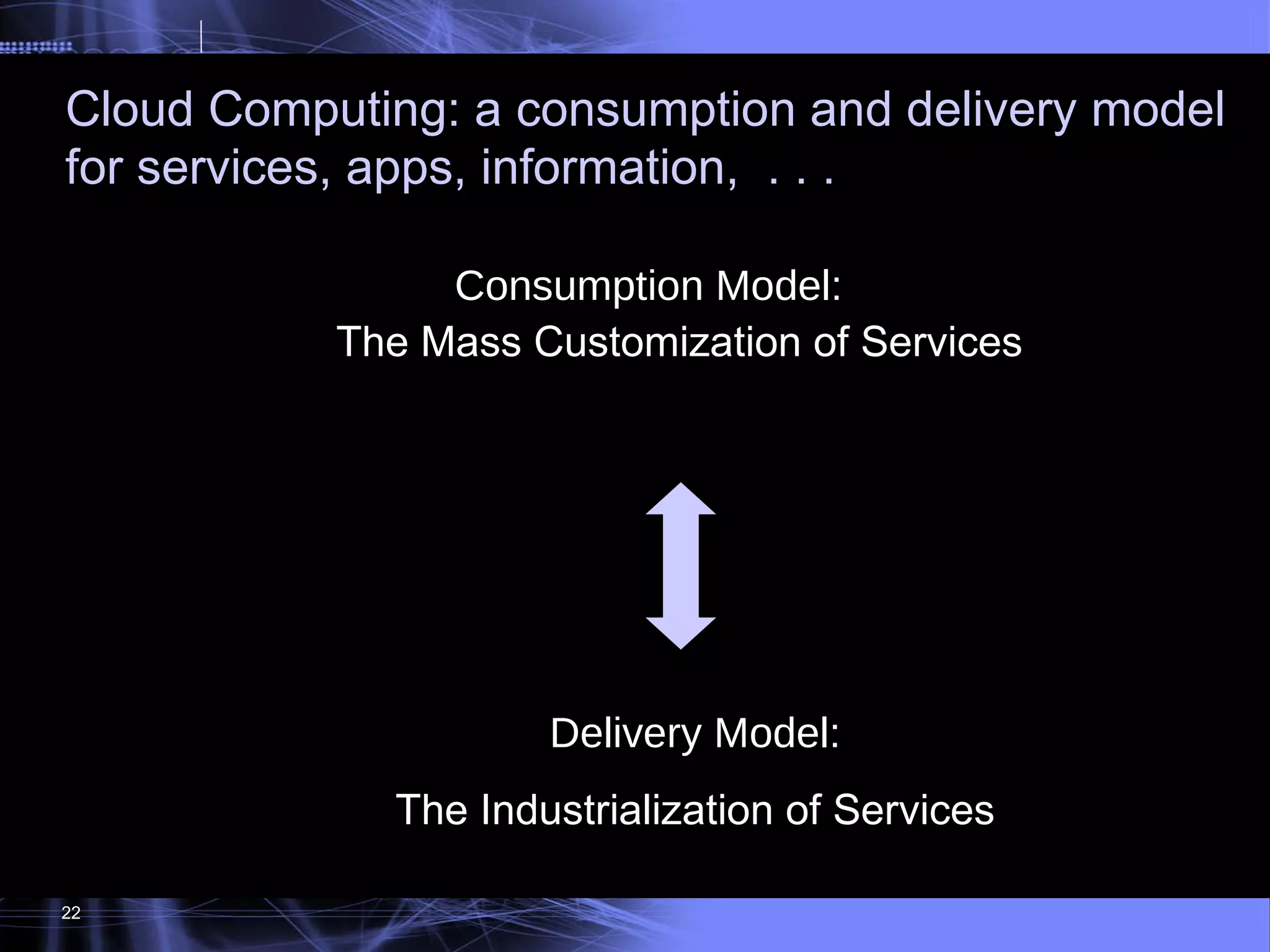
22 Consumption Model:  The Mass Customization of Services Delivery Model:   The Industrialization of Services Cloud Computing: a consumption and delivery model for services, apps, information,  . . .
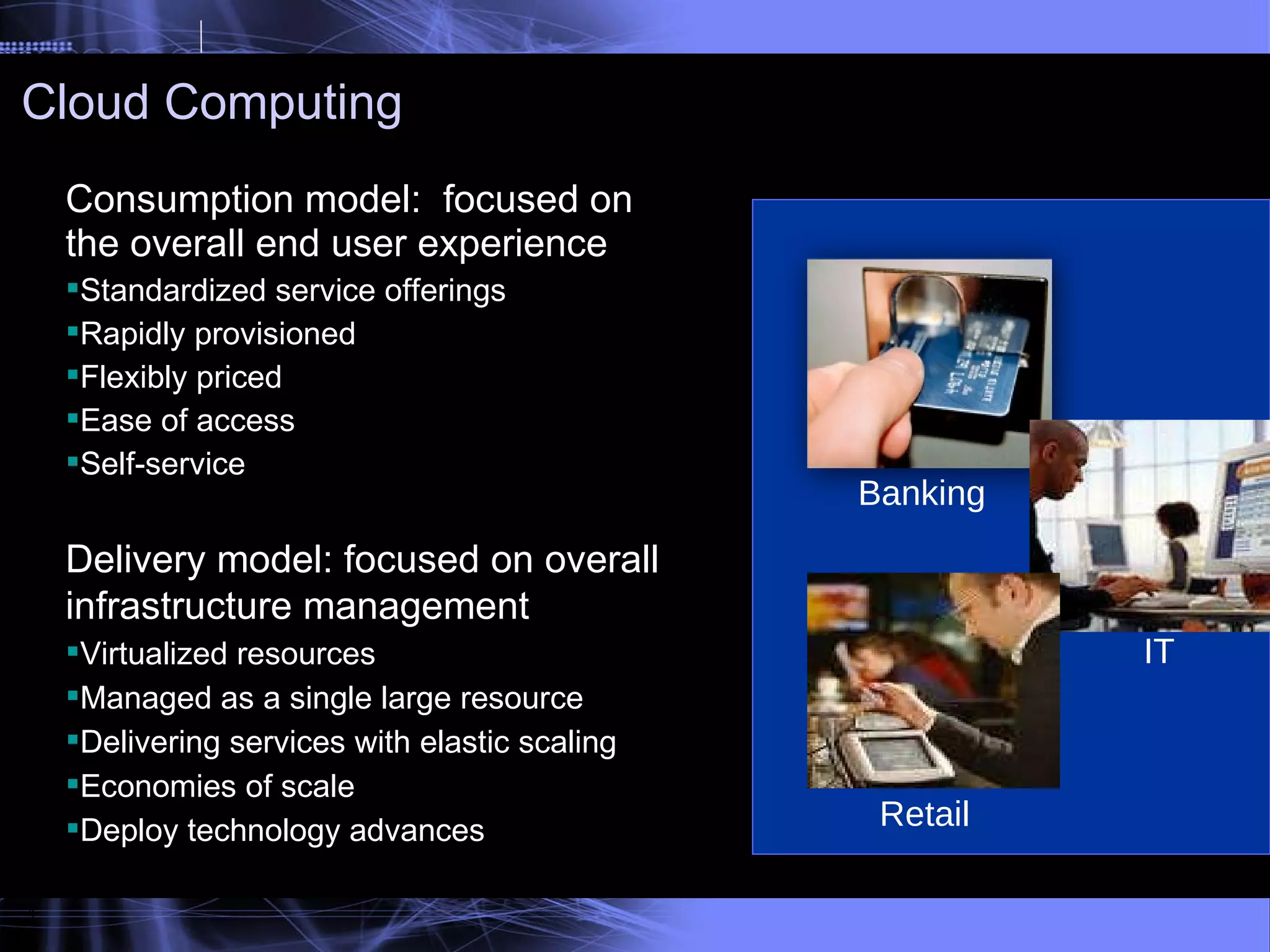
Cloud Computing 4 Banking  Retail IT  Consumption model:  focused on the overall end user experience Standardized service offerings Rapidly provisioned Flexibly priced Ease of access Self-service Delivery model: focused on overall infrastructure management Virtualized resources Managed as a single large resource Delivering services with elastic scaling Economies of scale Deploy technology advances
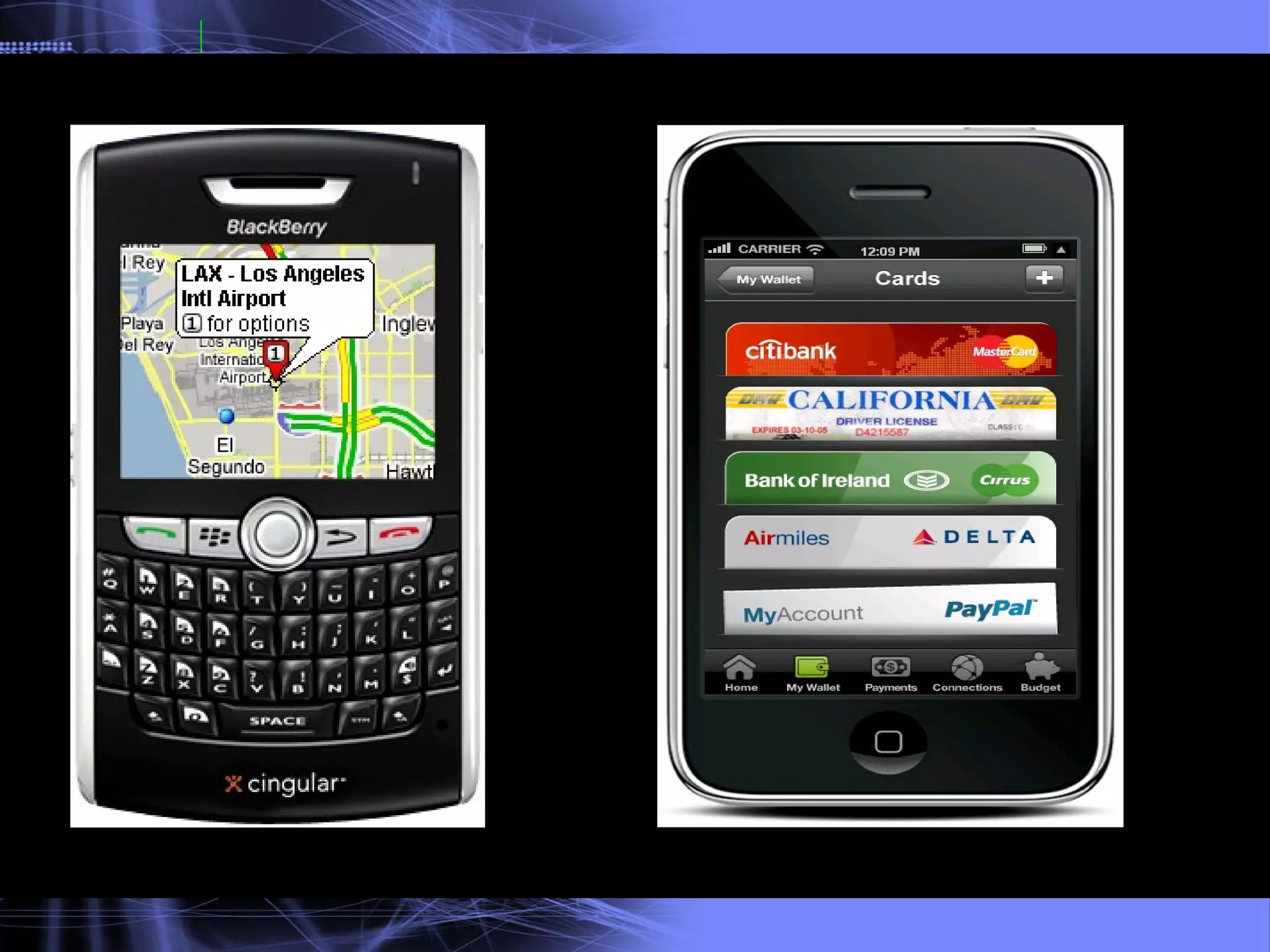
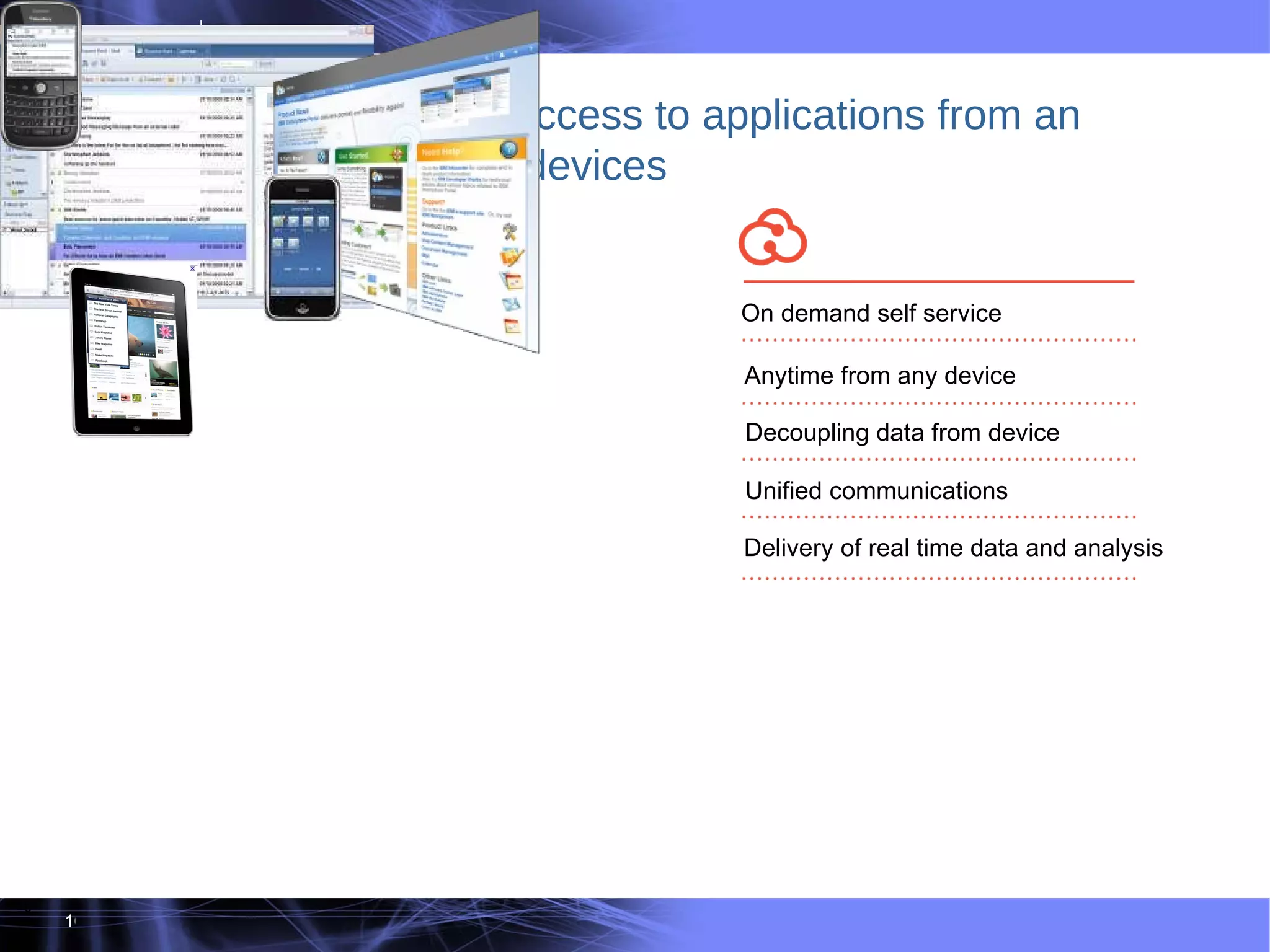
6 Clouds enable ubiquitous access to applications from an increasingly diverse set of devices On demand self service Anytime from any device Decoupling data from device Unified communications Delivery of real time data and analysis
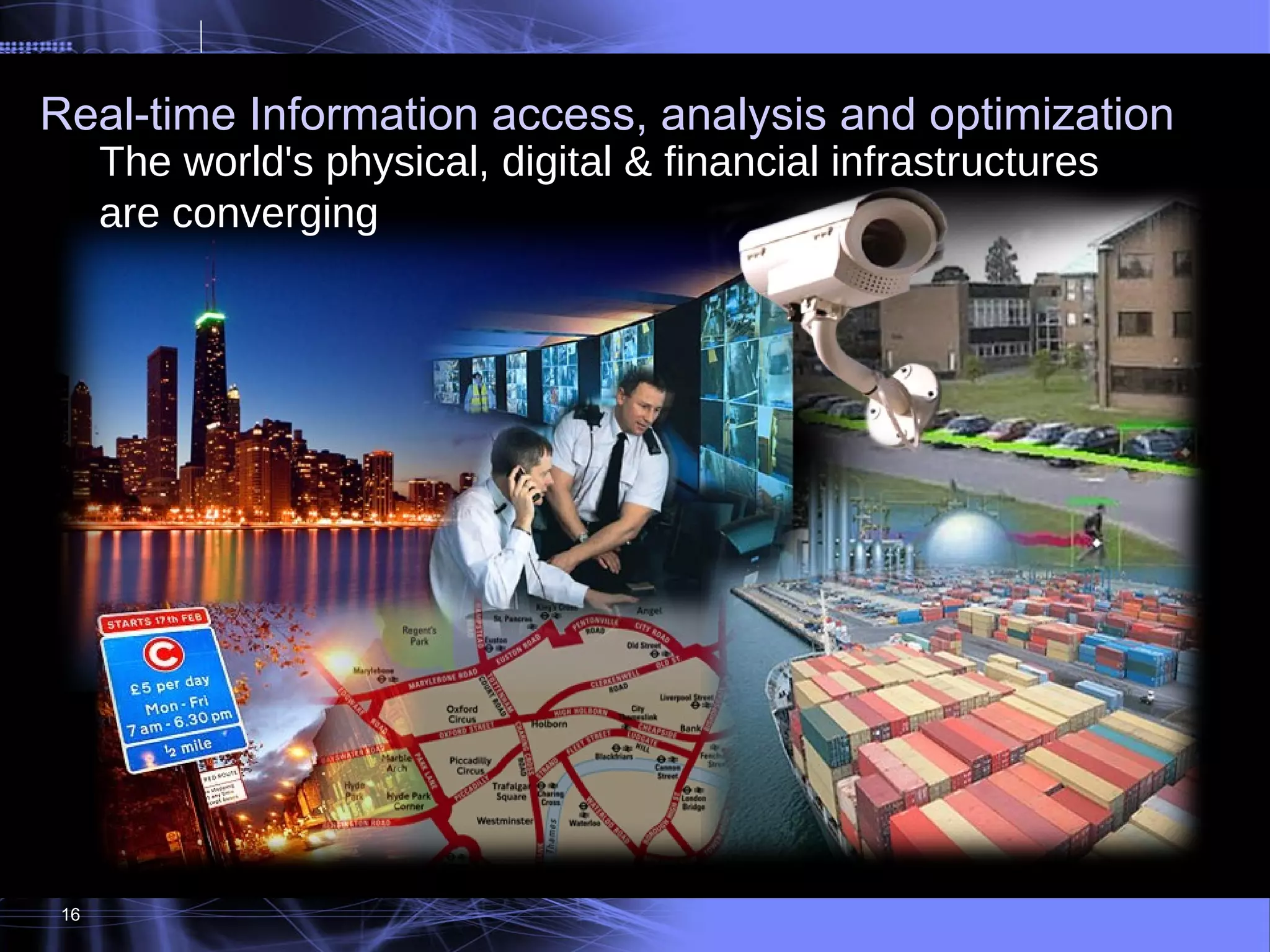
Real-time Information access, analysis and optimization   The world's physical, digital & financial infrastructures    are converging   16
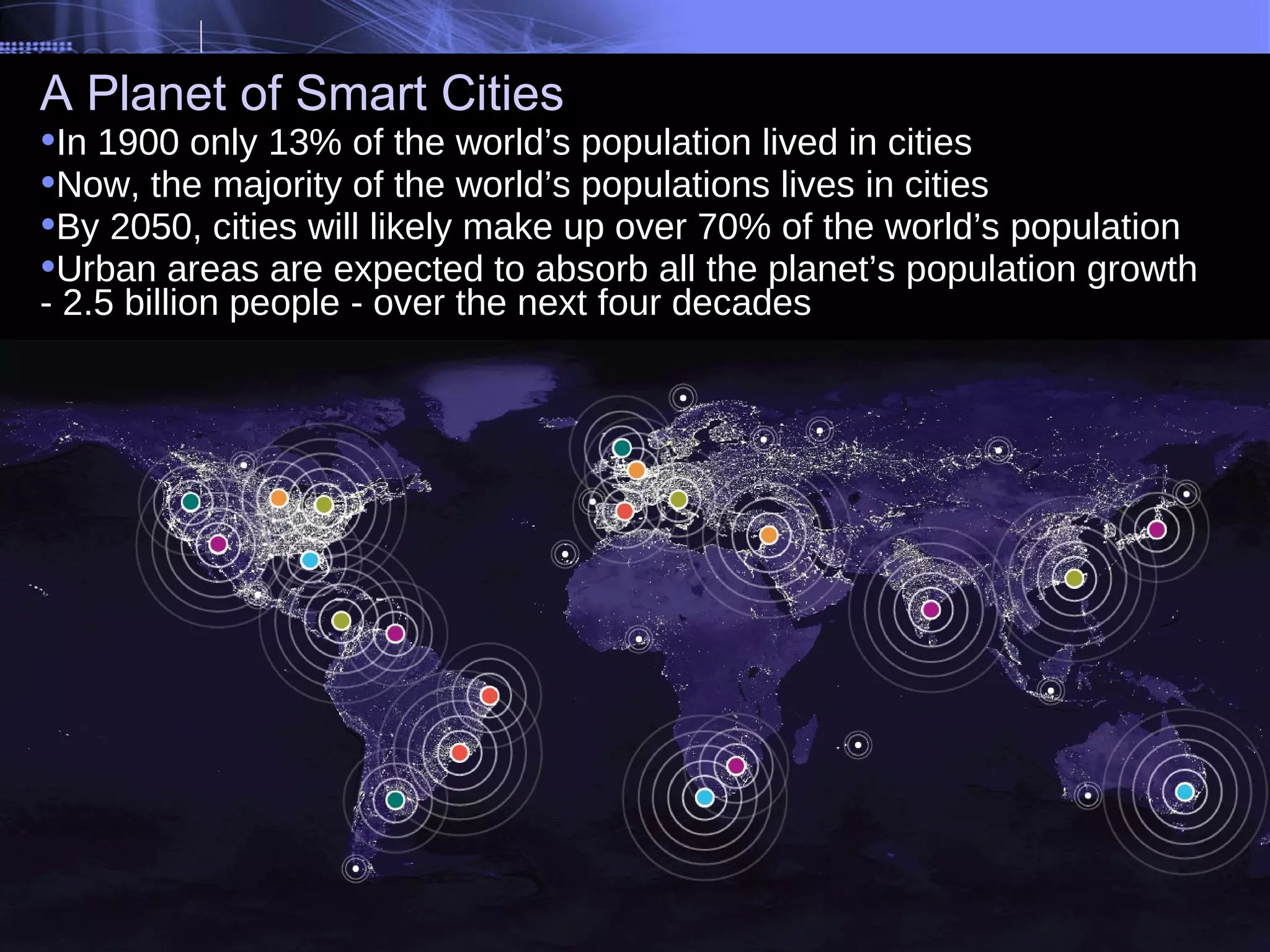
15 A Planet of Smart Cities In 1900 only 13% of the world’s population lived in cities Now, the majority of the world’s populations lives in cities By 2050, cities will likely make up over 70% of the world’s population Urban areas are expected to absorb all the planet’s population growth  - 2.5 billion people - over the next four decades
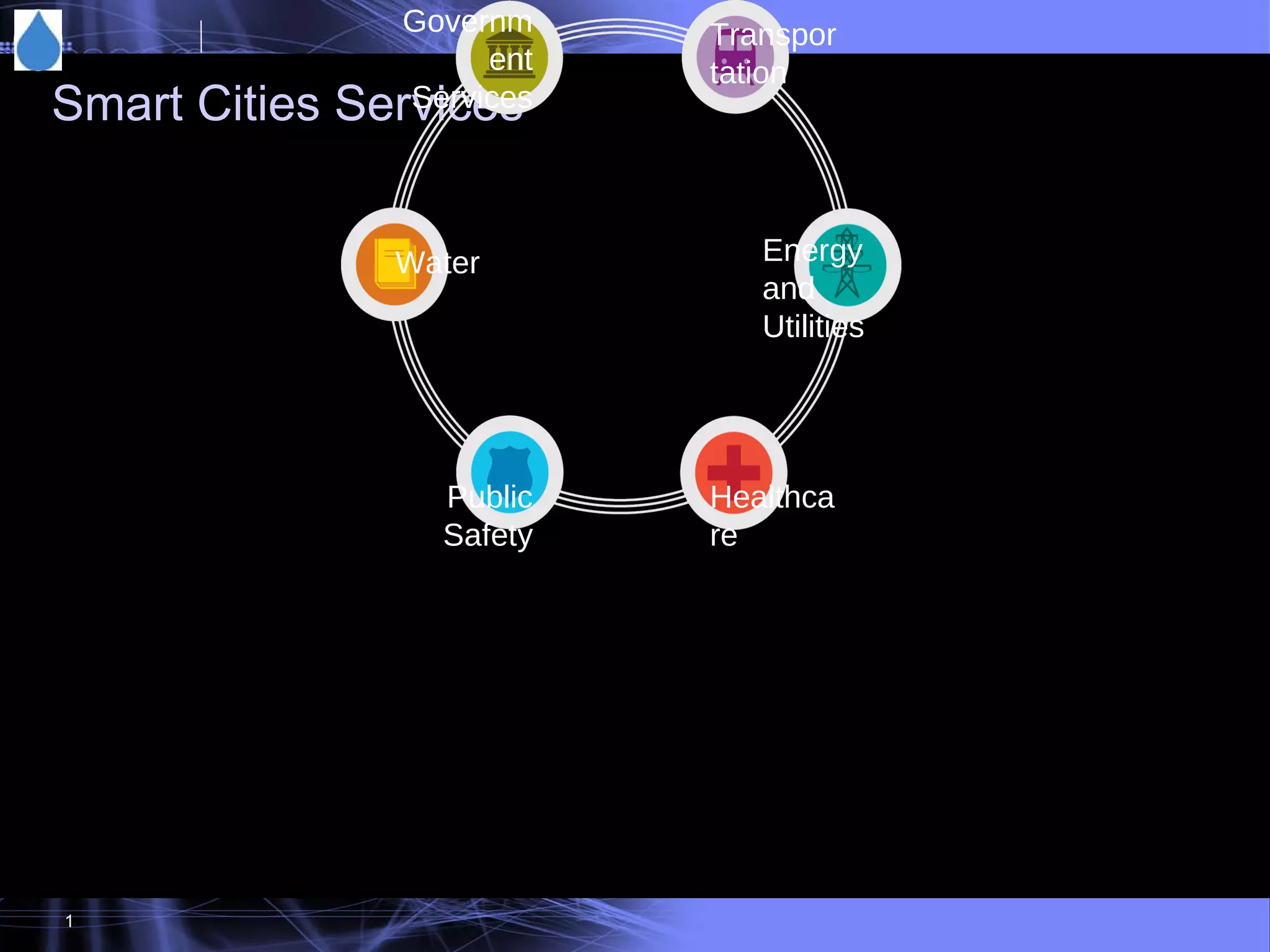
Smart Cities Services Public Safety Government  Services Water Healthcare Transportation Energy and  Utilities
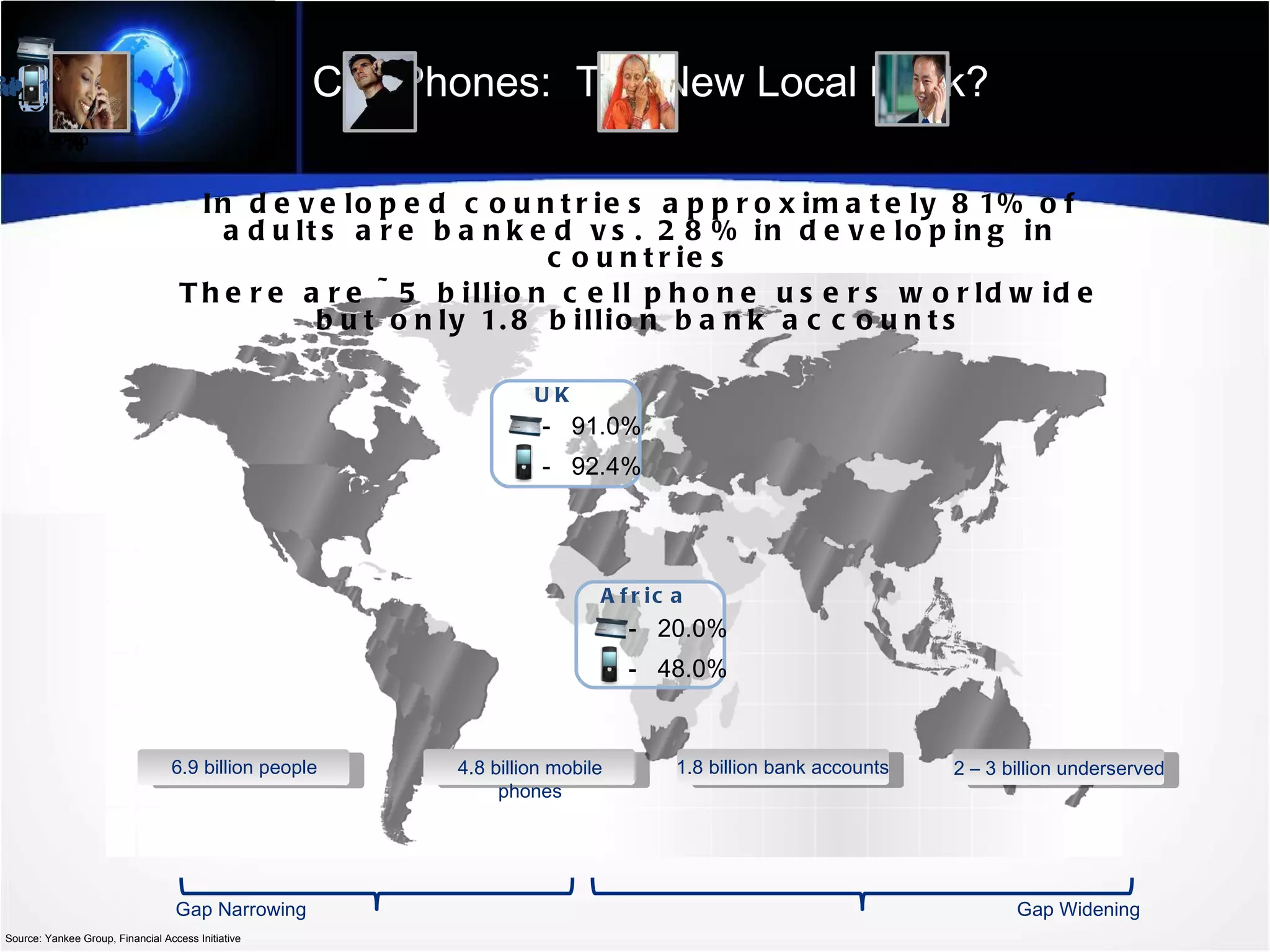
Cell Phones:  The New Local Bank? In developed countries approximately 81% of adults are banked vs. 28% in developing in countries There are ~5 billion cell phone users worldwide but only 1.8 billion bank accounts UK 91.0% 92.4% Africa 20.0% 48.0% Source: Yankee Group, Financial Access Initiative US 91.0% 84.7% Brazil 43.0% 82.9% Russia 69.0% 94.5% India 48.0% 56.2% China 42.0% 53.4% Gap Narrowing Gap Widening 2 – 3 billion underserved 1.8 billion bank accounts 4.8 billion mobile phones 6.9 billion people
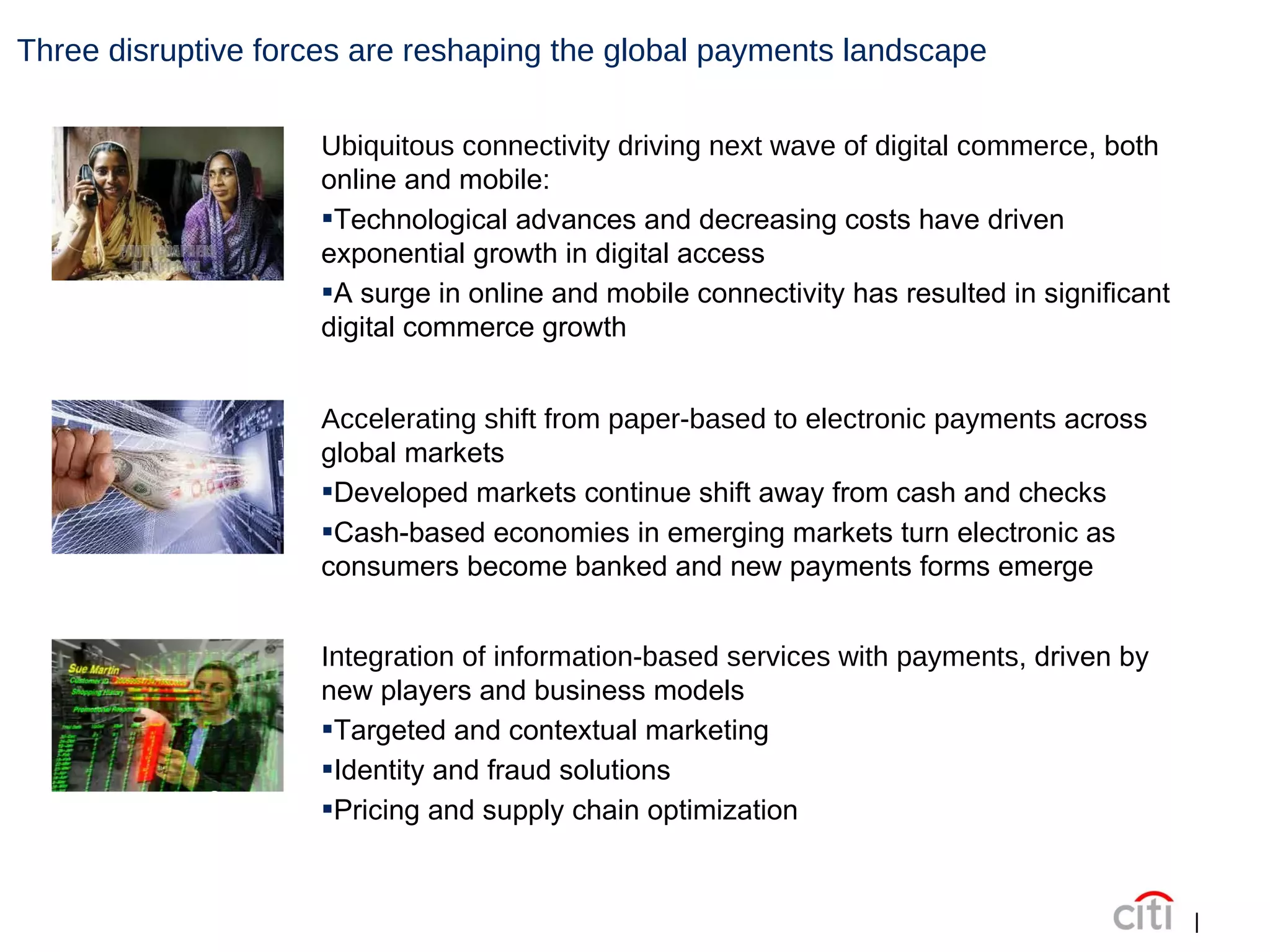
Three disruptive forces are reshaping the global payments landscape | Ubiquitous connectivity driving next wave of digital commerce , both online and mobile: Technological advances and decreasing costs have driven exponential growth in digital access A surge in online and mobile connectivity has resulted in significant digital commerce growth Accelerating shift from paper-based to electronic payments  across global markets Developed markets continue shift away from cash and checks Cash-based economies in emerging markets turn electronic as consumers become banked and new payments forms emerge Integration of information-based services with payments , driven by new players and business models Targeted and contextual marketing Identity and fraud solutions Pricing and supply chain optimization
A Historical Shift in the Economy and Society Irving Wladawsky-Berger

A Historical shift in the Economy and Society

  • 1.
    A Historical Shiftin the Economy and Society Irving Wladawsky-Berger
  • 2.
    Accelerating Advances inDigital Technologies Source: Kurzweil 1999 – Moravec 1998 Digital technologies are to the 21st century as steam power was to the Industrial Revolution 1900 1920 1940 1960 1E-5 1E-3 1E+0 1E+3 1E+6 1E+9 1E+12 $1000 Buys: Computations per second Integrated Circuit Discrete Transistor Vacuum Tube Electro- Mechanical Mechanical 2020 2000 1980 Nanotechnology
  • 3.
    Continuing Technology AdvancesHuge amounts of information Billions of mobile devices; trillions of sensors Massive computational power and storage capacity High bandwidth, wireless networks . . .
  • 4.
    The Internet: Industrial Information & Knowledge Economy
  • 5.
    Internet Evolution NetworkingTCP-IP Information World Wide Web Communications e-mail . . . Business, Government, . . . e-business Services, Apps, . . . Cloud Computing Internet Collaboration, Blogs, Wikis, . . . Social Media
  • 6.
  • 7.
    The decreasing costof technology is reducing the “digital divide” and democratizing access to government and business e-services of all sorts ~$6,000 1981 1994 2011+ Cost ~$2,000 $25-50 1% Penetration 10% 75% PC Media / device Laptop / internet Phone Non existent e-services potential Medium High The last three decades have witnessed tremendous progress in global digital connectivity and ubiquity Towards Ubiquitous Connectivity
  • 8.
    22 Consumption Model: The Mass Customization of Services Delivery Model: The Industrialization of Services Cloud Computing: a consumption and delivery model for services, apps, information, . . .
  • 9.
    Cloud Computing 4Banking Retail IT Consumption model: focused on the overall end user experience Standardized service offerings Rapidly provisioned Flexibly priced Ease of access Self-service Delivery model: focused on overall infrastructure management Virtualized resources Managed as a single large resource Delivering services with elastic scaling Economies of scale Deploy technology advances
  • 10.
    6 Clouds enableubiquitous access to applications from an increasingly diverse set of devices On demand self service Anytime from any device Decoupling data from device Unified communications Delivery of real time data and analysis
  • 11.
    Real-time Information access,analysis and optimization The world's physical, digital & financial infrastructures are converging 16
  • 12.
    15 A Planetof Smart Cities In 1900 only 13% of the world’s population lived in cities Now, the majority of the world’s populations lives in cities By 2050, cities will likely make up over 70% of the world’s population Urban areas are expected to absorb all the planet’s population growth - 2.5 billion people - over the next four decades
  • 13.
    Smart Cities ServicesPublic Safety Government Services Water Healthcare Transportation Energy and Utilities
  • 14.
    Cell Phones: The New Local Bank? In developed countries approximately 81% of adults are banked vs. 28% in developing in countries There are ~5 billion cell phone users worldwide but only 1.8 billion bank accounts UK 91.0% 92.4% Africa 20.0% 48.0% Source: Yankee Group, Financial Access Initiative US 91.0% 84.7% Brazil 43.0% 82.9% Russia 69.0% 94.5% India 48.0% 56.2% China 42.0% 53.4% Gap Narrowing Gap Widening 2 – 3 billion underserved 1.8 billion bank accounts 4.8 billion mobile phones 6.9 billion people
  • 15.
    Three disruptive forcesare reshaping the global payments landscape | Ubiquitous connectivity driving next wave of digital commerce , both online and mobile: Technological advances and decreasing costs have driven exponential growth in digital access A surge in online and mobile connectivity has resulted in significant digital commerce growth Accelerating shift from paper-based to electronic payments across global markets Developed markets continue shift away from cash and checks Cash-based economies in emerging markets turn electronic as consumers become banked and new payments forms emerge Integration of information-based services with payments , driven by new players and business models Targeted and contextual marketing Identity and fraud solutions Pricing and supply chain optimization
  • 16.
    A Historical Shiftin the Economy and Society Irving Wladawsky-Berger

Editor's Notes

  • #9 From an economic standpoint, we’re seeing innovation as the common thread woven into the fabric of more and more nations, as they tackle the challenges of an ever-changing world. And with good reason. Economies everywhere have concluded that Innovation is the single greatest driver of competitive advantage today. And markets being what they are, innovations that occur in the marketplace generate further innovations. In the process, they give rise to new industries, they spur productivity and economic growth, fuel wealth-creation, create higher-paying jobs, and raise the standard of living for everyone.