The Digital Native
Fact Vs. Myth
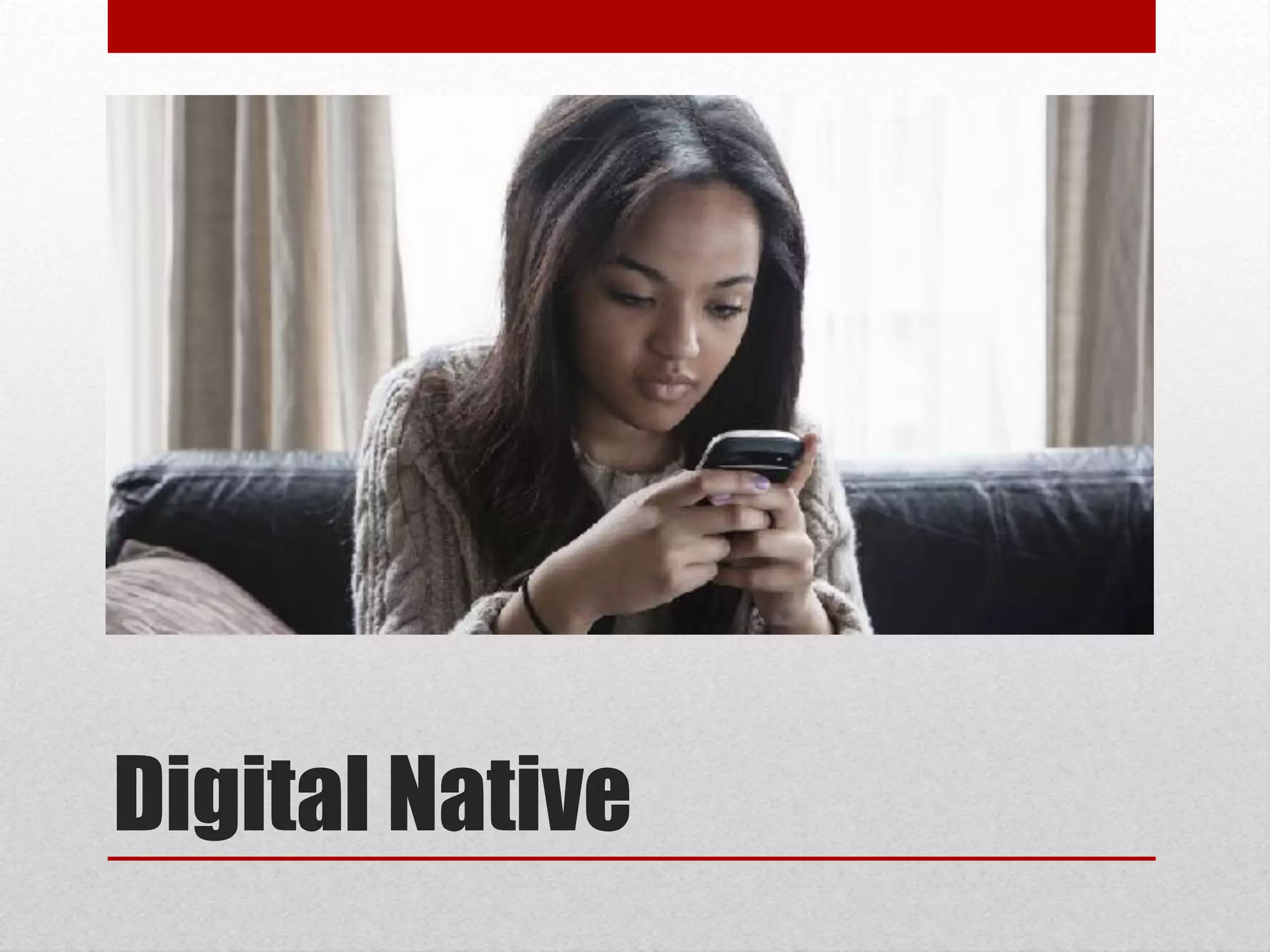
Digital Native
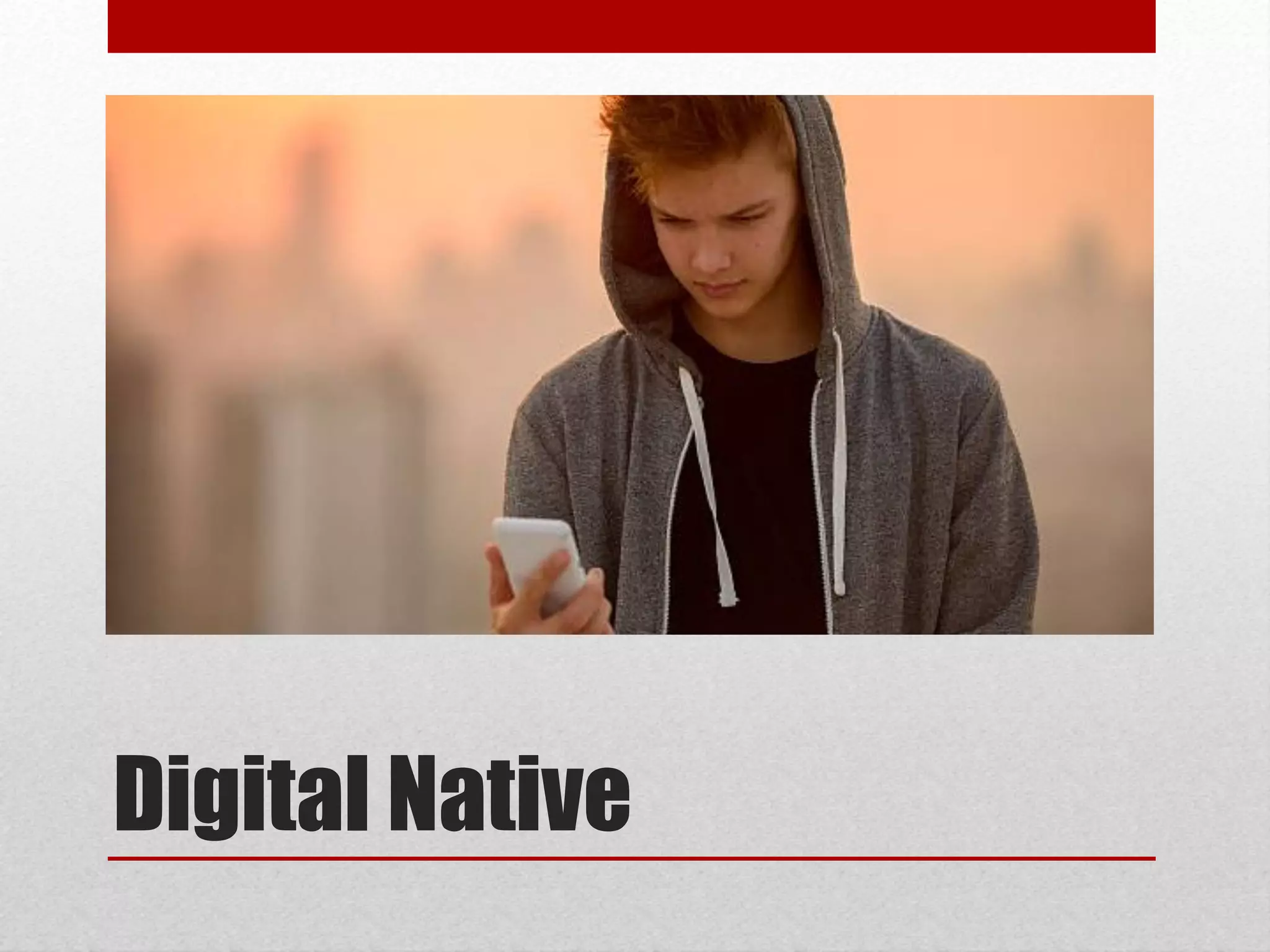
Digital Native
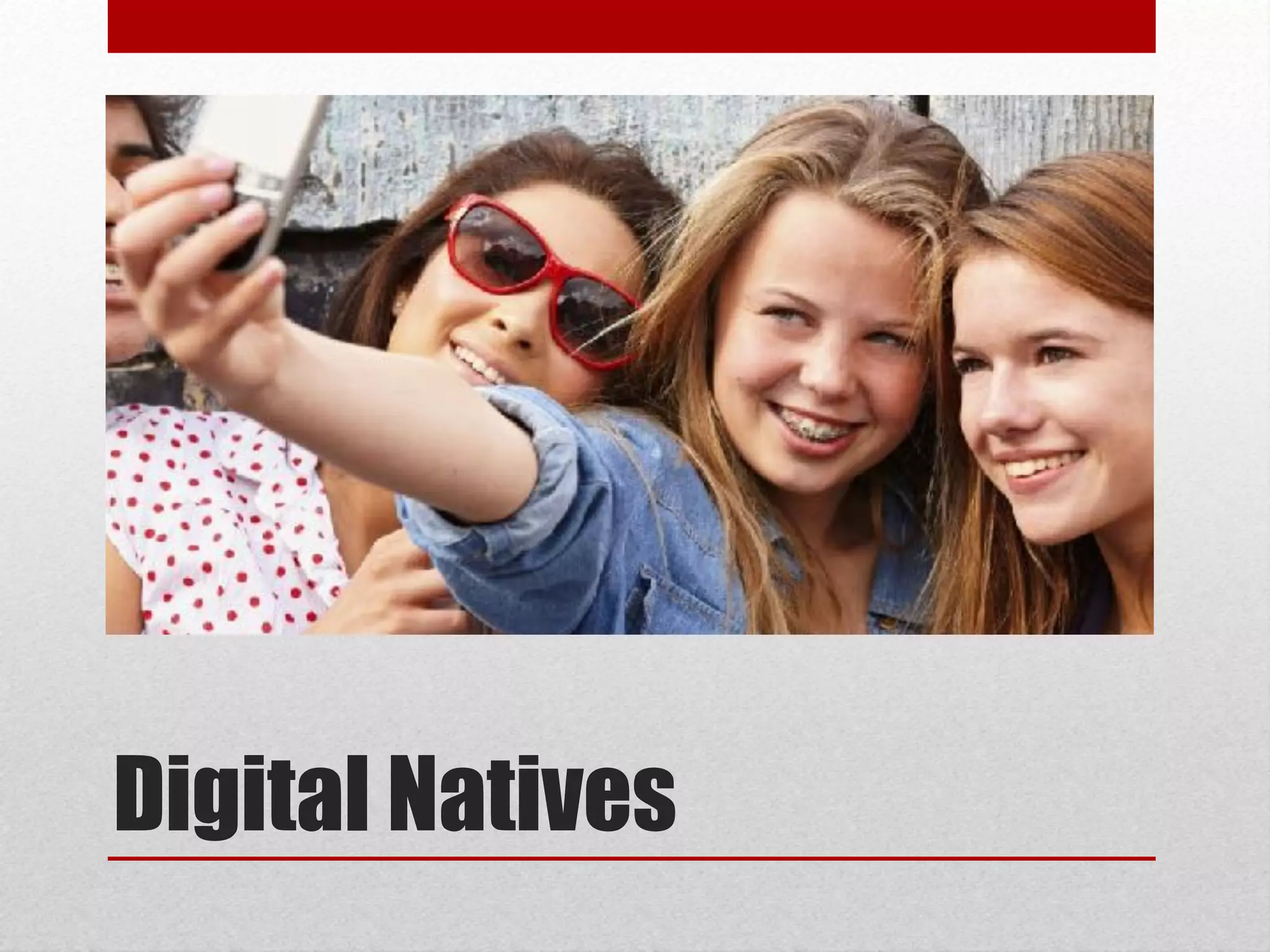
Digital Natives
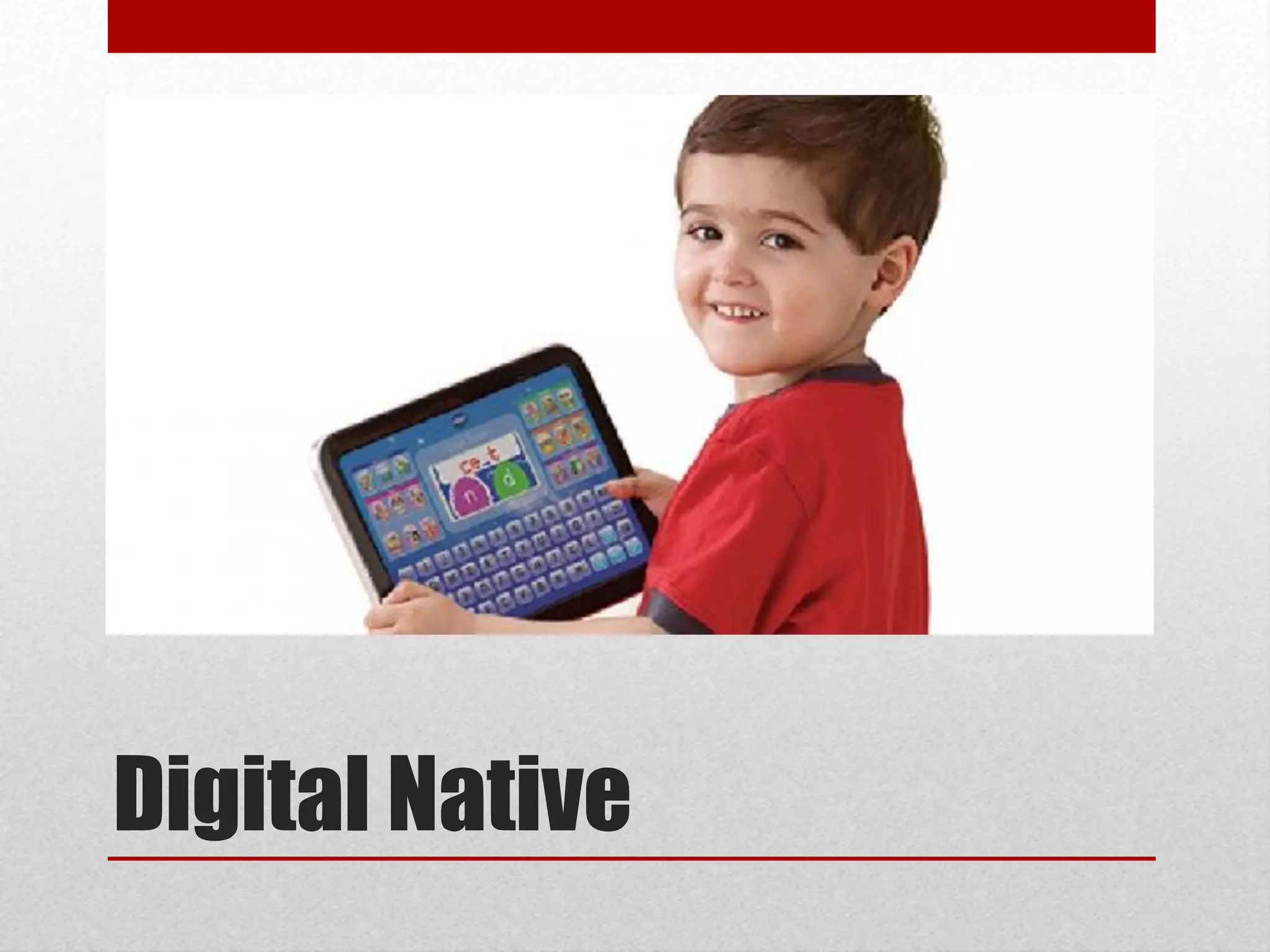
Digital Native
• Digital Native-
• a person born or brought up during the age
of digital technology and therefore familiar
with computers and the Internet from an
early age. This includes computers, videos,
video games, social media and a huge array
of other modalities.
What is a “Digital Native”?
Marc Prensky, known for inventing and
popularizing the terms “digital native” and
“digital immigrant”, says this regarding
digital natives-
“The most important thing to realize is
that this is a metaphor. It’s not a
distinction or a brand, it’s extremely
fluid.”
“Digital immigrants are people who grew up
in one digital culture and moved into
another,” Prensky explained. “Digital natives
are people who grew up in one culture. They
don’t have two cultures to compare.”
• Today, there is a more varied approach to the term “digital
native”.
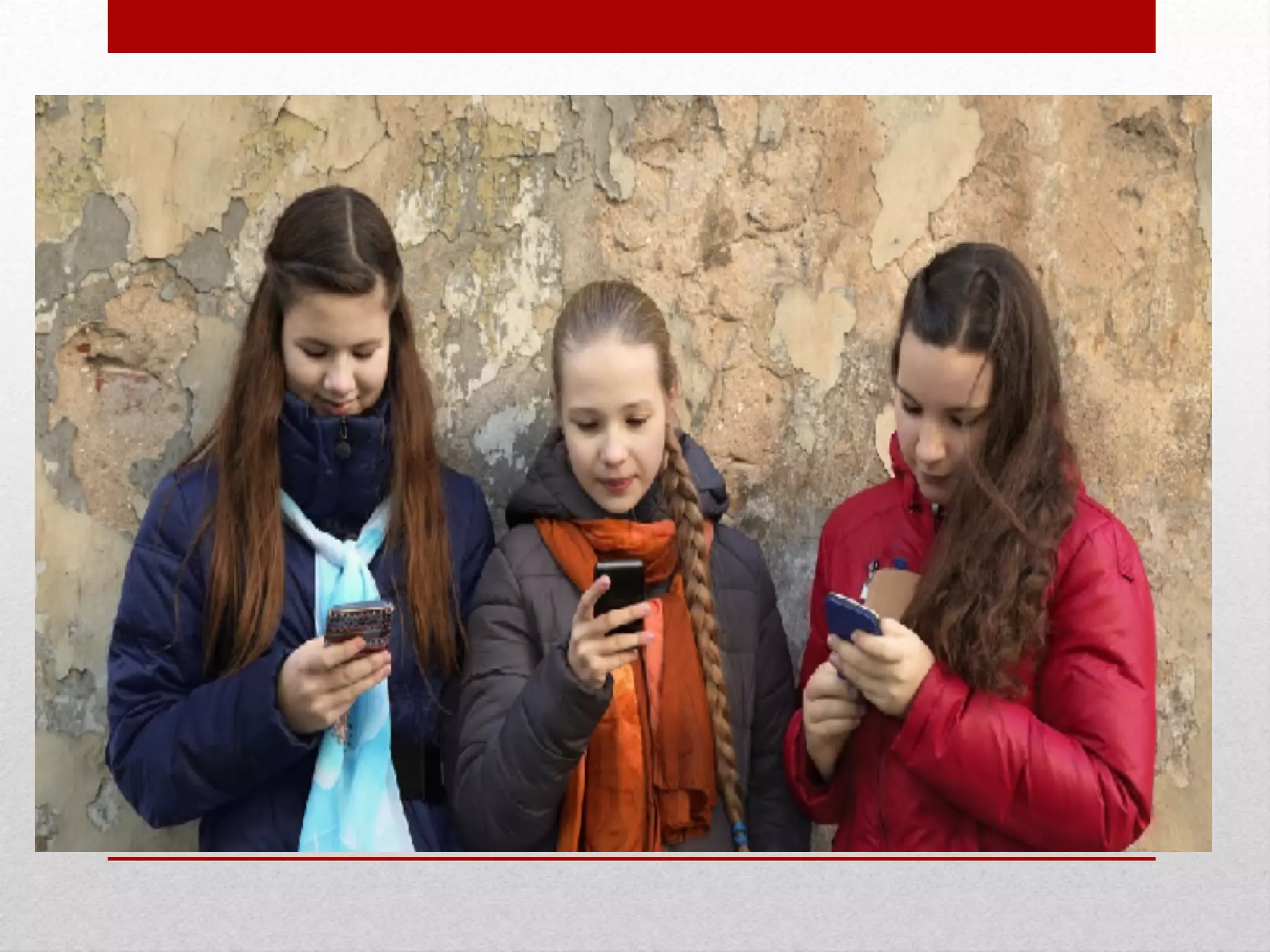
• Those who are digital natives are more likely to use social
media like Snapchat as opposed to Facebook or email.
• A Pew Research study shows 57% of teens have met a
new friend online, while social media and online
gameplay are the two top ways to meet friends digitally.
• Digital natives may not be necessarily tech savvy, but their
sense of knowledge... both digitally and culturally
establishes them as natives. They have this in common-
• Met new friends online
• Found new career paths online
• Online world tied to their identity
• A digital native is someone who gets it, the good and bad
the digital world offers.
• Even though Digital Natives “get” that
good and bad, how do they assess which
piece of information, bit of news, research
for school that they get is real or fake?
• In other words, how do Digital Natives sort
through all the ephemera that is thrown at
them constantly?
• "It's not just the question of real or fake, but it's the
broader question of how do all of us evaluate the
information that comes to us via screens," says Stanford
Professor Sam Wineburg, founder of the Stanford History
Education Group and lead author of a recent study
measuring students' evaluation of digital content.
• "The choice before us is more complicated than a
simple binary of real or fake. It's really about asking
questions about where all information comes from in
the social and political world.”
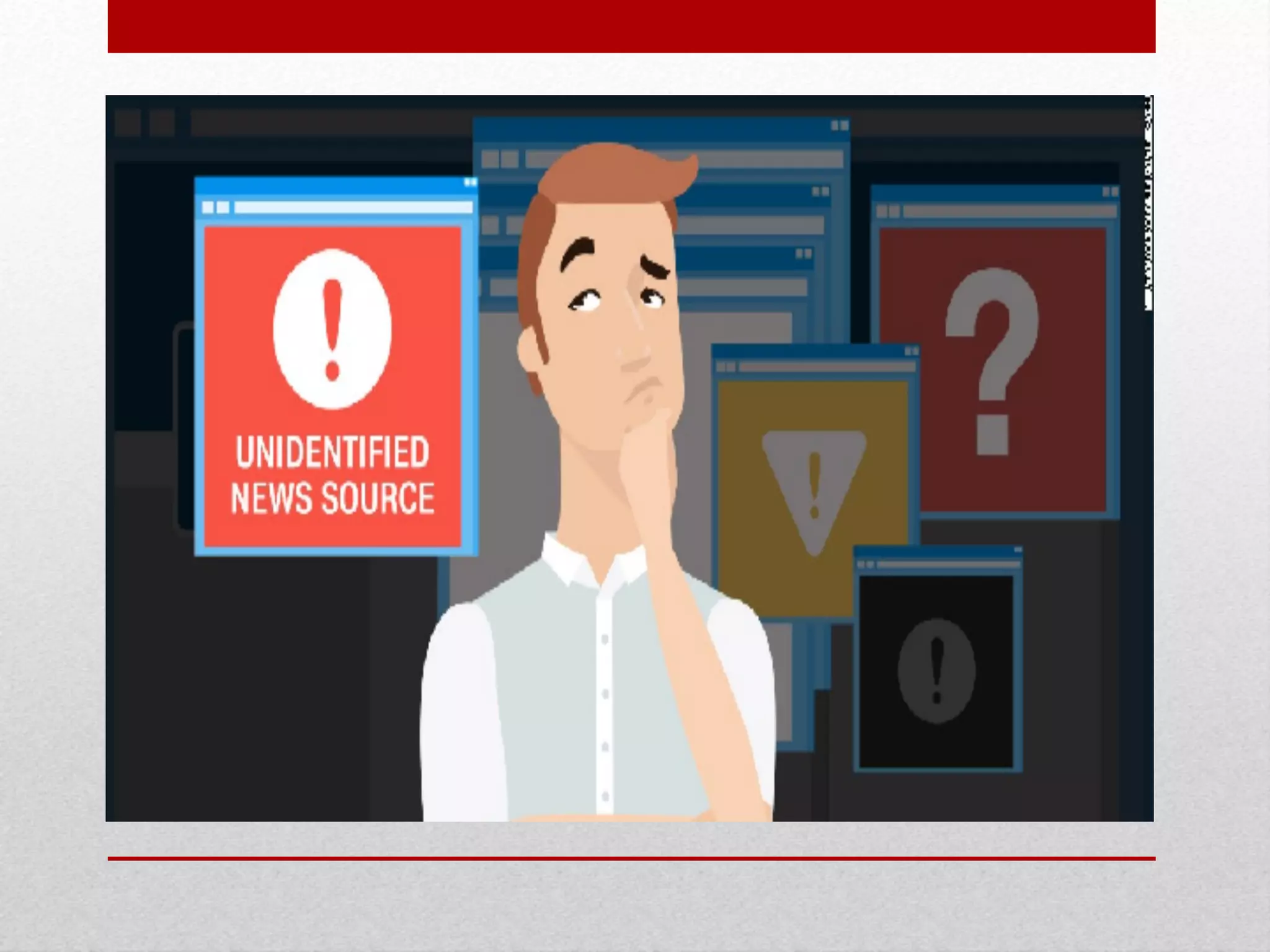
Where does the information come from?
Who posted the information you’re looking at or reading?
Can you recognize different genres of sources and can they
recognize the difference between unreliable or credible?
Is it worthy of our belief or our attention?
• What should we do?
• We must recognize that we have entered a tech revolution
where the tools are handling us and not us them.
• This goes across all parts of society. This is not just true
about Digital Natives, but of Digital Immigrants as well.
• The web is so sophisticated that many of us are taken in
by ruses.
• Ads are seen as news stories, blogs are seen as sources of
fact, Facebook is the expert.
• The old way of dealing with a situation in education was
to implement a new curriculum. In the case of the concern,
even crisis for our digital natives we quickly implement
new digital literacy curriculum.
• Often when budgets get cut, this curriculum is quickly
gone.
• We are in a fundamental shift at this time, and schools are
fundamentally behind in dealing with this issue.
• Anyone can be a
• Newscaster
• Historian
• Webpage - Expert (pretend)
• All you need is space – like a garage, a living room, a sofa
and the technology.
• When we come to a website we don’t know many of us
read it vertically, the About page is not going to help you.
• Fact checkers read a website laterally. They open multiple
windows to find out what the organization is and who is
behind it. Rather than just accepting the article, they read
across a lateral line and open multiple windows. They
find out what the actual source is, who is behind it, what
their agenda is. Only then do they go back to read it.
• http://www.omaha.com/living/fake-news-stories-in-real-
history/collection_cc0c051e-1646-11e7-976e-
e793e87537bc.html#1
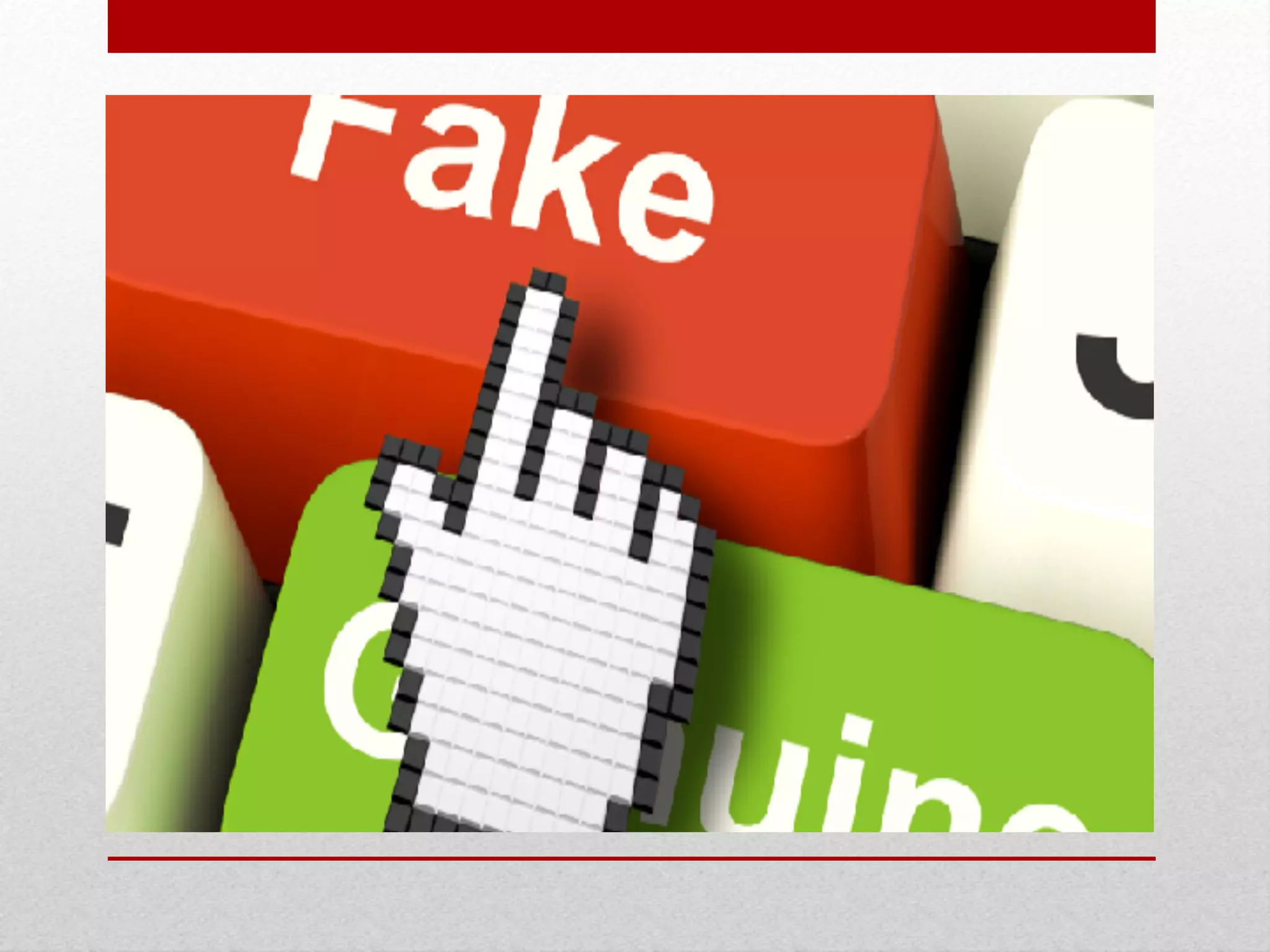
• Fake news stories that impacted people’s actions.
• Research tells us that that Digital Natives have an inability
to recognize “Fake” news from real.
• A Stanford Graduate School of Education study found
• "Many assume that because young people are fluent in
social media they are equally savvy about what they
find there," the researchers wrote. "Our work shows the
opposite.”
• The students displayed a "stunning and dismaying
consistency" in their responses, the researchers wrote,
getting duped again and again. They weren't looking for
high-level analysis of data but just a "reasonable bar"
of, for instance, telling fake accounts from real ones,
activist groups from neutral sources and ads from
articles.
• Most middle school students can't tell native ads from
articles.
• Most high school students accept photographs and their
captions as presented, without verifying them.
• Many high school students couldn't tell a real and fake
news source apart on Facebook.
• Most college students didn't suspect potential bias in a
tweet from an activist group.
• Most Stanford students couldn't identify the difference
between a mainstream and fringe or hate source.
• "The kinds of duties that used to be the responsibility of
editors and librarians now fall on the shoulders of anyone
who uses a screen to become informed about the world,"
Wineburg told NPR. "And so the response is not to take
away these rights from ordinary citizens but to teach them
how to thoughtfully engage in information seeking and
evaluating in a cacophonous democracy.”
• The answer is not to, as many schools do, filter information
for the student.
• Students must be taught to effectively evaluate the
source of the information in order to assess it’s accuracy.
• https://www.channelone.com/feature/quiz-can-you-spot-
the-fake-news-story/
• Can you spot the fake news?
• Stanford Education free curriculum- Reading Like a
Historian https://sheg.stanford.edu/rlh
Being a Digital Native as well as a Digital Immigrant
includes the responsibility of being well instead of ill-
informed.
TechTerra.com
@TechTerraEd
919-519-9097

Digital natives, Facts versus Myths

  • 2.
  • 3.
  • 4.
  • 5.
  • 6.
  • 7.
    • Digital Native- •a person born or brought up during the age of digital technology and therefore familiar with computers and the Internet from an early age. This includes computers, videos, video games, social media and a huge array of other modalities.
  • 9.
    What is a“Digital Native”? Marc Prensky, known for inventing and popularizing the terms “digital native” and “digital immigrant”, says this regarding digital natives- “The most important thing to realize is that this is a metaphor. It’s not a distinction or a brand, it’s extremely fluid.”
  • 11.
    “Digital immigrants arepeople who grew up in one digital culture and moved into another,” Prensky explained. “Digital natives are people who grew up in one culture. They don’t have two cultures to compare.”
  • 13.
    • Today, thereis a more varied approach to the term “digital native”. • Those who are digital natives are more likely to use social media like Snapchat as opposed to Facebook or email. • A Pew Research study shows 57% of teens have met a new friend online, while social media and online gameplay are the two top ways to meet friends digitally.
  • 14.
    • Digital nativesmay not be necessarily tech savvy, but their sense of knowledge... both digitally and culturally establishes them as natives. They have this in common- • Met new friends online • Found new career paths online • Online world tied to their identity • A digital native is someone who gets it, the good and bad the digital world offers.
  • 16.
    • Even thoughDigital Natives “get” that good and bad, how do they assess which piece of information, bit of news, research for school that they get is real or fake? • In other words, how do Digital Natives sort through all the ephemera that is thrown at them constantly?
  • 17.
    • "It's notjust the question of real or fake, but it's the broader question of how do all of us evaluate the information that comes to us via screens," says Stanford Professor Sam Wineburg, founder of the Stanford History Education Group and lead author of a recent study measuring students' evaluation of digital content. • "The choice before us is more complicated than a simple binary of real or fake. It's really about asking questions about where all information comes from in the social and political world.”
  • 19.
    Where does theinformation come from? Who posted the information you’re looking at or reading? Can you recognize different genres of sources and can they recognize the difference between unreliable or credible? Is it worthy of our belief or our attention?
  • 21.
    • What shouldwe do? • We must recognize that we have entered a tech revolution where the tools are handling us and not us them. • This goes across all parts of society. This is not just true about Digital Natives, but of Digital Immigrants as well. • The web is so sophisticated that many of us are taken in by ruses. • Ads are seen as news stories, blogs are seen as sources of fact, Facebook is the expert.
  • 23.
    • The oldway of dealing with a situation in education was to implement a new curriculum. In the case of the concern, even crisis for our digital natives we quickly implement new digital literacy curriculum. • Often when budgets get cut, this curriculum is quickly gone. • We are in a fundamental shift at this time, and schools are fundamentally behind in dealing with this issue.
  • 25.
    • Anyone canbe a • Newscaster • Historian • Webpage - Expert (pretend) • All you need is space – like a garage, a living room, a sofa and the technology.
  • 27.
    • When wecome to a website we don’t know many of us read it vertically, the About page is not going to help you. • Fact checkers read a website laterally. They open multiple windows to find out what the organization is and who is behind it. Rather than just accepting the article, they read across a lateral line and open multiple windows. They find out what the actual source is, who is behind it, what their agenda is. Only then do they go back to read it.
  • 28.
    • http://www.omaha.com/living/fake-news-stories-in-real- history/collection_cc0c051e-1646-11e7-976e- e793e87537bc.html#1 • Fakenews stories that impacted people’s actions. • Research tells us that that Digital Natives have an inability to recognize “Fake” news from real.
  • 29.
    • A StanfordGraduate School of Education study found • "Many assume that because young people are fluent in social media they are equally savvy about what they find there," the researchers wrote. "Our work shows the opposite.” • The students displayed a "stunning and dismaying consistency" in their responses, the researchers wrote, getting duped again and again. They weren't looking for high-level analysis of data but just a "reasonable bar" of, for instance, telling fake accounts from real ones, activist groups from neutral sources and ads from articles.
  • 31.
    • Most middleschool students can't tell native ads from articles. • Most high school students accept photographs and their captions as presented, without verifying them. • Many high school students couldn't tell a real and fake news source apart on Facebook. • Most college students didn't suspect potential bias in a tweet from an activist group. • Most Stanford students couldn't identify the difference between a mainstream and fringe or hate source.
  • 33.
    • "The kindsof duties that used to be the responsibility of editors and librarians now fall on the shoulders of anyone who uses a screen to become informed about the world," Wineburg told NPR. "And so the response is not to take away these rights from ordinary citizens but to teach them how to thoughtfully engage in information seeking and evaluating in a cacophonous democracy.” • The answer is not to, as many schools do, filter information for the student. • Students must be taught to effectively evaluate the source of the information in order to assess it’s accuracy.
  • 35.
  • 37.
    • Stanford Educationfree curriculum- Reading Like a Historian https://sheg.stanford.edu/rlh
  • 38.
    Being a DigitalNative as well as a Digital Immigrant includes the responsibility of being well instead of ill- informed.
  • 39.