Learn how Computational Thinking
can be used to support problem-
solving across all disciplines
Susan S. Wells
President-Elect 2015-16 for ISTE Mobile Learning Network
http://www.susanswells.com
http://www.camptechterra.com
https://www.linkedin.com/in/susanswells
wellssusans@gmail.com
@wellssusan
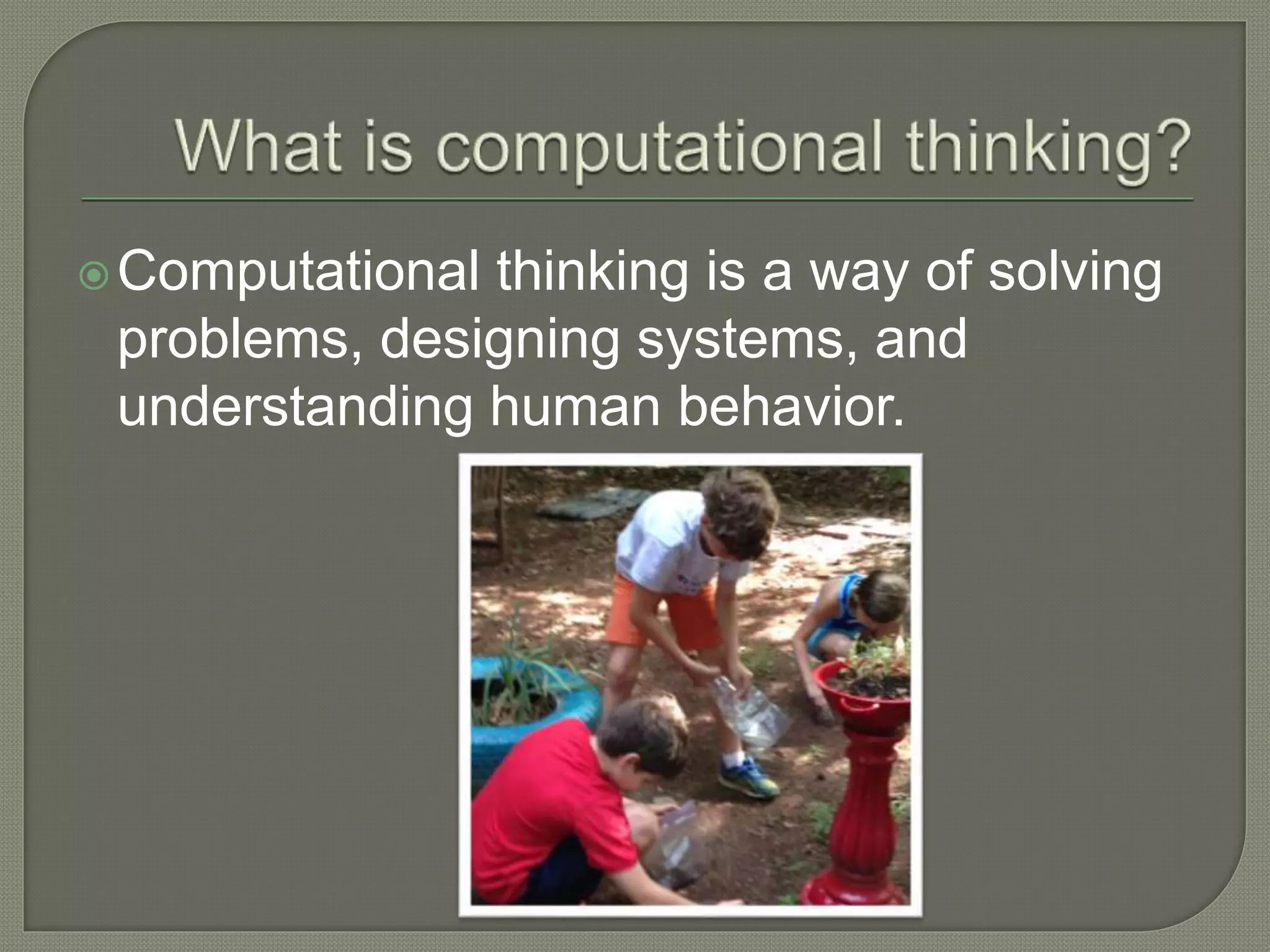
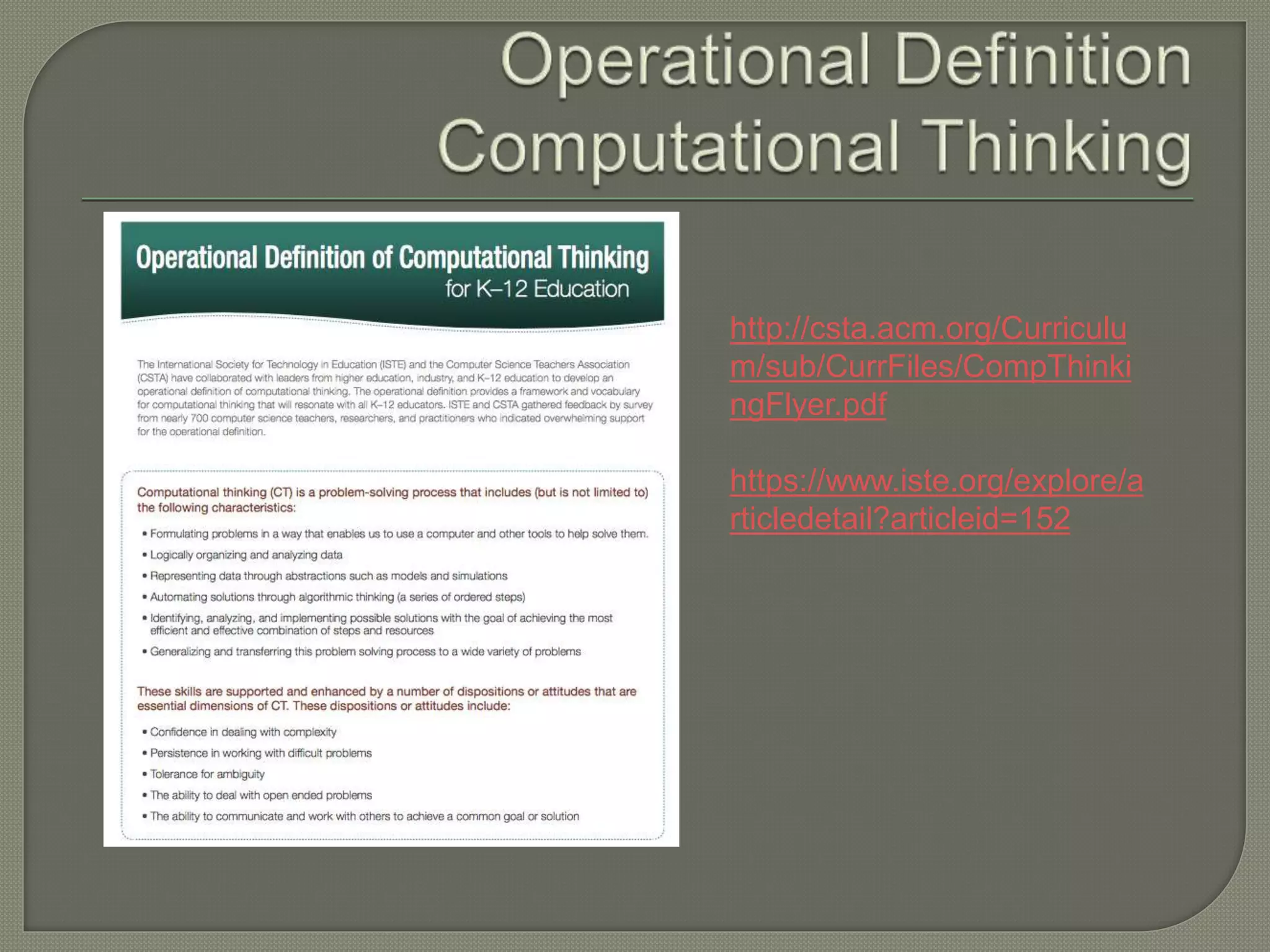
Computational thinking is a way of solving
problems, designing systems, and
understanding human behavior.
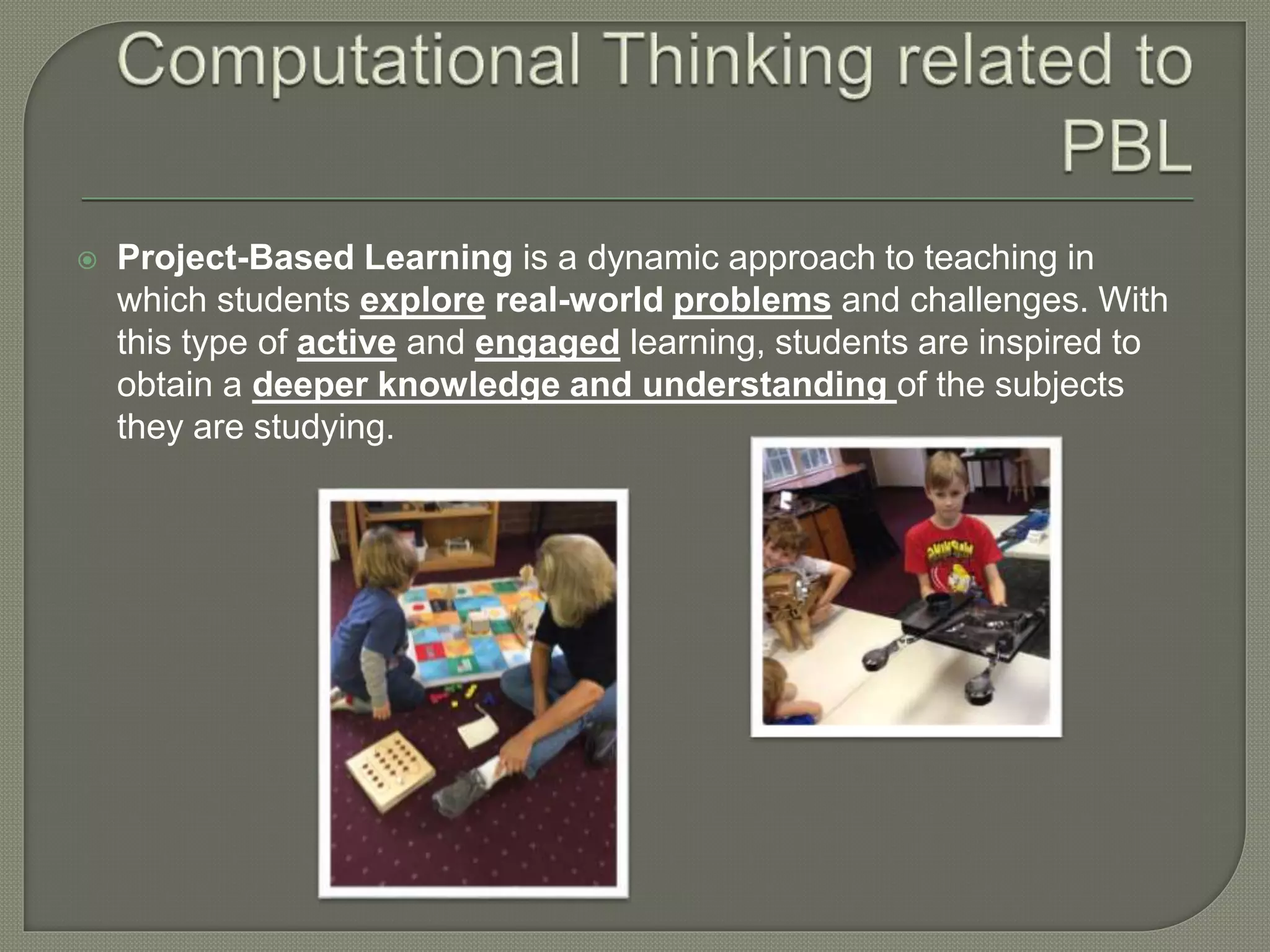
 Project-Based Learning is a dynamic approach to teaching in
which students explore real-world problems and challenges. With
this type of active and engaged learning, students are inspired to
obtain a deeper knowledge and understanding of the subjects
they are studying.
Problem formation
Logic
Organizing
Analyzing
Using models and simulations
Using ordered steps (or algorithims)
Generalizing
Transferring
 “Students who learn CT across
the curriculum can begin to see a
relationship between subjects as
well as between school and life
outside of the classroom.”
 https://www.google.com/edu/resources/programs/exploring-computational-thinking/#!ct-overview
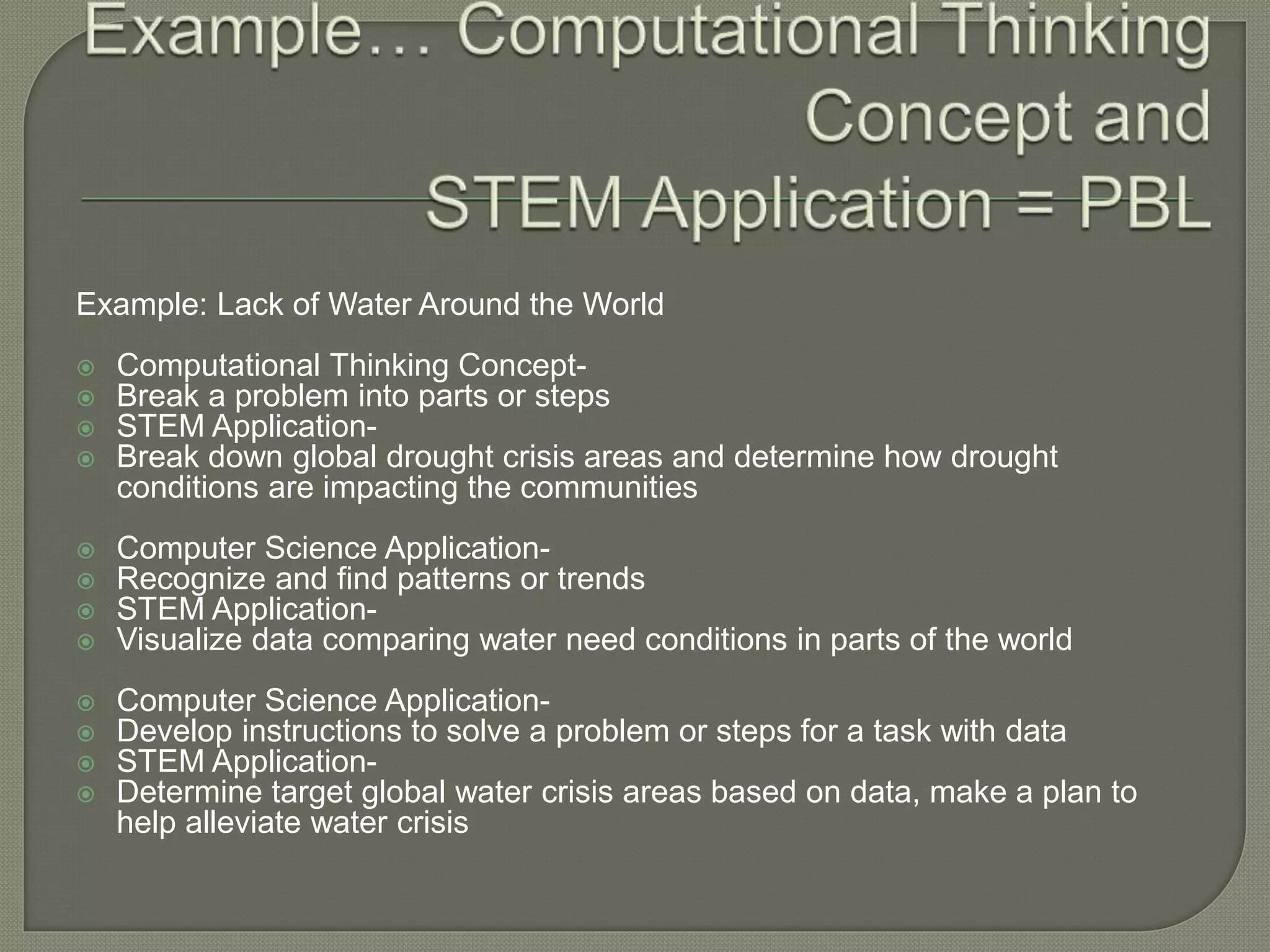
Example: Lack of Water Around the World
 Computational Thinking Concept-
 Break a problem into parts or steps
 STEM Application-
 Break down global drought crisis areas and determine how drought
conditions are impacting the communities
 Computer Science Application-
 Recognize and find patterns or trends
 STEM Application-
 Visualize data comparing water need conditions in parts of the world
 Computer Science Application-
 Develop instructions to solve a problem or steps for a task with data
 STEM Application-
 Determine target global water crisis areas based on data, make a plan to
help alleviate water crisis
http://csta.acm.org/Curriculu
m/sub/CurrFiles/CompThinki
ngFlyer.pdf
https://www.iste.org/explore/a
rticledetail?articleid=152
Susan S. Wells
 Outreach Coordinator for K-12 Education, Shodor, National
Resource for Computational Science Education
 President-Elect 2015-16 for ISTE Mobile Learning Network
 Founder, Camp TechTerra TM and TechTerra TrainingTM, bringing
together technology and nature in STEM-based discovery
 Consultant on educational technology for K-12
website
http://www.susanswells.com
http://www.camptechterra.com
twitter
@wellssusan
Contact me
wellssusans@gmail.com
919-627-4207
Thank you!

What and why of computational thinking

  • 1.
    Learn how ComputationalThinking can be used to support problem- solving across all disciplines Susan S. Wells President-Elect 2015-16 for ISTE Mobile Learning Network http://www.susanswells.com http://www.camptechterra.com https://www.linkedin.com/in/susanswells wellssusans@gmail.com @wellssusan
  • 2.
    Computational thinking isa way of solving problems, designing systems, and understanding human behavior.
  • 3.
     Project-Based Learningis a dynamic approach to teaching in which students explore real-world problems and challenges. With this type of active and engaged learning, students are inspired to obtain a deeper knowledge and understanding of the subjects they are studying.
  • 4.
    Problem formation Logic Organizing Analyzing Using modelsand simulations Using ordered steps (or algorithims) Generalizing Transferring
  • 10.
     “Students wholearn CT across the curriculum can begin to see a relationship between subjects as well as between school and life outside of the classroom.”  https://www.google.com/edu/resources/programs/exploring-computational-thinking/#!ct-overview
  • 11.
    Example: Lack ofWater Around the World  Computational Thinking Concept-  Break a problem into parts or steps  STEM Application-  Break down global drought crisis areas and determine how drought conditions are impacting the communities  Computer Science Application-  Recognize and find patterns or trends  STEM Application-  Visualize data comparing water need conditions in parts of the world  Computer Science Application-  Develop instructions to solve a problem or steps for a task with data  STEM Application-  Determine target global water crisis areas based on data, make a plan to help alleviate water crisis
  • 12.
  • 13.
    Susan S. Wells Outreach Coordinator for K-12 Education, Shodor, National Resource for Computational Science Education  President-Elect 2015-16 for ISTE Mobile Learning Network  Founder, Camp TechTerra TM and TechTerra TrainingTM, bringing together technology and nature in STEM-based discovery  Consultant on educational technology for K-12 website http://www.susanswells.com http://www.camptechterra.com twitter @wellssusan Contact me wellssusans@gmail.com 919-627-4207 Thank you!

Editor's Notes

  • #3 Operational definition… http://www.iste.org/docs/ct-documents/computational-thinking-operational-definition-flyer.pdf?sfvrsn=2
  • #4 And related to STEM… STEM Definition now includes computer science http://www.nebhe.org/newslink/get-with-the-programming-stem-definition-now-includes-computer-science/ expand the kinds of STEM programs that can be run and funded by federal government agencies to include computer science.
  • #5 Think about the teaching and learning we’ve always done…Consider the problem, logically…needs to make sense…organize what you know and need to know, analyze the situation. Model and simulate sollutions in an ordered manner. Generalize what you’ve learned to other similar problems. Transfer this learning to new content areas, new problems.
  • #6 4 C’s…critical thinking collaboration, creativity, communication
  • #7 Different then Grit…continue doing something or trying to do something even though it is difficult or opposed by other people Grit includes optimisim, courage, conscientousness, follow through, resilience, seeking excellence