Digital Media
Sectors & Audiences

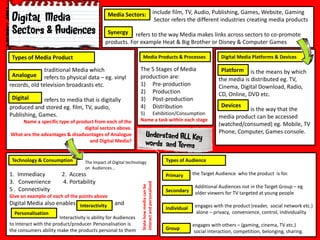
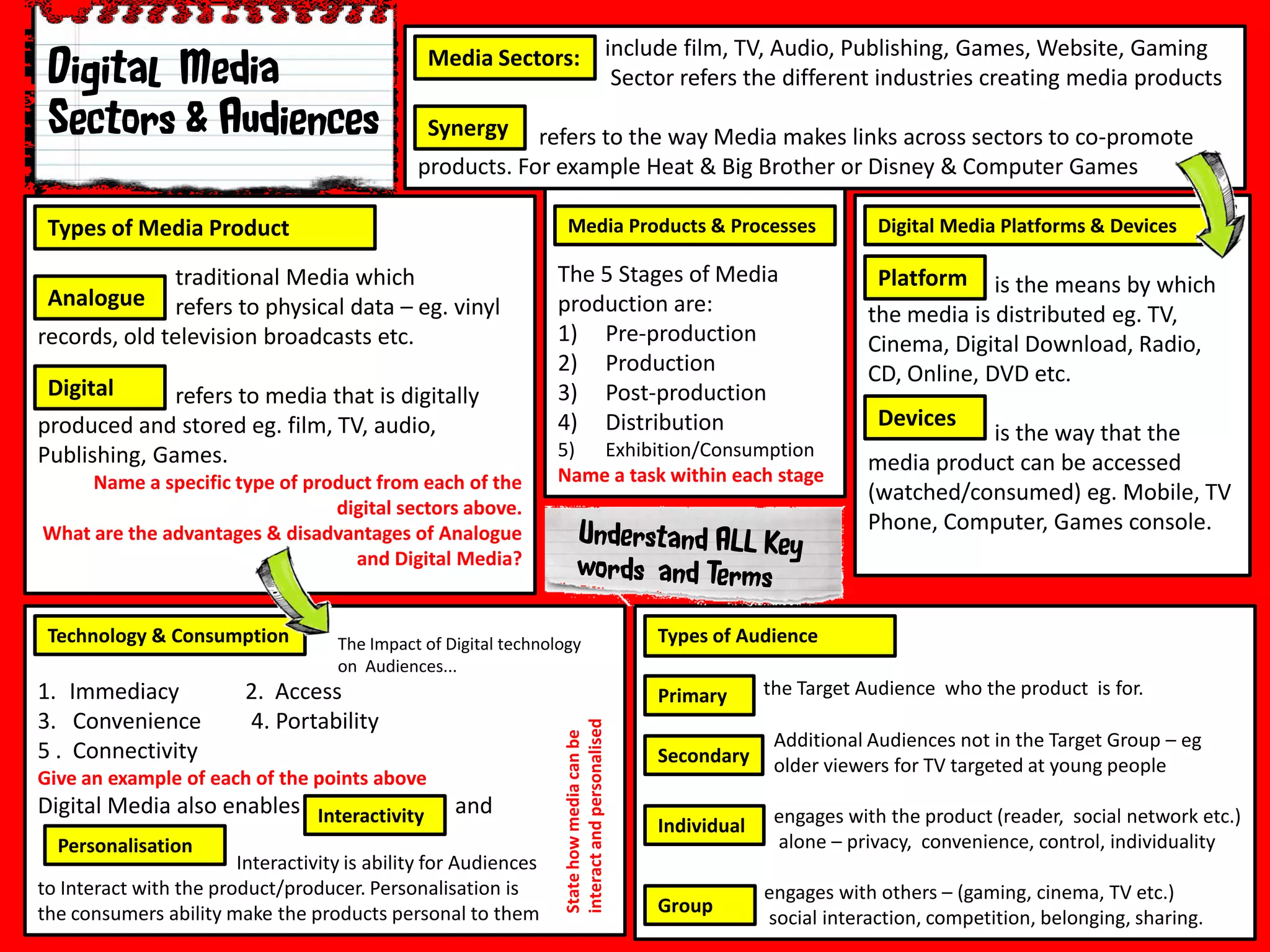
Media Sectors:
Synergy

refers to the way Media makes links across sectors to co-promote
products. For example Heat & Big Brother or Disney & Computer Games
Media Products & Processes

Types of Media Product
traditional Media which
Analogue refers to physical data – eg. vinyl
records, old television broadcasts etc.
Digital

refers to media that is digitally
produced and stored eg. film, TV, audio,
Publishing, Games.
Name a specific type of product from each of the
digital sectors above.
What are the advantages & disadvantages of Analogue
and Digital Media?

1. Immediacy
3. Convenience
5 . Connectivity

5) Exhibition/Consumption
Name a task within each stage

The Impact of Digital technology
on Audiences...

2. Access
4. Portability

Digital Media also enables yInteractivity

and

Interactivity is ability for Audiences
to Interact with the product/producer. Personalisation is
the consumers ability make the products personal to them

Digital Media Platforms & Devices

Platform is the means by which
the media is distributed eg. TV,
Cinema, Digital Download, Radio,
CD, Online, DVD etc.
Devices

is the way that the
media product can be accessed
(watched/consumed) eg. Mobile, TV
Phone, Computer, Games console.

Types of Audience
Primary

Give an example of each of the points above
Personalisation

The 5 Stages of Media
production are:
1) Pre-production
2) Production
3) Post-production
4) Distribution

State how media can be
interact and personalised

Technology & Consumption

include film, TV, Audio, Publishing, Games, Website, Gaming
Sector refers the different industries creating media products

the Target Audience who the product is for.

Secondary

Additional Audiences not in the Target Group – eg
older viewers for TV targeted at young people

Individual

engages with the product (reader, social network etc.)
alone – privacy, convenience, control, individuality

Group

engages with others – (gaming, cinema, TV etc.)
social interaction, competition, belonging, sharing.
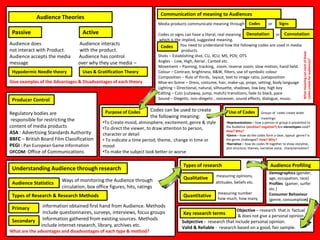
Communication of meaning to Audiences

Audience Theories

Media products communicate meaning through

Active

Audience does
not interact with Product.
Audience accepts the media
message
Hypodermic Needle theory

Uses & Gratification Theory

Give examples of the Advantages & Disadvantages of each theory

Producer Control
Purpose of Codes

Codes can be used to create
the following meaning:

Audience Statistics

Ways of monitoring the Audience through
circulation, box office figures, hits, ratings

Types of Research & Research Methods
Primary

Secondary

Use of Codes

information obtained first hand from Audience. Methods
include questionnaires, surveys, interviews, focus groups
Information gathered from existing sources. Methods
include internet research, library, archives etc.

What are the advantages and disadvantages of each type & method?

Types of research

Qualitative
Quantitative

Groups of codes create wider

meanings:
•Representations – how a person or group is presented to
the Audience (positive? negative?) Are stereotypes used?
How? Why?
•Genre – how do the codes form a clear, typical genre? Is
the genre challenged? How? Why?
•Narrative – how do codes fit together to show storyline,
plot structure, themes, narrative voice, characterisation?

•To Create mood, atmosphere, excitement, genre & style
•To direct the viewer, to draw attention to person,
character or detail
• To indicate a time period, theme, change in time or
mood
•To make the subject look better or worse

Understanding Audience through research
.

Signs

Codes or signs can have a literal, real meaning Denotation or Connotation
which is the implied, suggested meaning.
Codes You need to understand how the following codes are used in media
products.
Shots – Establishing shot, CU, XCU, Digital Media Platforms & Devices
MS, POV, OTS
Angles - Low, High, Aerial , Canted etc.
Movement – Panning, tracking, zoom, reverse zoom, slow motion, hand held.
Colour – Contrast, brightness, B&W, filters, use of symbolic colour
Composition – Rule of thirds, layout, text to image ratio, juxtaposition
Mise-en-Scene – Dress, costume, hair, make-up, props, setting, body language
Lighting – Directional, natural, silhouette, shadows, low key, high key
Editing – Cuts (cutaway, jump, match) transitions, fade to black, pace
Sound – Diegetic, non-diegetic , voiceover, sound effects, dialogue, music.

Audience interacts
with the product.
Audience has control
over why they use media –

Regulatory bodies are
responsible for restricting the
content of media products
ASA : Advertising Standards Authority
BBFC – British Board Film Classification
PEGI : Pan European Game Information
OFCOM: Office of Communications

or

What meaning can each of these
codes create for audiences?

#Passive

Codes

measuring opinions,
attitudes, beliefs etc.
measuring number
how much, how many

Audience Profiling
Demographics (gender,
age, occupation, race)
Profiles (gamer, surfer
etc.)
Consumer Behaviour
(genre, consumption)

Objective – research that is factual
& does not give a personal opinion.
Subjective - research that include personal opinion.
Valid & Reliable - research based on a good, fair sample.

Key research terms

Digital Media Sectors and Audiences

  • 1.
    Digital Media Sectors &Audiences Media Sectors: Synergy refers to the way Media makes links across sectors to co-promote products. For example Heat & Big Brother or Disney & Computer Games Media Products & Processes Types of Media Product traditional Media which Analogue refers to physical data – eg. vinyl records, old television broadcasts etc. Digital refers to media that is digitally produced and stored eg. film, TV, audio, Publishing, Games. Name a specific type of product from each of the digital sectors above. What are the advantages & disadvantages of Analogue and Digital Media? 1. Immediacy 3. Convenience 5 . Connectivity 5) Exhibition/Consumption Name a task within each stage The Impact of Digital technology on Audiences... 2. Access 4. Portability Digital Media also enables yInteractivity and Interactivity is ability for Audiences to Interact with the product/producer. Personalisation is the consumers ability make the products personal to them Digital Media Platforms & Devices Platform is the means by which the media is distributed eg. TV, Cinema, Digital Download, Radio, CD, Online, DVD etc. Devices is the way that the media product can be accessed (watched/consumed) eg. Mobile, TV Phone, Computer, Games console. Types of Audience Primary Give an example of each of the points above Personalisation The 5 Stages of Media production are: 1) Pre-production 2) Production 3) Post-production 4) Distribution State how media can be interact and personalised Technology & Consumption include film, TV, Audio, Publishing, Games, Website, Gaming Sector refers the different industries creating media products the Target Audience who the product is for. Secondary Additional Audiences not in the Target Group – eg older viewers for TV targeted at young people Individual engages with the product (reader, social network etc.) alone – privacy, convenience, control, individuality Group engages with others – (gaming, cinema, TV etc.) social interaction, competition, belonging, sharing.
  • 2.
    Communication of meaningto Audiences Audience Theories Media products communicate meaning through Active Audience does not interact with Product. Audience accepts the media message Hypodermic Needle theory Uses & Gratification Theory Give examples of the Advantages & Disadvantages of each theory Producer Control Purpose of Codes Codes can be used to create the following meaning: Audience Statistics Ways of monitoring the Audience through circulation, box office figures, hits, ratings Types of Research & Research Methods Primary Secondary Use of Codes information obtained first hand from Audience. Methods include questionnaires, surveys, interviews, focus groups Information gathered from existing sources. Methods include internet research, library, archives etc. What are the advantages and disadvantages of each type & method? Types of research Qualitative Quantitative Groups of codes create wider meanings: •Representations – how a person or group is presented to the Audience (positive? negative?) Are stereotypes used? How? Why? •Genre – how do the codes form a clear, typical genre? Is the genre challenged? How? Why? •Narrative – how do codes fit together to show storyline, plot structure, themes, narrative voice, characterisation? •To Create mood, atmosphere, excitement, genre & style •To direct the viewer, to draw attention to person, character or detail • To indicate a time period, theme, change in time or mood •To make the subject look better or worse Understanding Audience through research . Signs Codes or signs can have a literal, real meaning Denotation or Connotation which is the implied, suggested meaning. Codes You need to understand how the following codes are used in media products. Shots – Establishing shot, CU, XCU, Digital Media Platforms & Devices MS, POV, OTS Angles - Low, High, Aerial , Canted etc. Movement – Panning, tracking, zoom, reverse zoom, slow motion, hand held. Colour – Contrast, brightness, B&W, filters, use of symbolic colour Composition – Rule of thirds, layout, text to image ratio, juxtaposition Mise-en-Scene – Dress, costume, hair, make-up, props, setting, body language Lighting – Directional, natural, silhouette, shadows, low key, high key Editing – Cuts (cutaway, jump, match) transitions, fade to black, pace Sound – Diegetic, non-diegetic , voiceover, sound effects, dialogue, music. Audience interacts with the product. Audience has control over why they use media – Regulatory bodies are responsible for restricting the content of media products ASA : Advertising Standards Authority BBFC – British Board Film Classification PEGI : Pan European Game Information OFCOM: Office of Communications or What meaning can each of these codes create for audiences? #Passive Codes measuring opinions, attitudes, beliefs etc. measuring number how much, how many Audience Profiling Demographics (gender, age, occupation, race) Profiles (gamer, surfer etc.) Consumer Behaviour (genre, consumption) Objective – research that is factual & does not give a personal opinion. Subjective - research that include personal opinion. Valid & Reliable - research based on a good, fair sample. Key research terms