Digital Certificates
         &
Digital signatures
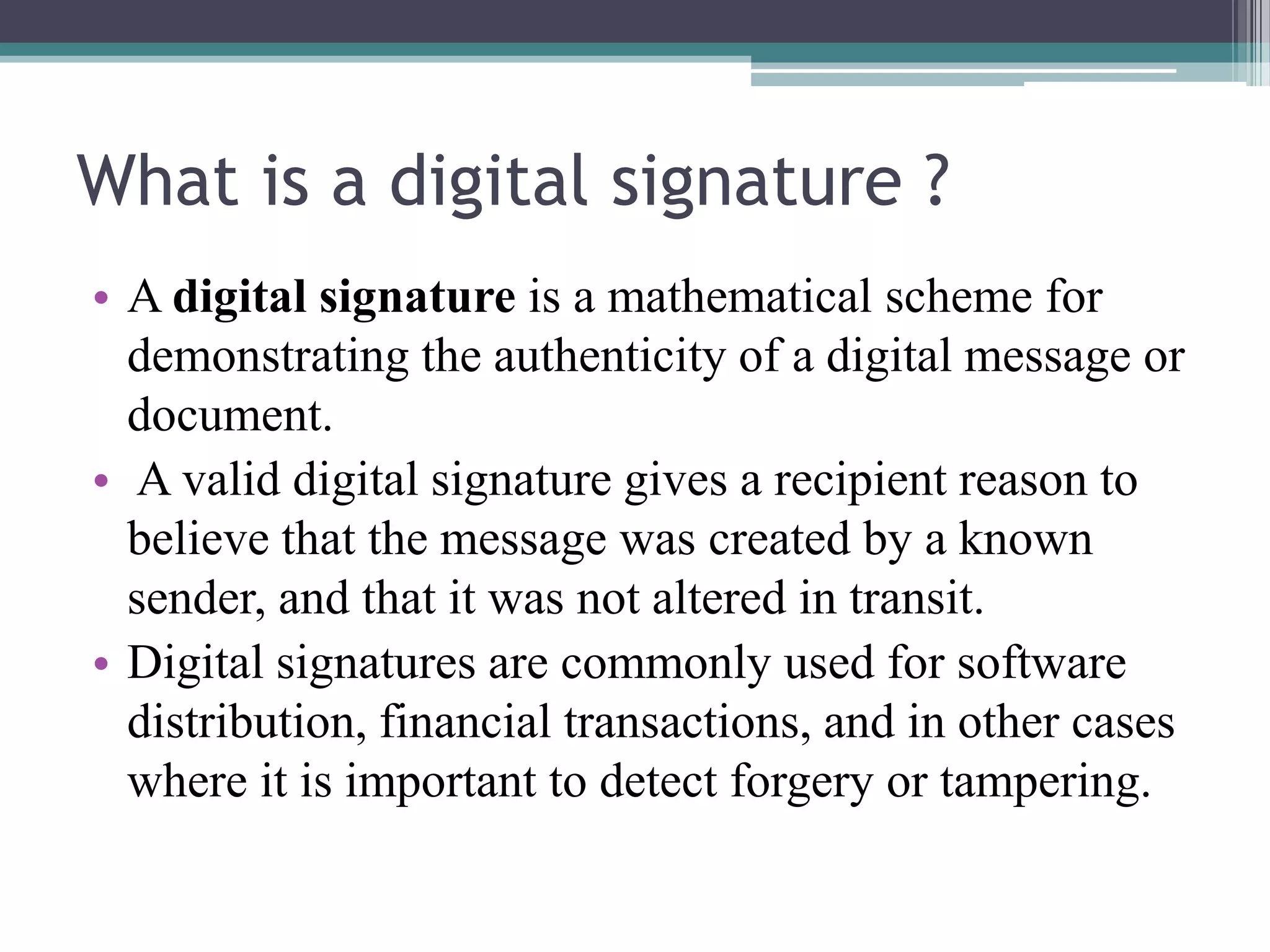
What is a digital signature ?
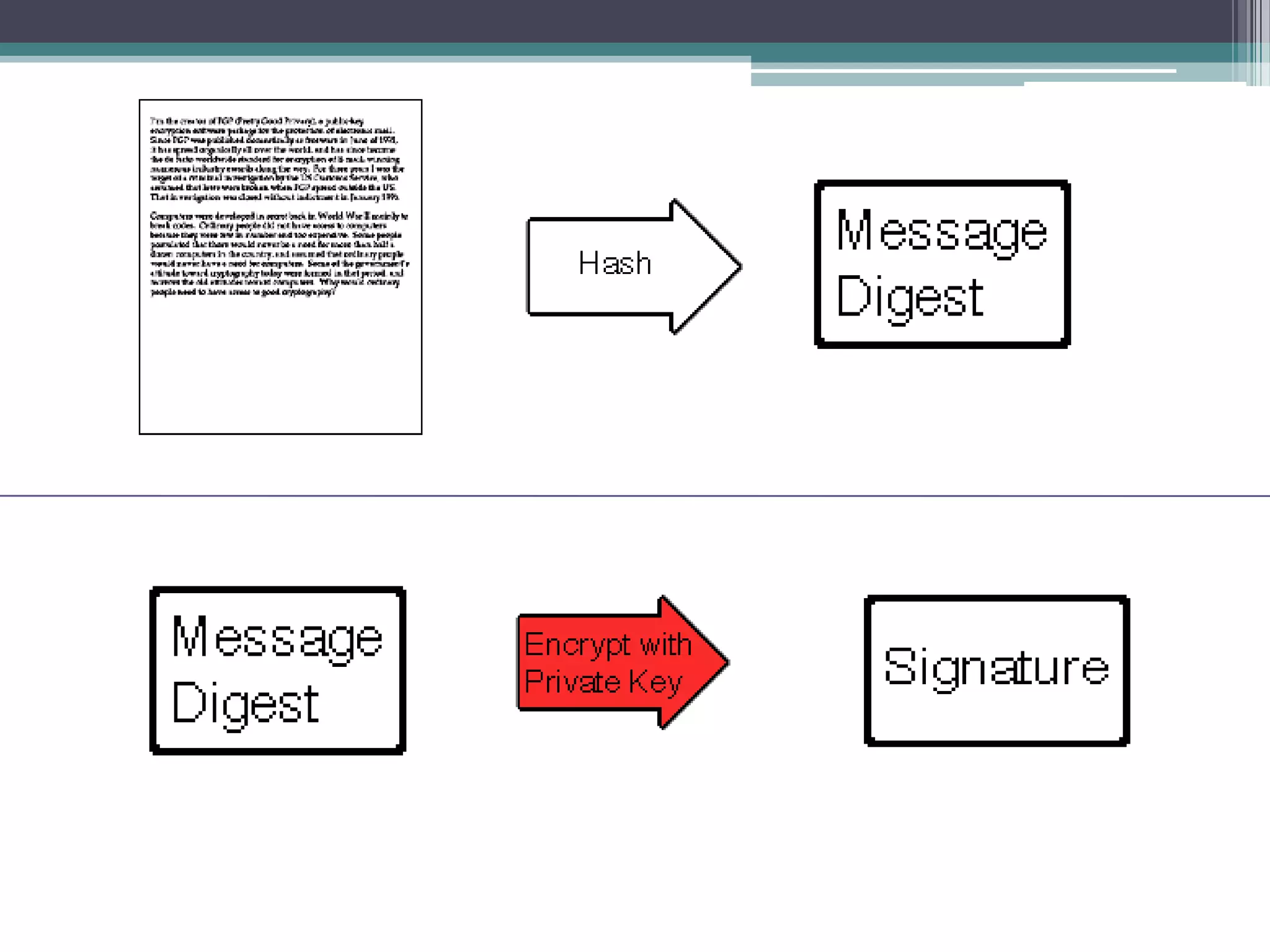
• A digital signature is a mathematical scheme for
  demonstrating the authenticity of a digital message or
  document.
• A valid digital signature gives a recipient reason to
  believe that the message was created by a known
  sender, and that it was not altered in transit.
• Digital signatures are commonly used for software
  distribution, financial transactions, and in other cases
  where it is important to detect forgery or tampering.
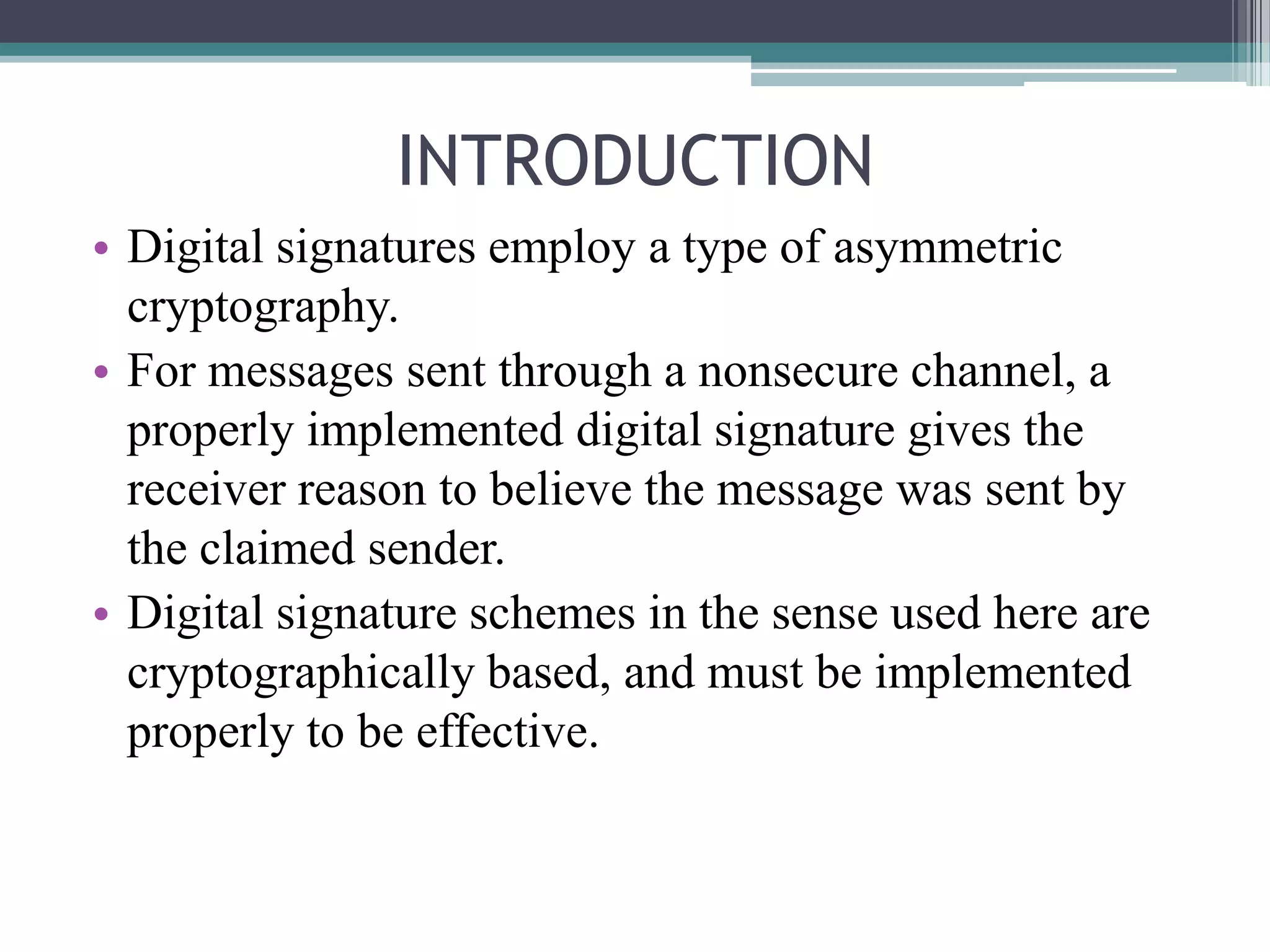
INTRODUCTION
• Digital signatures employ a type of asymmetric
  cryptography.
• For messages sent through a nonsecure channel, a
  properly implemented digital signature gives the
  receiver reason to believe the message was sent by
  the claimed sender.
• Digital signature schemes in the sense used here are
  cryptographically based, and must be implemented
  properly to be effective.
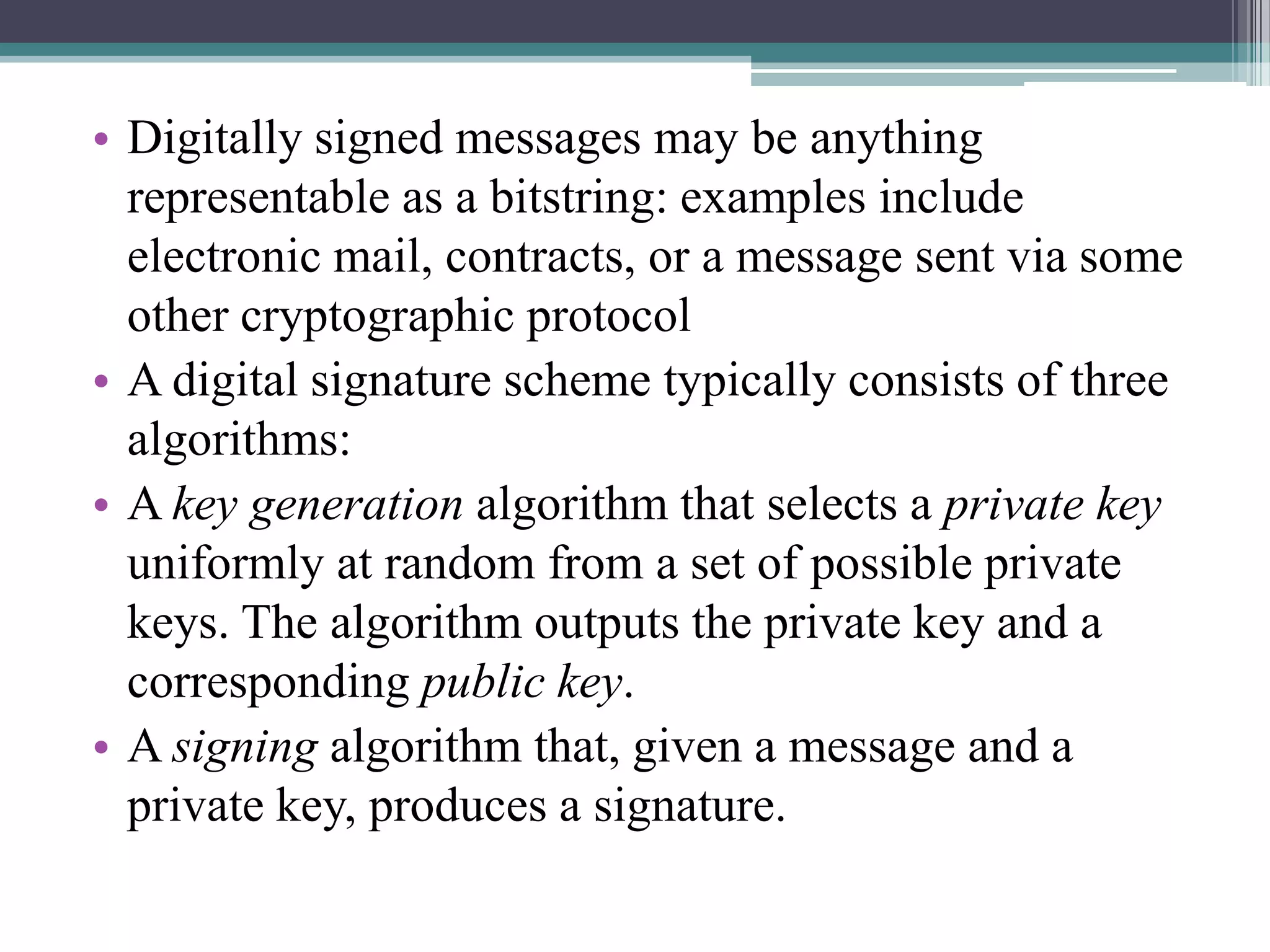
• Digitally signed messages may be anything
  representable as a bitstring: examples include
  electronic mail, contracts, or a message sent via some
  other cryptographic protocol
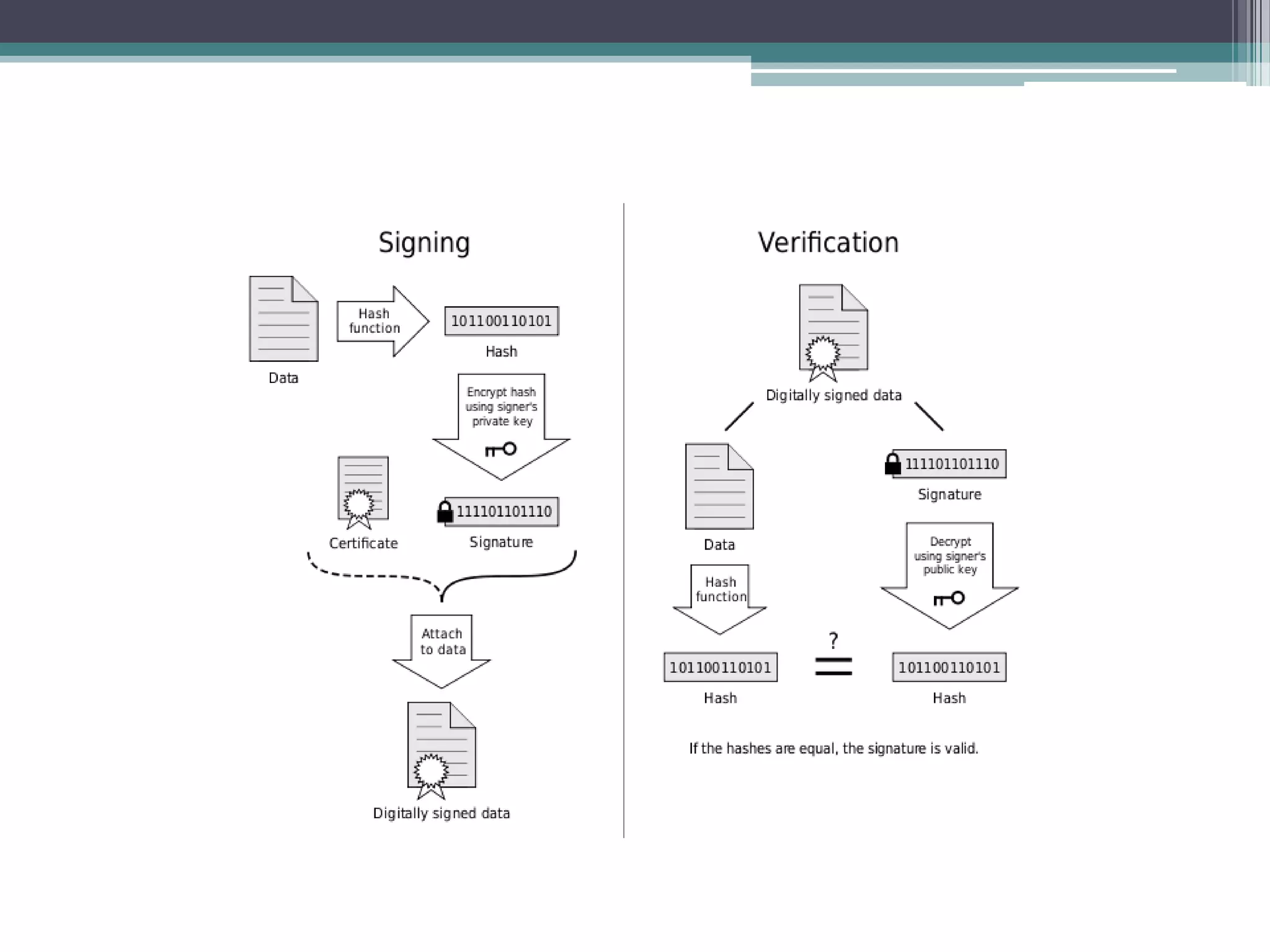
• A digital signature scheme typically consists of three
  algorithms:
• A key generation algorithm that selects a private key
  uniformly at random from a set of possible private
  keys. The algorithm outputs the private key and a
  corresponding public key.
• A signing algorithm that, given a message and a
  private key, produces a signature.
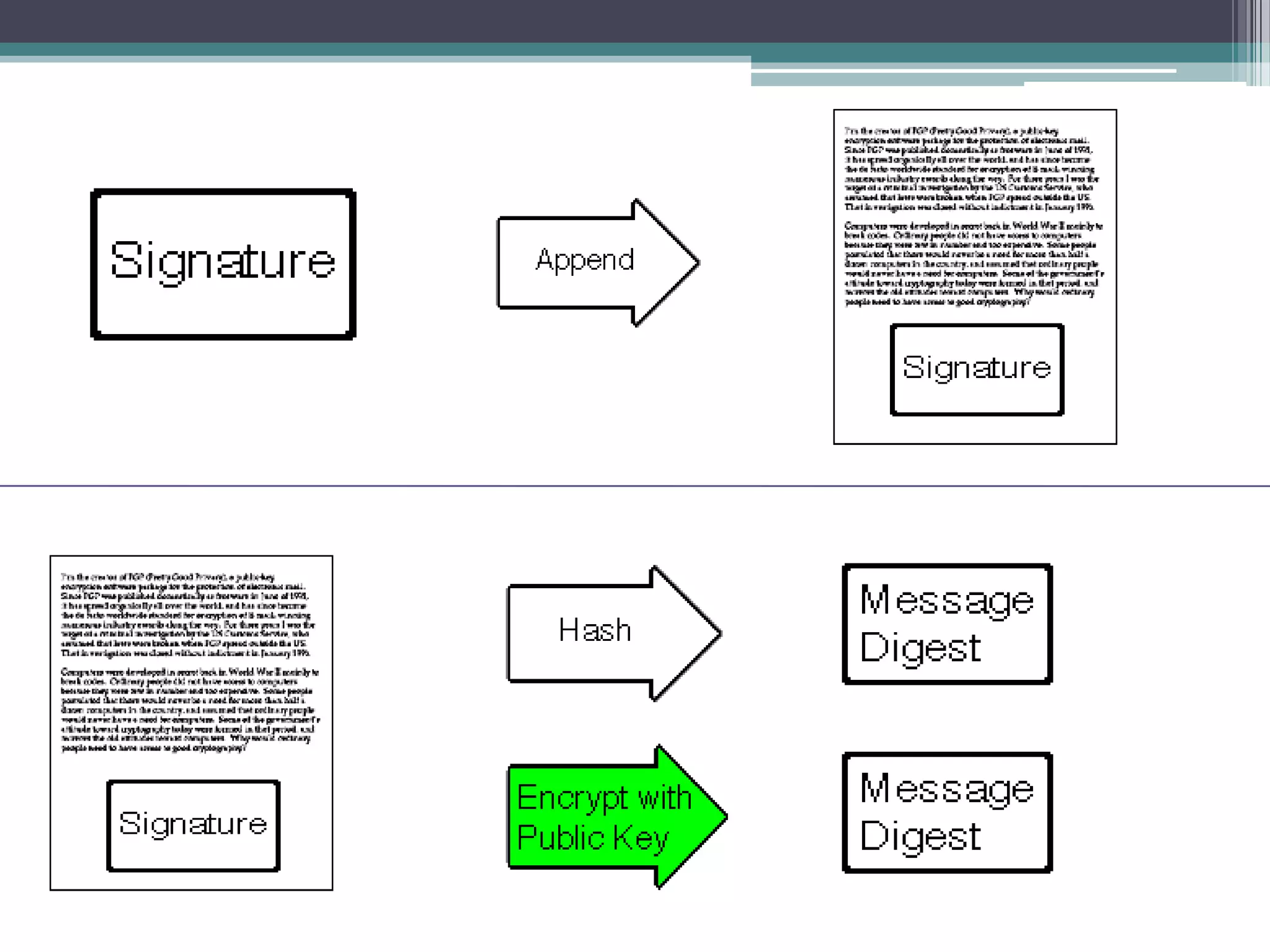
• A signature verifying algorithm that, given a
  message, public key and a signature, either accepts or
  rejects the message's claim to authenticity.

• Two main properties are required. First, a signature
  generated from a fixed message and fixed private key
  should verify the authenticity of that message by
  using the corresponding public key. Secondly, it
  should be computationally infeasible to generate a
  valid signature for a party who does not possess the
  private key.
Uses of Digital Signatures
• Now a days, organisations are moving away
  from paper documents with ink signatures or
  authenticity stamps, to digital signatures.

• It can provide added assurances of the evidence to
  provenance, identity, and status of an electronic
  document as well as acknowledging consent and
  approval by a signatory.
• Below are some common reasons for applying a
  digital signature to communications.

• Authentication:-
  - Digital signatures can be used to authenticate the
  source of messages.
  -For example, suppose a bank's branch office sends
  instructions to the central office requesting a change
  in the balance of an account.

• Integrity:-
  ▫ The sender and receiver of a message must know
    that the message has not been altered during
    transmission.
• However, if a message is digitally signed, any change
  in the message after signature will invalidate the
  signature.

• Non-repudiation:-
  ▫ An entity that has signed some information cannot
    at a later time deny having signed it. Similarly,
    access to the public key only does not enable a
    fraudulent party to fake a valid sign
Additional Security Precautions
• Using smart card readers with a separate
  keyboard:-
  ▫ Some card readers have their own numeric
    keypad. This is safer than using a card reader
    integrated into a PC, and then entering the PIN
    using that computer's keyboard.
• Using digital signatures only with trusted
  applications:-
      One of the main differences between a digital
  signature and a written signature is that the user does
  not "see" what he signs.
WYSIWYS
• WYSIWYS is an shortform for What You See Is
  What You Sign, used to describe the property of
  digital signatures systems that the content of signed
  messages can not be changed, either by accident or
  intent.
• What You See Is What You Sign means that the
  semantic interpretation of a signed message cannot be
  changed.
Digital signatures vs. ink on paper signatures

• Ink Paper Signatures     • Digital Signatures
• An ink signature could   • Digital signatures bind
  be replicated from one     an electronic identity to
  document to another by     an electronic document
  copying the image          and the digital signature
  manually or digitally.     cannot be copied to
                             another document.
• Ink Signatures can be    • Digital signatures can
  easilly erasiable.         never be erased.
What is Private Key & Public Key ???

• Cryptographic system requiring two separate Keys,
  one to lock or encrypt the Plaintext, and one to
  unlock or decrypt the Cyber text.
• One of these keys is published or public and the
  other is kept private.
• a private key, which only you use. and
• a public key, which other people use.
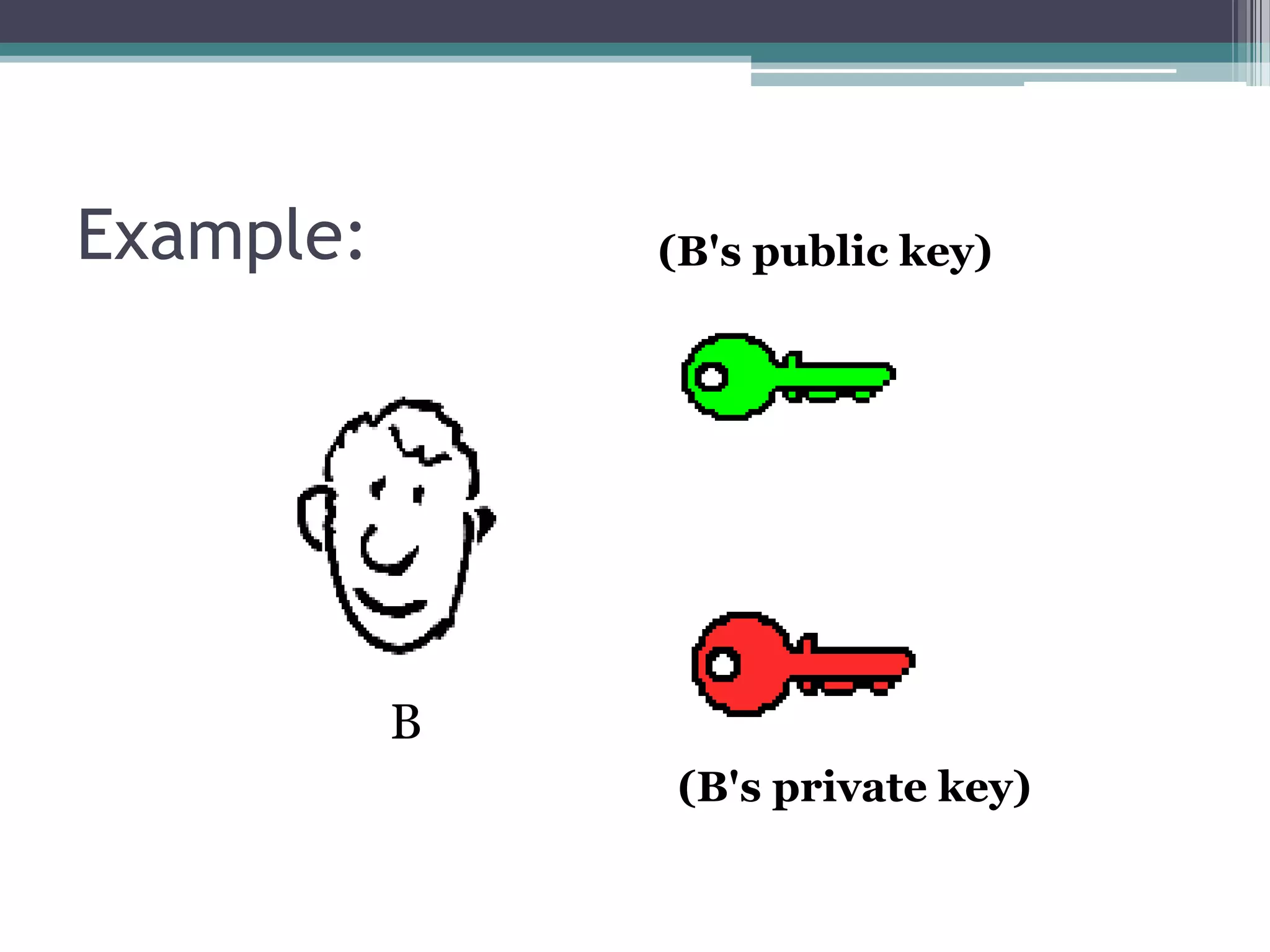
Example:       (B's public key)


           B
               (B's private key)
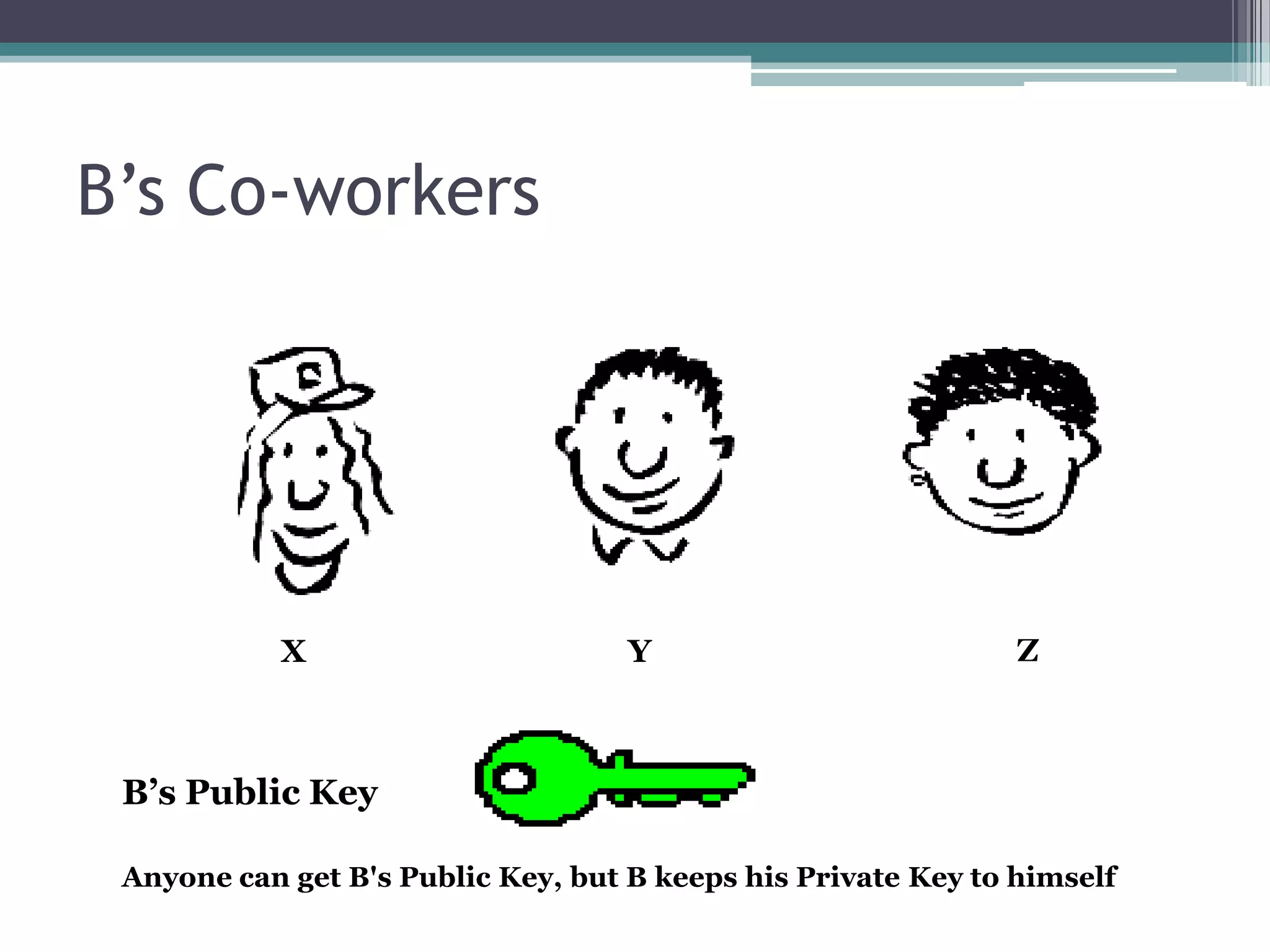
B’s Co-workers


                                                               Z
            X                       Y


 B’s Public Key

 Anyone can get B's Public Key, but B keeps his Private Key to himself
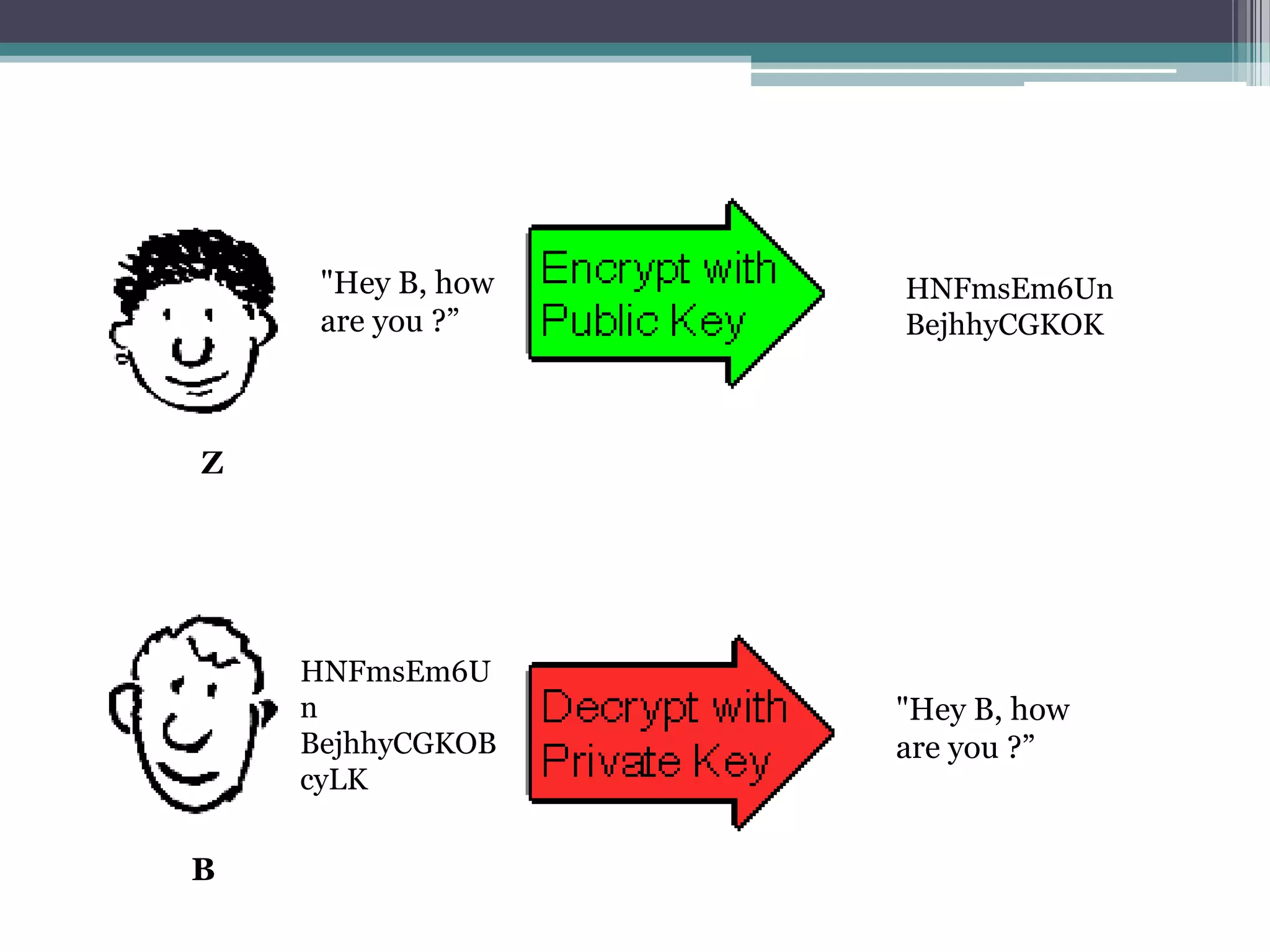
"Hey B, how   HNFmsEm6Un
     are you ?”    BejhhyCGKOK


Z


    HNFmsEm6U
    n              "Hey B, how
    BejhhyCGKOB    are you ?”
    cyLK


B
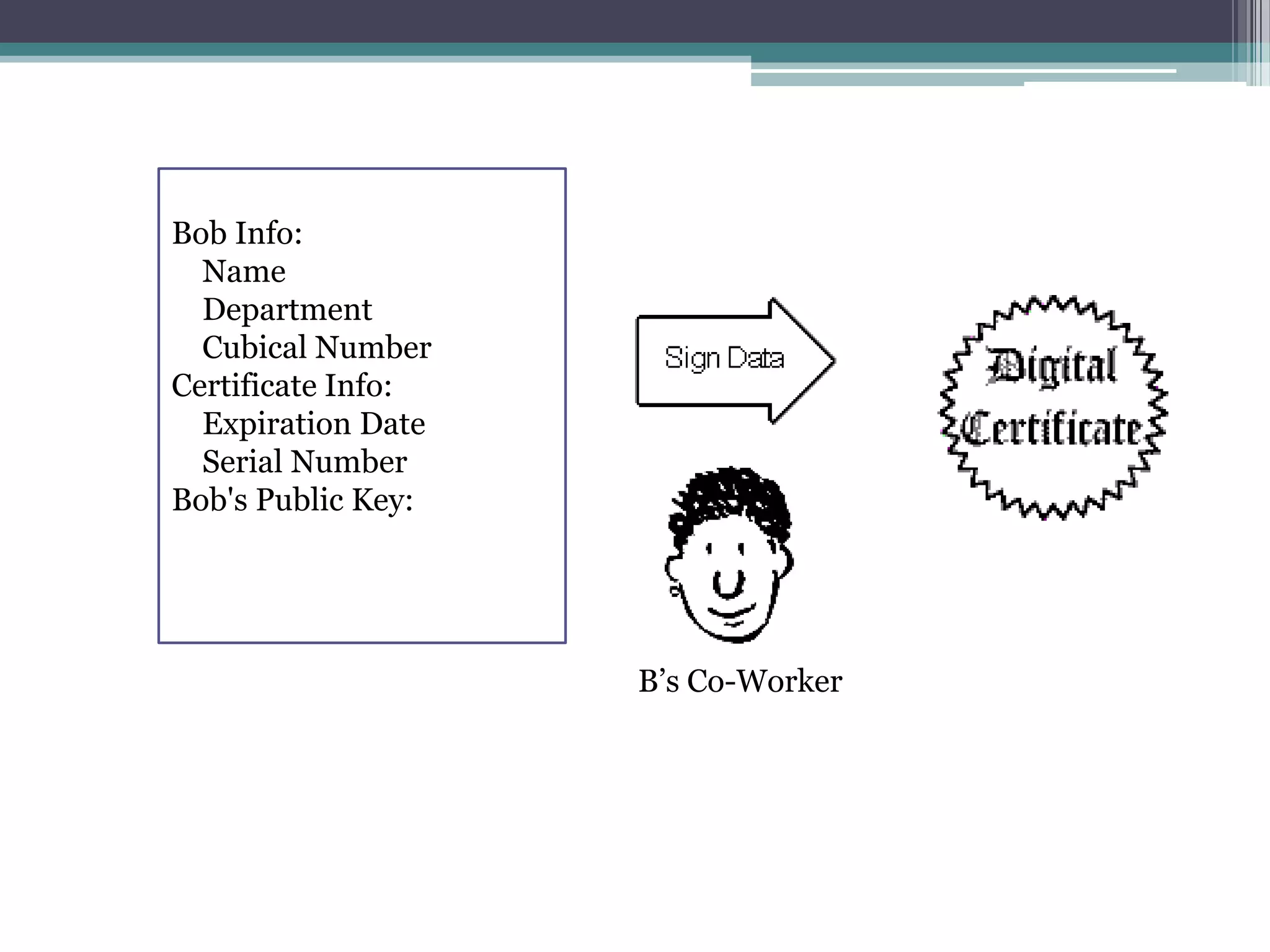
Bob Info:
  Name
  Department
  Cubical Number
Certificate Info:
  Expiration Date
  Serial Number
Bob's Public Key:


                    B’s Co-Worker
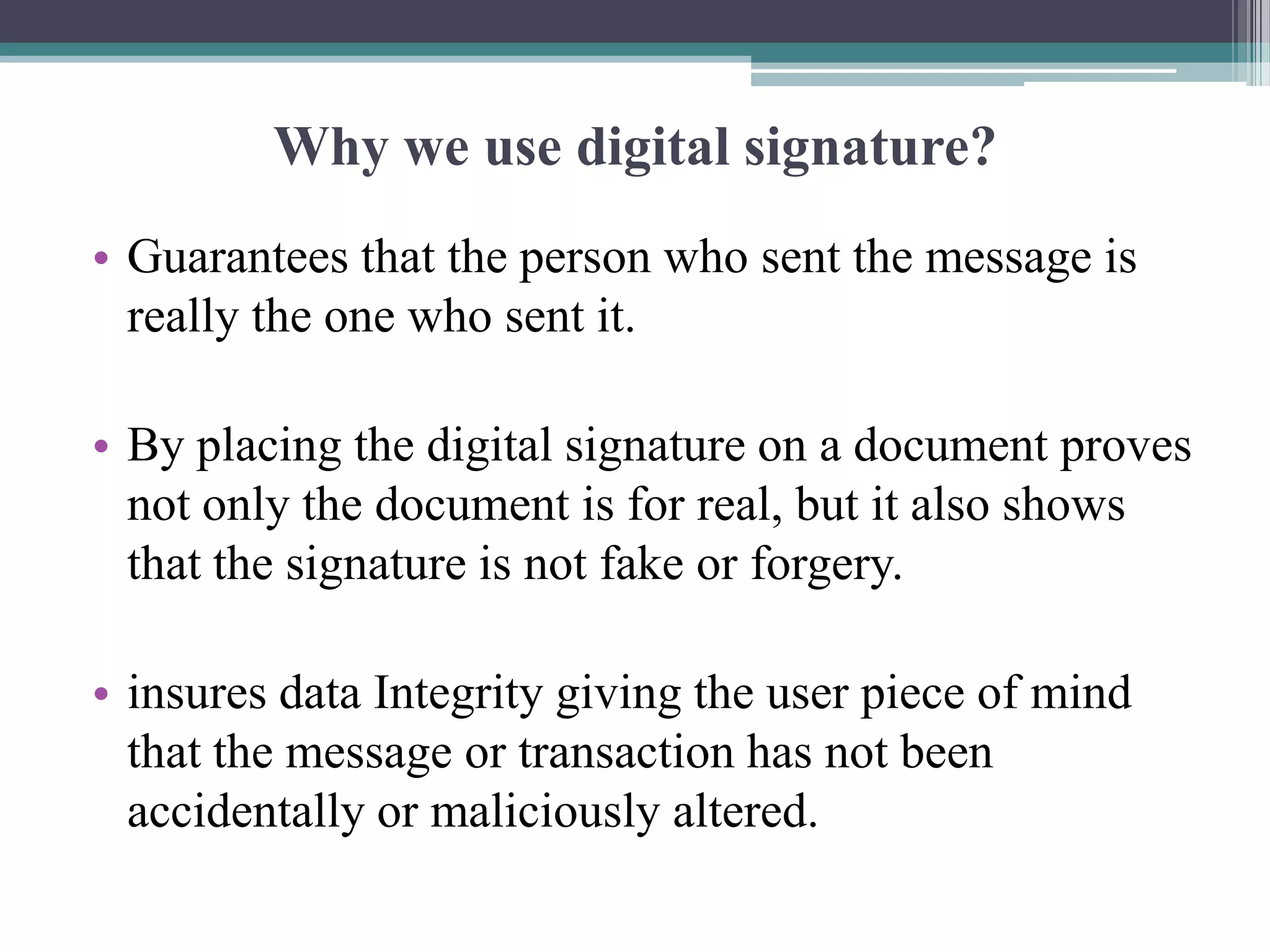
Why we use digital signature?
• Guarantees that the person who sent the message is
  really the one who sent it.

• By placing the digital signature on a document proves
  not only the document is for real, but it also shows
  that the signature is not fake or forgery.

• insures data Integrity giving the user piece of mind
  that the message or transaction has not been
  accidentally or maliciously altered.
• ensures confidentiality and ensures that messages can
  only be read by authorized intended recipients.

• also verifies date and time so that senders or
  recipients can not dispute if the message was actually
  sent or received.
• The process of checking the validity of digital
  signature.

• Advantages
  1) Imposter Prevention
  2) Message Integrity
  3) Legal Requirement

Digital certificates

  • 1.
    Digital Certificates & Digital signatures
  • 2.
    What is adigital signature ? • A digital signature is a mathematical scheme for demonstrating the authenticity of a digital message or document. • A valid digital signature gives a recipient reason to believe that the message was created by a known sender, and that it was not altered in transit. • Digital signatures are commonly used for software distribution, financial transactions, and in other cases where it is important to detect forgery or tampering.
  • 3.
    INTRODUCTION • Digital signaturesemploy a type of asymmetric cryptography. • For messages sent through a nonsecure channel, a properly implemented digital signature gives the receiver reason to believe the message was sent by the claimed sender. • Digital signature schemes in the sense used here are cryptographically based, and must be implemented properly to be effective.
  • 4.
    • Digitally signedmessages may be anything representable as a bitstring: examples include electronic mail, contracts, or a message sent via some other cryptographic protocol • A digital signature scheme typically consists of three algorithms: • A key generation algorithm that selects a private key uniformly at random from a set of possible private keys. The algorithm outputs the private key and a corresponding public key. • A signing algorithm that, given a message and a private key, produces a signature.
  • 5.
    • A signatureverifying algorithm that, given a message, public key and a signature, either accepts or rejects the message's claim to authenticity. • Two main properties are required. First, a signature generated from a fixed message and fixed private key should verify the authenticity of that message by using the corresponding public key. Secondly, it should be computationally infeasible to generate a valid signature for a party who does not possess the private key.
  • 7.
    Uses of DigitalSignatures • Now a days, organisations are moving away from paper documents with ink signatures or authenticity stamps, to digital signatures. • It can provide added assurances of the evidence to provenance, identity, and status of an electronic document as well as acknowledging consent and approval by a signatory.
  • 8.
    • Below aresome common reasons for applying a digital signature to communications. • Authentication:- - Digital signatures can be used to authenticate the source of messages. -For example, suppose a bank's branch office sends instructions to the central office requesting a change in the balance of an account. • Integrity:- ▫ The sender and receiver of a message must know that the message has not been altered during transmission.
  • 9.
    • However, ifa message is digitally signed, any change in the message after signature will invalidate the signature. • Non-repudiation:- ▫ An entity that has signed some information cannot at a later time deny having signed it. Similarly, access to the public key only does not enable a fraudulent party to fake a valid sign
  • 10.
    Additional Security Precautions •Using smart card readers with a separate keyboard:- ▫ Some card readers have their own numeric keypad. This is safer than using a card reader integrated into a PC, and then entering the PIN using that computer's keyboard. • Using digital signatures only with trusted applications:- One of the main differences between a digital signature and a written signature is that the user does not "see" what he signs.
  • 11.
    WYSIWYS • WYSIWYS isan shortform for What You See Is What You Sign, used to describe the property of digital signatures systems that the content of signed messages can not be changed, either by accident or intent. • What You See Is What You Sign means that the semantic interpretation of a signed message cannot be changed.
  • 12.
    Digital signatures vs.ink on paper signatures • Ink Paper Signatures • Digital Signatures • An ink signature could • Digital signatures bind be replicated from one an electronic identity to document to another by an electronic document copying the image and the digital signature manually or digitally. cannot be copied to another document. • Ink Signatures can be • Digital signatures can easilly erasiable. never be erased.
  • 13.
    What is PrivateKey & Public Key ??? • Cryptographic system requiring two separate Keys, one to lock or encrypt the Plaintext, and one to unlock or decrypt the Cyber text. • One of these keys is published or public and the other is kept private. • a private key, which only you use. and • a public key, which other people use.
  • 14.
    Example: (B's public key) B (B's private key)
  • 15.
    B’s Co-workers Z X Y B’s Public Key Anyone can get B's Public Key, but B keeps his Private Key to himself
  • 16.
    "Hey B, how HNFmsEm6Un are you ?” BejhhyCGKOK Z HNFmsEm6U n "Hey B, how BejhhyCGKOB are you ?” cyLK B
  • 19.
    Bob Info: Name Department Cubical Number Certificate Info: Expiration Date Serial Number Bob's Public Key: B’s Co-Worker
  • 20.
    Why we usedigital signature? • Guarantees that the person who sent the message is really the one who sent it. • By placing the digital signature on a document proves not only the document is for real, but it also shows that the signature is not fake or forgery. • insures data Integrity giving the user piece of mind that the message or transaction has not been accidentally or maliciously altered.
  • 21.
    • ensures confidentialityand ensures that messages can only be read by authorized intended recipients. • also verifies date and time so that senders or recipients can not dispute if the message was actually sent or received.
  • 22.
    • The processof checking the validity of digital signature. • Advantages 1) Imposter Prevention 2) Message Integrity 3) Legal Requirement