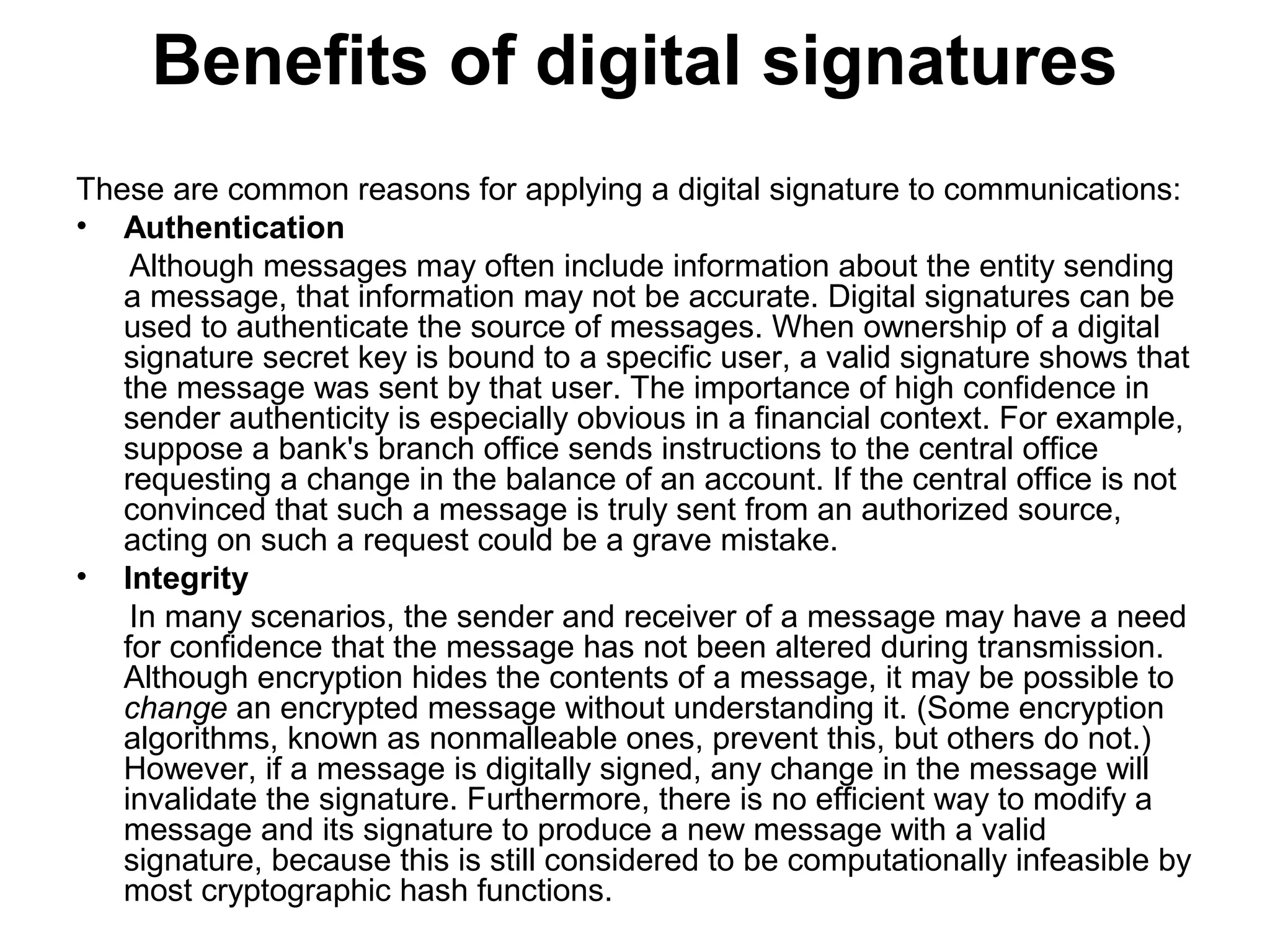
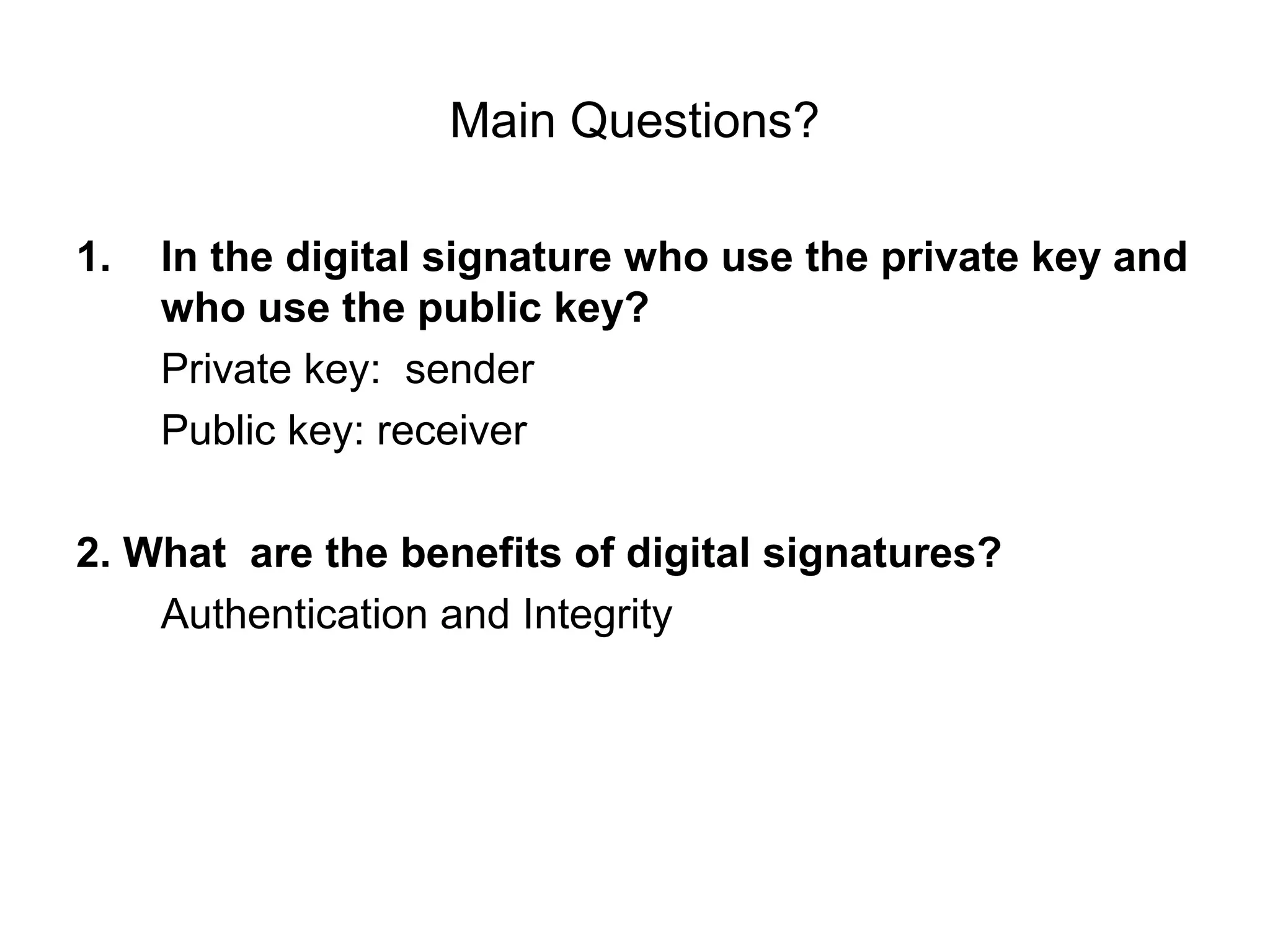
Digital signatures use public and private key cryptography to provide the security of a handwritten signature for digital documents. The sender uses their private key to encrypt a hash of the message, creating a digital signature. The receiver can then use the sender's public key to decrypt the signature and verify that it matches a hash of the received message, proving it came from the sender and was not altered. Digital signatures authenticate the sender and ensure integrity of the message. They prevent repudiation of signatures but reliance on private keys means signatures are suspect if a private key is compromised.





![How to Create a Twitter Cover Photo in PowerPoint [Tutorial]](https://cdn.slidesharecdn.com/ss_thumbnails/howtocreateatwittercoverphotoinpowerpointslideshare-160321102347-thumbnail.jpg?width=640&height=640&fit=bounds)


![Computer Networks 01[1 using all terms].pptx](https://cdn.slidesharecdn.com/ss_thumbnails/computernetworks011-251214040533-327dd9f8-thumbnail.jpg?width=640&height=640&fit=bounds)


