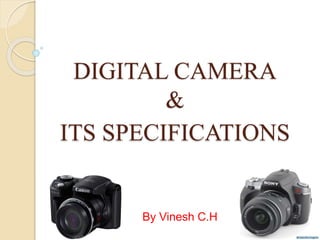
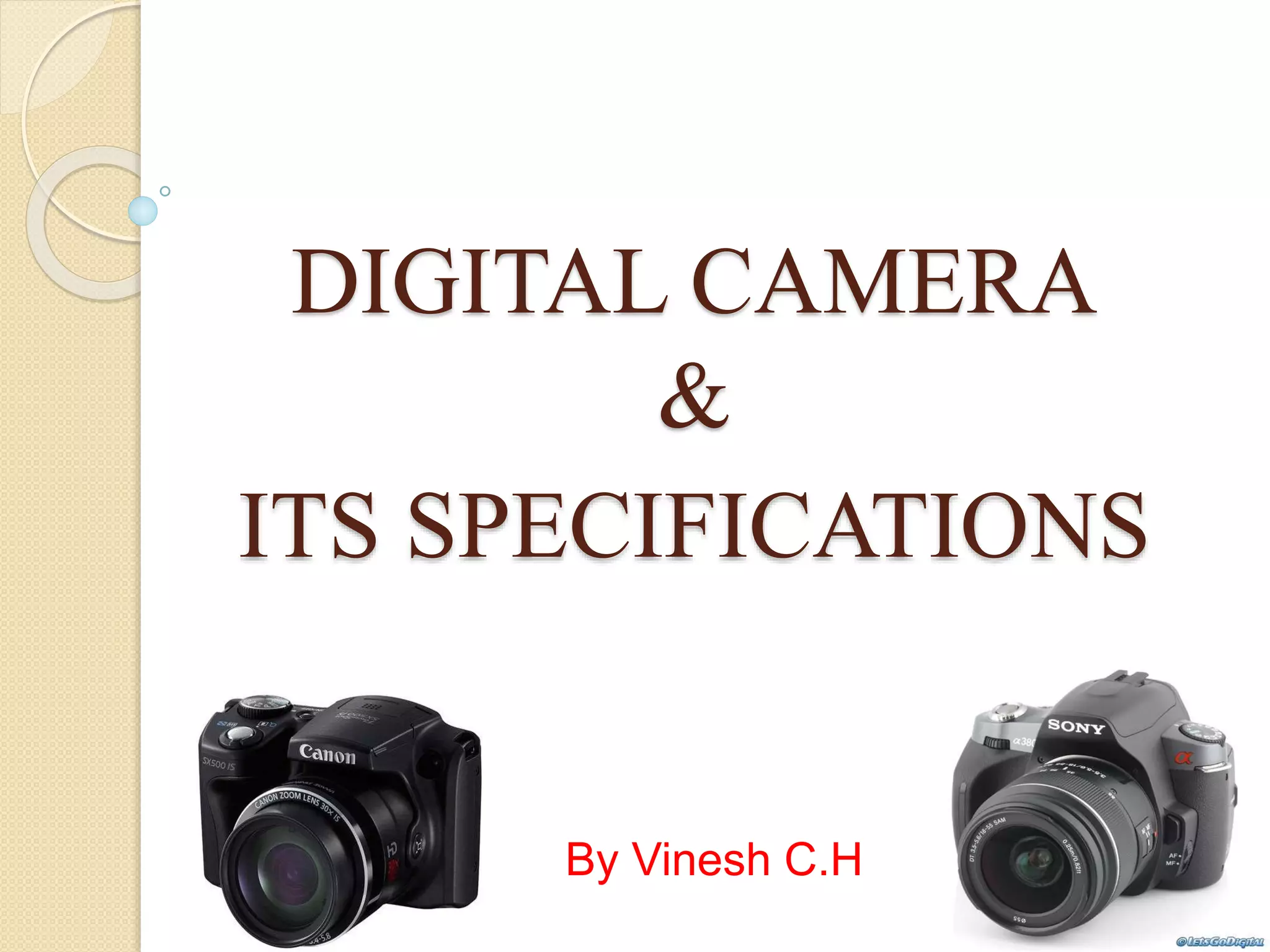
DIGITAL CAMERA
&
ITS SPECIFICATIONS
By Vinesh C.H
INTRO TO DIGITAL CAMERA
ď‚— A digital camera is a camera that
encodes images DIGITALLY and
stores them for later reproduction of
image.
ď‚— Steven Sasson who worked as an
engineer at Eastman Kodak invented
& built the first Digi cam in 1975.
ď‚— Today Nikon and Canon are the front
runners in Digi Cam manufacturing.
TYPES OF DIGI-CAMS
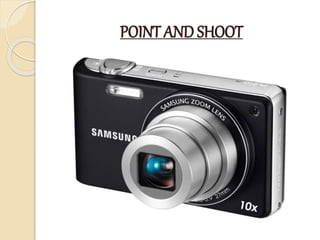
1. POINT AND SHOOT
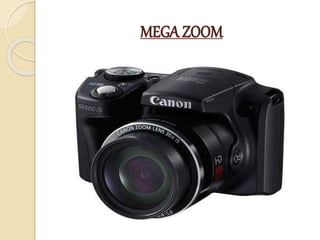
2. MEGA ZOOM
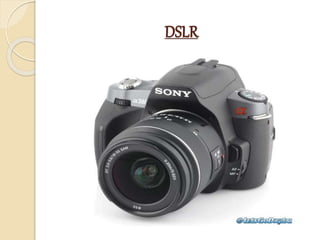
3. DSLR (DIGITAL SINGLE LENS
REFLEX)
POINT AND SHOOT
MEGA ZOOM
DSLR
SPECIFICATIONS TO WATCH FOR
1. SENSOR TYPE AND SIZE
2. IMAGE PROCESSOR
3. RESOLUTION
4. APERTURE OF THE LENS
5. ISO SENSITIVITY
6. SHUTTER SPEED
7. VIDEO CAPABALITIES
SENSOR TYPES
&
SIZE
TYPES OF SENSORS
1. CMOS
2. CCD (Charge coupled
device)
SENSOR SIZE
ď‚— Sensor size is the dimensions of the
array of photoreceptors that create the
pixels that become an image.
ď‚— Bigger sensors generally produce
better photo quality, but the bigger the
sensor the bigger the camera.
ď‚— Larger sensors are also more
expensive to make, so the cameras
are pricier.
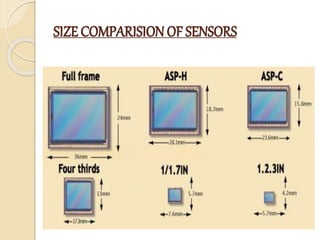
SIZE COMPARISION OF SENSORS
IMAGE PROCESSOR
IMAGE PROCESSOR
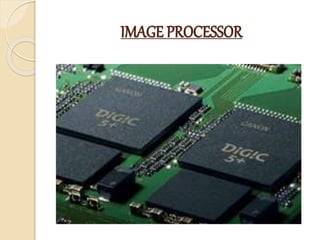
ď‚— An image processor,also called as
media processor,is a specialised
digital signal processor used for
image processing in digital
cameras,mobile phones etc.
ď‚— Noise reduction & Image
sharpening are done by the
processor.
IMAGE PROCESSOR
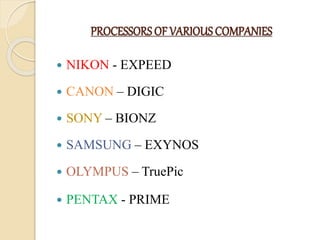
PROCESSORS OF VARIOUS COMPANIES
ď‚— NIKON - EXPEED
 CANON – DIGIC
 SONY – BIONZ
 SAMSUNG – EXYNOS
 OLYMPUS – TruePic
ď‚— PENTAX - PRIME
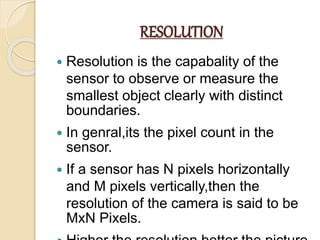
RESOLUTION
RESOLUTION
ď‚— Resolution is the capabality of the
sensor to observe or measure the
smallest object clearly with distinct
boundaries.
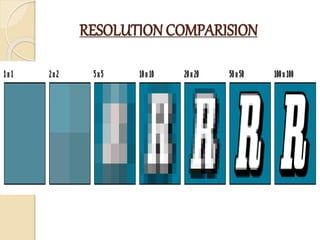
ď‚— In genral,its the pixel count in the
sensor.
ď‚— If a sensor has N pixels horizontally
and M pixels vertically,then the
resolution of the camera is said to be
MxN Pixels.
RESOLUTION COMPARISION
APERTURE
OF THE
LENS
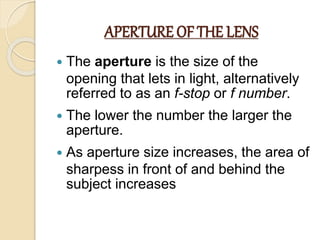
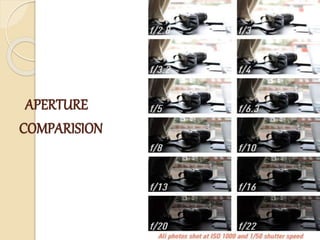
APERTURE OF THE LENS
ď‚— The aperture is the size of the
opening that lets in light, alternatively
referred to as an f-stop or f number.
ď‚— The lower the number the larger the
aperture.
ď‚— As aperture size increases, the area of
sharpess in front of and behind the
subject increases
APERTURE
COMPARISION
ISO SENSITIVITY
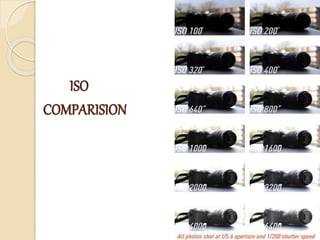
ISO SENSITIVITY
ď‚— A camera's sensitivity to light is specified as ISO
sensitivity.
ď‚— The higher the number, the better the camera's
ability to shoot in low light.
ď‚— Higher the ISO,more grains in the image.
ď‚— For instance, a camera rated up to ISO 6400 will
probably produce decent images up to ISO 800.
ď‚— Normal ISO range is from 200 to 1600 in most of
DSLR’s.
ISO
COMPARISION
SHUTTER SPEED
SHUTTER SPEED
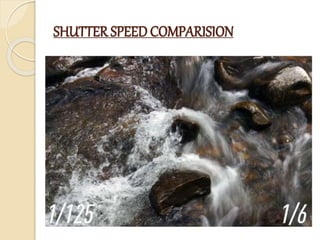
ď‚— Shutter speed controls how long the
camera spends collecting light i.e how
much light is taken in at once.
ď‚— It is measured in fractions of a second.
ď‚— More the shutter speed,less risk of blur.
SHUTTER SPEED COMPARISION
VIDEO CAPABALITIES
VIDEO CAPABALITIES
ď‚— The video capabality of a camera is
measured by the unit frames per
second(fps).
ď‚— Higher the fps,smoother the video.
ď‚— These days cameras come with
either 30 or 60fps.
VIDEO QUALITY
COMPARISION
VIDEO WITH 30 fps
VIDEO WITH 12 fps
OTHER
SPECIFICATIONS
OTHER SPECIFICATIONS
ď‚— LCD SCREEN SIZE,TYPE &
RESOLUTION
ď‚— IMAGE STABILIZATION
ď‚— AUTO FOCUS
ď‚— ZOOM
ď‚— DIFFERENT FILTERS / EFFECTS
ď‚— STORAGE
ď‚— BATTERY LIFE
ď‚— WIRELESS CONNECTIVITY
ď‚— WEIGHT AND SIZE
ď‚— WEATHER SEALED
THANK YOU

Digital cameras and its types and specifications.

  • 1.
  • 2.
    INTRO TO DIGITALCAMERA ď‚— A digital camera is a camera that encodes images DIGITALLY and stores them for later reproduction of image. ď‚— Steven Sasson who worked as an engineer at Eastman Kodak invented & built the first Digi cam in 1975. ď‚— Today Nikon and Canon are the front runners in Digi Cam manufacturing.
  • 3.
    TYPES OF DIGI-CAMS 1.POINT AND SHOOT 2. MEGA ZOOM 3. DSLR (DIGITAL SINGLE LENS REFLEX)
  • 4.
  • 5.
  • 6.
  • 7.
    SPECIFICATIONS TO WATCHFOR 1. SENSOR TYPE AND SIZE 2. IMAGE PROCESSOR 3. RESOLUTION 4. APERTURE OF THE LENS 5. ISO SENSITIVITY 6. SHUTTER SPEED 7. VIDEO CAPABALITIES
  • 8.
  • 9.
    TYPES OF SENSORS 1.CMOS 2. CCD (Charge coupled device)
  • 10.
    SENSOR SIZE ď‚— Sensorsize is the dimensions of the array of photoreceptors that create the pixels that become an image. ď‚— Bigger sensors generally produce better photo quality, but the bigger the sensor the bigger the camera. ď‚— Larger sensors are also more expensive to make, so the cameras are pricier.
  • 11.
  • 12.
  • 13.
    IMAGE PROCESSOR ď‚— Animage processor,also called as media processor,is a specialised digital signal processor used for image processing in digital cameras,mobile phones etc. ď‚— Noise reduction & Image sharpening are done by the processor.
  • 14.
  • 15.
    PROCESSORS OF VARIOUSCOMPANIES  NIKON - EXPEED  CANON – DIGIC  SONY – BIONZ  SAMSUNG – EXYNOS  OLYMPUS – TruePic  PENTAX - PRIME
  • 16.
  • 17.
    RESOLUTION ď‚— Resolution isthe capabality of the sensor to observe or measure the smallest object clearly with distinct boundaries. ď‚— In genral,its the pixel count in the sensor. ď‚— If a sensor has N pixels horizontally and M pixels vertically,then the resolution of the camera is said to be MxN Pixels.
  • 18.
  • 19.
  • 20.
    APERTURE OF THELENS ď‚— The aperture is the size of the opening that lets in light, alternatively referred to as an f-stop or f number. ď‚— The lower the number the larger the aperture. ď‚— As aperture size increases, the area of sharpess in front of and behind the subject increases
  • 21.
  • 22.
  • 23.
    ISO SENSITIVITY  Acamera's sensitivity to light is specified as ISO sensitivity.  The higher the number, the better the camera's ability to shoot in low light.  Higher the ISO,more grains in the image.  For instance, a camera rated up to ISO 6400 will probably produce decent images up to ISO 800.  Normal ISO range is from 200 to 1600 in most of DSLR’s.
  • 24.
  • 25.
  • 26.
    SHUTTER SPEED ď‚— Shutterspeed controls how long the camera spends collecting light i.e how much light is taken in at once. ď‚— It is measured in fractions of a second. ď‚— More the shutter speed,less risk of blur.
  • 27.
  • 28.
  • 29.
    VIDEO CAPABALITIES ď‚— Thevideo capabality of a camera is measured by the unit frames per second(fps). ď‚— Higher the fps,smoother the video. ď‚— These days cameras come with either 30 or 60fps.
  • 30.
  • 31.
  • 32.
  • 33.
  • 34.
    OTHER SPECIFICATIONS ď‚— LCDSCREEN SIZE,TYPE & RESOLUTION ď‚— IMAGE STABILIZATION ď‚— AUTO FOCUS ď‚— ZOOM ď‚— DIFFERENT FILTERS / EFFECTS ď‚— STORAGE ď‚— BATTERY LIFE ď‚— WIRELESS CONNECTIVITY ď‚— WEIGHT AND SIZE ď‚— WEATHER SEALED
  • 35.