Digestive System
Nutrients
•   Section 48-1 : Review on own
•   Carbohydrates
•   Proteins
•   Fats         •Elements found in the compound
•   Lipids       •Function of the compound
•   Vitamins     •Examples of the compound
•   Minerals     •Monomer of the compound
•   Water
Overview of Digestive System
Please read but do not take notes on this slide.
•   The digestive system consists of the alimentary canal as well as
    the organs and glands that contribute digestive enzymes and
    other products to specific portions of the canal.
•   In processing the food you eat, your digestive system uses
    mechanical and chemical methods.
•   Three major types of macromolecules must be broken down
    during digestion—carbohydrates, proteins, and lipids.
     – When these macromolecules are broken down sufficiently—
        into individual glucose monomers, amino acids, and fatty
        acids, respectively—those components (and water) must be
        absorbed into the body at the small intestine.
•   Wastes proceed through the large intestine, where the feces
    form and more water is absorbed.
Types of Digestion
• Physical Digestion
• Chemical Digestion
• Both
Physical Digestion
• Mechanical Digestion
• Macromolecule is PHYSICALLY broken
  down into SMALLER pieces in order to
  increase SURFACE area to maximize
  ENZYME action.
• Examples:
  – Chewing
  – Churning
Chemical Digestion
• Digestive enzymes are involved by
  CHEMICALLY breaking the bonds on
  the macromolecules until MONOMERS
  are formed.
• Examples:
  – Salivary amylase breaks down starch
Route of Digestion
•   Mouth
•   Pharynx
•   Esophagus
•   Stomach
•   Small intestine
•   Large intestine
•   Anus
As food directly passes through the
gastrointestinal tract
or
alimentary canal
specific secretions that aid in digestion
are released along the way.
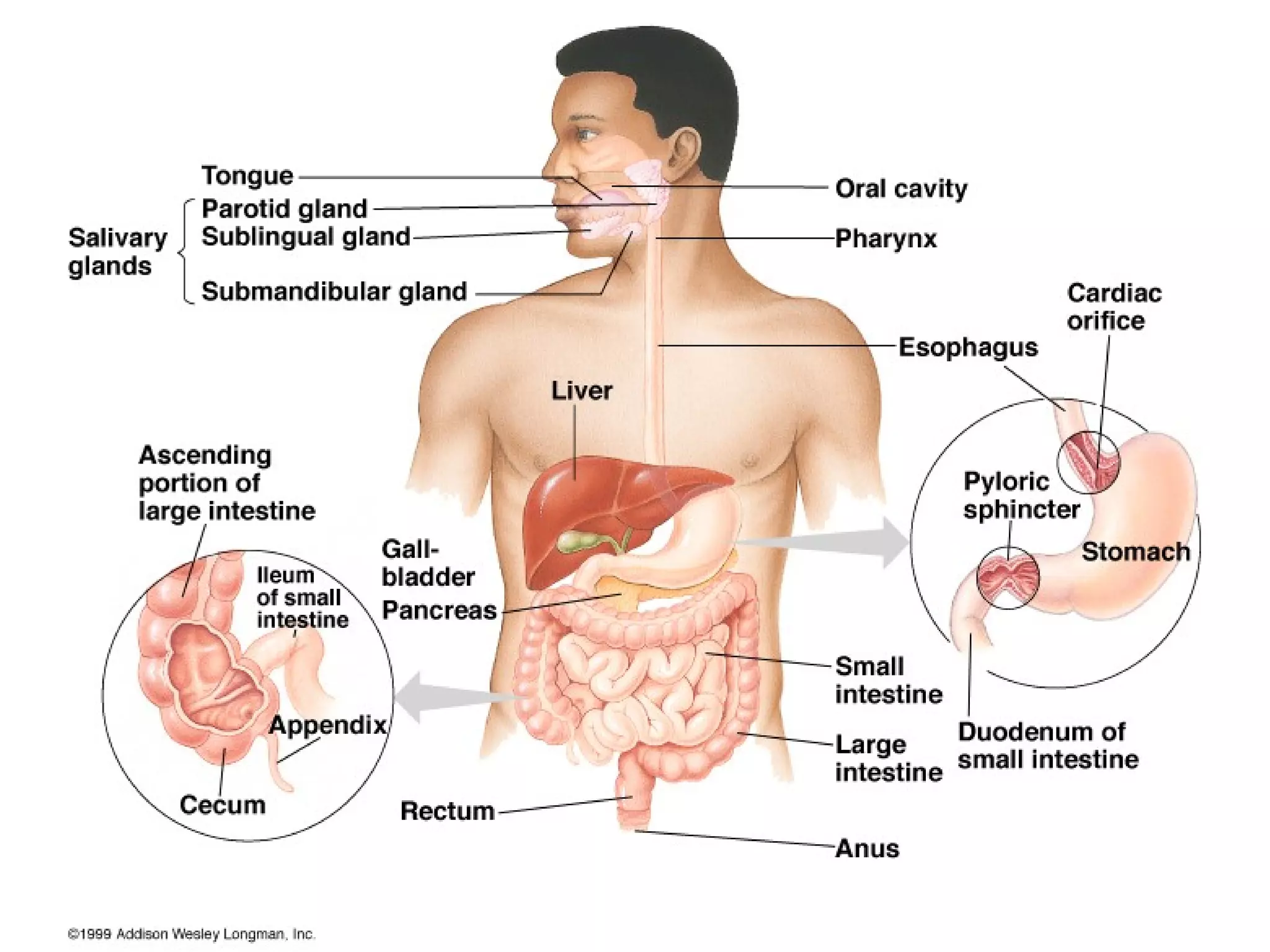
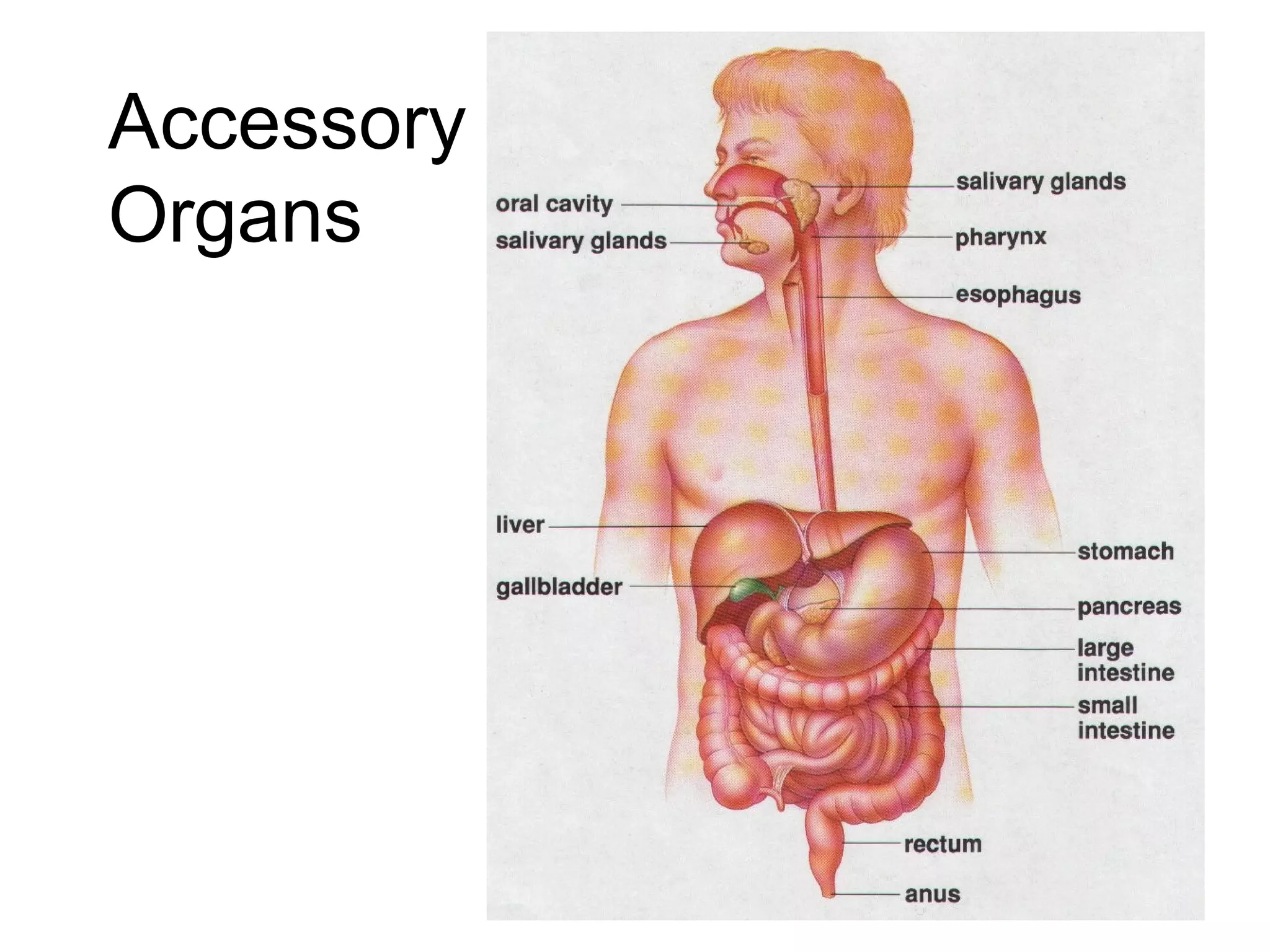
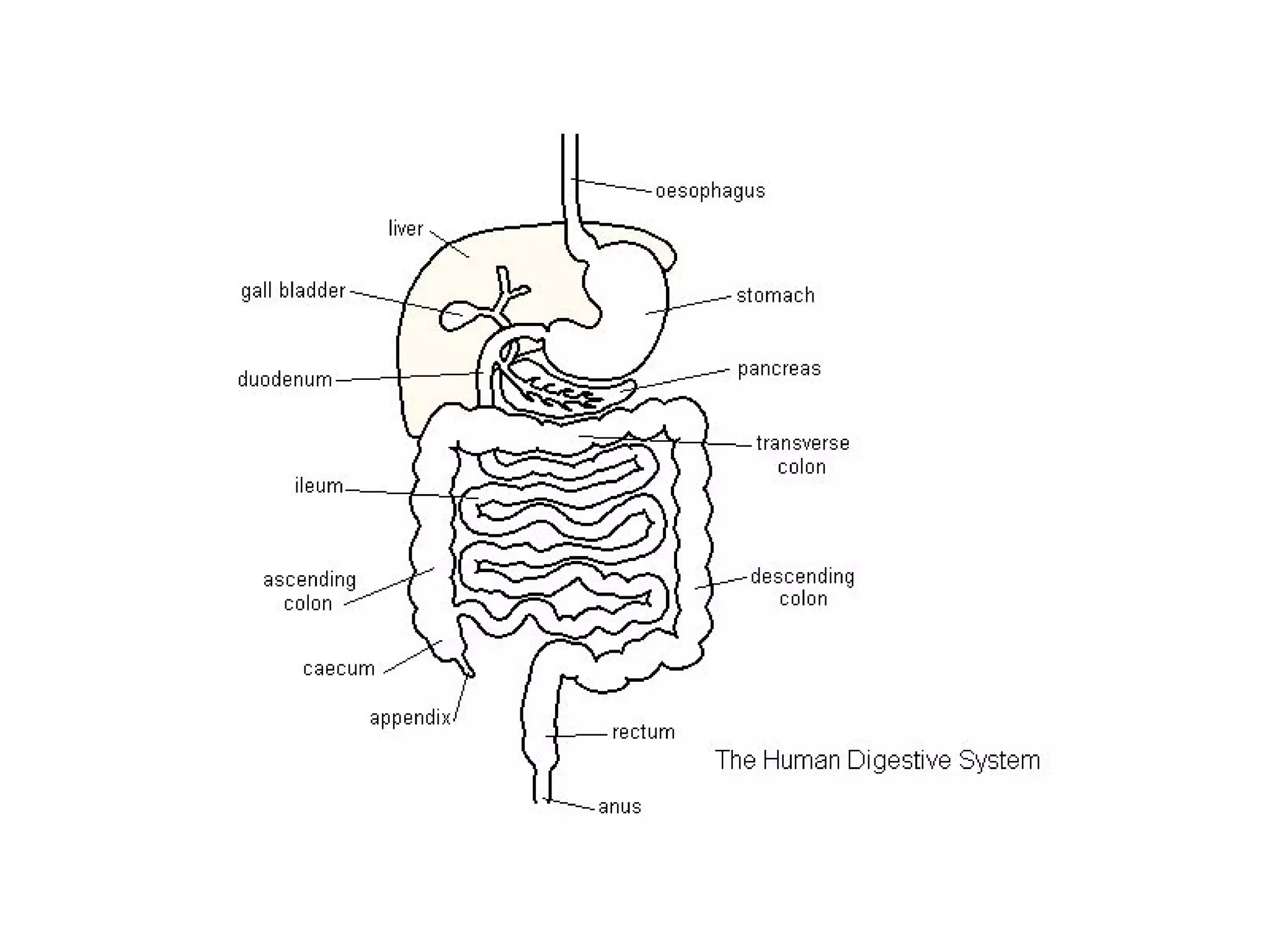
Accessory Organs
• Aids in digestion
• BUT…
• Food does NOT pass into these organs.
• Instead these organs SECRETE fluids that will
  enter the alimentary canal through DUCTS.
• Examples:
    – Liver          – Pancreas
    – Gallbladder    – Salivary Glands
Accessory
Organs
Digestive Secretions
•   Helps with breaking down of foods
•   All are hydrolysis reactions
•   Some are enzymatic reactions
•   Others are NOT.
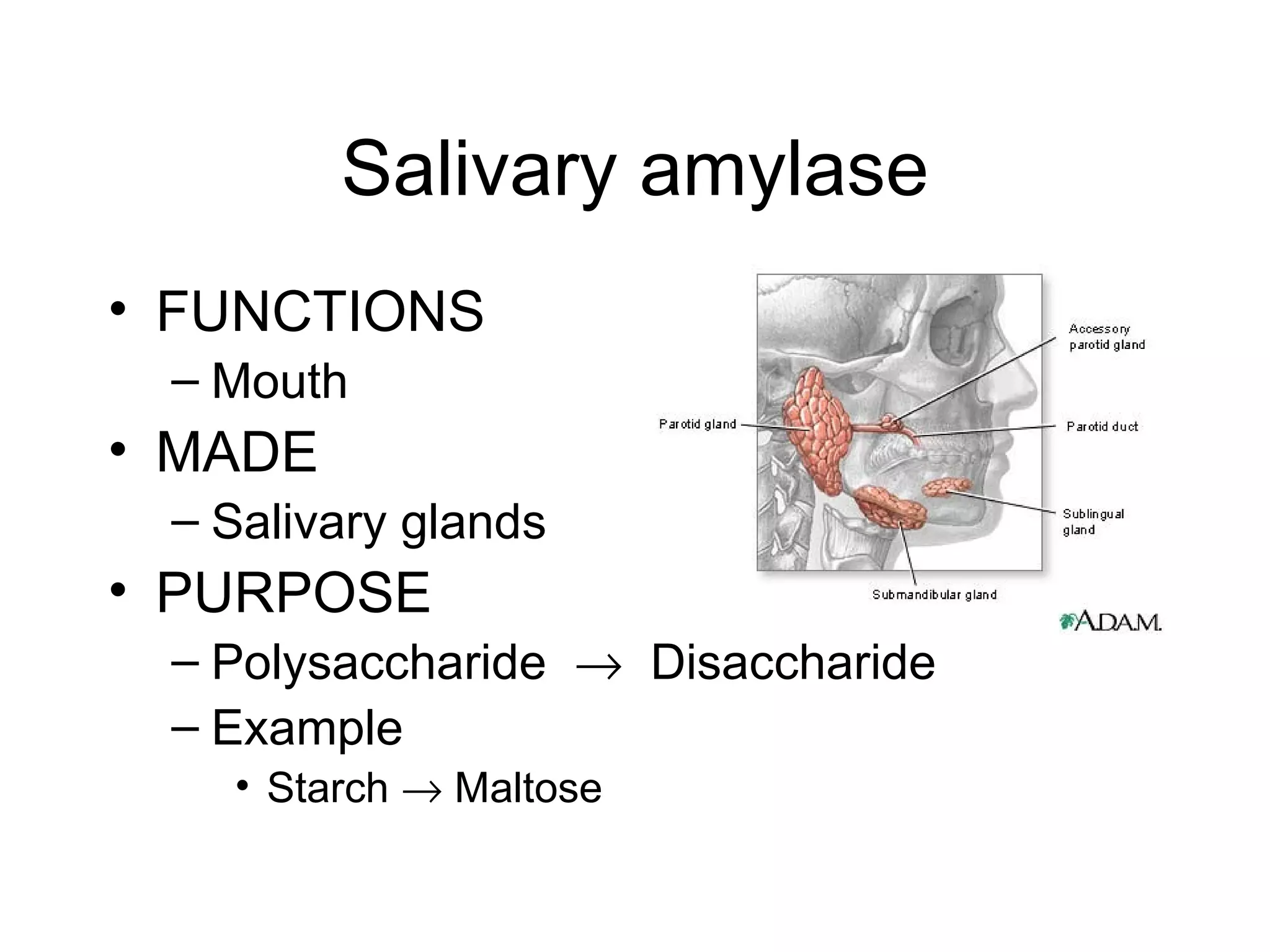
Salivary amylase
• FUNCTIONS
 – Mouth
• MADE
 – Salivary glands
• PURPOSE
 – Polysaccharide → Disaccharide
 – Example
   • Starch → Maltose
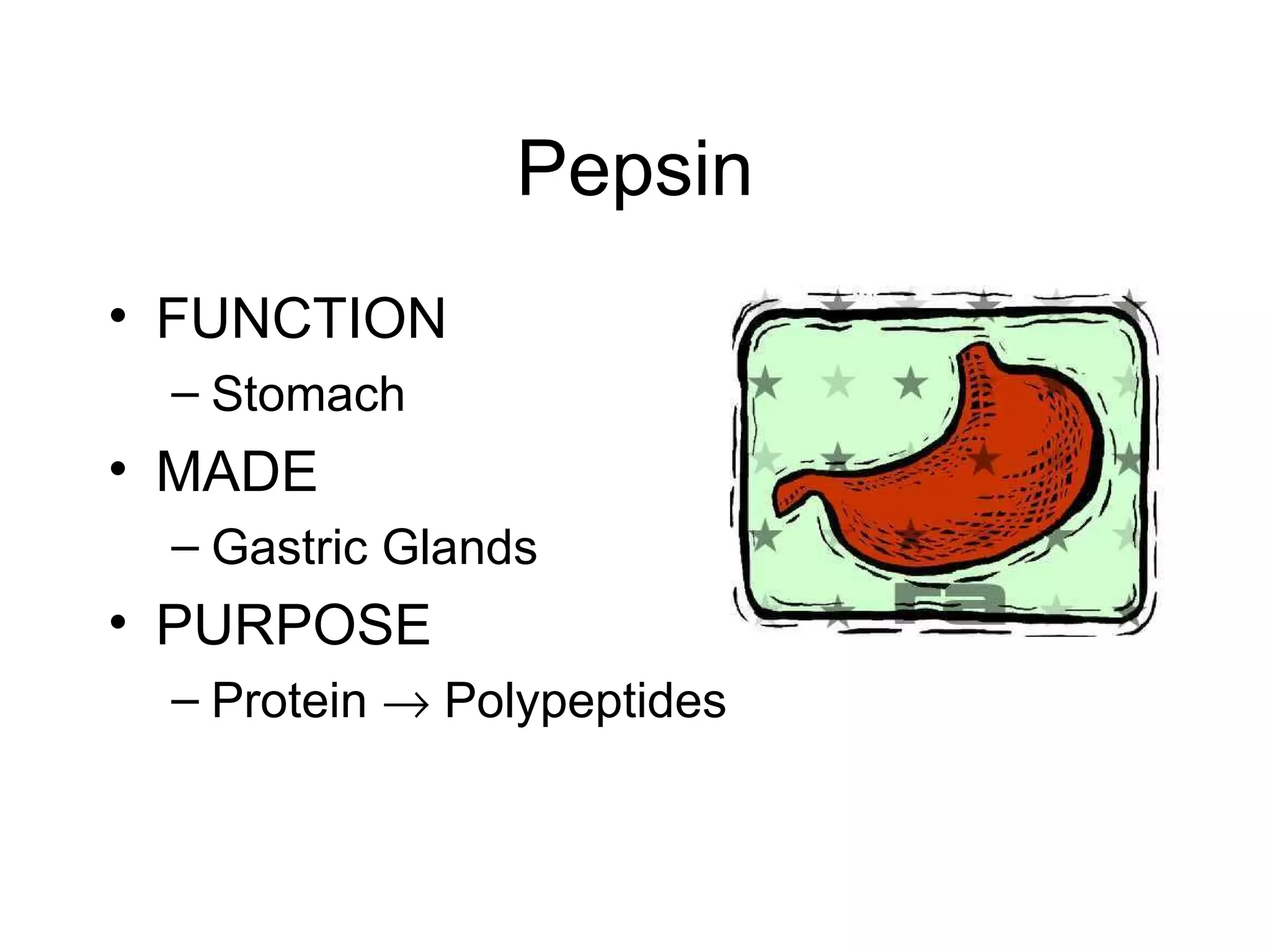
Pepsin
• FUNCTION
 – Stomach
• MADE
 – Gastric Glands
• PURPOSE
 – Protein → Polypeptides
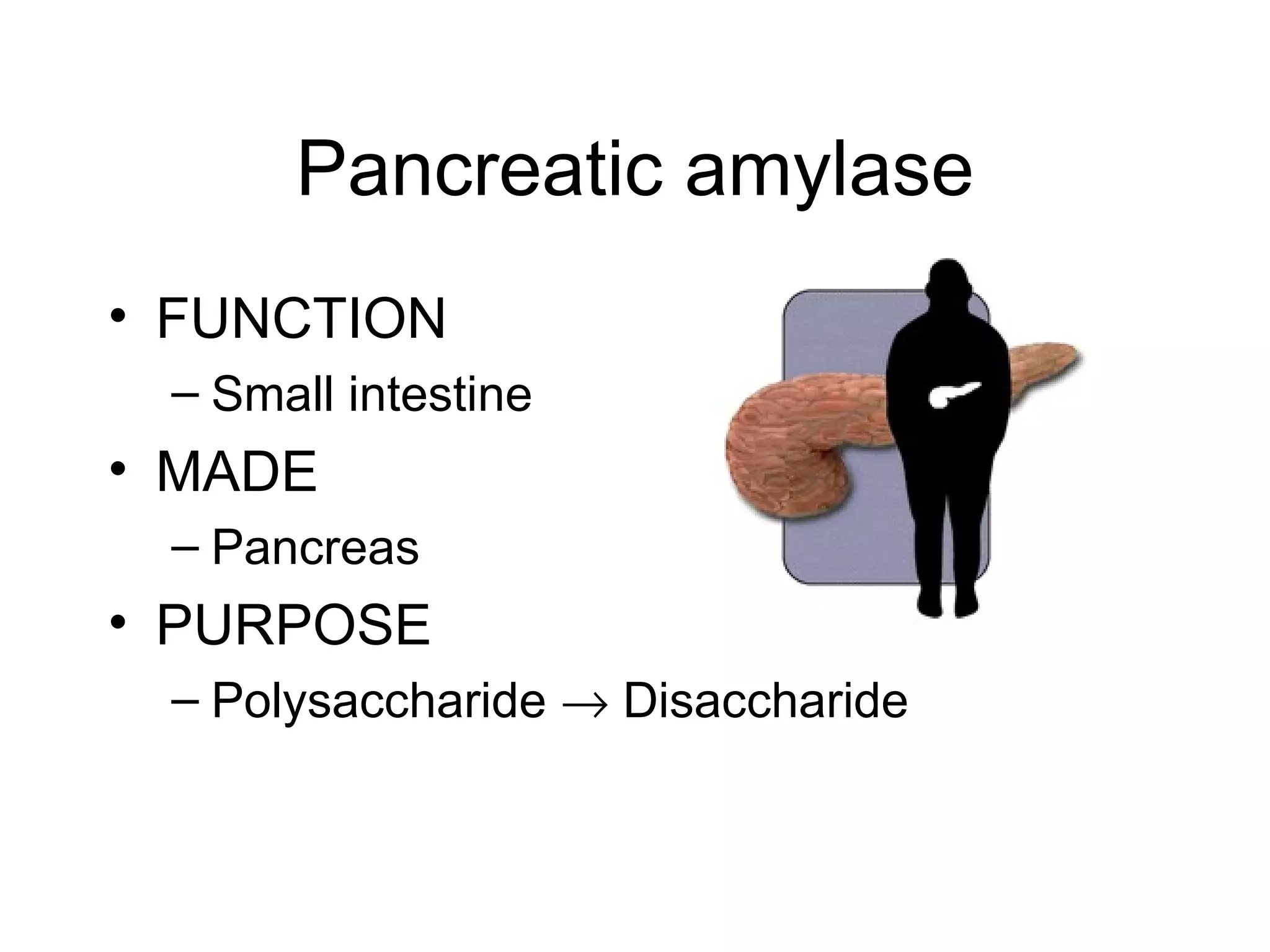
Pancreatic amylase
• FUNCTION
 – Small intestine
• MADE
 – Pancreas
• PURPOSE
 – Polysaccharide → Disaccharide
Pancreatic lipase
• FUNCTION
 – Small Intestine
• MADE
 – Pancreas
• PURPOSE
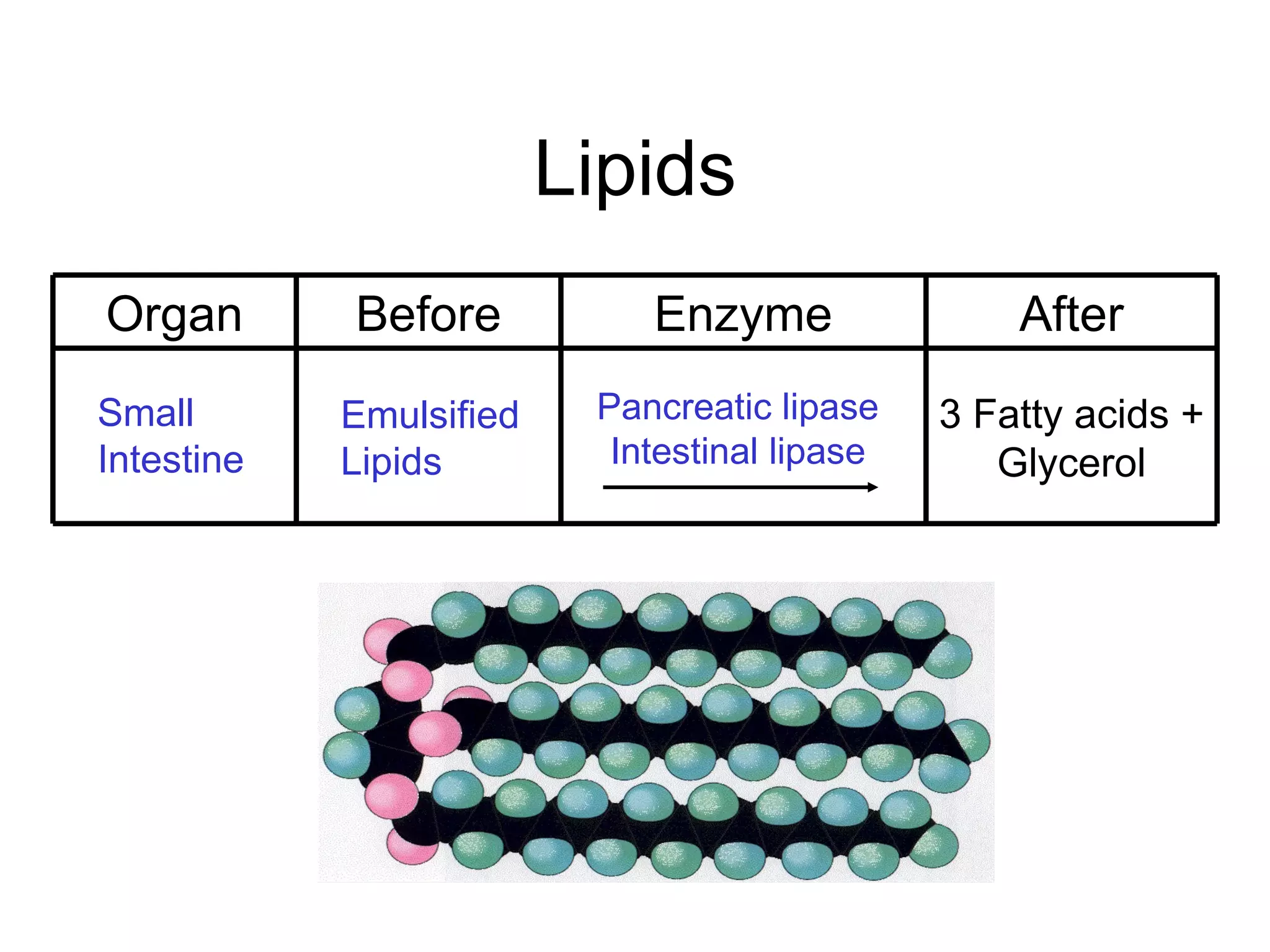
 – Lipids → 3 Fatty Acids + Glycerol
Trypsin/Chymotrypsin
• FUNCTION
 – Small intestine
• MADE
 – Pancreas
• PURPOSE
 – Polypeptides → Peptides
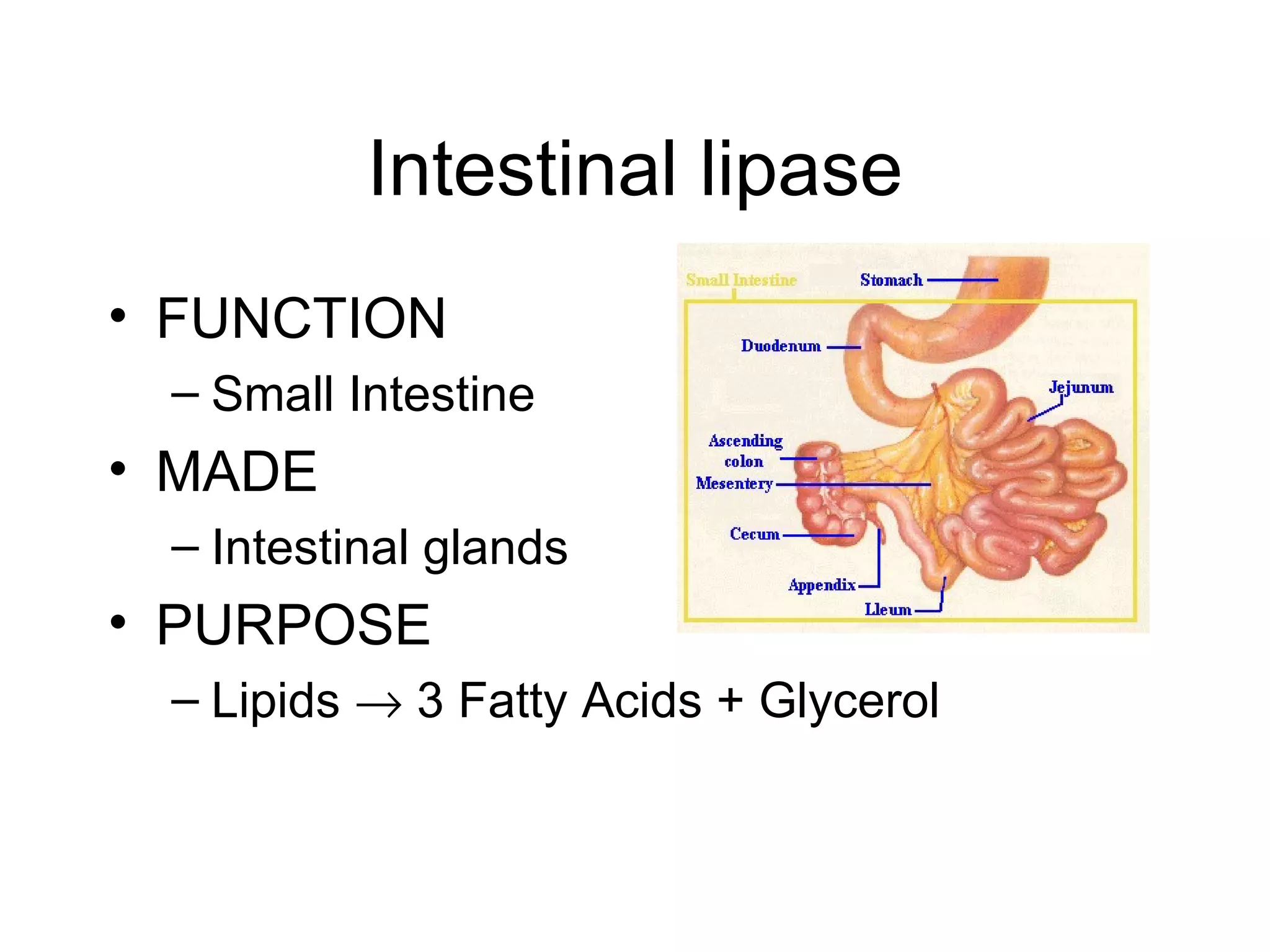
Intestinal lipase
• FUNCTION
 – Small Intestine
• MADE
 – Intestinal glands
• PURPOSE
 – Lipids → 3 Fatty Acids + Glycerol
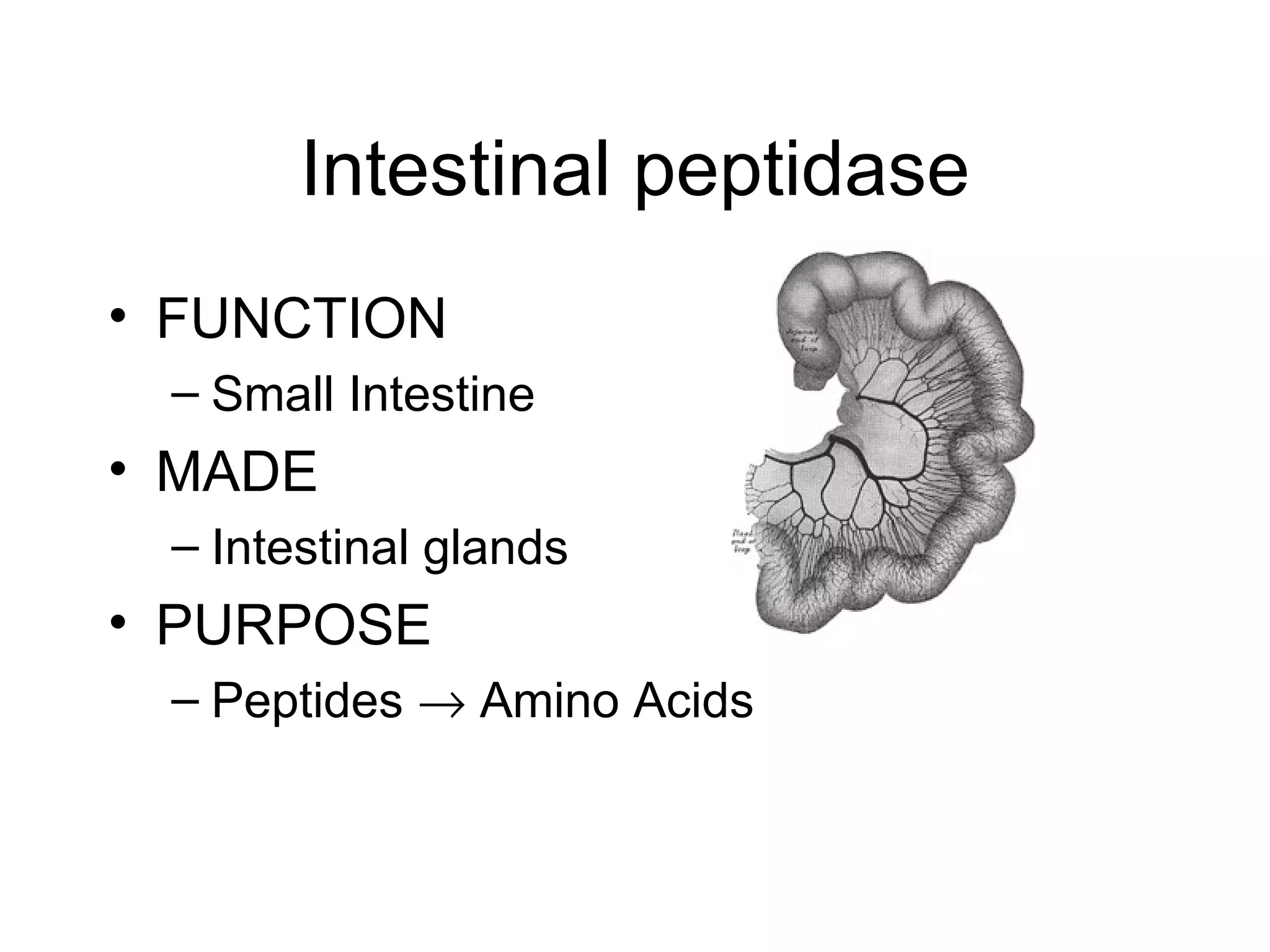
Intestinal peptidase
• FUNCTION
 – Small Intestine
• MADE
 – Intestinal glands
• PURPOSE
 – Peptides → Amino Acids
Maltase/Sucrase/Lactase
• FUNCTION
 – Small Intestine
• MADE
 – Intestinal glands
• PURPOSE
 – Disaccharides → Monosaccharides
Additional Secretions for
       Digestion
Saliva
• FUNCTION
 – Mouth
• MADE
 – Salivary Glands
• PURPOSE
 – Begins digestion of food
Mucus
• FUNCTION               • FUNCTION
  – Mouth                  – Stomach
• MADE                   • MADE
  – Salivary glands        – Gastric pits
• PURPOSE                • PURPOSE
  – Lubricates food        – Protects lining from
                             HCl
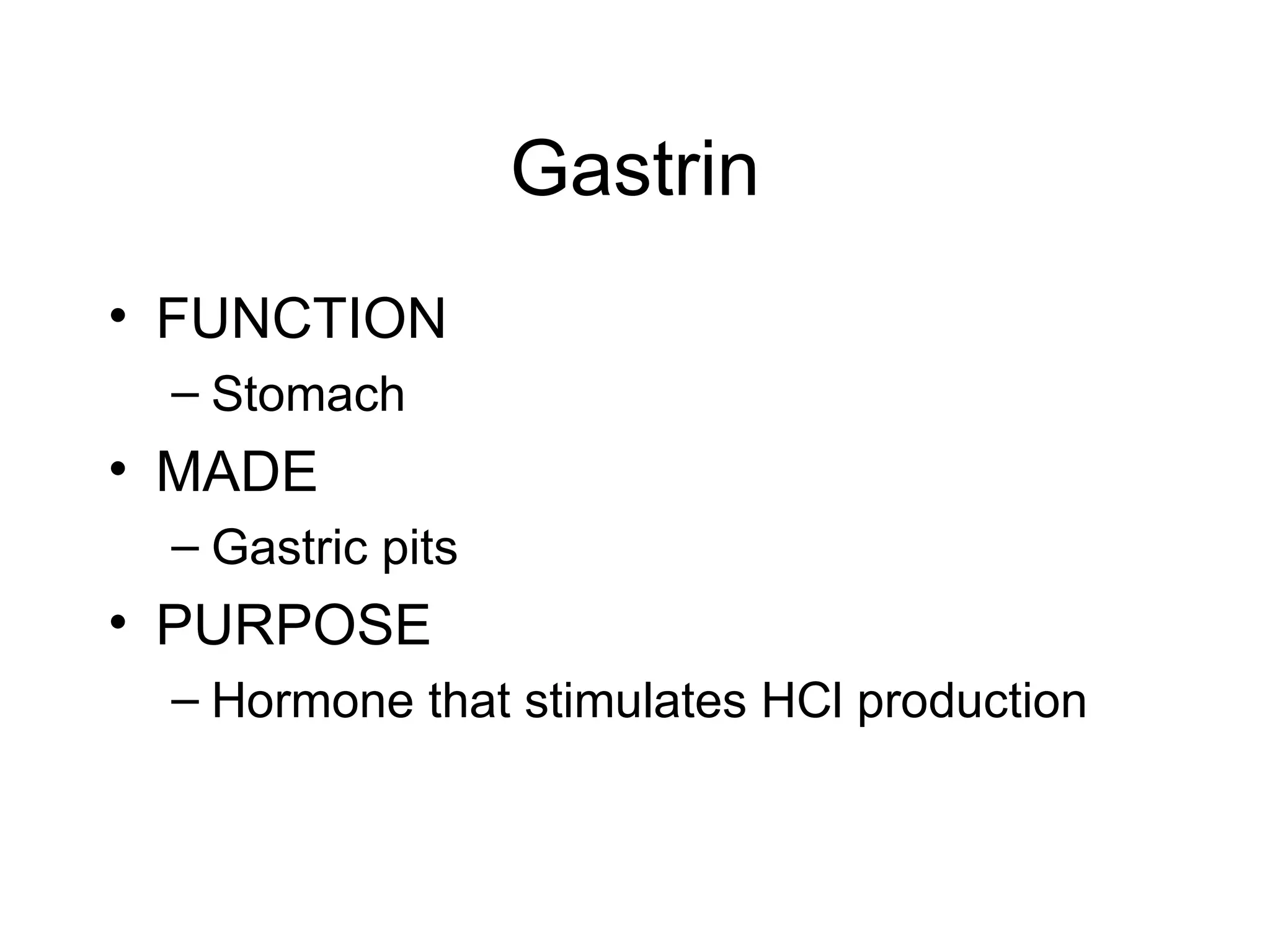
Gastrin
• FUNCTION
 – Stomach
• MADE
 – Gastric pits
• PURPOSE
 – Hormone that stimulates HCl production
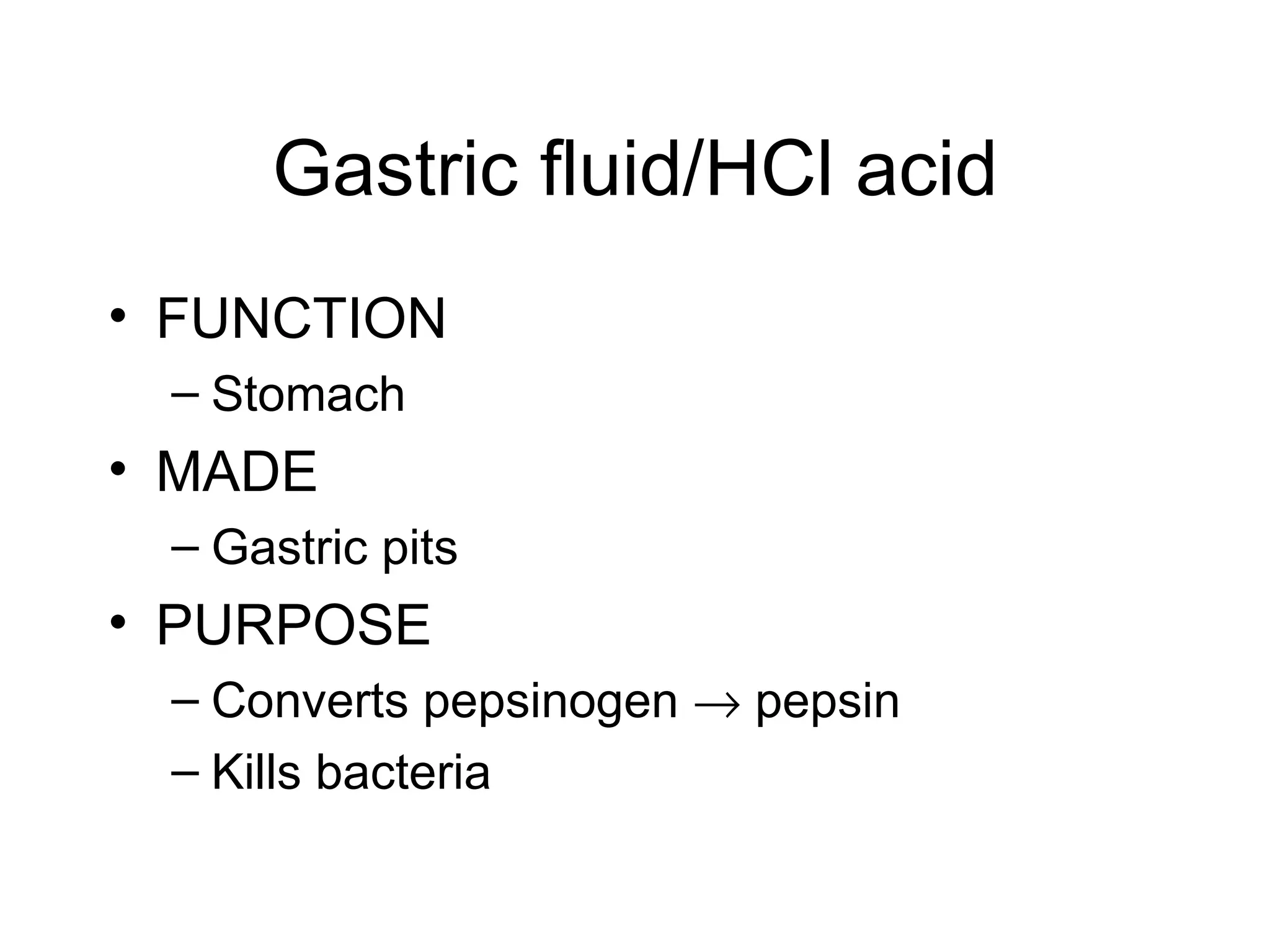
Gastric fluid/HCl acid
• FUNCTION
 – Stomach
• MADE
 – Gastric pits
• PURPOSE
 – Converts pepsinogen → pepsin
 – Kills bacteria
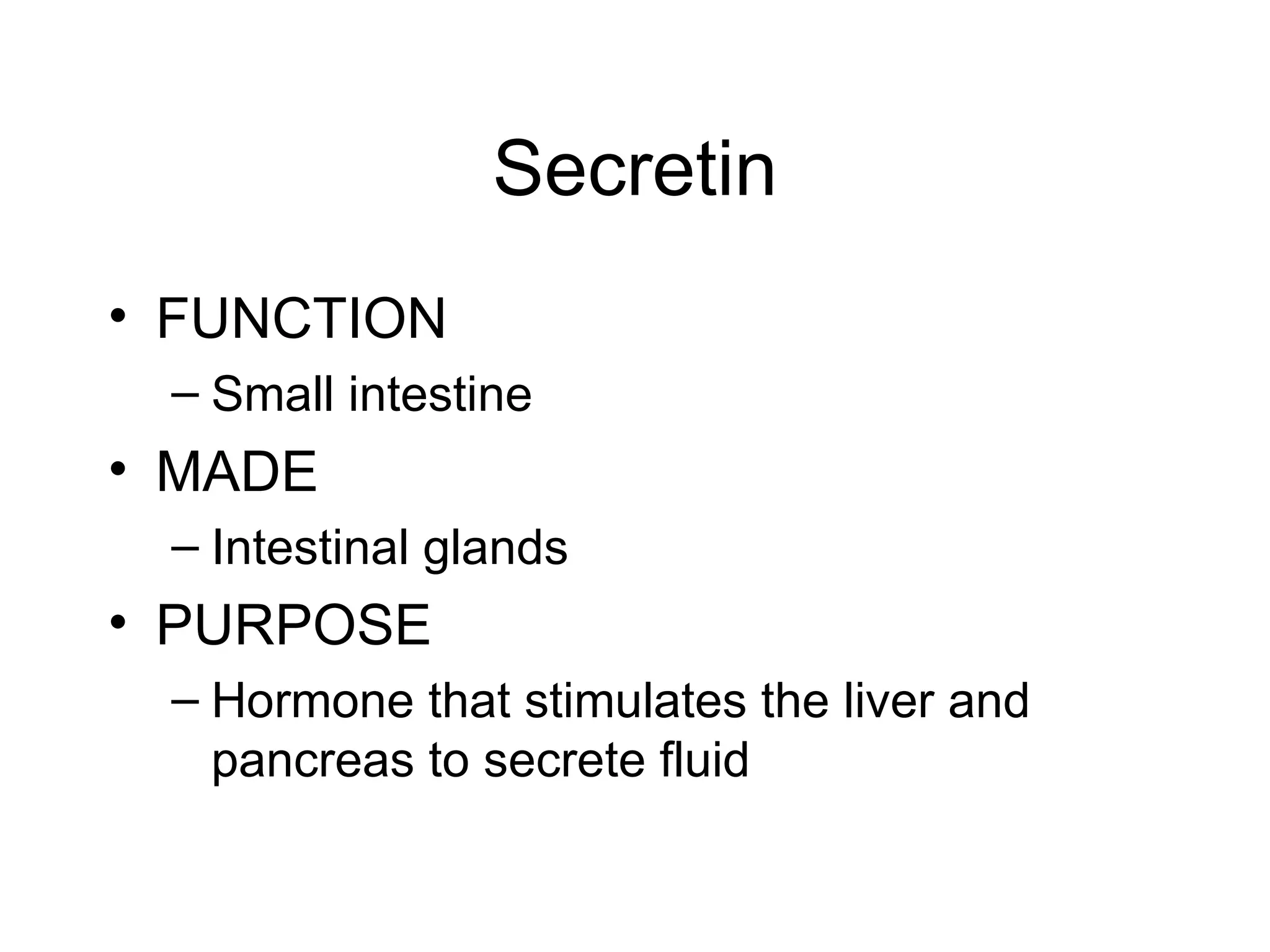
Secretin
• FUNCTION
 – Small intestine
• MADE
 – Intestinal glands
• PURPOSE
 – Hormone that stimulates the liver and
   pancreas to secrete fluid
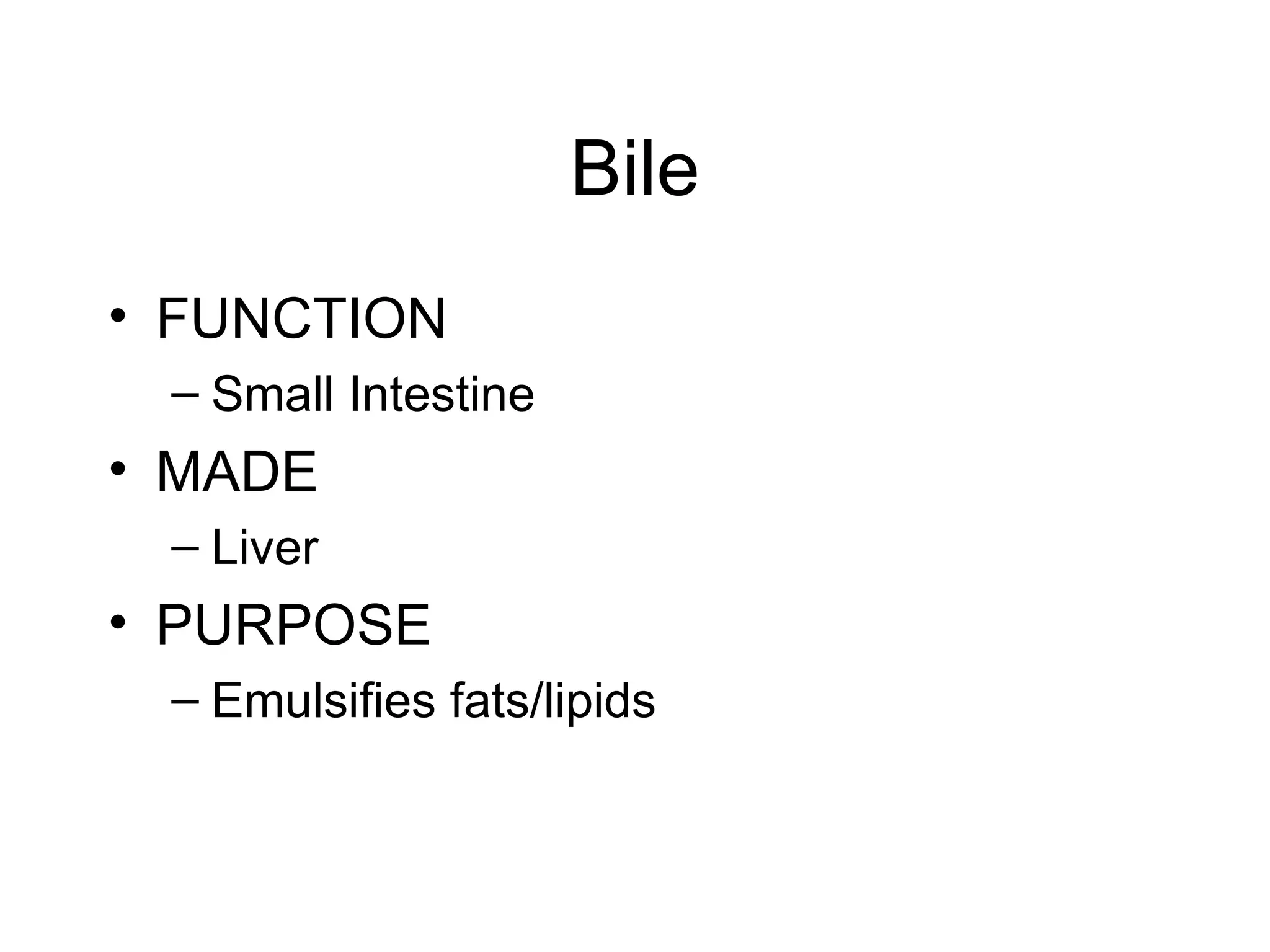
Bile
• FUNCTION
 – Small Intestine
• MADE
 – Liver
• PURPOSE
 – Emulsifies fats/lipids
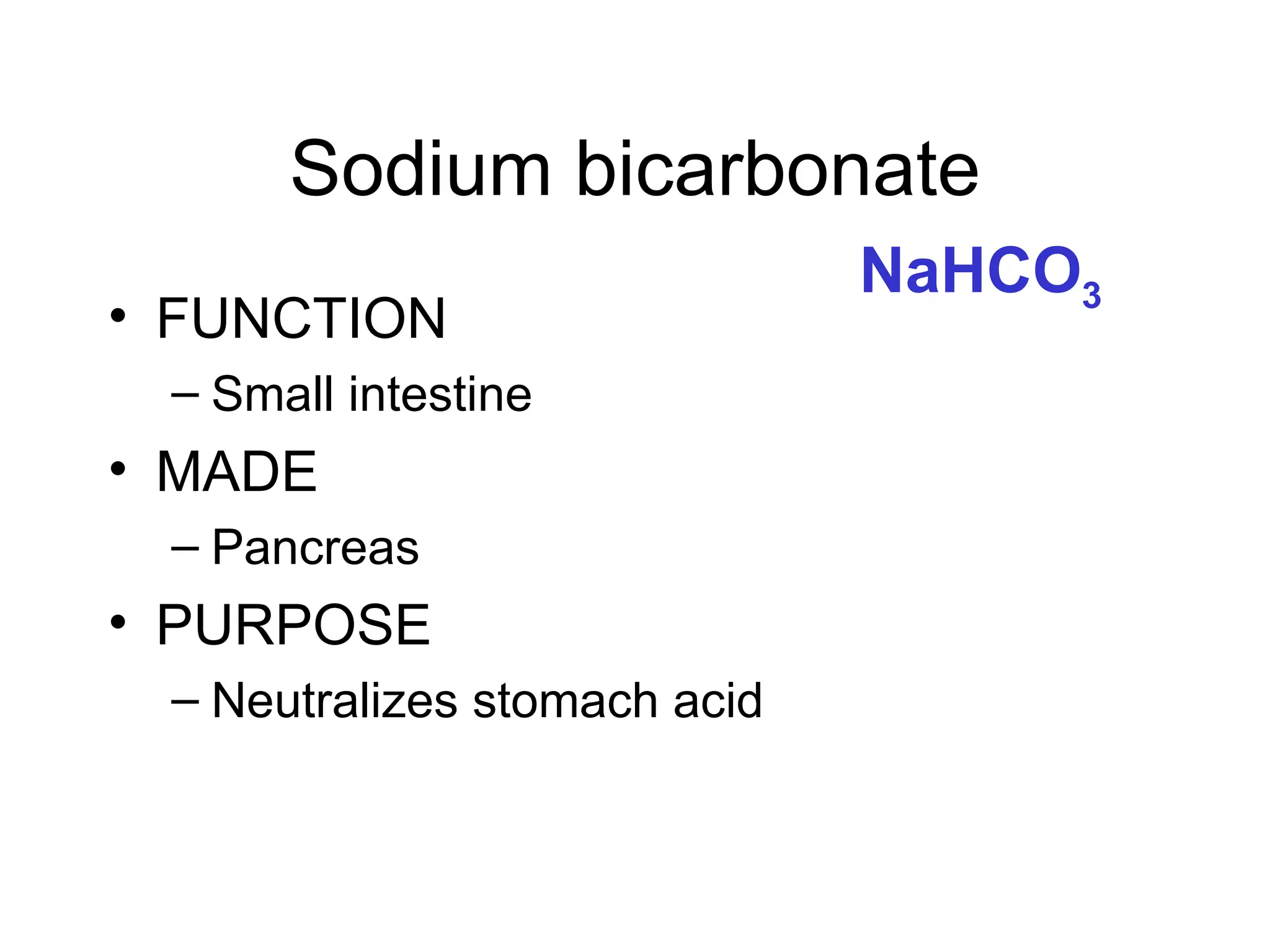
Sodium bicarbonate
                              NaHCO3
• FUNCTION
 – Small intestine
• MADE
 – Pancreas
• PURPOSE
 – Neutralizes stomach acid
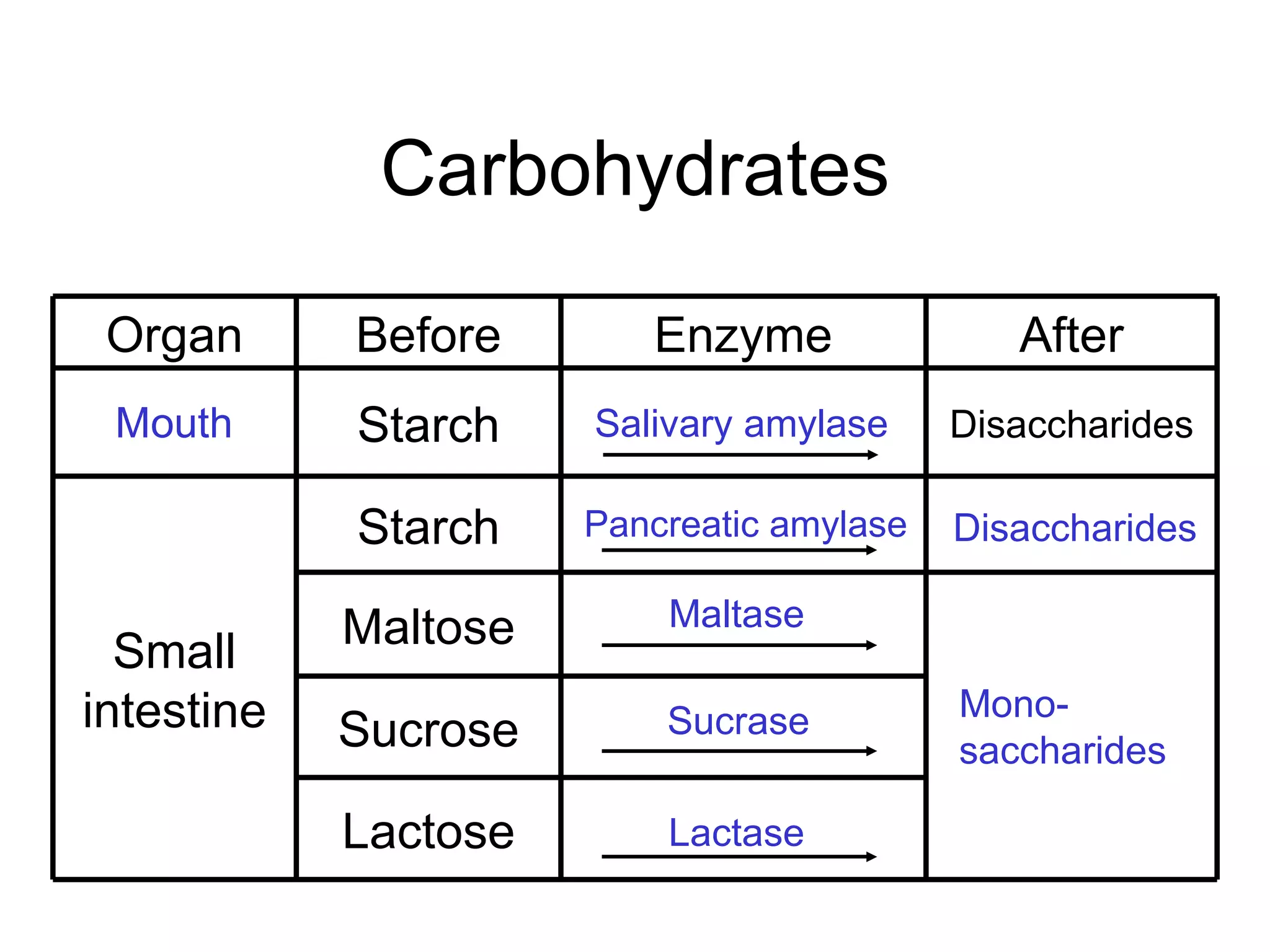
Carbohydrates

 Organ      Before       Enzyme               After
 Mouth      Starch    Salivary amylase     Disaccharides

            Starch    Pancreatic amylase   Disaccharides

            Maltose       Maltase
  Small
intestine                 Sucrase          Mono-
            Sucrose                        saccharides

            Lactose       Lactase
Digestion of Carbohydrates

 Click on the link above and view
  the animation associated with
    Digestion of Carbohydrates
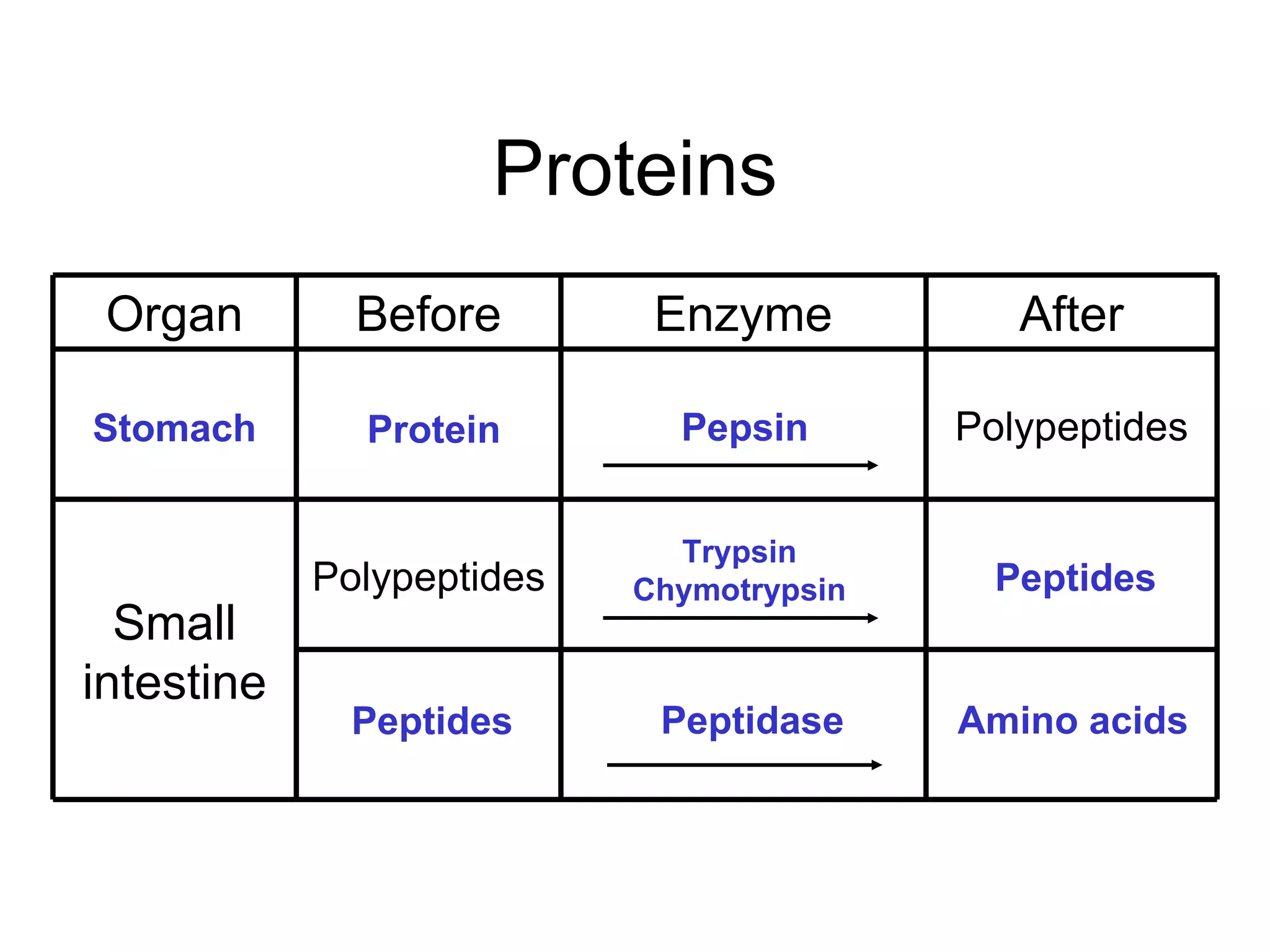
Proteins
 Organ        Before        Enzyme           After

Stomach       Protein        Pepsin       Polypeptides


                             Trypsin
            Polypeptides   Chymotrypsin     Peptides
  Small
intestine
              Peptides      Peptidase     Amino acids
Digestion of Proteins

Click on the link above and view
 the animation associated with
      Digestion of Proteins
Lipids
Organ       Before           Enzyme                After
Small       Emulsified    Pancreatic lipase    3 Fatty acids +
Intestine   Lipids         Intestinal lipase      Glycerol
Digestion of Lipids

Click on the link above and view
 the animation associated with
       Digestion of Lipids
Review the
       Structures
         of the
    Digestive System
Click on this phrase for Review Information

Digestive system ppt moodle

  • 1.
  • 2.
    Nutrients • Section 48-1 : Review on own • Carbohydrates • Proteins • Fats •Elements found in the compound • Lipids •Function of the compound • Vitamins •Examples of the compound • Minerals •Monomer of the compound • Water
  • 3.
    Overview of DigestiveSystem Please read but do not take notes on this slide. • The digestive system consists of the alimentary canal as well as the organs and glands that contribute digestive enzymes and other products to specific portions of the canal. • In processing the food you eat, your digestive system uses mechanical and chemical methods. • Three major types of macromolecules must be broken down during digestion—carbohydrates, proteins, and lipids. – When these macromolecules are broken down sufficiently— into individual glucose monomers, amino acids, and fatty acids, respectively—those components (and water) must be absorbed into the body at the small intestine. • Wastes proceed through the large intestine, where the feces form and more water is absorbed.
  • 4.
    Types of Digestion •Physical Digestion • Chemical Digestion • Both
  • 5.
    Physical Digestion • MechanicalDigestion • Macromolecule is PHYSICALLY broken down into SMALLER pieces in order to increase SURFACE area to maximize ENZYME action. • Examples: – Chewing – Churning
  • 6.
    Chemical Digestion • Digestiveenzymes are involved by CHEMICALLY breaking the bonds on the macromolecules until MONOMERS are formed. • Examples: – Salivary amylase breaks down starch
  • 8.
    Route of Digestion • Mouth • Pharynx • Esophagus • Stomach • Small intestine • Large intestine • Anus
  • 9.
    As food directlypasses through the gastrointestinal tract or alimentary canal specific secretions that aid in digestion are released along the way.
  • 11.
    Accessory Organs • Aidsin digestion • BUT… • Food does NOT pass into these organs. • Instead these organs SECRETE fluids that will enter the alimentary canal through DUCTS. • Examples: – Liver – Pancreas – Gallbladder – Salivary Glands
  • 12.
  • 14.
    Digestive Secretions • Helps with breaking down of foods • All are hydrolysis reactions • Some are enzymatic reactions • Others are NOT.
  • 15.
    Salivary amylase • FUNCTIONS – Mouth • MADE – Salivary glands • PURPOSE – Polysaccharide → Disaccharide – Example • Starch → Maltose
  • 16.
    Pepsin • FUNCTION –Stomach • MADE – Gastric Glands • PURPOSE – Protein → Polypeptides
  • 17.
    Pancreatic amylase • FUNCTION – Small intestine • MADE – Pancreas • PURPOSE – Polysaccharide → Disaccharide
  • 18.
    Pancreatic lipase • FUNCTION – Small Intestine • MADE – Pancreas • PURPOSE – Lipids → 3 Fatty Acids + Glycerol
  • 19.
    Trypsin/Chymotrypsin • FUNCTION –Small intestine • MADE – Pancreas • PURPOSE – Polypeptides → Peptides
  • 20.
    Intestinal lipase • FUNCTION – Small Intestine • MADE – Intestinal glands • PURPOSE – Lipids → 3 Fatty Acids + Glycerol
  • 21.
    Intestinal peptidase • FUNCTION – Small Intestine • MADE – Intestinal glands • PURPOSE – Peptides → Amino Acids
  • 22.
    Maltase/Sucrase/Lactase • FUNCTION –Small Intestine • MADE – Intestinal glands • PURPOSE – Disaccharides → Monosaccharides
  • 23.
  • 24.
    Saliva • FUNCTION –Mouth • MADE – Salivary Glands • PURPOSE – Begins digestion of food
  • 25.
    Mucus • FUNCTION • FUNCTION – Mouth – Stomach • MADE • MADE – Salivary glands – Gastric pits • PURPOSE • PURPOSE – Lubricates food – Protects lining from HCl
  • 26.
    Gastrin • FUNCTION –Stomach • MADE – Gastric pits • PURPOSE – Hormone that stimulates HCl production
  • 27.
    Gastric fluid/HCl acid •FUNCTION – Stomach • MADE – Gastric pits • PURPOSE – Converts pepsinogen → pepsin – Kills bacteria
  • 28.
    Secretin • FUNCTION –Small intestine • MADE – Intestinal glands • PURPOSE – Hormone that stimulates the liver and pancreas to secrete fluid
  • 29.
    Bile • FUNCTION –Small Intestine • MADE – Liver • PURPOSE – Emulsifies fats/lipids
  • 30.
    Sodium bicarbonate NaHCO3 • FUNCTION – Small intestine • MADE – Pancreas • PURPOSE – Neutralizes stomach acid
  • 31.
    Carbohydrates Organ Before Enzyme After Mouth Starch Salivary amylase Disaccharides Starch Pancreatic amylase Disaccharides Maltose Maltase Small intestine Sucrase Mono- Sucrose saccharides Lactose Lactase
  • 32.
    Digestion of Carbohydrates Click on the link above and view the animation associated with Digestion of Carbohydrates
  • 33.
    Proteins Organ Before Enzyme After Stomach Protein Pepsin Polypeptides Trypsin Polypeptides Chymotrypsin Peptides Small intestine Peptides Peptidase Amino acids
  • 34.
    Digestion of Proteins Clickon the link above and view the animation associated with Digestion of Proteins
  • 35.
    Lipids Organ Before Enzyme After Small Emulsified Pancreatic lipase 3 Fatty acids + Intestine Lipids Intestinal lipase Glycerol
  • 36.
    Digestion of Lipids Clickon the link above and view the animation associated with Digestion of Lipids
  • 37.
    Review the Structures of the Digestive System Click on this phrase for Review Information