 Class : MCA 2nd (2013 - 2015) 
 Topics : DBMS & RDBMS 
By : Mr. Jitendra Thakur
DBMS is a software system that allow us to 
manage the data base. 
DATA:- A data is Raw martial, fact, figure that give 
the meaningful information i.e. require foe some 
form of processing.
DATA BASE:- It is a group of information or A 
collection of data may be organized in the form of 
files or tables. 
Examples:- 
1. Oracle 9i, 10G, 10Gi, 11G, 11Gi 
2. SQL-server-2005, 2010 
3. DB2,Sybase,forpro, Ms-access2003, 
2007, 2010, 
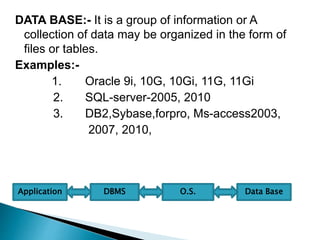
Application DBMS O.S. Data Base
Components of DBMS:- 1. User 
2. Hardware 
3. Software 
4. Data 
Application of DBMS:- 1. Banking Sector 
2. Universities 
3. Railway Reservation 
4. Finance 
5. Sales
Advantages of DBMS:- 
1.Reduce the redundancy from Database. 
2. Sharing of data. 
3. Important in data security. 
4. Better interaction with user. 
Disadvantages of DBMS:- 
1. Cost of Software. 
2. Cost of Hardware. 
3. Complexity of back-up of recovery.
RDBMS:- RDBMS is a DBMS i.e. 
based on Relational model as introduce 
by Dr. E.F. codd….. 
Codd’s role for RDBMS:- Dr. 
Codd is an IBM researcher who 
developed relational data base in 
1970….. 
In 1905 Codd published 12 rules……
1)-The Information rule. 
2)-Granted access rule. 
3)-Systemic treatment of NULL 
values. 
4)-Dynamic online Catalog based on 
relational model. 
5)-Comprehensive data sub-language 
rule. 
6)-View updating rule.
7)-High level Insert , Update, Delete rule. 
8)-Physical data Independence. 
9)- Logical data Independence. 
10)- Integrity data Independence. 
11)- Distribution data Independence. 
12)- Non-subversions rule.
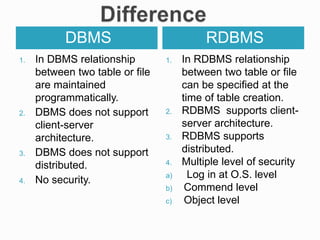
DBMS RDBMS 
1. In DBMS relationship 
between two table or file 
are maintained 
programmatically. 
2. DBMS does not support 
client-server 
architecture. 
3. DBMS does not support 
distributed. 
4. No security. 
1. In RDBMS relationship 
between two table or file 
can be specified at the 
time of table creation. 
2. RDBMS supports client-server 
architecture. 
3. RDBMS supports 
distributed. 
4. Multiple level of security 
a) Log in at O.S. level 
b) Commend level 
c) Object level
5. DBMS may satisfy 
less then 7 or 8 rules 
of Dr. E.F. codd 
5. More then 7 or 8 
rules of Dr. E.F. codd

Diffrence between dbms and rdbms

  • 1.
     Class :MCA 2nd (2013 - 2015)  Topics : DBMS & RDBMS By : Mr. Jitendra Thakur
  • 2.
    DBMS is asoftware system that allow us to manage the data base. DATA:- A data is Raw martial, fact, figure that give the meaningful information i.e. require foe some form of processing.
  • 3.
    DATA BASE:- Itis a group of information or A collection of data may be organized in the form of files or tables. Examples:- 1. Oracle 9i, 10G, 10Gi, 11G, 11Gi 2. SQL-server-2005, 2010 3. DB2,Sybase,forpro, Ms-access2003, 2007, 2010, Application DBMS O.S. Data Base
  • 4.
    Components of DBMS:-1. User 2. Hardware 3. Software 4. Data Application of DBMS:- 1. Banking Sector 2. Universities 3. Railway Reservation 4. Finance 5. Sales
  • 5.
    Advantages of DBMS:- 1.Reduce the redundancy from Database. 2. Sharing of data. 3. Important in data security. 4. Better interaction with user. Disadvantages of DBMS:- 1. Cost of Software. 2. Cost of Hardware. 3. Complexity of back-up of recovery.
  • 6.
    RDBMS:- RDBMS isa DBMS i.e. based on Relational model as introduce by Dr. E.F. codd….. Codd’s role for RDBMS:- Dr. Codd is an IBM researcher who developed relational data base in 1970….. In 1905 Codd published 12 rules……
  • 7.
    1)-The Information rule. 2)-Granted access rule. 3)-Systemic treatment of NULL values. 4)-Dynamic online Catalog based on relational model. 5)-Comprehensive data sub-language rule. 6)-View updating rule.
  • 8.
    7)-High level Insert, Update, Delete rule. 8)-Physical data Independence. 9)- Logical data Independence. 10)- Integrity data Independence. 11)- Distribution data Independence. 12)- Non-subversions rule.
  • 9.
    DBMS RDBMS 1.In DBMS relationship between two table or file are maintained programmatically. 2. DBMS does not support client-server architecture. 3. DBMS does not support distributed. 4. No security. 1. In RDBMS relationship between two table or file can be specified at the time of table creation. 2. RDBMS supports client-server architecture. 3. RDBMS supports distributed. 4. Multiple level of security a) Log in at O.S. level b) Commend level c) Object level
  • 10.
    5. DBMS maysatisfy less then 7 or 8 rules of Dr. E.F. codd 5. More then 7 or 8 rules of Dr. E.F. codd