Differentiated Instruction in KindergartenDonna Arvay
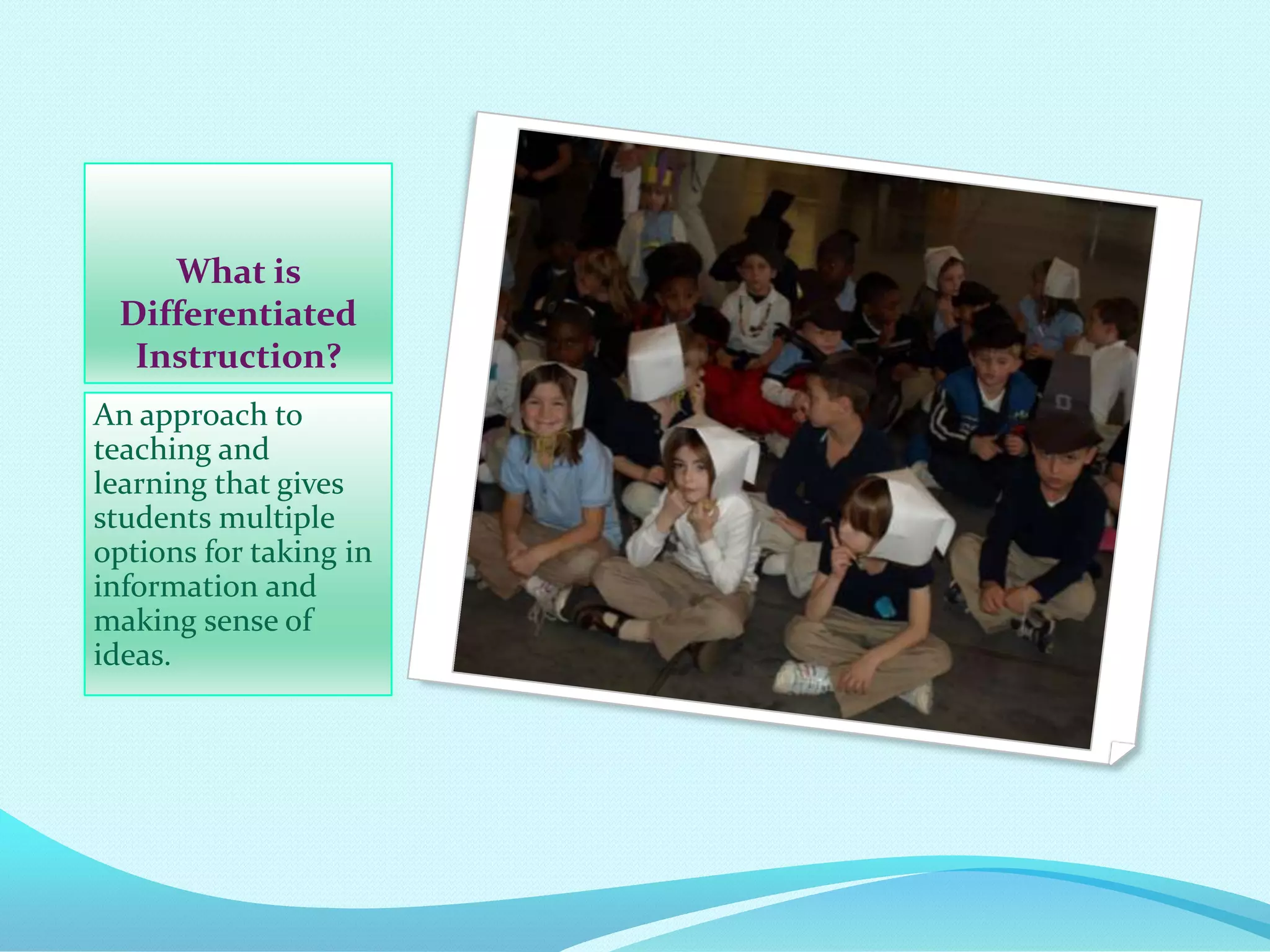
What is Differentiated Instruction?An approach to teaching and learning that gives students multiple options for taking in information and making sense of ideas.
Why Differentiate Instruction?All students can succeed in school.All students should have the same opportunities as their peers.Each student learns differently.Students need to master concepts before moving to another one.Quality, not quantity instructionStudent centered classroomsDifferent approaches to what students learn, how they learn it, and how they demonstrate what they’ve learned.
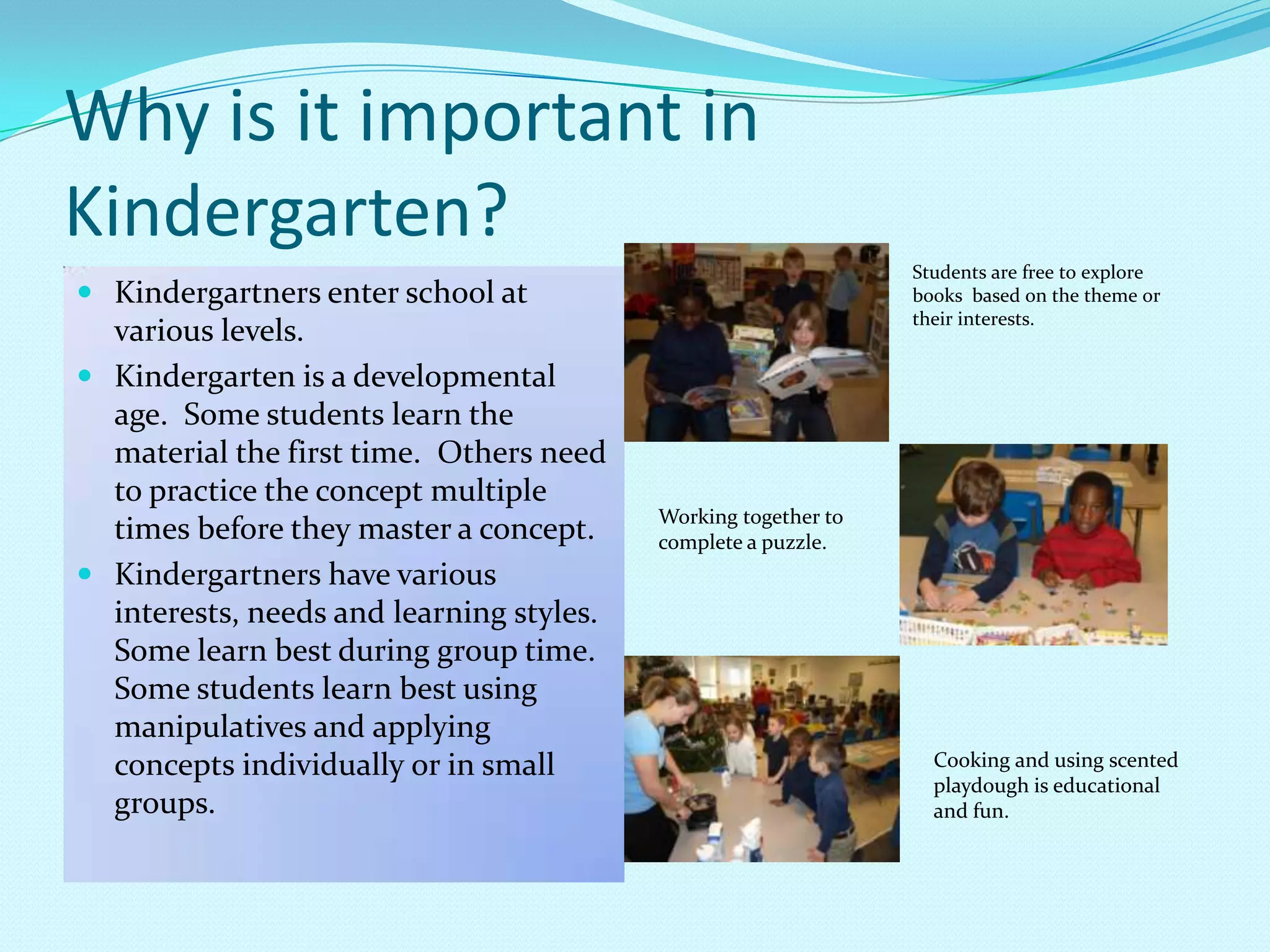
Why is it important in Kindergarten?Kindergartners enter school at various levels.Kindergarten is a developmental age.  Some students learn the material the first time.  Others need to practice the concept multiple times before they master a concept.Kindergartners have various interests, needs and learning styles.  Some learn best during group time.  Some students learn best using manipulatives and applying concepts individually or in small groups.Students are free to explore books  based on the theme or their interests.Working together to complete a puzzle.Cooking and using scented playdoughis educational and fun.
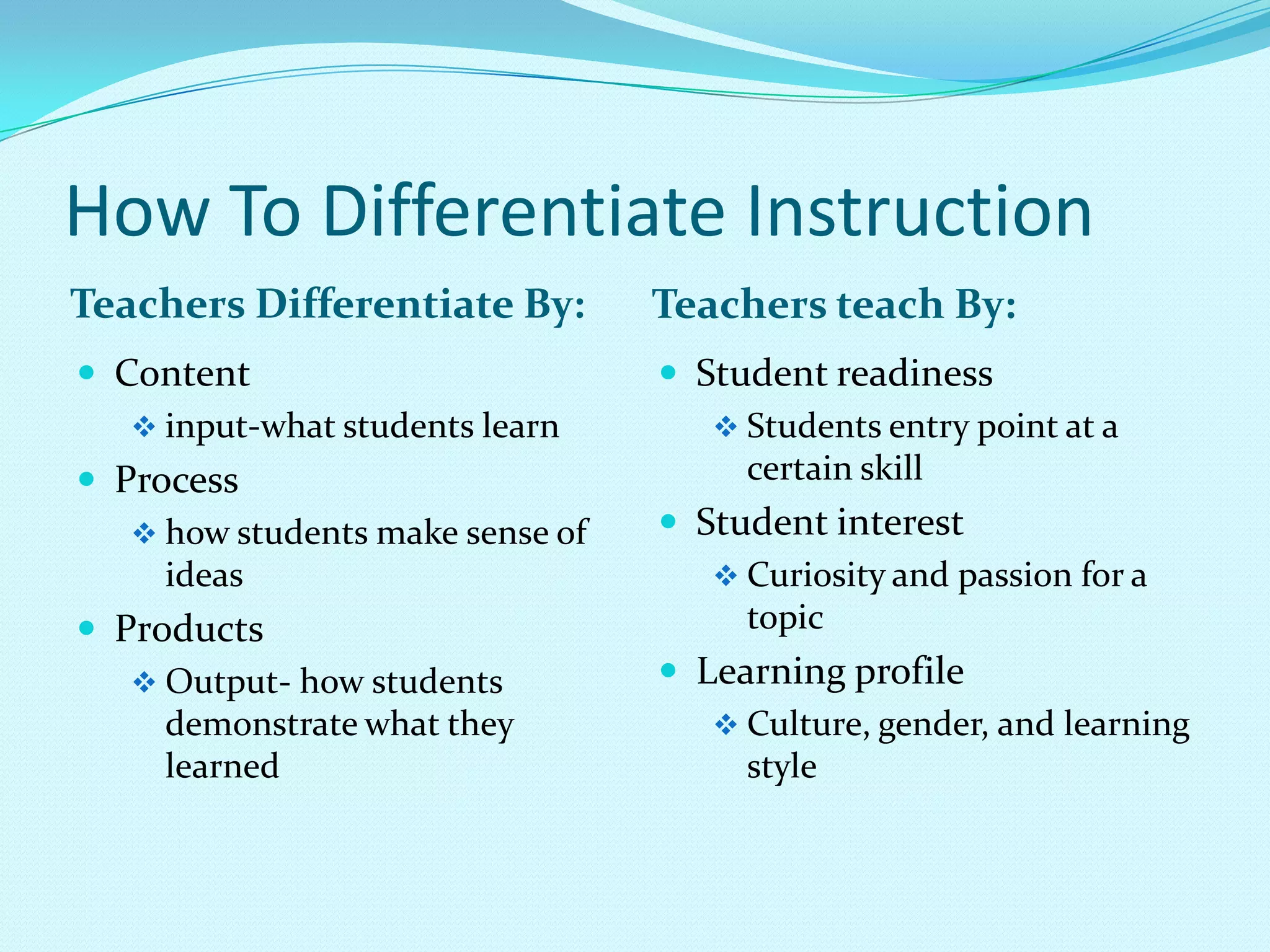
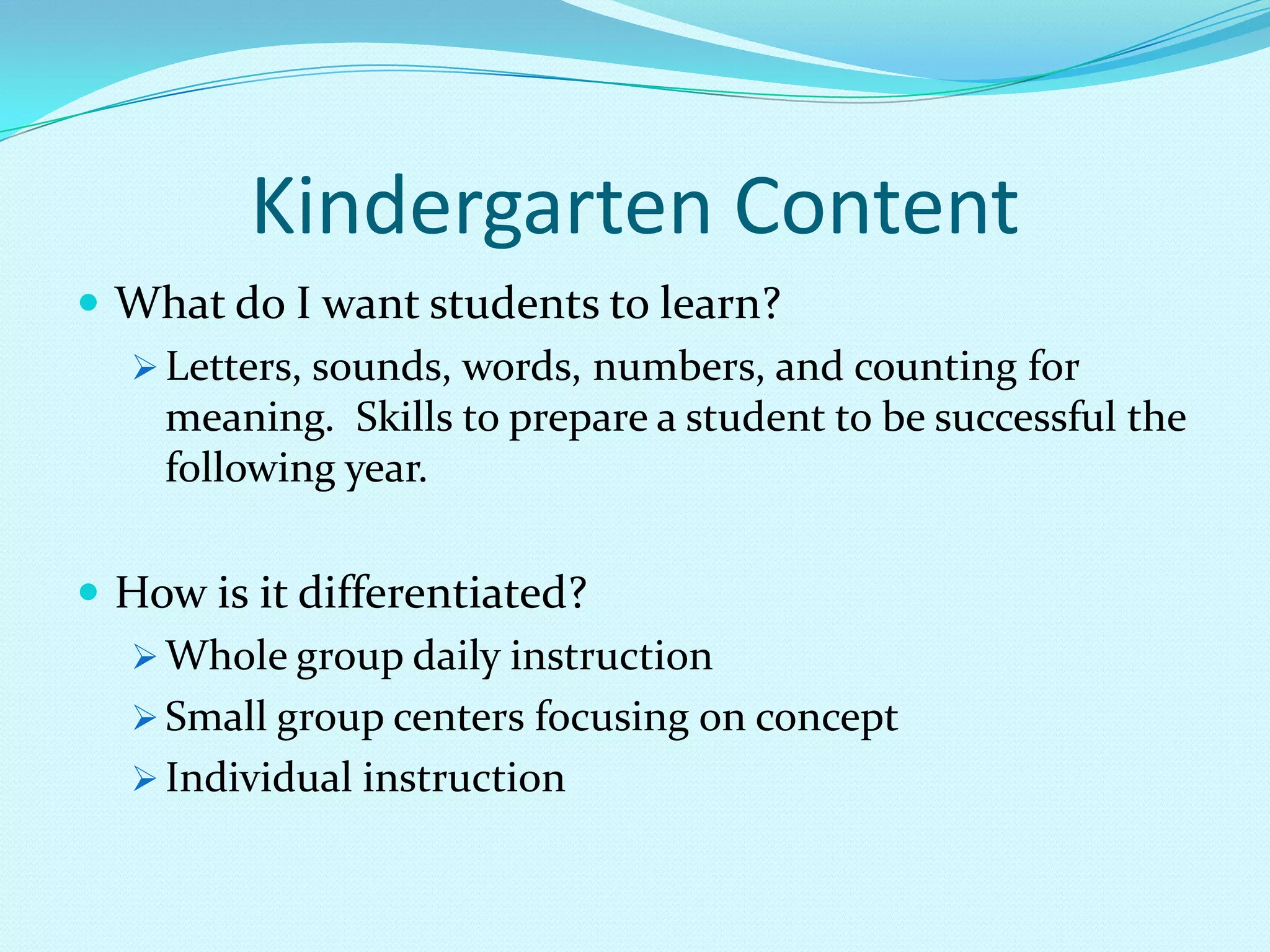
How To Differentiate Instruction	Teachers Differentiate By:Teachers teach By: Contentinput-what students learnProcesshow students make sense of ideasPr0ductsOutput- how students demonstrate what they learnedStudent readinessStudents entry point at a certain skillStudent interestCuriosity and passion for a topicLearning profileCulture, gender, and learning styleKindergarten ContentWhat do I want students to learn?Letters, sounds, words, numbers, and counting for meaning.  Skills to prepare a student to be successful the following year.How is it differentiated?Whole group daily instruction
Small group centers focusing on concept
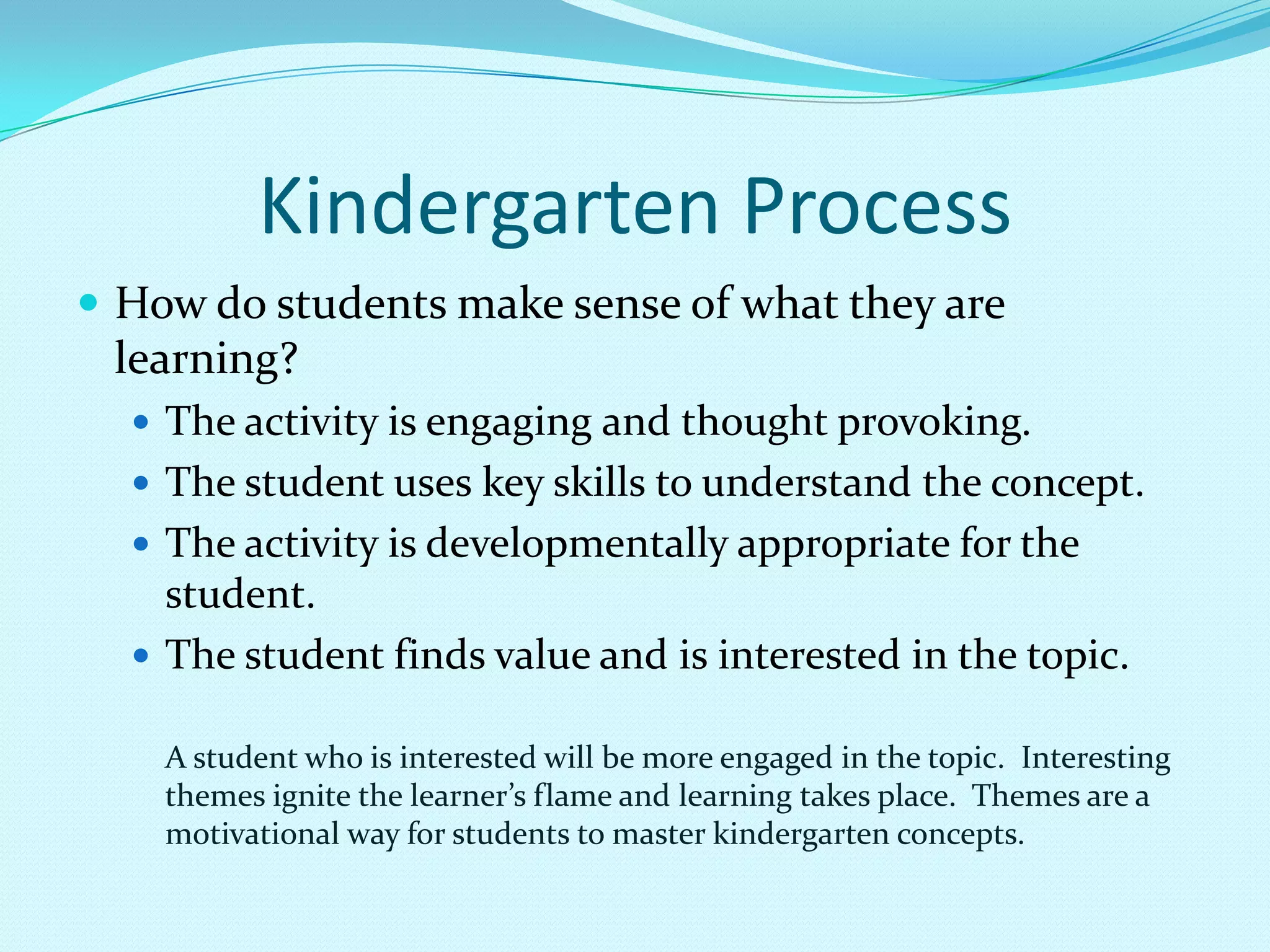
Individual instructionKindergarten ProcessHow do students make sense of what they are learning?The activity is engaging and thought provoking.The student uses key skills to understand the concept.The activity is developmentally appropriate for the student.The student finds value and is interested in the topic.A student who is interested will be more engaged in the topic.  Interesting themes ignite the learner’s flame and learning takes place.  Themes are a motivational way for students to master kindergarten concepts.
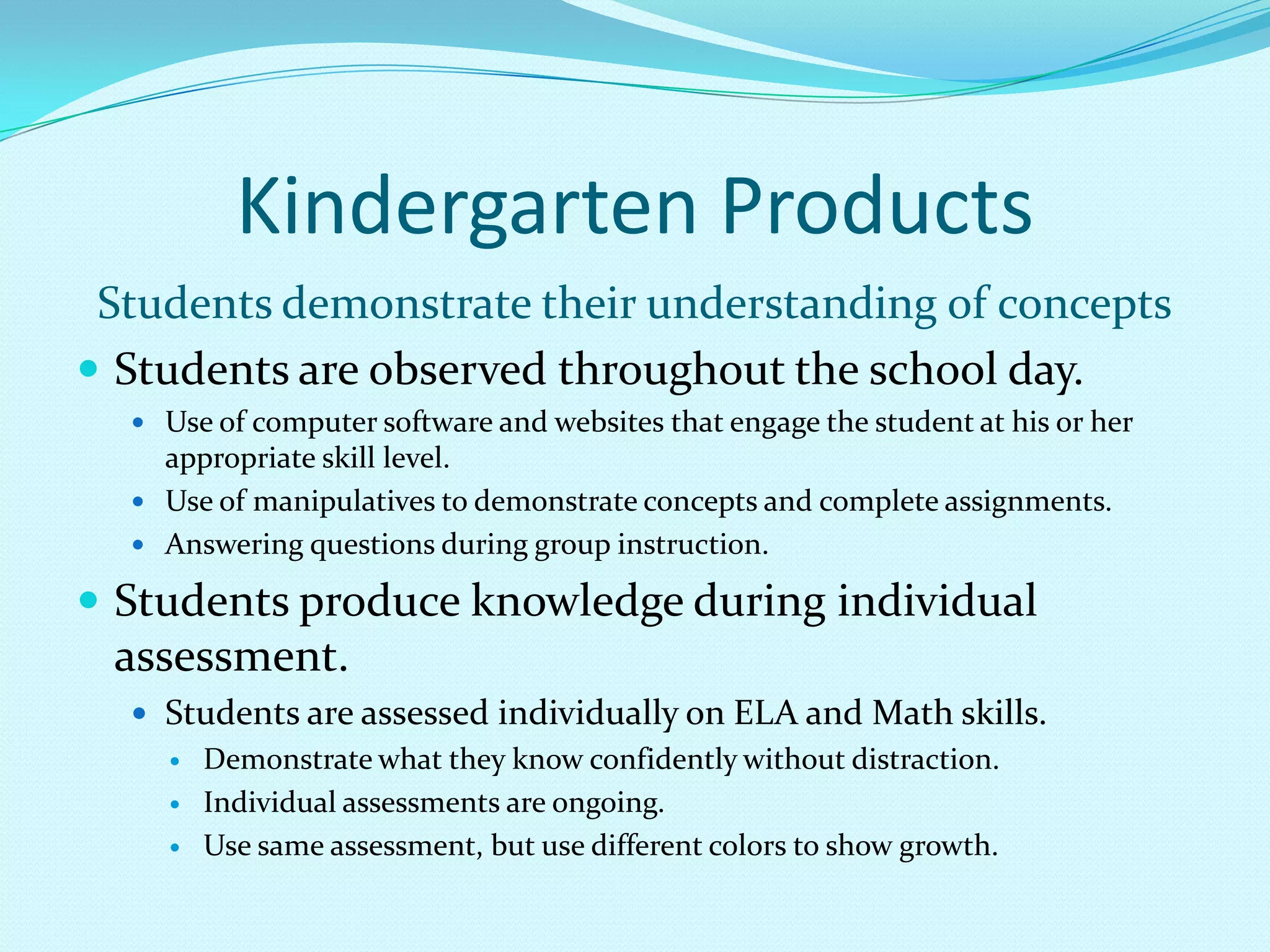
Kindergarten ProductsStudents demonstrate their understanding of conceptsStudents are observed throughout the school day.Use of computer software and websites that engage the student at his or her appropriate skill level.Use of manipulatives to demonstrate concepts and complete assignments.Answering questions during group instruction.Students produce knowledge during individual assessment.Students are assessed individually on ELA and Math skills.Demonstrate what they know confidently without distraction.Individual assessments are ongoing.Use same assessment, but use different colors to show growth.
Differentiation in the Classroom	All lessons fit the needs of all the students.  Lessons are modified according to growth.  Multiple concepts are covered at the same time and all students are learning at their appropriate level.Students are exposed to differentiation all day.  Group time during the Morning Meeting
Morning work using paper, pencil, and fine motor skills
During centers playing games (bingo)

Differentiated Instruction

  • 1.
    Differentiated Instruction inKindergartenDonna Arvay
  • 2.
    What is DifferentiatedInstruction?An approach to teaching and learning that gives students multiple options for taking in information and making sense of ideas.
  • 3.
    Why Differentiate Instruction?Allstudents can succeed in school.All students should have the same opportunities as their peers.Each student learns differently.Students need to master concepts before moving to another one.Quality, not quantity instructionStudent centered classroomsDifferent approaches to what students learn, how they learn it, and how they demonstrate what they’ve learned.
  • 4.
    Why is itimportant in Kindergarten?Kindergartners enter school at various levels.Kindergarten is a developmental age. Some students learn the material the first time. Others need to practice the concept multiple times before they master a concept.Kindergartners have various interests, needs and learning styles. Some learn best during group time. Some students learn best using manipulatives and applying concepts individually or in small groups.Students are free to explore books based on the theme or their interests.Working together to complete a puzzle.Cooking and using scented playdoughis educational and fun.
  • 5.
    How To DifferentiateInstruction Teachers Differentiate By:Teachers teach By: Contentinput-what students learnProcesshow students make sense of ideasPr0ductsOutput- how students demonstrate what they learnedStudent readinessStudents entry point at a certain skillStudent interestCuriosity and passion for a topicLearning profileCulture, gender, and learning styleKindergarten ContentWhat do I want students to learn?Letters, sounds, words, numbers, and counting for meaning. Skills to prepare a student to be successful the following year.How is it differentiated?Whole group daily instruction
  • 6.
    Small group centersfocusing on concept
  • 7.
    Individual instructionKindergarten ProcessHowdo students make sense of what they are learning?The activity is engaging and thought provoking.The student uses key skills to understand the concept.The activity is developmentally appropriate for the student.The student finds value and is interested in the topic.A student who is interested will be more engaged in the topic. Interesting themes ignite the learner’s flame and learning takes place. Themes are a motivational way for students to master kindergarten concepts.
  • 8.
    Kindergarten ProductsStudents demonstratetheir understanding of conceptsStudents are observed throughout the school day.Use of computer software and websites that engage the student at his or her appropriate skill level.Use of manipulatives to demonstrate concepts and complete assignments.Answering questions during group instruction.Students produce knowledge during individual assessment.Students are assessed individually on ELA and Math skills.Demonstrate what they know confidently without distraction.Individual assessments are ongoing.Use same assessment, but use different colors to show growth.
  • 9.
    Differentiation in theClassroom All lessons fit the needs of all the students. Lessons are modified according to growth. Multiple concepts are covered at the same time and all students are learning at their appropriate level.Students are exposed to differentiation all day. Group time during the Morning Meeting
  • 10.
    Morning work usingpaper, pencil, and fine motor skills
  • 11.
  • 12.
  • 13.
    Writing and tracingusing sand, playdough, markers, and chalk
  • 14.
  • 15.
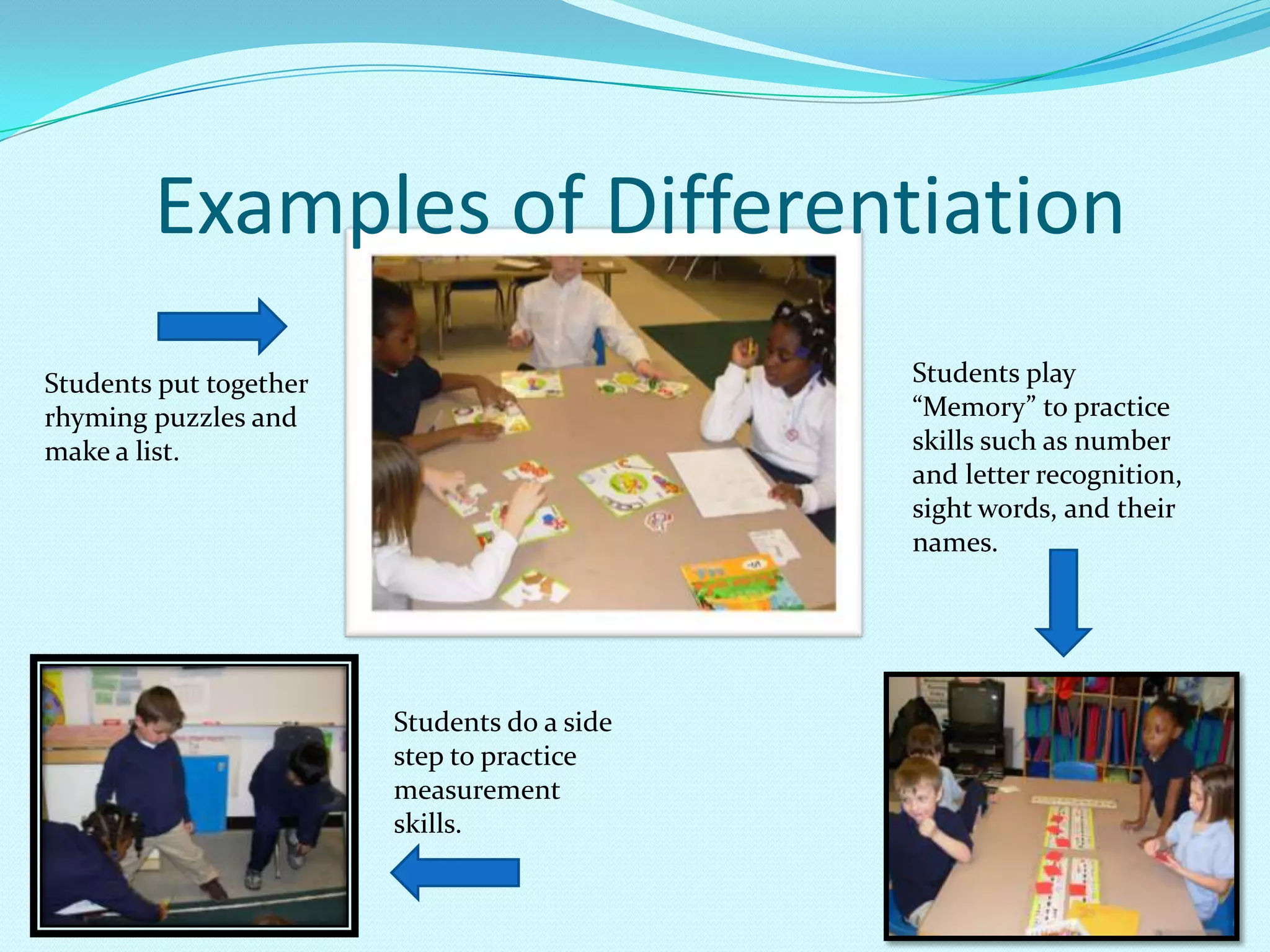
    Software on thecomputer Examples of DifferentiationStudents play “Memory” to practice skills such as number and letter recognition, sight words, and their names.Students put together rhyming puzzles and make a list.Students do a side step to practice measurement skills.
  • 16.
    Final Thoughts onDifferentiated InstructionDI is Student Centered Instruction. Students apply themselves to master each concept. Most of their learning is hands-on. A DI classroom allows students to learn, grow, succeed, and feel accepted in school.The goal of DI is to make certain all students grow in all key skills and move on from their starting point.The teacher observes students’ knowledge levels, interests, and learning styles and creates lessons to fit the needs of the class.