Download as PDF, PPTX
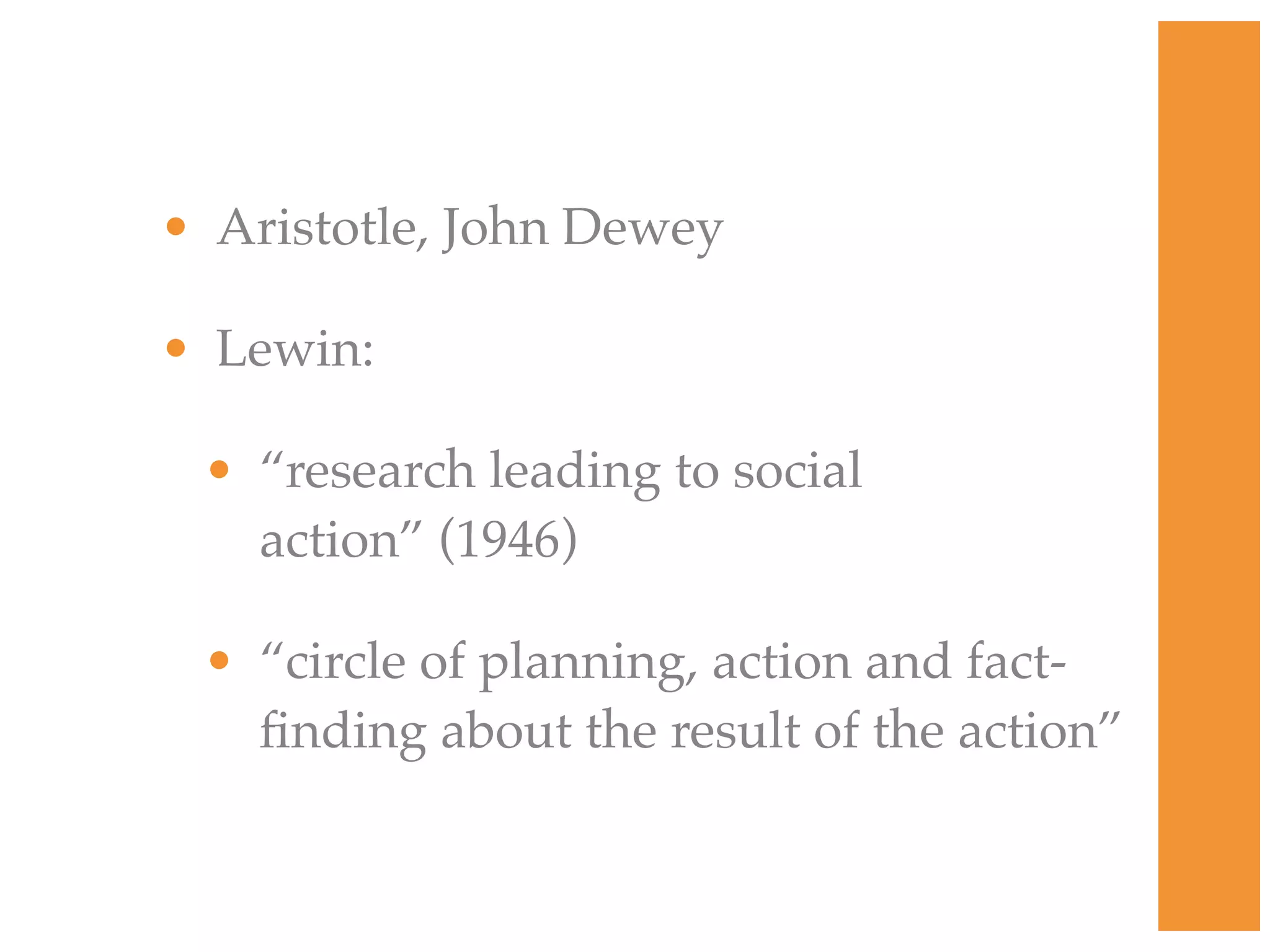
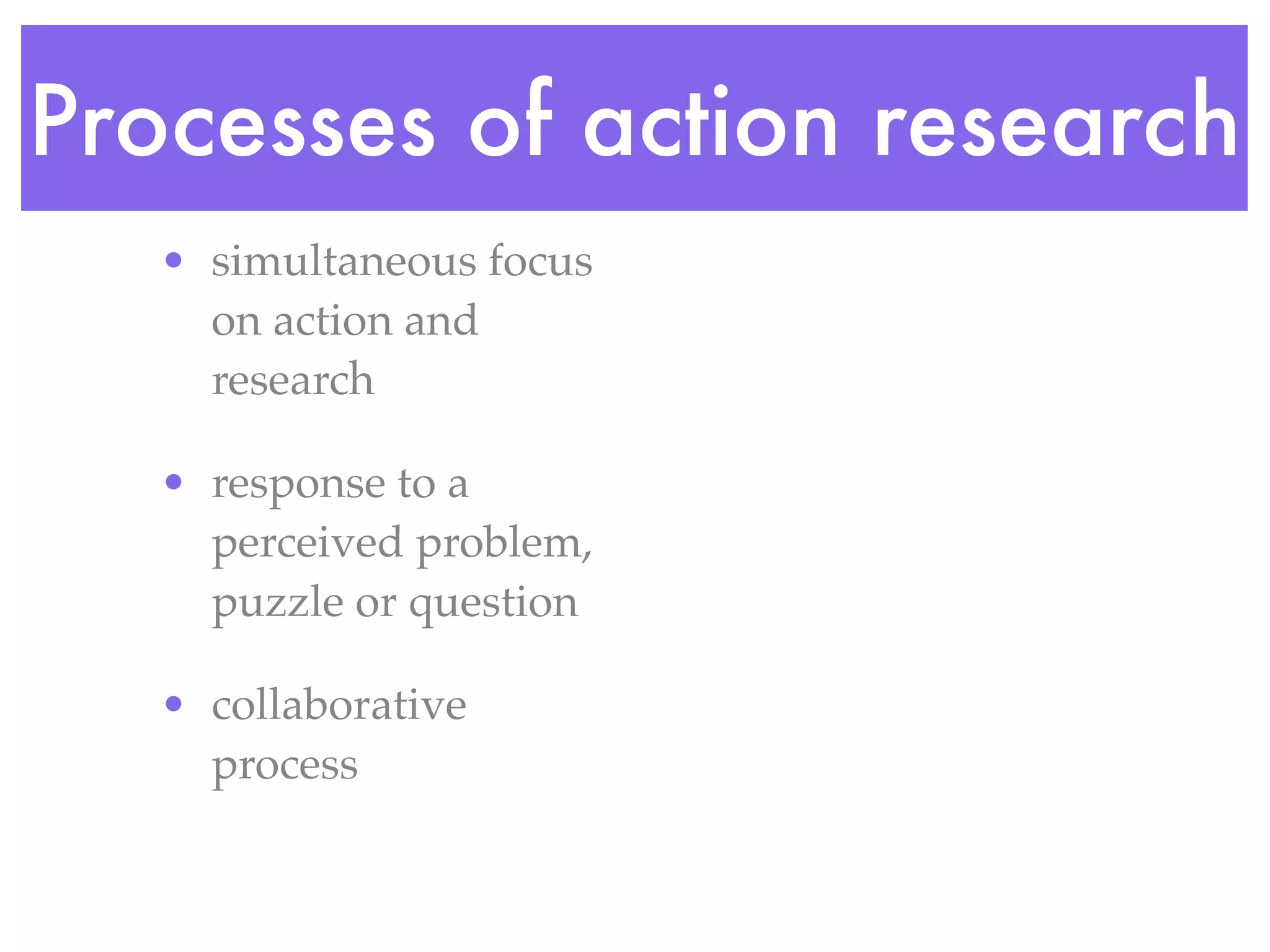
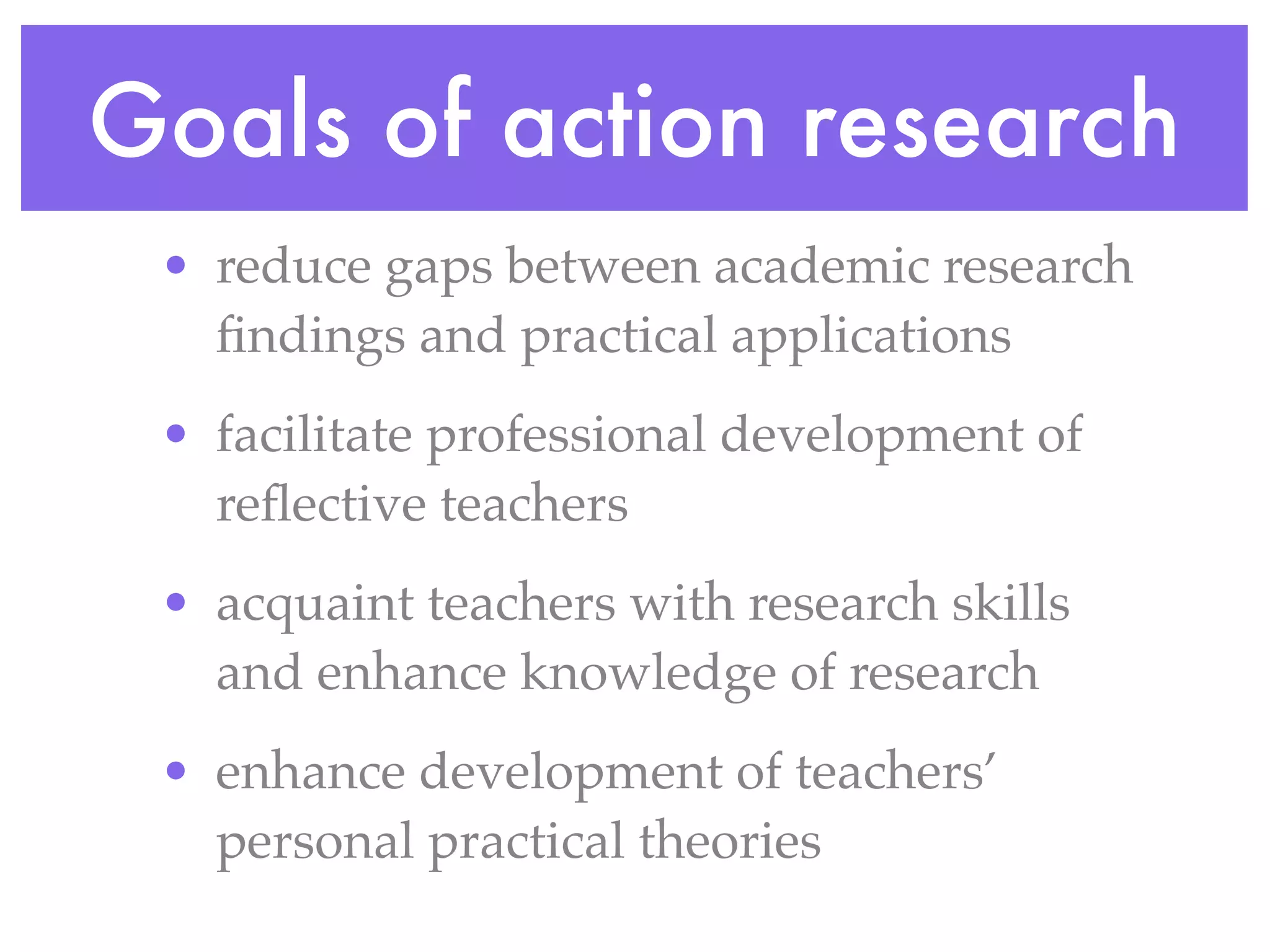

Action research is a participative, naturalistic form of inquiry that aims to simultaneously improve situations and generate new knowledge. It involves a collaborative process where practitioners systematically reflect on a problem or question in order to gain new understandings and bring about positive change. The process of action research follows a cycle of planning, action, observation, and reflection that is repeated in different phases as the researcher explores, identifies, plans, collects data, analyzes, hypothesizes, intervenes, observes, reports, writes, and presents findings. The goals of action research include reducing gaps between theory and practice, facilitating teacher development and research skills, and enhancing teachers' personal practical theories.


