○ Topic - Different types of inflorescence in angiosperms
Botany Presentation
Botany(Major)
Date-22/11/2023
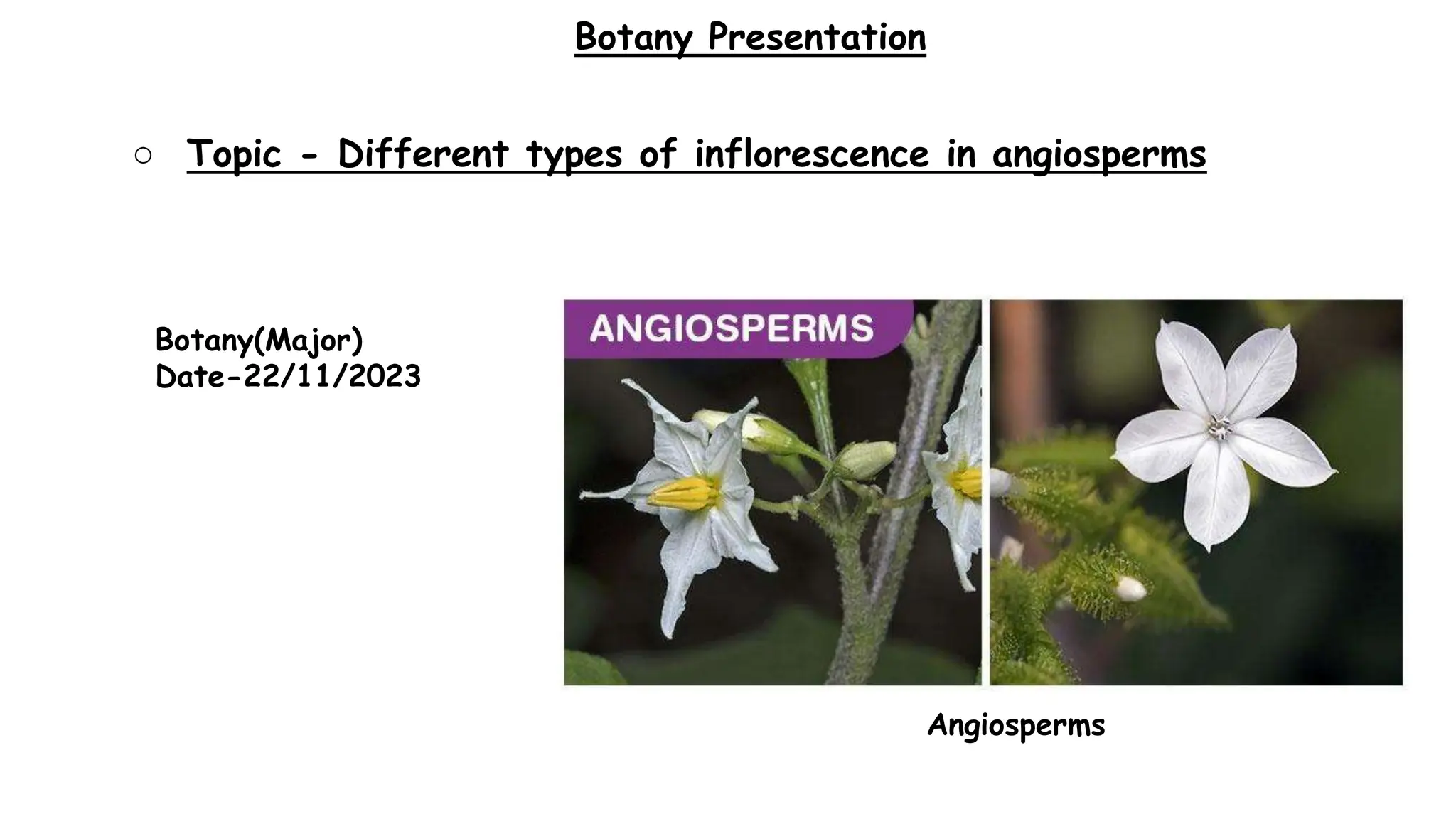
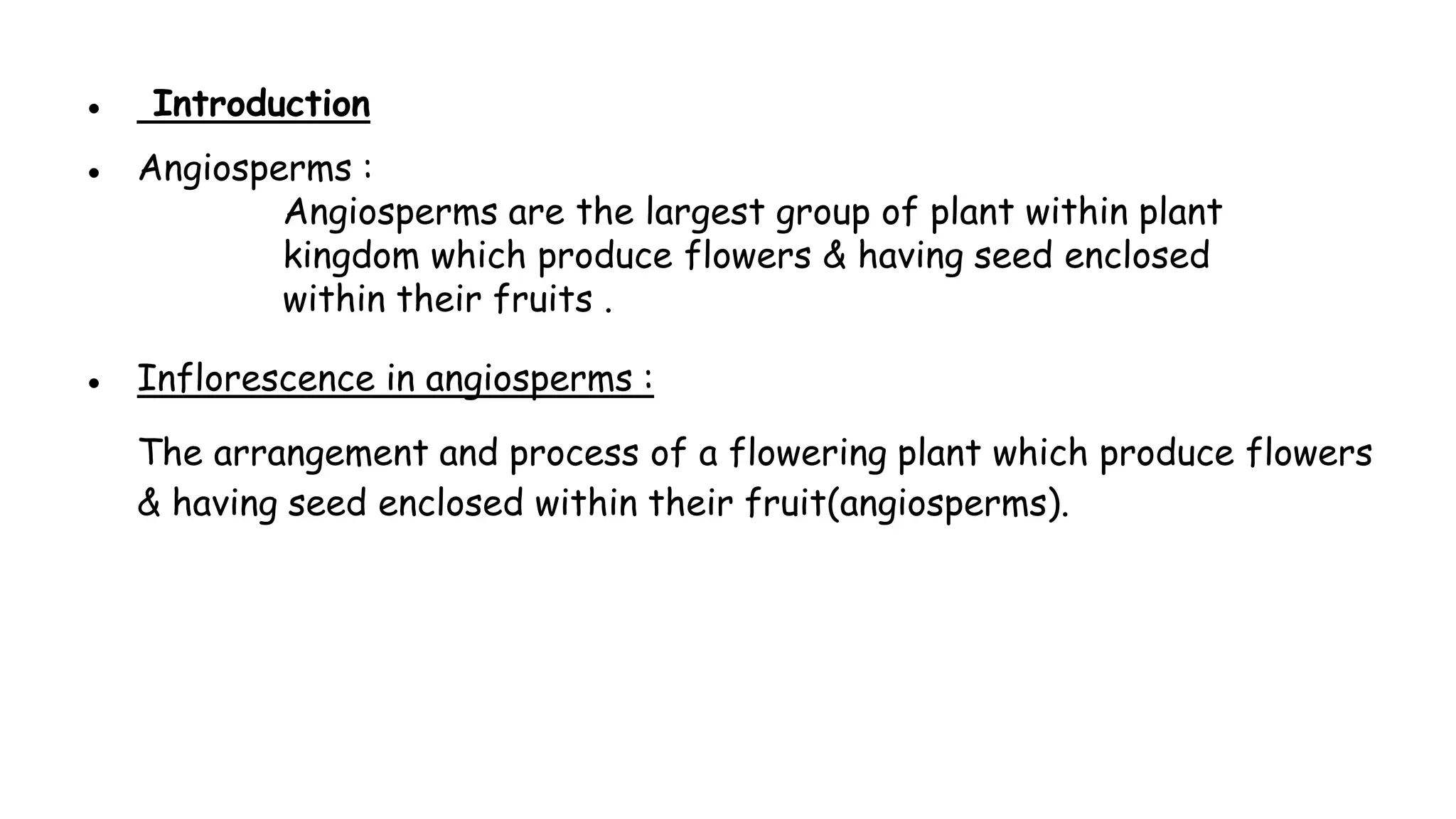
Angiosperms
● Introduction
● Inflorescence in angiosperms :
The arrangement and process of a flowering plant which produce flowers
& having seed enclosed within their fruit(angiosperms).
● Angiosperms :
Angiosperms are the largest group of plant within plant
kingdom which produce flowers & having seed enclosed
within their fruits .
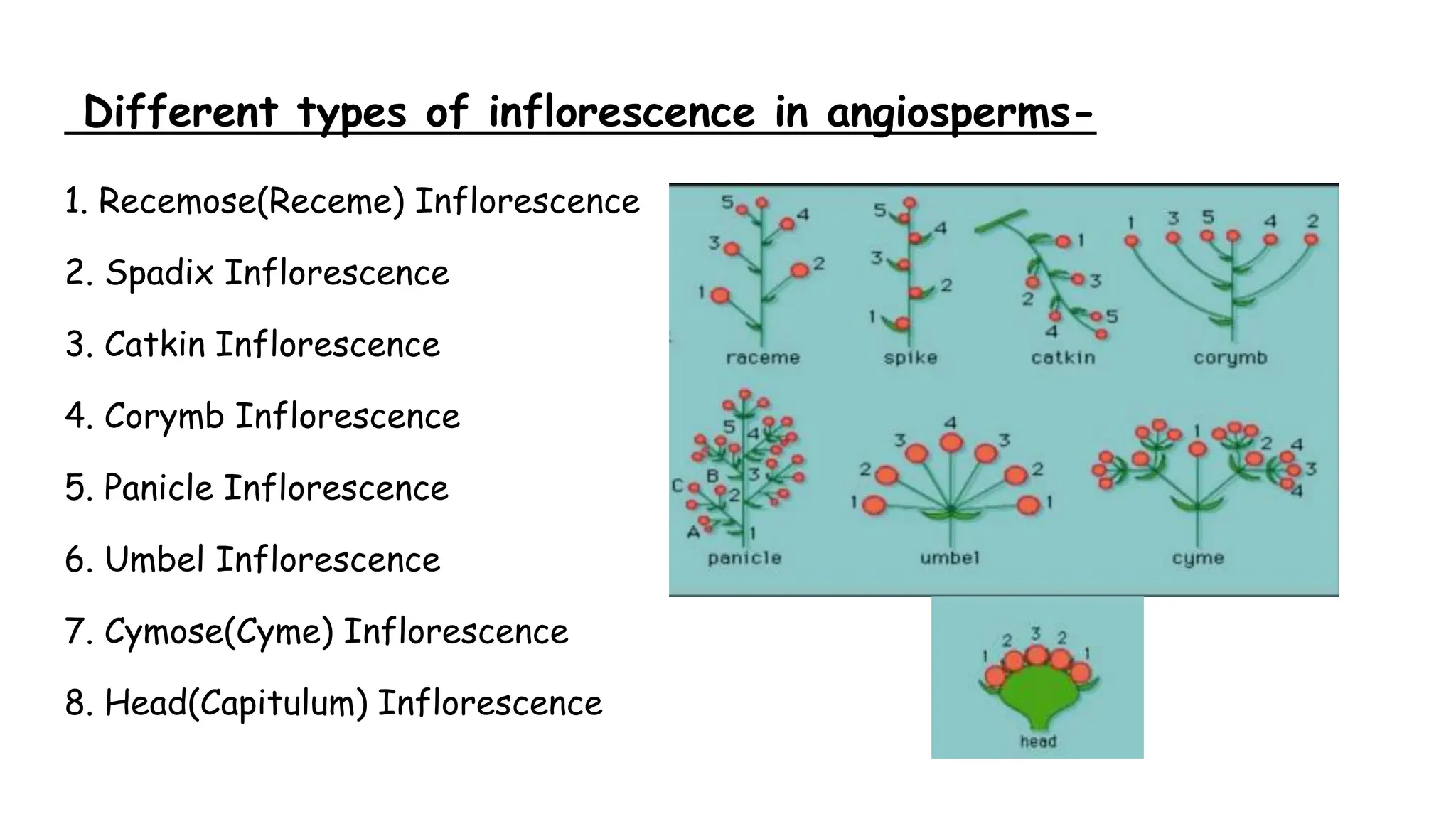
Different types of inflorescence in angiosperms-
1. Recemose(Receme) Inflorescence
2. Spadix Inflorescence
3. Catkin Inflorescence
4. Corymb Inflorescence
5. Panicle Inflorescence
6. Umbel Inflorescence
7. Cymose(Cyme) Inflorescence
8. Head(Capitulum) Inflorescence
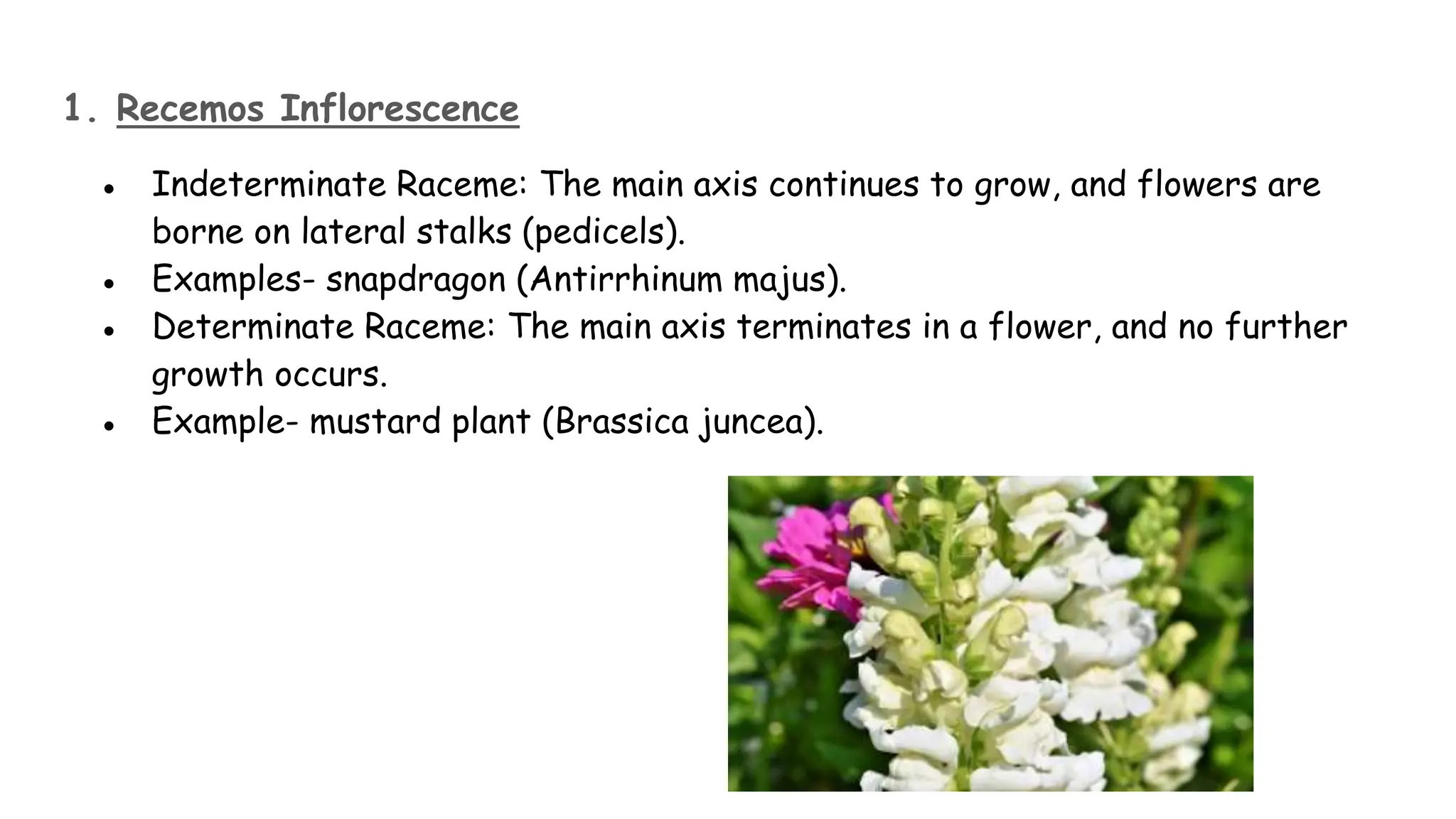
● Indeterminate Raceme: The main axis continues to grow, and flowers are
borne on lateral stalks (pedicels).
● Examples- snapdragon (Antirrhinum majus).
● Determinate Raceme: The main axis terminates in a flower, and no further
growth occurs.
● Example- mustard plant (Brassica juncea).
1. Recemos Inflorescence
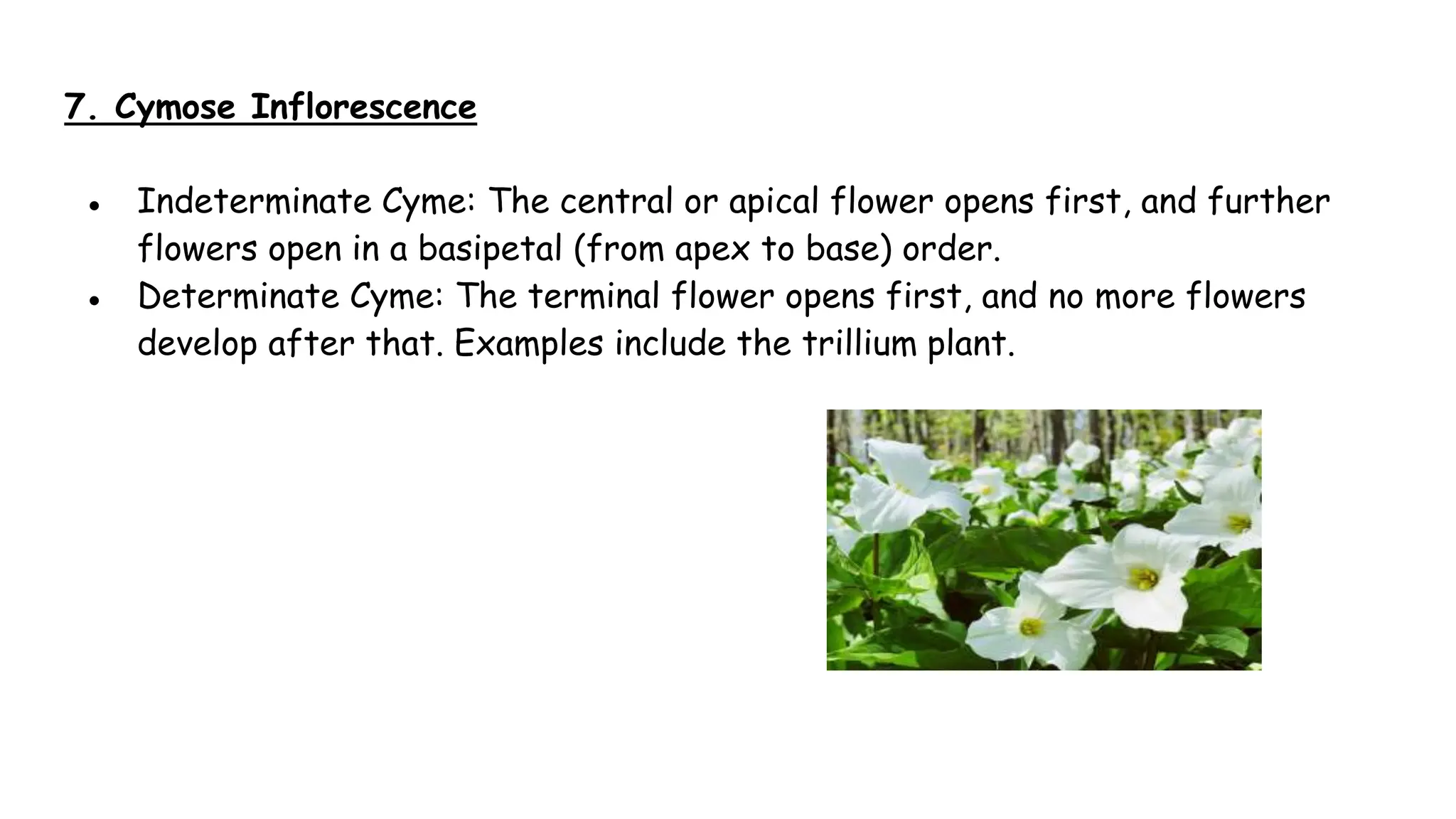
7. Cymose Inflorescence
● Indeterminate Cyme: The central or apical flower opens first, and further
flowers open in a basipetal (from apex to base) order.
● Determinate Cyme: The terminal flower opens first, and no more flowers
develop after that. Examples include the trillium plant.
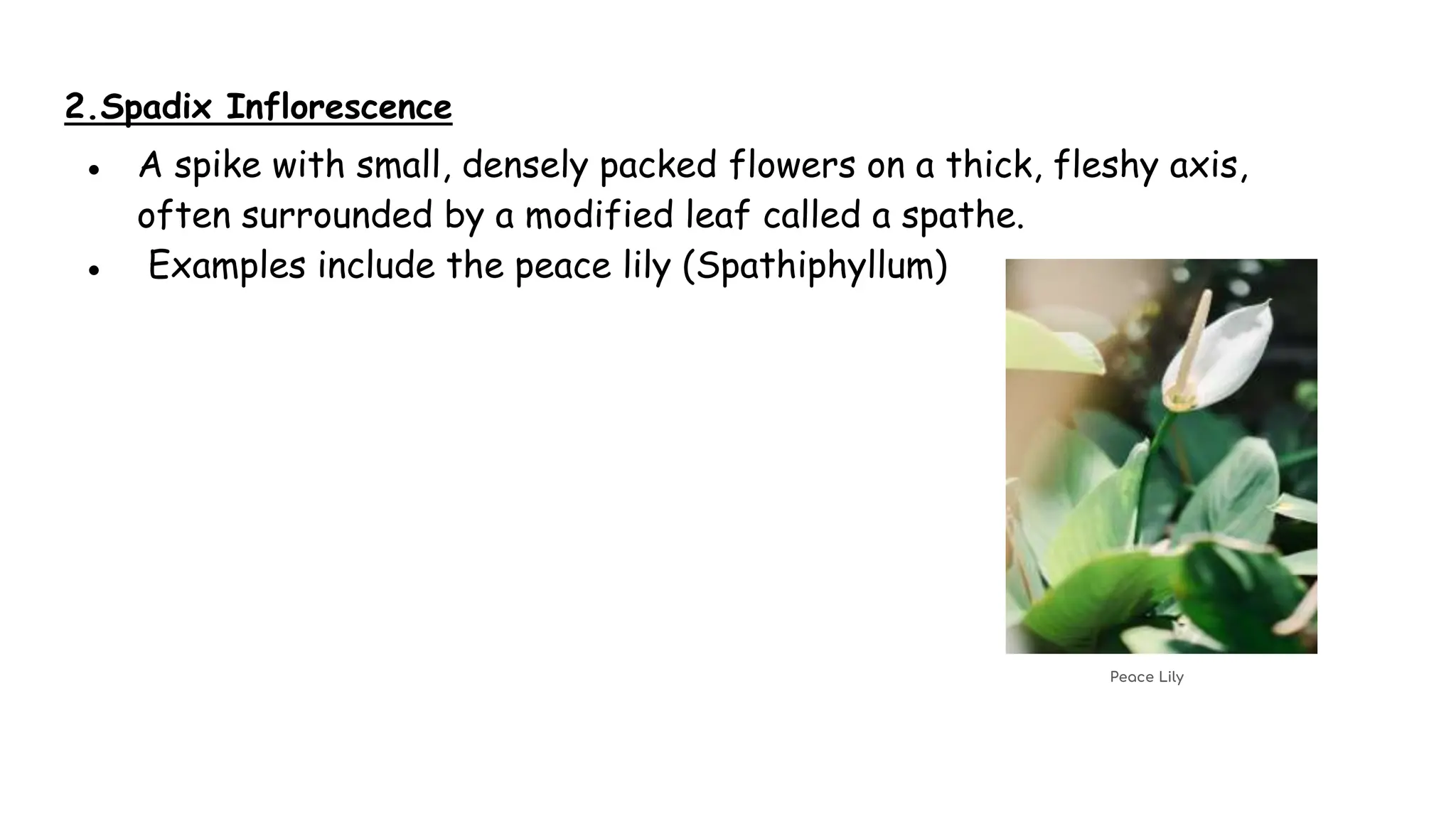
2.Spadix Inflorescence
● A spike with small, densely packed flowers on a thick, fleshy axis,
often surrounded by a modified leaf called a spathe.
● Examples include the peace lily (Spathiphyllum)
Peace Lily
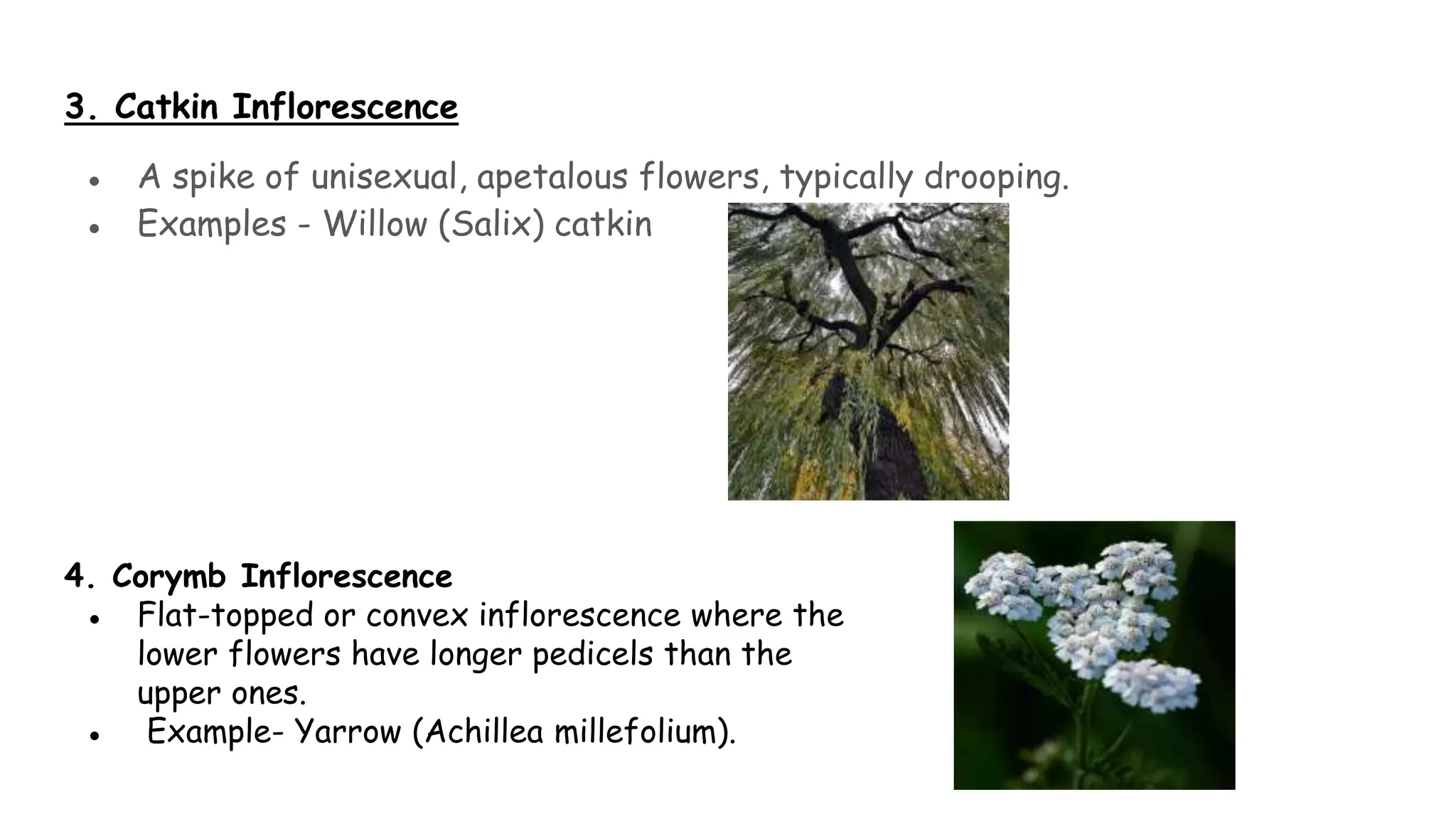
3. Catkin Inflorescence
● A spike of unisexual, apetalous flowers, typically drooping.
● Examples - Willow (Salix) catkin
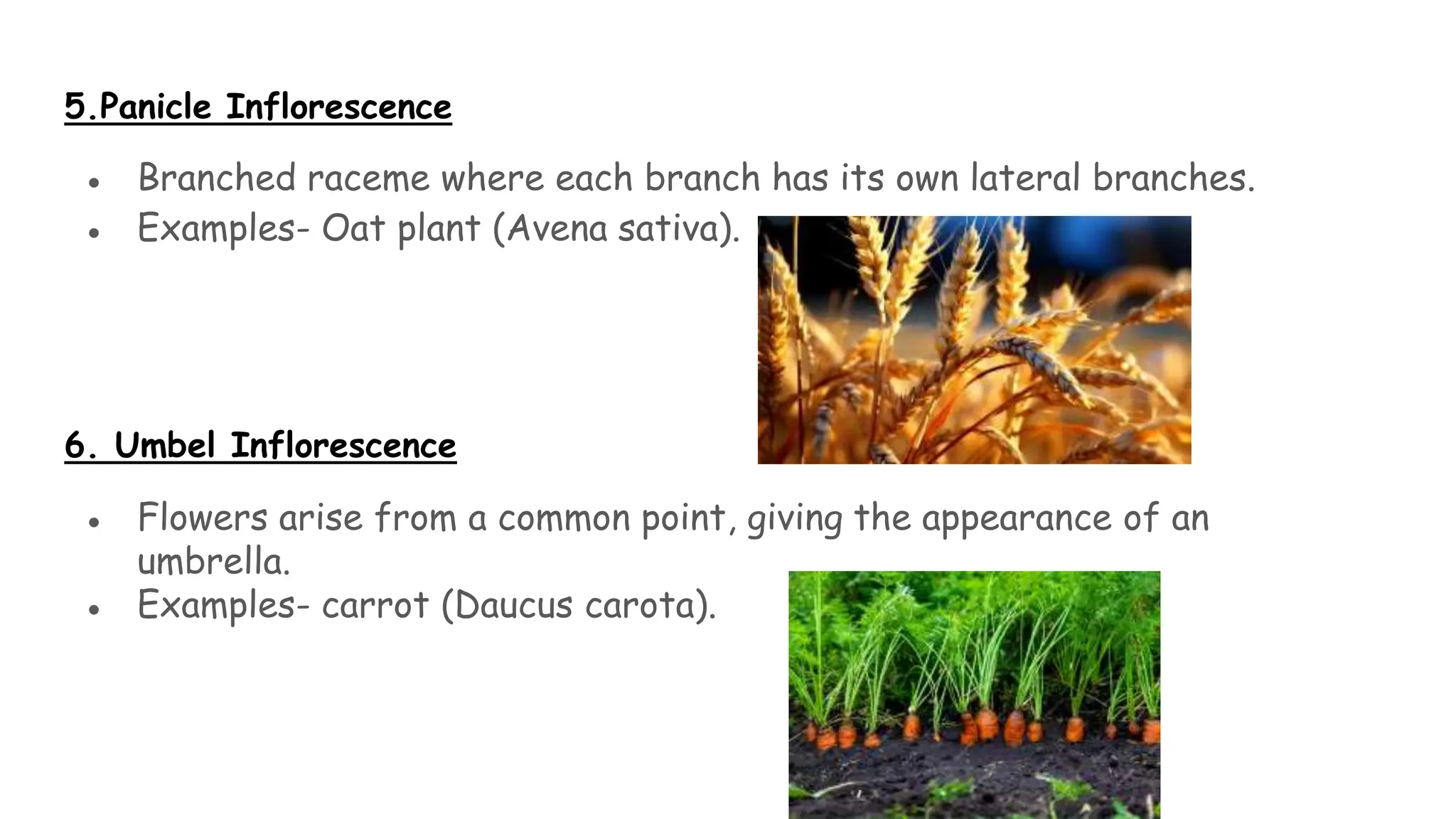
4. Corymb Inflorescence
● Flat-topped or convex inflorescence where the
lower flowers have longer pedicels than the
upper ones.
● Example- Yarrow (Achillea millefolium).
5.Panicle Inflorescence
● Branched raceme where each branch has its own lateral branches.
● Examples- Oat plant (Avena sativa).
6. Umbel Inflorescence
● Flowers arise from a common point, giving the appearance of an
umbrella.
● Examples- carrot (Daucus carota).
7.Cymose Inflorescence
● Indeterminate Cyme: The central or apical flower opens first, and
further flowers open in a basipetal (from apex to base) order.
Examples include the forget-me-not (Myosotis).
● Determinate Cyme: The terminal flower opens first, and no more
flowers develop after that. Examples- trillium plant.
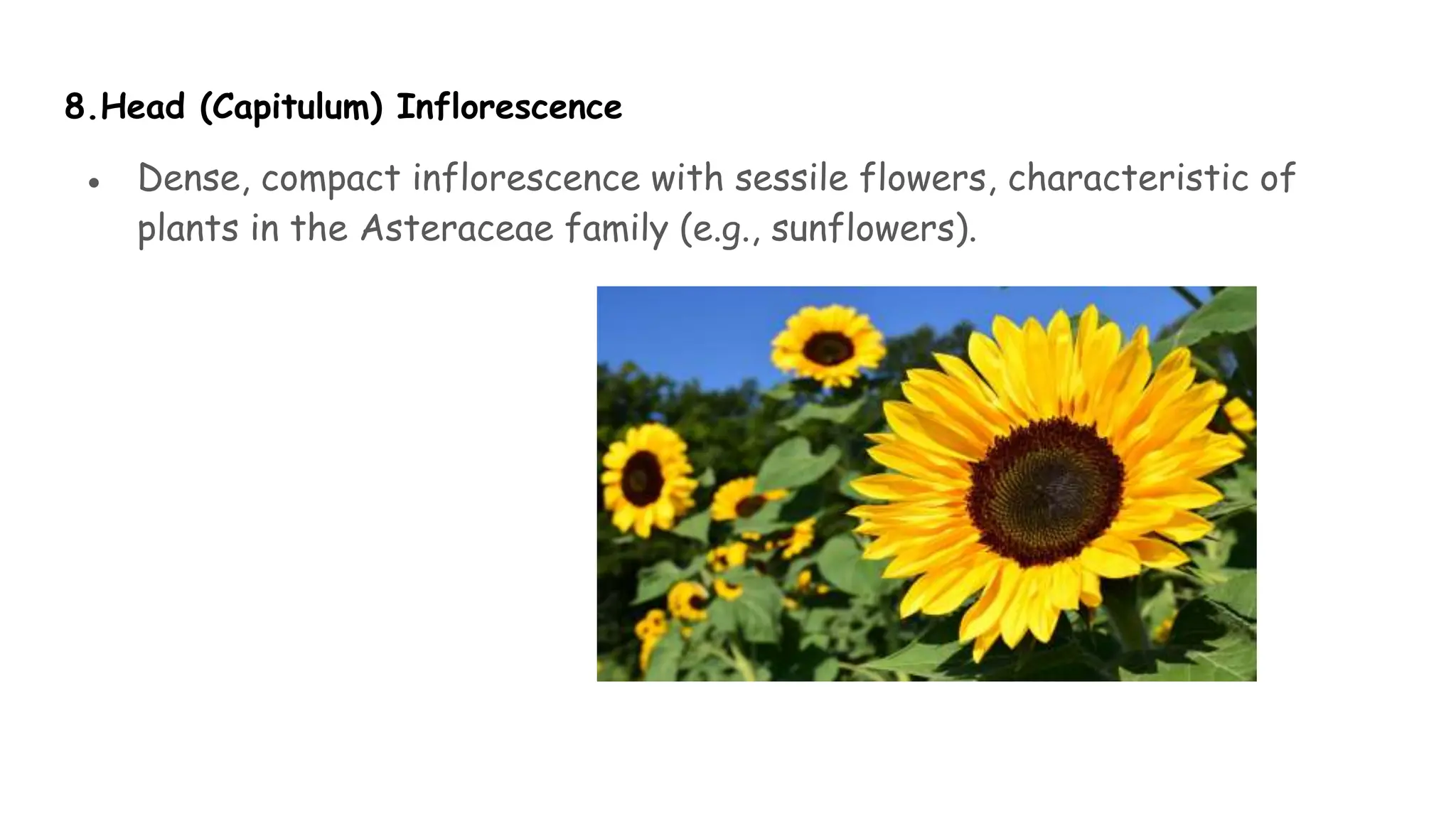
8.Head (Capitulum) Inflorescence
● Dense, compact inflorescence with sessile flowers, characteristic of
plants in the Asteraceae family (e.g., sunflowers).
Conclusion
● Inflorescence plays a vital role in the reproductive strategy of
angiosperms, genetic diversity and resource allocation.
● Inflorescence increase risibility, attracting pollinators by procreding a
concentrated display of flowers.
~ Thank you ~

Different types of inflorescence in angiosperms

  • 1.
    ○ Topic -Different types of inflorescence in angiosperms Botany Presentation Botany(Major) Date-22/11/2023 Angiosperms
  • 2.
    ● Introduction ● Inflorescencein angiosperms : The arrangement and process of a flowering plant which produce flowers & having seed enclosed within their fruit(angiosperms). ● Angiosperms : Angiosperms are the largest group of plant within plant kingdom which produce flowers & having seed enclosed within their fruits .
  • 3.
    Different types ofinflorescence in angiosperms- 1. Recemose(Receme) Inflorescence 2. Spadix Inflorescence 3. Catkin Inflorescence 4. Corymb Inflorescence 5. Panicle Inflorescence 6. Umbel Inflorescence 7. Cymose(Cyme) Inflorescence 8. Head(Capitulum) Inflorescence
  • 4.
    ● Indeterminate Raceme:The main axis continues to grow, and flowers are borne on lateral stalks (pedicels). ● Examples- snapdragon (Antirrhinum majus). ● Determinate Raceme: The main axis terminates in a flower, and no further growth occurs. ● Example- mustard plant (Brassica juncea). 1. Recemos Inflorescence
  • 5.
    7. Cymose Inflorescence ●Indeterminate Cyme: The central or apical flower opens first, and further flowers open in a basipetal (from apex to base) order. ● Determinate Cyme: The terminal flower opens first, and no more flowers develop after that. Examples include the trillium plant.
  • 6.
    2.Spadix Inflorescence ● Aspike with small, densely packed flowers on a thick, fleshy axis, often surrounded by a modified leaf called a spathe. ● Examples include the peace lily (Spathiphyllum) Peace Lily
  • 7.
    3. Catkin Inflorescence ●A spike of unisexual, apetalous flowers, typically drooping. ● Examples - Willow (Salix) catkin 4. Corymb Inflorescence ● Flat-topped or convex inflorescence where the lower flowers have longer pedicels than the upper ones. ● Example- Yarrow (Achillea millefolium).
  • 8.
    5.Panicle Inflorescence ● Branchedraceme where each branch has its own lateral branches. ● Examples- Oat plant (Avena sativa). 6. Umbel Inflorescence ● Flowers arise from a common point, giving the appearance of an umbrella. ● Examples- carrot (Daucus carota).
  • 9.
    7.Cymose Inflorescence ● IndeterminateCyme: The central or apical flower opens first, and further flowers open in a basipetal (from apex to base) order. Examples include the forget-me-not (Myosotis). ● Determinate Cyme: The terminal flower opens first, and no more flowers develop after that. Examples- trillium plant.
  • 10.
    8.Head (Capitulum) Inflorescence ●Dense, compact inflorescence with sessile flowers, characteristic of plants in the Asteraceae family (e.g., sunflowers).
  • 11.
    Conclusion ● Inflorescence playsa vital role in the reproductive strategy of angiosperms, genetic diversity and resource allocation. ● Inflorescence increase risibility, attracting pollinators by procreding a concentrated display of flowers. ~ Thank you ~