Cloud &
Virtualization
Duan van der Westhuizen
Private Cloud Product
A Difference in Philosophy and Approach

     Virtualization                            Cloud
     Not elastic compute or                 Holistic approach to
   elastic storage – solves for          infrastructure automation
      server consolidation
                                        Key drivers are agility and
 Key driver are consolidation and      automation, Capex to Opex
      resource optimization                  and scalability

  Supports standard application       Applications built to elastically
   architecture. VM functions        scale in Cloud via API integration
  logically as traditional server.
                                      Apps built to scale Horizontally
 Apps Scale vertically by adding        on commodity hardware
 more resources CPU, RAM, etc.


                                                     RACKSPACE® HOSTING   |   WWW.RACKSPACE.COM
                                                                                                  2
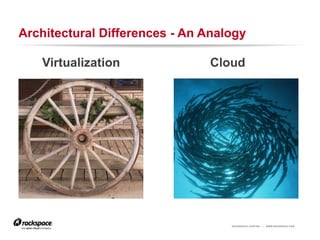
Architectural Differences - An Analogy

   Virtualization               Cloud


                                   RACKSPACE® HOSTING   |   WWW.RACKSPACE.COM
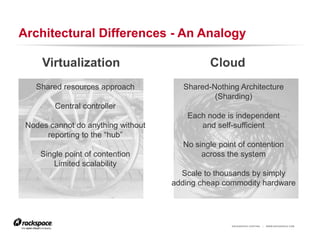
Architectural Differences - An Analogy

     Virtualization                          Cloud
   Shared resources approach          Shared-Nothing Architecture
                                              (Sharding)
         Central controller
                                       Each node is independent
 Nodes cannot do anything without         and self-sufficient
      reporting to the “hub”
                                      No single point of contention
     Single point of contention            across the system
        Limited scalability
                                      Scale to thousands by simply
                                    adding cheap commodity hardware


                                                    RACKSPACE® HOSTING   |   WWW.RACKSPACE.COM
APP LAYER
• Scaling and Redundancy: The
  Different Approaches

• Stateful vs. Stateless
  Applications

• Why Should You Care?

                           RACKSPACE® HOSTING   |   WWW.RACKSPACE.COM
THE   1ST   RULE OF CLOUD
Redundancy
    in the App…

not the
 INFRASTRUCTURE

                    RACKSPACE® HOSTING   |   WWW.RACKSPACE.COM
Redundancy in
Virtualization
• Clustered hypervisors for high availability

• Live migration technology for fault tolerance

• Multiple levels of redundancy through backup
  hardware components


                                                  RACKSPACE® HOSTING   |   WWW.RACKSPACE.COM
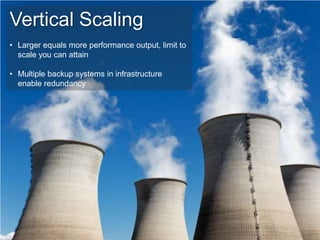
Vertical Scaling
• Larger equals more performance output, limit to
  scale you can attain

• Multiple backup systems in infrastructure
  enable redundancy


                                                    RACKSPACE® HOSTING   |   WWW.RACKSPACE.COM
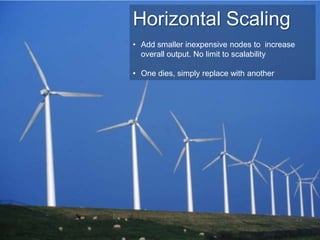
Horizontal Scaling
• Add smaller inexpensive nodes to increase
  overall output. No limit to scalability

• One dies, simply replace with another


                           RACKSPACE® HOSTING   |   WWW.RACKSPACE.COM
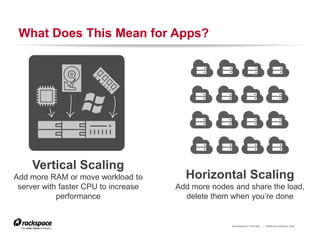
What Does This Mean for Apps?


     Vertical Scaling
Add more RAM or move workload to        Horizontal Scaling
 server with faster CPU to increase   Add more nodes and share the load,
            performance                 delete them when you’re done


                                                    RACKSPACE® HOSTING   |   WWW.RACKSPACE.COM
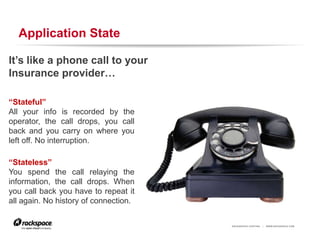
Application State

It’s like a phone call to your
Insurance provider…

“Stateful”
All your info is recorded by the
operator, the call drops, you call
back and you carry on where you
left off. No interruption.

“Stateless”
You spend the call relaying the
information, the call drops. When
you call back you have to repeat it
all again. No history of connection.

                                       RACKSPACE® HOSTING   |   WWW.RACKSPACE.COM
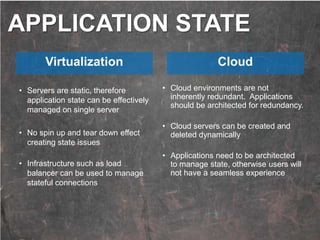
APPLICATION STATE
       Virtualization                                   Cloud

• Servers are static, therefore          • Cloud environments are not
  application state can be effectively     inherently redundant. Applications
                                           should be architected for redundancy.
  managed on single server

                                         • Cloud servers can be created and
• No spin up and tear down effect          deleted dynamically
  creating state issues
                                         • Applications need to be architected
• Infrastructure such as load              to manage state, otherwise users will
  balancer can be used to manage           not have a seamless experience
  stateful connections


                                                            RACKSPACE® HOSTING   |   WWW.RACKSPACE.COM
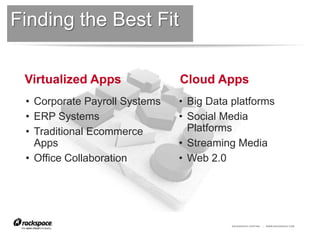
Finding the Best Fit

 Virtualized Apps              Cloud Apps
 • Corporate Payroll Systems   • Big Data platforms
 • ERP Systems                 • Social Media
 • Traditional Ecommerce         Platforms
   Apps                        • Streaming Media
 • Office Collaboration        • Web 2.0


                                          RACKSPACE® HOSTING   |   WWW.RACKSPACE.COM
RACKSPACE® HOSTING               |    5000 WALZEM ROAD              |   SAN ANTONIO, TX 78218
                                        US SALES: 1-800-961-2888                 |    US SUPPORT: 1-800-961-4454               |    WWW.RACKSPACE.COM


RACKSPACE® HOSTING   |   © RACKSPACE US, INC.   |   RACKSPACE® AND FANATICAL SUPPORT® ARE SERVICE MARKS OF RACKSPACE US, INC. REGISTERED IN TH E UNITED STATES AND OTHER COUNTRIES.   |   WWW.RACKSPACE.COM
                                                                                                                                                                                                              14

Differences between Virtualization and Cloud

  • 1.
    Cloud & Virtualization Duan vander Westhuizen Private Cloud Product
  • 2.
    A Difference inPhilosophy and Approach Virtualization Cloud Not elastic compute or Holistic approach to elastic storage – solves for infrastructure automation server consolidation Key drivers are agility and Key driver are consolidation and automation, Capex to Opex resource optimization and scalability Supports standard application Applications built to elastically architecture. VM functions scale in Cloud via API integration logically as traditional server. Apps built to scale Horizontally Apps Scale vertically by adding on commodity hardware more resources CPU, RAM, etc. RACKSPACE® HOSTING | WWW.RACKSPACE.COM 2
  • 3.
    Architectural Differences -An Analogy Virtualization Cloud RACKSPACE® HOSTING | WWW.RACKSPACE.COM
  • 4.
    Architectural Differences -An Analogy Virtualization Cloud Shared resources approach Shared-Nothing Architecture (Sharding) Central controller Each node is independent Nodes cannot do anything without and self-sufficient reporting to the “hub” No single point of contention Single point of contention across the system Limited scalability Scale to thousands by simply adding cheap commodity hardware RACKSPACE® HOSTING | WWW.RACKSPACE.COM
  • 5.
    APP LAYER • Scalingand Redundancy: The Different Approaches • Stateful vs. Stateless Applications • Why Should You Care? RACKSPACE® HOSTING | WWW.RACKSPACE.COM
  • 6.
    THE 1ST RULE OF CLOUD Redundancy in the App… not the INFRASTRUCTURE RACKSPACE® HOSTING | WWW.RACKSPACE.COM
  • 7.
    Redundancy in Virtualization • Clusteredhypervisors for high availability • Live migration technology for fault tolerance • Multiple levels of redundancy through backup hardware components RACKSPACE® HOSTING | WWW.RACKSPACE.COM
  • 8.
    Vertical Scaling • Largerequals more performance output, limit to scale you can attain • Multiple backup systems in infrastructure enable redundancy RACKSPACE® HOSTING | WWW.RACKSPACE.COM
  • 9.
    Horizontal Scaling • Addsmaller inexpensive nodes to increase overall output. No limit to scalability • One dies, simply replace with another RACKSPACE® HOSTING | WWW.RACKSPACE.COM
  • 10.
    What Does ThisMean for Apps? Vertical Scaling Add more RAM or move workload to Horizontal Scaling server with faster CPU to increase Add more nodes and share the load, performance delete them when you’re done RACKSPACE® HOSTING | WWW.RACKSPACE.COM
  • 11.
    Application State It’s likea phone call to your Insurance provider… “Stateful” All your info is recorded by the operator, the call drops, you call back and you carry on where you left off. No interruption. “Stateless” You spend the call relaying the information, the call drops. When you call back you have to repeat it all again. No history of connection. RACKSPACE® HOSTING | WWW.RACKSPACE.COM
  • 12.
    APPLICATION STATE Virtualization Cloud • Servers are static, therefore • Cloud environments are not application state can be effectively inherently redundant. Applications should be architected for redundancy. managed on single server • Cloud servers can be created and • No spin up and tear down effect deleted dynamically creating state issues • Applications need to be architected • Infrastructure such as load to manage state, otherwise users will balancer can be used to manage not have a seamless experience stateful connections RACKSPACE® HOSTING | WWW.RACKSPACE.COM
  • 13.
    Finding the BestFit Virtualized Apps Cloud Apps • Corporate Payroll Systems • Big Data platforms • ERP Systems • Social Media • Traditional Ecommerce Platforms Apps • Streaming Media • Office Collaboration • Web 2.0 RACKSPACE® HOSTING | WWW.RACKSPACE.COM
  • 14.
    RACKSPACE® HOSTING | 5000 WALZEM ROAD | SAN ANTONIO, TX 78218 US SALES: 1-800-961-2888 | US SUPPORT: 1-800-961-4454 | WWW.RACKSPACE.COM RACKSPACE® HOSTING | © RACKSPACE US, INC. | RACKSPACE® AND FANATICAL SUPPORT® ARE SERVICE MARKS OF RACKSPACE US, INC. REGISTERED IN TH E UNITED STATES AND OTHER COUNTRIES. | WWW.RACKSPACE.COM 14