Difference between Classicism and
Romanticism
Name: Sonal Olakiya
Roll No: 23
Paper:5(The Romantic Literature)
Semester:2(Two)
Enrolment No:2069108420170022
Email Id:
sonalolakiya2405@gmail.com
Submitted by: Dr. Dilip Barad.
SMT: S.B.Gardi Maharaja Krishanakumarsinhji
Bhavnagar University.
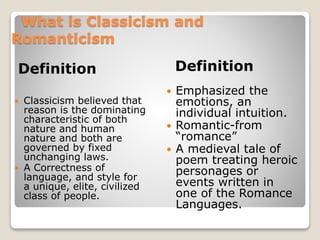
What is Classicism and
Romanticism
Definition Definition
 Classicism believed that
reason is the dominating
characteristic of both
nature and human
nature and both are
governed by fixed
unchanging laws.
 A Correctness of
language, and style for
a unique, elite, civilized
class of people.
 Emphasized the
emotions, an
individual intuition.
 Romantic-from
“romance”
 A medieval tale of
poem treating heroic
personages or
events written in
one of the Romance
Languages.
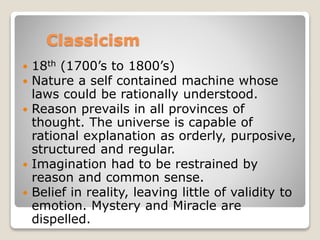
Classicism
 18th (1700’s to 1800’s)
 Nature a self contained machine whose
laws could be rationally understood.
 Reason prevails in all provinces of
thought. The universe is capable of
rational explanation as orderly, purposive,
structured and regular.
 Imagination had to be restrained by
reason and common sense.
 Belief in reality, leaving little of validity to
emotion. Mystery and Miracle are
dispelled.
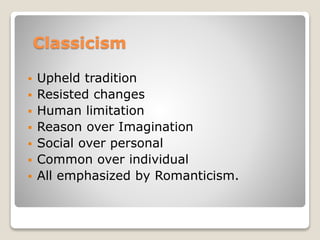
Classicism
 Upheld tradition
 Resisted changes
 Human limitation
 Reason over Imagination
 Social over personal
 Common over individual
 All emphasized by Romanticism.
Romanticism
 1800-1830
 Imagination gives expression to that
which mark each person’s unique being.
 All art is the imaginative expression of the
inner essence of the individual claim for
individual freedom.
 Development of a sense of awe and
Mystery.
Romanticism
 Emphasized the human potential for social
progress and spiritual growth.
 Reflected political ideas in declaration of
Individual. "all men are created equal”
which led to emphasis of dignity and
worth of the common individual and to
social reforms to fulfill this idea of
equality.
 Romantic writers tried to express their
own intuitive experiences.
Common Romantic Subject
Nature
 Emphasized beauty, strangeness, mystry of not
rational laws.
 Saw as an organic, process, constantly
developing and changing
 Connection between human imagination and the
natural world.
 The Past
 Later romantic poets used dramatic incidents
from early American History.
Inner World of Human Nature
 The exploration and expression of the Writer’s
most private inner being.
 Interested in the irrational depths of human
nature.
A Quick Comparison
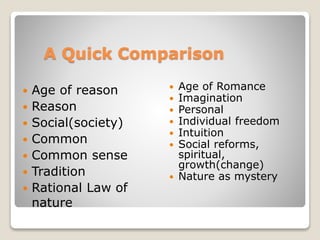
 Age of reason
 Reason
 Social(society)
 Common
 Common sense
 Tradition
 Rational Law of
nature
 Age of Romance
 Imagination
 Personal
 Individual freedom
 Intuition
 Social reforms,
spiritual,
growth(change)
 Nature as mystery
Thank You

Difference between Classicism and Romanticism

  • 1.
    Difference between Classicismand Romanticism Name: Sonal Olakiya Roll No: 23 Paper:5(The Romantic Literature) Semester:2(Two) Enrolment No:2069108420170022 Email Id: sonalolakiya2405@gmail.com Submitted by: Dr. Dilip Barad. SMT: S.B.Gardi Maharaja Krishanakumarsinhji Bhavnagar University.
  • 2.
    What is Classicismand Romanticism Definition Definition  Classicism believed that reason is the dominating characteristic of both nature and human nature and both are governed by fixed unchanging laws.  A Correctness of language, and style for a unique, elite, civilized class of people.  Emphasized the emotions, an individual intuition.  Romantic-from “romance”  A medieval tale of poem treating heroic personages or events written in one of the Romance Languages.
  • 3.
    Classicism  18th (1700’sto 1800’s)  Nature a self contained machine whose laws could be rationally understood.  Reason prevails in all provinces of thought. The universe is capable of rational explanation as orderly, purposive, structured and regular.  Imagination had to be restrained by reason and common sense.  Belief in reality, leaving little of validity to emotion. Mystery and Miracle are dispelled.
  • 4.
    Classicism  Upheld tradition Resisted changes  Human limitation  Reason over Imagination  Social over personal  Common over individual  All emphasized by Romanticism.
  • 5.
    Romanticism  1800-1830  Imaginationgives expression to that which mark each person’s unique being.  All art is the imaginative expression of the inner essence of the individual claim for individual freedom.  Development of a sense of awe and Mystery.
  • 6.
    Romanticism  Emphasized thehuman potential for social progress and spiritual growth.  Reflected political ideas in declaration of Individual. "all men are created equal” which led to emphasis of dignity and worth of the common individual and to social reforms to fulfill this idea of equality.  Romantic writers tried to express their own intuitive experiences.
  • 7.
    Common Romantic Subject Nature Emphasized beauty, strangeness, mystry of not rational laws.  Saw as an organic, process, constantly developing and changing  Connection between human imagination and the natural world.  The Past  Later romantic poets used dramatic incidents from early American History. Inner World of Human Nature  The exploration and expression of the Writer’s most private inner being.  Interested in the irrational depths of human nature.
  • 8.
    A Quick Comparison Age of reason  Reason  Social(society)  Common  Common sense  Tradition  Rational Law of nature  Age of Romance  Imagination  Personal  Individual freedom  Intuition  Social reforms, spiritual, growth(change)  Nature as mystery
  • 9.