The Spirit of the Age (1790 A sense of a shared vision among the
1850)
Romantics.

 Early support of the French Revolution.
 Rise of the individual  alienation.
 Dehumanization of industrialization.

 Radical poetics / politics  an obsession
with violent change.
Romanticism is characterized
by the 5 “I”s






Imagination
Intuition
Idealism
Inspiration
Individuality
Imagination
 Imagination was emphasized over
“reason.”
 This was a backlash against the
rationalism characterized by the
Neoclassical period or “Age of Reason.”
 Imagination was considered necessary
for creating all art.
 British writer Samuel Taylor Coleridge
called it “intellectual intuition.”
Intuition
 Romantics placed value on “intuition,” or
feeling and instincts, over reason.
 Emotions were important in Romantic
art.
 British Romantic William Wordsworth
described poetry as “the spontaneous
overflow of powerful feelings.”
Idealism

 Idealism is the concept that we can
make the world a better place.
 Idealism refers to any theory that
emphasizes the spirit, the mind, or
language over matter – thought has a
crucial role in making the world the way
it is.
 Immanuel Kant, a German philosopher,
held that the mind forces the world we
perceive to take the shape of spaceand-time.
Inspiration
 The Romantic artist, musician, or writer,
is an “inspired creator” rather than a
“technical master.”
 What this means is “going with the
moment” or being spontaneous, rather
than “getting it precise.”
Individuality
 Romantics celebrated the individual.
 During this time period, Women’s Rights
and Abolitionism were taking root as
major movements.
 Walt Whitman, a later Romantic writer,
would write a poem entitled “Song of
Myself”: it begins, “I celebrate
myself…”
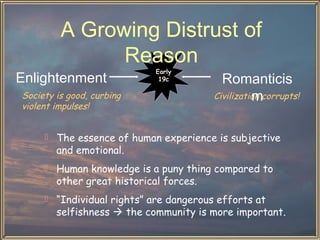
A Growing Distrust of
Reason

Enlightenment

Early
19c

Society is good, curbing
violent impulses!

Romanticis
Civilization corrupts!
m

 The essence of human experience is subjective

and emotional.

 Human knowledge is a puny thing compared to

other great historical forces.

 “Individual rights” are dangerous efforts at

selfishness  the community is more important.
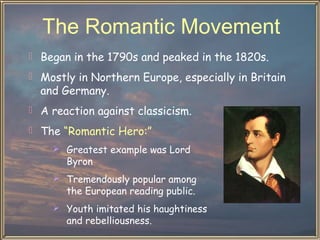
The Romantic Movement
 Began in the 1790s and peaked in the 1820s.
 Mostly in Northern Europe, especially in Britain

and Germany.

 A reaction against classicism.
 The “Romantic Hero:”
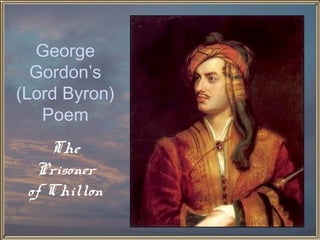
 Greatest example was Lord

Byron

 Tremendously popular among

the European reading public.

 Youth imitated his haughtiness

and rebelliousness.
Characteristics of
Romanticism
The Engaged & Enraged
Artist:
 The artist apart from society.
 The artist as social critic/revolutionary.
 The artist as genius.
Characteristics of
Romanticism

The Individual/ The
Dreamer:

 Individuals have unique, endless
potential.

 Self-realization comes through art
 Artists are the true philosophers.
Characteristics of
Romanticism

Glorification of Nature:
 Peaceful, restorative qualities [an
escape from industrialization and
the dehumanization it creates].

 Awesome, powerful, horrifying
aspects of nature.

 Indifferent to the fate of humans.
 Overwhelming power of nature.
Characteristics of
Romanticism

The Supernatural:

 Ghosts, fairies, witches, demons.
 The shadows of the mind—dreams &
madness.

 The romantics rejected materialism

in pursuit of spiritual self-awareness.

 They yearned for the unknown and
the unknowable.
The Great Age of the
Novel
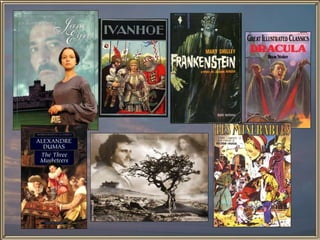
 Gothic Novel:
Jane Eyre - Charlotte Bronte (1847)
Wuthering Heights - Emily Bronte (1847)



Historical Novel:
Ivanhoe - Sir Walter Scott (1819)
Les Miserables - Victor Hugo (1862)
The Three Musketeers – Alexander Dumas
(1844)
The Great Age of the
Novel

 Science Fiction Novel:

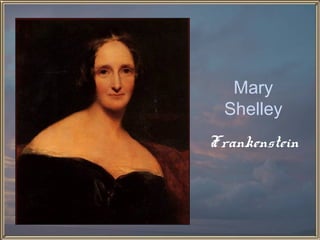
Frankenstein - Mary Shelley (1817)
Dracula – Bramm Stoker (1897)

 Novel of Purpose:
Hugh Trevar - Thomas Holcroft (1794)
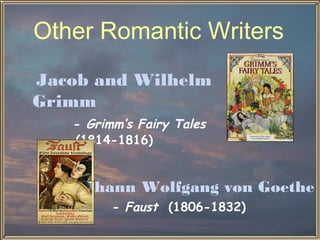
Other Romantic Writers
Jacob and Wilhelm
Grimm
- Grimm’s Fairy Tales
(1814-1816)

Johann Wolfgang von Goethe
- Faust (1806-1832)
The Romantic Poets
 Percy Byssche Shelley
 Lord Byron (George
Gordon)

 Samuel Taylor Coleridge
 William Wordsworth
 John Keats
 William Blake
George
Gordon’s
(Lord Byron)
Poem
The
Prisoner
of Chillon
Mary
Shelley
Frankenstein
Sir
Walter
Scott
Ivanhoe
William
Wordsworth’s
Poem,
Tintern
Abbey
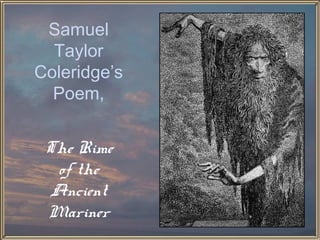
Samuel
Taylor
Coleridge’s
Poem,
The Rime
of the
Ancient
Mariner
The End…

Romanticism

  • 2.
    The Spirit ofthe Age (1790 A sense of a shared vision among the 1850) Romantics.  Early support of the French Revolution.  Rise of the individual  alienation.  Dehumanization of industrialization.  Radical poetics / politics  an obsession with violent change.
  • 3.
    Romanticism is characterized bythe 5 “I”s      Imagination Intuition Idealism Inspiration Individuality
  • 4.
    Imagination  Imagination wasemphasized over “reason.”  This was a backlash against the rationalism characterized by the Neoclassical period or “Age of Reason.”  Imagination was considered necessary for creating all art.  British writer Samuel Taylor Coleridge called it “intellectual intuition.”
  • 5.
    Intuition  Romantics placedvalue on “intuition,” or feeling and instincts, over reason.  Emotions were important in Romantic art.  British Romantic William Wordsworth described poetry as “the spontaneous overflow of powerful feelings.”
  • 6.
    Idealism  Idealism isthe concept that we can make the world a better place.  Idealism refers to any theory that emphasizes the spirit, the mind, or language over matter – thought has a crucial role in making the world the way it is.  Immanuel Kant, a German philosopher, held that the mind forces the world we perceive to take the shape of spaceand-time.
  • 7.
    Inspiration  The Romanticartist, musician, or writer, is an “inspired creator” rather than a “technical master.”  What this means is “going with the moment” or being spontaneous, rather than “getting it precise.”
  • 8.
    Individuality  Romantics celebratedthe individual.  During this time period, Women’s Rights and Abolitionism were taking root as major movements.  Walt Whitman, a later Romantic writer, would write a poem entitled “Song of Myself”: it begins, “I celebrate myself…”
  • 10.
    A Growing Distrustof Reason Enlightenment Early 19c Society is good, curbing violent impulses! Romanticis Civilization corrupts! m  The essence of human experience is subjective and emotional.  Human knowledge is a puny thing compared to other great historical forces.  “Individual rights” are dangerous efforts at selfishness  the community is more important.
  • 11.
    The Romantic Movement Began in the 1790s and peaked in the 1820s.  Mostly in Northern Europe, especially in Britain and Germany.  A reaction against classicism.  The “Romantic Hero:”  Greatest example was Lord Byron  Tremendously popular among the European reading public.  Youth imitated his haughtiness and rebelliousness.
  • 12.
    Characteristics of Romanticism The Engaged& Enraged Artist:  The artist apart from society.  The artist as social critic/revolutionary.  The artist as genius.
  • 14.
    Characteristics of Romanticism The Individual/The Dreamer:  Individuals have unique, endless potential.  Self-realization comes through art  Artists are the true philosophers.
  • 16.
    Characteristics of Romanticism Glorification ofNature:  Peaceful, restorative qualities [an escape from industrialization and the dehumanization it creates].  Awesome, powerful, horrifying aspects of nature.  Indifferent to the fate of humans.  Overwhelming power of nature.
  • 17.
    Characteristics of Romanticism The Supernatural: Ghosts, fairies, witches, demons.  The shadows of the mind—dreams & madness.  The romantics rejected materialism in pursuit of spiritual self-awareness.  They yearned for the unknown and the unknowable.
  • 18.
    The Great Ageof the Novel  Gothic Novel: Jane Eyre - Charlotte Bronte (1847) Wuthering Heights - Emily Bronte (1847)  Historical Novel: Ivanhoe - Sir Walter Scott (1819) Les Miserables - Victor Hugo (1862) The Three Musketeers – Alexander Dumas (1844)
  • 19.
    The Great Ageof the Novel  Science Fiction Novel: Frankenstein - Mary Shelley (1817) Dracula – Bramm Stoker (1897)  Novel of Purpose: Hugh Trevar - Thomas Holcroft (1794)
  • 21.
    Other Romantic Writers Jacoband Wilhelm Grimm - Grimm’s Fairy Tales (1814-1816) Johann Wolfgang von Goethe - Faust (1806-1832)
  • 22.
    The Romantic Poets Percy Byssche Shelley  Lord Byron (George Gordon)  Samuel Taylor Coleridge  William Wordsworth  John Keats  William Blake
  • 23.
  • 24.
  • 25.
  • 26.
  • 27.
  • 28.