University Duhok
faculty of medical science
school of nursing

Disseminated Intravascular
Coagulation
Prepared by:
Sirwan Hamabaqi
Chnar Sabr
Shadan Abdulstar
Payam Nuri

Supervisor:
Mr.Rasoul S.piro
CONTAIN…
•
•
•
•
•
•
•
•
•
•

Definition
Pathophysiology
Classification
Etiology
Tests
Clinical manifestation of DIC
Complication
Treatment
Nursing Process
Reference
DEFINITION
• DIC is an acquired syndrome characterized by the
intravascular activation of coagulation with loss of
localization arising from different causes. It can
originate from and cause damage to the
microvasculature, which if sufficiently severe, can
produce organ dysfunction
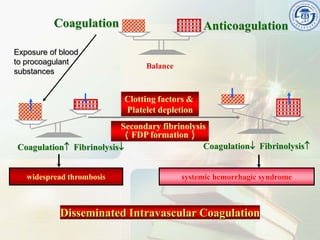
Coagulation
Exposure of blood
to procoagulant
substances

Anticoagulation
Balance

Clotting factors &
Platelet depletion
Secondary fibrinolysis
(FDP formation)
Coagulation Fibrinolysis
Coagulation Fibrinolysis
widespread thrombosis

systemic hemorrhagic syndrome

Disseminated Intravascular Coagulation
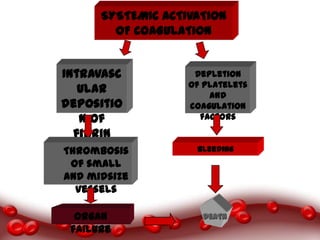
SYSTEMIC ACTIVATION
OF COAGULATION

Intravasc
ular
depositio
n of
fibrin
Thrombosis
of small
and midsize
vessels
Organ
failure

Depletion
of platelets
and
coagulation
factors

Bleeding

DEATH
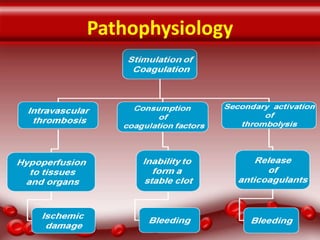
Pathophysiology
.

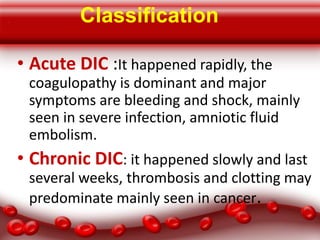
Classification
• Acute DIC :It happened rapidly, the
coagulopathy is dominant and major
symptoms are bleeding and shock, mainly
seen in severe infection, amniotic fluid
embolism.

• Chronic DIC: it happened slowly and last
several weeks, thrombosis and clotting may
predominate mainly seen in cancer.
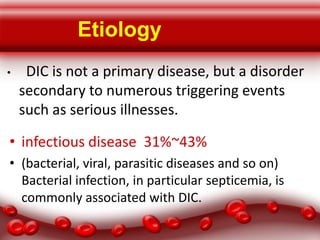
Etiology
•

DIC is not a primary disease, but a disorder
secondary to numerous triggering events
such as serious illnesses.

• infectious disease 31%~43%
• (bacterial, viral, parasitic diseases and so on)
Bacterial infection, in particular septicemia, is
commonly associated with DIC.
•
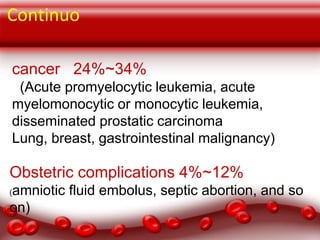
Continuo
cancer 24%~34%
(Acute promyelocytic leukemia, acute
myelomonocytic or monocytic leukemia,
disseminated prostatic carcinoma
Lung, breast, gastrointestinal malignancy)

Obstetric complications 4%~12%
amniotic fluid embolus, septic abortion, and so
on)
(
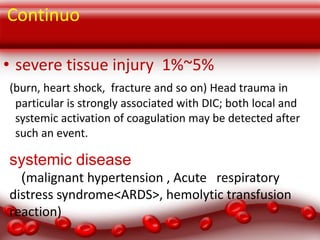
Continuo
• severe tissue injury 1%~5%
(burn, heart shock, fracture and so on) Head trauma in
particular is strongly associated with DIC; both local and
systemic activation of coagulation may be detected after
such an event.

systemic disease
(malignant hypertension , Acute respiratory
distress syndrome<ARDS>, hemolytic transfusion
reaction)
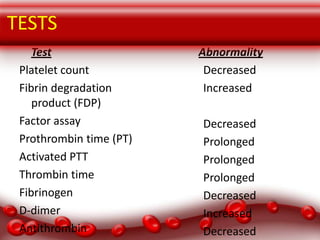
TESTS
Test
Platelet count
Fibrin degradation
product (FDP)
Factor assay
Prothrombin time (PT)
Activated PTT
Thrombin time
Fibrinogen
D-dimer
Antithrombin

Abnormality
Decreased
Increased
Decreased
Prolonged
Prolonged
Prolonged
Decreased
Increased
Decreased
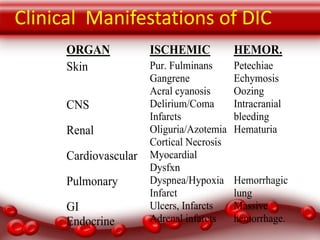
Clinical Manifestations of DIC
ORGAN
Skin
CNS
Renal
Cardiovascular
Pulmonary
GI
Endocrine

ISCHEMIC

HEMOR.

Pur. Fulminans
Gangrene
Acral cyanosis
Delirium/Coma
Infarcts
Oliguria/Azotemia
Cortical Necrosis
Myocardial
Dysfxn
Dyspnea/Hypoxia
Infarct
Ulcers, Infarcts
Adrenal infarcts

Petechiae
Echymosis
Oozing
Intracranial
bleeding
Hematuria

Hemorrhagic
lung
Massive
hemorrhage.
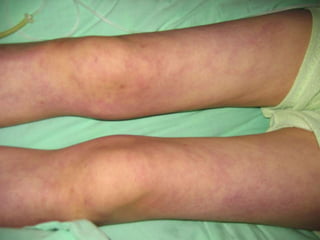
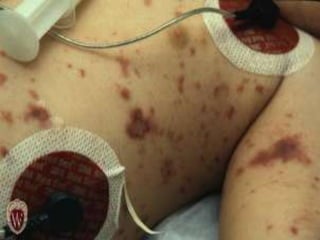
Symptoms and Signs

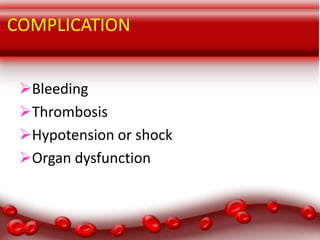
COMPLICATION
Bleeding
Thrombosis
Hypotension or shock
Organ dysfunction
Continuo
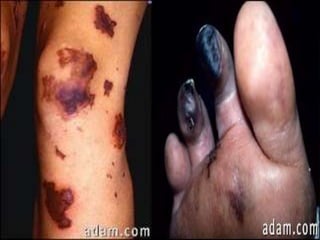
• Bleeding :
It may occur at any site, but spontaneous bleeding
and oozing at venipuncture sites or wounds are
important clues to the diagnosis.

• Thrombosis:
It is most commonly manifested by digital
ischemia and gangrene, renal cortical necrosis and
hemorrhagic adrenal infarction may occur.
Treatment Modalities

TREATMENT
• Treat the underlying cause
• Provide supportive management of
complications
• Stop abnormal coagulation and control
bleeding by replacement of depleted blood
and clotting components(FFP, Platelets,PRBC)
• Medications can be used and choice depends
on the patient’s condition
(Heparin, Antithrombin III (ATIII), (
Fibrinolytic inhibitors)
Nursing Process--Planning the Care of the
Patient With DIC
• Major goals include maintenance of
hemodynamic status, maintenance of intact
skin and oral mucosa, maintenance of fluid
balance, maintenance of tissue perfusion,
enhanced coping, and absence of complications

19
Interventions
• Assessment and interventions should target
potential /actual sites of organ damage
• Monitor and assess carefully for bleeding and
thrombosis
• Avoid trauma and procedures that increase the
risk of bleeding, including activities that increase
intracranial pressure
References
Otto, Shirley E. (2001). Oncology
Porth, Carol M. (2004). Essentials of
Pathophysiology: Concepts of Altered
Health States. Lippncott Williams &
Wilkins: Philadelphia.
Web Sites:
Pat Bowne, faculty Alverno College Milwaukee Wis.
• Levi M & Ten Cate H. Disseminated intravascular coagulation. N Engl J
Med 341: 586 - 592, 1999.
THE END
Thank you!!!

Dic

  • 1.
    University Duhok faculty ofmedical science school of nursing Disseminated Intravascular Coagulation Prepared by: Sirwan Hamabaqi Chnar Sabr Shadan Abdulstar Payam Nuri Supervisor: Mr.Rasoul S.piro
  • 2.
  • 3.
    DEFINITION • DIC isan acquired syndrome characterized by the intravascular activation of coagulation with loss of localization arising from different causes. It can originate from and cause damage to the microvasculature, which if sufficiently severe, can produce organ dysfunction
  • 4.
    Coagulation Exposure of blood toprocoagulant substances Anticoagulation Balance Clotting factors & Platelet depletion Secondary fibrinolysis (FDP formation) Coagulation Fibrinolysis Coagulation Fibrinolysis widespread thrombosis systemic hemorrhagic syndrome Disseminated Intravascular Coagulation
  • 5.
    SYSTEMIC ACTIVATION OF COAGULATION Intravasc ular depositio nof fibrin Thrombosis of small and midsize vessels Organ failure Depletion of platelets and coagulation factors Bleeding DEATH
  • 6.
  • 7.
    . Classification • Acute DIC:It happened rapidly, the coagulopathy is dominant and major symptoms are bleeding and shock, mainly seen in severe infection, amniotic fluid embolism. • Chronic DIC: it happened slowly and last several weeks, thrombosis and clotting may predominate mainly seen in cancer.
  • 8.
    Etiology • DIC is nota primary disease, but a disorder secondary to numerous triggering events such as serious illnesses. • infectious disease 31%~43% • (bacterial, viral, parasitic diseases and so on) Bacterial infection, in particular septicemia, is commonly associated with DIC. •
  • 9.
    Continuo cancer 24%~34% (Acute promyelocyticleukemia, acute myelomonocytic or monocytic leukemia, disseminated prostatic carcinoma Lung, breast, gastrointestinal malignancy) Obstetric complications 4%~12% amniotic fluid embolus, septic abortion, and so on) (
  • 10.
    Continuo • severe tissueinjury 1%~5% (burn, heart shock, fracture and so on) Head trauma in particular is strongly associated with DIC; both local and systemic activation of coagulation may be detected after such an event. systemic disease (malignant hypertension , Acute respiratory distress syndrome<ARDS>, hemolytic transfusion reaction)
  • 11.
    TESTS Test Platelet count Fibrin degradation product(FDP) Factor assay Prothrombin time (PT) Activated PTT Thrombin time Fibrinogen D-dimer Antithrombin Abnormality Decreased Increased Decreased Prolonged Prolonged Prolonged Decreased Increased Decreased
  • 12.
    Clinical Manifestations ofDIC ORGAN Skin CNS Renal Cardiovascular Pulmonary GI Endocrine ISCHEMIC HEMOR. Pur. Fulminans Gangrene Acral cyanosis Delirium/Coma Infarcts Oliguria/Azotemia Cortical Necrosis Myocardial Dysfxn Dyspnea/Hypoxia Infarct Ulcers, Infarcts Adrenal infarcts Petechiae Echymosis Oozing Intracranial bleeding Hematuria Hemorrhagic lung Massive hemorrhage.
  • 15.
  • 16.
    Continuo • Bleeding : Itmay occur at any site, but spontaneous bleeding and oozing at venipuncture sites or wounds are important clues to the diagnosis. • Thrombosis: It is most commonly manifested by digital ischemia and gangrene, renal cortical necrosis and hemorrhagic adrenal infarction may occur.
  • 18.
    Treatment Modalities TREATMENT • Treatthe underlying cause • Provide supportive management of complications • Stop abnormal coagulation and control bleeding by replacement of depleted blood and clotting components(FFP, Platelets,PRBC) • Medications can be used and choice depends on the patient’s condition (Heparin, Antithrombin III (ATIII), ( Fibrinolytic inhibitors)
  • 19.
    Nursing Process--Planning theCare of the Patient With DIC • Major goals include maintenance of hemodynamic status, maintenance of intact skin and oral mucosa, maintenance of fluid balance, maintenance of tissue perfusion, enhanced coping, and absence of complications 19
  • 20.
    Interventions • Assessment andinterventions should target potential /actual sites of organ damage • Monitor and assess carefully for bleeding and thrombosis • Avoid trauma and procedures that increase the risk of bleeding, including activities that increase intracranial pressure
  • 21.
    References Otto, Shirley E.(2001). Oncology Porth, Carol M. (2004). Essentials of Pathophysiology: Concepts of Altered Health States. Lippncott Williams & Wilkins: Philadelphia. Web Sites: Pat Bowne, faculty Alverno College Milwaukee Wis. • Levi M & Ten Cate H. Disseminated intravascular coagulation. N Engl J Med 341: 586 - 592, 1999.
  • 22.